
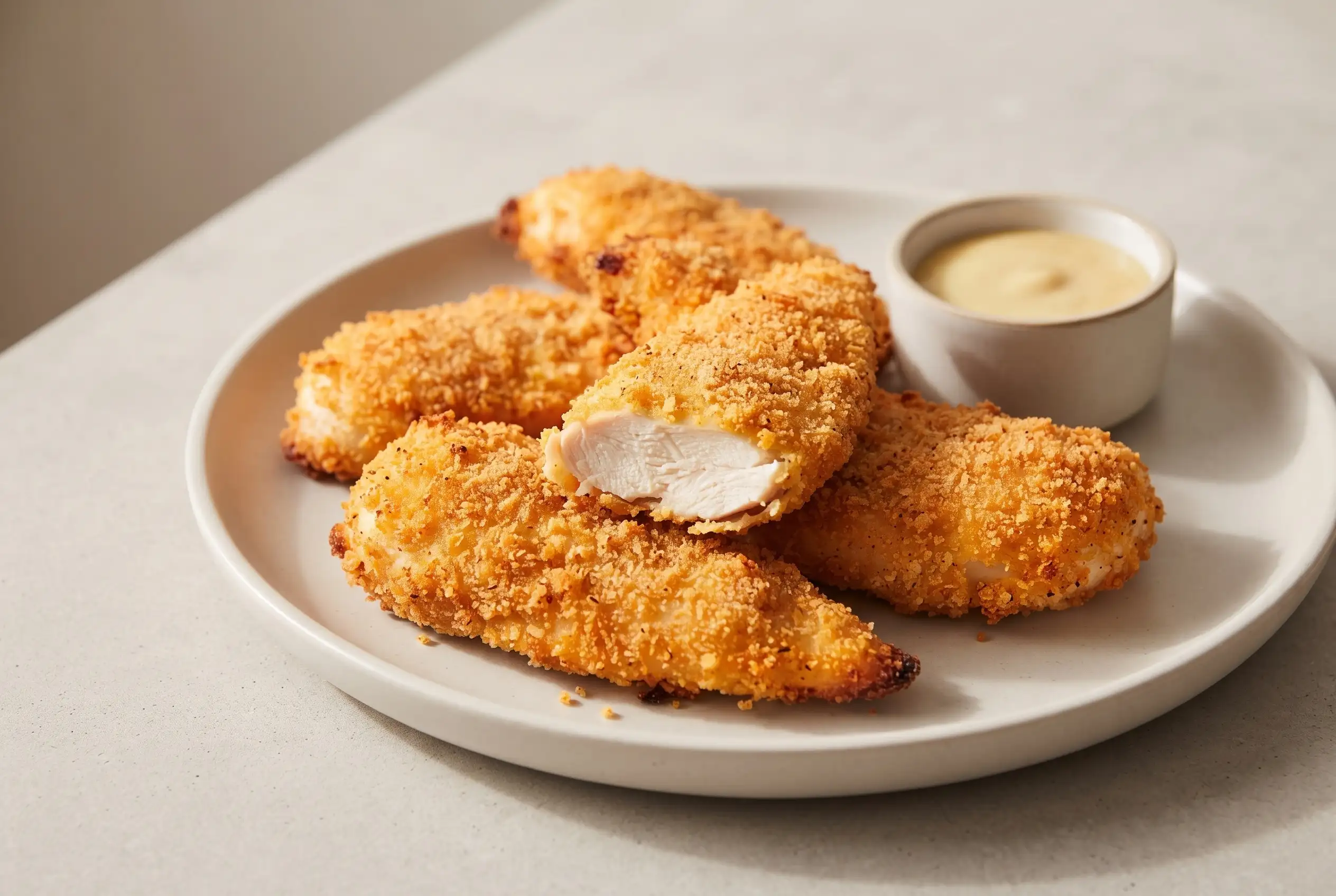
Air fryer chicken tenders start with a crisp coating
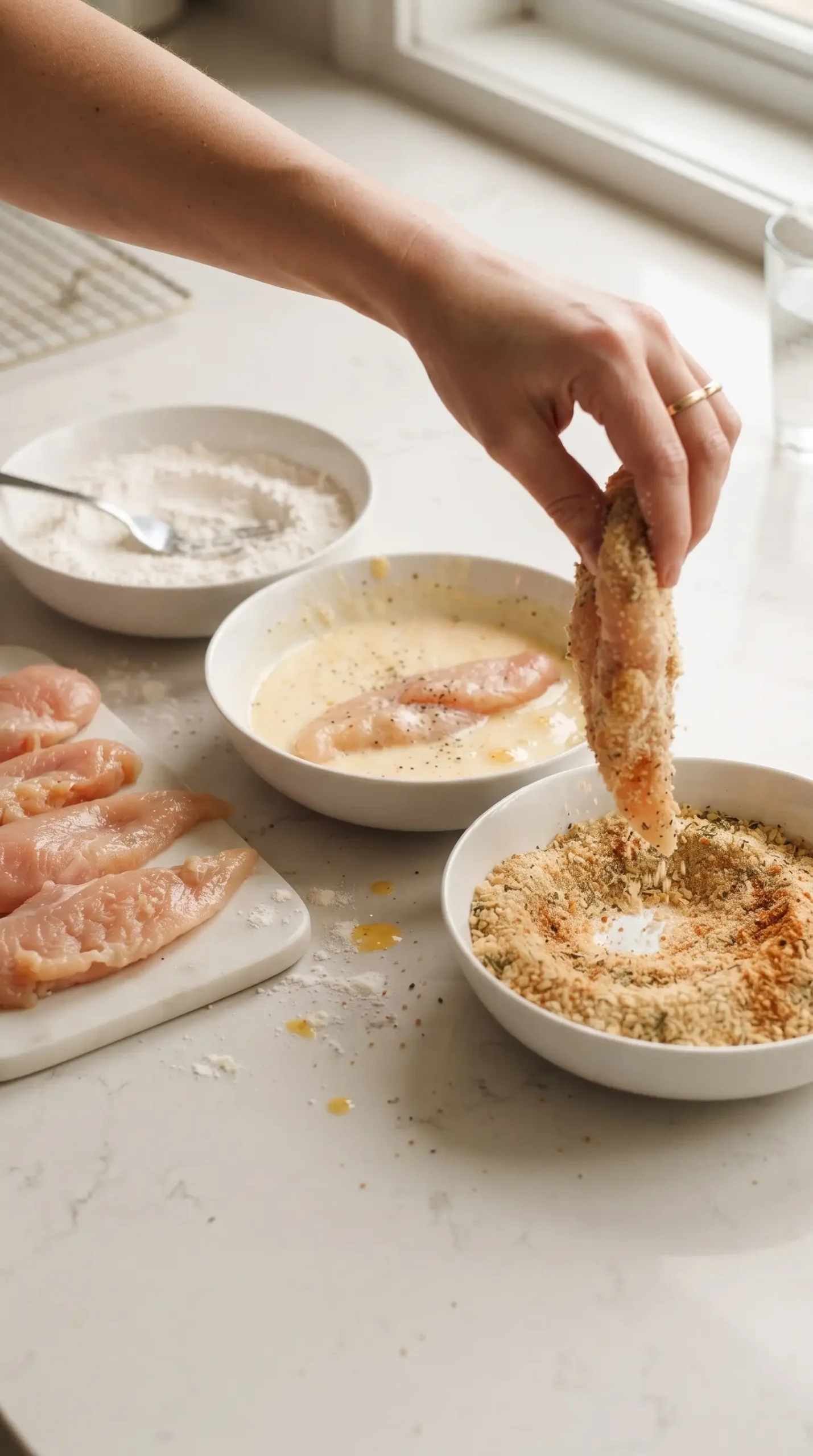
air fryer chicken tenders bring together a thin seasoned crust, tender chicken tenderloins, and a cooking method that creates a fried-style exterior without a deep fryer. The coating process is where the texture begins, because flour, a tangy milk mixture, and breadcrumbs each help the chicken develop a layered surface that browns evenly.
Flattening the chicken pieces slightly before coating helps create a more even shape. This small adjustment allows the breading to sit across the surface instead of collecting around thicker areas, which supports consistent cooking from edge to center.
The flattening step shapes better breaded air fryer chicken tenders
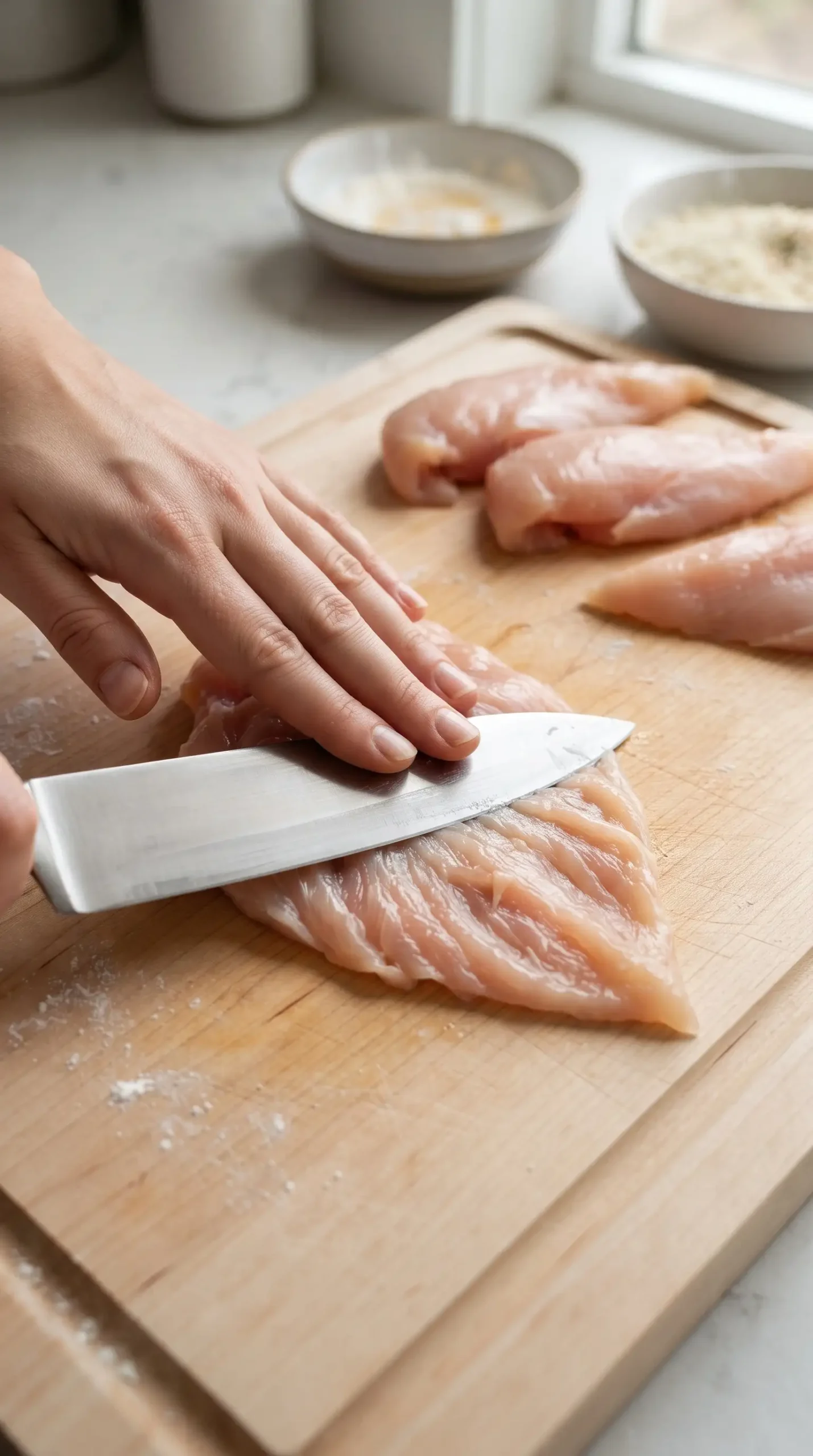
Chicken tenderloins can vary in thickness, and a thicker end may cook differently from a thinner section. Gently pressing the pieces with the flat side of a knife creates a wider, slightly fanned shape that gives the coating more room to cover the meat.
The goal of this preparation is even contact with the hot air and the seasoning layers. A flatter tender also provides more surface area for the breadcrumb mixture, helping the finished crust become more noticeable in every bite.
Seasoned coatings define the flavor balance
The coating for these air fryer chicken tenders relies on seasoning added at multiple stages instead of depending on a single layer. The flour mixture carries salt and optional ranch seasoning, while the breadcrumbs receive rotisserie chicken seasoning for a savory outer crust.
Using seasoning throughout the coating creates a balanced flavor because each layer contributes as the chicken cooks. If seasoning mixes are not available, salt and freshly ground pepper can be distributed into the dry mixtures while keeping the same coating structure.
- Flour layer: Creates a dry surface that helps the wet mixture cling to the chicken.
- Milk mixture: Adds moisture and helps the breadcrumb layer attach evenly.
- Breadcrumb layer: Forms the outer texture that becomes crisp in the air fryer.
The buttermilk dip keeps air fryer chicken tenderloins moist
The milk and vinegar mixture creates a simple homemade buttermilk-style dip that works with the egg and optional hot sauce. The acidity from the vinegar changes the milk slightly, giving the coating mixture a useful texture for breading.
Hot sauce adds flavor and a small amount of zing without making the finished chicken spicy. The amount used is adjustable, making it easy to keep the coating mild while still adding another layer of taste.
Allowing excess liquid to drip away before adding breadcrumbs helps the crust stay attached. Too much moisture around the chicken can make the coating uneven, while a light, complete coating creates better contact with the dry crumbs.
Breadcrumb texture changes the finished crunch
Breadcrumb choice affects the character of the crust. Plain breadcrumbs create a familiar coating, while slightly chunkier crumbs can add more texture. A mixture of different breadcrumb sizes can also create a varied surface without changing the overall preparation.
| Breadcrumb option | Texture result | Best use |
|---|---|---|
| Fine plain breadcrumbs | Smooth, even crust | Classic breaded chicken texture |
| Chunkier breadcrumbs | More visible crunch | When a textured coating is preferred |
| Mixed breadcrumb sizes | Balanced crispness | Combining familiar and rustic textures |
Air fryer chicken tenders need even heat control
Good air fryer results depend on how the coated chicken is arranged before cooking. Keeping pieces in a single flat layer allows hot air to move around the coating instead of trapping moisture between overlapping pieces.
Lightly spraying the breaded surface with avocado oil helps the crumbs brown and develop a fried appearance. The spray should moisten the coating evenly without soaking it, because excess oil can affect the texture.
Checking the color of the crust and the internal temperature provides the most useful signs of doneness. The exterior should be golden brown, while the chicken should reach a safe internal temperature before serving.
For a clear doneness check, chicken pieces should reach a 165°F (74°C) internal temperature before serving.
Coating mistakes that ruin air fryer chicken tenders
Small preparation errors can change the final texture of air fryer chicken tenders. Most coating problems come from uneven layers, excess moisture, or poor spacing during cooking.
| Common issue | What you may notice | Adjustment |
|---|---|---|
| Skipping the flour layer | Breadcrumbs do not cling well | Coat lightly with flour before dipping |
| Overlapping chicken pieces | Soft areas on the crust | Cook in batches with space between pieces |
| Too much oil spray | Heavy or damp coating | Use a light, even mist across the surface |
Another common mistake is pressing on the breadcrumbs too aggressively while coating. Gentle pressure is enough to cover the chicken and maintain a textured surface.
Serving pairings for crispy air fryer chicken tenders
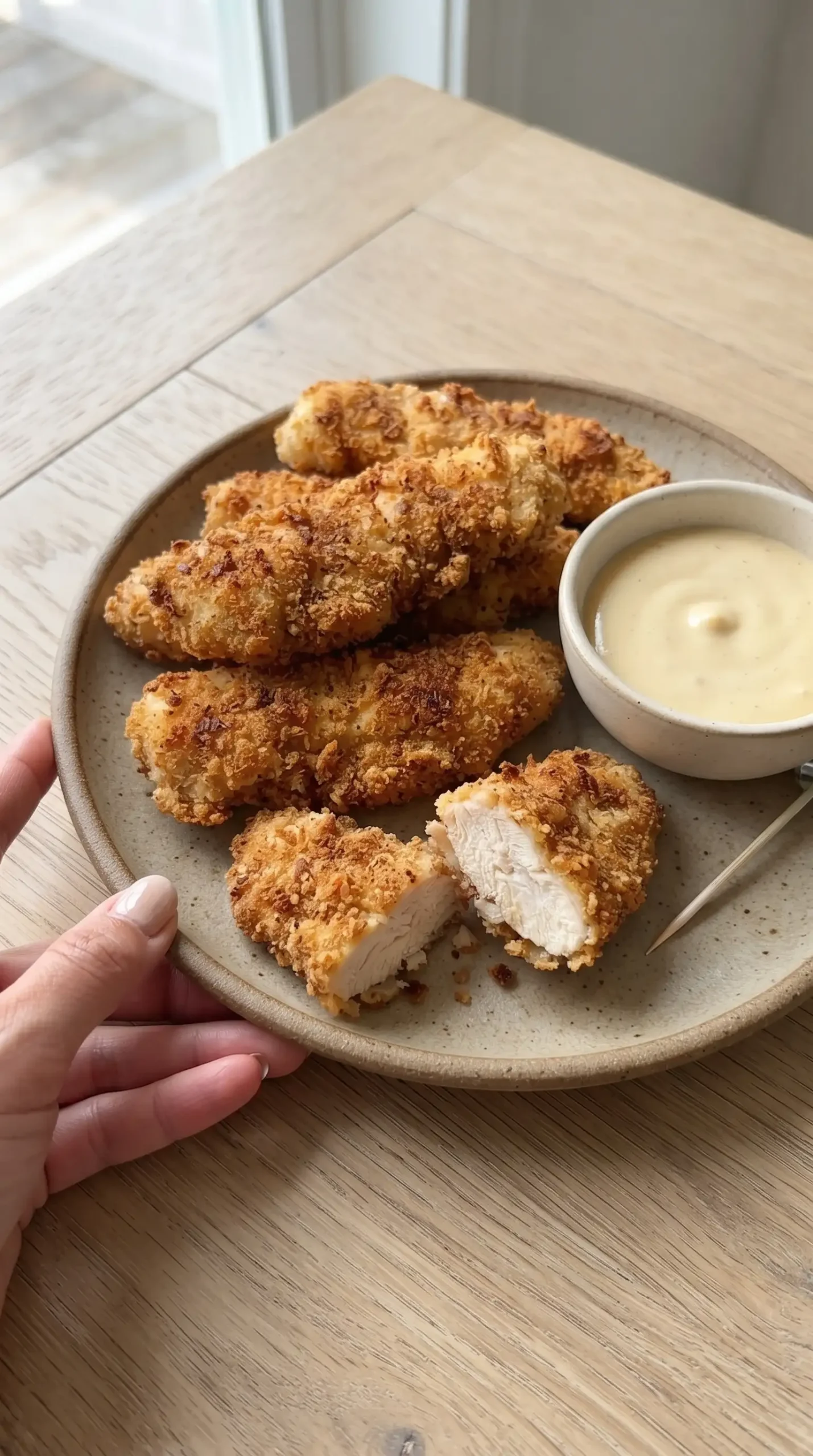
Crispy air fryer chicken tenders work well with sauces that complement the seasoned crust. The ranch and rotisserie-style flavors in the coating pair naturally with creamy dips, tangy sauces, or simple condiments.
Building a larger meal around these tenders can involve balancing the crispy coating with grains, vegetables, or a seasoned chicken-and-rice dish like cilantro lime chicken and lentil rice bowls when serving more than one main component.
Storing and reheating leftover tenders properly
Cooked chicken tenders are best stored after they have cooled and placed in an airtight container. Keeping the coating protected from extra moisture helps preserve the texture as much as possible.
Reheating in an air fryer can help restore some of the crisp exterior because hot circulating air reaches the breaded surface directly. Avoiding excessive reheating time helps prevent the chicken from drying out.
Oven adjustments for the same coated chicken
The oven version follows the same coated chicken concept while changing the heat source. Baking on a wire rack allows air to move around more of the chicken surface and helps reduce sticking.
When using a baking sheet without a rack, applying oil spray only to the top side of each tender prevents the underside from becoming too moist. Additional browning can be achieved with a short broil at the end of baking.
Flavor variations built from the original seasoning
The basic coating can be adjusted without changing the structure that makes these breaded tenders work. Different seasoning choices can shift the flavor while keeping the flour, wet coating, and breadcrumb layers in place.
Reducing or replacing the seasoning mixes allows the chicken flavor to become more prominent. Adding extra pepper, changing the herbs, or adjusting the savory notes can create different versions suited to personal preference.
Choosing sauces that match the seasoned crust
The seasoned breadcrumb coating already brings savory notes, so sauces can be selected based on contrast. Creamy options soften the crisp crust, while sharper sauces add brightness to each serving.
Serving sauces separately keeps the coating crisp longer. Dipping also lets each person control the amount of sauce added to the chicken.
Quick reference for coating decisions
| Decision | Recommended approach | Reason |
|---|---|---|
| Chicken shape | Flatten thicker areas slightly | Encourages more even coating and cooking |
| Oil application | Use avocado oil spray lightly | Supports browning without excess moisture |
| Cooking arrangement | Keep pieces in one layer | Allows better air circulation around the crust |
Air fryer chicken tenders stay crispy through careful coating control
Air fryer chicken tenders depend on the relationship between the chicken shape, layered coating, and cooking environment. Flattening the tenderloins, building the flour and breadcrumb layers carefully, and managing oil and spacing all influence the finished texture.
The crisp crust comes from small choices made before the air fryer starts working. When each coating stage is handled with care, the chicken develops a golden exterior while keeping the tender center that makes this preparation practical for home cooking.
Air fryer chicken tenders questions about texture, timing, and storage
Why are my breaded air fryer chicken tenders not crispy?
A soft crust usually comes from excess moisture, overlapping pieces, or too much oil spray. Make sure extra liquid drips away before adding breadcrumbs, keep the chicken in a single layer, and use only enough oil to lightly moisten the coating.
Can I use chicken tenderloins instead of packaged tenders?
Yes. Air fryer chicken tenderloins are the same type of cut used here, and gently flattening them helps create a shape that cooks evenly while giving the breading more surface area.
Does the hot sauce make the chicken spicy?
The optional hot sauce mainly adds flavor and a small amount of zing. The quantity used in the coating is not intended to create a strongly spicy result.
What can I use if I do not have seasoning mixes?
You can season the dry mixtures with salt and freshly ground pepper while keeping the same breading process. The coating structure is what creates the texture, while the seasoning choices adjust the flavor.
Can these tenders be reheated after cooking?
Yes. Reheating them in an air fryer can help bring back some crispness because the circulating heat reaches the outer coating directly. Store them properly first to protect their texture.
Air Fryer Chicken Tenders with Seasoned Breadcrumb Coating
Ingredients
Method
- Mix the flour, kosher salt, and ranch seasoning together in a bowl.
- Combine the milk and vinegar and allow the mixture to sit for 5 minutes. Whisk it with the egg and hot sauce until combined.
- Blend the breadcrumbs with the seasoning mix in a separate bowl.
- Flatten each chicken tenderloin slightly by pressing it a few times with the flat side of a knife on a cutting board.
- Coat each tenderloin in the flour mixture, removing excess flour. Dip into the milk mixture, allow extra liquid to drip off, then cover with the breadcrumb mixture while gently pressing the coating onto the surface.
- Arrange the coated chicken tenderloins in the air fryer basket in a single flat layer, working in batches if needed.
- Spray the coated chicken generously with avocado oil spray until the surface is lightly and evenly moistened.
- Air fry at 400°F (204°C) for 7-9 minutes, until the coating is golden brown and the internal temperature reaches 165-175°F (74-79°C).
- Serve with your favorite sauce.