
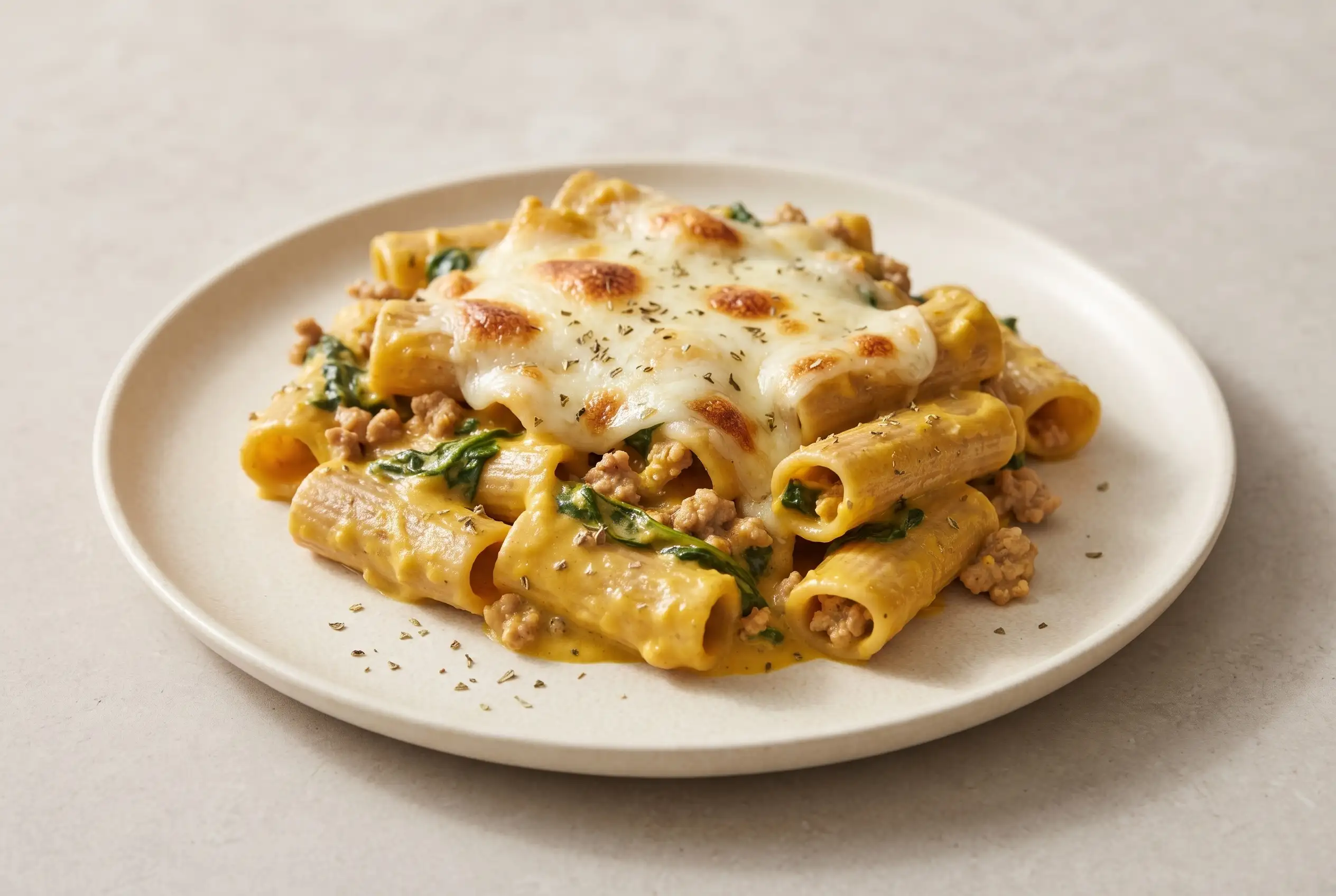
Baked rigatoni brings together tender pasta, browned turkey, wilted spinach, melted Provolone, and a silky squash sauce in one deeply comforting dish. The sauce starts with kabocha or butternut squash simmered in vegetable broth, then gets blended with cream until smooth enough to coat every tube of whole wheat rigatoni. A short bake finishes the pasta with a browned, cheesy top while keeping the center moist and savory.
Squash turns the sauce into the backbone of the bake
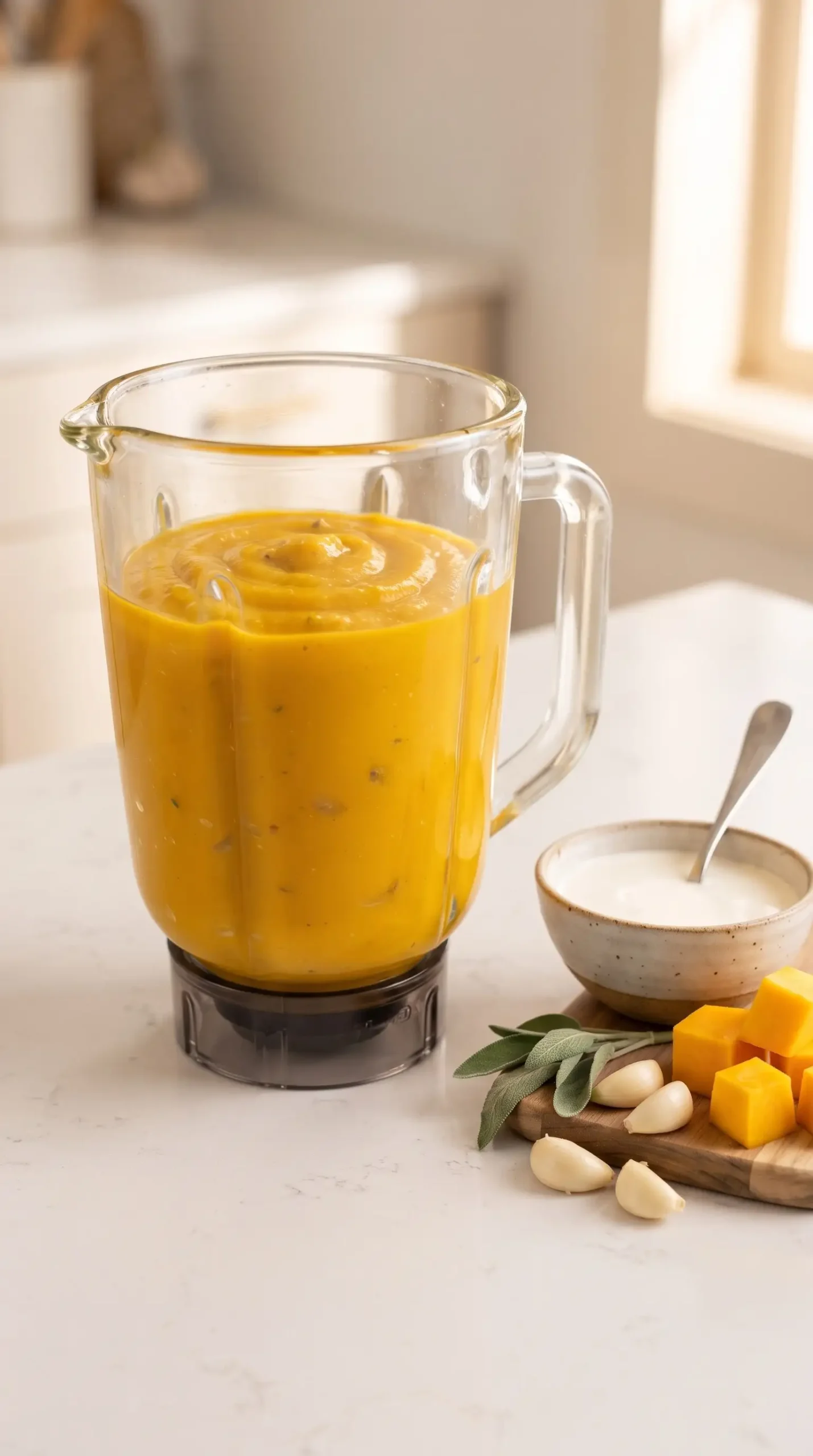
Kabocha or butternut squash does more here than supply sweetness. Once simmered with onion and garlic, the tender cubes blend with a small amount of vegetable broth into a thick sauce that can cling to rigatoni. That texture matters because the pasta will continue absorbing moisture during baking.
Using only enough broth to help the squash cook and puree keeps the sauce concentrated. The cream is stirred in after blending, so its richness stays integrated without requiring a long simmer. Salt, pepper, and dried oregano should be added at the puree stage, when seasoning can be tasted directly in the sauce.
For a butternut squash rigatoni bake, the puree should be smooth enough to flow around the pasta but not so loose that it pools in the baking dish. If the squash is still resistant when pierced, give it more cooking time before blending; a firm cube will not produce the same cohesive sauce.
Whole wheat rigatoni needs room to finish cooking
Rigatoni is especially well suited to a baked pasta because its wide tubes catch sauce, turkey, spinach, and melted cheese. Whole wheat pasta also benefits from the moisture supplied by the squash sauce, and pasta recipes built around sturdy shapes can be handled with the same undercooking principle: let the oven finish the noodles rather than boiling them to full tenderness first.
The browned turkey needs a dry, hot pan
Ground turkey can release enough liquid to steam instead of brown, so draining excess liquid is an important control point. The target is meat with browned edges and a nearly crisp surface, seasoned generously with salt, pepper, and oregano. That texture gives the finished baked rigatoni a savory contrast against its creamy sauce.
Medium-high heat provides the intensity needed for browning after the onion and garlic mixture is added. Avoid leaving excess liquid around the meat once it has cooked through. Removing it allows the turkey to make direct contact with the pan and develop the deeper color called for in the directions.
Spinach joins the turkey and sauce only after the rigatoni has been cooked and drained. Its brief contact with the hot mixture is enough to wilt it, while the oven supplies additional heat during the bake. Adding it at that point also prevents the greens from becoming the dominant texture in the dish.
Provolone belongs inside as well as on top
Splitting the grated Provolone between the middle and surface creates two different cheese textures. The interior layer melts among the sauced noodles, while the remaining cheese sits directly against the heat at the top of the baking dish and can begin to brown.
| Cheese placement | What happens | Best visual cue |
|---|---|---|
| Middle layer | Melts through the center of the pasta | Cheese disappears into the warm mixture |
| Top layer | Melts and begins to brown during baking | Surface looks glossy with early golden spots |
| Both layers together | Connects the pasta while giving the top a distinct finish | Center stays cohesive and the surface is lightly browned |
Six small controls protect the texture
- Squash tenderness: Cook until the cubes and accompanying aromatics are fork-tender before blending.
- Puree consistency: Use the specified portion of broth so the sauce remains substantial enough for baking.
- Turkey browning: Drain excess liquid so the meat can brown instead of steam.
- Pasta doneness: Undercook the rigatoni because the oven provides another stage of cooking.
- Cheese placement: Reserve half for the center and half for the surface.
- Oven finish: Look for a beginning brown on top and a thoroughly heated center.
Six minutes of boiling changes the oven finish
The supplied directions use about six minutes as the pasta-boiling benchmark, but the more important principle is that the rigatoni should remain slightly underdone when drained. Exact stovetop timing can vary, so texture is the better guide: the tubes should have enough firmness to withstand mixing and baking without turning soft and fragile.
Once drained, the pasta immediately meets the squash sauce, browned turkey, and spinach. That mixture should be stirred thoroughly so the sauce reaches the inside and outside of the rigatoni before the dish goes into the oven.
A fully tender noodle at the start would have less structural room to absorb sauce and heat. Slight undercooking gives the baked rigatoni space to finish cooking while the cheese melts and the surface develops color.
Layering keeps the Provolone from disappearing
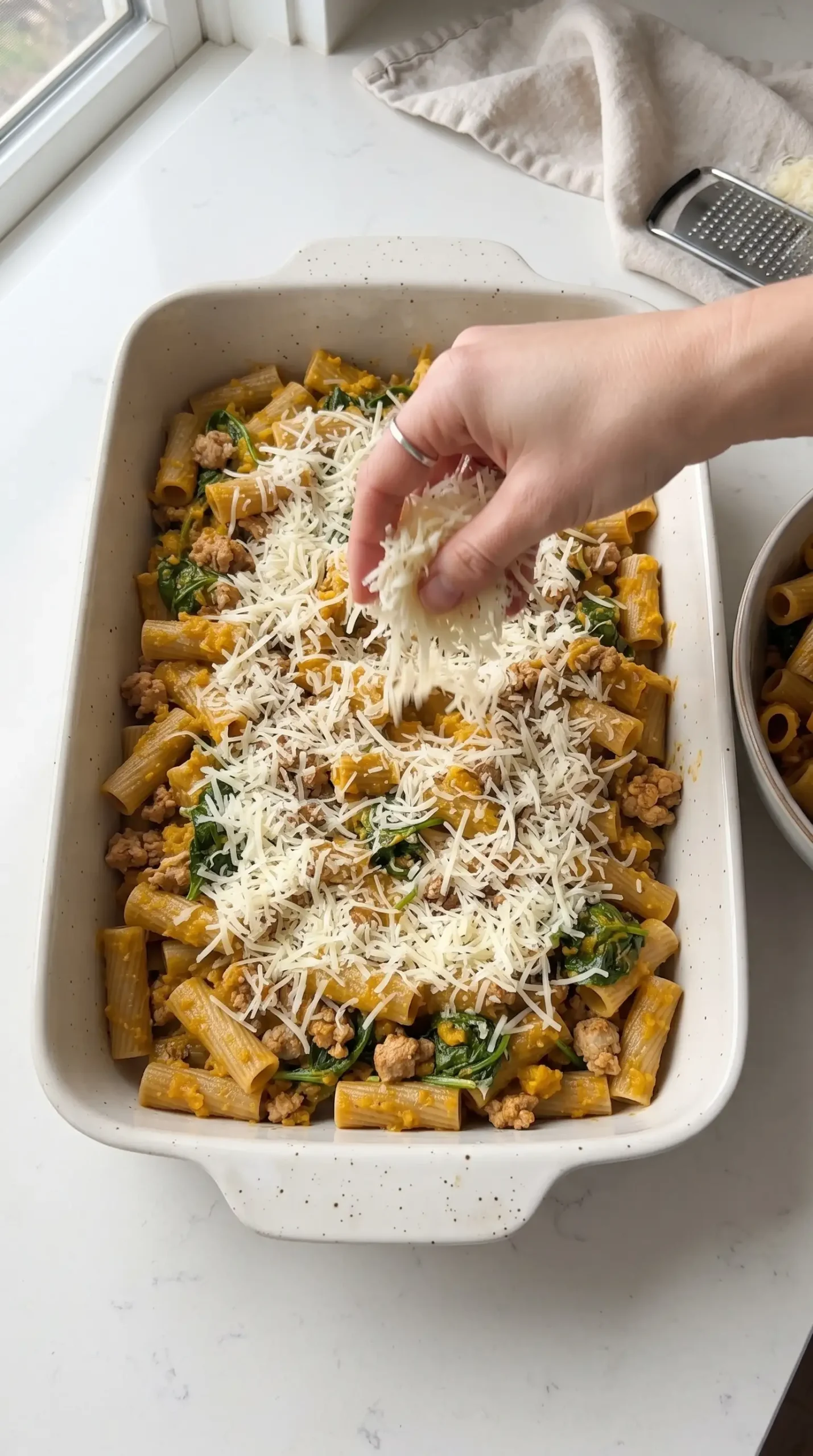
Use a large baking dish and spread in roughly half of the combined pasta mixture first. Scatter about half of the grated Provolone over that layer, then add the remaining pasta mixture and finish with the rest of the cheese. The middle layer is important because it prevents all of the cheese from becoming a surface topping.
Oregano connects the squash and turkey
Dried oregano seasons both the blended squash sauce and the browned turkey, giving the separate components a common savory note. Seasoning each part as it is prepared also makes it easier to judge the flavor before everything is combined.
The baking dish should show heat, not dryness
At 375 degrees, the oven’s job is to bring the assembled pasta fully together, melt the Provolone, and begin browning the top. The 20-minute baking direction provides a useful benchmark, but visual and temperature cues remain important: the center should be heated through and the surface should just begin to brown.
Because the pasta enters the dish slightly undercooked and already coated with sauce, there is no need to bake it until the surface becomes deeply browned. Excessive baking can drive off moisture that the rigatoni needs for its final texture.
A shallow or unusually shaped baking dish can expose more surface area to the oven, so the appearance of the top is worth watching closely. Once the cheese has melted and early browning appears, the dish has reached the intended finish.
Common baked rigatoni mistakes start before the oven
Several problems can be traced to decisions made while the components are still separate. Keeping the squash tender, the turkey relatively dry, and the pasta slightly firm establishes the texture that the oven is meant to complete.
- Watery turkey: Excess cooking liquid prevents the desired browning. Drain it so the meat can develop a browned surface.
- Firm squash: Undercooked cubes make a coarse puree. Continue cooking until they are fork-tender.
- Fully cooked pasta: Noodles that are already soft have less capacity to withstand the baking stage. Drain them while still slightly firm.
- Cheese only on top: A surface-only layer misses the melted cheese running through the center. Divide the Provolone between the middle and top.
- Overbaking: A deeply browned crust is not necessary. Remove the dish once it is heated through and the top is beginning to brown.
Spinach works best as a late-stage addition
Fresh spinach does not need separate cooking in the supplied method. Stirring it into the hot pasta, sauce, and turkey allows the leaves to wilt as the mixture is combined, then the oven continues the cooking.
A few substitutions preserve the intended structure
Kabocha and butternut squash are directly interchangeable within the stated ingredient choice because either can be peeled, cubed, simmered until tender, and pureed. The practical requirement is a smooth, substantial squash base that can coat the pasta.
Half-and-half can stand in for the cream specified in the sauce without changing the basic preparation. Whole wheat rigatoni can also be handled according to the same undercooking principle: drain it before it reaches full tenderness so the bake can complete the cooking.
These substitutions work because they preserve the functions that matter most here: a smooth squash sauce, enough creaminess to coat the pasta, and a firm noodle structure. Changes that substantially thin the sauce or eliminate the pasta’s undercooked starting point would alter the balance established by the directions.
Storage and reheating depend on keeping moisture intact
Once cooled, leftover baked rigatoni can be refrigerated in a covered container. For reheating, warm portions until the center is hot, taking care not to leave them exposed to prolonged high heat that can dry the pasta and sauce.
The squash-based sauce gives the leftovers a useful moisture base, but the pasta continues absorbing liquid as it sits. Reheating gently helps retain the creamy texture that comes from the blended squash and cream.
Why this baked rigatoni holds together so well
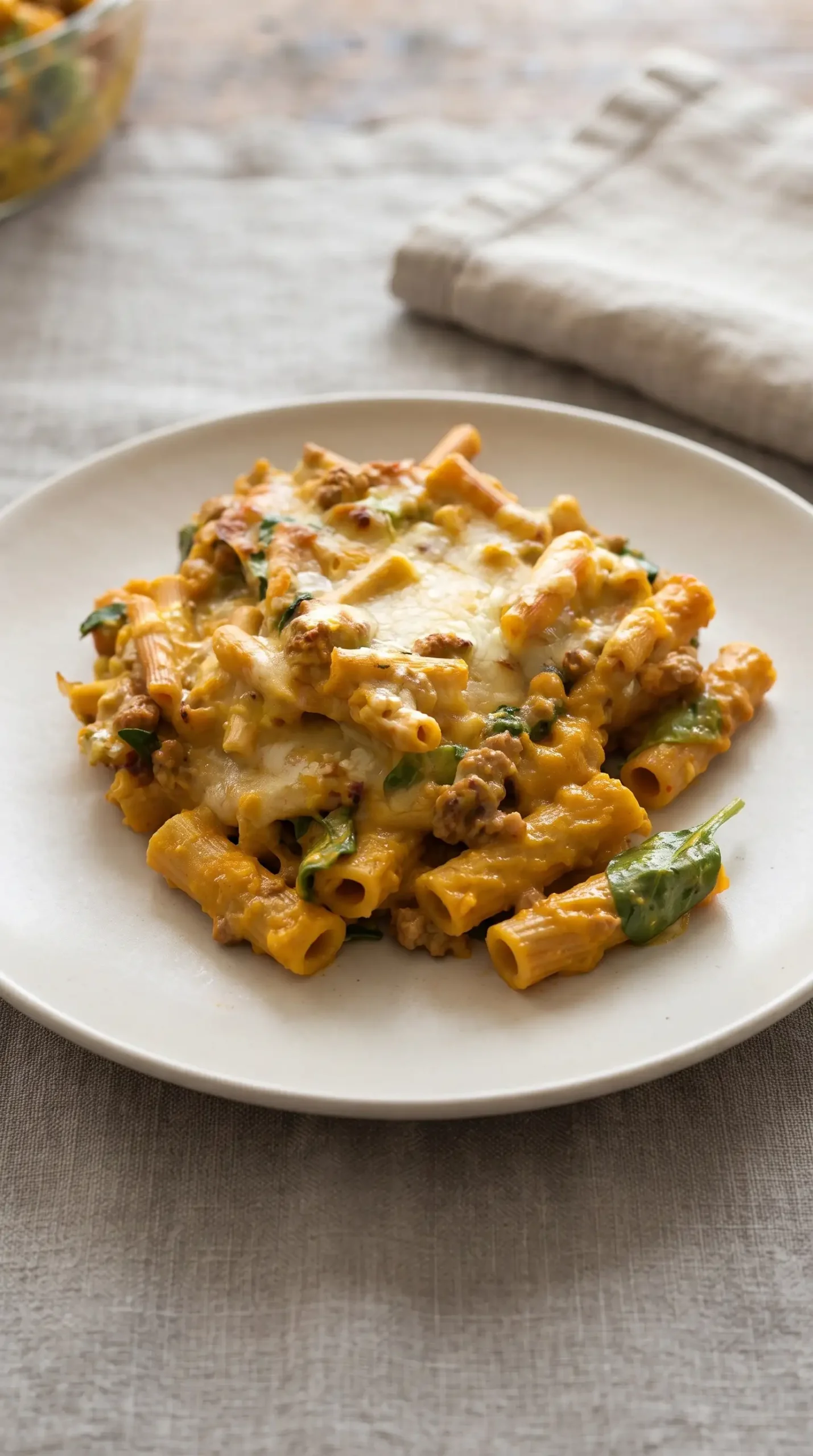
The structure comes from several components reaching the baking dish at complementary stages. Slightly undercooked rigatoni supplies firmness, the squash puree coats the tubes, browned turkey contributes concentrated savory texture, and spinach folds into the mixture without requiring a separate cooking step.
Provolone then provides the connective layer. Half melts inside the pasta while the remaining portion forms the exposed top, so the dish has both internal cohesion and a visibly finished surface.
Firm pasta and concentrated sauce make the bake work
The most consequential judgment in baked rigatoni is the point at which the pasta leaves the pot: it should still have enough firmness to absorb sauce and finish cooking in the oven. That decision works in tandem with a squash puree that is concentrated enough to cling to the noodles and a turkey mixture that has been drained enough to brown.
Once those textures are in place, the 375-degree bake has a focused job. It heats the assembled pasta, melts the divided Provolone, wilts the spinach fully, and begins browning the top without asking the oven to rescue undercooked squash or watery meat.
Questions about baked rigatoni texture and reheating
Can I prepare the squash sauce ahead of assembling the pasta?
Yes. The blended squash mixture can be prepared before assembly and kept refrigerated until needed. Bring it back into the cooking process with enough gentle warming to make it easy to stir through the pasta before baking.
How do I know the rigatoni is undercooked enough?
It should be firm when drained rather than soft and fully tender. The tubes need to hold their shape during mixing and still have room to absorb the squash sauce and finish cooking in the oven.
Can I use butternut squash instead of kabocha?
Yes. The directions specifically allow either squash. Peel and cube it, simmer it with the onion, garlic, and broth until fork-tender, then blend it with the reserved broth before adding the cream.
Why is my turkey not browning?
Excess liquid is the most direct issue addressed by the supplied method. Drain away accumulated liquid after the turkey cooks so the meat can make better contact with the hot pan and develop the browned, almost crisp appearance intended for the dish.
Can the Provolone be placed only on top?
It can melt that way, but the stated layering uses cheese in two places for a reason. Dividing the Provolone puts melted cheese through the center of the pasta while leaving enough on the surface to brown as the dish finishes.
What should I look for when the baked rigatoni is done?
The center should be heated through, the Provolone should be melted, and the top should be beginning to brown. Those signs matter more than pushing the dish toward a deeply browned crust, which can cause unnecessary moisture loss.
Baked Rigatoni with Spinach, Turkey and Squash Sauce
Ingredients
Method
- Mince the onions and garlic, then place them together in a small bowl until needed.
- Bring the vegetable broth to a boil. Add half of the onion and garlic mixture with the prepared squash, then cook for 10 minutes or until the squash and aromatics are fork-tender.
- Transfer the cooked squash mixture to a blender with 1/2 cup of the broth from the pot. Blend until smooth, season with salt, pepper, and dried oregano to taste, then mix in the cream and set the sauce aside.
- Cook the turkey with the remaining onion and garlic mixture over medium-high heat. Season with salt, pepper, and oregano, then remove excess liquid so the meat can brown well.
- Cook the rigatoni in a large pot until slightly underdone, about 6 minutes. Drain the pasta.
- Combine the noodles with the squash sauce, turkey, and spinach, stirring until evenly mixed.
- Transfer half of the pasta mixture to a large baking dish. Add about 1/2 cup of the Provolone, then add the remaining pasta mixture and finish with the remaining 1/2 cup of cheese on top.
- Bake at 375°F (190°C) for 20 minutes, or until the top begins to brown and the center is heated through.