
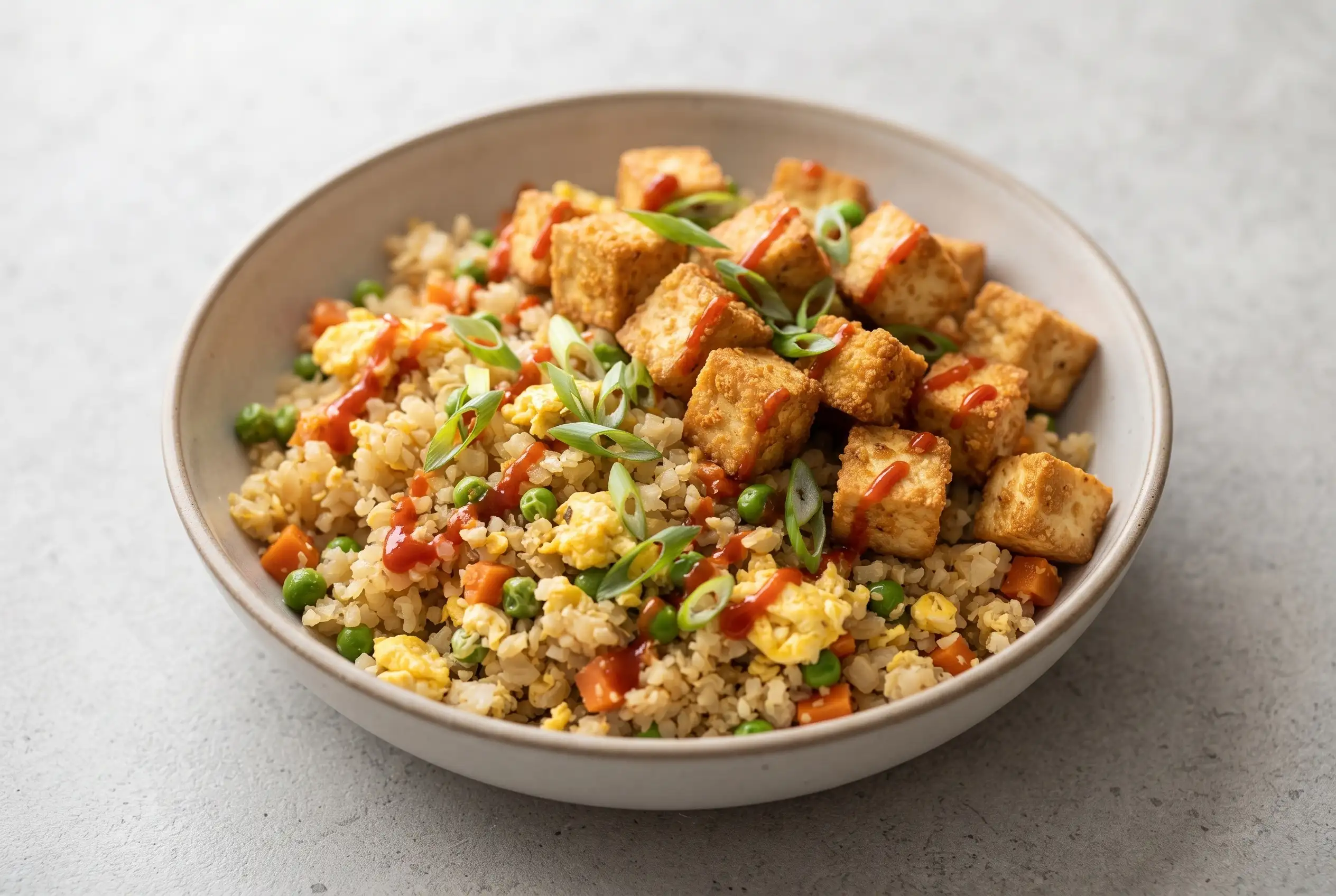
Cauliflower Fried Rice Builds a Better Weeknight Bowl
Cauliflower fried rice brings together crisp vegetables, savory seasoning, fluffy eggs, and golden tofu in a lighter bowl that still delivers the familiar comfort of fried rice. The combination works because each part is handled with a specific purpose: cauliflower creates the rice-like base, tofu develops a crunchy contrast, and quick pan cooking keeps the vegetables lively.
Many versions of cauliflower fried rice can become watery or soft because cauliflower naturally contains moisture. Turning the florets into small rice-sized pieces and cooking them briefly helps maintain a texture closer to the dish people expect. The pan needs enough heat for the ingredients to cook quickly without steaming together.
The Tofu Texture Choice Shapes Every Bite
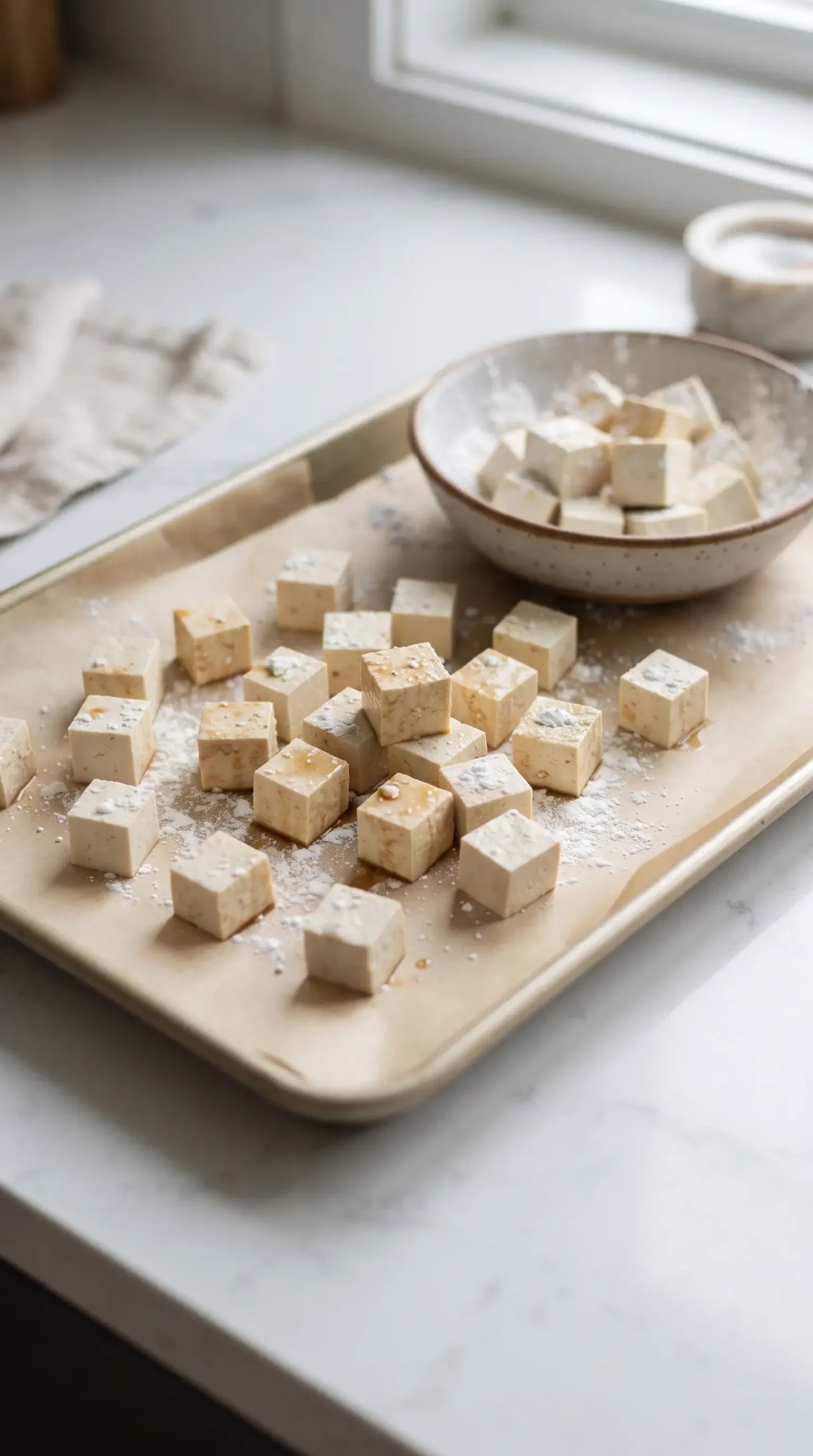
Extra firm tofu is the key choice for cauliflower fried rice with tofu because it can hold its shape after pressing, cubing, seasoning, and baking. The tofu pieces receive a coating of soy sauce and cornstarch before they roast, creating a surface that contrasts with the tender cauliflower and vegetables.
Crispy tofu cauliflower fried rice depends on the balance between the baked tofu and the softer ingredients added later. Adding the tofu after the pan-fried rice mixture is ready helps protect the browned exterior. The finished bowl keeps distinct pieces instead of blending into one soft texture.
Pressing tofu removes excess moisture, which allows the outside to brown more effectively. Cornstarch contributes a thin coating that helps the cubes develop a lightly crisp shell during baking. These small preparation decisions have a noticeable effect on the finished texture.
Cauliflower Rice Preparation Prevents a Watery Pan
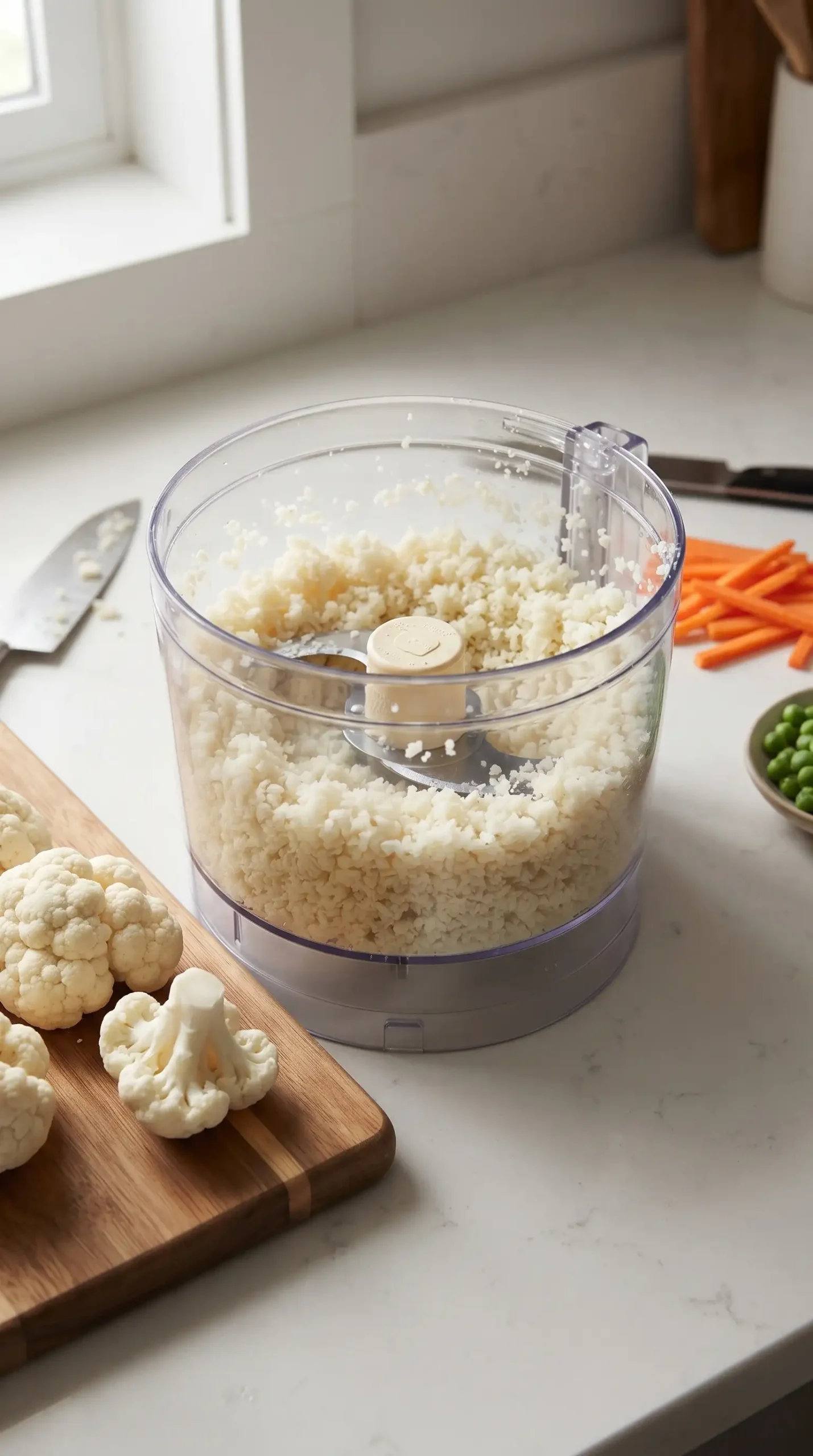
The cauliflower pieces need to become small enough to resemble grains while avoiding a mushy texture. Processing the florets in batches gives the pieces room to move and reduces the chance of unevenly sized chunks. A short pulse cauliflower until rice-like consistency is enough to create the right base for this dish.
| Cauliflower rice condition | Likely result in the pan | Helpful adjustment |
|---|---|---|
| Large uneven pieces | Bites feel closer to chopped vegetables | Pulse smaller batches until pieces resemble grains |
| Over-processed cauliflower | Texture becomes softer and releases more moisture | Stop blending once a rice-like size appears |
| Overcooked cauliflower | Fried rice loses its quick sautéed character | Cook briefly until barely softened |
A healthy cauliflower rice recipe works best when the cauliflower remains a supporting base instead of becoming a wet replacement for traditional rice. Fast cooking preserves the structure needed for a satisfying bowl.
Soy Sauce Ginger and Sesame Decisions Add Depth
The strongest flavor improvements come from using the seasonings at the right moments. Garlic and ginger begin the flavor foundation in the hot pan, while soy sauce and Sriracha are added with the cauliflower so their savory and spicy notes spread evenly.
Sesame oil is added near the egg step, giving the finished cauliflower fried rice a recognizable fried rice aroma without overpowering the other ingredients. Green onions added at serving provide a fresh contrast to the richer cooked flavors.
Vegetable Additions Keep the Bowl Flexible
Frozen peas and carrots fit naturally into this dish because they cook quickly alongside the aromatics and cauliflower. The vegetables can also be adjusted with other choices when available, provided they are suitable for a fast sauté.
- Frozen vegetables: Add convenient color and texture without requiring long preparation.
- Extra heat: Increase Sriracha at serving time for diners who prefer a stronger spicy finish.
- Fresh toppings: Use green onions to add brightness after cooking.
Egg Cooking Technique Protects the Fried Rice Texture
The eggs require their own space in the pan because they are meant to form small scrambled pieces throughout the cauliflower fried rice. Creating a well in the center allows the eggs to cook directly against the hot surface before being mixed with the surrounding ingredients.
Stirring raw egg throughout the cauliflower mixture changes the texture and can make the vegetables wetter. Keeping the eggs concentrated in the center until they set creates recognizable egg pieces that match the style of classic fried rice.
Heat Control Makes the Cauliflower Fried Rice Work
Cooking control matters most during the short sauté stage. The pan should be hot enough for the garlic, ginger, peas, carrots, and cauliflower to cook quickly. Extended cooking encourages moisture release and reduces the contrast between the ingredients.
- Prepare texture: Make sure the tofu and cauliflower are ready before the pan work begins.
- Watch the vegetables: Remove the mixture from prolonged heat once the cauliflower barely softens.
- Finish with balance: Combine the cooked egg, toppings, and tofu without crushing the crisp pieces.
Crispy Tofu Cauliflower Fried Rice Mistakes to Avoid
Several problems can affect crispy tofu cauliflower fried rice, but each has a clear cause connected to preparation or timing. Understanding these points makes it easier to adjust while cooking.
- Soggy tofu: Skipping the pressing step or using a wet surface can prevent the cubes from developing their browned coating.
- Soft cauliflower: Leaving the cauliflower in the pan too long can remove the texture that makes the bowl enjoyable.
- Broken egg pieces: Mixing eggs into the vegetables before they cook prevents the distinct scrambled texture.
Correcting these issues does not require extra ingredients. Paying attention to moisture, heat, and timing creates a stronger result from the same components.
Serving Ideas Highlight the Bowl’s Contrast
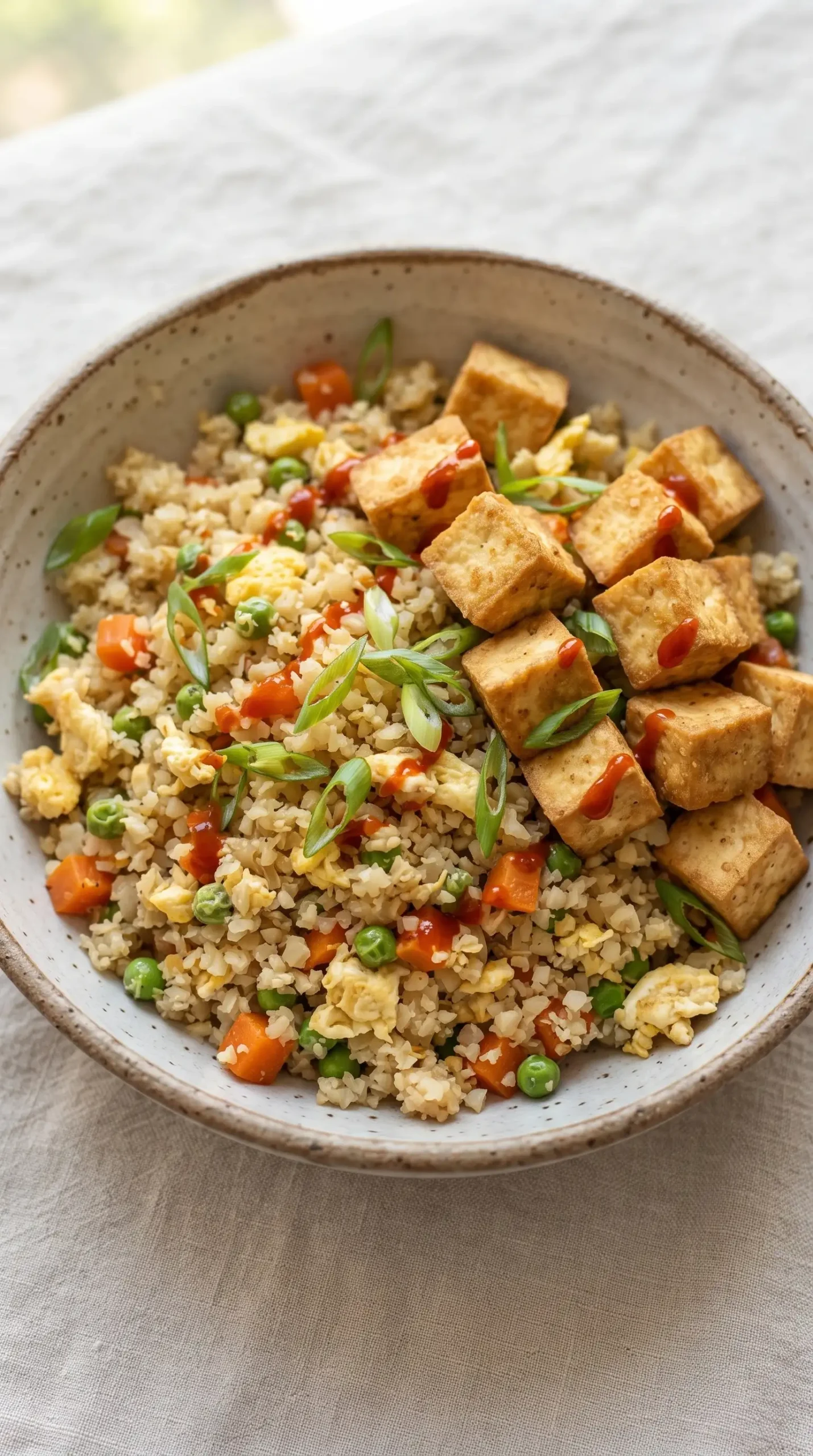
The finished bowl is most appealing when the different textures remain visible. Crispy tofu pieces, small egg curds, cauliflower grains, and vegetables each contribute something different, so serving should avoid compressing the mixture too much.
Extra Sriracha can be added at the table for individual spice preferences. Green onions work well as a finishing touch because they provide a fresh element after the warm sautéed ingredients are combined.
Storage Choices Preserve the Cooked Components
Cooked cauliflower fried rice can be stored when handled properly, but the textures may shift over time. The tofu coating is at its crispest when freshly baked, while the cauliflower and vegetables remain practical for reheating.
Keeping portions separated can help maintain more contrast. Warm the cauliflower mixture gently and add attention to the tofu pieces if you want to keep more of their baked exterior.
Variations Keep the Cauliflower Rice Recipe Adaptable
The basic structure allows adjustments while preserving the important cooking ideas. The tofu, cauliflower base, egg technique, and seasoning approach create a dependable framework for different preferences.
Possible changes should respect the quick cooking style of the bowl. Ingredients that release large amounts of liquid may require extra care because excess moisture can affect the texture of the cauliflower.
Healthy Cauliflower Rice Recipe Details Worth Remembering
A healthy cauliflower rice recipe succeeds when it focuses on texture as much as nutrition. The cauliflower provides a vegetable-based foundation, while tofu and eggs contribute satisfying elements that make the bowl feel complete.
Simple choices create the biggest improvements: properly prepared tofu, briefly cooked cauliflower, and carefully timed eggs. Those decisions make the finished dish more balanced and enjoyable.
Cauliflower Fried Rice Rewards Careful Texture Decisions
Cauliflower fried rice comes together most successfully when moisture and heat are managed with intention. The cauliflower should stay lightly cooked, the tofu should remain crisp, and the eggs should form their own pieces before everything is combined.
These texture choices turn a collection of simple ingredients into a bowl with contrast and character. The cooking process is quick, but the attention given to each stage determines how satisfying the result becomes.
Cauliflower Fried Rice Questions About Crispness and Preparation
Why does my cauliflower fried rice become watery?
Excess moisture usually comes from cauliflower that has been over-processed or cooked too long. Keeping the cauliflower pieces rice-sized and sautéing briefly helps preserve a firmer texture.
Can the tofu stay crispy after being mixed into the bowl?
The tofu has its strongest crisp texture when freshly baked. Adding it after the main cauliflower mixture is finished helps protect the browned coating from absorbing too much moisture.
How can I make the egg pieces stand out?
Cook the beaten eggs in the center of the hot pan before stirring them through the cauliflower mixture. This allows the eggs to form separate scrambled pieces.
Is cauliflower fried rice suitable for meal preparation?
It can be prepared ahead, though the tofu texture may soften during storage. Keeping tofu separate until serving can help maintain more of its crisp exterior.
Cauliflower Fried Rice with Crispy Tofu and Vegetables
Ingredients
Method
- Preheat the oven to 450°F (232°C). Combine the tofu with the olive oil, soy sauce, and cornstarch, then spread it on a parchment-lined baking sheet.
- Process the cauliflower florets in batches until the pieces have a rice-like consistency.
- Bake the coated tofu for 20-30 minutes, stirring halfway through.
- Heat olive oil in a pan over medium heat. Add the garlic, ginger, peas, and carrots and cook until the mixture is sizzling.
- Add the cauliflower, soy sauce, and Sriracha. Sauté for 1-2 minutes, just until the cauliflower barely softens.
- Create an open space in the center of the hot pan. Add the sesame oil and beaten eggs, then move the eggs gently with a spatula in the center until they are scrambled and cooked.
- Stir the cooked scrambled eggs into the cauliflower mixture.
- Serve the cauliflower fried rice with the crispy tofu, then top with more Sriracha and green onions.