
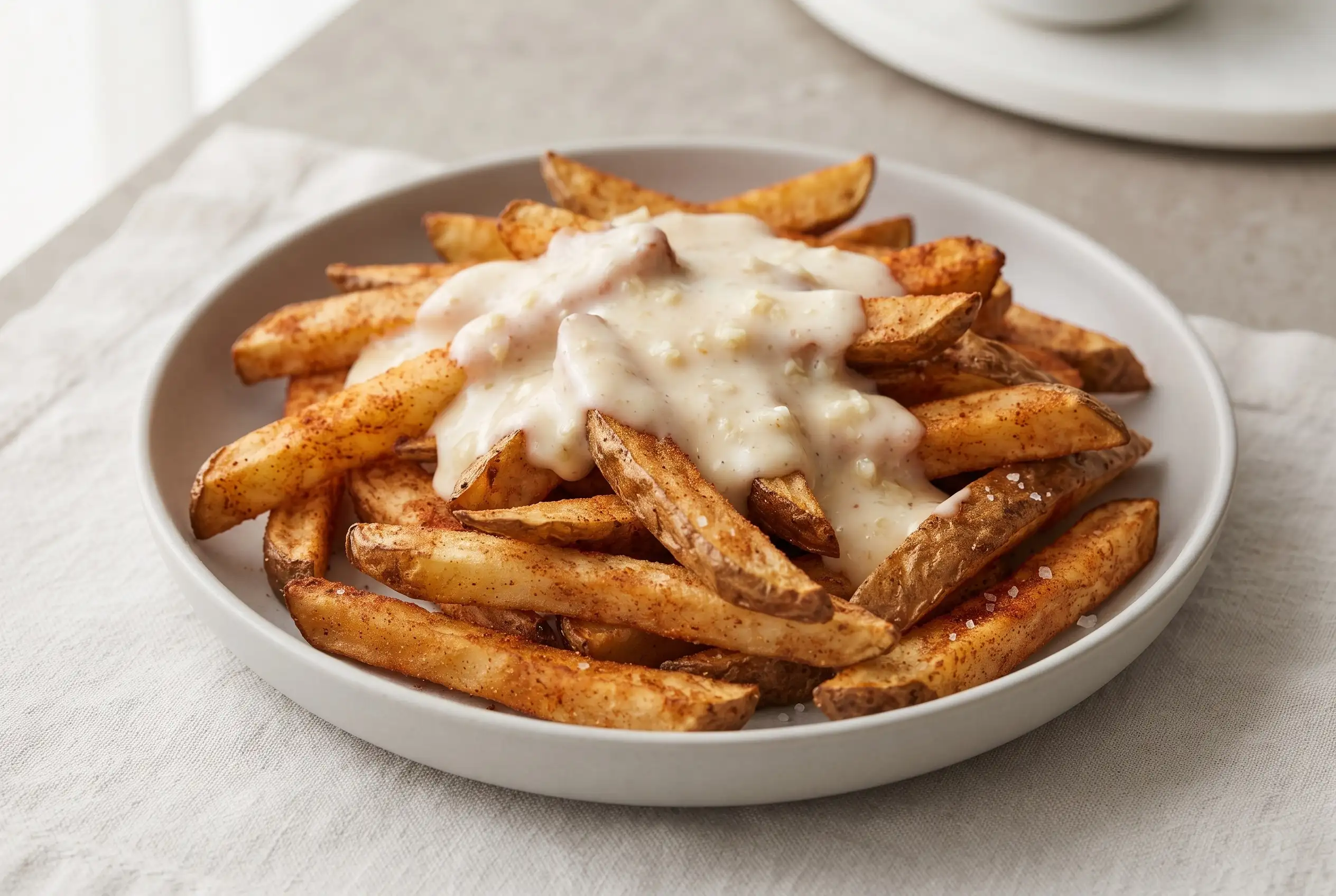
Spicy baked fries bring together crisp-edged potato strips, smoky heat, and a creamy garlic cheese sauce in one tray-friendly dish. The technique is a little different from ordinary oven fries: beaten egg whites coat the potatoes, the fries begin on parchment, and they are moved directly onto the baking sheets partway through cooking. Those details help create the dry, puffy exterior that makes the finished fries sturdy enough for a generous pour of sauce.
The seasoning blend balances chili powder and smoked sweet paprika with cayenne, while seasoning salt carries savory flavor throughout the potatoes. A light cream cheese sauce softens that heat with garlic and shredded cheese. The result is spicy baked fries with cheese sauce that work as a substantial snack, a side dish, or something to put in the middle of the table and eat while they are still hot.
Idaho potatoes give these fries the right interior texture
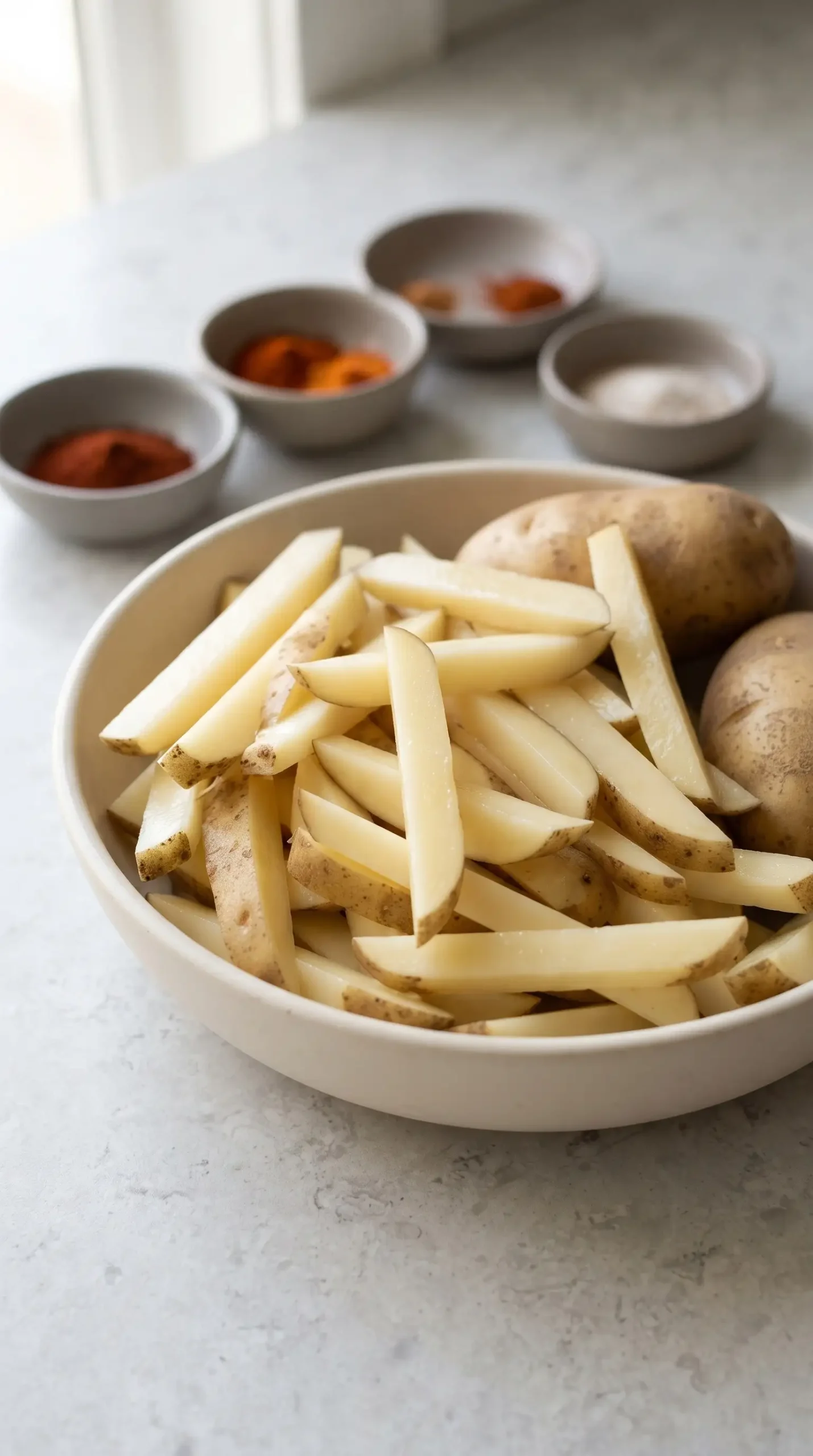
Medium Idaho baking potatoes are particularly useful here because their starchy flesh can become tender inside while the seasoned surface dries and browns in the oven. Cut the potatoes into strips about 3/4 inch wide, keeping the pieces reasonably consistent so they reach the desired texture at roughly the same time.
There is no need to peel the potatoes. A thorough wash followed by careful drying leaves the skin intact and removes excess surface moisture. Dry potatoes also make the egg-white coating easier to distribute without creating a watery mixture in the bowl.
Keep the strips substantial enough to retain a soft center. Very narrow pieces change the balance of the dish, giving you more browned surface and less of the tender potato interior that makes these fries satisfying with the rich sauce.
The egg-white coating changes how the seasoned surface bakes
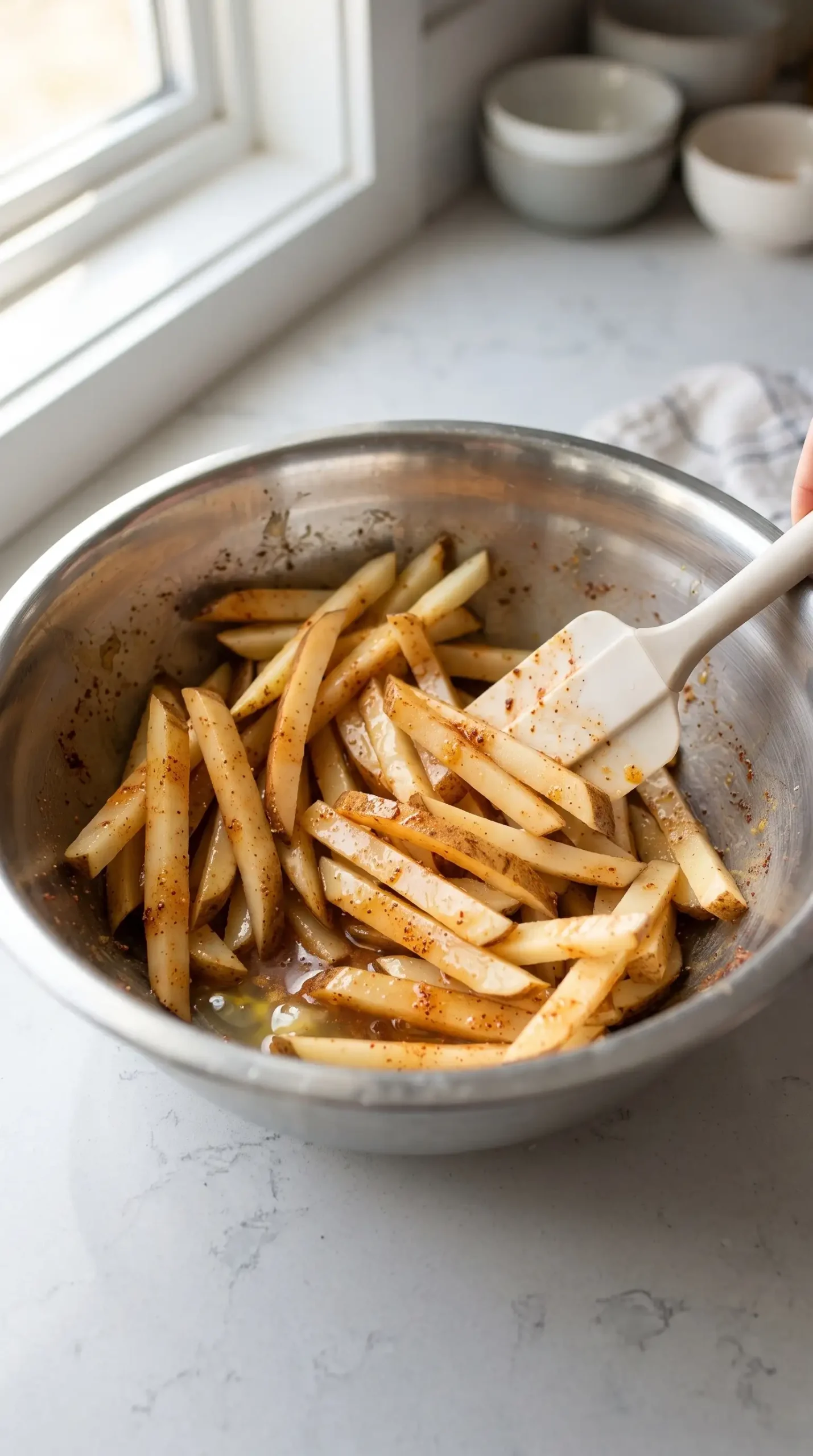
Beaten egg whites are more than a vehicle for the spices. They create the coating that dries around the potato strips as they bake, producing the characteristic puffy exterior. Pour the egg whites over the cut potatoes and stir before adding the seasoning mixture through the same bowl, making sure the strips are coated without leaving a pool of liquid at the bottom.
That loose liquid matters once the potatoes reach the baking sheets. Scoop the coated strips out of the bowl instead of tipping everything onto the parchment. The remaining egg whites can collect underneath the potatoes and interfere with the dry surface you want.
Smoked paprika and cayenne set the heat without flattening the flavor
The seasoning combination works because its heat arrives in layers. Chili powder supplies the broad savory-spiced character, smoked sweet paprika adds a rounded smoky note, and cayenne gives the blend its sharper edge. Seasoning salt reinforces the savory profile, while coarse sea salt can be adjusted to taste.
- Chili powder: provides the main warm, savory spice character.
- Smoked sweet paprika: brings smoke and a gentle sweetness that keeps the seasoning from tasting one-dimensional.
- Cayenne: concentrates the heat, so its presence is easier to notice than the larger-volume spices.
- Coarse sea salt: gives you a separate opportunity to adjust the finished potato seasoning.
For a milder plate, reducing the cayenne is the simplest adjustment because it changes the direct heat without removing the smoky paprika character. Keeping the other seasonings intact preserves the intended balance of the coating.
Direct contact with the baking sheet finishes the exterior
The parchment has a specific job during the early part of baking: it keeps the coated potatoes easy to handle and lets them release cleanly when you remove it. After that point, direct contact with the baking sheet helps the fries continue drying and browning. Slide the parchment away once the initial bake has set the coating.
Two baking sheets are useful when the potatoes need enough room to sit in a broad layer. Crowding makes it harder for moisture to escape and makes stirring more awkward, especially when the strips are still soft. Give the pieces room to remain recognizable as fries instead of pressing them into a dense pile.
During the later baking stages, stir gently. The potatoes should remain in strip form while their surfaces gradually become golden and dry. Frequent, careful turning helps expose different sides to the hot baking sheet without breaking the tender pieces apart.
Look for a dry, puffy surface before calling the fries done
Color alone is not the best cue for these spicy baked fries. The more useful signs are a puffy golden-brown coating that feels dry to the touch, with a little crispness outside and a soft interior. Because the strips are relatively thick, the inside can remain tender even after the exterior has developed substantial color.
Use the oven time as a guide, but let those physical cues decide when to stop. The supplied method uses repeated bake-and-stir intervals after the parchment is removed, allowing the surfaces to develop gradually instead of relying on one uninterrupted bake.
| What you see | What to do | What it indicates |
|---|---|---|
| Surface is pale and still moist | Continue baking before judging the texture | The coating has not dried enough |
| Coating is puffy and golden-brown | Check that the surface feels dry | The exterior is approaching the desired finish |
| Outside is lightly crisp while the center remains soft | Remove from the oven | The intended contrast has developed |
That combination of cues matters more than chasing an exact shade of brown. The sauce will add moisture and richness, so a properly dried exterior gives the fries enough structure to hold up after serving.
Gentle stirring protects the shape while the potatoes firm up
Freshly cut potato strips coated with egg whites are vulnerable early in the bake. Use a spatula or other broad utensil and turn them carefully rather than tossing the sheet aggressively. The shape becomes easier to preserve as the coating sets and the potatoes firm.
Small changes in handling have a visible effect here. A broken strip exposes more soft potato and can become difficult to turn without further damage. Keeping the pieces intact gives the finished plate a better mixture of crisp edges, tender centers, and sauce-catching surfaces.
Garlic cheese sauce should be loose enough to pour
The sauce begins with melted light cream cheese, then gets loosened with milk before garlic, seasoning salt, and oil are whisked in. Shredded cheese goes in after the mixture is smooth. The short microwave intervals are intended to warm and melt the components without turning the sauce into a stiff mass.
Consistency is especially important because the sauce is poured over fries instead of served as a separate dip. If it is too thick, it can sit in heavy clumps and cover the seasoned crust unevenly. A small additional splash of milk gives you control over how readily it flows across the potatoes.
The cheese choice can vary within the basic structure. A sharp white cheese works well with the smoky spices because its pronounced flavor remains noticeable alongside the chili and garlic. Another good-quality shredded cheese can be used when you prefer a different character, provided it melts smoothly enough for a sauce.
Microwave melting keeps the sauce quick without changing its purpose
Short microwave intervals make the garlic cheese sauce for fries convenient when the potatoes are already occupying your attention. Melt the cream cheese first, whisk in the liquid and seasonings, then add the shredded cheese and warm it again. Whisking between intervals helps distribute the heat and smooth the mixture.
A small saucepan can handle the same job on the stovetop. Use gentle heat and stir frequently so the dairy mixture stays smooth. The important control point is not the appliance; it is avoiding excessive heat while giving the cheeses enough warmth to blend.
Keep the sauce below a hard simmer while the cheese melts, since overheating can make cheese sauce grainy or cause it to separate. Gentle heat and gradual additions help the cheese melt into the liquid smoothly.
Common spicy baked fries mistakes start with excess moisture
Several problems can be traced directly to how the potatoes are coated and transferred. Leaving excess egg white in the bowl, crowding the strips, or judging doneness only by color can all work against the dry exterior that defines the dish.
- Dumping the bowl: leaves extra egg white on the baking sheet. Scoop the potatoes out so the loose coating stays behind.
- Skipping the parchment removal: prevents the later direct-contact stage from doing its job. Remove the parchment after the initial bake.
- Overcrowding the sheets: makes the fries harder to stir and gives moisture fewer opportunities to escape. Spread the strips across the available surface.
- Stirring roughly: can break the softened potato strips before their coating firms. Turn them gently and preserve their shape.
- Stopping at the first golden color: can leave the coating insufficiently dry. Look for the puffy, dry-to-the-touch surface and a soft center.
If the fries are browning but the coating still feels damp, keep the focus on surface dryness instead of simply increasing the heat. Continued baking with careful stirring gives moisture more time to leave while preserving the oven temperature specified for the dish.
Serve the cheese sauce while the fries are hot
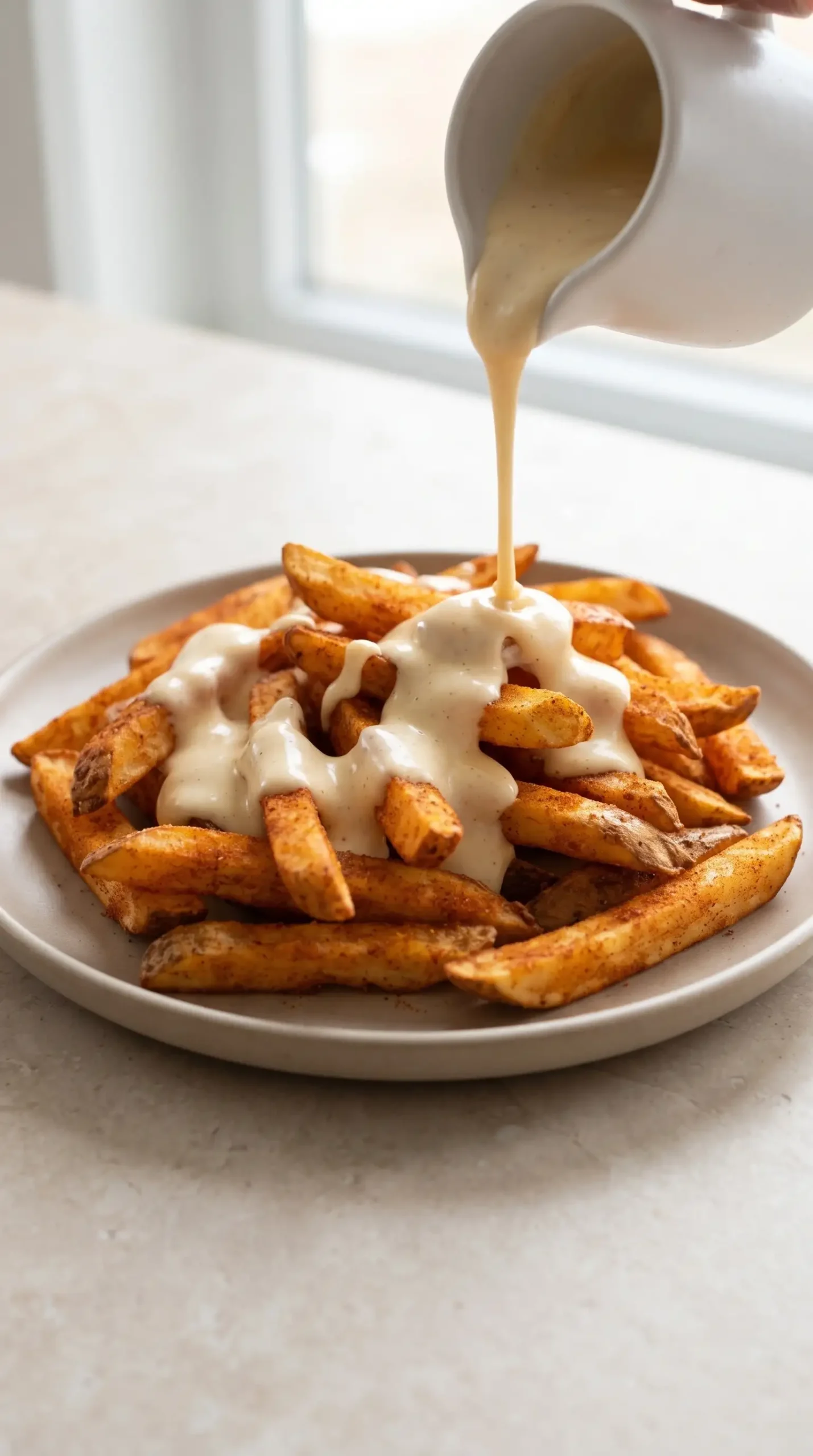
Warm fries and freshly melted sauce create the best contrast between the crisped exterior and creamy topping. Pour the sauce over the potatoes once they have reached their finished texture, distributing it across the pile so some seasoned surfaces remain visible. The fries can anchor a snack spread alongside side dishes when you are serving them as a shared plate.
For a more controlled eating experience, the sauce can also be placed alongside the fries for dipping. That approach keeps more of the exterior exposed and lets each person decide how much garlic cheese sauce reaches each bite.
Small adjustments can change the heat and sauce balance
Cayenne is the easiest place to adjust heat because it provides a concentrated spicy note. Reducing it leaves the chili powder and smoked paprika structure in place. If you want the finished dish to taste more intensely garlicky, the fresh garlic can be emphasized within the sauce without changing the potato seasoning.
Milk is the practical adjustment point for the sauce texture. Add a little more when the melted cheese mixture is too thick to pour smoothly. Add only enough to reach the consistency you want, since the sauce should remain creamy and flavorful rather than becoming thin and watery.
| Adjustment | Best use | Effect on the finished dish |
|---|---|---|
| Reduce cayenne | Lowering direct heat | Keeps the smoky seasoning profile while softening the spice level |
| Add a little more milk | Loosening thick sauce | Makes the cheese sauce easier to pour |
| Serve sauce separately | Protecting more crisp surface | Lets diners control the amount of creamy topping per bite |
The strongest variations preserve the central contrast: seasoned potato strips should retain a dry, lightly crisp exterior, while the cheese component supplies softness and richness. Changes that push both parts toward the same texture can make the dish feel less balanced.
Why these fries hold up under a creamy topping
The combination of thick potato strips, an egg-white coating, gradual baking, and direct contact with the baking sheet gives the exterior enough structure to support a rich sauce. The potatoes do not need to become brittle; they need a dry surface with a little crispness and a tender center.
That distinction explains why baked fries with garlic cheese sauce benefit from careful finishing. A soft potato center welcomes the sauce, while the browned coating provides the textural contrast that would disappear if the entire fry became moist and floppy.
Once the sauce is added, serve the fries promptly. The topping naturally softens the surface it touches, so the dish is most appealing when the contrast between creamy cheese and freshly baked potato is still pronounced.
Spicy baked fries are finished by the contrast between dry crust and creamy sauce
The key judgment comes at the point when the potato coating is puffy, golden-brown, and dry to the touch while the centers remain soft. That is the condition that lets the fries carry a pourable garlic cheese sauce without losing all of their texture.
Keep the potato pieces intact, remove excess egg white before baking, and use the later direct-contact stage to develop the exterior. Those choices do more to shape the finished bite than simply extending the oven time. The result is a plate where smoky heat, tender potato, crisped coating, garlic, and melted cheese each remain distinct.
Questions about crispness, heat, and garlic cheese sauce
Can I make the fries less spicy without changing the whole seasoning blend?
Yes. Reduce the cayenne first, since it is the most concentrated source of heat in the seasoning. Keeping the chili powder and smoked sweet paprika maintains the broader savory and smoky character while making the finished fries milder.
Why should I remove the parchment partway through baking?
The parchment helps the coated potato strips release easily during the early stage, but the later stage benefits from direct contact with the baking sheet. Removing it allows the fries to continue drying and browning against the hot surface.
What should I do if the garlic cheese sauce is too thick?
Whisk in another small splash of milk and warm the sauce briefly if needed. Add the milk gradually so you can stop as soon as the sauce becomes smooth and pourable without becoming overly thin.
Can I make the cheese sauce on the stovetop instead of in the microwave?
Yes. A regular saucepan works well for the same ingredients. Use gentle heat and whisk frequently, particularly after adding the shredded cheese, to keep the mixture smooth.
How do I know when the potato centers are done?
Check a thicker fry after the exterior has become puffy and golden-brown. The desired texture is lightly crisp outside with a soft interior, so the center should yield easily rather than remain hard or crunchy.
Can I serve the cheese sauce separately?
Absolutely. Serving it as a dip preserves more of the fries’ exposed crisp surface and lets each person control how much sauce goes onto each bite. It is also useful when the fries will sit on the table for a while.
Baked Spicy Fries with Garlic Cheese Sauce for a Snack
Ingredients
Method
- Preheat the oven to 430°F (221°C).
- Wash and dry the potatoes, then slice them into French-fry strips about 3/4 inches wide. Add the egg whites, seasonings, and potato strips to a bowl and stir until the coating is evenly distributed.
- Line each baking sheet with parchment paper. Use two baking sheets if needed. Transfer the coated potatoes onto the parchment with a scoop, leaving any extra egg white mixture behind in the bowl.
- Bake for 10 minutes, then remove the sheets from the oven. Lift away the parchment and place the fries directly on the baking sheets.
- Continue baking for another 5-8 minutes, then remove the fries and gently stir them while keeping the strips intact. Repeat the bake-and-stir process until the fries have a puffy golden-brown exterior that feels dry to the touch, with a lightly crisp surface and soft center. Total baking time is about 25-35 minutes.
- Microwave the cream cheese for about 30 seconds to soften it. Whisk in the milk, garlic, seasoning salt, and oil until smooth.
- Add the shredded cheese and heat for another 20-30 seconds. Whisk again until the sauce is smooth, adding more milk if needed to reach the desired consistency.
- Pour the garlic cheese sauce over the hot fries and serve.