
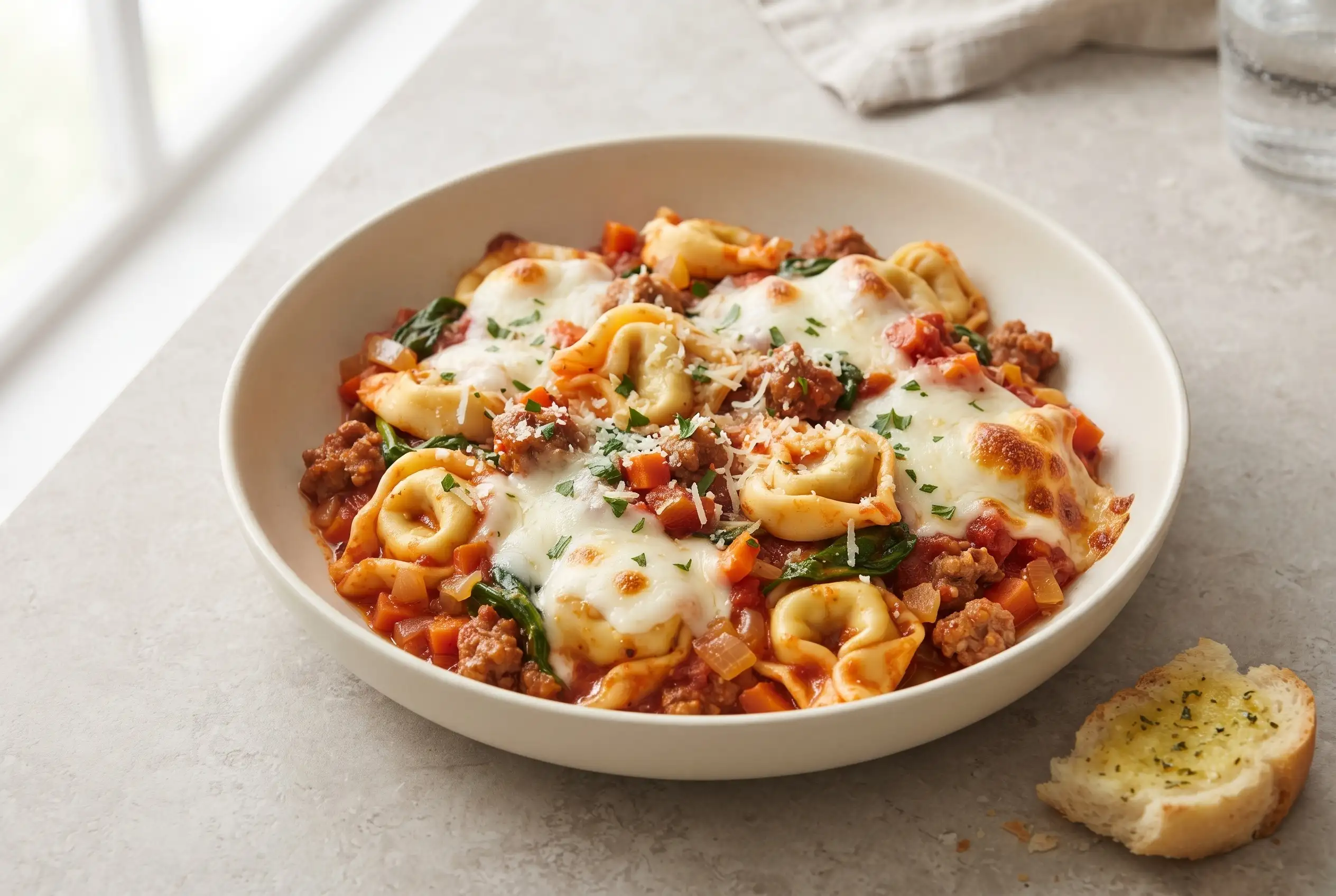
Baked tortellini turns a skillet of sausage, vegetables, tomato sauce, and cheese into a hearty dinner with very little fuss. Refrigerated cheese tortellini cooks directly in the saucy mixture, then the whole pan goes into the oven for a bubbling mozzarella finish. The result lands somewhere between a pasta bake and a cozy one-pan casserole, with browned sausage and tender vegetables throughout.
For a baked tortellini with sausage that cooks evenly, the important decisions happen before the cheese goes on: use a generously sized oven-safe pan, keep enough broth around the tortellini as it cooks, and let the sauce stay loose enough to finish the pasta without turning watery. A little attention to those cues gives the dish its best texture.
Browned sausage gives baked tortellini its savory base
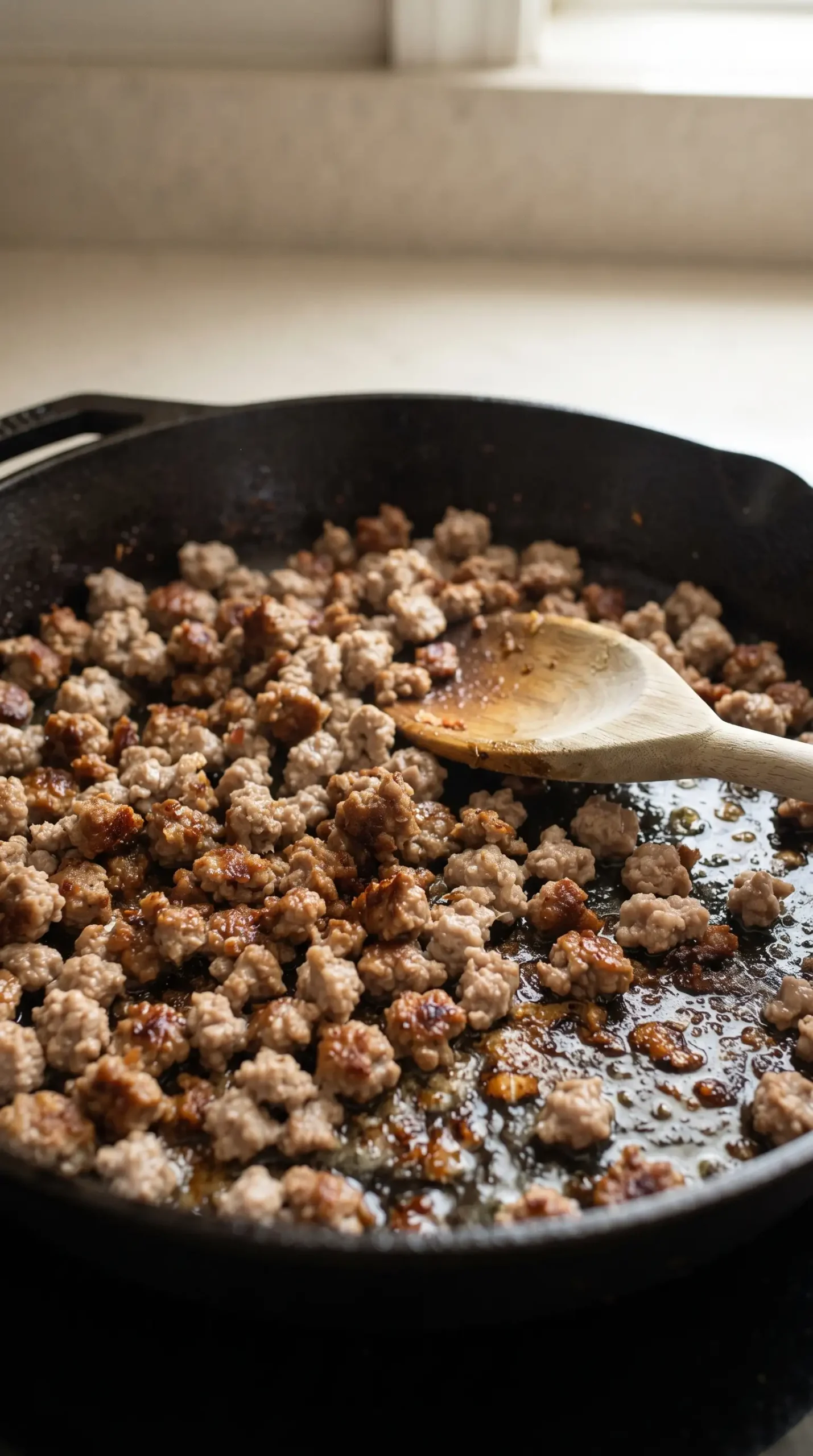
Ground Italian sausage should develop noticeable color before it leaves the pan. Those browned bits on the bottom are useful, because the vegetables will loosen them as they cook and carry that savory flavor into the tomato sauce.
Fennel, vegetables, and tomato keep the sauce balanced
Fennel seeds are especially useful here because they echo the seasoning commonly associated with Italian sausage without requiring a long list of additional herbs. Crushing them first helps distribute their flavor through the vegetables and sauce instead of leaving whole seeds concentrated in a few bites.
Carrots, celery, and yellow onion also give the tomato mixture more dimension. Cook them until fragrant and softened, with enough oil left in the pan to keep them moving. Their job is not to become deeply browned or caramelized; they need to soften enough that the finished dish feels cohesive.
Tomato sauce is the more immediately seasoned option, while canned San Marzano tomatoes leave you with a base that may need additional salt after the tortellini and broth are incorporated. Taste before the spinach and cheese go in so seasoning can be corrected while the sauce is still easy to adjust.
Refrigerated cheese tortellini needs room to cook
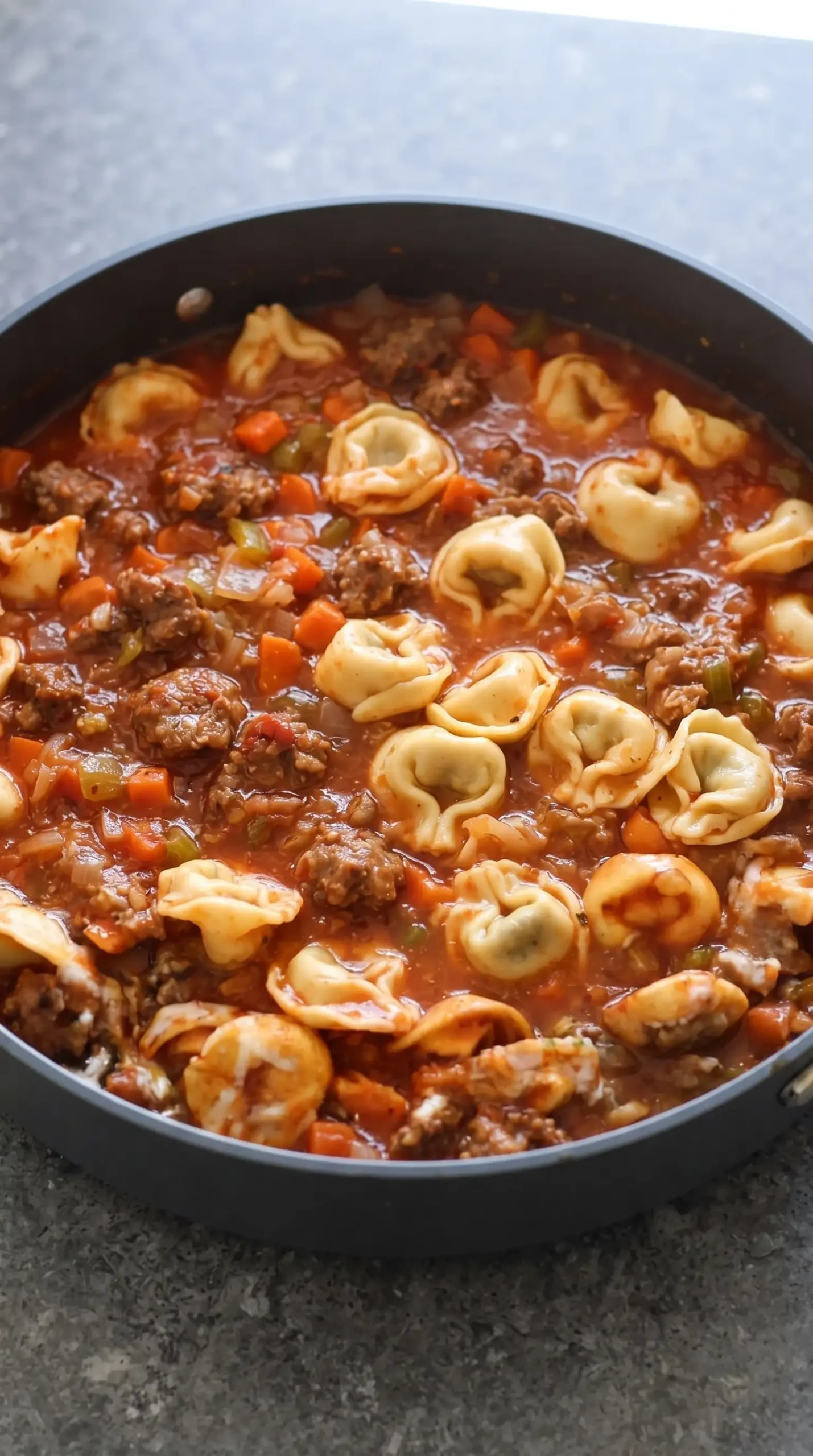
The tortellini is the part of baked tortellini that makes pan capacity especially important. Once sauce, vegetables, sausage, pasta, and broth are together, the pan can become crowded quickly. If everything is packed tightly, use a larger Dutch oven or similar oven-safe vessel so the pasta has room to settle into the liquid.
Keep the sauce loose while the tortellini cooks
Start with 1 cup of chicken broth alongside the tomato sauce and tortellini. The mixture should come to a low simmer rather than a vigorous boil. Gentle heat gives the refrigerated pasta time to cook while the sauce thickens around it.
Watch the surface as the tortellini cooks. If the pasta is absorbing liquid faster than expected, add some of the remaining broth. The right cue is practical: there should still be enough moisture for the tortellini to cook without leaving the pan flooded with thin liquid.
As the tortellini cooks, pasta starch helps sauce cling to the pasta as it absorbs the surrounding liquid. That is another reason to keep enough moisture in the pan without leaving the sauce thin.
A lid can help when the pan needs more time at low heat. Keep the cooking gentle and check the pasta instead of relying only on the clock, since the amount of tortellini and the shape of the pan affect how quickly the liquid is absorbed.
Once the pasta is cooked, stir in the torn spinach and let its leaves wilt into the hot sauce. At that point, the mixture should be saucy enough to support the mozzarella without looking soupy.
One-pan timing makes the sausage tortellini bake efficient
The useful rhythm is to brown the sausage first, soften the vegetables in the same pan, then return the sausage before the tomato sauce, tortellini, and broth go in. That sequence preserves the browned flavor while avoiding a separate pot for the pasta.
After the tortellini reaches the right stage on the stovetop, spinach goes in before the mozzarella. The short oven finish is there to melt and soften the cheese across the surface, not to perform the main cooking of the pasta.
Cheese should melt across a moist, settled surface
Half a cup of shredded mozzarella creates the stretchy, melted layer associated with a cheesy baked tortellini. Spread it over the surface after the spinach has wilted so the cheese stays on top instead of disappearing into the sauce.
The oven should be hot enough to melt the mozzarella quickly. An 8- to 10-minute bake at 375°F is sufficient for the cheese to become glossy and melted while the already-cooked tortellini stays tender.
Grated Parmesan belongs after the oven stage, when it can remain distinct on the hot mozzarella and sauce. Chopped parsley adds a fresh finish, while garlic bread gives the saucy edges of the pan an obvious companion for scooping.
Broth adjustments depend on what the pan shows
| What you see | What to do | Why it matters |
|---|---|---|
| The tortellini is simmering with plenty of liquid around it | Keep the heat low and continue cooking | The pasta has enough moisture to cook without diluting the sauce unnecessarily |
| The tortellini is absorbing the sauce quickly and the pan looks dry | Add some of the remaining chicken broth | Extra liquid keeps the pasta cooking while protecting the sauce from becoming too thick |
| The tortellini is cooked and the sauce still looks loose | Let it settle briefly before adding the mozzarella | The oven finish works best when the surface is saucy but not flooded |
Vegetable texture determines when the pan is ready for pasta
Look for softened carrots, celery, and onion before moving on. They should smell fragrant and no longer feel raw, because their brief sauté is the main opportunity to develop their texture before the tomato mixture surrounds them.
Common baked tortellini mistakes are easy to catch early
- Crowding the pan: If the tortellini barely fits before the broth is added, move everything to a larger oven-safe vessel.
- Boiling too hard: Keep the sauce at a low simmer so the liquid is not driven off before the pasta finishes cooking.
- Skipping the taste check: Canned tomatoes may need salt, so taste the sauce before adding spinach and cheese.
- Adding cheese too soon: Let the tortellini cook and the spinach wilt before covering the surface with mozzarella.
Spicy sausage changes the character without changing the method
Mild Italian sausage keeps the dish approachable, while a spicy version brings more heat to the same tomato, fennel, and cheese combination. The cooking process does not need to change simply because the sausage is hotter.
Either choice should be browned well before the vegetables enter the pan. If the sausage leaves more rendered fat than you want, drain some while keeping enough in the pan to help the vegetables cook and loosen the browned bits.
Garlic bread belongs beside the saucy edges
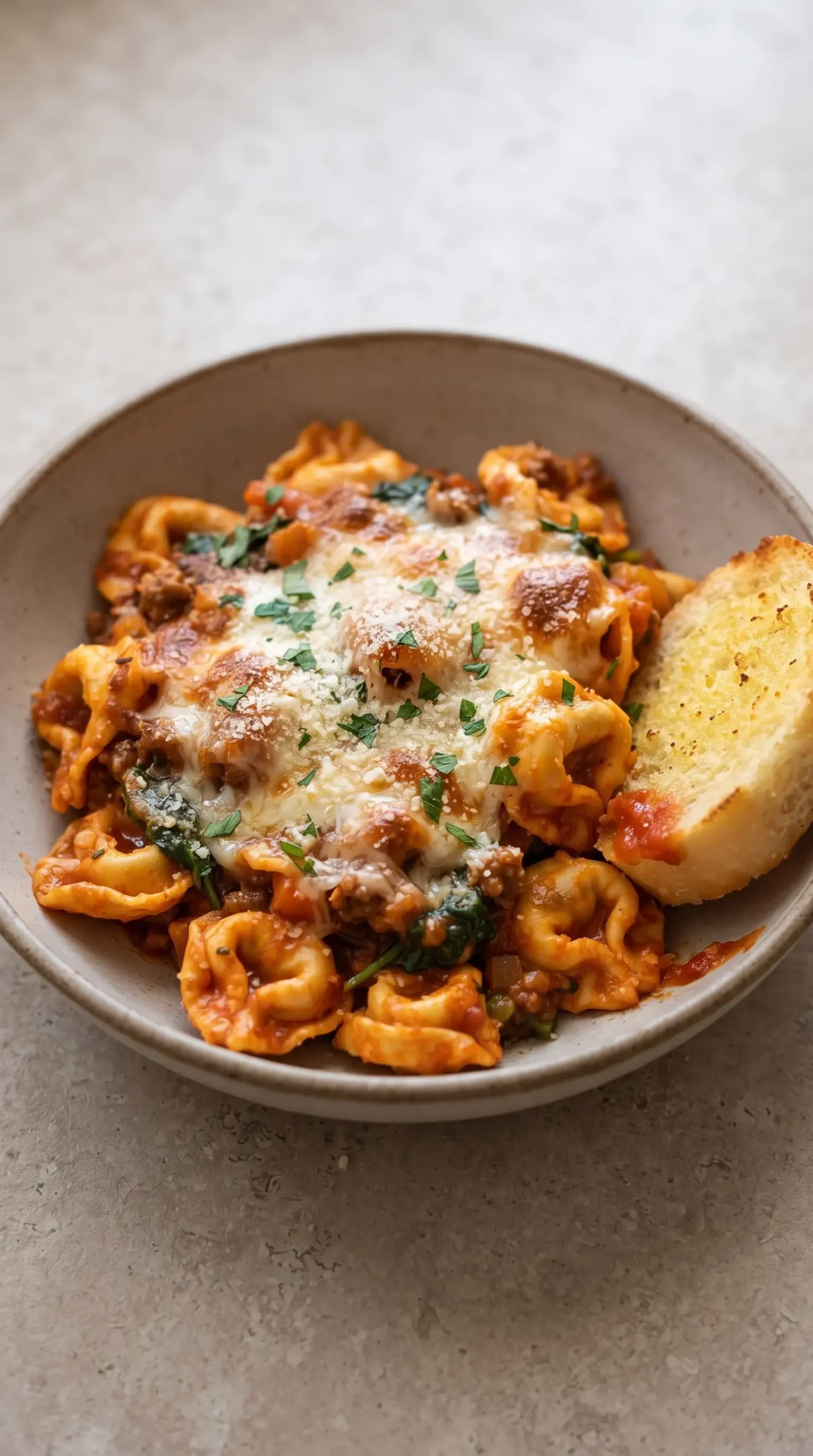
Garlic bread works especially well here because the finished pan has enough tomato sauce to cling to crisp, buttery pieces. Serve it alongside the tortellini so the bread can pick up sauce from the bottom and edges without disturbing the melted cheese across the top, with other side dishes kept simple so the saucy pasta remains the focus.
A short oven finish protects the tortellini texture
Once the stovetop cooking has done its work, the oven needs only to melt the mozzarella. Keeping that finishing stage brief helps preserve the tender texture of refrigerated cheese tortellini instead of asking the pasta to withstand a prolonged bake.
The best baked tortellini stays saucy before the cheese melts
The most important visual cue comes before the pan enters the oven: cooked tortellini should sit in a moist tomato mixture with enough sauce to keep the dish cohesive. When the pasta has absorbed nearly everything, a little more broth can make the difference between a lush bake and a dry one.
Once the spinach has wilted and the surface is ready for mozzarella, the rest is deliberately brief. A short bake melts the cheese, while Parmesan and parsley finish the pan without obscuring the browned sausage, vegetables, and tomato sauce underneath.
Baked tortellini questions about texture and timing
Can I use spicy Italian sausage?
Yes. Spicy Italian sausage can replace mild sausage without changing the cooking sequence. The fennel seeds, tomato sauce, mozzarella, and Parmesan will still work with the added heat.
How do I know when the tortellini has enough broth?
Look for a low simmer with visible moisture around the pasta. If the tortellini is absorbing the sauce quickly and the pan looks dry before the pasta is cooked, add some of the remaining broth and continue gently simmering.
What should I do if my skillet looks too full?
Transfer the mixture to a larger oven-safe vessel before the cooking space becomes cramped. The tortellini needs room to sit in the sauce, and a larger pan is preferable to forcing the full mixture into an overcrowded skillet.
Can I use canned San Marzano tomatoes instead of tomato sauce?
Yes. Use the canned San Marzano tomatoes in place of the jarred tomato sauce, then taste the mixture before adding the spinach because the canned-tomato version may need additional salt.
Why add Parmesan after the mozzarella?
Parmesan is used as a finishing cheese here, so sprinkling it over the melted mozzarella keeps its sharper flavor distinct instead of burying it beneath the main layer of cheese.
Baked Tortellini with Sausage and Mozzarella Cheese
Ingredients
Method
- Heat a very large oven-safe skillet over medium-high heat. Add the oil and ground sausage, break it apart with a wooden spoon, and cook until browned. Transfer the sausage to a bowl and remove excess oil from the pan, leaving about a tablespoon behind.
- Add the chopped carrots, celery, onion, garlic, and crushed fennel seeds to the skillet. Cook until the vegetables are softened and fragrant, adding a small amount of salt or oil if needed. Return the cooked sausage to the pan.
- Stir in the tomato sauce, refrigerated cheese tortellini, and 1 cup of chicken broth. Bring the mixture to a low simmer and cook for about 5 minutes to cook the tortellini. Add some or all of the remaining broth if more liquid is needed. Cover with a lid and continue cooking over low heat if needed.
- Taste the sauce and adjust seasoning if needed, especially when using canned tomatoes. Stir in the torn spinach and cook until wilted.
- Cover the surface with mozzarella cheese and bake the skillet at 375°F (190°C) for 8-10 minutes, or until the cheese is melted.
- Finish with grated Parmesan and finely chopped parsley. Serve with garlic bread.