
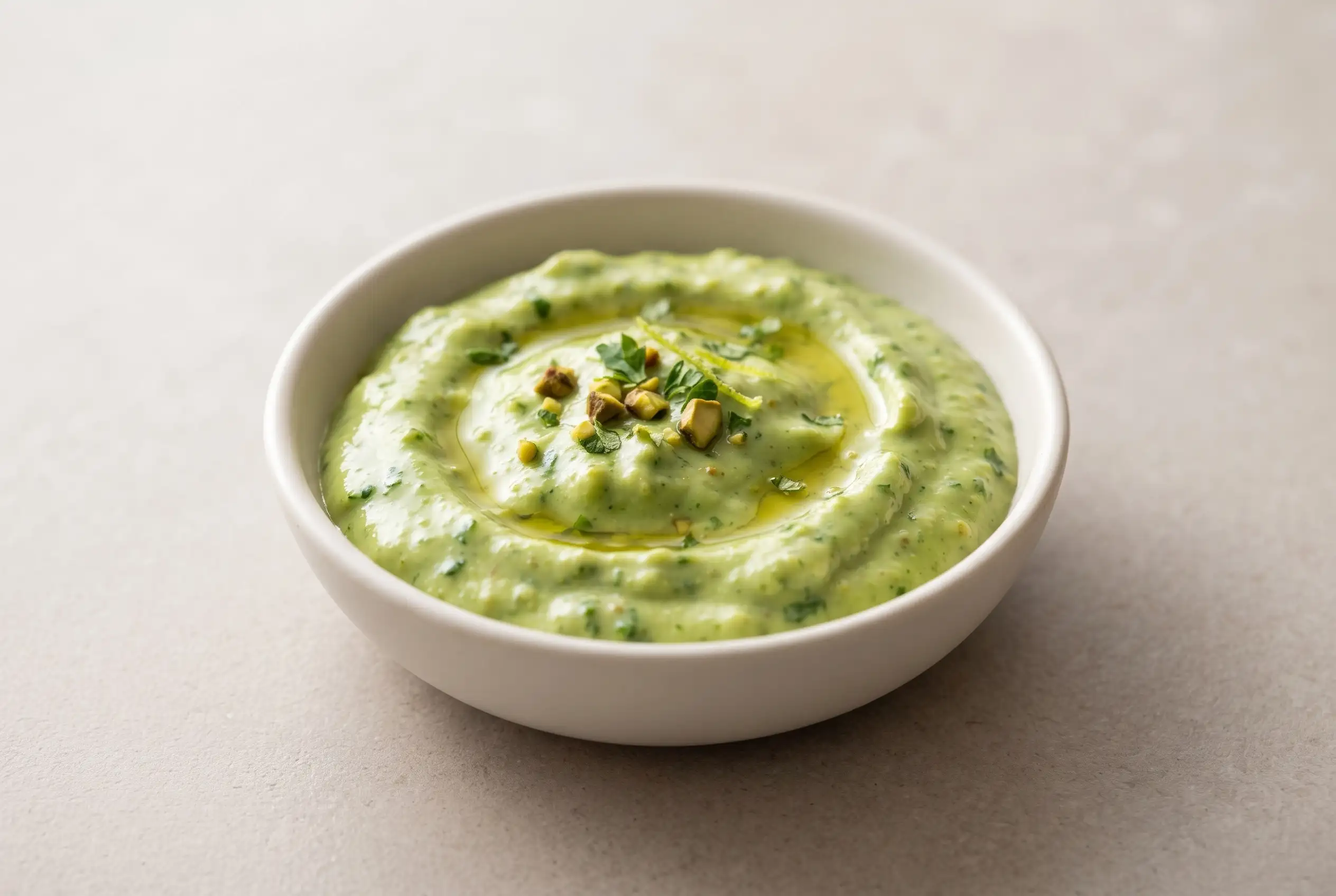
5 Minute Magic Green Sauce turns avocado, herbs, lime, garlic, jalapeño, olive oil, and pistachios into a bright, creamy green sauce with enough flexibility for dipping, spreading, dressing, or marinating. The food processor does most of the work, while a few small choices determine whether the finished sauce is thick and spoonable, loose enough to drizzle, or textured with little pieces of pistachio.
Avocado sets the body while lime keeps the sauce lively
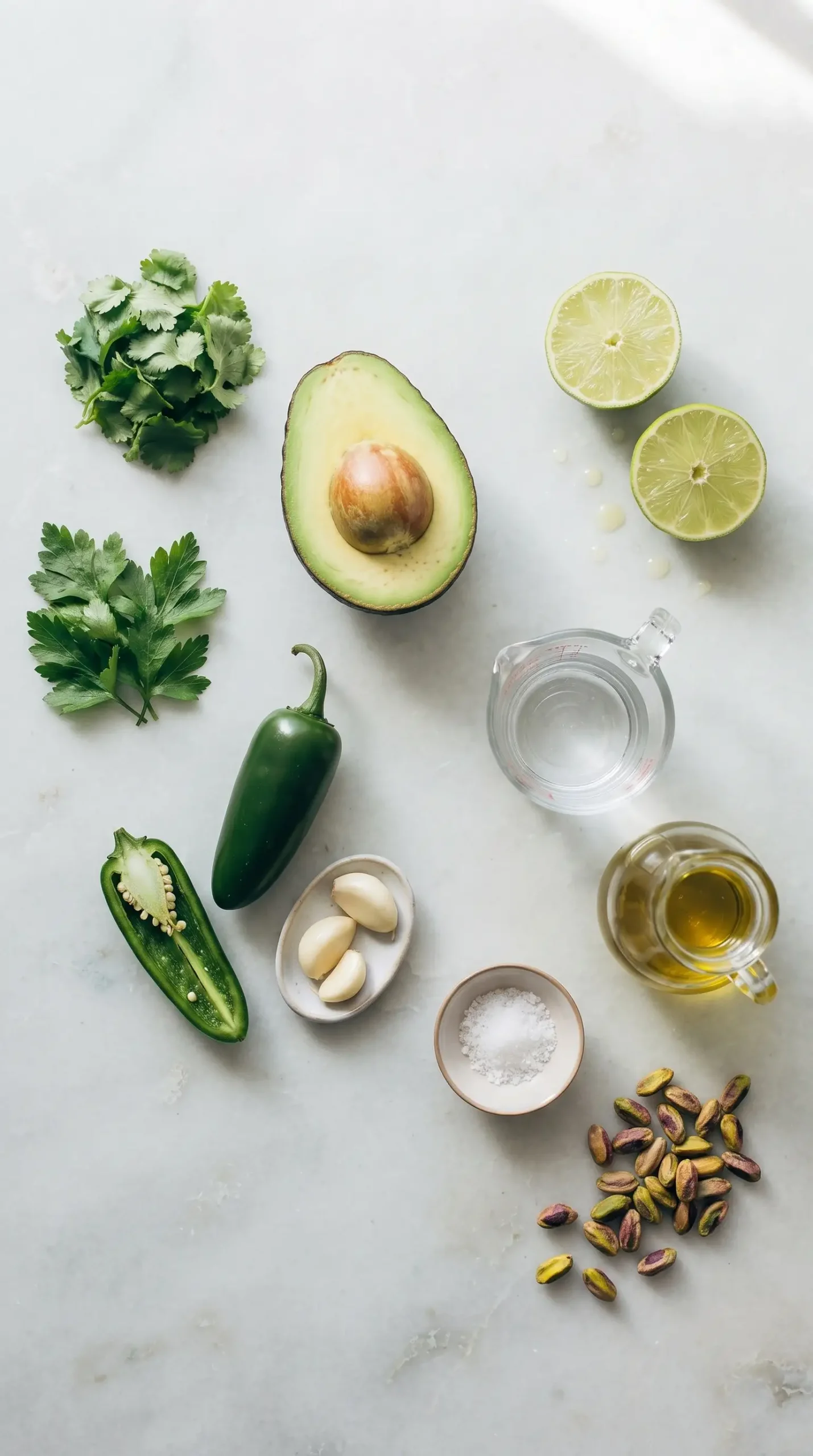
Avocado gives the sauce its creamy foundation, but its richness needs contrast. Lime juice supplies that sharp edge, and the amount can be adjusted to suit the character you want. One lime keeps the flavor bright; a second can make the sauce noticeably more citrus-forward and especially useful when serving it with foods that need a fresh lift.
Parsley and cilantro bring a fresh herbal character that makes the green sauce taste vivid instead of simply rich. Pack the leaves into the cup when measuring so the herb presence remains substantial after blending. Removing the jalapeño ribs and seeds keeps the pepper contribution more controlled while leaving its fresh chile flavor intact.
Pistachios play a different role from the avocado. They add substance and a nutty note, while their late addition lets you decide how much texture remains. Garlic and salt should support the herbs, lime, and chile without making the sauce taste one-dimensional.
A short ingredient lineup creates several useful textures
The same mixture can move from a thick dip to a pourable dressing with a surprisingly small adjustment. Water produces a lighter consistency without adding more richness, while olive oil makes the sauce looser and more luxurious. Add either gradually, since the sauce can move from spoonable to runny quickly once the ingredients are fully incorporated.
| Desired finish | Useful adjustment | Best application |
|---|---|---|
| Thick and creamy | Keep the mixture close to its original consistency | Dip or spread |
| Soft and spoonable | Add a small amount of water or oil | Spoon over cooked foods |
| Loose and pourable | Thin gradually with water or oil | Dressing or marinade |
Pistachios decide how much texture stays in the green sauce
Adding the pistachios after the other ingredients have been incorporated creates a useful point of control. A few short pulses can leave small nutty pieces throughout the sauce, while additional processing moves it toward a smoother texture. Neither finish is inherently better; the right stopping point depends on how you plan to serve it.
For a dip or spread, a little pistachio texture can make each bite more interesting. A dressing benefits from greater smoothness so it can flow easily across a salad or cooked vegetables. If the sauce is headed for a marinade, a mostly smooth consistency is generally easier to distribute evenly.
- Chunkier finish: Stop pulsing as soon as the pistachios are broken into small pieces.
- Mostly smooth finish: Continue pulsing until the nuts are thoroughly incorporated.
- Extra-loose finish: Thin only after the desired pistachio texture is reached.
Five minutes of active blending keeps the flavor fresh
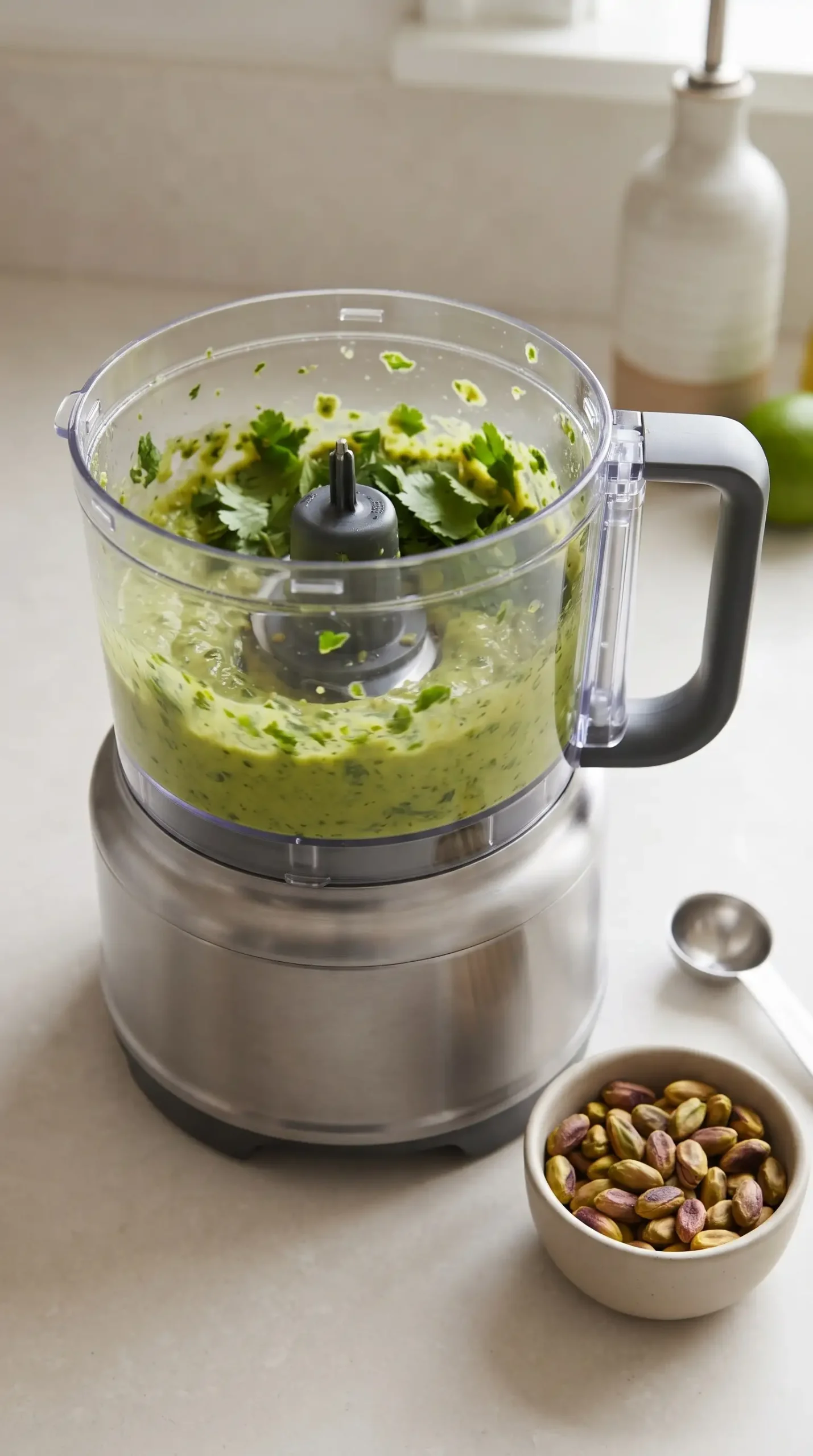
Cold, fresh ingredients are especially helpful here because there is no cooking stage to soften or develop their flavors. The herbs, lime, jalapeño, and garlic go directly into the food processor, so their raw freshness remains central to the finished sauce. That makes efficient processing more useful than prolonged blending.
Start by pulsing the ingredients without the pistachios until the mixture is incorporated. Short pulses give you a chance to check the texture and keep the mixture from becoming thinner than intended. Once the base is cohesive, add the pistachios and pulse again.
Watch the mixture during those later pulses instead of relying on a fixed number. Pistachios vary in how quickly they break down, and the desired texture is part of the recipe’s design. Stop when the sauce matches its intended use, then make any thinning adjustment.
Water and olive oil solve different thinning problems
Both water and olive oil can loosen the green sauce, but they change its character in different ways. Water lightens the mixture without contributing additional richness, making it a practical choice when you want a more fluid dressing. Olive oil preserves the sauce’s rich profile while making it easier to drizzle.
Add the thinning liquid in small increments and process briefly between additions. That gives you control over the transition from dip to dressing and avoids having to compensate for an overly loose mixture. If the sauce already feels rich enough, water is the more direct adjustment; if you want to preserve that richness, olive oil is useful.
A marinade needs enough fluidity to coat its intended food without becoming watery. For that use, stop thinning as soon as the sauce spreads readily. The herbs and pistachios should remain distributed through the mixture instead of separating into a thin liquid and dense solids.
One green sauce can cover three serving jobs
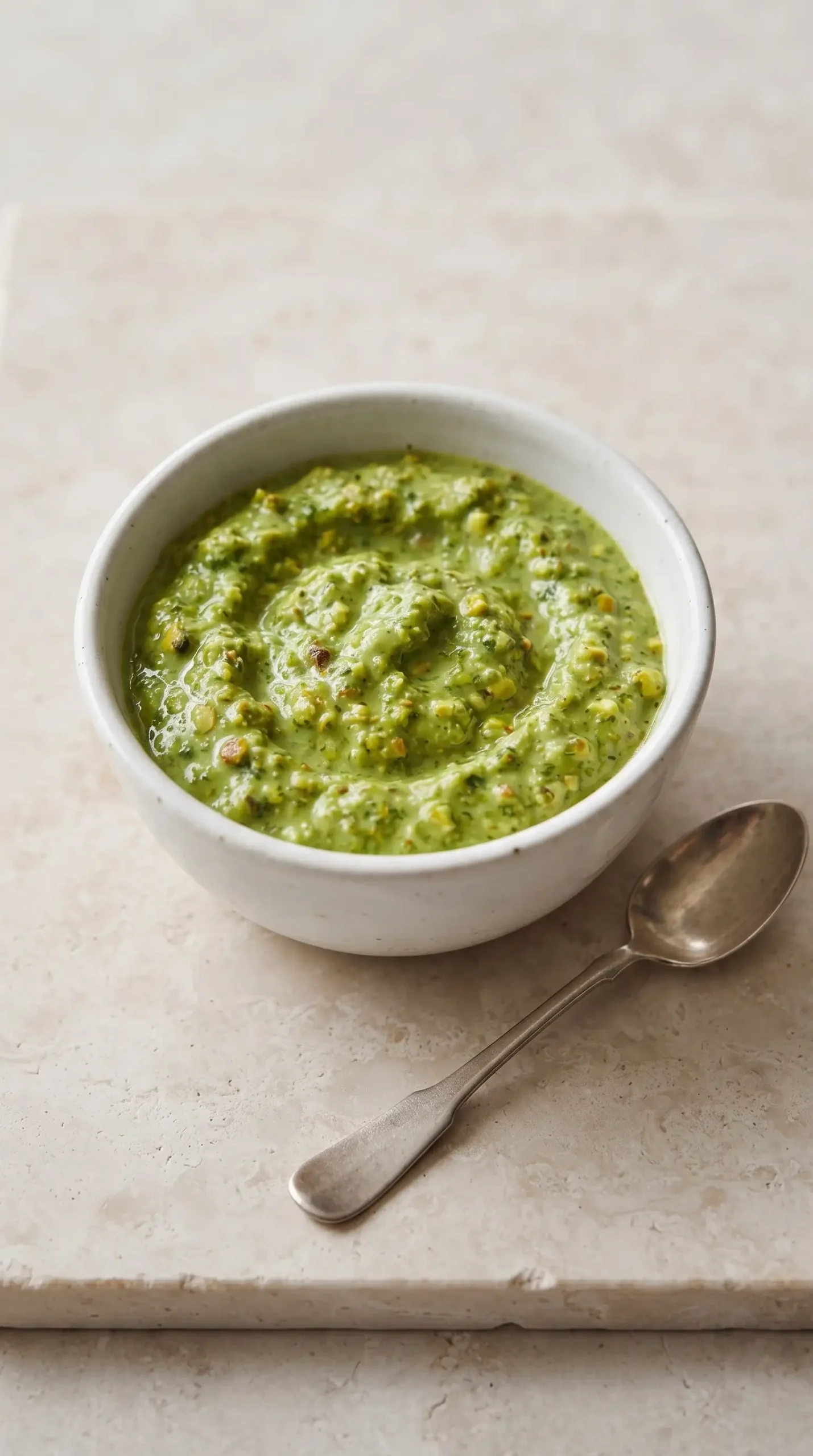
Thick avocado green sauce works naturally as a dip or spread, while a looser version can be spooned or poured over other foods. Its combination of citrus, herbs, chile, garlic, and nuts gives it enough contrast to function as more than a single-purpose condiment.
| Use | Texture to aim for | What to watch |
|---|---|---|
| Dip | Thick and creamy | Keep enough body for scooping |
| Spread | Spoonable and cohesive | Avoid over-thinning |
| Dressing | Loose and pourable | Add water or oil gradually |
| Marinade | Fluid but still substantial | Thin enough to coat evenly |
Jalapeño control keeps the avocado base balanced
Removing the ribs and seeds makes the jalapeño easier to manage in a sauce where raw pepper flavor is noticeable. The quantity is modest, so its contribution can remain fresh and lively without taking over the herbs, lime, or avocado.
Lime brightness is the easiest flavor adjustment
Lime juice is the most direct way to sharpen the finished green sauce. If the avocado and olive oil make the mixture feel heavy, more lime can bring the flavors into clearer focus. Add it with the ingredients at the blending stage, then taste after everything has been incorporated before deciding whether additional lime is useful.
A second lime is particularly appropriate when you want a more pronounced citrus character. The supplied ingredients allow either one or two, so the sauce can be tuned to the foods around it. A milder presentation can stop after one lime; a sharper version can take advantage of the extra juice.
Food-processor control prevents an overly loose finish
Short pulses are the most useful control throughout preparation. They incorporate the leafy ingredients and avocado efficiently while allowing you to see how quickly the mixture changes. Continuous processing can make it harder to judge the point at which the texture has become right for serving.
Keep the pistachios out until the first mixture is already incorporated. Their later addition creates a deliberate texture checkpoint and makes it easier to stop with some nutty pieces intact. Once the nuts are added, pulse only until the desired degree of smoothness appears.
Thinning belongs at the end because consistency is easier to judge after the pistachios have been processed. A sauce that looks thick before the nuts are incorporated may loosen as everything comes together, so reserve water or oil for the final adjustment.
Common green sauce mistakes have simple fixes
Overprocessing can erase the pistachio texture that makes the sauce more interesting because longer processing makes nuts smoother. Stop as soon as the nuts reach the consistency you want, especially if the sauce will be used as a dip or spread.
Adding too much thinning liquid at once can turn a thick avocado base into a dressing before you are ready for it. Work in small additions and briefly pulse between them. If the sauce becomes looser than intended, avoid adding more liquid and reassess its intended use; a thinner consistency may still suit a dressing or marinade.
Holding the pistachios back until the base is incorporated also matters. Blending everything together from the beginning removes a useful texture checkpoint. Separating that stage gives you more control over how smooth or textured the finished sauce becomes.
Fresh herbs need deliberate handling before blending
Parsley and cilantro are central to the sauce’s fresh character, so packed leaves provide a more dependable amount than loosely filled cups. Use the leaves as supplied and make sure they are ready to process efficiently with the avocado, lime, garlic, and jalapeño.
Nut substitutions can preserve the sauce’s structure
Pistachios are replaceable when needed, provided the substitute is a nut that can be pulsed into the sauce and contributes a similar kind of substance. The texture will vary with the chosen nut, so the stopping point should be based on what you see in the processor instead of an exact processing time.
A substitute also changes the flavor profile, which can shift how prominent the lime, herbs, or garlic seem. Taste after blending and make small flavor adjustments only when they are needed to restore balance. The avocado still supplies the creamy base, so the nut does not have to carry the entire texture.
Serving temperature and texture shape the best use
Use the finished sauce at the consistency that matches the food beside it. A thick spoonful works where a dip or spread needs to stay in place, while a loosened mixture can travel across a surface as a dressing or marinade.
- For dipping: Keep the sauce thick enough to cling to what you scoop.
- For spreading: Aim for a cohesive texture that moves easily under a spoon.
- For dressing: Add water or olive oil until it pours without becoming watery.
- For marinating: Thin just enough for an even coating.
Green sauce works best when texture follows the serving plan
The most useful decision comes after the pistachios are incorporated: decide what the sauce needs to do before adding water or oil. A dip needs body, a spread needs easy spoonability, and a dressing or marinade needs enough fluidity to move across or around food.
Avocado, herbs, lime, and pistachios give the green sauce enough character to handle those different roles, but texture determines whether that character is easy to use. Short pulses, a controlled pistachio finish, and gradual thinning keep the same fresh mixture adaptable without losing its balance.
Green sauce questions about storage, nuts, and texture
Can the green sauce be made without pistachios?
Yes. Another nut can be substituted, with the understanding that its flavor and texture may differ. Pulse the substitute to the consistency you want and judge the finished mixture by texture instead of assuming it will behave exactly like pistachios.
How can I make the avocado green sauce thinner?
Add a small amount of water or olive oil and pulse briefly, then check the consistency. Repeat only as needed until the sauce pours or spreads at the rate you want for its intended use.
Can I make the sauce less spicy?
The supplied jalapeño is already prepared with the ribs and seeds removed, which gives you a controlled chile contribution. For an even milder result, use less jalapeño when preparing the mixture, since the pepper is one of the ingredients responsible for its fresh heat.
Why add the pistachios after the other ingredients?
Late addition gives you direct control over texture. The base can become cohesive first, then the pistachios can be pulsed only until they are mostly smooth or left with more noticeable pieces.
Can I use one lime instead of two?
Yes. One lime is within the supplied range. Use the second when you want more pronounced citrus brightness, particularly if the avocado and olive oil make the mixture taste richer than you prefer.
What should I do if the sauce is too thick?
Thin it gradually with water or olive oil. Water makes the mixture more fluid without adding richness, while olive oil keeps the sauce richer as it loosens.
5 Minute Green Sauce with Avocado, Lime, and Pistachios
Ingredients
Method
- Add all ingredients except the pistachios to a food processor and pulse until the mixture is combined.
- Add the pistachios and continue pulsing until the sauce reaches a mostly smooth texture.
- Serve as a dip, spread, or sauce, or add more water or oil to thin the mixture for a dressing or marinade consistency.