
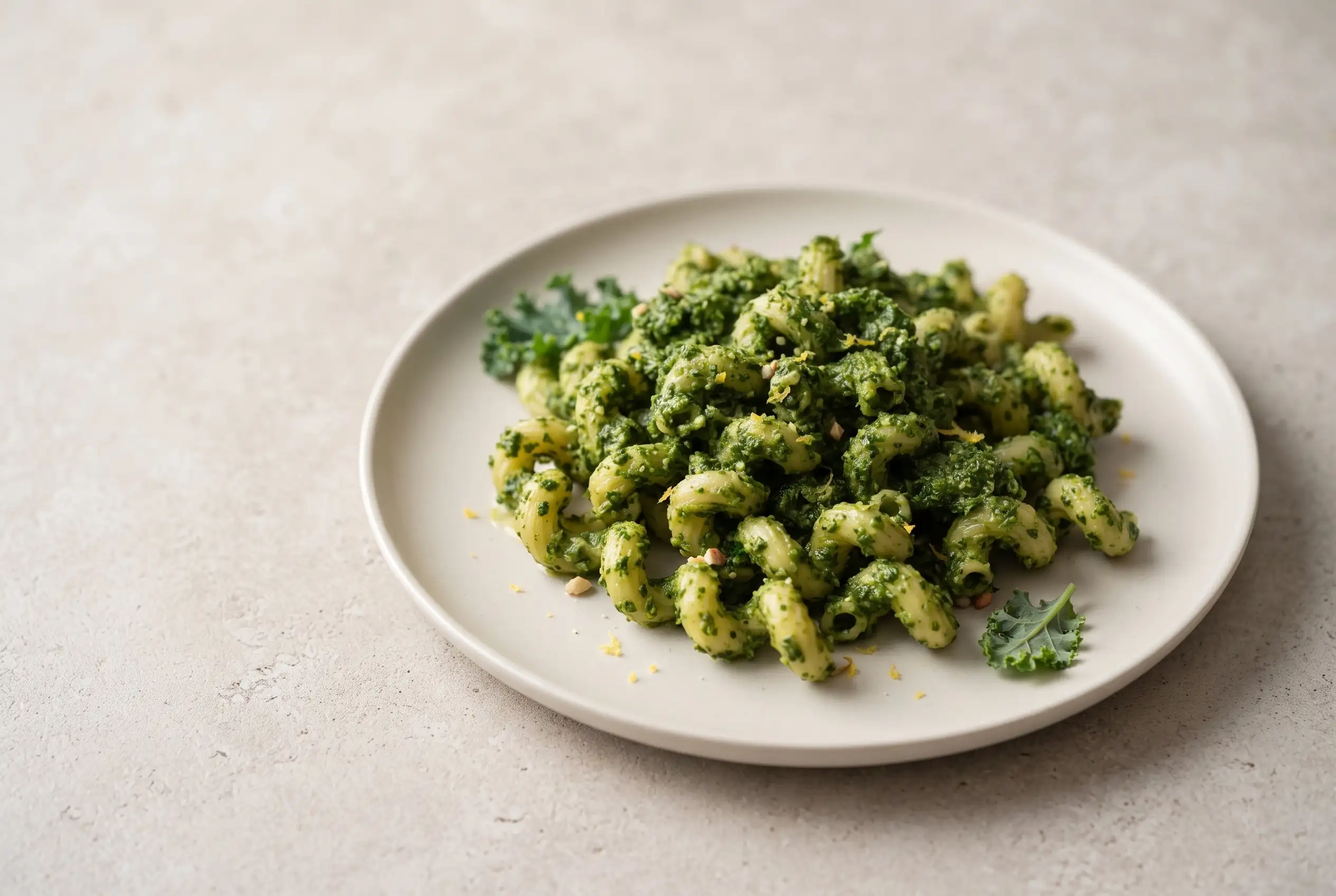
Vegan kale pesto turns a handful of sturdy greens, olive oil, lemon, garlic, and almonds into a bright, savory sauce in minutes. The combination is especially useful when basil is not on hand or when you want a pesto with a deeper green character and a little more flexibility. The food processor does most of the work, while the balance of lemon, salt, oil, and almonds keeps the finished sauce lively instead of heavy.
Why vegan kale pesto works without basil
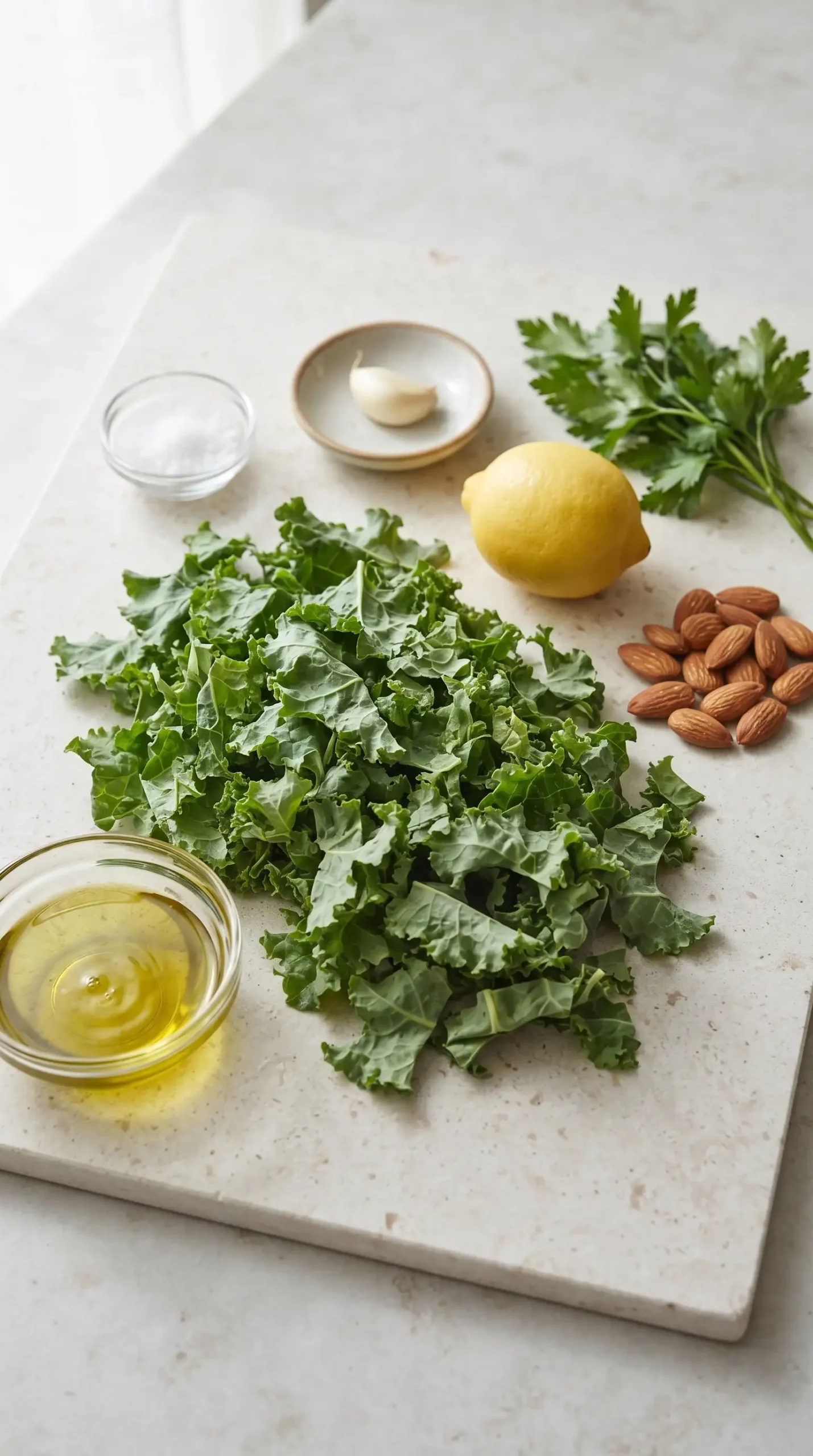
Kale and parsley create a fresh, green base with enough character to stand up to garlic and lemon. Kale brings body, while parsley keeps the mixture from tasting overly dense or earthy. Together they make a useful alternative to a basil-centered pesto.
Traditional pesto often depends on basil for its familiar aroma, but basil is not essential to the basic pesto structure. A leafy green, oil, something nutty, salt, garlic, and an acidic element can create the same kind of versatile sauce. That makes a kale parsley pesto particularly adaptable.
For anyone looking for a 5 minute vegan pesto, the absence of cooking beyond a brief food-processor session is part of the appeal. The finished mixture can move directly from the processor to pasta, pizza, crackers, eggs, salads, soup, or sandwiches.
The greens determine the character of the sauce
Use tender kale leaves with the stems removed so the processor can turn the greens into a cohesive sauce. Parsley brings a lighter herbal note, and the two greens can be adjusted according to what is available without changing the basic approach.
Almonds control texture as much as flavor
Raw almonds give the pesto substance and a mild nuttiness while also helping create a satisfying texture. The amount can be adjusted within the recipe’s range depending on whether you prefer a looser, more fluid sauce or a thicker spread.
Grinding time matters once the almonds enter the processor. A few pulses leave more visible pieces and give the pesto a rustic quality, while additional pulsing produces a smoother mixture. Watching the texture is more useful than relying on a fixed number of pulses because food processors vary in power.
- Coarse finish: stop as soon as the almonds are visibly ground for a more textured pesto.
- Middle texture: pulse until small almond pieces are distributed evenly through the greens.
- Smoother finish: continue briefly until the almonds are finely incorporated, taking care not to process unnecessarily.
Lemon keeps the green mixture lively
Lemon juice does more than add acidity. Its brightness helps balance the richness of olive oil and almonds, while its sharpness gives the greens a fresher impression. Add enough to keep the pesto tasting vivid, then adjust seasoning at the end if needed.
Olive oil needs room to blend
Olive oil forms the fluid base that allows the kale, parsley, garlic, and lemon to move together in the processor. A measured half cup gives the mixture enough lubrication to become a sauce instead of remaining a dry chopped green mixture.
Processing should produce a cohesive texture without turning the pesto into an excessively thin liquid. If the mixture looks uneven early in processing, pause and scrape down the sides so the greens can return to the blade path. This small intervention is especially useful with leafy ingredients that can cling to the processor bowl.
Once the almonds are incorporated, judge the pesto by how easily it can be spooned and spread. A thicker batch works well as a cracker spread or sandwich layer, while a more fluid consistency is convenient for coating pasta or spooning over other foods.
Garlic is easiest to balance before serving
Fresh garlic has enough intensity to remain noticeable in a small batch, so the single clove should be distributed thoroughly through the mixture. Processing it with the greens and lemon gives the flavor time to disperse rather than leaving isolated pieces.
Food-processor control changes the finished texture
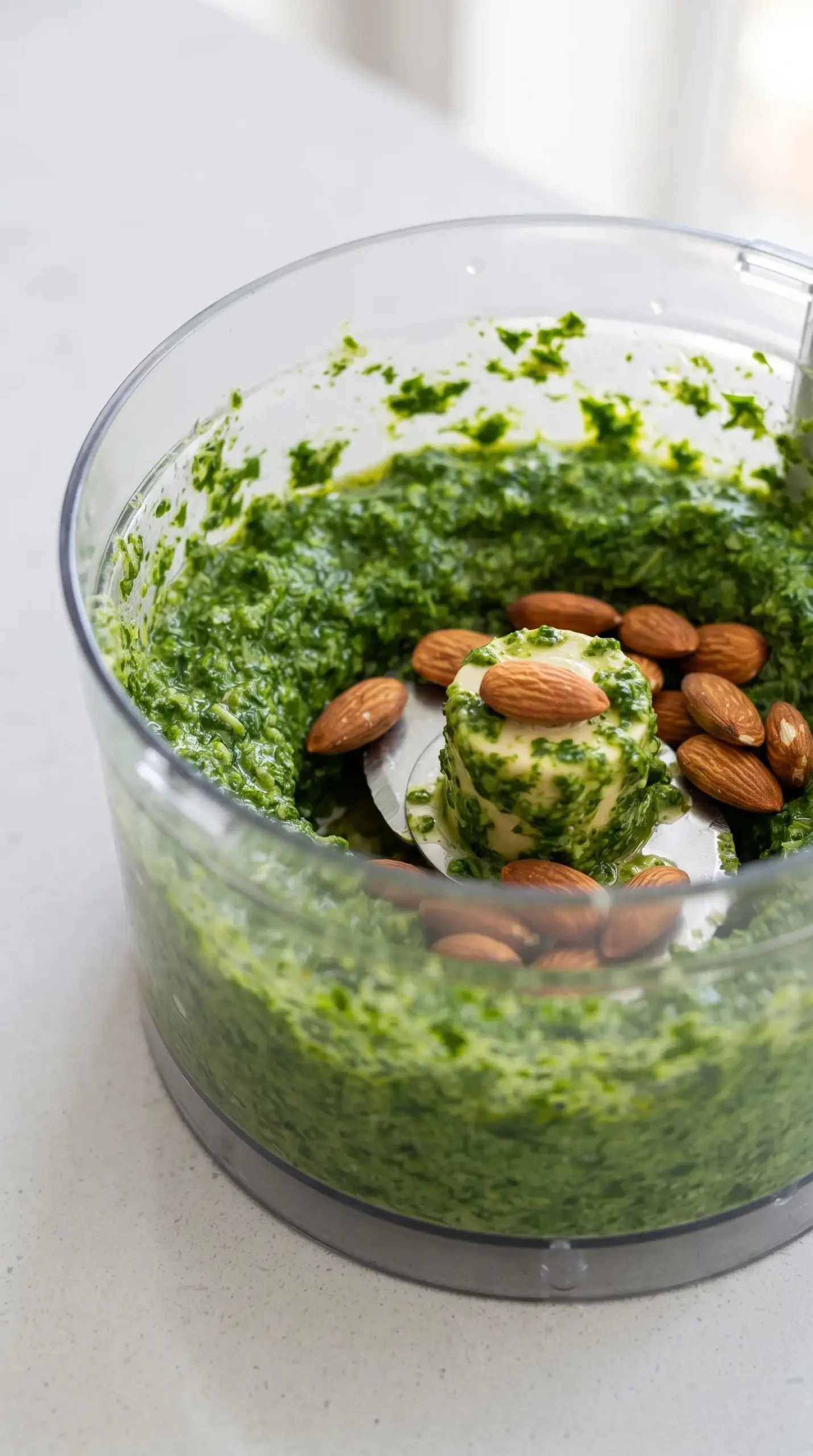
The first stage should reduce the leafy ingredients into a smooth green base before the almonds are added. Keeping the almonds for the later stage gives you control over their texture instead of automatically grinding everything to the same consistency.
Short pulses are useful when you want to monitor the mixture closely. Between pulses, inspect the sides and bottom of the bowl, especially if the greens have collected away from the blade. Scraping them inward helps the processor work evenly without requiring unnecessary extra processing.
A useful stopping point is a slightly coarse pesto texture rather than processing until the mixture becomes completely smooth. This keeps the sauce textured while still giving the greens and almonds enough processing to form a cohesive paste.
Texture also changes how the pesto behaves at the table. A finely processed batch blends easily into pasta or spreads across pizza, whereas a coarser batch gives crackers and sandwiches more noticeable nutty texture. Decide where you plan to use it before choosing when to stop.
Salt should be judged with the finished pesto
Salt sharpens the flavors of the greens, garlic, lemon, and almonds, but the ideal amount depends on how the pesto will be served. Taste after processing rather than assuming the initial seasoning is sufficient. A small adjustment can make the difference between a flat-tasting sauce and one with clear, distinct flavors.
These vegan kale pesto mistakes are easy to prevent
Overprocessing is one of the simplest ways to lose control of the texture. If the almonds are processed far beyond the desired point, the pesto can become much smoother than intended. Use short pulses and inspect the mixture as it changes.
Another problem comes from leaving kale stems in the mixture. Tough stems do not break down as readily as the leaves, so removing them before processing keeps the texture more consistent. The leafy portions are the useful part for a smooth sauce.
Uneven blending can also happen when greens stick to the bowl instead of reaching the blade. Stop the processor, scrape the sides, and continue in short bursts. This is a better correction than simply processing for a long uninterrupted stretch.
A flexible greens mix can suit the meal
Kale does not have to carry the entire green component. Parsley can share the mixture, and other tender greens can also be used when they fit the flavor you want. The supplied combination is intentionally flexible, so the sauce can adapt to what is already in the refrigerator.
For a softer green profile, a portion of kale can be replaced with spinach. Herbs can also shift the character of the pesto, although basil is not necessary for a satisfying result. The important consideration is keeping enough leafy material for the food processor to create a cohesive sauce.
| Green combination | Resulting character | Useful pairing |
|---|---|---|
| Kale and parsley | Fresh, green, balanced | Pasta, pizza, sandwiches |
| Mostly kale | Deeper and more robust | Soup, hearty sandwiches, crackers |
| Kale with some spinach | Milder and softer | Pasta, eggs, salads |
Spicy almonds can change the finished flavor
Seasoned or spicy almonds can replace raw almonds when you want the pesto to carry additional flavor without introducing another preparation. Because the nuts become part of the sauce, their seasoning will influence the finished balance.
Serve vegan kale pesto beyond pasta
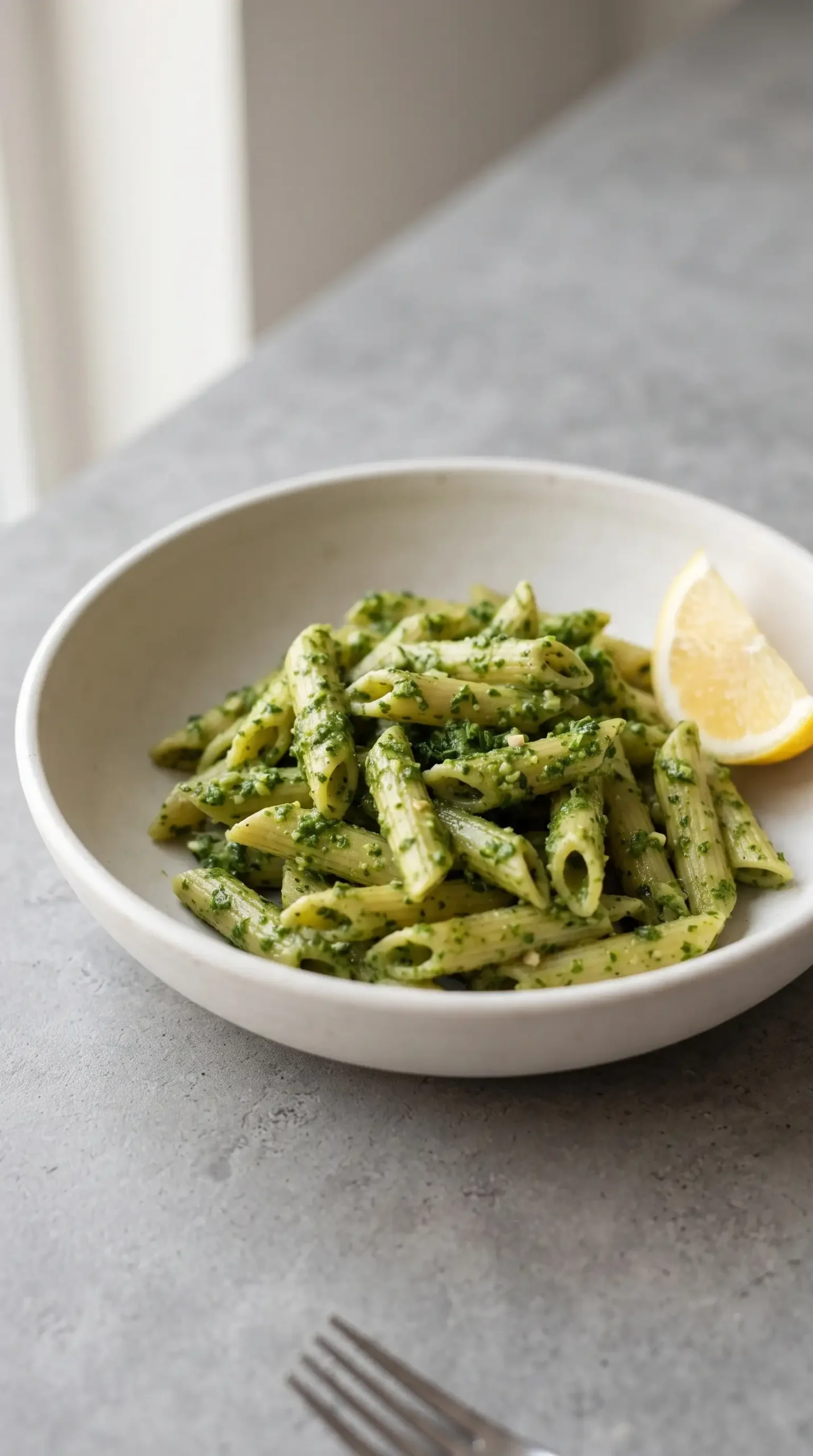
Pasta is an obvious destination, but the sauce has enough flexibility to work across several meals. Spread it on crackers for a quick snack, spoon it over eggs, or use a thin layer inside a sandwich. Its concentrated green flavor also gives salads and soup a useful finishing element.
Pizza provides another practical use because the pesto can be spread across the surface or added after baking, depending on the texture and flavor you want. A thicker batch can stay in place more easily, while a looser one can be drizzled or spooned across the top.
- For pasta: use the pesto as a coating so the sauce is distributed through the noodles.
- For crackers: keep more almond texture for a substantial spread.
- For eggs: add a small spoonful alongside or over the eggs for a bright herbal accent.
- For salads: loosen the pesto if needed so it can be distributed without weighing down the greens.
Storage depends on protecting the fresh flavor
Transfer leftover pesto to a clean, covered container and refrigerate it promptly. Keeping air exposure low helps preserve its fresh character and prevents the surface from sitting uncovered. Use a shallow container if that makes it easier to portion and cover.
Before serving leftovers, stir thoroughly because the oil can separate from the ground greens during storage. Taste again after chilling and adjust the seasoning only if needed. The pesto is most useful when its texture and flavor are brought back together before serving.
Five-minute preparation rewards small decisions
Speed comes from preparing the greens efficiently and letting the food processor handle the texture. Removing kale stems beforehand prevents tough pieces from entering the mixture, while adding almonds later gives you control over how coarse or smooth the pesto becomes.
That division of tasks keeps the process quick without sacrificing texture. There is no need to chase an exact visual standard; stop when the greens are cohesive and the almonds have reached the consistency that suits the intended use.
Vegan kale pesto stays adaptable at the table
A flexible pesto is useful because the same green base can move between very different foods. The kale-and-parsley combination gives enough structure for spreading, enough freshness for salads, and enough intensity to stand beside pasta or pizza.
Balanced greens and controlled texture make the pesto work
Fresh greens provide the foundation, lemon keeps the flavor bright, olive oil creates a cohesive sauce, and almonds determine much of the finished texture. The most important judgment happens during processing: stop when the pesto has the consistency that matches how you plan to serve it.
With that control in place, a vegan kale pesto recipe does not need basil or a complicated preparation to become useful. The combination can remain flexible, whether you prefer a rustic almond texture, a smoother spread, or a different balance of kale and parsley.
Vegan kale pesto questions about storage and texture
Can I make vegan kale pesto with only kale?
Yes. The supplied greens are flexible, so kale can make up the full green component. Expect a more pronounced kale character than a batch that includes parsley, and make sure the stems are removed before processing.
Why does my pesto look too thick?
A thicker texture can result from the amount of ground almonds or from processing the greens without enough fluid movement around the blade. If the pesto is difficult to spread, stir it thoroughly and add a small amount of olive oil gradually until it reaches the consistency you need.
Can I use different nuts instead of almonds?
Other nuts can work in a similar pesto structure, provided they have a flavor that suits the greens and can be ground to the desired texture. The distinctive character will change, so taste the finished mixture before making additional seasoning adjustments.
How can I make the pesto less garlicky?
If the garlic tastes too prominent, serve the pesto alongside a larger amount of pasta, vegetables, eggs, or another neutral food to spread its intensity. For future batches, reducing the garlic is the simplest way to create a gentler flavor.
Can vegan kale pesto be used as a sandwich spread?
Yes. A thicker batch is particularly convenient for sandwiches because the ground almonds give it body. Spread a modest layer over the bread and pair it with ingredients that benefit from the pesto’s lemony, herbal flavor.
What should I do if the pesto tastes flat?
Check the seasoning after processing. Lemon provides brightness and salt helps the other flavors register clearly, so a small adjustment of either can sharpen the finished pesto. Taste between adjustments to avoid masking the greens or garlic.
5 Minute Vegan Kale Pesto with Lemon and Raw Almonds
Ingredients
Method
- Place the kale, parsley, olive oil, salt, garlic, and lemon juice in a food processor and process until the mixture becomes smooth.
- Add the almonds and pulse until they reach your preferred texture.
- Serve the pesto with pizza, pasta, crackers, eggs, salads, soup, sandwiches, or other desired pairings.