
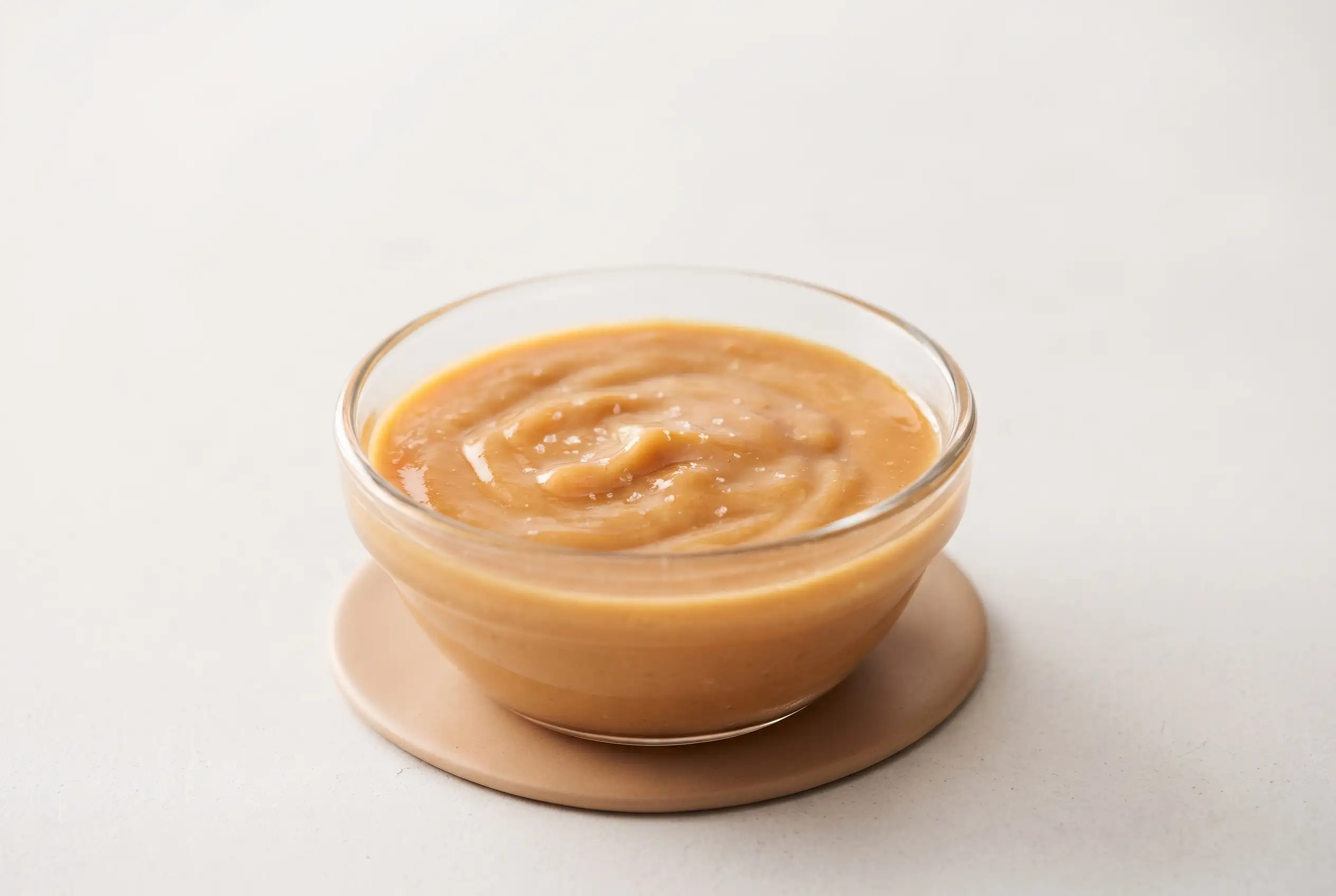
5 minute vegan caramel sauce turns coconut oil, real maple syrup, and almond butter into a glossy, spoonable topping with a rich caramel-like flavor. A little vanilla, cinnamon, or sea salt can shape the finish, while the short preparation keeps the sauce practical for toast, fruit, desserts, and quick snacks.
Maple syrup sets the flavor direction
Real maple syrup does more than provide sweetness here. Its distinctive flavor gives the sauce its caramel-like character without requiring granulated sugar or a stovetop sugar syrup. Because the syrup is paired with coconut oil and almond butter, the finished vegan caramel sauce has a rounded flavor that works especially well with warm breakfasts and simple desserts.
Almond butter controls the creamy finish
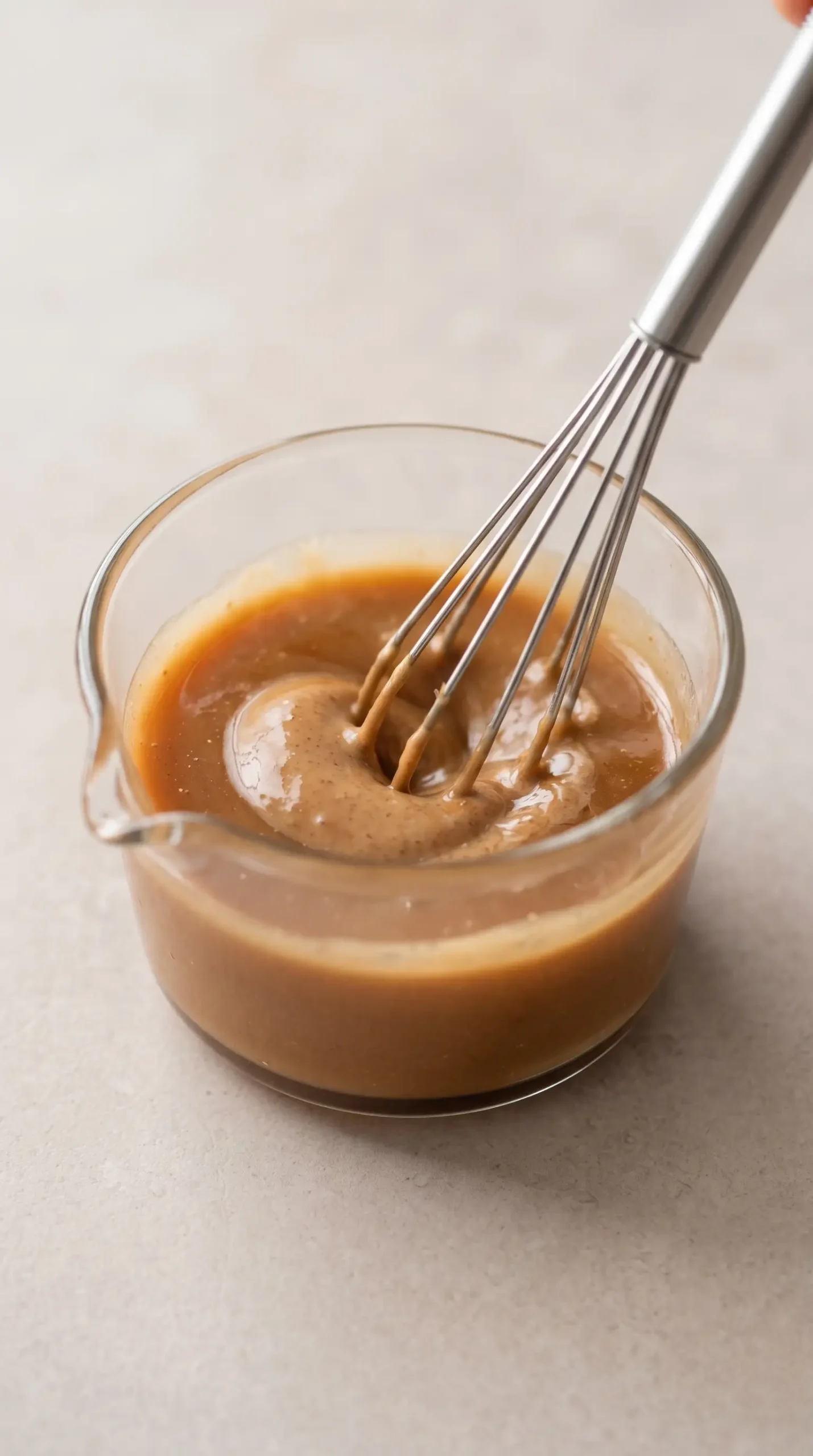
Almond butter is the ingredient that turns the melted mixture into something thick, creamy, and spoonable. Smooth almond butter is especially convenient because it can be whisked into the warm liquids quickly. Natural almond butter may separate in its container, so stirring it thoroughly before measuring helps keep the mixture consistent.
The amount of whisking matters more than prolonged heating. Once the almond butter is incorporated, the sauce should look cohesive and very smooth. A few small streaks at the beginning are normal, but continuing to whisk for about 30 seconds gives the mixture time to come together.
For a different flavor direction, cookie butter can replace the almond butter. That substitution changes the character of the sauce substantially, bringing a spiced-cookie flavor to the same basic preparation. Check the label of the particular cookie butter you use if vegan ingredients are important to you, since formulations can vary by brand.
Warm coconut oil keeps the mixture fluid
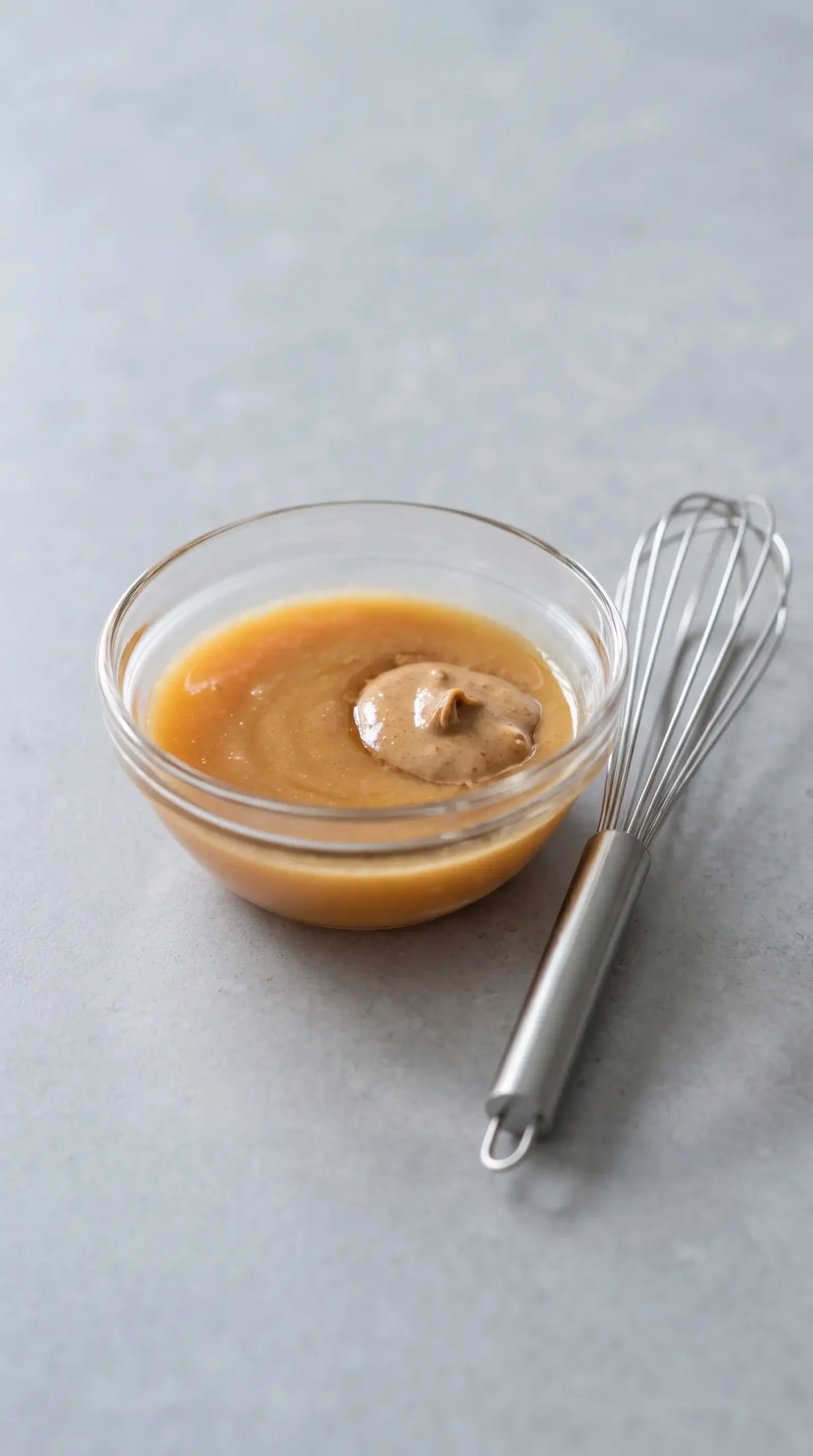
Coconut oil becomes liquid when warmed, which makes it possible to combine it quickly with maple syrup and then whisk in the almond butter. Keeping the mixture gently warm during preparation helps the ingredients blend smoothly. If the sauce cools considerably, the coconut oil can begin becoming firmer again.
Five minutes work because the ingredients need little cooking
The short preparation depends on combining ingredients that are already ready to eat instead of developing caramel through a prolonged sugar-cooking process. The coconut oil and maple syrup only need enough heat to become fluid and warm, while the almond butter needs whisking to disperse evenly.
A glass container makes the initial warming step straightforward, but the container should be suitable for the heating method being used. After the short warming period, whisk promptly so the almond butter meets the warm mixture while everything is still fluid.
Vegan caramel sauce is easiest to judge visually at this stage. Look for a smooth, unified mixture without visible pools of oil or unmixed almond butter. Once that appearance is reached, additional heating is not the useful next move; the sauce is ready to use.
Sea salt, vanilla, and cinnamon change the finishing note
The flavoring options are intentionally flexible because each one pushes the sauce in a different direction. Sea salt sharpens the sweetness, vanilla gives the mixture a familiar dessert profile, and cinnamon adds warmth. Use any of them to taste, depending on where the sauce is headed.
- Sea salt: Use a small amount when you want the maple sweetness to taste more defined.
- Vanilla: Choose it for a softer, classic dessert-style finish.
- Cinnamon: Add it when the sauce will accompany apples, toast, oatmeal, or other warm flavors.
Vegan caramel sauce with maple syrup suits quick serving
A maple-based sauce is particularly useful when you want caramel flavor without building a cooked sugar caramel. The ingredients can be combined in a short sequence, and the finished sauce can be spooned or drizzled over foods that benefit from a sweet, nutty topping.
Try it over sliced apples, toast, pancakes, waffles, oatmeal, or a simple dairy-free dessert. The almond butter gives the sauce enough body to feel substantial, while the maple syrup keeps its flavor recognizable even when used in a modest amount.
For a dessert with contrasting textures, pair the smooth sauce with crisp fruit, crunchy toast, or a baked treat. A small drizzle can also add a concentrated sweet note to a larger serving without requiring another complicated component.
Temperature matters more than extra cooking
The useful temperature cue is fluidity, not browning. Coconut oil and maple syrup should be warm enough to combine, and the almond butter should whisk into that warm mixture without resistance. There is no need to keep cooking the sauce after it has become smooth.
If the mixture looks unusually loose while warm, remember that its texture can change as it cools. Conversely, a sauce that starts becoming firmer can often be made easier to drizzle by warming it gently again. Avoid extending the heating time simply to chase a darker color; the supplied ingredients and method do not call for a cooked sugar stage.
What to avoid when making 5 minute vegan caramel sauce
Several problems can be traced directly to the handling of the three main ingredients. Watching the mixture instead of relying only on the clock makes the preparation easier to control.
- Overheating: Do not keep heating after the coconut oil and maple syrup are melted and warm. Extra cooking is unnecessary for this preparation.
- Stopping the whisk too soon: Almond butter needs enough mixing time to become fully incorporated. Continue until the sauce looks smooth.
- Using separated almond butter without mixing it first: Unevenly blended almond butter can make the measured portion inconsistent and harder to incorporate.
- Expecting a cooked-sugar caramel color: The sauce is built around maple syrup, coconut oil, and almond butter, so its appearance and flavor develop differently from traditional sugar caramel.
Cookie butter gives the almond butter swap a different personality
Cookie butter is a particularly tempting variation because it changes the sauce from nutty and maple-forward to warmly spiced and cookie-like. It can be substituted in the same role as almond butter, making the finished sauce especially appealing alongside desserts or fruit.
The substitution is best treated as a flavor choice, not as a way to preserve the exact taste of almond butter. Cookie butter may have a different sweetness, spice level, and texture depending on the product, so the final sauce can taste noticeably different.
A smooth texture depends on when you whisk
The key visual checkpoint comes after the warm maple-and-coconut-oil mixture meets the almond butter. Whisking helps form an emulsion by dispersing ingredients that do not naturally stay mixed, giving the sauce the creamy, cohesive texture associated with vegan caramel sauce.
Short, purposeful whisking is enough when the ingredients are properly warmed. If you see streaks, keep mixing instead of immediately adding more ingredients. The appearance should move from visibly separate components toward one consistent sauce.
That distinction also helps prevent unnecessary adjustments. Adding extra oil or syrup before the existing mixture has fully combined can make it harder to judge the finished consistency. First create the smooth emulsion-like mixture, then decide whether a flavor adjustment is actually needed.
Serving choices reveal the sauce’s best texture
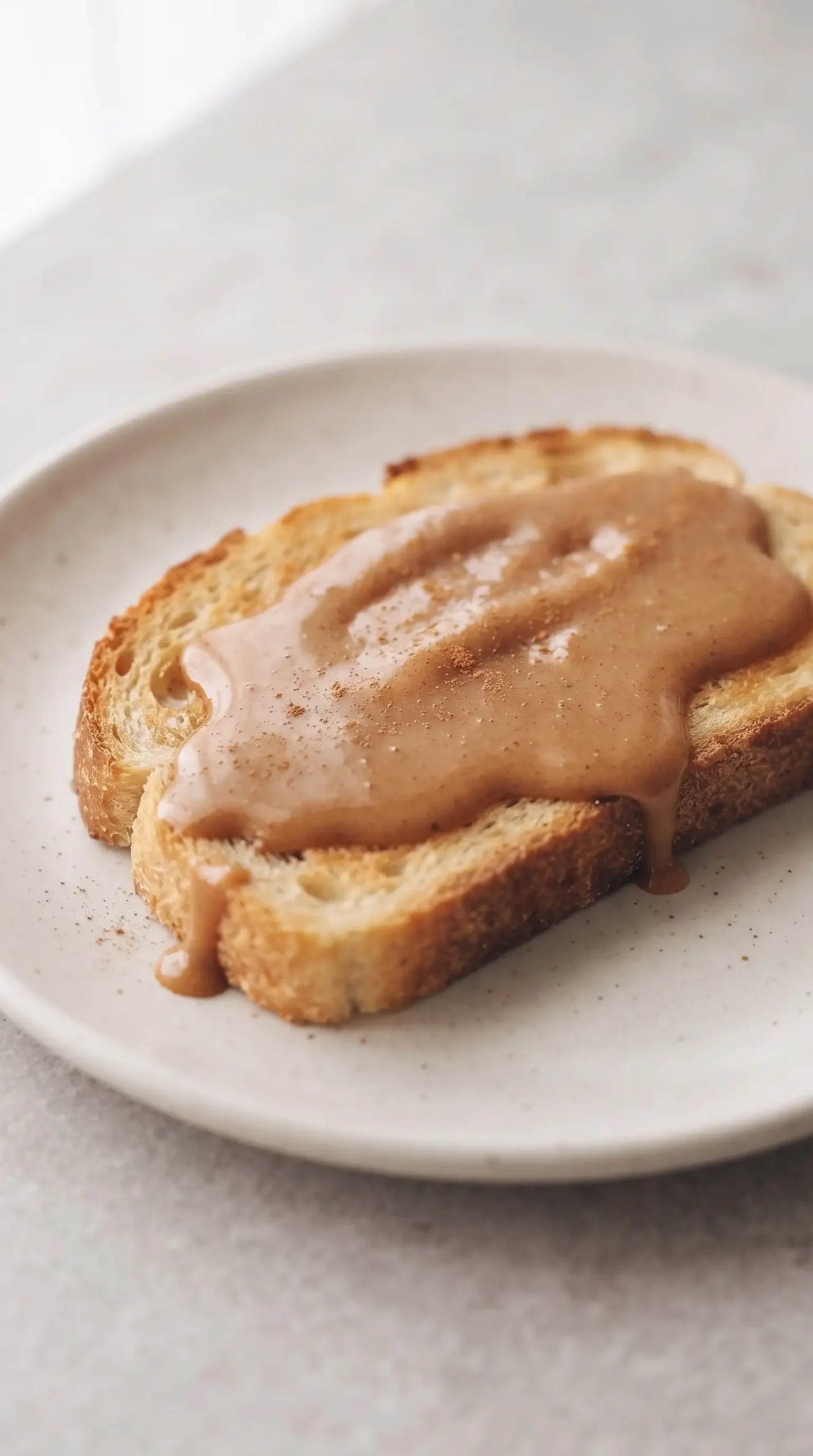
| Serving idea | What the sauce contributes | Useful pairing |
|---|---|---|
| Toast | Creamy sweetness and nutty richness | Banana, apple, or a pinch of cinnamon |
| Oatmeal | A concentrated maple-caramel note | Warm oats and fruit |
| Fresh fruit | A smooth, rich contrast | Apples or other crisp fruit |
| Waffles or pancakes | A spoonable dessert-style topping | Fruit and cinnamon |
Cooling changes how the vegan caramel sauce behaves
Freshly combined sauce is easier to drizzle while it remains warm and fluid. As coconut oil cools, its texture naturally becomes firmer, so a sauce that changes consistency after sitting is not necessarily a sign that something went wrong.
For serving, use the texture that matches the food in front of you. A warmer sauce works well when you want a flowing drizzle, while a cooler, thicker consistency can be useful when spreading it onto toast or keeping it in a small pool over fruit.
Storage and gentle reheating keep the sauce usable
For short-term storage, place the cooled sauce in a clean, covered container and refrigerate it. Because coconut oil firms as it gets cold, expect the texture to become much thicker than it was immediately after mixing.
When you want a more pourable consistency again, warm the sauce gently and stir until it becomes smooth. The objective is simply to soften the coconut oil and restore fluidity, not to cook the mixture further.
Vegan caramel sauce works best when smoothness guides the finish
Warmth and whisking determine the most important texture change in vegan caramel sauce: the separate melted ingredients need to become one smooth mixture. Once the almond butter is fully incorporated, further cooking adds little to the preparation, while gentle reheating later can restore a more fluid consistency after cooling.
That simple control point makes the sauce adaptable. Maple syrup keeps the flavor distinctive, almond butter supplies body, and the optional seasonings let the same quick mixture move toward salty, vanilla-rich, or cinnamon-warm territory.
Vegan caramel sauce questions about texture and storage
Why is my vegan caramel sauce separating?
Separation can happen when the almond butter has not been fully incorporated into the warm coconut oil and maple syrup. Whisk until the mixture becomes visibly smooth and cohesive before judging the final texture. Thoroughly stirred almond butter also gives you a more consistent starting point.
Can I make vegan caramel sauce without almond butter?
Cookie butter is the supplied alternative that most directly fits this preparation. It changes the flavor toward a spiced cookie profile, so use it when that character suits the food you plan to serve with the sauce. If vegan status matters, check the specific product label because formulations differ.
Why did my sauce become hard after cooling?
Coconut oil becomes firmer as it cools, which can make the sauce substantially thicker after refrigeration or extended standing. Gentle warming and stirring can bring it back toward a softer, more pourable texture without changing the basic mixture.
Can I add vanilla or cinnamon to vegan caramel sauce?
Yes. Both are included as optional flavorings, and the amount can be adjusted to taste. Vanilla creates a familiar dessert note, while cinnamon brings more warmth and works especially naturally with fruit, toast, oatmeal, pancakes, and waffles.
How can I make the sauce easier to drizzle?
Use it while it is still warm and fluid, or gently rewarm a cooled portion until the coconut oil softens. Stirring as it warms helps restore an even consistency. Avoid prolonged heating, since the preparation only needs enough warmth to keep the ingredients fluid and combined.
Vegan Caramel Sauce with Maple Syrup and Almond Butter
Ingredients
Method
- Warm the coconut oil and maple syrup together in a glass container for 1 minute until combined.
- Add the almond butter and whisk for about 30 seconds until the mixture is fully blended and smooth.