
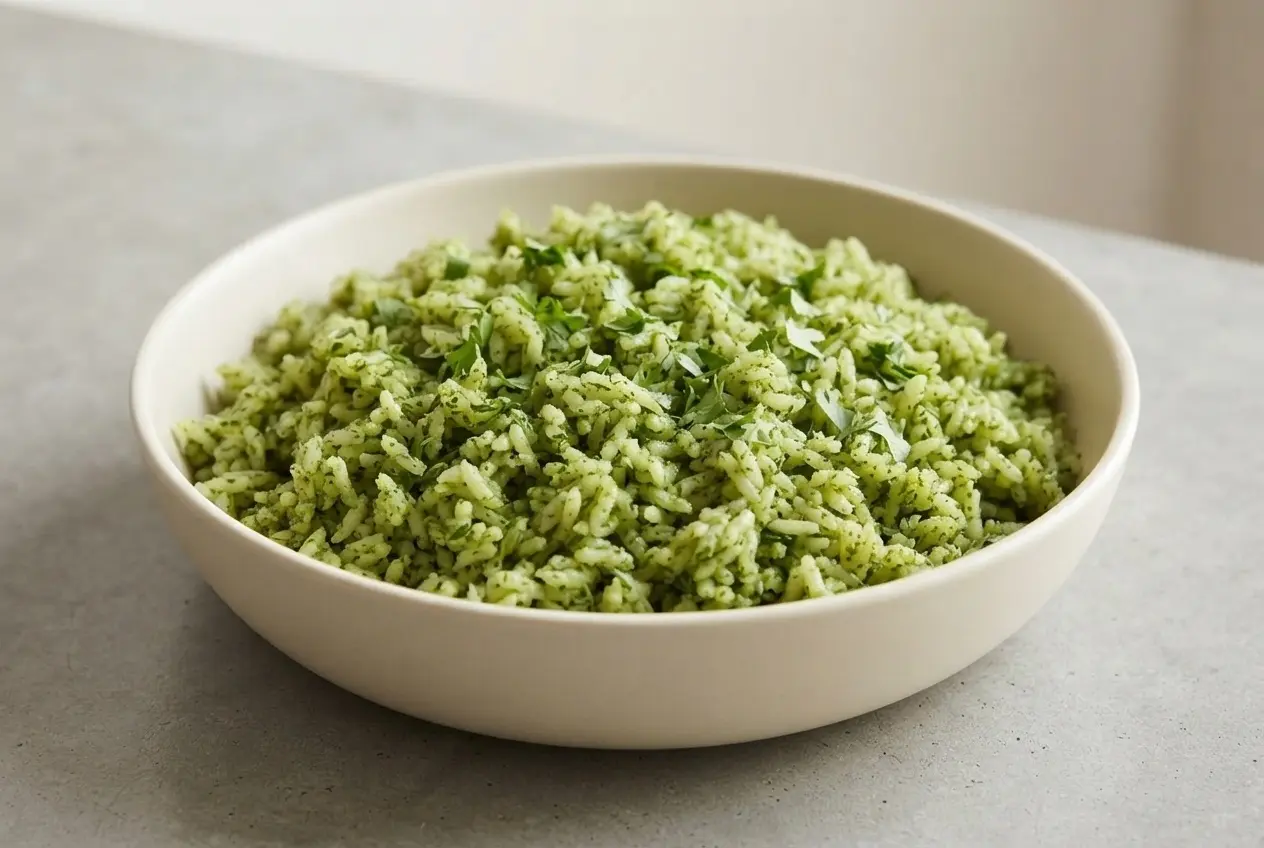
Green rice brings together toasted long-grain grains, fresh herbs, and leafy greens for a vibrant side dish with a savory flavor and naturally colorful finish. This cilantro and spinach version transforms everyday rice into a fragrant herb green rice that pairs easily with grilled proteins, tacos, beans, and vegetable-based meals. The blended greens create a smooth, fresh character while the toasted rice keeps each bite distinct.
A cilantro green rice recipe works best when the balance between the liquid, toasted grains, and green mixture is carefully managed. The method relies on a few important choices: preparing the rice so it cooks evenly, building flavor before adding broth, and adjusting the texture according to how fluffy or tender you prefer the finished dish.
The Green Mixture Shapes Every Bite
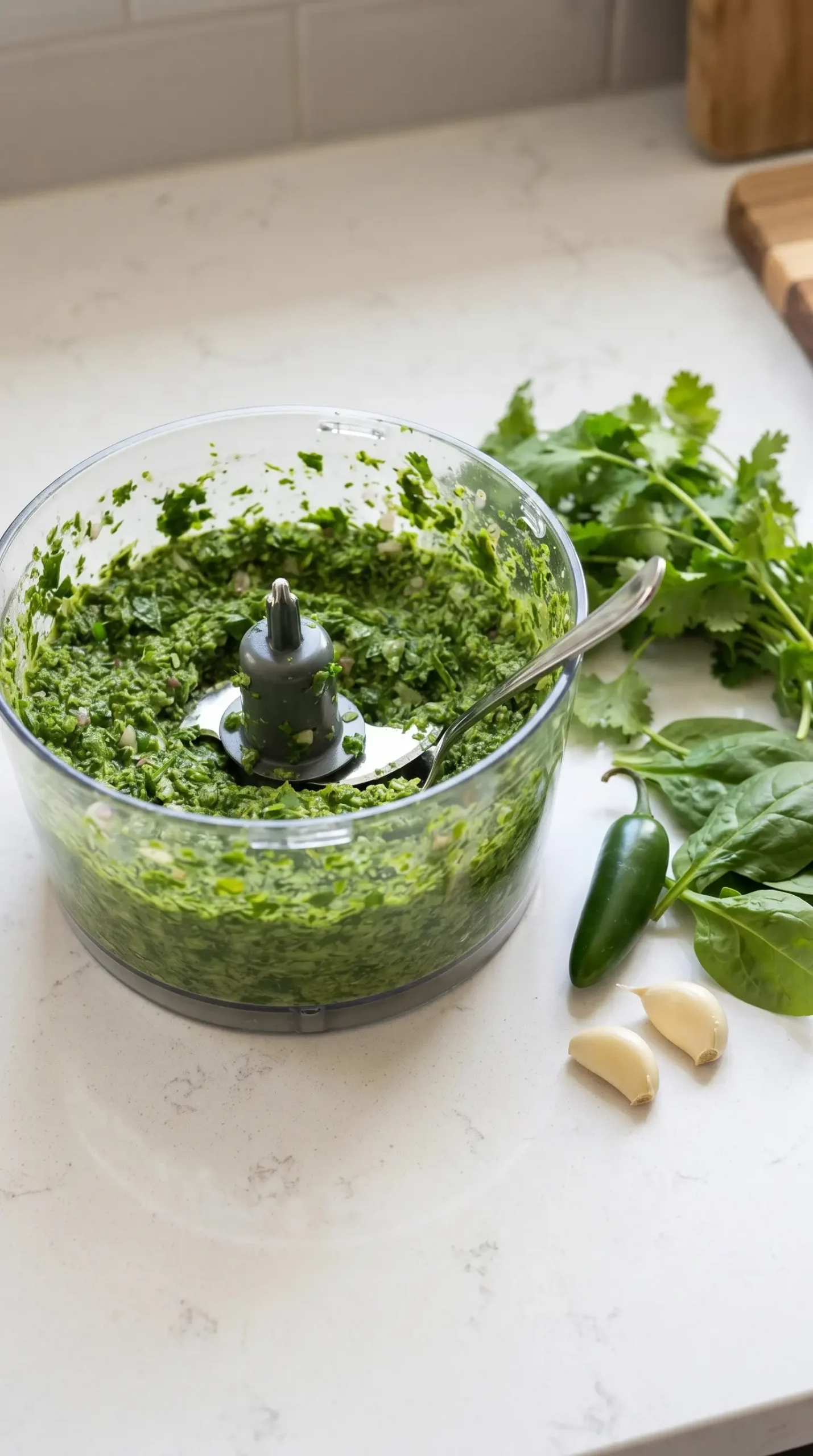
The combination of cilantro, spinach, shallot, serrano pepper, and garlic creates the defining flavor profile of the dish. Fresh spinach softens the herbal intensity of cilantro, while the aromatics give the rice a deeper savory base. Processing the ingredients into a fine mixture helps distribute the green color and flavor throughout the grains.
Using fresh greens also gives the rice a bright appearance without relying on artificial coloring. The spinach green rice style comes from the natural pigments in the leafy vegetables, while cilantro provides the recognizable fresh herb flavor that makes the dish stand out.
The serrano pepper can be adjusted depending on your preferred level of heat. Removing the ribs and seeds keeps the pepper flavor present without making the rice overwhelmingly spicy. A jalapeño can replace it when a milder pepper character is preferred.
Toasting Rice Builds a Stronger Base
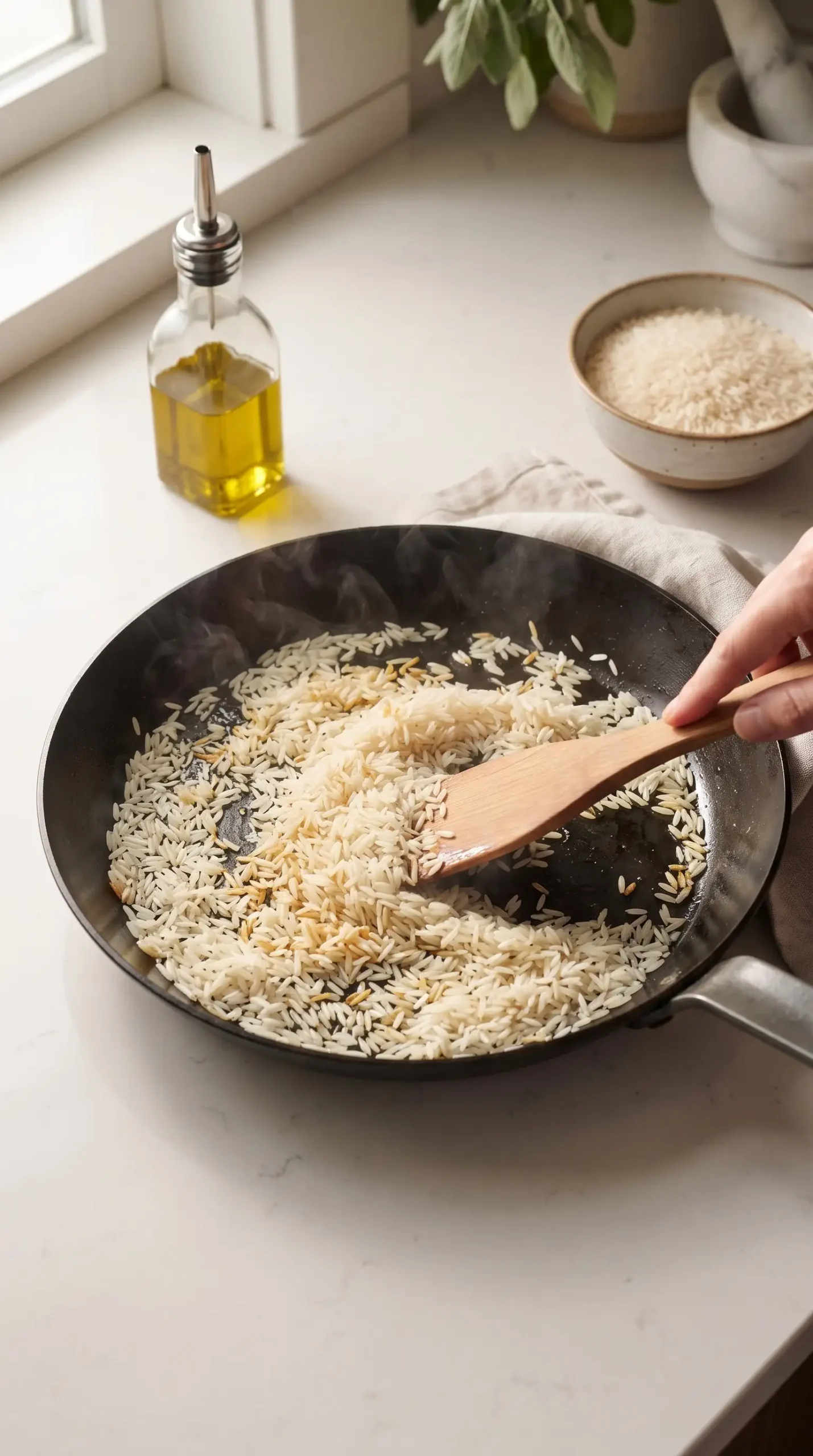
Toasting the rice before adding liquid is one of the most important flavor-building steps. The grains become lightly coated with olive oil and develop a subtle nutty aroma that supports the fresh green mixture. Exploring more rice recipes can reveal how different grains and preparations affect texture, seasoning, and serving styles. This extra stage helps prevent the finished dish from tasting flat.
| Rice preparation choice | Cooking result | Best use |
|---|---|---|
| Rinsed and toasted grains | Separate, flavorful grains | Fluffy side dishes and plated meals |
| Extra liquid added | Softer, more connected texture | Meals where a stickier rice texture is preferred |
| Skipped rinsing | Possible excess surface starch | Less predictable texture |
Rinsing the rice helps with texture because rinsing removes excess surface starch, and drying the grains before they meet hot oil helps avoid unwanted splattering. These small preparation details improve control during the early cooking stage.
Fresh Greens Make This Herb Green Rice Distinct
The leafy ingredients are not simply added for color; they determine the personality of the dish. Cilantro contributes a clean herbal note, while spinach adds body and a softer green flavor. Together, they create a balanced profile that works with many main dishes.
- Cilantro focus: Brings a fresh, recognizable herb flavor that defines the rice.
- Spinach balance: Adds a mild green element that supports the stronger herbs.
- Serrano choice: Controls the pepper warmth without changing the overall style.
Keeping the greens finely chopped allows their flavors to blend into the rice instead of creating separate pockets of herbs. The result is a consistent color and taste from the first serving to the last.
Liquid Choice Controls the Rice Texture
The cooking liquid has a direct effect on the finished texture and flavor. Chicken broth adds a richer savory foundation, while vegetable broth keeps the dish suitable for plant-based meals. Water works when the herb mixture and seasoning are allowed to provide the main flavor.
Choosing the amount of liquid depends on the texture you want. A smaller amount creates lighter, fluffier grains, while additional liquid produces a softer and more connected texture. Checking the rice near the end of cooking helps you decide whether it needs more moisture.
| Liquid option | Flavor effect | Texture consideration |
|---|---|---|
| Chicken broth | More savory depth | Maintains a classic rice texture |
| Vegetable broth | Herb flavors remain prominent | Works well with vegetable pairings |
| Water | Cleaner background flavor | Seasoning becomes more important |
Cooking Control Keeps Green Rice Even
Good texture comes from managing heat after the liquid reaches a simmer. Keeping the pan covered over low heat allows the grains to absorb moisture steadily while the green flavors remain integrated.
Fork testing is useful because rice can vary depending on the pan, heat level, and exact liquid amount. A gentle check near the end of cooking reveals whether the grains are tender or whether additional moisture and time are needed.
Fluffing with a fork after cooking separates the grains and distributes the herbs. Stirring aggressively can make the rice heavier, so a light touch helps maintain the texture created during cooking.
Serving Ideas That Match Green Rice
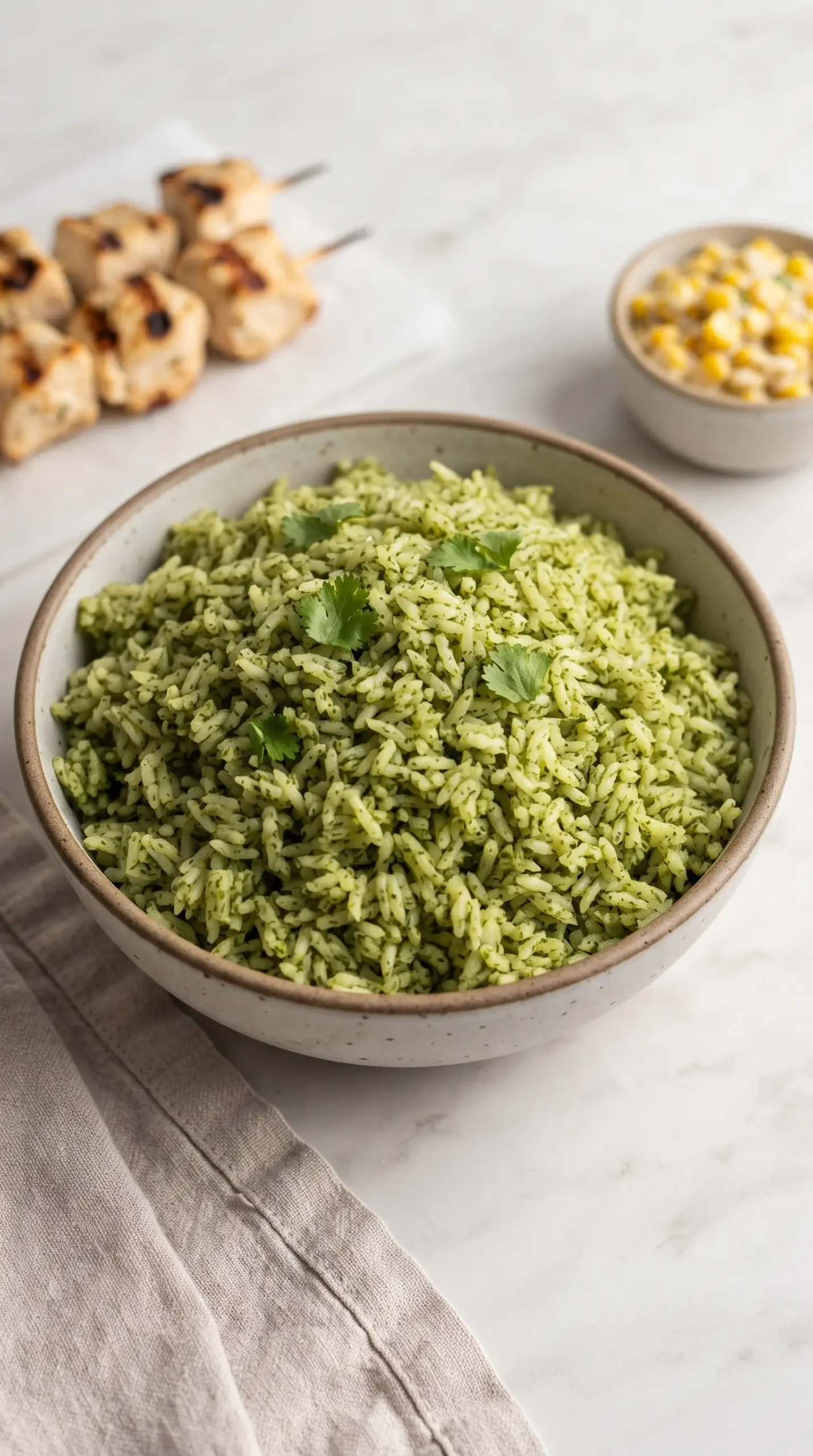
Green rice has enough flavor to support simple meals while remaining flexible with bold toppings and proteins. Its fresh herb character makes it a natural companion for grilled foods, tacos, and dishes with creamy or smoky elements.
- Protein pairing: Serve alongside chicken skewers, air fryer chicken, or salmon for a balanced plate.
- Mexican-inspired meals: Combine with tacos, beans, or creamy corn for a colorful spread.
- Vegetable plates: Use it as a flavorful base for roasted or sautéed vegetables.
The rice can also bring brightness to meals that already contain rich sauces. The herbs and greens provide contrast without requiring complicated additions.
Green Rice Mistakes That Affect Flavor and Texture
Several small mistakes can change the result of a cilantro green rice recipe. Understanding what causes these issues makes it easier to correct them before serving.
- Wet grains in hot oil: Excess water can cause splattering when the rice is toasted. Drying rinsed rice helps create a safer and cleaner cooking process.
- Large herb pieces: A coarse green mixture may distribute unevenly. Finely processing the greens creates a more consistent result.
- Uncovered cooking: Losing steam during cooking can affect tenderness. Keeping the pan covered supports even absorption.
- Skipping the texture check: Rice may need small adjustments at the end. A quick fork test shows whether more liquid or time is needed.
These problems are easy to avoid because they are connected to preparation and observation. Paying attention during the early and late cooking stages creates a more reliable finish.
Storage Keeps Herb Flavors Ready for Later
Cooked green rice can be stored for future meals when handled properly after cooking. Allowing it to cool appropriately before placing it in a covered container helps maintain its quality.
When reheating, a small splash of water can help restore moisture if the grains have become firm. Gentle heating works well because the herbs are already blended throughout the rice.
Simple Adjustments Create New Versions
The basic structure of the dish allows for personal changes while keeping the same green character. The pepper level, cooking liquid, and serving combinations can all be adapted to fit different meals.
A milder version can use jalapeño or less pepper, while a stronger herb profile can highlight the cilantro more prominently. The same cooking approach supports different preferences without changing the core identity.
Pairing Green Rice With Complete Meals
The fresh flavor of green rice makes it useful as more than a side dish. It can anchor a meal by adding color, texture, and herbal notes next to simple proteins or vegetables.
Meals built around grilled chicken, salmon, tacos, and beans benefit from the rice because the herbs add freshness while the toasted grains provide comfort. Creamy elements, smoky flavors, and spicy dishes all find a natural match with the green profile.
Preparing Green Rice for Consistent Results
Reliable results come from treating each stage as a connected process. Properly prepared grains, a finely blended herb mixture, and controlled cooking heat work together to create the intended texture.
Small decisions have a noticeable impact, especially when balancing liquid and rice texture. Starting with a texture preference in mind makes it easier to adjust the cooking process without losing the fresh character of the dish.
Green Rice Delivers Fresh Flavor Through Simple Technique
The finished green rice depends on harmony between toasted grains, blended greens, and careful moisture control. The herb mixture creates the signature color and flavor, while the cooking approach determines whether the rice feels light and fluffy or softer and more cohesive.
Fresh cilantro, spinach, and aromatics turn a familiar pantry staple into a dish with a distinct identity. When the rice is prepared with attention to texture and seasoning, it becomes a versatile addition to many different meals.
Green Rice Storage and Texture Questions and Answers
Can green rice be made with frozen spinach instead of fresh spinach?
Fresh spinach gives the brightest green appearance, but frozen spinach can work when it is thawed and excess moisture is removed. The texture may be slightly different because frozen greens release more water during preparation.
Why does my green rice look less vibrant after cooking?
The color naturally softens as the greens heat with the rice. Using fresh cilantro and spinach, blending them finely, and avoiding unnecessary overcooking helps maintain a brighter green appearance.
How can I make green rice less spicy?
Reducing the serrano pepper or replacing it with a milder jalapeño lowers the heat while keeping the fresh pepper flavor. The rest of the herb mixture can remain unchanged.
Can I make green rice with brown rice?
Brown rice can be used, but it requires different cooking behavior because the grains need more time and liquid to become tender. The green mixture can still provide the same herb-forward flavor.
What should I do if my rice becomes too soft?
If the texture is softer than desired, allow the rice to rest uncovered briefly so excess moisture can escape. Future batches can be adjusted by using less liquid or monitoring the cooking stage earlier.
Green Rice with Cilantro and Spinach Fresh Herb Recipe
Ingredients
Method
- Rinse the rice thoroughly in a mesh colander. Shake off excess water or pat the grains dry with paper towels to reduce splattering when they are added to the hot oil.
- Place the cilantro, spinach, shallot, serrano pepper, and garlic in a food processor and pulse until the mixture is very finely chopped.
- Heat olive oil in a skillet over medium-high heat. Add the rice and cook for 3-5 minutes, stirring, until the grains are lightly toasted.
- Stir in the herb mixture and salt, then continue cooking for another 3-5 minutes until the mixture is fragrant.
- Add the broth or water and bring the mixture to a simmer. Cover the skillet and cook over low heat for 15-ish minutes.
- Check the rice with a fork. If needed, add more water and continue cooking until the rice reaches your preferred texture. Remove from heat and fluff with a fork to distribute the greens.
- Serve the green rice alongside dishes such as chicken skewers, air fryer chicken, salmon, tacos, beans, or creamy corn.