
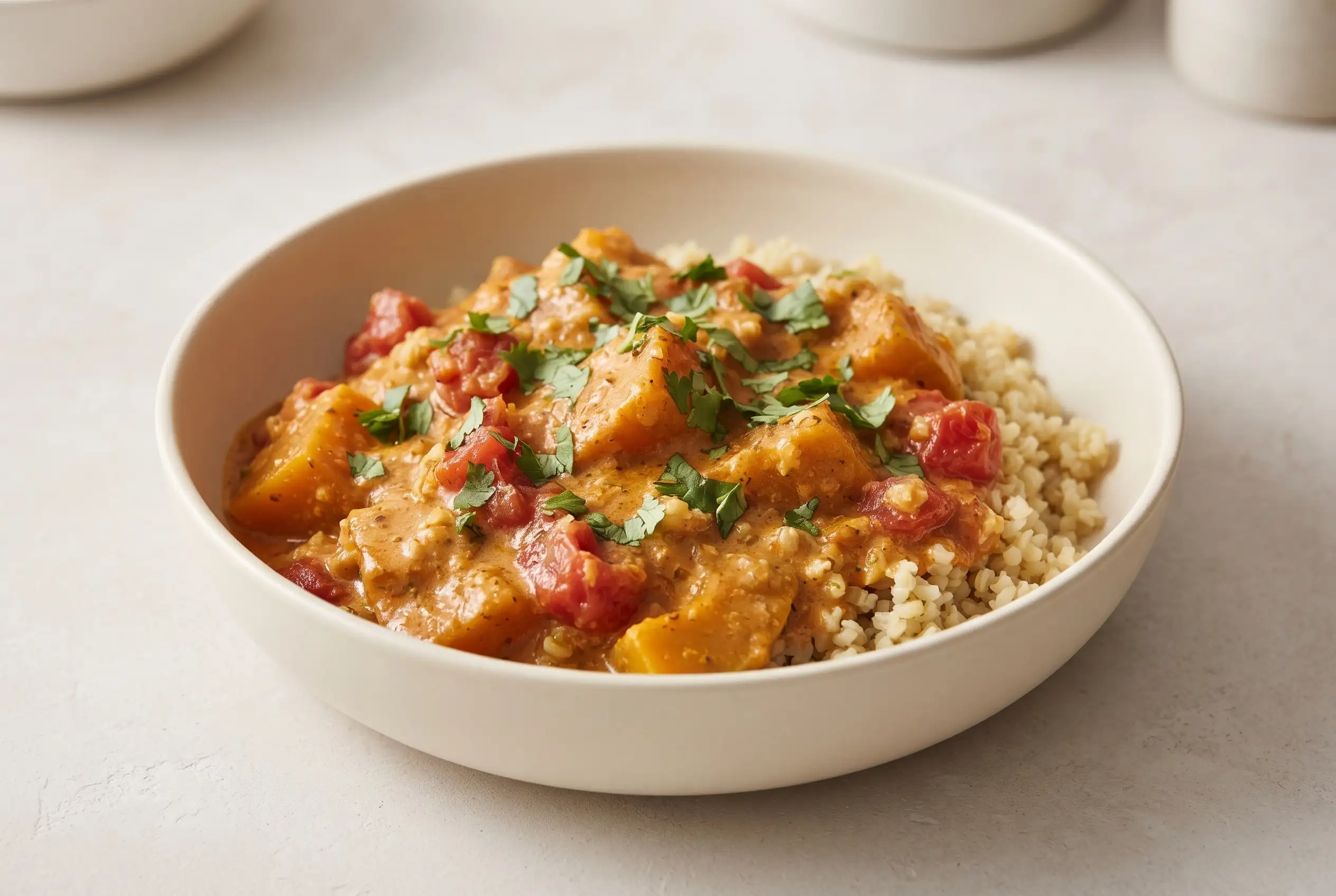
Squash coconut curry turns a handful of pantry staples into a deeply savory skillet meal with a creamy, warmly spiced sauce. Tender squash absorbs coconut milk, red curry paste, peanut butter, and fire-roasted tomatoes, while bulgur gives the finished dish enough substance to stand on its own. The combination is especially useful when you want a 30 minute squash curry that feels hearty without requiring a long simmer.
Why squash coconut curry works in one pan
Squash brings a naturally substantial texture to the skillet, but the sauce keeps it from feeling heavy. Coconut milk provides the creamy base, while tomatoes bring acidity and enough liquid to surround the squash as it cooks. That balance matters because the sauce needs to stay loose enough for the squash to simmer gently.
Garlic and ginger establish the savory foundation before the liquid goes in. Sautéing them briefly softens their sharp edges and releases their aroma, giving the curry a more integrated flavor once the coconut milk and spices are added.
Peanut butter is an especially useful bridge between the sweet squash and the assertive curry paste. A small amount of honey reinforces that roundness, while chili powder, turmeric, and cayenne deepen the seasoning. The result is a coconut squash curry with several layers of flavor instead of relying on heat alone.
Kabocha and butternut change the curry texture
Kabocha gives the skillet a dense, creamy bite, while butternut squash is softer and more yielding as it cooks. Either works with the supplied cooking approach, but the pieces should be cut into reasonably similar sizes so they reach tenderness together. If using butternut, watch the skillet closely toward the end because its softer texture can move from tender to overly soft more quickly.
Before choosing between kabocha and butternut, choose winter squash that feel heavy for their size and avoid specimens with moist, black, or shriveled stems. Starting with sound squash helps ensure the pieces are in good condition before they go into the curry.
| Squash | Texture in the curry | What to watch |
|---|---|---|
| Kabocha | Dense and creamy | Cook until easily pierced without letting pieces collapse |
| Butternut | Soft and tender | Check earlier so the pieces stay intact |
| Mixed squash | Varied texture | Keep pieces similar in size and monitor the softer type |
Coconut milk needs a smooth, well-blended base
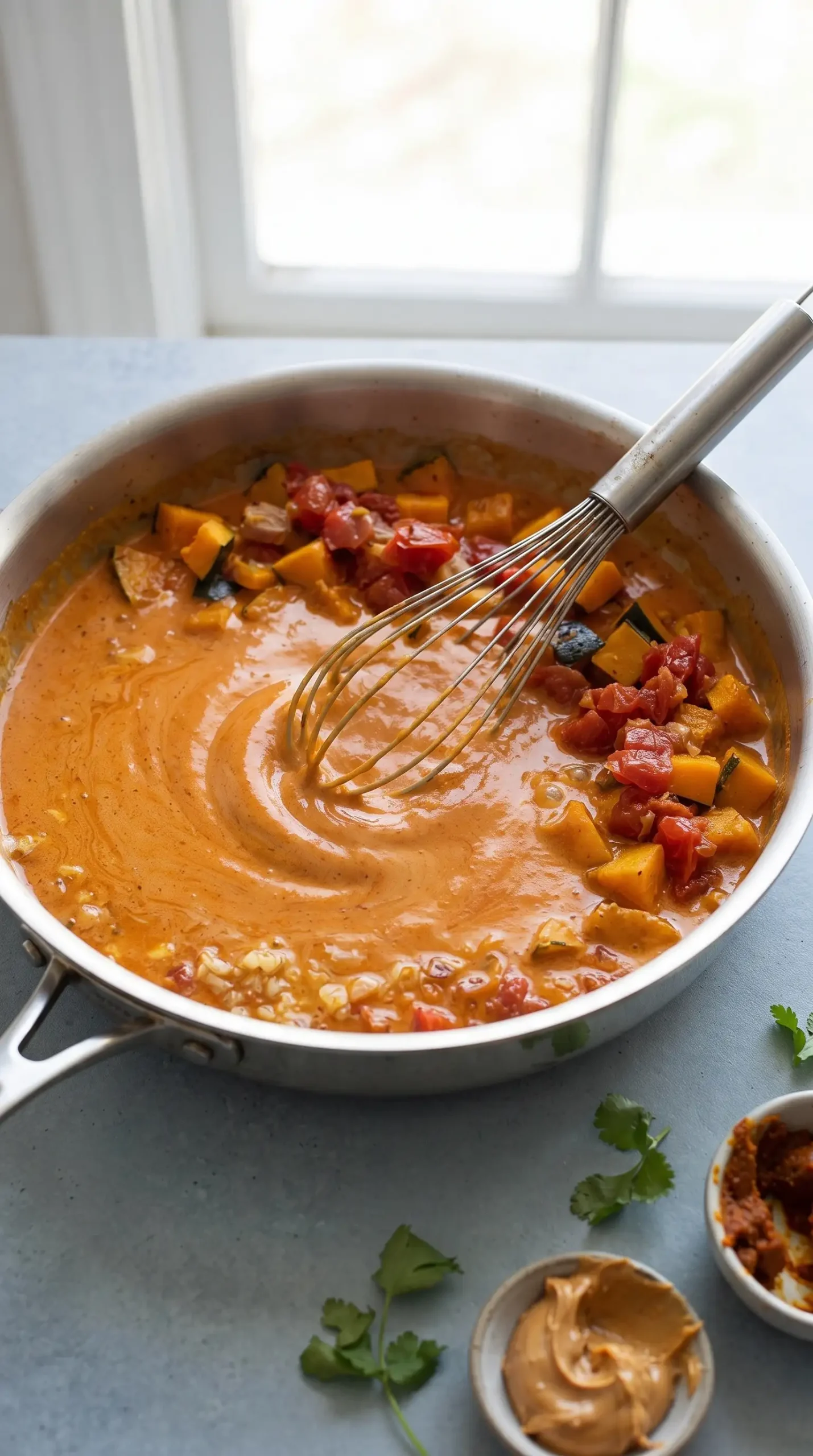
The coconut milk enters after the garlic and ginger have softened, which creates an opportunity to dissolve the curry paste, peanut butter, and honey before the squash begins simmering. Whisking at this point is more useful than stirring everything together after the vegetables are already in the pan.
Red curry paste can vary considerably in intensity and saltiness, so the amount of paste affects more than heat. Massaman paste gives the sauce a rounded, aromatic character, while a hotter or milder paste can shift the balance of the whole skillet. Taste the sauce once it has come together and make small seasoning adjustments if needed.
Fire-roasted tomatoes also matter to the sauce’s structure. Their juices contribute liquid for simmering, while their roasted flavor keeps the coconut base from tasting flat. Keep the skillet covered during the tenderizing stage so the squash cooks in the seasoned mixture instead of leaving the sauce to reduce too quickly.
Choose curry paste according to the heat you want
Three tablespoons of Massaman curry paste provide a noticeable kick without making heat the only defining feature. If your preferred curry paste is hotter, start with less and increase it after tasting. A mild paste can be used more generously if you want its aromatic character without as much chili intensity.
- More heat: Use a hotter curry paste or retain the cayenne called for in the seasoning.
- Gentler heat: Choose a mild curry paste and reduce the cayenne.
- More savory balance: Taste before adding extra salt because curry paste and tomatoes may already contribute enough seasoning.
Bulgur turns the creamy sauce into a complete serving
Light bulgur is more than an accompaniment here because it gives the sauce something substantial to cling to. Cooking it separately keeps its texture under control and lets you decide whether to fold it into the skillet or spoon the curry over individual portions.
Folding the cooked bulgur into the curry distributes the sauce throughout the grain, producing a thicker, more integrated bowl. Serving the curry over bulgur keeps the components more distinct and makes it easier to control the amount of sauce in each portion.
For a squash curry with bulgur, the most useful choice depends on how you want the dish to eat. Mixing everything together is convenient when serving immediately, while keeping the bulgur separate can help preserve a clearer contrast between tender squash, creamy sauce, and grain.
Squash tenderness is the key timing cue
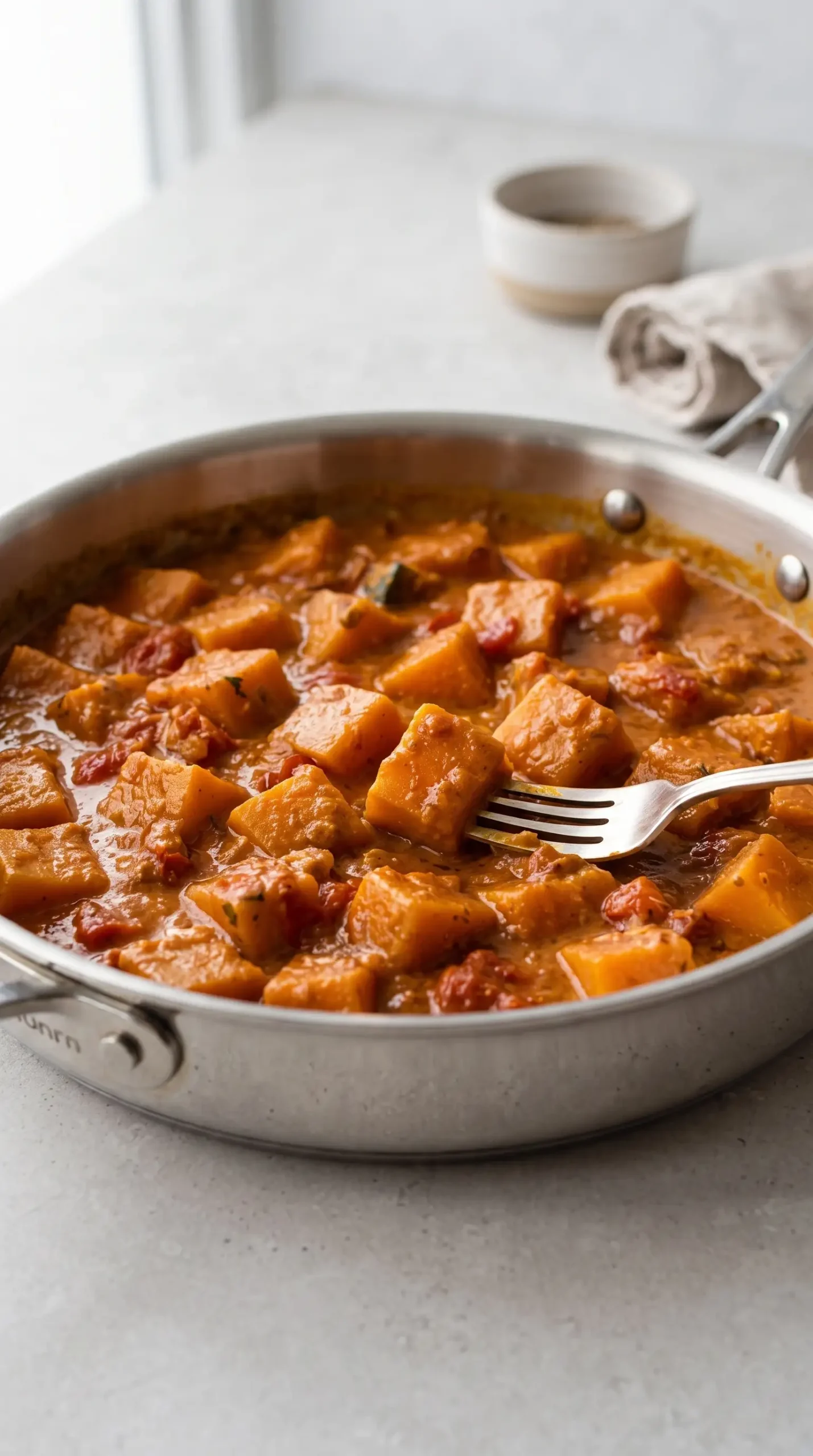
Ten to fifteen minutes of covered simmering is enough for the squash to become tender, but the clock should remain secondary to texture. Test a piece with a fork toward the end of the simmer: it should yield readily while still holding its shape. Once the squash reaches that point, take the skillet off the heat instead of extending the cooking time simply to reduce the sauce.
Ten quiet minutes let the sauce settle
Removing the skillet from the heat before serving gives the sauce time to thicken naturally. The liquid continues to settle around the squash and bulgur, making the consistency noticeably more cohesive without additional cooking.
That pause is particularly helpful when the bulgur has been mixed directly into the skillet. The grain can absorb some of the surrounding sauce as everything stands, so the finished texture becomes fuller without requiring extra thickener.
Serving immediately after the simmer can leave the sauce looser and more fluid. Waiting through the brief resting period gives the coconut, tomato, peanut butter, and curry paste mixture a chance to reach the texture intended by the cooking process.
Keep the skillet balanced before adding bulgur
Before the grain goes into the curry, check that the squash is tender and the sauce still has enough moisture to coat it generously. If the mixture already looks very thick, folding in bulgur will make it denser because the grain absorbs sauce. Keeping the components separate is an easy way to preserve a creamier consistency at serving time.
Common squash coconut curry mistakes to avoid
Oversized squash pieces can stay firm while the surrounding sauce thickens, leaving the skillet unevenly cooked. Cutting the squash into manageable, consistent pieces gives the covered simmer a better chance of tenderizing everything at roughly the same pace.
Adding the dry spices without coating the squash can also produce uneven seasoning. Tossing the squash with curry powder, chili powder, turmeric, and cayenne first helps distribute those seasonings before the pieces enter the coconut mixture.
Overcooking creates a different problem: squash that has gone too soft can break apart as the sauce is stirred. Check for tenderness near the end of the simmer and stop cooking when the pieces are tender but intact. A second common issue is overloading the skillet with heat from the curry paste and cayenne; taste the sauce and adjust future batches according to the specific paste being used.
- Uneven squash: Standardize the pieces before cooking.
- Flat seasoning: Coat the squash with the dry spices before adding it to the sauce.
- Mushy pieces: Stop the simmer as soon as the squash is tender.
- Overpowering heat: Scale back the curry paste or cayenne when using a hotter paste.
Leftover curry benefits from keeping bulgur separate
When you expect leftovers, storing the cooked bulgur separately gives you more control over the next serving. Mixed bulgur continues to absorb the curry sauce as it sits, which can make the mixture considerably thicker. Reheating the curry and adding fresh portions of bulgur as needed preserves more of the original saucy texture.
Cilantro and texture finish the skillet
Chopped cilantro belongs at the end, when its fresh character can remain distinct against the rich coconut sauce. Adding it just before serving keeps the herb from disappearing into the cooked mixture.
The skillet already contains several soft elements, so the contrast from intact squash pieces and freshly chopped cilantro helps keep each bite defined. Serving over separately cooked bulgur adds another textural layer without changing the character of the curry itself.
A small amount of additional seasoning can also be useful at the table. Because curry paste varies between brands and styles, tasting the finished sauce is more reliable than assuming every batch will need the same amount of salt or heat.
Tender squash and thickened sauce define the finished curry
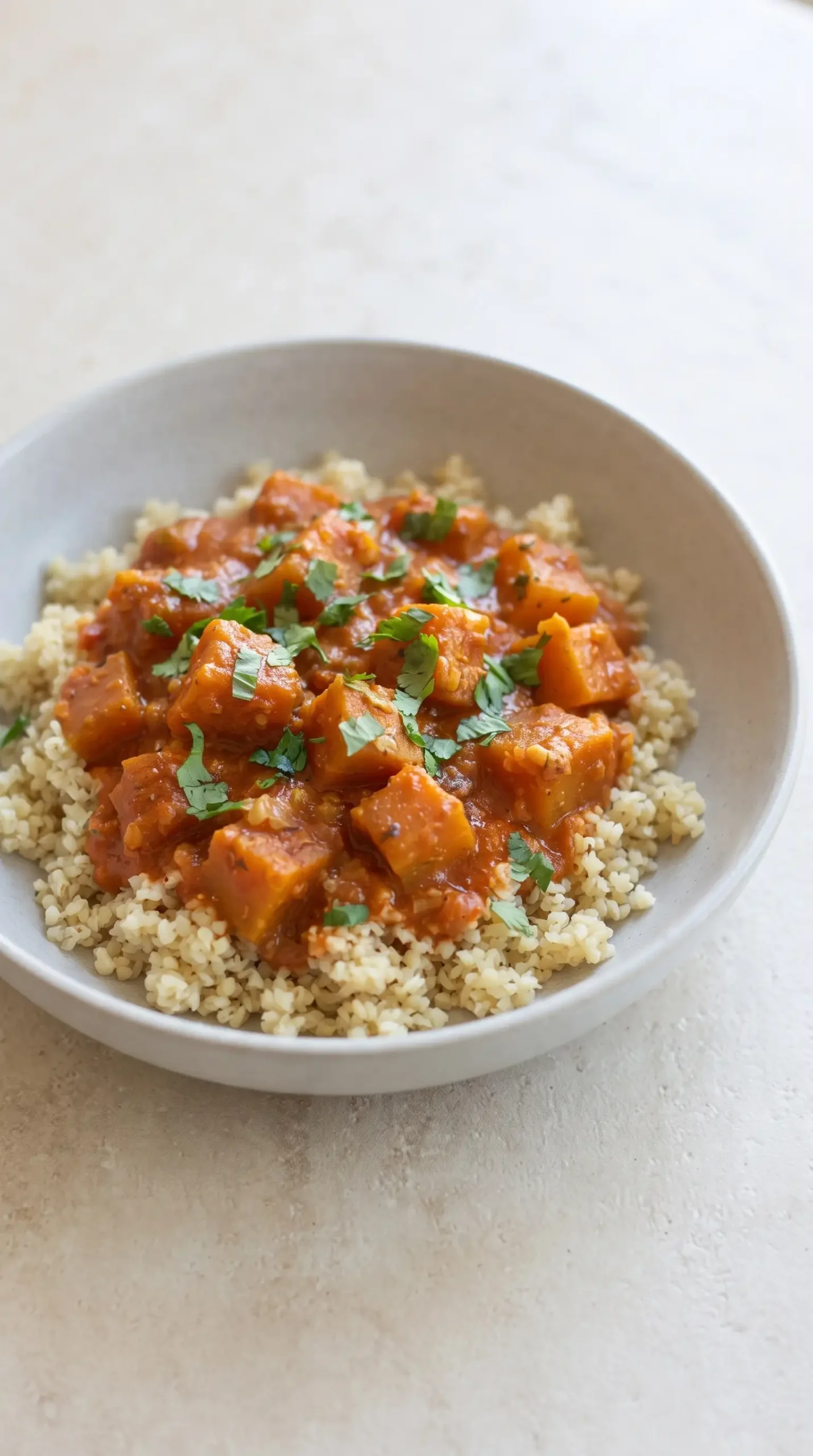
Tender squash should remain recognizable inside a sauce that has thickened enough to coat the pieces and the bulgur without becoming pasty. The most important judgment comes at the end of the simmer: stop when the squash yields easily, then allow the skillet to stand so the sauce can settle and thicken on its own.
That balance lets coconut milk, curry paste, tomatoes, peanut butter, and squash work together without any single element overwhelming the bowl. The short cooking window succeeds because texture, heat, and sauce consistency are adjusted by observation rather than by extending the cooking time.
Squash curry questions about heat texture and serving
Can I make squash coconut curry less spicy?
Yes. Use a mild curry paste and reduce the cayenne first, since both contribute heat. If you are unsure how strong your curry paste is, start with less paste and increase it after the coconut sauce has been mixed and tasted.
Can butternut squash replace kabocha?
Butternut squash is a suitable substitute for kabocha in the supplied preparation. Its texture is softer, so begin checking it toward the end of the simmer and remove the skillet from the heat once the pieces are tender but still intact.
Why did my curry become too thick?
Cooked bulgur can absorb a substantial amount of the surrounding sauce, especially after the curry stands. If thickness is a concern, serve the bulgur separately and spoon the curry over it instead of combining everything in the skillet.
Should the bulgur be mixed into the curry?
Either approach works. Mixing it in creates a more unified, hearty dish, while serving the curry over bulgur keeps the grain and sauce distinct and gives you more control over the ratio in each serving.
How do I know when the squash is done?
A fork should pierce the squash easily, but the pieces should still hold their shape when moved through the sauce. Once that texture is reached, remove the skillet from the heat rather than continuing to cook for a fixed amount of time.
Can I use a different curry paste?
Another curry paste can work, but its saltiness, spice level, and flavor profile may differ from Massaman paste. Adjust the amount according to its strength and taste the sauce before deciding whether additional seasoning is needed.
Squash Coconut Curry with Peanut Butter and Tomatoes
Ingredients
Method
- Cook the bulgur according to the package instructions, then set it aside.
- Heat the olive oil in a large skillet over medium heat. Add the garlic and ginger and cook for 2-3 minutes until softened and fragrant.
- Coat the squash with the curry powder, chili powder, turmeric, and cayenne pepper.
- Add the coconut milk to the skillet, then whisk in the curry paste, peanut butter, and honey until the mixture is smooth.
- Add the seasoned squash and tomatoes to the skillet. Cover and simmer for 10-15 minutes, until the squash is tender but still holds its shape.
- Remove the skillet from the heat and allow it to stand for 10 minutes so the sauce can thicken.
- Stir the bulgur into the curry, or serve the curry over individual portions of bulgur. Finish with chopped cilantro before serving.