
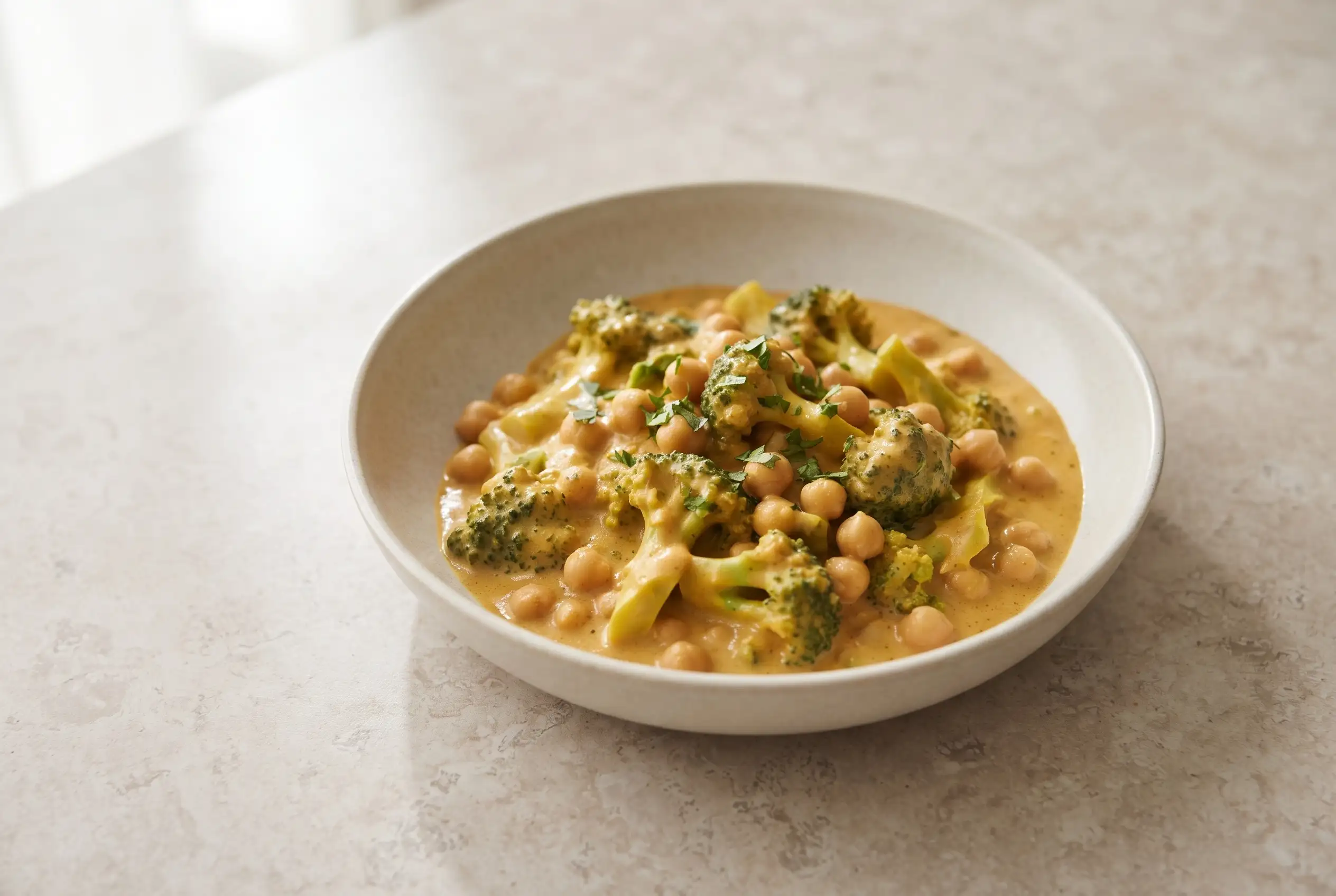
Coconut curry can be a remarkably complete meal when a few well-chosen ingredients do several jobs at once. Creamy coconut milk carries the red curry paste, broccoli brings a tender vegetable texture, chickpeas make the sauce more substantial, and a small amount of cornstarch gives the finished pan enough body to cling to everything. The result is a simple coconut curry that tastes fuller than its short ingredient list suggests.
For a 5 ingredient coconut curry, the most important details are not complicated techniques. They are small decisions about texture, heat, timing, and how the sauce comes together. Broccoli needs enough simmering time to soften without becoming limp, while the curry paste needs to disperse evenly through the coconut milk. Understanding those points makes the dish easier to adjust when you use different vegetables or want a thicker, looser, or more intensely seasoned bowl.
Coconut milk gives the curry paste room to bloom
Coconut milk creates the liquid foundation that lets red curry paste spread throughout the pan. Its richness softens the sharper character of the paste and gives the sauce a creamy consistency without requiring a separate dairy ingredient. Since the curry paste is stirred into the coconut milk after the broccoli has begun cooking, the sauce can develop around vegetables that are already partly tender.
Red curry paste is concentrated, so distributing it thoroughly matters more than simply adding it and leaving it undisturbed. Whisking it into the warm coconut milk breaks up concentrated pockets and produces a more even flavor from one spoonful to the next. That step is especially useful in a small batch, where an unevenly mixed spoonful of paste can make one portion taste much stronger than another.
Garlic or onion can be added at the beginning when you want another savory layer, but neither is essential to the structure of the dish. Sautéing either one with the broccoli allows its flavor to mingle with the vegetables before the coconut milk enters the pan. Keeping those additions modest preserves the clear coconut-and-curry character instead of turning the sauce into a crowded mixture.
Broccoli should stay tender-crisp inside the coconut curry
Broccoli benefits from being cooked in stages because its florets need enough time to soften while retaining some bite. A few minutes of sautéing followed by a gentle simmer in coconut milk gives the pieces time to cook through without requiring a long braise. The useful visual cue is simple: the broccoli should feel softened when pierced but still hold its shape and offer resistance when bitten.
Chickpeas and cornstarch turn the sauce into a substantial meal
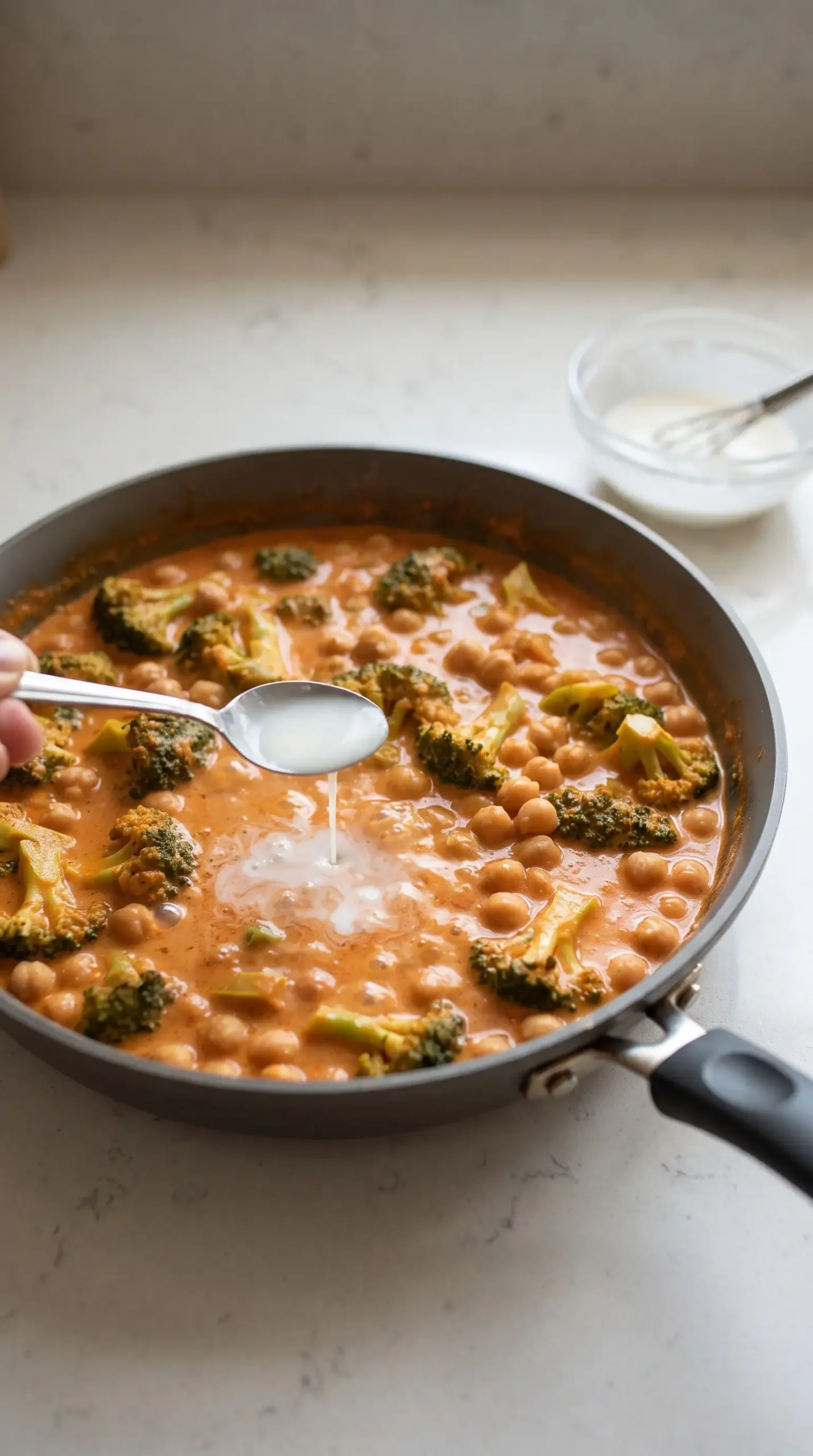
Chickpeas contribute more than bulk. Their firm, creamy centers give the coconut curry something substantial to contrast with the softer broccoli and silky sauce. Rinsing and draining canned chickpeas before adding them also keeps excess canning liquid from unnecessarily changing the sauce’s consistency or flavor.
Cornstarch has a very different job. Mixing cornstarch with cold water before it reaches the hot pan prevents the starch from forming stubborn lumps. Once that mixture enters the simmering curry, the sauce can thicken quickly. A short boil activates the starch, after which the pan can come off the stronger heat so the curry settles into its finished texture.
Cooling matters because the sauce continues to tighten as its temperature drops. A curry that looks slightly looser immediately after thickening can become spoon-coating after a brief rest. If the sauce already looks extremely thick while it is still bubbling, continuing to cook it aggressively can push the texture farther than intended.
| What you see | What it means | Useful response |
|---|---|---|
| Broccoli is bright and firm but not crunchy | The vegetables have reached a tender-crisp stage | Continue with the curry paste and chickpeas |
| Sauce looks loose while bubbling | The cornstarch has not fully finished thickening yet | Give it the brief boiling time specified, then reduce the heat |
| Sauce thickens noticeably as it sits | The activated starch is continuing to set the texture | Let it cool slightly before deciding whether the consistency needs adjustment |
A steady simmer protects the broccoli texture
Heat control is particularly important once the coconut milk is in the pan. A steady simmer gives the broccoli time to soften while keeping the sauce manageable. An aggressive boil can cook the vegetables faster than you want and make it harder to judge when the sauce has reached the right consistency.
Whisking the red curry paste prevents concentrated pockets
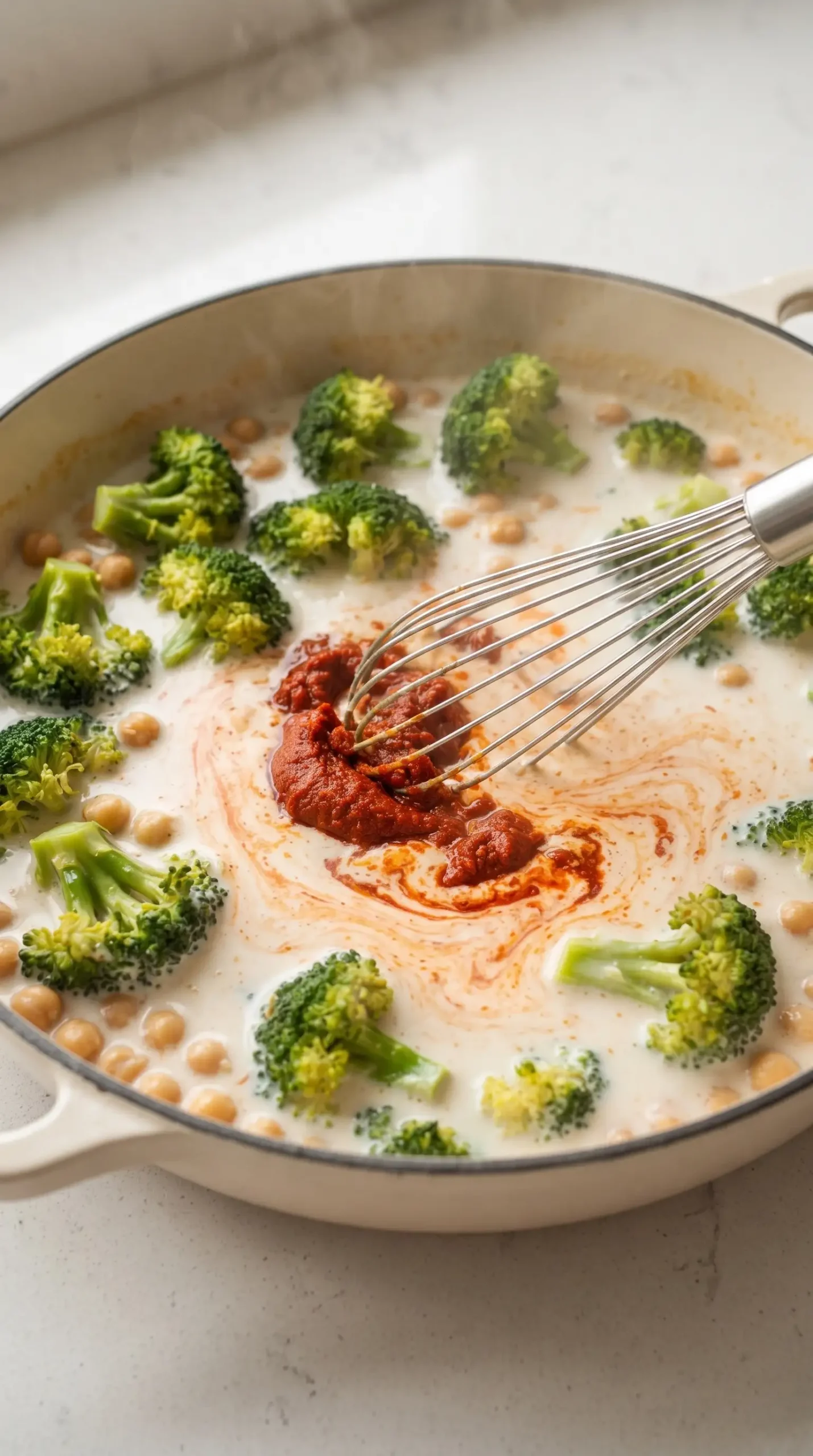
Red curry paste should meet the coconut milk while the liquid is warm enough to mix readily. Whisking directly in the pan disperses the paste before the chickpeas are added, so the legumes become coated in an evenly seasoned sauce instead of carrying isolated streaks of concentrated curry.
Different vegetables can keep the same coconut curry structure
Broccoli is the specified vegetable, but the method has room for practical substitutions because the sauce does not depend on broccoli alone. Other vegetables can work when they tolerate sautéing followed by a short simmer. The key consideration is their cooking speed: pieces that soften very quickly should be added with enough restraint to preserve some texture, while denser vegetables may need more time before the coconut milk goes into the pan.
Cauliflower is a particularly natural swap when you want a similarly substantial vegetable texture. Green beans can also fit the same general approach, provided they are cooked until tender enough to eat comfortably. Mixed vegetables are possible too, but combining pieces with dramatically different cooking times makes the texture harder to control.
Whatever vegetable combination you choose, keep the pieces reasonably similar in size. Smaller pieces cook faster and absorb more sauce relative to their volume, while very large pieces can remain firm after the surrounding curry has already thickened. Consistent cutting therefore helps the sauce and vegetables finish together without changing the core character of the dish.
- For similar texture: choose vegetables that can remain pleasantly firm after a short simmer.
- For mixed vegetables: add slower-cooking pieces early enough to soften before faster-cooking pieces become overdone.
- For even seasoning: keep pieces manageable so the sauce can coat their surfaces well.
Five-ingredient coconut curry stays flexible around the pantry
Canned chickpeas make the dish especially convenient because they require no separate cooking before entering the curry. Their neutral flavor also leaves room for the red curry paste and coconut milk to remain the dominant combination. If you have cooked chickpeas on hand, they can serve the same structural purpose as long as they are ready to eat and not carrying excessive liquid.
The coconut milk is less interchangeable with ordinary milk because its richness is part of the sauce’s character and texture. A thinner liquid would change both the body and the way the curry paste behaves in the pan. For that reason, substitutions are most useful with the vegetables and optional aromatics, while keeping the sauce’s principal foundation intact.
Small timing mistakes can flatten the texture of the curry
Overcooking the broccoli is one of the easiest ways to lose the contrast that makes the dish satisfying. If the florets become very soft before the sauce has finished, they can break apart more easily as the curry thickens. Watching their texture during the coconut-milk simmer is more reliable than extending the cooking time simply because the pan is still warm.
Another problem comes from adding cornstarch without first dispersing it in cold water. Dry starch can clump as soon as it touches hot liquid, leaving uneven thick spots that are difficult to smooth out later. Keeping the starch slurry ready before it is needed makes the thickening stage much more controlled.
The sauce should coat the chickpeas without becoming pasty
Texture is easiest to judge after the curry has received its brief boil and then been removed from stronger heat. The sauce should cling to the broccoli and chickpeas while remaining fluid enough to move around the pan. If it becomes noticeably thicker as it cools, that is expected behavior from the cornstarch rather than a sign that something has gone wrong.
A useful visual test is to lift a spoonful and watch how the sauce falls back. It should move as a cohesive coating instead of behaving like a thin liquid, yet it should not sit in a stiff mound. This distinction helps prevent unnecessary extra cornstarch, which can turn a creamy coconut curry into a heavy starch-thickened mixture.
Red curry paste needs even distribution more than extra quantity
When the flavor seems uneven, the first place to look is mixing rather than immediately adding more curry paste. Concentrated paste can remain in small pockets if it is not whisked thoroughly into the coconut milk. Even distribution lets the existing amount season the whole pan and keeps the finished flavor balanced.
A few simple adjustments change the finished bowl
Serving choices can change how the curry feels without altering its basic preparation. A thicker sauce works well when you want the chickpeas and broccoli to carry plenty of coating, while a looser consistency feels more like a saucy vegetable-and-legume dish. Because the cornstarch is added near the end, the texture can be judged at that point instead of being locked in much earlier.
Garlic or onion can make the base more aromatic when available, while leaving them out keeps the ingredient profile especially spare. The optional nature of those additions also makes the curry useful on days when the pantry is limited. What matters most is preserving the relationship between the creamy coconut milk, concentrated curry paste, tender vegetables, chickpeas, and controlled thickening.
| Adjustment | Best reason to use it | What to watch |
|---|---|---|
| Keep broccoli pieces moderately sized | Helps the vegetable soften evenly | Very large pieces may stay firm while the sauce thickens |
| Add garlic or onion with the broccoli | Builds a more aromatic base | Keep the additions restrained so the curry paste remains prominent |
| Let the thickened curry cool slightly | Allows the sauce to reach a more settled consistency | Do not judge the final thickness only while the curry is actively bubbling |
Common 5 ingredient coconut curry pitfalls are easy to correct
Several problems have straightforward causes. If the curry tastes unevenly seasoned, whisk the paste more thoroughly through the coconut milk at the point when it is added. If the broccoli is too soft, shorten its cooking time in the pan on the next attempt and use its texture as the cue for moving forward. If the sauce becomes too thick, avoid adding more starch and allow it to settle before making another adjustment.
Coconut curry works best when texture guides the heat
The broccoli should remain tender-crisp, the chickpeas should stay distinct, and the sauce should become cohesive without turning pasty. Those three observations provide a practical framework for managing the pan even when vegetable sizes or cookware differ. Heat and timing serve the texture, so visual and tactile cues are more useful than treating every minute of cooking as an inflexible endpoint.
The coconut curry comes together through controlled thickening
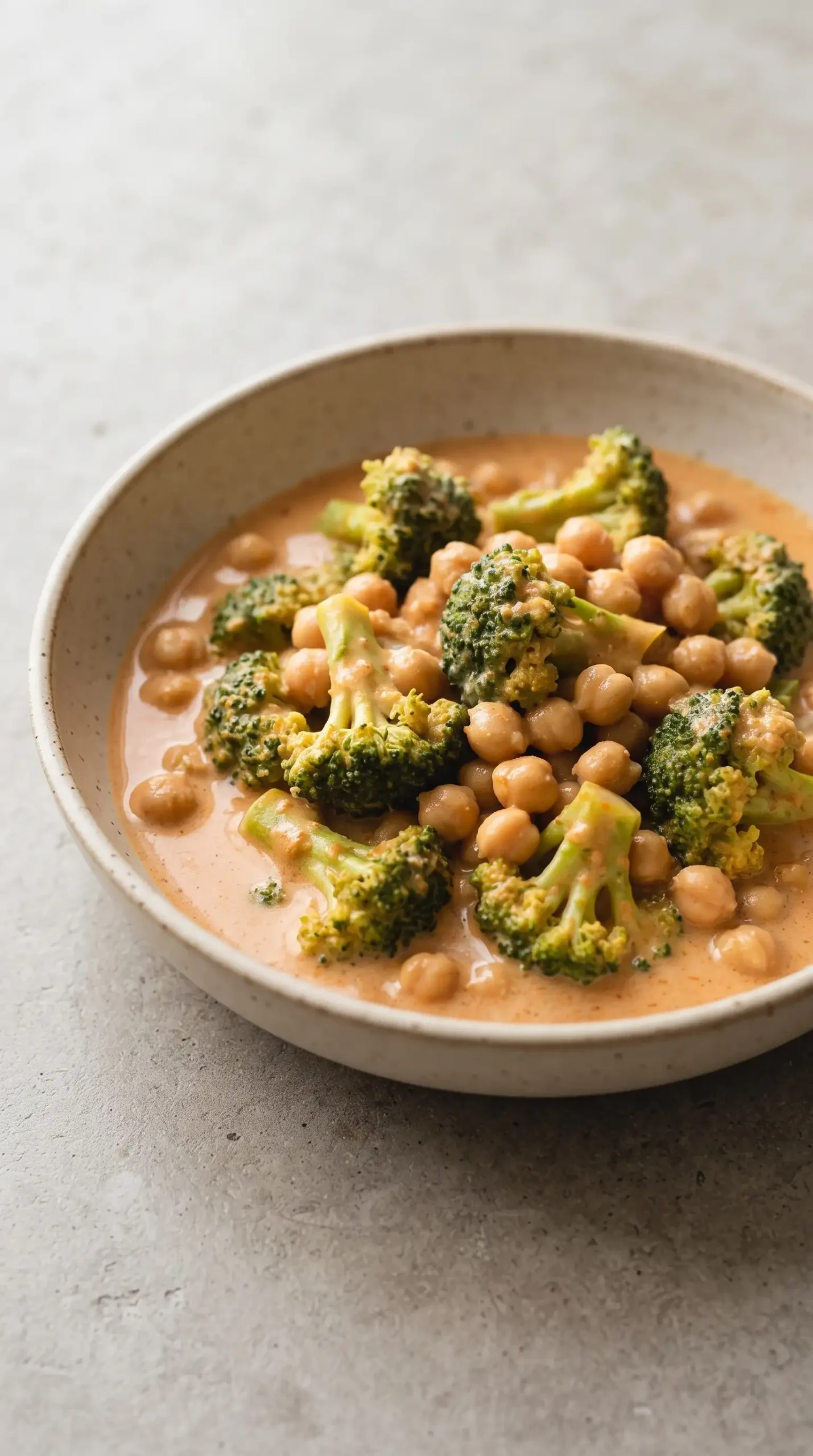
Creamy coconut milk, red curry paste, broccoli, and chickpeas already create a balanced combination; the cornstarch simply brings those elements together with a sauce that coats instead of running thin. Keeping the broccoli slightly firm and allowing the thickened curry to cool briefly preserves the contrast that gives the finished dish its character.
Coconut Curry Questions About Texture and Substitutions
Can I use frozen broccoli in coconut curry?
Frozen broccoli can be used, but its texture may soften faster than fresh broccoli during the simmer. Add it with attention to its existing tenderness and stop cooking once the pieces are heated through and pleasantly tender. Avoid treating the simmering time as a reason to keep cooking after the vegetables have already reached the desired texture.
Why is my coconut curry sauce still thin after adding cornstarch?
Cornstarch needs sufficient heat to activate, and the sauce can also become thicker as it cools slightly. If the curry has only just received the slurry, give it the brief boil called for in the preparation before judging the consistency. A longer cooling period may reveal more thickening than is visible while the sauce is actively bubbling.
Can I make the coconut curry without onion or garlic?
Yes. Onion and garlic are optional additions, so leaving them out does not remove a required structural component. The coconut milk, red curry paste, broccoli, chickpeas, and cornstarch still provide the main flavor, texture, and sauce structure.
How can I keep chickpeas from making the curry watery?
Drain and rinse canned chickpeas thoroughly before adding them. Excess liquid can dilute the coconut sauce, making its finished consistency less predictable. Letting the chickpeas drain well also keeps the concentrated coconut-and-curry flavor from being unnecessarily softened by leftover canning liquid.
What should I do if my coconut curry becomes too thick?
First let it cool slightly and reassess, since the sauce naturally continues to thicken after the starch is activated. If it is still thicker than you want, a small amount of additional liquid can loosen it gradually while you stir. Add liquid cautiously so the sauce remains cohesive instead of becoming abruptly thin.
5 Ingredient Coconut Curry with Broccoli and Chickpeas
Ingredients
Method
- Sauté the broccoli in a tablespoon of oil, adding onion or garlic at this stage if using. Cook for a few minutes until the broccoli begins to soften.
- Add the coconut milk to the pan and simmer for 5-8 minutes, keeping the broccoli tender-crisp rather than fully soft.
- Stir the red curry paste into the warm coconut milk until evenly combined, then add the chickpeas.
- Bring the curry to a slight boil and add the cornstarch slurry. Boil for about a minute, then reduce the heat and allow the curry to cool slightly as the sauce thickens.