
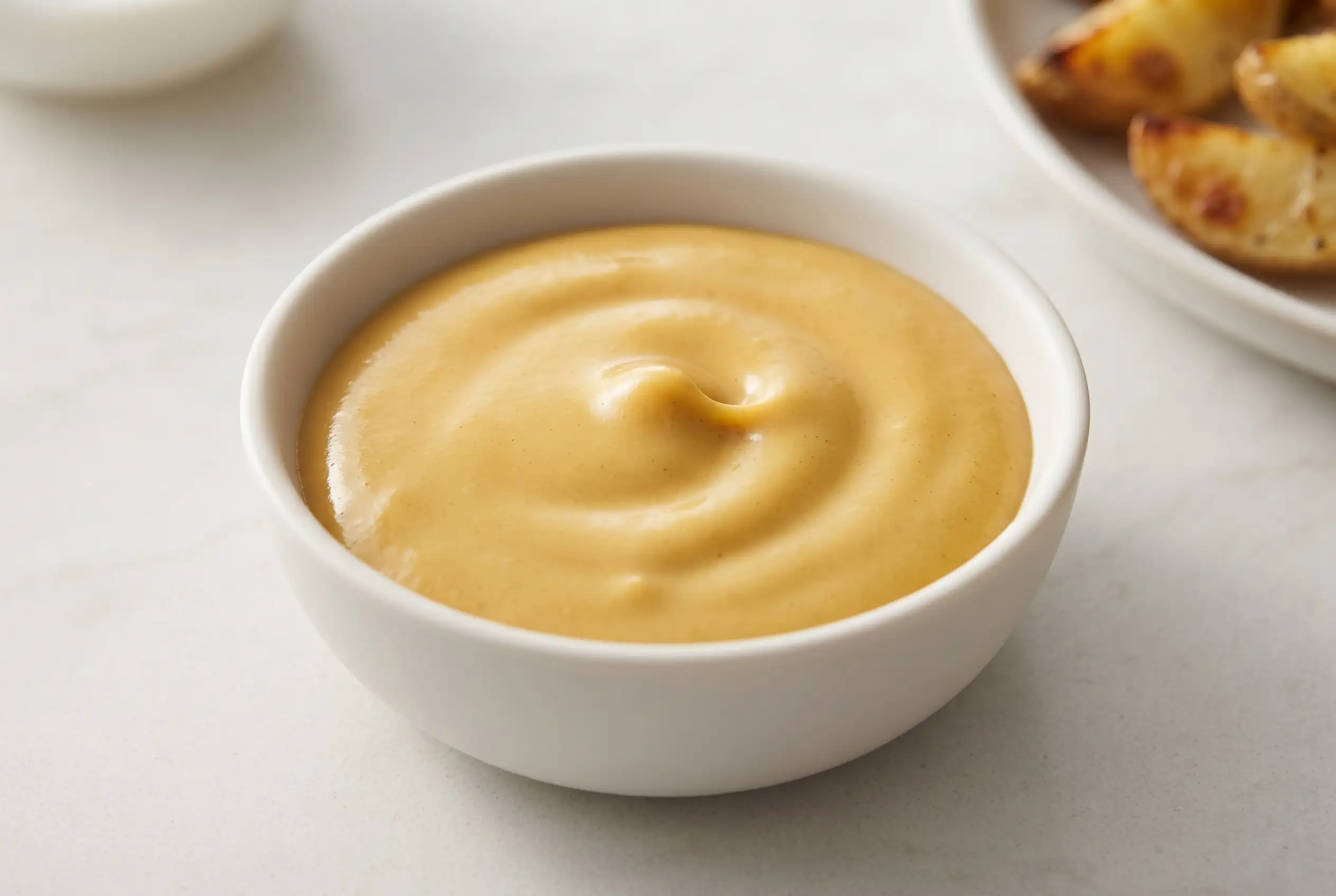
Honey mustard sauce is one of those quick kitchen staples that can shift from dip to drizzle with almost no effort. Honey brings rounded sweetness, Dijon mustard supplies sharpness and depth, mayonnaise gives the mixture a creamy body, and a little white distilled vinegar keeps the flavor lively. A pinch of cayenne can add a gentle spark without changing the sauce’s basic character.
Five minutes is enough to turn those ingredients into a smooth, spoonable condiment for sandwiches, roasted vegetables, chicken, fries, salads, or grain bowls. The simplicity leaves little room for hiding mistakes, though, so the most useful details are small ones: choosing the right mustard texture, balancing sweetness with acidity, and whisking until the sauce looks completely unified.
Honey and Dijon set the flavor balance
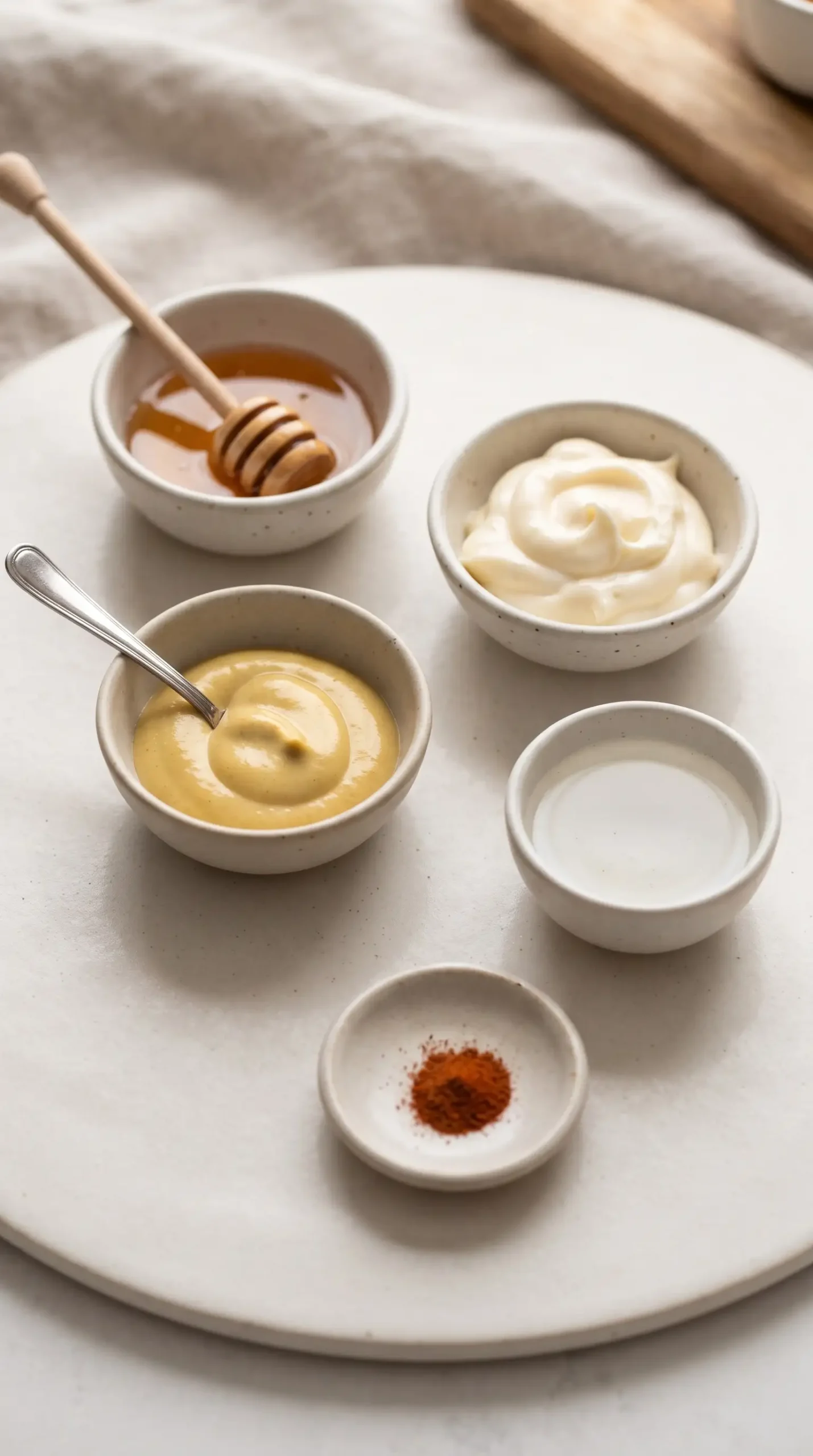
The most important ingredient relationship in honey mustard sauce is the contrast between honey and Dijon mustard. Honey softens the mustard’s pungent edge, while Dijon keeps the sweetness from becoming flat. Mayonnaise sits between those flavors and gives them a creamy base, allowing the sauce to feel cohesive instead of tasting like separate sweet, sharp, and acidic notes.
Dijon is especially useful here because its smooth texture blends readily into a sauce. Its assertive flavor also means the finished mixture can remain distinctly mustard-forward even with an equal portion of honey. White distilled vinegar contributes a clean acidity that brightens the mixture without introducing another strong flavor.
Cayenne belongs to a different category because it is optional. A small amount changes the finish more than the basic balance, adding warmth after the sweetness and mustard have already registered. Leaving it out keeps the sauce mild and straightforward.
Five-minute honey mustard sauce stays smooth through controlled whisking
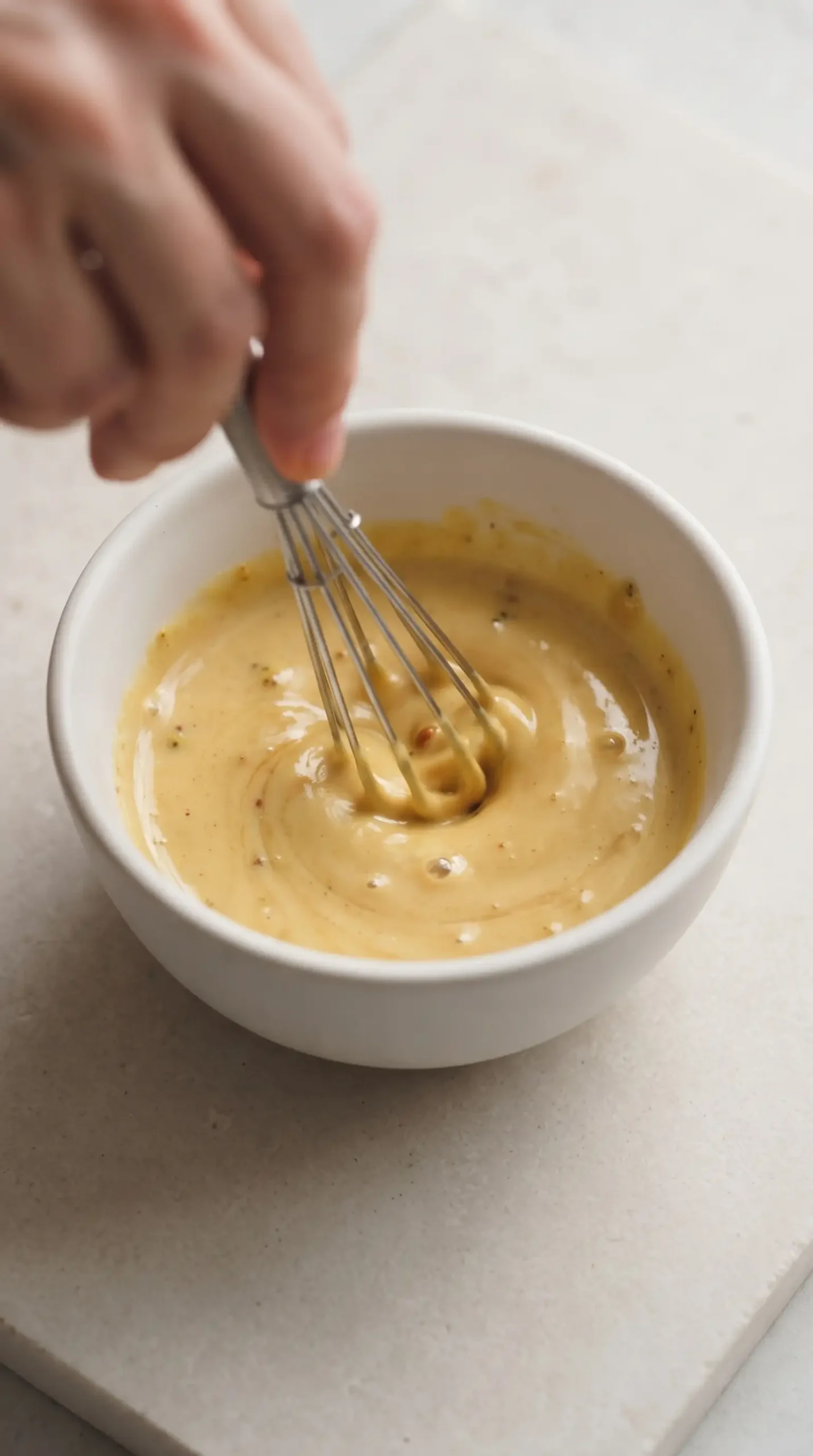
Whisking is the main technique that determines the texture. The ingredients should be worked together until no streaks of mayonnaise, honey, mustard, or vinegar remain visible. A small dish gives the whisk enough contact with the mixture to bring everything together efficiently.
Dijon can act as an emulsifying agent in vinegar-based mixtures, helping ingredients that would otherwise separate stay dispersed as they are whisked. That makes the mustard more than a flavor component here: it also contributes to the sauce’s unified texture.
Start with steady, compact strokes instead of aggressive splashing. Honey can cling to the spoon or sides of the dish, while mayonnaise is thick enough to resist blending if it is left in a lump. Scraping around the bottom and edges as you whisk helps incorporate anything that has settled.
Once the sauce looks uniformly colored and glossy, stop. Continued mixing does not provide a meaningful benefit once the ingredients are fully combined. The finished consistency should be creamy enough to dollop, loose enough to drizzle, and cohesive enough to cling to foods without looking separated.
White vinegar gives the sauce its clean finish
White distilled vinegar has a particularly useful role because its acidity is direct and relatively neutral. It cuts through the richness of mayonnaise and keeps honey from dominating the palate. The result is a sauce that tastes brighter and more balanced than a mixture built from sweet and creamy ingredients alone.
| Acid choice | Flavor effect | Best reason to use it |
|---|---|---|
| White distilled vinegar | Clean, direct acidity | Keeps the sauce crisp and focused |
| White wine vinegar | Softer, lightly wine-like acidity | Useful when a gentler vinegar character is preferred |
| Apple cider vinegar | Fruity, slightly rounded acidity | Adds a more noticeable fruit-toned note |
White wine vinegar and apple cider vinegar can both stand in when distilled vinegar is unavailable. Either substitution changes the flavor slightly, so the choice is less about correcting a problem and more about deciding which acidic character suits the food being served.
A whole-grain swap changes the texture of the honey mustard
Whole-grain mustard works when a more textured sauce is desirable. The mustard seeds remain visible and give the mixture a more rustic appearance and a bit more textural interest with each bite.
Smooth Dijon creates a more uniform honey mustard sauce, which is useful for drizzling or spreading where an even coating matters. Whole-grain mustard shifts the experience toward a textured condiment, making it particularly suitable when visible mustard seeds fit the dish.
Sweetness needs room for the mustard to remain noticeable
Honey is naturally prominent, so its presence should be understood alongside the mustard rather than as an isolated sweetener. Equal portions of honey and Dijon create the defining sweet-sharp character, while mayonnaise softens the edges and gives the sauce enough richness to carry those flavors.
Adding more sweetness can make the sauce seem gentler at first, but it can also reduce the mustard’s apparent intensity. For foods that already have their own sweetness, keeping the balance intact allows the condiment to contribute contrast instead of disappearing into the dish.
Acidity provides another way to restore definition when the mixture tastes too rich. The vinegar is not simply there to make the sauce tangy; it helps separate the sweet and creamy elements so the mustard remains perceptible.
Small-dish mixing prevents uneven pockets
A compact mixing dish is practical because the sauce contains only a modest amount of each component. A vessel that is excessively wide can spread the ingredients into a thin layer, making it harder for a small whisk or spoon to gather everything efficiently. Keeping the mixture concentrated makes smooth blending easier.
- Check the edges: Honey and mayonnaise can cling to the sides, so sweep around the dish while whisking.
- Watch the color: A uniform golden-yellow appearance signals that the ingredients have blended together.
- Inspect the surface: The sauce should look cohesive and creamy without visible streaks of vinegar or mayonnaise.
These visual checks are more useful than relying on a fixed whisking count. Ingredients vary slightly in temperature and texture, so the appearance of the mixture tells you when the sauce has reached the intended consistency.
Common honey mustard sauce mistakes are easy to spot
Uneven mixing is the clearest avoidable problem. Streaks of white mayonnaise or concentrated honey indicate that the whisking has not yet brought the mixture together. Continue working around the dish until the color and texture become consistent.
Too much emphasis on sweetness can also flatten the sauce’s character. Honey should remain prominent, but Dijon and vinegar need enough presence to keep the finished condiment lively. If the sauce tastes heavy or one-dimensional, consider the balance of its sweet, sharp, and acidic components before adding anything else.
Using a textured mustard when a perfectly smooth finish is expected can create an unwanted mismatch. Whole-grain mustard is a valid alternative, but its visible seeds and rougher texture are part of the result. Choose it deliberately when that texture is welcome.
Serving choices show where the sauce works hardest
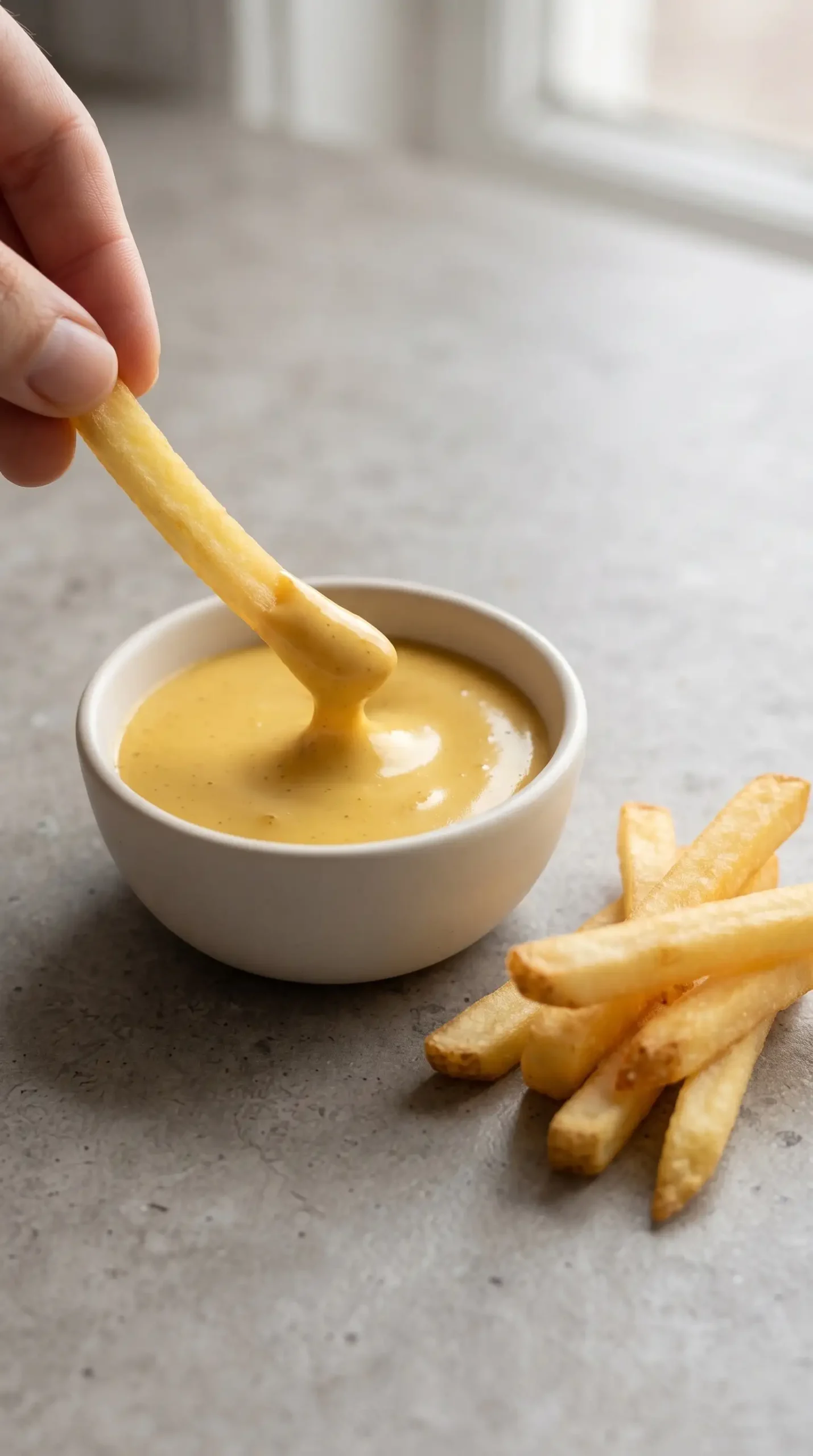
Honey mustard sauce has enough richness for spreading and enough looseness for drizzling, so its use does not have to be limited to dipping. Its sweet-acidic balance can provide contrast wherever a creamy condiment is useful.
| Use | What to look for | Why the sauce fits |
|---|---|---|
| Dip | Creamy, cohesive texture | Clings readily to fries, vegetables, or other bite-sized foods |
| Sandwich spread | Smooth, easily spreadable consistency | Adds moisture and sweet mustard flavor without needing a large amount |
| Drizzle | Uniform, spoonable sauce | Can be distributed across a larger surface for even flavor |
| Salad or grain-bowl accent | Bright, balanced flavor | Sweetness, acidity, and mustard provide contrast to mild ingredients |
For dipping, the creamy body makes each bite feel substantial. A sandwich benefits from the same texture because the sauce can be spread across bread instead of pooling in one place. Drizzling gives the condiment a wider reach, while salads and grain bowls can use its sweet-tangy character as a concentrated flavor accent.
The sauce can be adjusted without losing its identity
Small changes are most successful when they preserve the central sweet-mustard-acid balance. Whole-grain mustard is the clearest texture variation, while the vinegar alternatives offer different expressions of acidity without changing the basic structure of the condiment.
Cayenne is another straightforward adjustment. Keeping it out gives a mild profile; including the optional amount adds heat that arrives alongside the existing mustard bite. Because the sauce already contains several assertive flavors, a restrained approach keeps the heat from becoming the only noticeable feature.
Texture tells you when the blend is ready
A finished easy honey mustard sauce should hold together when lifted with a spoon. It should not show separate pools or streaks, and the color should be consistent throughout. Those observations are more useful than chasing a particular visual shade because the exact appearance can vary with the mustard and honey used.
Gloss is another useful cue. Mayonnaise contributes a creamy sheen, while thorough mixing produces a unified surface. If the mixture appears patchy, keep whisking; if it already looks smooth and cohesive, additional agitation is unnecessary.
Acidity can guide the sauce toward the food
Different serving situations can make the same condiment taste slightly different. Rich foods can benefit from the clean lift of vinegar, while milder foods allow the honey and Dijon combination to stand out more clearly.
White wine vinegar creates a softer variation, whereas apple cider vinegar introduces a fruitier note. Neither is a correction for a flawed sauce; both are legitimate alternatives when their flavor suits the intended use.
Storage is best handled with ordinary food-safety care
Because honey mustard sauce contains mayonnaise, treat leftovers as a perishable prepared condiment. Keep unused sauce refrigerated in a clean, covered container and avoid leaving it sitting out unnecessarily during serving.
Clean utensils matter as well. Using a fresh spoon for serving helps prevent crumbs or other foods from being introduced into the container. If the sauce develops an unusual odor, appearance, or texture, discard it instead of trying to restore it through additional whisking.
Five-minute preparation rewards attention to balance
The short preparation time works because there is no cooking process that needs to develop flavor. The character comes from bringing sweet honey, sharp Dijon, creamy mayonnaise, clean vinegar, and optional cayenne into a single balanced mixture.
A well-mixed Dijon honey mustard sauce should taste recognizable from the first bite: sweet enough to round the mustard, tangy enough to keep the richness lively, and creamy enough to spread or dip without feeling thin. Those relationships matter more than elaborate technique.
Honey mustard sauce works best when texture and balance agree
A smooth honey mustard sauce depends on two simple judgments: blend until the mixture is genuinely cohesive, then keep the sweet, sharp, and acidic elements in balance. Dijon determines much of the sauce’s identity, honey rounds it out, mayonnaise carries the flavors, and vinegar prevents the richness from becoming dull.
The optional cayenne and mustard alternatives provide room to change the character without losing that foundation. Once the sauce looks uniform and tastes balanced, its versatility follows naturally, whether it lands beside a dipping food, across a sandwich, or over a larger dish.
Honey mustard sauce questions about texture, swaps, and balance
Can I use whole-grain mustard instead of Dijon?
Yes. Whole-grain mustard is specifically suitable when you prefer a more textured condiment. The mustard seeds remain visible, so the finished sauce will look and feel less uniform than one made with smooth Dijon.
What can replace white distilled vinegar?
White wine vinegar or apple cider vinegar can replace white distilled vinegar. White wine vinegar keeps the acidic character relatively gentle, while apple cider vinegar brings a more noticeable fruity note to the finished sauce.
How can I make the sauce less spicy?
Leave out the optional cayenne pepper. Dijon mustard already provides its own pungent character, so omitting cayenne keeps the sauce focused on its sweet, creamy, and tangy elements without adding the extra layer of heat.
Why does my honey mustard sauce look streaky?
Streaks usually mean the ingredients have not fully incorporated. Scrape around the bottom and sides of the small dish while whisking, paying particular attention to areas where honey or mayonnaise may be clinging.
Can honey mustard sauce be used as more than a dip?
Absolutely. Its creamy consistency makes it suitable for spreading on sandwiches, drizzling over salads or grain bowls, or pairing with foods that benefit from a sweet and tangy condiment. The same balanced flavor can serve several roles without changing the mixture.
What should the finished sauce look like?
Look for a smooth, cohesive mixture with an even color and a creamy, glossy appearance. It should be thick enough to dollop but fluid enough to drizzle, with no visible streaks of separate ingredients.
5 Minute Honey Mustard Sauce with Dijon and Vinegar
Ingredients
Method
- Combine all ingredients in a small dish and whisk until the mixture is smooth and fully blended.
- Serve the sauce as desired and enjoy.