
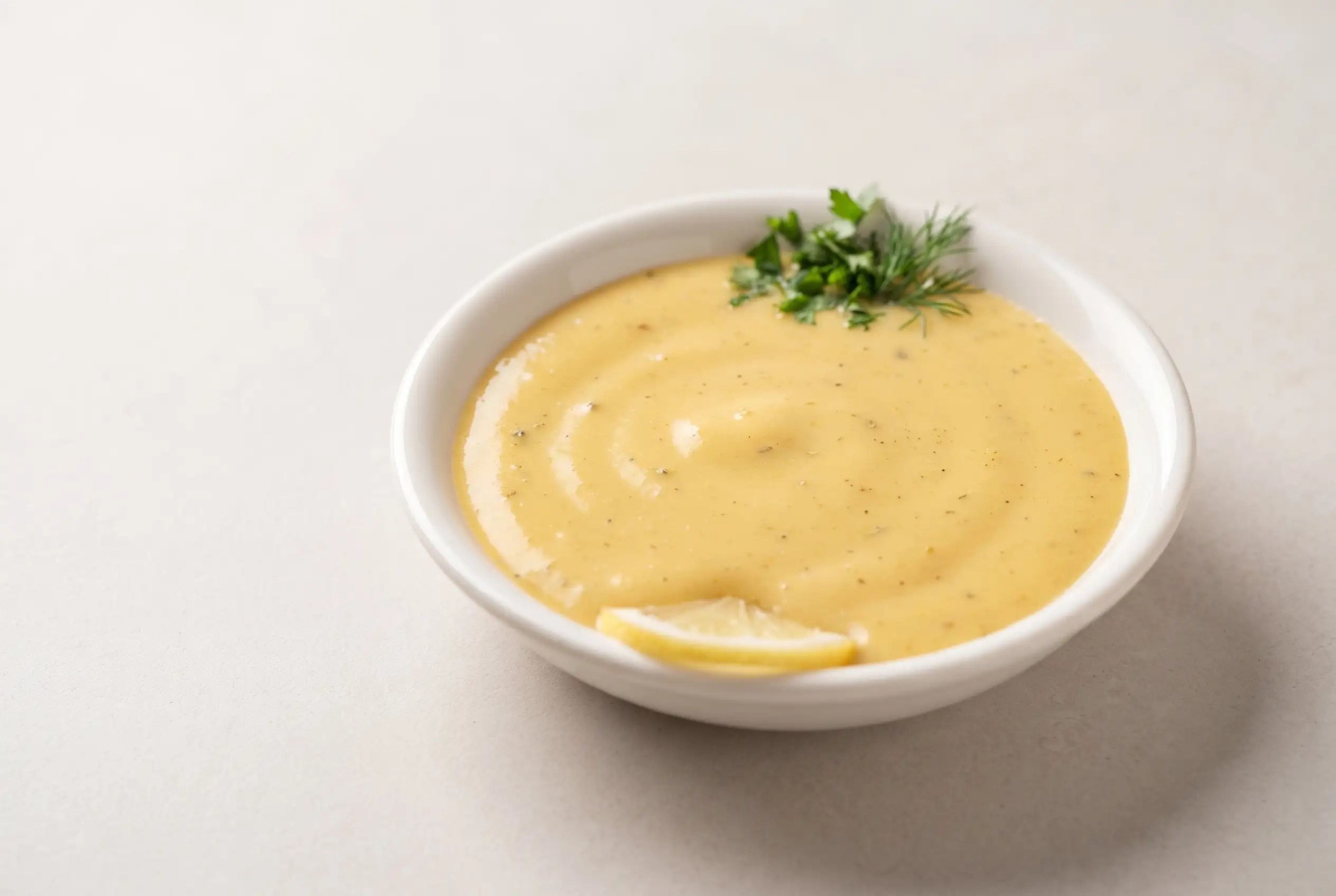
Sunshine sauce is the kind of quick homemade dressing that can change the character of a simple meal with almost no effort. The 5 minute sunshine sauce combines olive oil, water, white vinegar, garlic, dried herbs, salt, and black pepper into a smooth, creamy sauce that works across salads, roasted vegetables, grain bowls, and meal-prep lunches. Fresh lemon and herbs can brighten it further when they are available, but the pantry-friendly base stands on its own.
Sunshine sauce gets its texture from a simple emulsion
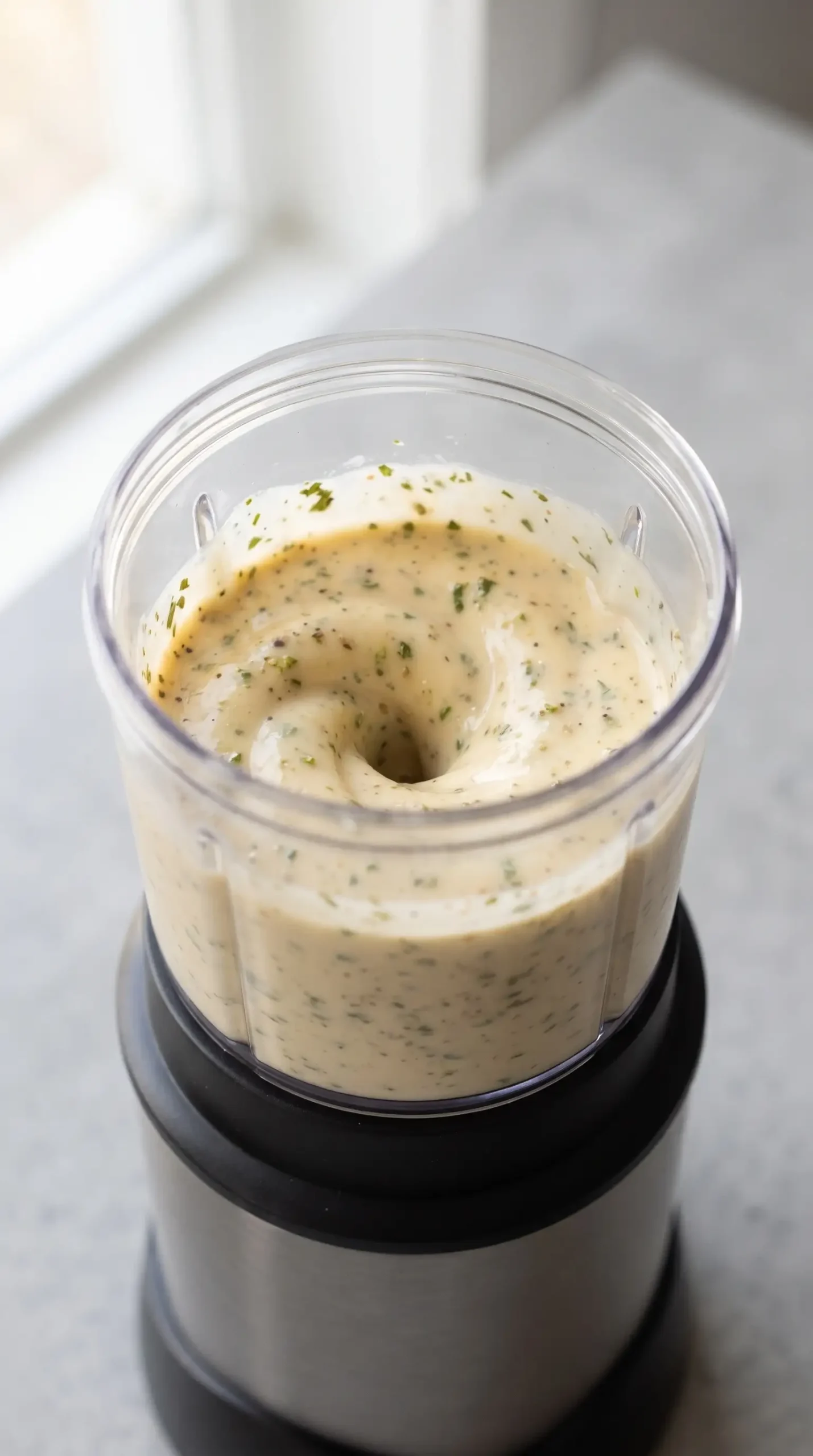
Olive oil and water do not naturally stay mixed for long, so the blending step matters more than it might appear. Emulsification combines oil and water by dispersing one liquid through the other, while vigorous processing helps create the smooth, creamy texture that makes the sauce easy to spoon or drizzle.
White vinegar supplies the sharp acidic element that keeps the rich oil from feeling heavy. Garlic, oregano, and basil give the mixture its savory character, while salt helps the flavors register clearly.
A short blend is enough to bring those elements together. Once the sauce looks uniformly creamy, stop processing; there is no cooking stage to develop or soften the flavors.
Olive oil, vinegar, and herbs determine the balance
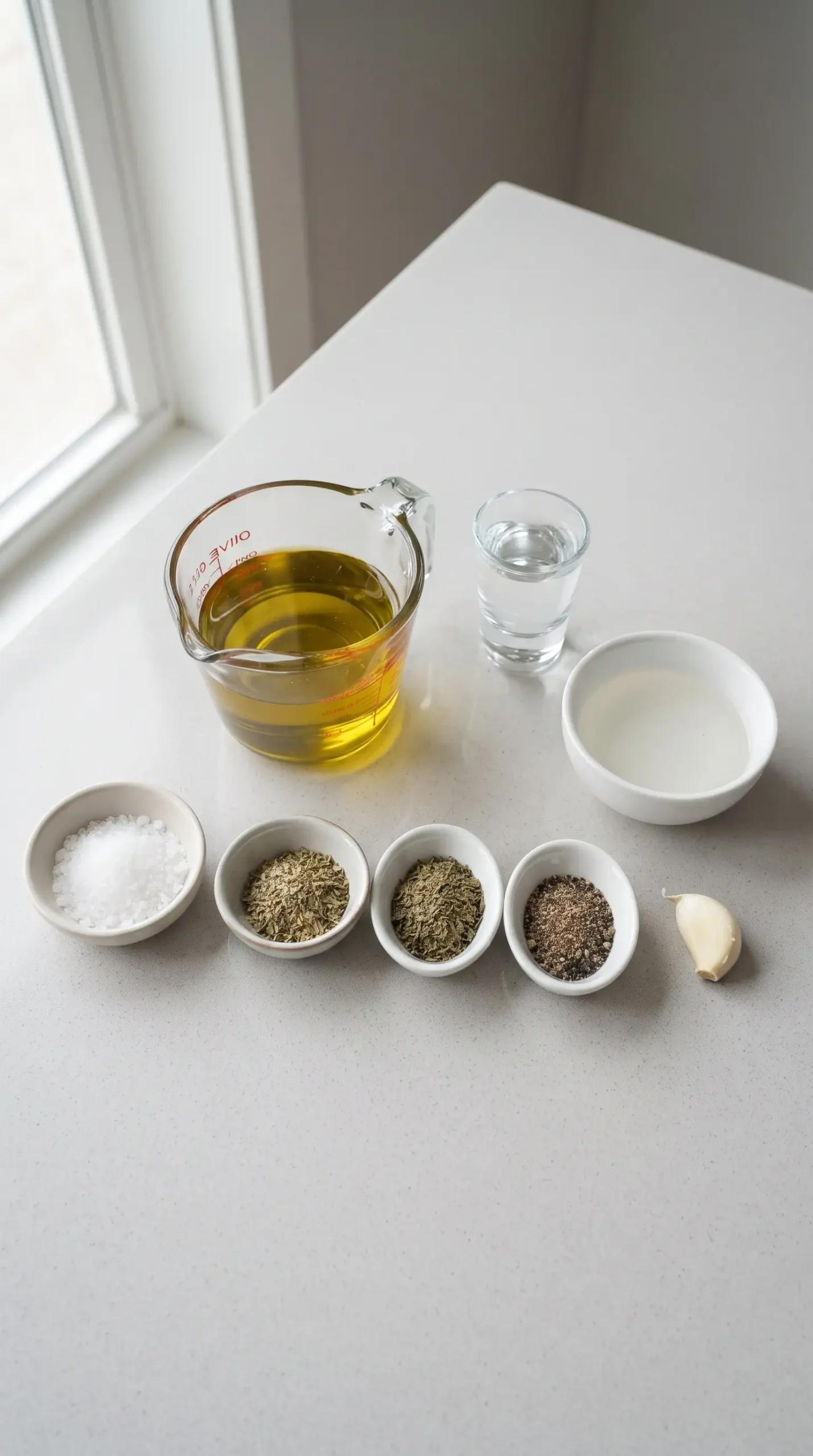
The ingredient combination is deliberately compact, but each choice affects how the finished sunshine sauce behaves. Olive oil forms the rich base, while water lightens the mixture and helps produce a pourable consistency. White vinegar brings a clean acidity that works particularly well with the dried oregano and basil.
Coarse kosher salt is best treated as a starting point because saltiness can vary with the exact brand and the foods you plan to dress. Black pepper can be adjusted to suit the meal. A single garlic clove gives the sauce a noticeable savory edge without requiring a long infusion.
Fresh additions are optional, but they create useful variations. Fresh lemon can add another layer of brightness, while parsley or basil suits Italian-leaning meals and cilantro works naturally with Mexican-inspired combinations.
Water keeps the sauce lighter and easier to use
The water is more than a filler in sunshine sauce. It gives the oil-and-vinegar mixture additional fluidity, helping the blended dressing move easily over vegetables, salads, and other foods. If the finished sauce becomes too thick after chilling, a small amount of additional water can restore a smoother consistency.
Blending time controls the creamy finish
Use a blender or food processor that can thoroughly circulate the relatively small amount of liquid. Processing should continue until the mixture looks smooth and creamy, with the herbs and garlic distributed throughout instead of sitting in separate pockets.
Pay attention to the appearance rather than relying on a rigid blending time. A properly emulsified sauce looks cohesive and fluid, while a poorly combined mixture can appear visibly oily with watery liquid underneath. Once the texture is unified, further processing is unlikely to add much value.
For a smaller appliance, pausing briefly to scrape down the sides can help any garlic or dried herbs that cling above the blade reach the mixture. Keep the goal practical: an even sauce with no obvious separation immediately after blending.
Fresh lemon changes the brightness without changing the base
Fresh lemon is an optional pantry upgrade that fits especially well when the sauce will accompany roasted vegetables, grains, or salads. Add it when you want a sharper citrus note alongside the white vinegar. Because lemon varies in acidity and size, taste after adding it instead of assuming a fixed amount will suit every batch.
Fresh herbs can steer sunshine sauce toward the meal
A handful of fresh herbs gives the sauce a more pronounced fresh-green character. Parsley or basil can reinforce an Italian-style meal, while cilantro can shift the flavor toward Mexican-inspired dishes without changing the underlying dressing.
- Parsley: Use when you want a fresh, savory accent that stays relatively versatile.
- Basil: Pair with Italian-style vegetables, grains, or salads for a more pronounced herbal profile.
- Cilantro: Choose when the sauce is headed toward Mexican-inspired combinations.
Easy sunshine sauce fits more than one kind of meal
Roasted vegetables are an obvious match because the sauce adds acidity and richness to foods with browned edges. Spoon it over vegetables just before serving so the creamy dressing remains distinct instead of disappearing during cooking.
Salads benefit from the same contrast. The sauce can be drizzled directly over greens or tossed through a larger salad, where the vinegar and herbs help connect crisp vegetables with richer ingredients.
Meal prep is another practical use because one blended batch can be portioned across several meals. Keep the sauce separate until serving when you want vegetables or grains to retain their original texture.
Three ways to adjust a batch without losing its character
| Adjustment | Best use | What to watch for |
|---|---|---|
| Fresh lemon | Salads and roasted vegetables | Add gradually because the sauce already contains vinegar. |
| Fresh parsley or basil | Italian-style meals | Use a handful for a more pronounced fresh-herb flavor. |
| Fresh cilantro | Mexican-inspired meals | Add according to how prominent you want the cilantro character. |
| Extra water | A sauce that has become too thick | Add a little at a time until the consistency loosens. |
Sunshine sauce mistakes usually come from texture control
One common problem is stopping the blender before the oil and liquid have become cohesive. If the mixture still looks distinctly separated, continue blending until it becomes smooth and creamy.
Another issue appears after refrigeration. The oil can solidify in the cold, making the sauce look thicker or partially set. Letting the jar sit at room temperature for a few minutes, or running it under warm water, helps loosen it before shaking.
Overcorrecting thickness can also make the dressing less balanced. Instead of adding a large amount of liquid at once, loosen a thick batch gradually with a little water and shake or blend again.
Storage keeps the sauce useful beyond one meal
Refrigerated sunshine sauce keeps for about one week in a jar. Separation is not a sign that the mixture has failed; shake the jar again before serving to recombine it.
Cold temperatures can make the olive oil turn solid. Allowing the jar to warm briefly or placing it under warm water can return the sauce to a workable consistency. Once loosened, shake thoroughly before using.
Portioning makes a versatile dressing easier to reach for
A jar works well for storage because it lets you shake the sauce directly before serving. For meal prep, small containers can make it easier to keep individual portions separate from salads or cooked vegetables until you are ready to eat.
Keeping the dressing apart from delicate greens also preserves their texture. Add enough to coat the food lightly, then add more if needed; the sauce is easier to increase than to remove once a salad has been heavily dressed.
Roasted vegetables show the sauce at its simplest
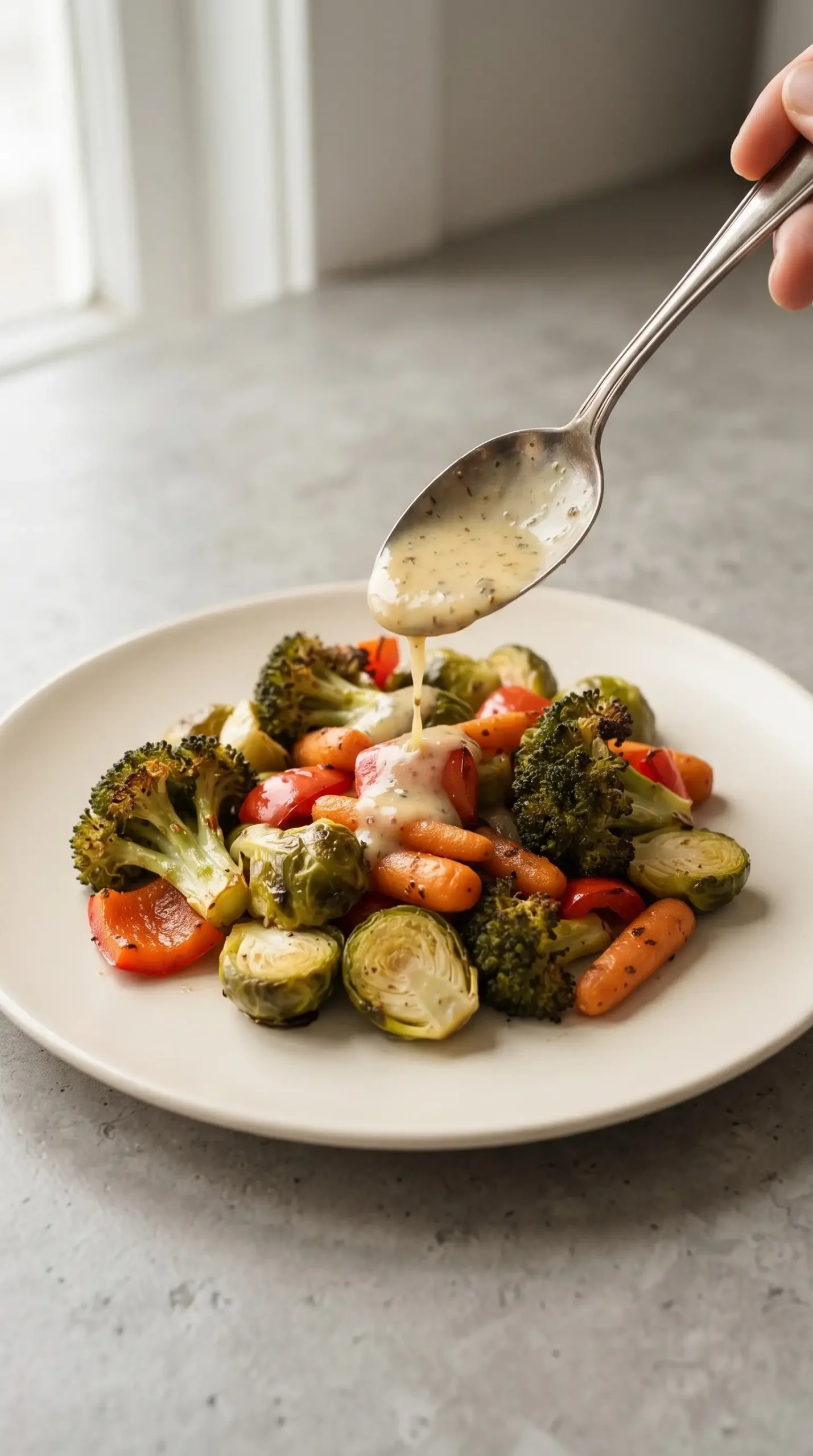
Warm roasted vegetables provide a particularly useful contrast for the cool, acidic dressing. Spoon sunshine sauce over the vegetables after roasting so its vinegar, garlic, and herb notes remain distinct. The result can turn a plain tray of vegetables into a more complete side dish without requiring another cooked component.
For a mixed vegetable platter, use the sauce selectively instead of flooding everything at once. That leaves room for the browned vegetable flavors to remain noticeable while the dressing supplies richness and acidity around them.
A few pantry decisions keep the flavor adaptable
The pantry-friendly foundation is useful precisely because it does not depend on fresh produce. Dried oregano and basil can provide the herbal backbone when the refrigerator is nearly empty, while optional lemon and fresh herbs can be treated as upgrades when they happen to be available.
That flexibility also makes the sauce easier to match with different meals. Keep the base unchanged for a neutral all-purpose dressing, then introduce fresh herbs when the rest of dinner points toward a particular flavor direction.
One blended balance makes sunshine sauce worth keeping around
A smooth emulsion is the key practical judgment behind sunshine sauce: the oil should feel integrated with the water and vinegar, while the garlic and herbs remain evenly dispersed. If the mixture is too thick after chilling, a little water can restore its pourable texture without changing its basic identity.
Once that balance is right, the sauce can move easily between roasted vegetables, salads, and meal-prep dishes. Its short ingredient list leaves enough room for fresh lemon or herbs when available, while the dried-herb base remains useful on its own.
Sunshine sauce questions about storage and adjustments
Can sunshine sauce be made without fresh lemon?
Yes. Fresh lemon is an optional addition, and the base already gets acidity from white vinegar. Leave the lemon out when you want a pantry-only version, or add it later when you have fresh lemon available and want a brighter citrus note.
Why did my sunshine sauce separate after blending?
Oil and water naturally tend to separate, so a visible split can happen when the emulsion is not fully maintained or after the sauce has been sitting. Shake the jar vigorously before serving; if the mixture is freshly made and still looks markedly divided, blend it again until it becomes smooth and creamy.
How can I thin sunshine sauce after refrigeration?
If the chilled sauce becomes too thick, let it sit at room temperature for a few minutes and shake it. When more loosening is needed, add a little water, shake again, and continue gradually until the consistency is easy to drizzle.
What fresh herbs work best in sunshine sauce?
Parsley and basil are useful for Italian-style meals, while cilantro suits Mexican-inspired dishes. A handful of the chosen herb can be blended into the sauce, allowing the same base to take on a different fresh-herb direction.
How long does sunshine sauce last in the refrigerator?
Stored in a jar in the refrigerator, the sauce keeps for about one week. Because the olive oil can firm up when cold, allow the jar to warm briefly or run it under warm water before shaking if the dressing has become difficult to pour.
Sunshine Sauce with Olive Oil and Dried Herbs
Ingredients
Method
- Add all ingredients to a blender or food processor and blend until the sauce is smooth and creamy.
- Serve the sauce with roasted vegetables, salads, meal prep dishes, or other foods as desired.