
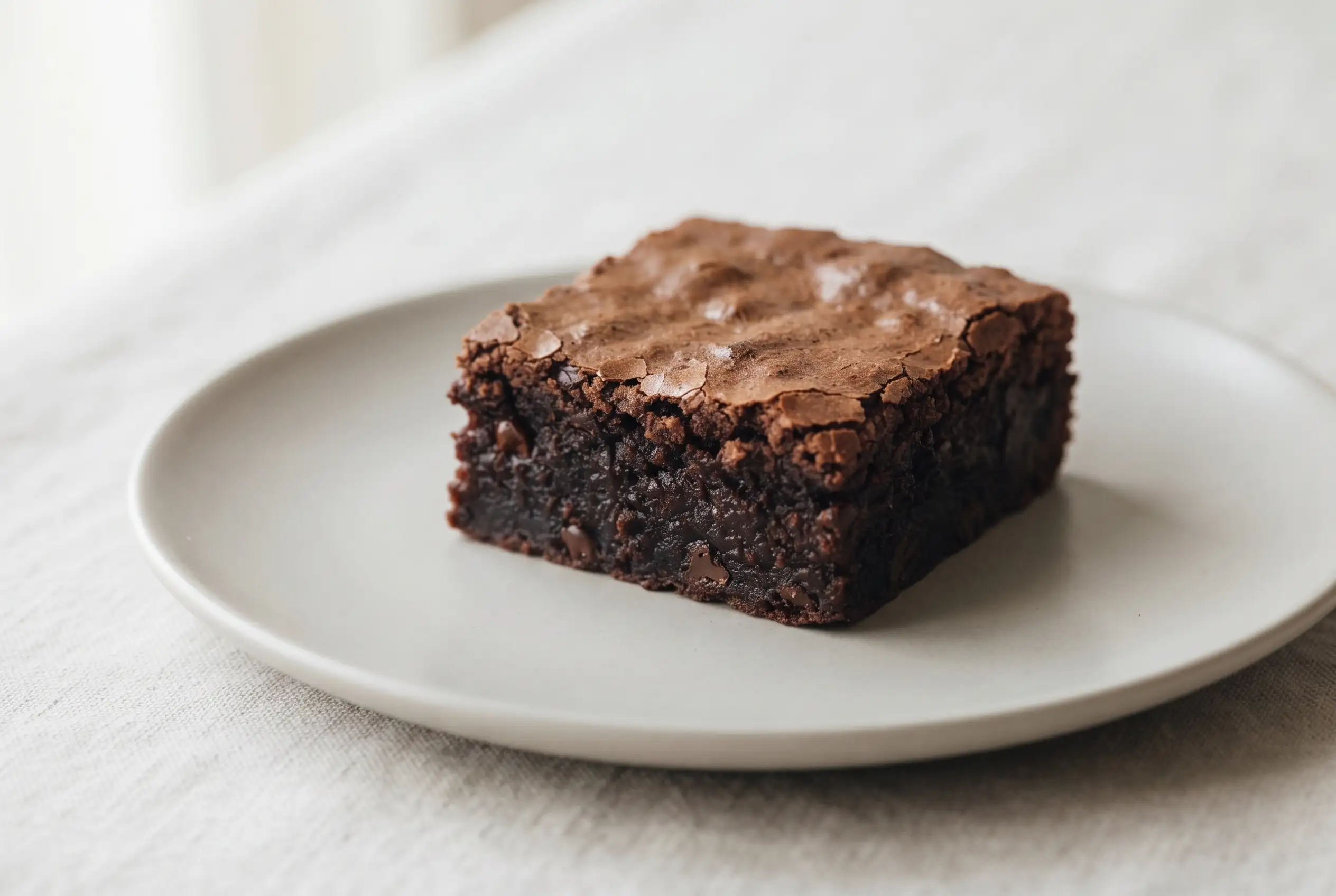
Espresso brownies bring together two flavors that naturally reinforce each other: deep cocoa and concentrated coffee. These 6 ingredient espresso brownies use melted salted butter, sugar, espresso powder, eggs, flour, and unsweetened cocoa powder to create a rich, intensely chocolatey bake with a distinct coffee finish. The short ingredient list keeps the focus on the balance between cocoa and espresso, while the simple mixing method makes these easy espresso brownies especially practical for a casual baking day.
Why espresso makes these brownies taste more chocolatey
Espresso powder does more than make brownies taste like coffee. In chocolate baking, it can intensify chocolate flavor without necessarily making the brownies taste like mocha. Using 1/3 cup here creates a clearly recognizable espresso presence in the finished brownies.
The timing of the espresso powder matters too. It is mixed directly with the warm melted butter and sugar before the eggs, flour, and cocoa enter the bowl. That gives the powder a chance to disperse evenly through the mixture, helping avoid concentrated pockets of coffee flavor.
For anyone who enjoys a pronounced mocha profile, these baked espresso brownies have a particularly direct flavor structure. There are no extra extracts, melted chocolate, or complicated additions competing with the cocoa and espresso.
Salted butter gives the batter its rich foundation
Melted salted butter supplies the fat and richness that make the brownies dense and satisfying. Because it is already salted, the batter has a built-in savory counterpoint to the two cups of granulated sugar and the concentrated coffee flavor. The butter also makes the mixing process unusually straightforward because there is no need to cream softened butter.
Unsweetened cocoa keeps the chocolate profile focused
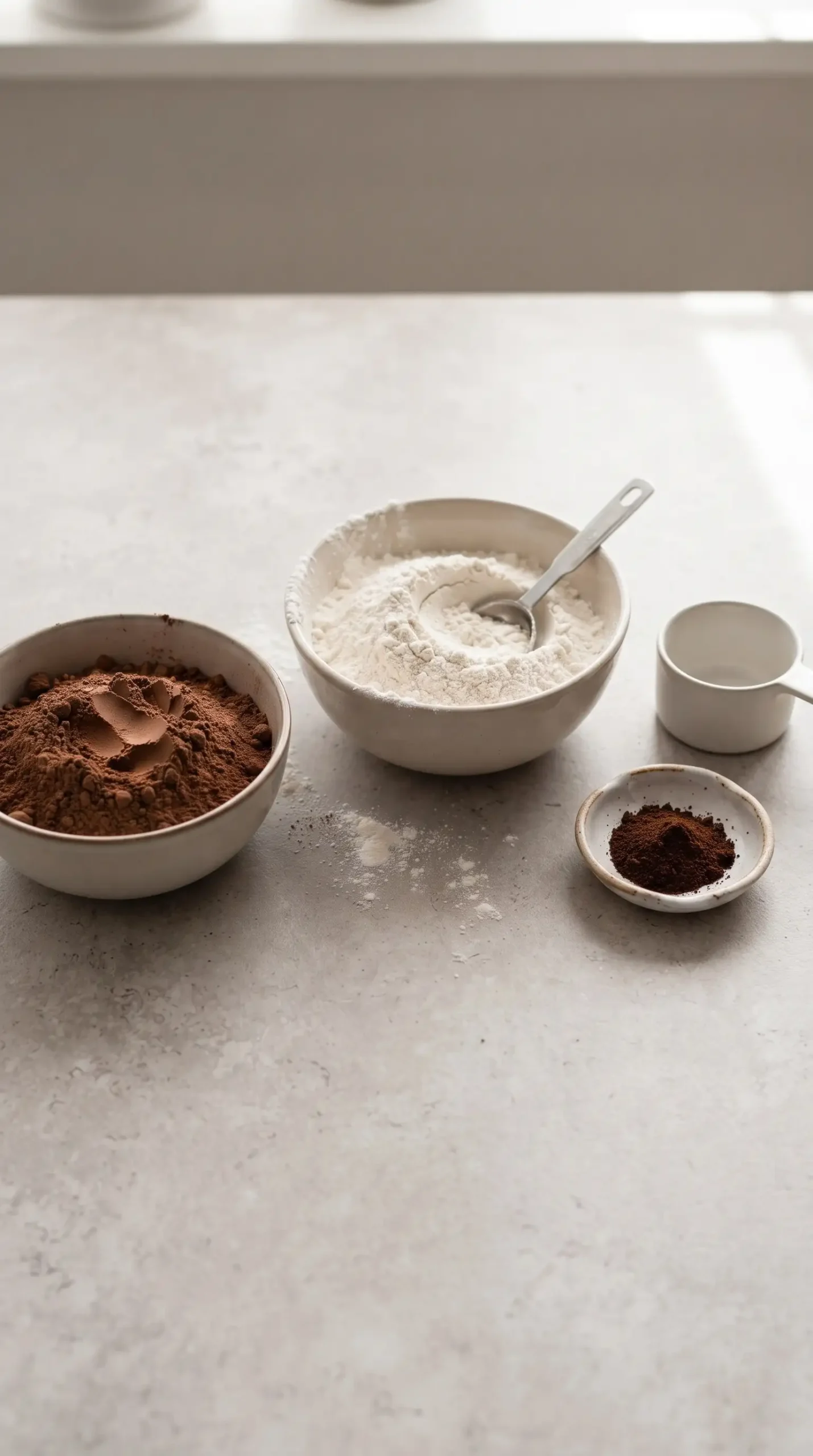
Unsweetened cocoa powder brings the primary chocolate flavor without introducing additional sugar. That matters here because the batter already contains a substantial amount of granulated sugar, while the espresso powder contributes bitterness and intensity. The cocoa therefore works within a deliberately bold sweet-bitter balance.
All-purpose flour provides the structure needed for the brownies to hold together after baking. The important handling point is to stir the flour and cocoa only until no flour streaks remain. Prolonged mixing is unnecessary and can change the texture of the finished brownies.
For the cleanest flavor, keep the cocoa and espresso amounts tied to the proportions given. Increasing one dramatically can shift the balance toward either bitterness or coffee intensity, while reducing either one changes the character that makes these espresso brownies distinctive.
The batter should stay thick and evenly combined
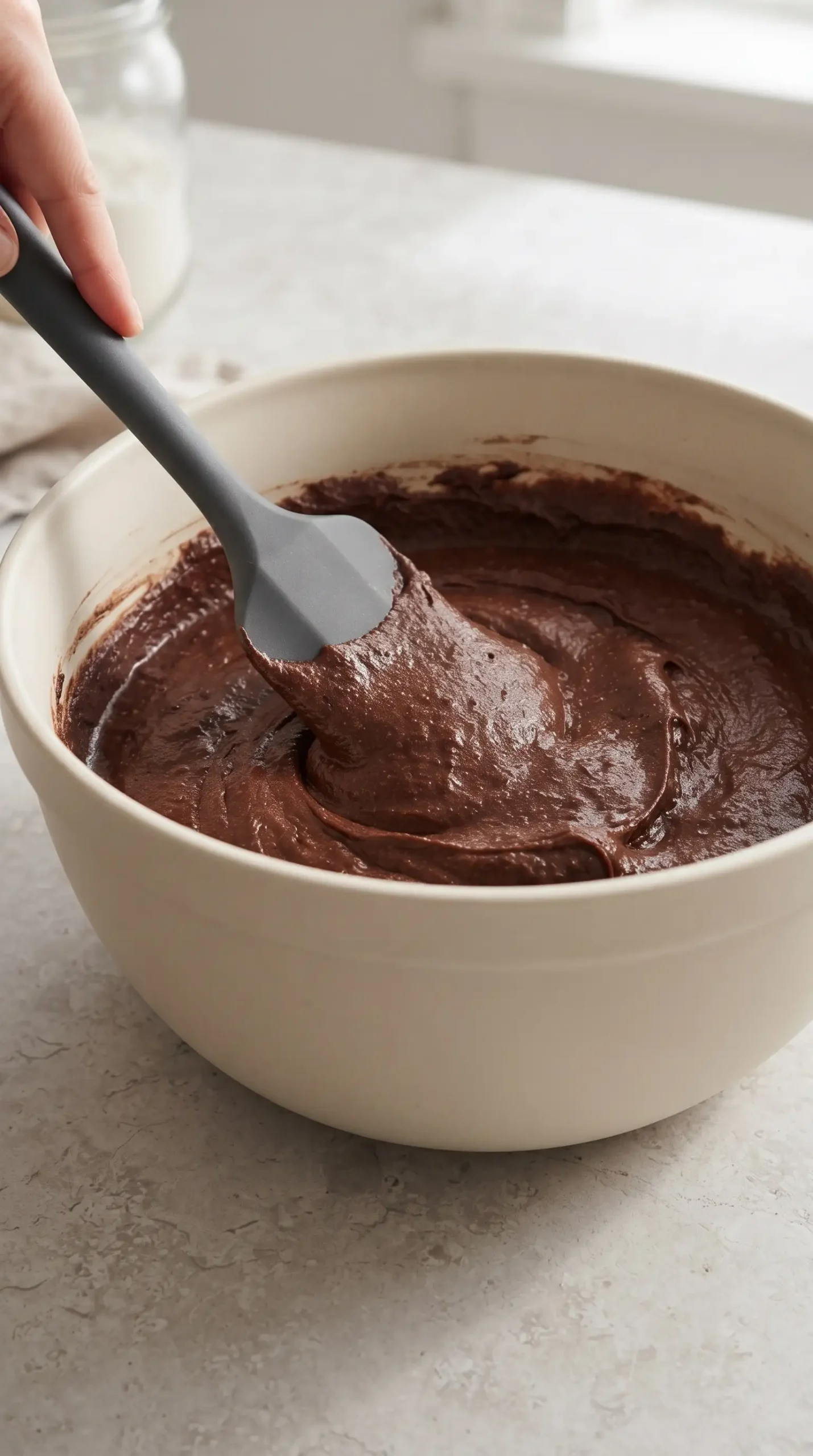
Whisking the melted butter and sugar for about 30 seconds is enough to bring the mixture together before the espresso powder goes in. Once the eggs are added, mix until they are fully incorporated, then switch to a gentler stirring motion for the flour and cocoa.
A useful visual checkpoint comes when the dry ingredients disappear. The batter should have no visible flour streaks, but it does not need extended beating after that point. This small distinction protects the texture while still ensuring that every portion of the pan receives the same cocoa-flour mixture.
One 9×13 pan changes how the brownies bake
The 9×13-inch parchment-lined pan gives the batter a broad, even surface for baking. Parchment also makes lifting the cooled brownies from the pan easier and helps keep the edges from sticking directly to the baking surface.
Spread the batter into the pan before it goes into the 350-degree oven, paying attention to the corners so the thickness stays reasonably consistent. A uniform layer makes the center and edges easier to judge during baking.
Thirty minutes favors a softer espresso brownie center
The supplied 30-minute baking point is intentionally close to the softer end of the texture range. At that stage, the center should be set enough to hold its shape while retaining the tender, fudgy quality associated with a slightly underbaked brownie.
If you prefer a chewier result, the baking time can be extended to 35 to 40 minutes. The longer bake moves the texture away from the softer center and toward a firmer chew, so the choice depends on how you like your brownies to finish.
Watch the middle closely instead of relying only on the clock. Oven performance varies, and the useful visual cue supplied for these brownies is a center that has set. That observation matters most when you are aiming for the softer texture.
Two texture paths are built into the same pan
| Preferred texture | Timing approach | What to look for |
|---|---|---|
| Soft and fudgy | About 30 minutes | Center is set but remains tender |
| Chewier | About 35 to 40 minutes | Center is more firmly baked |
| Between the two | Use the supplied range as a guide | Choose based on how firm you want the middle |
The useful advantage of this range is that the same batter can be finished according to personal texture preference. The espresso and cocoa flavors remain central either way; the principal change comes from how far the center is baked.
Chocolate chips can make the finish more indulgent
A handful of chocolate chips is an optional addition mentioned with the batter. They are not necessary for the basic six-ingredient formula, but they can add little pockets of chocolate throughout the brownies for a more decadent finish.
A pinch of sea salt can sharpen the sweet coffee contrast
Although salted butter is already part of the formula, a pinch of sea salt is offered as an optional extra. Used sparingly, it can heighten the contrast between the sweet sugar, dark cocoa, and assertive espresso flavor without changing the basic structure of the brownies.
Common espresso brownie mistakes to avoid
Most problems with these brownies can be traced to a small number of handling decisions. The ingredients themselves are uncomplicated, so attention to mixing and doneness has an outsized effect on the result.
- Overmixing the dry ingredients: Stir only until the flour streaks disappear once the flour and cocoa are added.
- Under-incorporating the eggs: Mix after adding the eggs until they are fully combined so the batter is cohesive before the dry ingredients go in.
- Ignoring the center: Use the set middle as the key doneness observation, especially when aiming for the softer 30-minute finish.
- Skipping parchment: Line the 9×13 pan so the baked brownies are easier to lift and portion after baking.
These checks are especially useful because the batter contains both cocoa and espresso powder, making visual changes in color less helpful than texture and consistency cues. A controlled mixing approach and an attentive look at the center provide clearer signals.
Cutting espresso brownies starts with the texture you chose
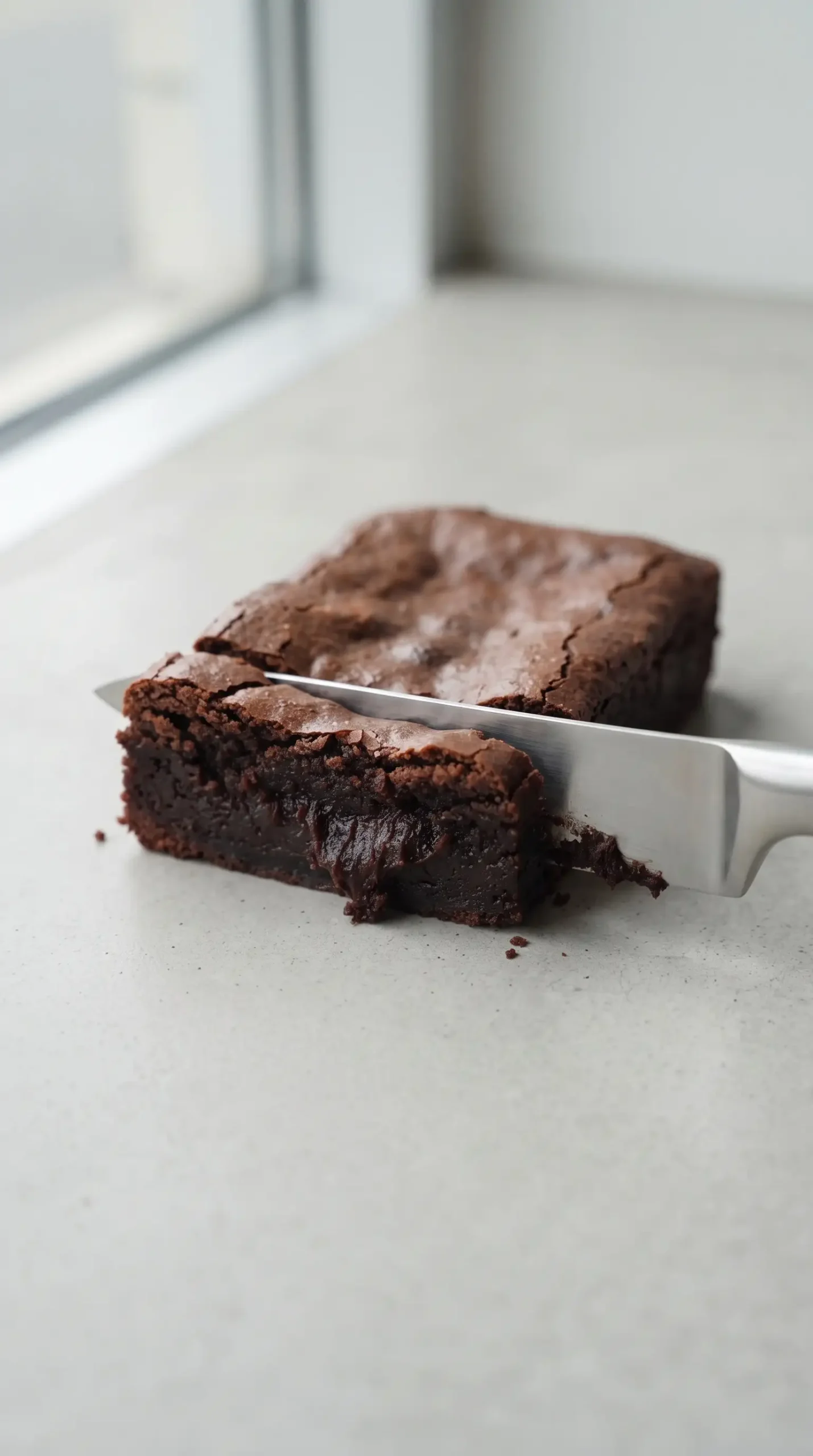
Allow the baked brownies to settle before cutting so the center has time to hold together. A softer bake will naturally feel more delicate than brownies taken closer to the 35-to-40-minute mark, so rushing into cutting can make the pieces harder to handle.
Easy espresso brownies work with restrained additions
The base has a strong enough flavor profile that additions should be chosen with some restraint. Chocolate chips are the clearest option already supported by the formula, while a small amount of sea salt can emphasize the existing contrast. Neither addition requires changing the underlying batter proportions.
The short ingredient list rewards precise proportions
Six core ingredients leave little room for a background flavor to hide an imbalance. The sugar controls sweetness, the espresso powder establishes the coffee intensity, cocoa supplies the chocolate character, eggs help bind the batter, flour provides structure, and melted salted butter supplies richness.
That balance is why measuring the ingredients accurately matters even when the preparation feels casual. A change in one major component affects the relationship between sweetness, bitterness, richness, and structure.
For readers searching specifically for 6 ingredient espresso brownies, the appeal is also practical: the core formula avoids a long pantry list while still producing a strongly flavored chocolate dessert. The optional salt and chocolate chips can remain exactly that optional without complicating the main formula.
Espresso brownies are best judged by the middle
Once the edges are baked and the middle has reached the desired degree of set, the most important decision has already been made. Choosing a softer or chewier center changes the eating experience more noticeably than adding extra decoration or elaborate toppings.
For a tender, fudgy result, the supplied 30-minute timing gives a clear starting point. For a firmer chew, extending the bake toward 35 to 40 minutes provides the alternate texture described with the recipe.
The balanced bake keeps cocoa and espresso in focus
Deep cocoa, concentrated espresso, and a tender center are the defining features of these brownies. The strongest result comes from keeping the batter evenly mixed, stopping once the dry ingredients disappear, and using the center as the guide for the desired finish. Those choices let the simple six-ingredient structure do the work without unnecessary additions.
A slightly underbaked center keeps the character of the brownies especially rich and soft, while a longer bake creates a chewier square. Either finish preserves the essential cocoa-and-espresso combination that gives these espresso brownies their distinctive flavor.
Espresso brownies questions about texture and baking
Can I use regular instant coffee instead of espresso powder?
Instant coffee is not identical to espresso powder, so substituting it can change the intensity and flavor of the brownies. The supplied formula is specifically built around espresso powder, making that ingredient the clearest choice when you want the pronounced coffee character described here.
Why are my brownies still soft in the center?
A soft center can be intentional at the 30-minute baking point. If the middle has not set enough for your preferred texture, continue baking and use the 35-to-40-minute range as the provided path toward a chewier result.
Should the melted butter be cooled before mixing?
The directions call for melted butter to be whisked with the sugar before the espresso powder and eggs are incorporated. If the butter is extremely hot, allowing it to cool somewhat is a sensible handling precaution so the eggs are not exposed to unnecessary heat when they are added.
Can I make the brownies without chocolate chips?
Yes. Chocolate chips are an optional addition, so leaving them out keeps the brownies within the core six-ingredient formula and does not require another adjustment to the batter.
How do I know when baked espresso brownies are done?
Look at the middle of the pan. For the softer texture, the center should be set while remaining tender; if you want a chewier brownie, extend the bake toward 35 to 40 minutes and look for a firmer center.
6 Ingredient Espresso Brownies with Cocoa Powder
Ingredients
Method
- Preheat the oven to 350°F (177°C).
- Whisk the melted butter and sugar together for 30 seconds. Mix in the espresso powder until evenly combined, then add the eggs and continue mixing until fully incorporated.
- Stir in the flour and cocoa powder just until no dry streaks remain.
- Spread the batter into a 9×13-inch baking pan lined with parchment paper.
- Bake for 30 minutes, or until the center is set. For a chewier texture, bake for 35 to 40 minutes.