
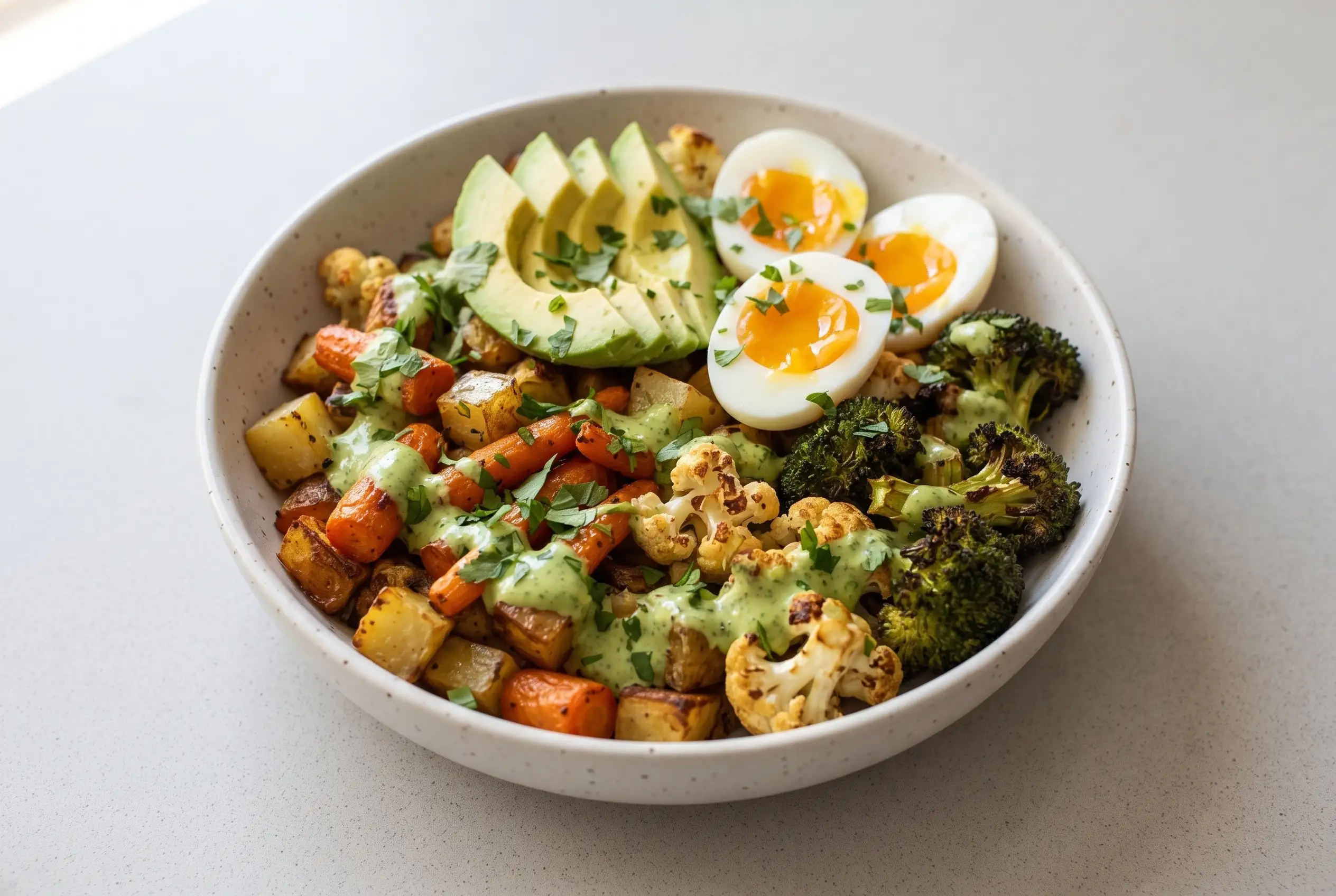
Roasted vegetable bowls turn a simple tray of carrots, potatoes, broccoli, and cauliflower into a lunch with contrasting textures and a bright, herb-rich sauce. The vegetables become the sturdy base, while green tahini, avocado, and eggs can be added according to the kind of meal you want that day. Because the components roast separately and the sauce comes together while the oven is working, the bowl has a practical meal-prep rhythm without requiring complicated cooking.
What makes the combination especially useful is its flexibility at serving time. A bowl can lean heavily on browned vegetables, use a generous spoonful of green tahini for creaminess, or add egg and avocado for a more substantial lunch. The same roasted vegetables can therefore feel different across several portions without changing the core preparation.
Roasted vegetable bowls work because contrast carries the meal
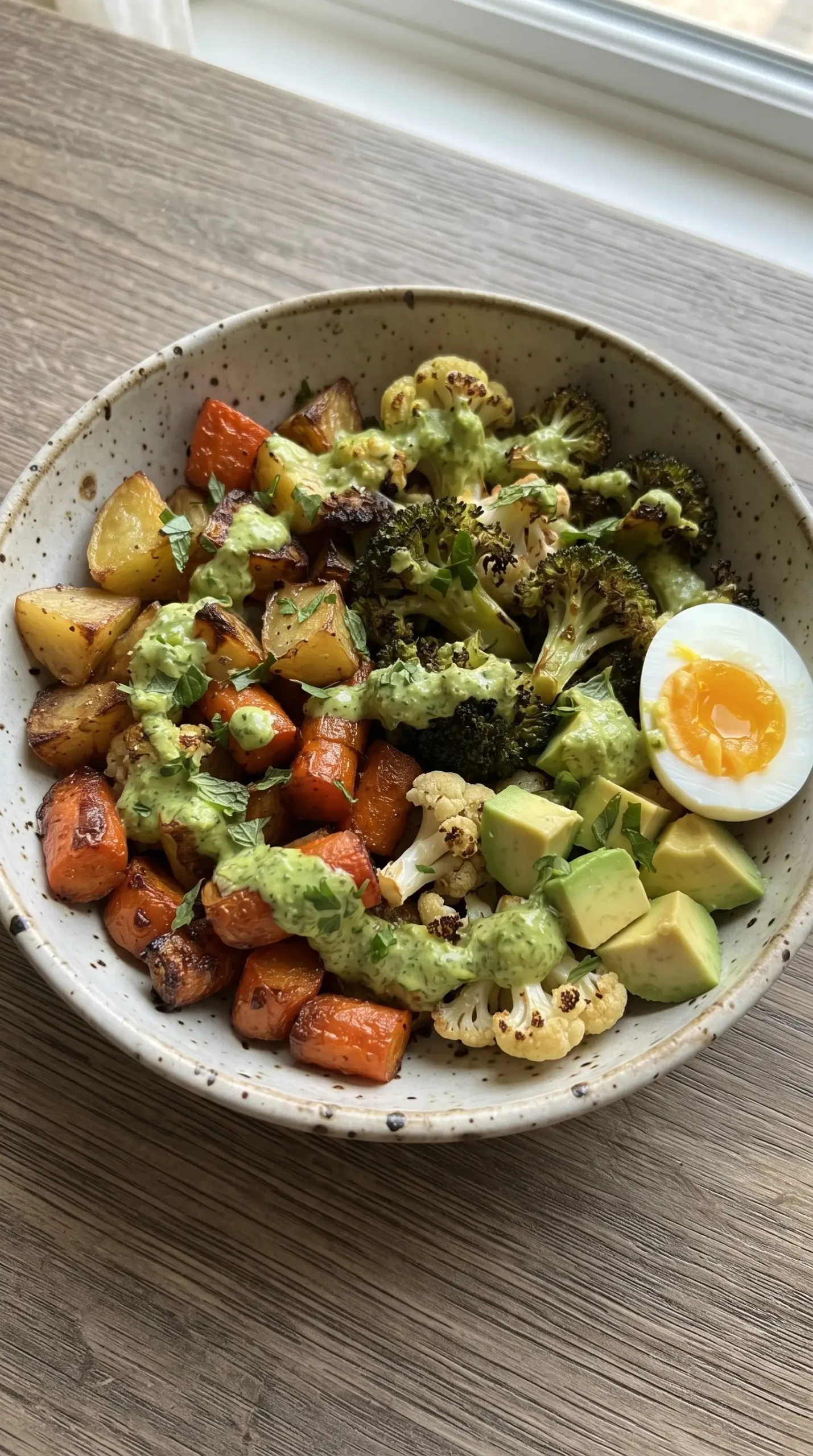
Roasted vegetables bring sweetness, savory depth, and browned edges, but the bowl becomes more interesting when those qualities meet fresh herbs, lemon, and creamy tahini. Each component has a different texture, so the finished meal does not depend on a single dominant flavor.
Carrots and potatoes provide a substantial roasted base, while broccoli and cauliflower contribute smaller florets with more exposed browned surfaces. Green tahini moves between those textures, coating uneven pieces and adding moisture without requiring another cooked component.
Serving the vegetables with avocado and hard-boiled eggs also creates an easy way to change the character of each portion. Some bowls can emphasize creamy avocado, while others can use egg for a firmer bite. The roasted vegetable foundation remains the same throughout.
Carrots and potatoes set the roasting rhythm
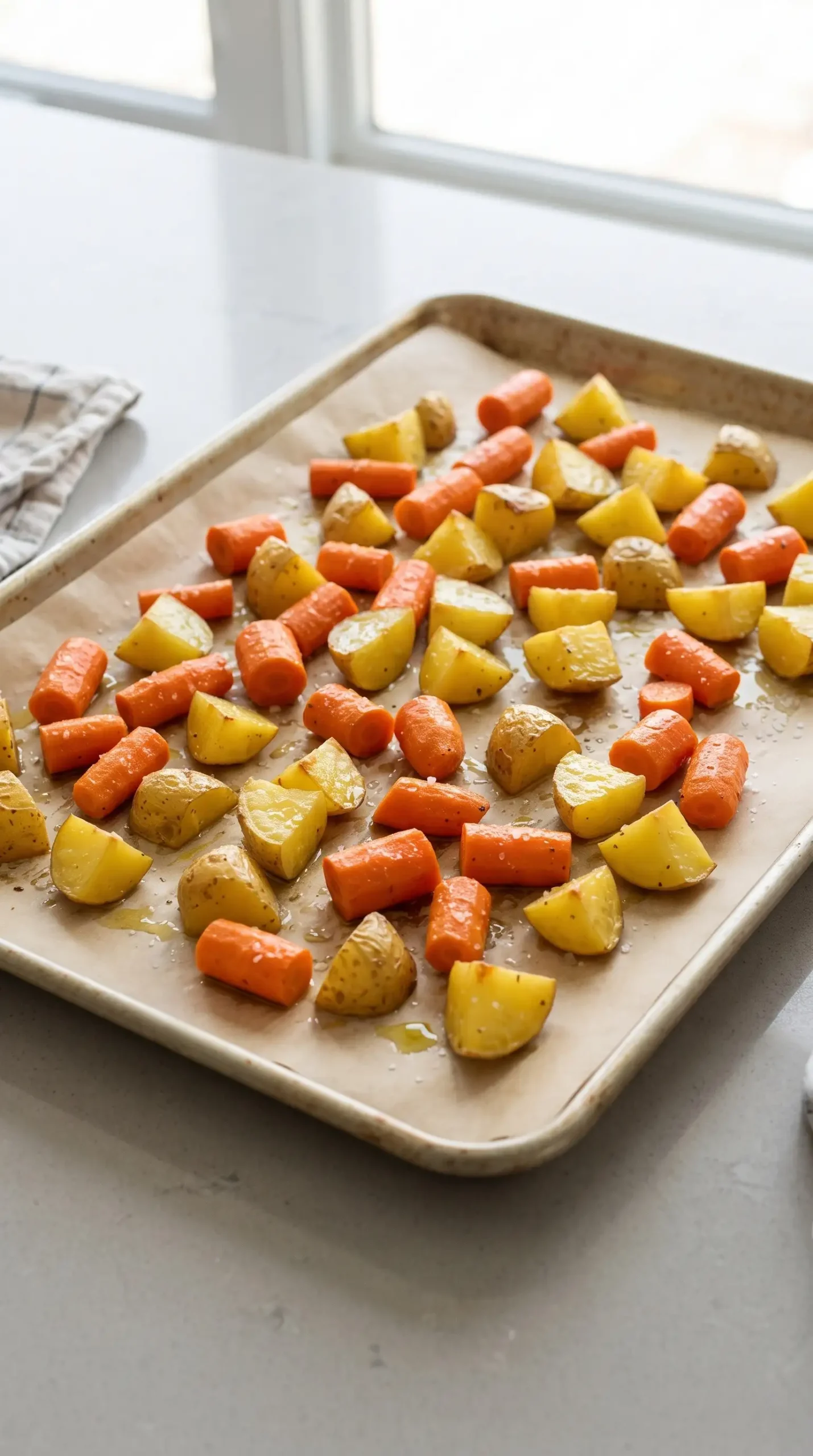
Carrots and potatoes share a useful roasting job because both benefit from enough heat to develop browned edges while becoming tender inside. Chopping them into reasonably similar pieces helps them approach doneness together, although the exact size still affects how quickly each piece softens. A little space around the pieces lets hot air reach more surfaces, supporting browning and keeping the tray from behaving like a steamy covered pan.
Broccoli and cauliflower need visual attention
Broccoli and cauliflower can brown beautifully at the same temperature, but their smaller florets expose plenty of surface area to direct heat. That makes them the vegetables most worth watching near the end of roasting. Deeply browned tips can add appealing roasted flavor, while very dark edges signal that the tray needs attention.
Keeping these two vegetables together on one baking sheet makes that decision easier. If they reach the color you want before the carrots and potatoes are ready, they can come out while the denser vegetables continue cooking. This arrangement creates control without requiring a different oven temperature.
The separate trays also make portioning easier later. You can distribute the roasted vegetables evenly or deliberately give one bowl more broccoli, more cauliflower, or more root vegetables according to preference.
Green tahini depends on texture and balance
Tahini is the anchor of the green sauce, but the surrounding ingredients determine whether it pours smoothly or lands as a thick paste. The mild olive oil, water, lemon juice, garlic, and herbs need enough blending to become cohesive. A food processor or blender is useful because it breaks the herbs down into the tahini mixture instead of leaving large leafy pieces throughout the sauce.
Fresh cilantro and parsley can be used together, or you can lean toward one of them. Their role is especially useful beside deeply roasted vegetables; the herbs bring a fresh character that keeps the bowl from tasting uniformly rich.
Lemon has a practical job beyond adding brightness. If the sauce tastes heavy against the roasted vegetables, a little more lemon can sharpen the overall balance. Add small amounts at a time, since the base already contains lemon juice and salt.
- Texture check: Blend until the herbs are distributed through the tahini instead of remaining in large leafy pieces.
- Balance check: Taste for the relationship between tahini richness, lemon brightness, garlic, and salt.
- Pouring check: Loosen a sauce that feels too thick so it can reach the uneven surfaces of the roasted vegetables.
A few sheet-pan choices improve browning
Parchment keeps the vegetables easy to lift and clean up after roasting, while dividing the vegetables into distinct sections helps you monitor their progress. Tossing the pieces with olive oil and salt before roasting gives the surfaces seasoning and the fat needed for good contact with the hot pan, while unlined baking sheets can provide more direct heat contact for deeper browning.
Keep vegetables separated for flexible doneness
Sheet-pan organization matters here because the vegetables do not all respond identically to heat. Putting broccoli and cauliflower together creates one group that can be removed when their florets are well browned. Carrots and potatoes can share another tray and continue until their centers are tender and their edges have developed more color.
| Vegetable group | Roasting partner | Useful visual cue | Cooker decision |
|---|---|---|---|
| Carrots | Potatoes | Edges become browned while centers soften | Continue if the centers still need tenderness |
| Potatoes | Carrots | Cut surfaces develop deeper color | Give the tray more time when pieces remain firm |
| Broccoli | Cauliflower | Floret tips become visibly browned | Remove earlier if the edges are getting too dark |
| Cauliflower | Broccoli | Exposed surfaces show strong roasting color | Check closely near the end of cooking |
The practical advantage is not just convenience. Separate groups give you a visual cue for each vegetable family, so you can make a decision based on what you see instead of forcing every component to finish at exactly the same moment.
Baking at 425 degrees provides the high-heat environment needed for roasting, but the oven is only part of the equation. Piece size, tray crowding, and how much surface area is exposed all influence the result. A tray that looks packed will generally need more patience than one where the vegetables have room around them.
Once the vegetables are arranged, avoid repeatedly moving them around. Turning or stirring can be useful when needed for even exposure, but constant handling can make it harder to track browning. Let the hot pan do its work, then check the vegetables near the end for tenderness and color.
Pair each bowl for texture and staying power
Hard-boiled eggs and avocado serve different purposes alongside the roasted vegetables: eggs add a firm, savory protein element, while avocado contributes soft richness. Green tahini can bridge those textures, coating the vegetables and connecting the creamy and crisp-tender components in each serving.
Avoid these roasted vegetable bowl mistakes
Crowding the pan is one of the easiest ways to lose the roasted character that makes these bowls satisfying. When pieces are packed tightly, moisture has less opportunity to escape and the surfaces have less room to brown. Spread the vegetables out, use more than one sheet when necessary, and keep the groups organized.
Another issue is pulling every vegetable at the same moment simply because they entered the oven together. Broccoli and cauliflower may reach their preferred color before carrots and potatoes become as tender as you want. Watch each group independently and remove the faster-browning vegetables when they are ready.
Under-seasoning can also become more noticeable after portioning. The vegetables are seasoned before roasting, while the sauce carries its own salt, lemon, garlic, and herbs. Taste the finished sauce before serving and adjust its seasoning so that it can flavor several bites of vegetables without becoming overwhelming.
Finally, an overly thick sauce can make a bowl feel heavy and difficult to coat evenly. The water in the green tahini is there to create a more fluid consistency. Blend thoroughly, then adjust gradually if the sauce needs to loosen.
Portioning keeps meal prep roasted vegetable bowls practical
Six servings can be assembled from the roasted vegetables, green tahini, avocado, and hard-boiled eggs, with the avocado and egg added according to how you want each meal to eat. Keeping the sauce distinct until serving also lets you control how much dressing reaches each portion.
Storage decisions protect texture
Roasted vegetables are easiest to manage when they are allowed to cool before being packed away. Excess heat trapped in a sealed container can create condensation, which softens the surfaces that were browned in the oven. Letting the vegetables settle before closing the containers helps preserve their roasted texture.
Green tahini is particularly useful as a separate component. You can add it when serving so the sauce does not sit on the vegetables for an extended period and soften them. This also makes it easier to adjust the amount from bowl to bowl.
Avocado deserves similar attention because its texture changes quickly after cutting. Add it close to serving when practical, especially if you want clean slices or cubes rather than a softer topping.
Eggs are convenient for portioning because they can be prepared alongside the other meal components and added when needed. Keeping each component distinct gives you more control over texture and makes the same batch feel less repetitive across the week.
Green tahini gives the bowl its finishing contrast
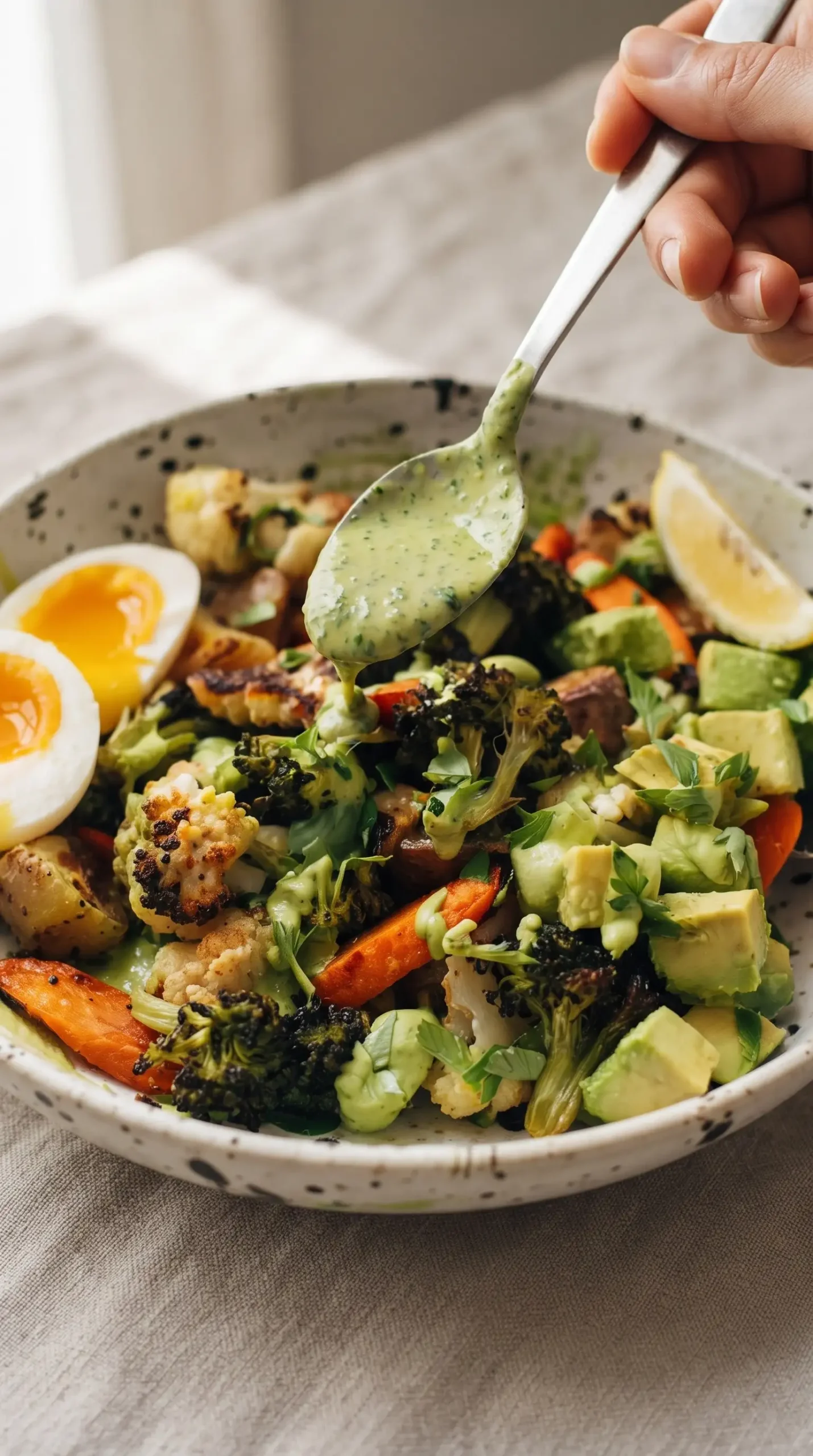
A spoonful of green tahini changes the character of the roasted vegetables by bringing creamy texture, herbs, lemon, and garlic into each bite. The sauce should be loose enough to drizzle or spoon across the vegetables, yet substantial enough to cling to their uneven surfaces.
Browning turns the vegetables into a complete lunch
Deeply browned carrots, potatoes, broccoli, and cauliflower give roasted vegetable bowls their central texture and flavor, while the green tahini keeps those roasted notes balanced with herbs and lemon. The useful judgment is to watch the vegetables individually: pull the florets when their color is right and let the denser pieces continue until they are tender.
At serving time, the contrast matters as much as the roast itself. Soft avocado, firm egg, and fluid green tahini create different textures around the vegetables, so a simple tray of roasted produce becomes a meal that can be portioned without tasting flat.
Questions about storage, sauce, and serving roasted vegetable bowls
Can I make the green tahini ahead of serving?
Yes. Blend the sauce while the vegetables roast and keep it separate until the bowls are served. If it becomes thicker after resting, loosen it gradually with a little water and blend or stir until it reaches a spoonable consistency.
How can I keep the roasted vegetables from becoming soggy?
Give the pieces space on the baking sheets and avoid sealing them while they are still releasing a lot of heat. Letting them cool before packing reduces trapped condensation, and adding the green tahini at serving keeps the sauce from sitting directly on the vegetables for an extended period.
Can I use only cilantro or only parsley in the green tahini?
Yes. The supplied sauce works with cilantro and/or parsley, so either herb can carry the green element on its own. Using both gives a broader herb profile, while choosing one lets you emphasize the flavor you prefer without changing the basic sauce structure.
What can I use instead of hard-boiled eggs?
The bowl can be served with another protein that fits your meal, since the vegetables and green tahini do not depend on eggs for their structure. Choose a ready-to-eat protein that can be portioned alongside the roasted vegetables and added close to serving.
When should I add the avocado?
Add avocado as close to eating as practical. Its soft texture contrasts with the roasted vegetables, but it is less suited to long storage than the cooked vegetable components, so keeping it separate preserves a fresher serving texture.
Roasted Vegetable Bowls with Green Tahini and Avocado
Ingredients
Method
- Preheat the oven to 425°F (218°C).
- Place the vegetables on several parchment-lined baking sheets, keeping each vegetable in its own section. Coat with olive oil and salt, then roast for 25-30 minutes.
- While the vegetables cook, blend the sauce ingredients in a food processor or blender until combined.
- Divide the roasted vegetables into portions and serve with avocado, hard-boiled eggs, or another protein.