
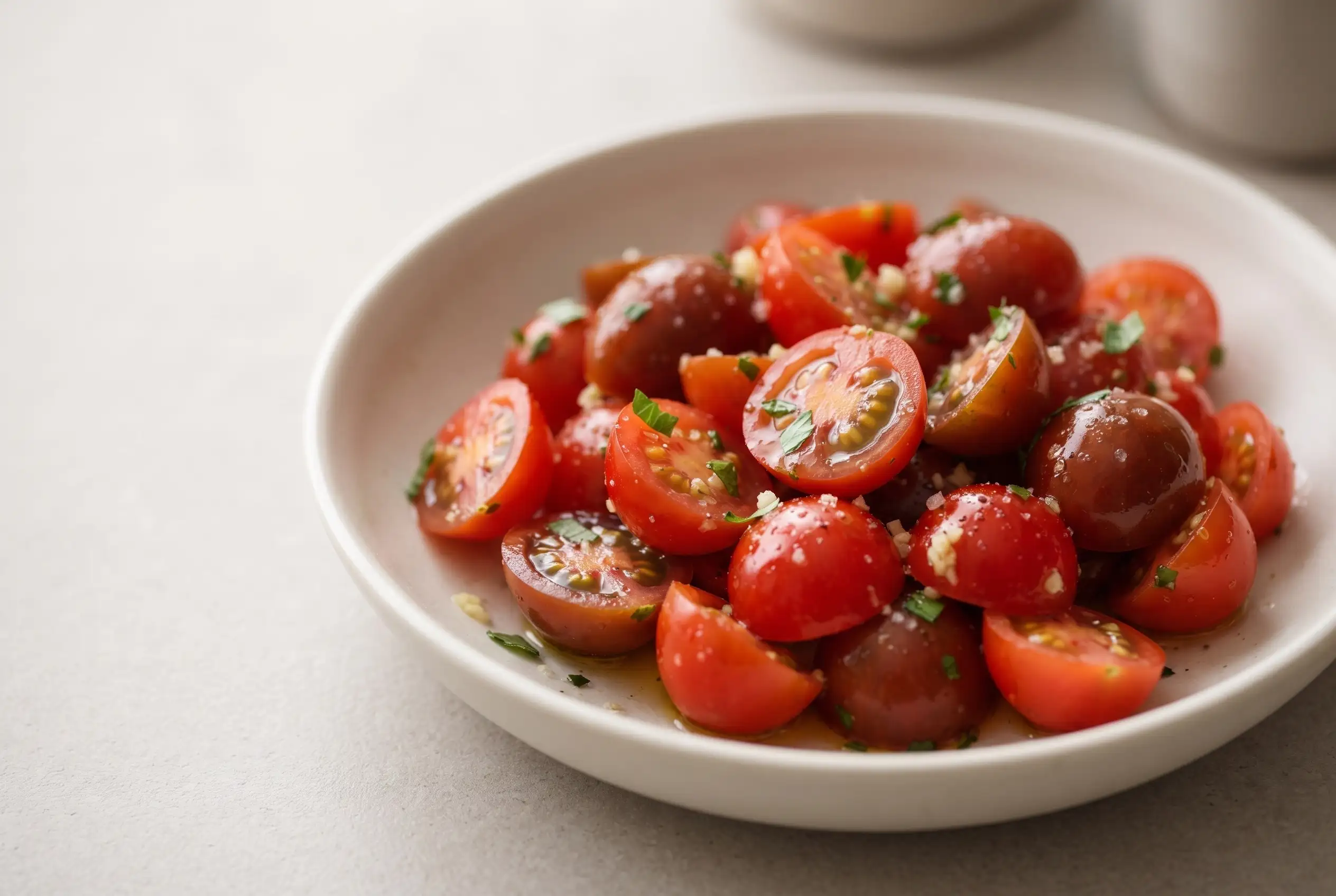
Marinated tomatoes turn a handful of everyday ingredients into something far more useful than a simple side dish. Juicy cherry or grape tomatoes absorb olive oil, vinegar or lemon juice, garlic, fresh herbs, and salt as they rest, becoming bright, savory, and deeply seasoned without any cooking at all. The result is especially good when you want something fresh alongside grilled food, spooned over toast, or folded into a salad.
These 5 ingredient marinated tomatoes rely on time as much as technique. The preparation takes only a few minutes, but the flavor improves as the tomatoes sit in their dressing. A short rest gives the surface plenty of seasoning, while a longer chill lets sturdy tomatoes take on more of the garlicky, acidic mixture. Bringing them back to room temperature before serving also restores the texture of the olive oil and lets the flavors taste more open.
Choose Firm Tomatoes for Marinating
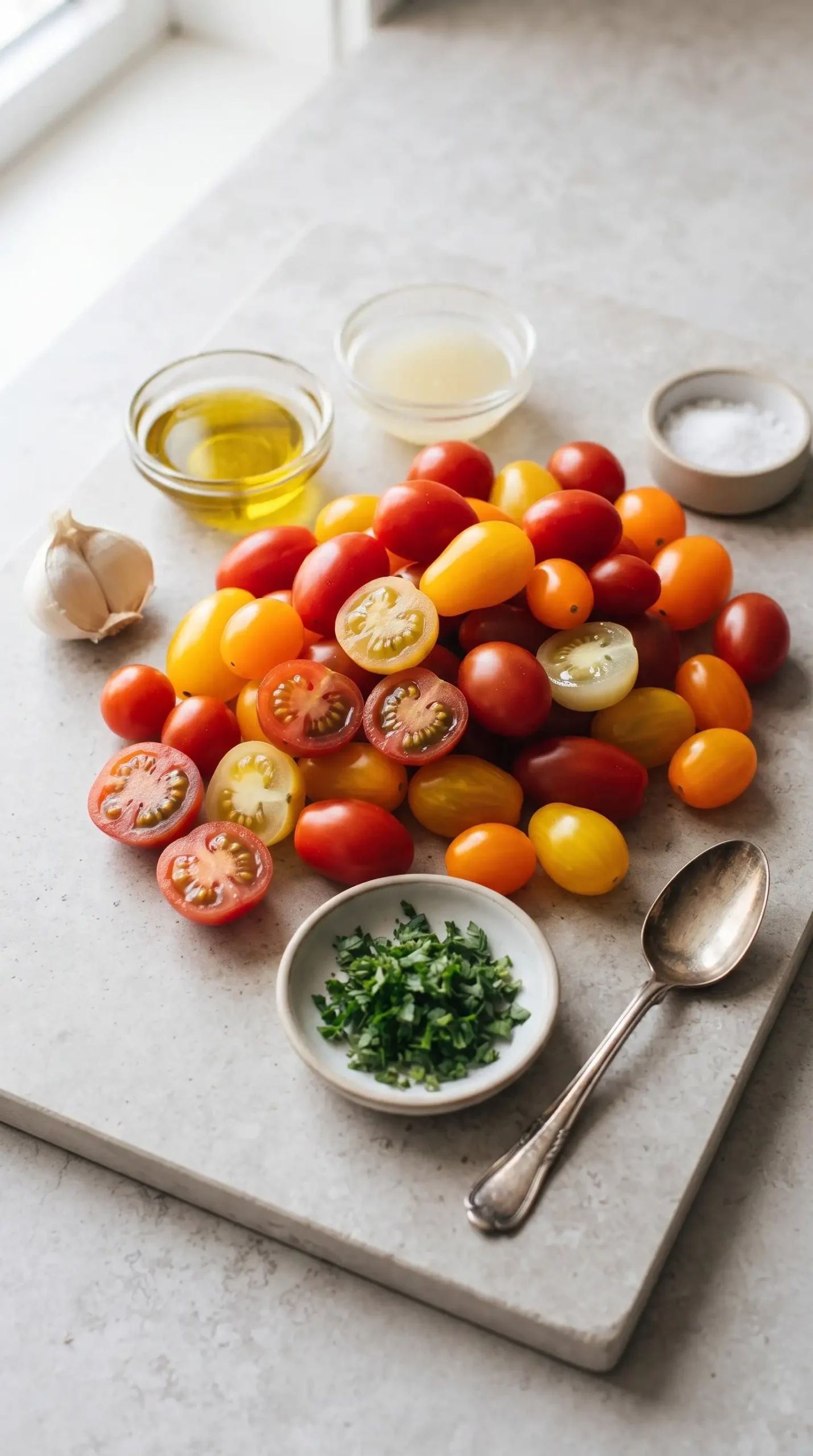
Cherry tomatoes and grape tomatoes are especially convenient because their flesh is firm enough to withstand cutting and resting without quickly collapsing. Halving smaller tomatoes exposes plenty of juicy interior to the marinade, while quartering larger specimens creates more surfaces for the dressing to reach.
Tomato ripeness matters here because there is no cooking step to soften or concentrate their flavor. Look for tomatoes that feel plump and firm, with smooth skins and a fresh tomato aroma. Very soft tomatoes can still work, but they are more likely to lose their shape during an extended rest.
Whole beefsteak tomatoes are another option when you want larger pieces. Slice them into manageable pieces so the dressing can reach the cut surfaces, then handle them gently when tossing and serving. Their larger size changes the presentation, but the same basic balance of oil, acid, herbs, garlic, and salt still applies.
Let Acid Choice Shape the Tomato Flavor
White vinegar, red wine vinegar, and lemon juice all work with marinated tomatoes, but each gives the finished dish a different character. White vinegar keeps the flavor clean and direct, red wine vinegar brings a deeper tang, and lemon juice makes the mixture taste particularly fresh.
| Acid | Flavor direction | Useful pairing |
|---|---|---|
| White vinegar | Clean and sharp | Simple grilled meals and sandwiches |
| Red wine vinegar | Richer and more pronounced | Hearty salads and savory dishes |
| Lemon juice | Bright and fresh | Herb-forward plates and lighter meals |
Whichever acid you choose, the important cooking decision is to use one that complements the tomatoes instead of overwhelming them. Since the mixture rests for several hours, its acidity becomes part of the tomato’s overall flavor rather than functioning only as a last-minute dressing.
Fresh Herbs Keep Marinated Tomatoes Lively
Freshly minced parsley fits naturally into the mixture because its clean herbal flavor works with both the tomatoes and the acidity. Chop it finely enough that small pieces distribute throughout the bowl instead of collecting in a few concentrated spots.
- Parsley: Keeps the flavor fresh, grassy, and versatile.
- Garlic: Finely grating it distributes its flavor throughout the dressing.
- Olive oil: Carries the herbs and garlic across the tomato surfaces.
- Acid: Keeps the mixture lively while seasoning the cut tomatoes.
Fresh herbs are most useful when they remain noticeable without becoming the dominant flavor. Parsley does that particularly well, making it easy to serve the tomatoes with many different meals without locking them into one cuisine or flavor profile.
Grating Garlic Prevents Harsh Clumps
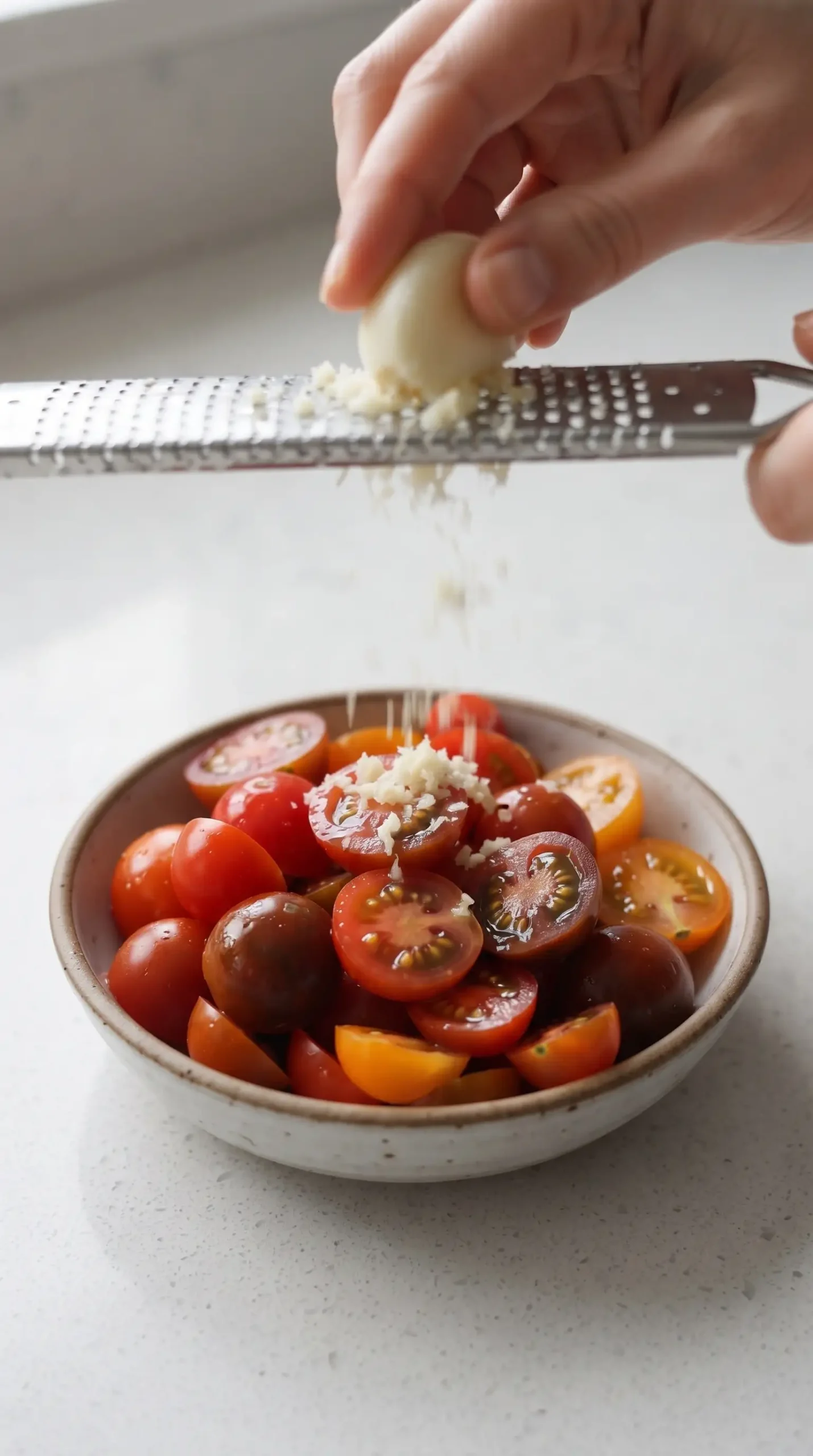
Finely grated garlic is valuable here because the pieces become extremely small and disperse through the oil and acid. A larger mince can leave occasional bites with a much stronger garlic hit, whereas grating spreads the garlic more evenly across the tomatoes.
Use a fine grater and work directly over the bowl when convenient, taking care to keep the garlic distributed. Because the tomatoes rest without cooking, there is no heat to mellow the garlic’s raw character. Even distribution therefore matters more than simply adding garlic in larger pieces.
Once combined, the dressing should cling lightly to the tomato pieces instead of forming a heavy pool at the bottom. Gentle tossing is enough to coat everything without bruising soft tomatoes. If some pieces are particularly ripe, use a spoon or spatula and lift them carefully from underneath.
Marinating Time Controls Texture and Flavor
Resting is the main piece of cooking control in this preparation. The tomatoes need at least 2 to 3 hours in the refrigerator for the flavors to develop, while sturdy tomatoes can remain in the mixture for up to 24 hours.
Shorter resting favors a fresher tomato character with seasoning concentrated closer to the cut surfaces. A longer rest allows the marinade to become more integrated, which can be especially useful when the tomatoes will be mixed into another dish.
| Resting approach | What to expect | Best use |
|---|---|---|
| 2–3 hours | Fresh tomato flavor with developed seasoning | Serving as a distinct side |
| Several hours | More integrated garlic, herb, oil, and acid flavor | General serving and meal prep |
| Up to 24 hours | Deeper marinade character with softer texture | Sturdy tomatoes or mixing into salads |
Texture should guide the longer end of the timing range. Very delicate tomatoes may become less firm as they sit, while sturdy cherry or grape tomatoes can tolerate the extended marinating period more comfortably.
Bring the Chilled Tomatoes Back to Serving Temperature
Cold storage can make olive oil appear thicker or slightly congealed, particularly after a longer rest. Letting the tomatoes return toward room temperature loosens the oil naturally and makes the dressing easier to distribute.
Temperature also affects how the flavors come across. Straight from the refrigerator, the mixture can taste muted and the oil can feel heavier. A brief return to room temperature makes the tomatoes more suitable for serving on toast, beside a main dish, or over a salad.
Use the Marinade Beyond the Tomato Pieces
The liquid left around the tomatoes is part of the finished flavor, not something that needs to be discarded. Olive oil carries the garlic and herbs, while the acid gives the mixture enough brightness to work as a flavorful addition to other foods.
Fold the tomatoes and some of their marinade into a green salad when you want the dressing and vegetables to become one component. The tomatoes can also be spooned over toasted bread, where the seasoned liquid soaks into the surface and adds moisture as well as flavor.
For a more substantial use, marinated cherry tomatoes can accompany grilled foods or be scattered over a simple grain or vegetable dish. Their strongest advantage is flexibility: the same prepared tomatoes can move from side dish to topping without requiring another round of seasoning.
Marinated Cherry Tomatoes Need Gentle Handling
Cherry tomatoes have a naturally convenient size, but their skins and flesh can still split when they are tossed too aggressively. Use a small bowl with enough room for movement, and turn the pieces gently until the dressing is distributed.
Grape tomatoes tend to be similarly useful for marinating, especially when they are firm and ripe. Halve them lengthwise to expose the interior, or quarter larger examples when you want more cut surface and smaller bites.
Avoid These Marinated Tomato Mistakes
Overworking the tomatoes is one of the easiest ways to lose the appealing texture that makes the dish useful. Vigorous stirring can crush soft pieces, releasing excess juice and leaving the bowl wetter than intended.
Another issue comes from serving the tomatoes immediately after mixing. The ingredients are technically combined at that point, but the resting period is what allows the garlic, herbs, acid, and oil to become integrated with the tomato surfaces.
Excessive chilling can also make the olive oil look less fluid and can dull the overall eating experience. Letting the tomatoes come back toward room temperature addresses the oil’s texture and makes the seasoning easier to appreciate.
Finally, very soft tomatoes are a poor match for the longest resting period. Choose firmer fruit when you know the tomatoes will sit for many hours, particularly if you plan to fold them into a salad later.
Turn Marinated Grape Tomatoes Into a Flexible Topping
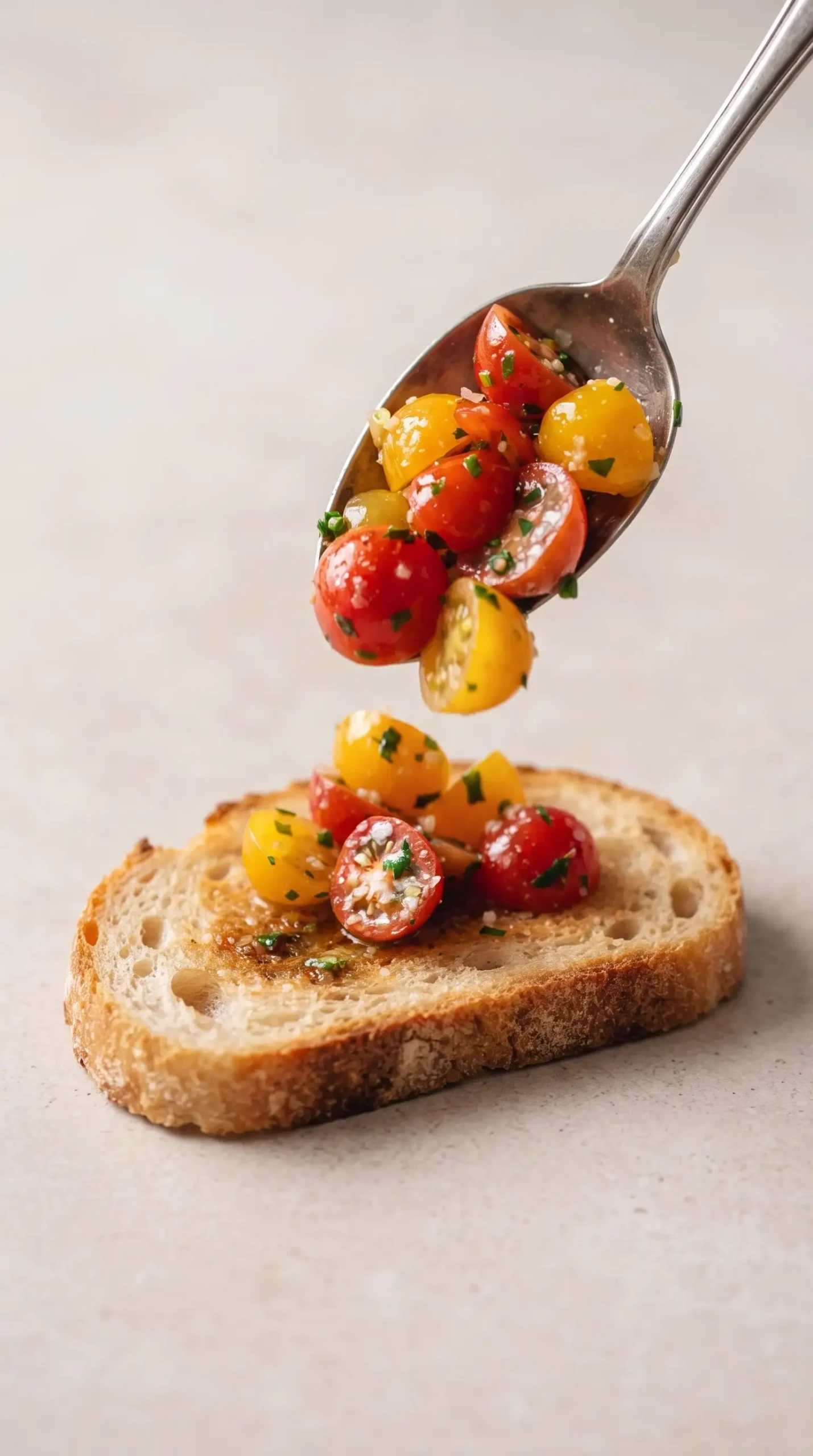
Marinated grape tomatoes work especially well when you want distinct pieces that can be lifted from the bowl and placed where needed. Their elongated shape gives them a slightly different appearance from cherry tomatoes, while their firm flesh makes them practical for resting in the seasoned mixture.
Spoon them over crisp toast and include enough of the surrounding oil to moisten the bread without flooding it. For salads, use the tomatoes together with a little of their marinade so the dressing becomes part of the finished dish instead of remaining at the bottom of the bowl.
Serve the Tomatoes Where Freshness Matters Most
Fresh marinated tomatoes can balance foods that are rich, grilled, roasted, or simply in need of a bright vegetable element. Their acidity makes them useful beside heavier dishes, while the olive oil and garlic give them enough savory depth to stand on their own.
A bowl of the tomatoes can also become an easy topping station for bread or salads. Keep the pieces intact when presentation matters, and spoon over some of the seasoned liquid at serving so each portion carries both tomato and marinade.
Marinated Tomatoes Taste Best After the Right Rest
Firm tomato pieces, finely grated garlic, a balanced acid, fresh herbs, and olive oil create the foundation, but the most consequential choice is patience. Give the mixture enough refrigerator time to develop flavor, then allow it to lose its chill before serving.
That simple sequence preserves the contrast that makes marinated tomatoes useful: juicy tomato texture, concentrated seasoning at the cut surfaces, fresh herbs, and a dressing that can follow the tomatoes onto bread, salads, or the plate beside a meal.
Marinated Tomatoes Questions About Timing and Storage
Can marinated tomatoes sit overnight?
Yes, sturdy cherry or grape tomatoes can rest in the marinade for up to 24 hours. A longer rest is particularly useful when the tomatoes will be incorporated into another dish, although softer tomatoes may lose some of their firmness.
For food safety, cut tomatoes within 2 hours should be covered and refrigerated rather than left at room temperature. Once refrigerated, cut or chopped tomatoes generally keep for about 1 to 2 days.
Why did the olive oil become solid in the refrigerator?
Olive oil can thicken or congeal when chilled, especially after a longer refrigerator rest. Bringing the tomatoes back toward room temperature allows the oil to loosen naturally, so there is no need to add more oil or remix the marinade aggressively.
Can I use sliced beefsteak tomatoes?
Yes. Whole beefsteak tomatoes can be cut into slices and marinated using the same flavor combination. Because slices are larger and can be delicate, handle them gently when tossing and serving.
Which vinegar works best with marinated tomatoes?
White vinegar, red wine vinegar, and lemon juice are all suitable choices. White vinegar gives a clean sharpness, red wine vinegar has a more pronounced savory tang, and lemon juice brings a particularly bright citrus character.
Should marinated tomatoes be served cold?
They can be refrigerated while they marinate, but bringing them back toward room temperature before serving gives the olive oil a better texture and allows the flavors to come through more clearly.
What can I do with leftover marinated tomatoes?
Use them over toast, fold them into a salad, or serve them alongside grilled food. Include some of the flavorful marinade when practical, since it carries the garlic, herbs, oil, and acidity that developed while the tomatoes rested.
Marinated Tomatoes with Garlic, Olive Oil and Herbs
Ingredients
Method
- Combine the tomatoes, grated garlic, olive oil, vinegar or lemon juice, herbs, and salt in a small bowl, then toss gently until evenly coated.
- Cover and refrigerate the tomatoes for at least 2–3 hours, or up to 24 hours for sturdier tomatoes. Bring the tomatoes back to room temperature before serving.