
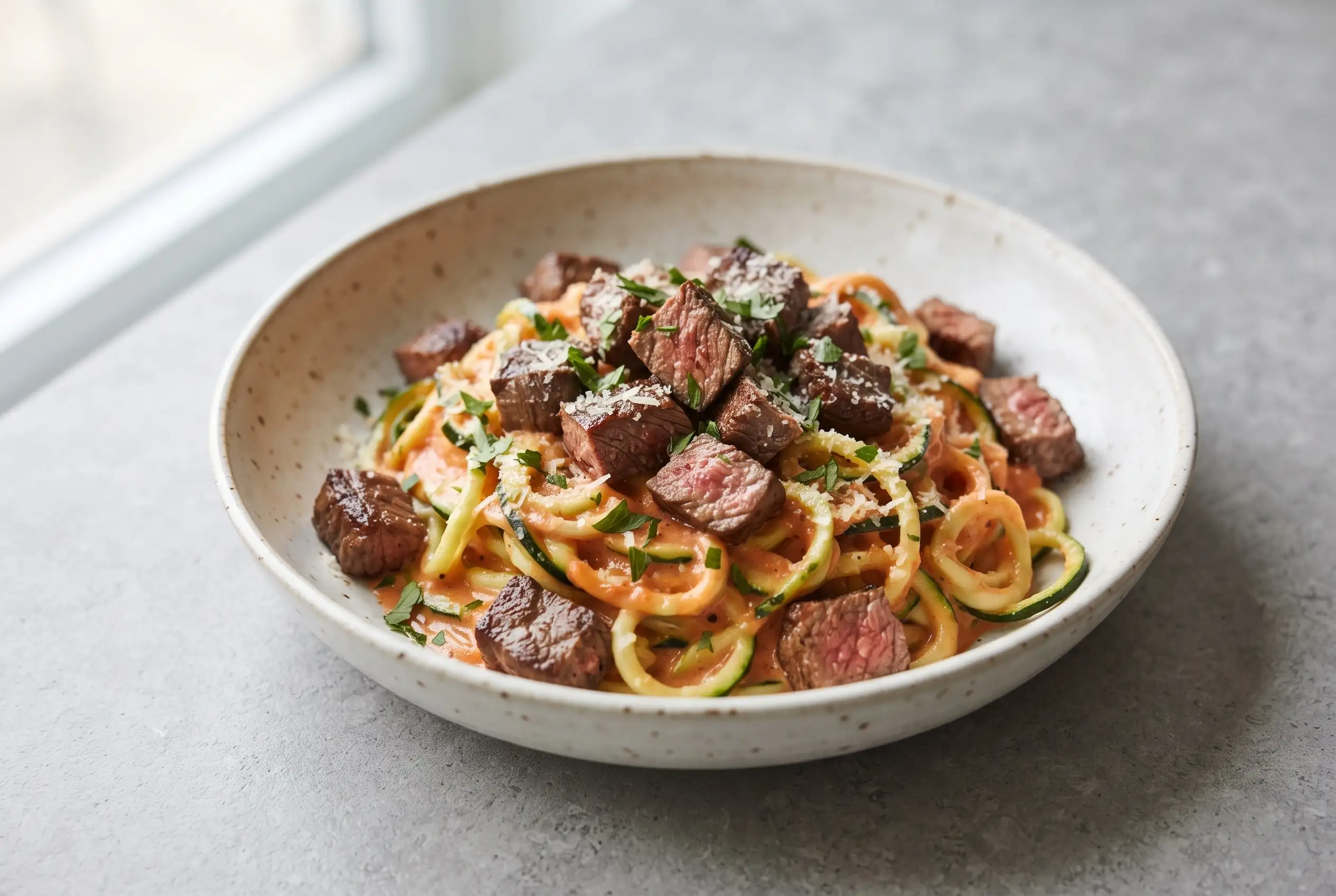
Creamy vodka steak pasta brings together deeply browned steak, silky vodka sauce, and tender noodles in a skillet-friendly meal that feels substantial without requiring a long ingredient list. The combination works especially well when the steak is cut into small pieces and seared quickly, allowing the browned exterior to develop while the center stays tender. Zucchini noodles keep the dish light and give the sauce plenty of surface area to cling to, although regular pasta works when you want a more traditional steak pasta dinner.
What makes the dish especially practical is the way the components come together in one skillet. Butter first becomes lightly browned, steak picks up a quick sear, and the same pan then holds the vodka sauce while the zucchini or pasta is prepared. That sequence keeps the cooking focused and gives the sauce time to become hot and cohesive without turning the steak into an overcooked afterthought.
Small steak pieces make the sear count
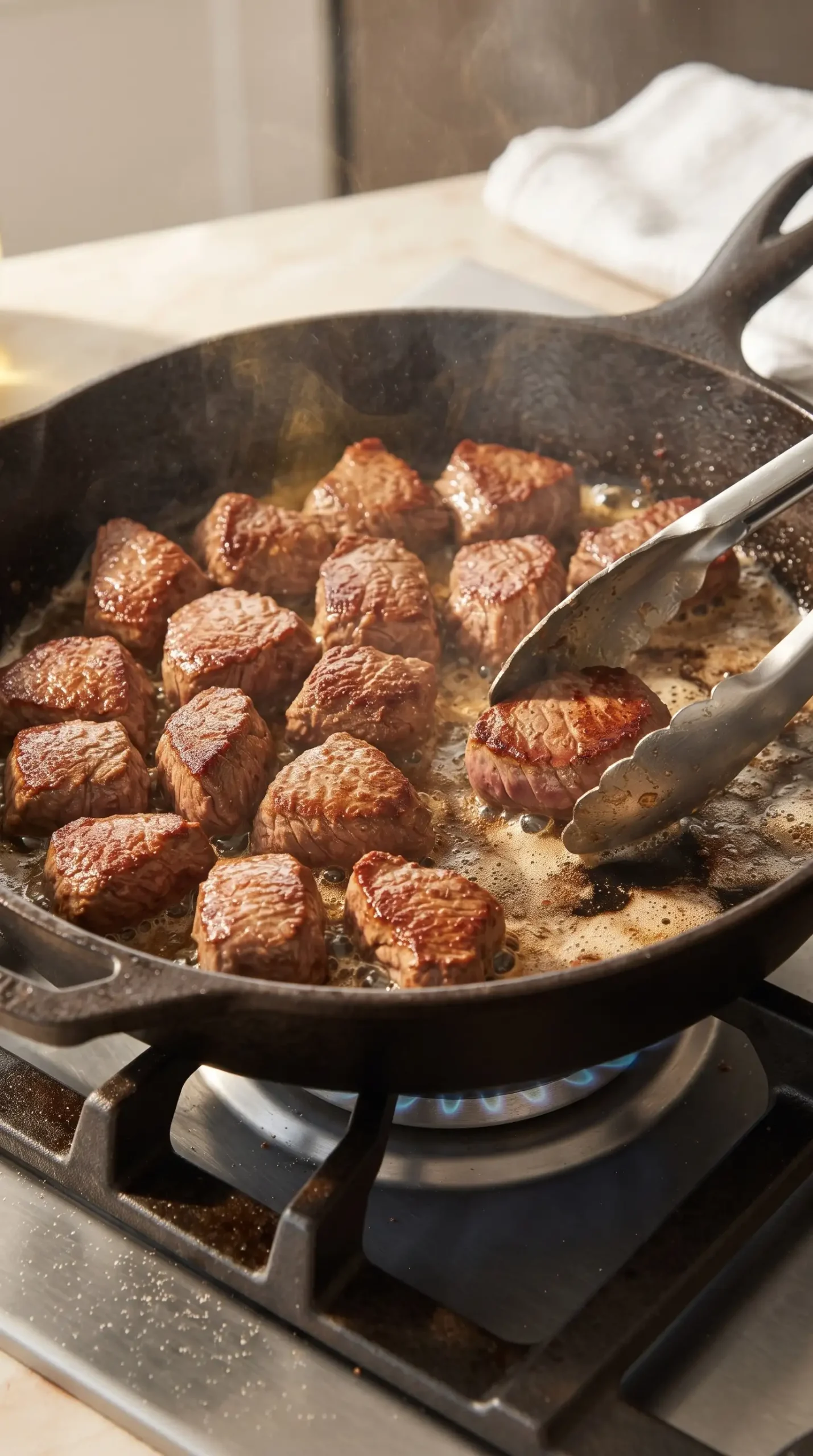
Cutting the sirloin into bite-sized pieces is more than a serving choice. Smaller pieces expose more surface area to the hot skillet, so a short cooking period can create a browned exterior across several sides. Because the pieces are removed after only a few minutes, the meat also has less time to become tough than it would during prolonged skillet cooking.
High heat matters once the steak enters the pan. Letting the pieces sit undisturbed for about a minute gives the contact side time to brown before they are turned. Constant stirring would keep the meat moving across the skillet and make it harder to develop that concentrated seared surface.
The browned surface develops through the Maillard reaction, which occurs when heat drives reactions between compounds in the meat and creates the deeper colors and flavors associated with searing.
Sirloin suits the approach because it can handle a fast, high-heat sear while remaining tender when it is not cooked excessively. Keep the pieces reasonably uniform so they reach a similar level of doneness at roughly the same time.
Browned butter sets the steak up for richer flavor
Butter does two useful jobs here: it provides the cooking fat for the steak and develops a lightly nutty flavor before the meat enters the skillet. The important visual cue is a light brown color, not dark or blackened butter. Once the butter reaches that point, the pan is ready for the steak.
Vodka sauce carries the creamy center
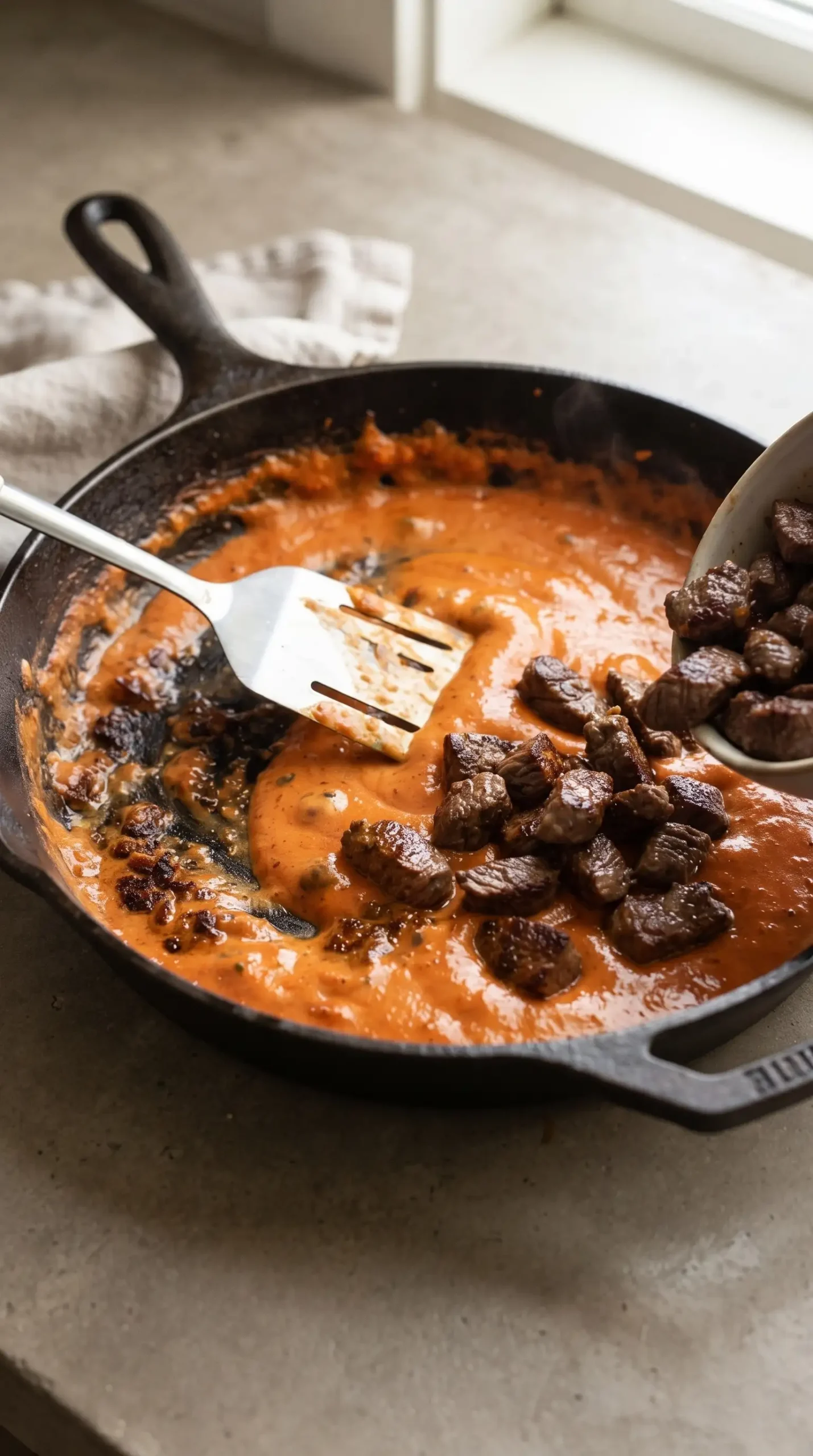
The prepared vodka sauce supplies the creamy, tomato-based foundation without requiring a separate sauce-building process. After the steak has been removed, adding the sauce to the same skillet lets it pick up some of the savory character left from the searing stage. A short simmer gives the sauce time to heat thoroughly before it is combined with the steak again.
Using a generous amount of sauce is particularly useful with zucchini noodles because they can release moisture after being coated. The sauce provides enough richness to remain satisfying even as the vegetables contribute some additional liquid. With regular pasta, the same generous coating produces a more familiar steak-and-vodka-pasta texture.
For the cleanest texture, return the steak to the sauce after the pan has been wiped of excess grease. That small bit of skillet management keeps the finished sauce from becoming unnecessarily oily while preserving the browned flavor that matters most.
Zucchini noodles change how the sauce should be served
Zucchini noodles make the dish feel lighter and emphasize the contrast between the rich sauce and fresh vegetable texture. They can be spiralized or cut into noodle-like strips, depending on the equipment available. The key serving decision is timing: zucchini becomes more watery after it meets a hot sauce, so the noodles are best combined and eaten promptly.
- Freshly prepared noodles: Serve them as soon as they are coated so the sauce stays concentrated.
- Regular pasta: Use cooked pasta when a more substantial, classic pasta texture is preferred.
- Separate leftovers: Keep zucchini and sauce apart when possible to limit moisture accumulation during storage.
Sirloin and zucchini need different handling
Sirloin benefits from a brief period of intense heat, while zucchini noodles are better treated gently at the serving stage. Giving both ingredients identical cooking treatment would work against their strengths: the steak needs surface browning, whereas zucchini does not need a prolonged cooking period to become pleasant to eat.
Once the steak is seared, its cooking momentum continues after it leaves the skillet. That is why the pieces do not need extended cooking in the sauce. The sauce can simmer for several minutes while the noodles are prepared, then the steak can return to the pan without spending an unnecessarily long time over heat.
One skillet keeps the vodka sauce balanced
After the steak comes out, wiping away excess grease creates a cleaner base for the vodka sauce. This step is especially useful because butter has already supplied enough fat for the searing stage. Removing the surplus leaves the sauce with the browned character of the pan without making the finished dish feel greasy.
| Cooking choice | What to watch for | Useful adjustment |
|---|---|---|
| Medium-low butter stage | Butter should become lightly browned | Remove it from excessive heat before it turns black |
| High-heat steak stage | Pieces should develop a visible sear | Leave them undisturbed for about a minute before turning |
| Vodka sauce stage | Excess grease can dilute the texture | Wipe the skillet before adding the sauce |
| Zucchini serving stage | Noodles can release moisture | Combine close to serving time |
Keeping the skillet involved from steak to sauce also makes the cooking sequence efficient. There is no need to transfer the sauce to a separate pot, and the steak can be returned directly to the warm sauce once the noodles are ready.
Steak vodka pasta depends on restraint at high heat
High heat is valuable for the sear, but it is not a signal to leave the steak cooking indefinitely. Bite-sized sirloin needs only a short time to brown on the outside. Extending the cooking period simply because the pan is hot can push the meat beyond the tender texture intended for this dish.
Watch the surface of the steak instead of relying only on the clock. A browned side followed by a browned second side is the useful visual checkpoint. Once both sides are well seared, remove the pieces and let the sauce stage happen separately.
Parmesan and parsley finish the bowl without changing its identity
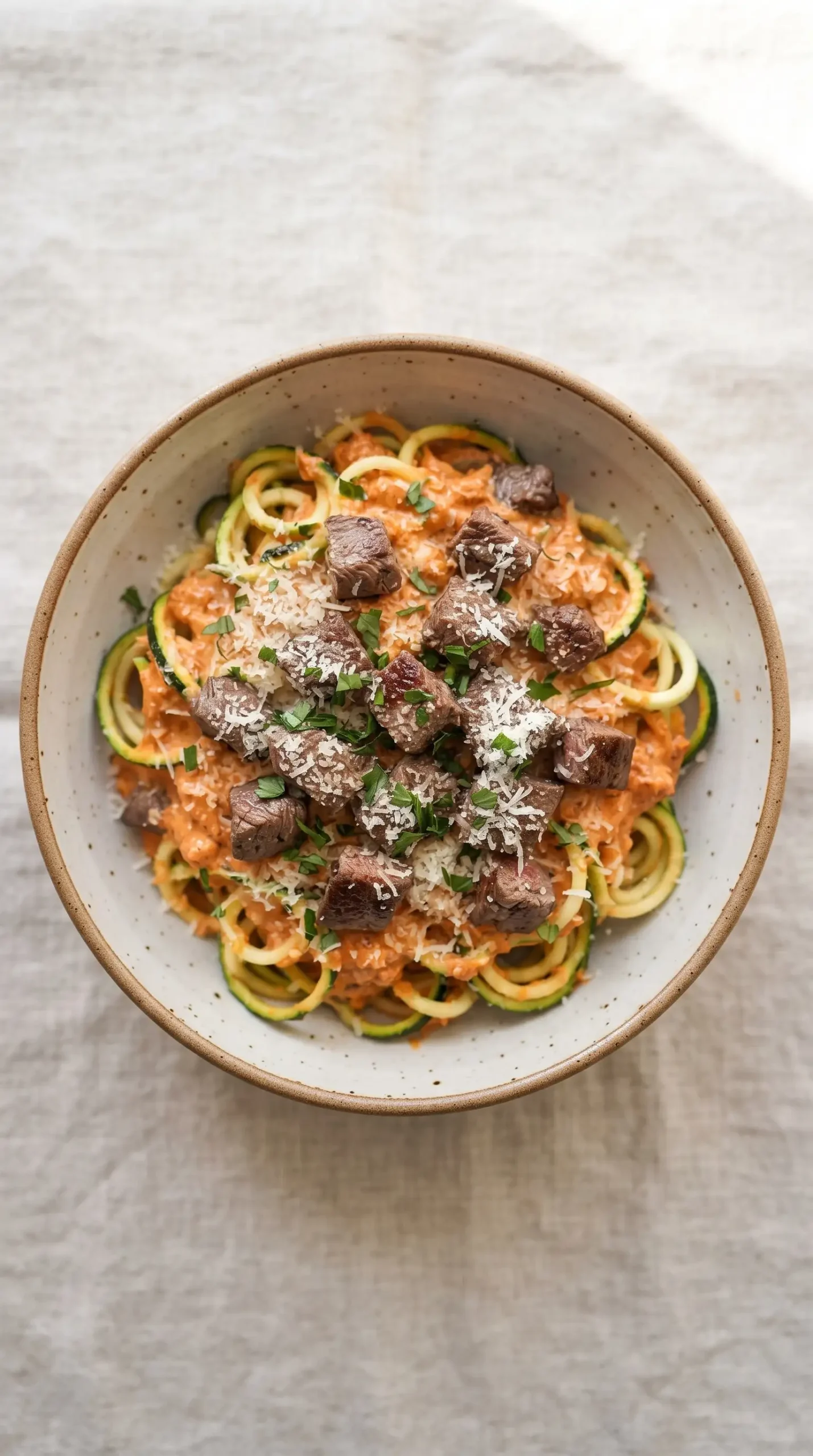
Parmesan adds a salty, savory finish to the creamy sauce, while parsley contributes a fresh note and a contrasting green color. Both belong at the end, after the sauce and noodles have been brought together, so they remain recognizable as finishing elements.
Common creamy vodka steak pasta mistakes to avoid
Overworking the steak is the easiest way to lose the benefit of the quick-sear method. Stirring immediately after adding the pieces interrupts the first browning stage, while leaving them in the skillet for too long can make the small pieces firmer than intended. Give the first side a moment of uninterrupted contact with the pan, then turn the pieces and finish the brief sear.
Burning the butter creates a different problem. Light browning is useful because it adds flavor, but blackened butter can introduce a harsh taste that carries into the steak. Keep the initial heat at medium-low and watch the color before increasing the heat for the meat.
Another common issue is allowing zucchini noodles to sit under sauce for too long. Their moisture can loosen the sauce and soften the noodle texture, particularly after storage. Serve the combined dish promptly when possible, or keep the noodles and sauce separate if you know you will be saving portions.
Regular pasta gives the same sauce a different texture
Regular pasta is a straightforward alternative when zucchini noodles are not what you want. The sauce will cling to the cooked pasta in a more familiar way, and the finished meal will feel more substantial. The steak, sauce, and finishing elements remain compatible with either noodle choice.
Choosing between the two is mainly a matter of texture and serving preference. Zucchini provides a fresh, vegetable-forward base with a greater concern about moisture, while pasta offers a firmer, starchier foundation for the creamy vodka sauce.
Serving timing matters most with zucchini noodles
Fresh assembly gives zucchini noodles their best chance of retaining a pleasant texture. Once the hot sauce meets the vegetable noodles, moisture begins to move into the surrounding sauce. Eating the dish soon after combining the components keeps that change relatively limited.
Leftover portions can still be useful, but expect some additional moisture after refrigeration. Stirring the noodles and sauce together again can redistribute the liquid, while separate storage preserves more control over the texture when the meal is reheated or served later.
A 30-minute skillet meal stays focused on contrast
The appeal of this preparation comes from keeping the cooking tasks sharply defined: brown the butter without scorching it, sear the steak without overcooking it, warm the sauce without making it greasy, and bring the noodles into the dish at the right moment. None of those tasks requires elaborate technique, but each affects the final texture.
That focused sequence also explains why the dish feels more complete than its short ingredient list suggests. The browned steak supplies a seared element, the vodka sauce brings creaminess, and the noodles provide the base that carries both together. Parmesan and parsley then add the finishing contrast without requiring another cooking stage.
Quick searing keeps the steak tender in creamy vodka sauce
Seared steak is at its best here when the browned exterior is created quickly and the pieces are then allowed to finish their cooking momentum away from direct skillet heat. That approach protects the tender quality of the sirloin while giving the vodka sauce time to become hot and cohesive.
Serving the sauce and zucchini close to the moment of eating completes the same idea from the vegetable side. The steak stays distinct, the sauce remains creamy, and the noodles are less likely to release enough moisture to overwhelm the finished texture.
Questions about creamy vodka steak pasta and zucchini texture
Can I use regular pasta instead of zucchini noodles?
Yes. Cooked regular pasta works in place of zucchini noodles and gives the dish a more traditional pasta texture. The steak and vodka sauce can be prepared the same way, with the cooked pasta added for serving.
Why does my zucchini pasta become watery?
Zucchini naturally releases moisture after it is coated with sauce, and that effect becomes more noticeable as the dish sits. Combining the noodles with the sauce shortly before serving helps limit the amount of liquid that accumulates around the noodles.
Can I make the steak pieces ahead of time?
You can prepare the seared steak in advance, but its texture is best protected by avoiding prolonged cooking when it is reheated. If preparing components ahead, keep the steak separate until the sauce is hot, then return the pieces briefly to the sauce before serving.
How do I keep the butter from burning?
Begin with medium-low heat and watch the butter as it changes color. Light browning is the useful point for this dish; once the butter becomes blackened, its flavor can become harsh, so controlling the initial heat is important.
Can I store leftover steak pasta?
Leftovers can be refrigerated, although zucchini noodles will usually become more moist after sitting in the sauce. For better texture on a later serving, store the noodles and sauce separately when practical, or stir the combined leftovers thoroughly before eating.
When should I add the Parmesan and parsley?
Add both after the sauce and noodles have been brought together for serving. Parmesan can settle into the warm sauce, while parsley stays brighter and fresher when used as a finishing touch instead of being cooked for an extended period.
Creamy Vodka Steak Pasta with Tender Zucchini Noodles
Ingredients
Method
- Cut the steak into bite-sized pieces. Prepare zucchini noodles by spiralizing or cutting the zucchini into noodles, or cook regular pasta if using.
- Heat the butter in a large heavy-duty skillet over medium-low heat until lightly browned, taking care not to let it blacken.
- Increase the heat and add the steak pieces to the skillet. Leave them undisturbed for about 1 minute to develop a seared surface, then turn and cook another 1-2 minutes until both sides are well seared. Remove the skillet from the heat.
- Transfer the steak to a bowl and wipe the skillet with a paper towel to remove excess grease.
- Add the vodka sauce to the skillet. Return the steak to the pan and simmer for 5-10 minutes while the zucchini noodles or pasta are prepared.
- Serve the sauce and steak over the prepared zucchini noodles or pasta. Finish with Parmesan and parsley, then serve immediately.