
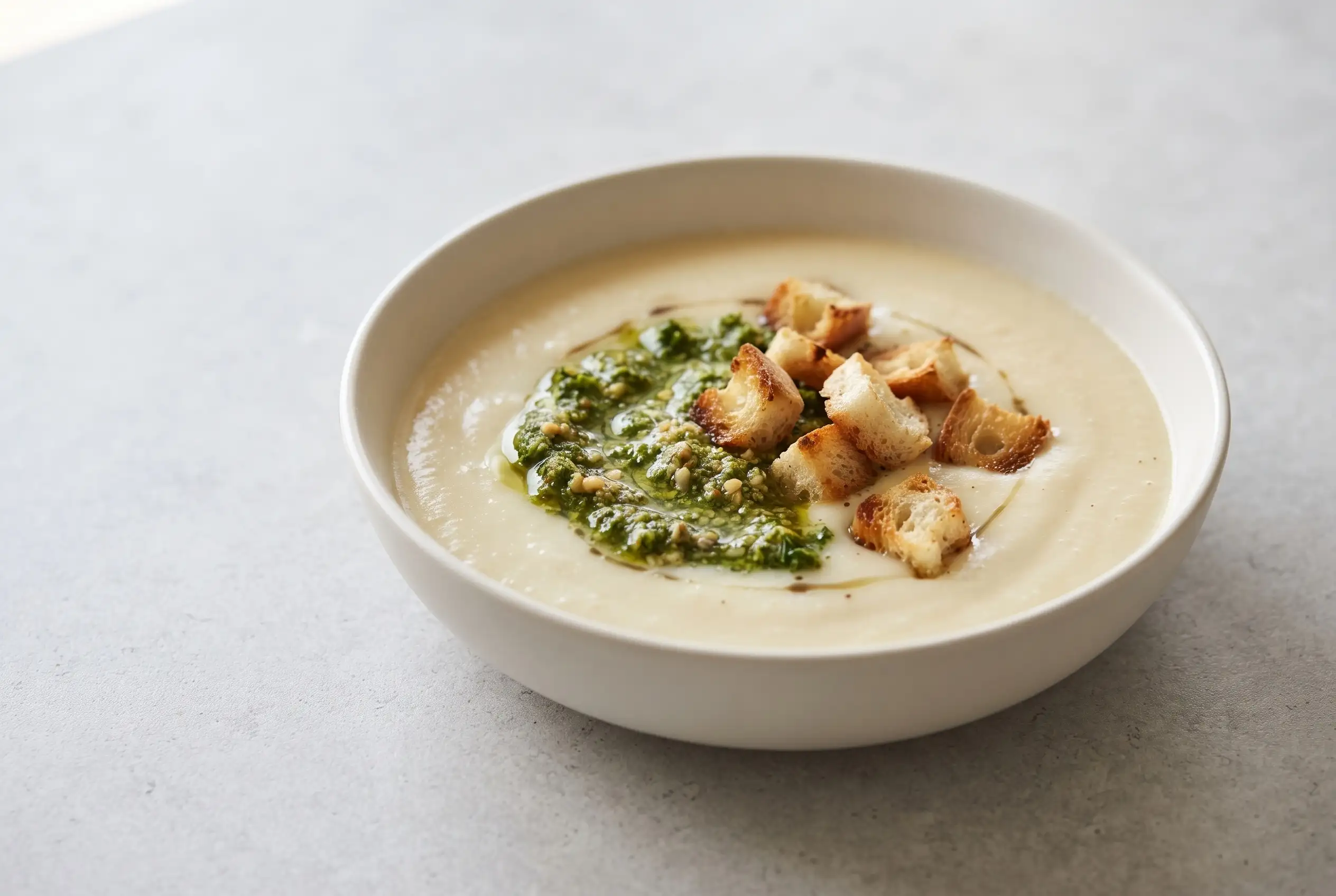
Creamy cauliflower soup becomes especially satisfying when a short list of everyday ingredients is handled with care. Golden onions build the savory base, tender cauliflower supplies the body, and half-and-half rounds out the texture without making the pot feel heavy. A bright kale pesto brings color and freshness, while crisp skillet croutons add the contrast that a smooth soup needs.
The combination works because each finishing element arrives with a different texture and flavor. The soup itself stays mellow and silky, the pesto contributes lemony, garlicky richness, and the croutons provide a browned, crunchy bite. For a bowl of cauliflower soup with kale pesto, those contrasts matter as much as the creamy consistency.
Golden onions give creamy cauliflower soup its savory foundation
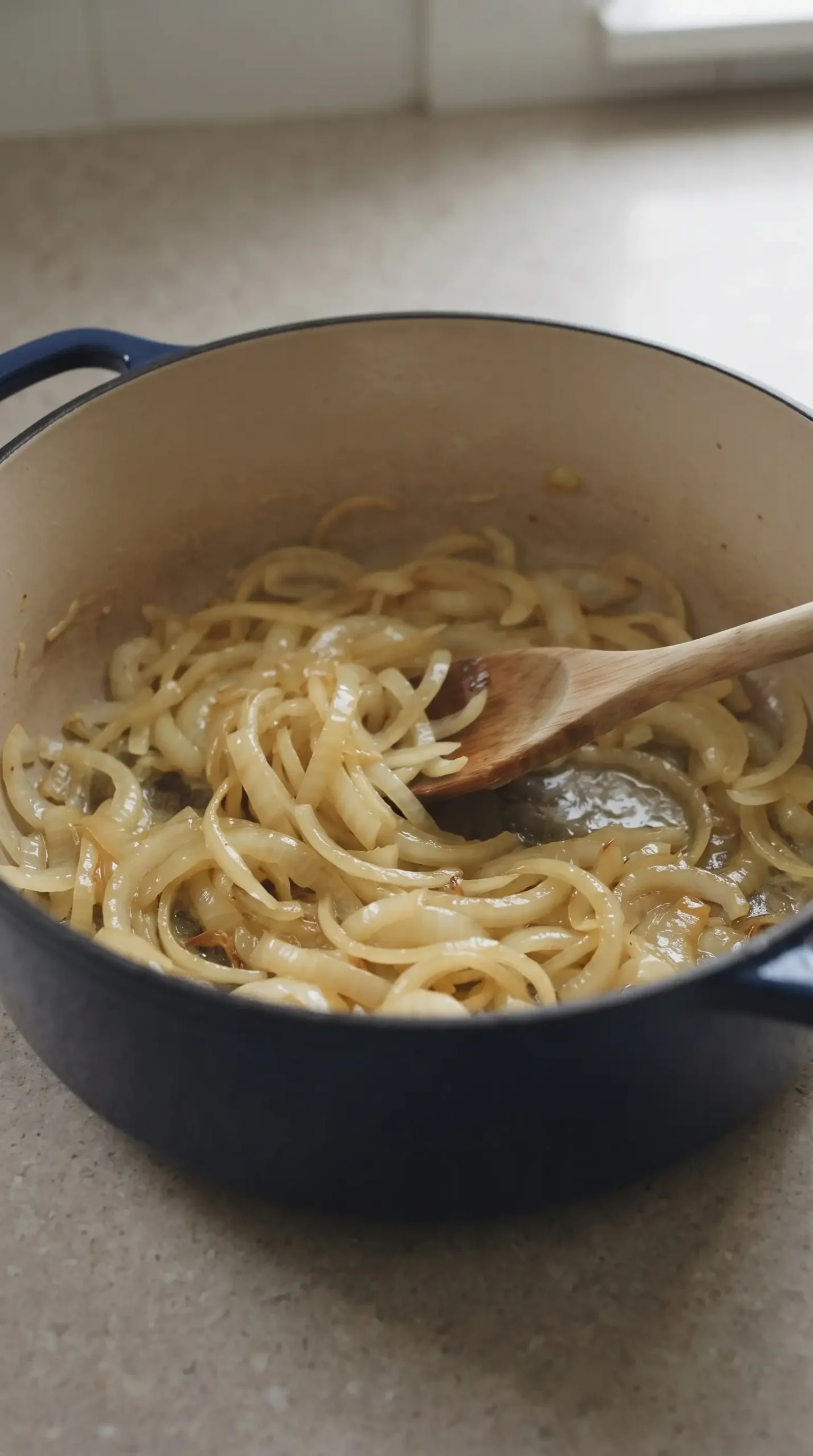
Thinly sliced yellow onion deserves a slow start in the butter. Cooking it gently over low heat gives the slices time to soften, lose their raw edge, and become golden and fragrant. That stage is more important than pushing the heat higher to save a few minutes, because the onion becomes part of the soup’s underlying flavor instead of remaining a noticeable, sharp component.
Watch for a soft, glossy texture and an even golden color before adding the broth. Stir occasionally so the slices cook uniformly and do not catch on the bottom of the Dutch oven. If the butter starts browning aggressively while the onions are still firm, lowering the heat keeps the process under control.
Once the broth and cauliflower enter the pot, the browned onion becomes integrated into the liquid as everything simmers. The result is a deeper-tasting base without needing a long list of aromatics or seasonings.
Cauliflower tenderness controls the soup’s finished texture
Cutting cauliflower into even pieces helps the florets cook at a similar rate, as shown by cutting cauliflower into even pieces. The useful endpoint is fork tenderness: a fork should pass easily through the thickest pieces without the vegetable retaining a firm center.
Under-cooked cauliflower can leave a blended soup slightly coarse, even when a powerful blender is used. Letting the florets reach complete tenderness before puréeing gives the blender a softer ingredient to break down and makes it easier to achieve the smooth consistency expected from creamy cauliflower soup.
There is little advantage in cooking the florets far beyond tenderness. Once they are easily pierced, move on to blending so the soup retains a clean cauliflower character and does not spend unnecessary time simmering.
Kale pesto works best with a deliberately rustic texture
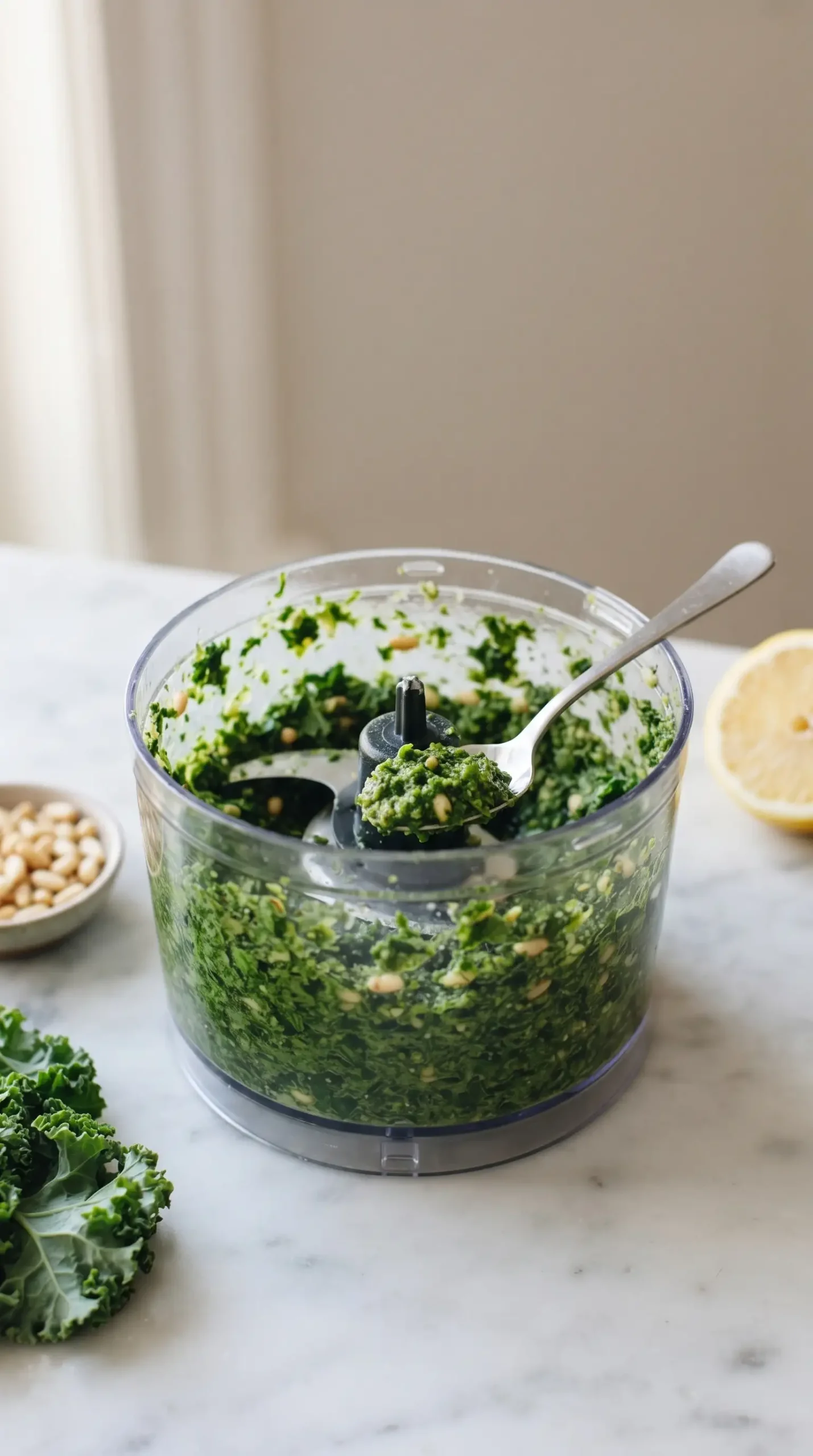
Pulse the kale, olive oil, pine nuts or almonds, garlic, salt, lemon juice, and optional Parmesan until they form a textured paste. A few small pieces should remain visible instead of turning the mixture into a completely uniform green purée. That texture lets the pesto stand apart from the smooth soup beneath it.
Broth and half-and-half should support cauliflower without masking it
Chicken or vegetable broth can both work with the cauliflower base. The choice changes the savory character, but either provides enough liquid for the florets to simmer and later become a spoonable soup. Keep the broth’s seasoning in mind when tasting the finished pot, particularly because the pesto also contains salt and Parmesan may contribute additional savoriness.
Half-and-half goes in after the cauliflower has been puréed. Adding it at that point keeps the dairy from being subjected to the longer cooking stage and makes it easier to judge the soup’s richness once the vegetable base has reached the desired texture.
Taste after the dairy is incorporated and adjust salt only if needed. Lemon in the kale pesto supplies acidity at the table, so the soup itself does not need to be aggressively seasoned to compensate for the richness of the butter and half-and-half.
A careful blend determines whether the soup feels silky or rustic
An immersion blender allows the soup to remain in the Dutch oven while you work toward the preferred consistency. Move the blender through the pot steadily, paying attention to any florets that remain intact around the sides or bottom.
Truffle oil and Parmesan belong in the finishing layer
Truffle oil is optional, but its concentrated aroma can change the character of the bowl quickly. A small drizzle over the finished soup lets its earthy fragrance remain distinct instead of becoming lost during cooking. Because the kale pesto already brings substantial flavor, restraint at the finishing stage keeps the components distinguishable.
Parmesan can be incorporated into the pesto when a more savory, nutty finish is wanted. It is not essential to the soup’s structure, so leaving it out still allows the kale, lemon, garlic, and nuts to create a flavorful topping.
Bright pesto against the pale cauliflower soup also gives each spoonful a useful balance: creamy vegetable richness underneath, fresh acidity and herbs on top, followed by whatever browned crunch the croutons contribute.
Skillet croutons bring the needed crunch to a smooth bowl
For the croutons, cut the bread into cubes and toss them in a deep skillet with enough olive oil to coat them lightly. Medium heat allows the bread to brown while the cubes are turned frequently enough to color several sides without burning. Once golden, transfer them to a paper towel-lined plate and season with salt while they are still warm.
- Thin coating: A light film of oil helps the cubes brown and reduces sticking without making them feel saturated.
- Frequent tossing: Moving the cubes around the skillet encourages more even browning across their surfaces.
- Warm seasoning: A little salt adheres readily after the croutons leave the skillet.
Three texture checks keep the soup on track
Several visual and tactile cues make it easier to decide when each component is ready. The useful checkpoints are simple enough to observe without relying entirely on the clock.
| Stage | Look or feel | What to do next |
|---|---|---|
| Onions | Soft, fragrant, and golden | Add the broth and cauliflower |
| Cauliflower | Fork passes through the florets easily | Blend until the preferred consistency is reached |
| Pesto | Textured green paste with small pieces | Spoon over the soup at serving |
| Croutons | Golden cubes with browned surfaces | Drain briefly and season |
These cues are especially useful when the size of the cauliflower florets or the strength of the burner differs from one kitchen to another. Texture tells you more than a rigid visual expectation of what the pot should look like at a particular moment.
Mistakes that can dull creamy cauliflower soup
Rushing the onions is one of the easiest ways to lose depth. High heat can brown their surfaces before the slices have softened properly, leaving unevenly cooked pieces in the base. Keeping the heat low and stirring occasionally gives the onion time to become tender and fragrant.
Stopping the simmer before the cauliflower is fork tender creates a harder blending job and can leave the finished soup less smooth. Check a thick piece with a fork before puréeing. If there is resistance at the center, continue cooking until the florets soften completely.
Overworking the kale pesto can also change its role on the plate. A completely smooth green mixture can visually and texturally merge with the soup. Short pulses are enough to create the lightly textured paste that makes the topping recognizable against the creamy base.
Serving temperature changes how the toppings read
Serve the soup warm enough for the butter, dairy, and cauliflower base to feel rounded and comforting, while keeping the pesto and croutons separate until the bowls are assembled. The contrast is strongest when the crunchy bread has not had time to absorb much liquid.
Small substitutions can preserve the character of the bowl
Vegetable broth makes the soup suitable for a vegetarian preparation when the Parmesan is also omitted or replaced with a suitable alternative. Chicken broth creates a different savory foundation but follows the same cooking process. Both choices remain compatible with the kale pesto.
Pine nuts are the natural choice for the pesto’s classic pesto-like texture, while almonds can also be used when that is what you have available. Keep the nuts finely integrated into the paste without processing the mixture until completely smooth.
Half-and-half provides the creamy element listed for the soup. If a lighter dairy profile is preferred, the practical adjustment is to use less and rely more heavily on the blended cauliflower for body. The finished texture will be less rich, but the vegetable base can still remain smooth.
A make-ahead bowl needs its toppings protected
The soup base can be prepared ahead and kept separate from the pesto and croutons until serving. Refrigerating the toppings apart from the liquid protects their contrasting textures and prevents the bread from becoming soft.
When reheating the soup, warm it gently and stir periodically so the creamy mixture heats evenly. If it has thickened during refrigeration, a small amount of broth can loosen it while preserving the cauliflower flavor.
Freshly prepared pesto can be spooned over the reheated soup just before eating. Add croutons at the table, followed by truffle oil if using it, so the aromatic and crunchy finishes remain distinct.
Cauliflower, kale pesto, and croutons create the balance
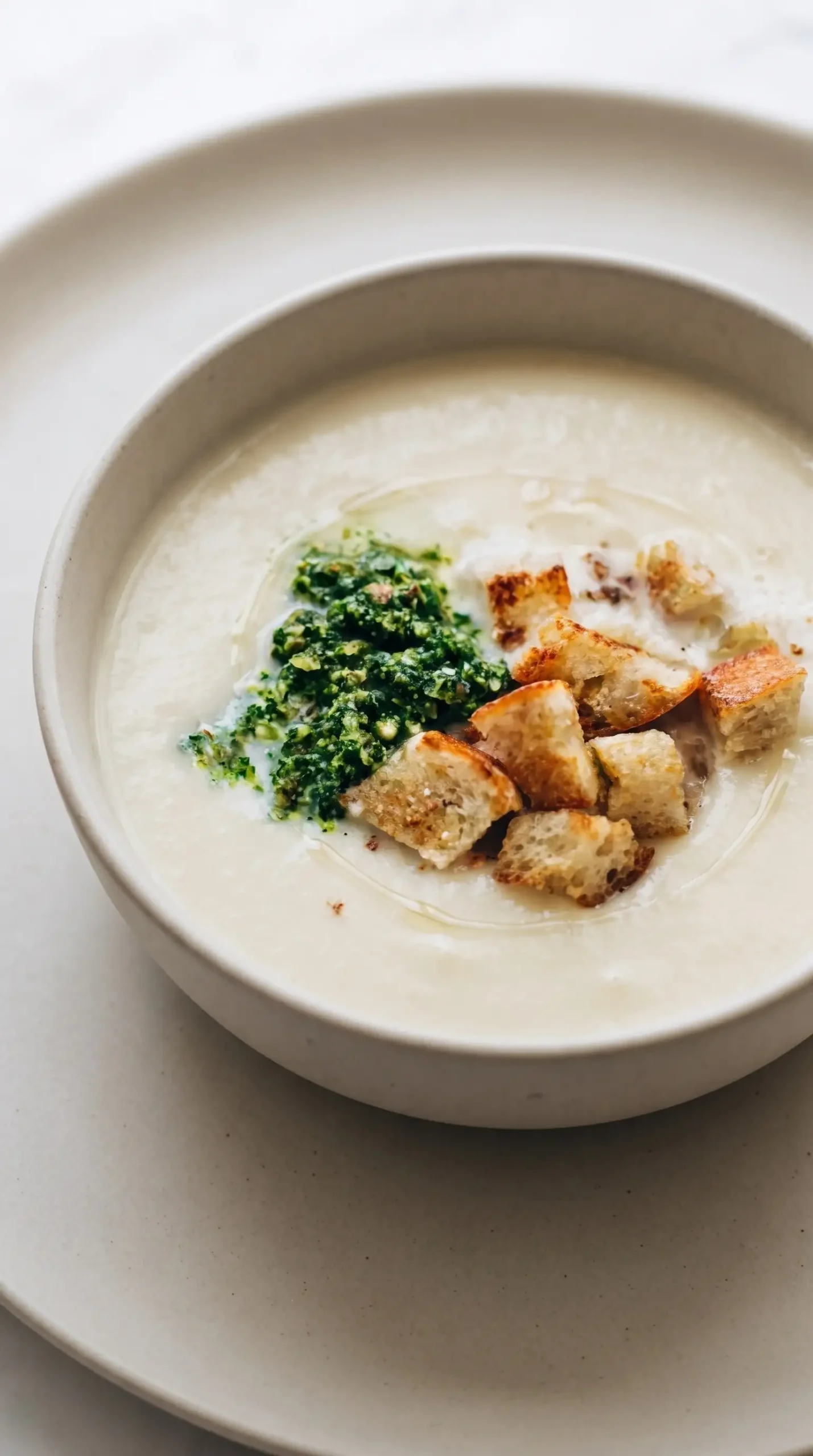
Silky cauliflower supplies the soft center of the dish, but the bowl becomes more complete when the topping stays vivid and textured. Lemon and garlic keep the kale pesto lively against the mellow soup, while browned bread gives each spoonful a crisp contrast.
Let the cauliflower stay silky while the toppings stay distinct
Fork-tender cauliflower and slowly softened onions establish the depth and texture that make the soup satisfying, while a lightly pulsed kale pesto keeps the finish bright. Keeping the pesto, croutons, and optional truffle oil until serving preserves the contrast that makes each element recognizable.
Questions about creamy cauliflower soup texture and toppings
Can I make the kale pesto without Parmesan?
Yes. Parmesan is optional, so the pesto can rely on kale, olive oil, nuts, garlic, salt, and lemon juice for its character. Leaving it out produces a slightly less savory topping while keeping the pesto fully useful as a finishing layer.
Why is my cauliflower soup not completely smooth?
The most likely issue from the supplied method is cauliflower that has not reached full fork tenderness before blending. Larger or firmer florets need enough simmering time to soften through the center, after which an immersion blender or regular blender can break them down more effectively.
Can almonds replace the pine nuts in the pesto?
Yes. Almonds are specifically suitable as an alternative to the pine nuts here. Their flavor is somewhat different, but they still provide the nutty element and textured body needed for a pesto-style topping.
How do I keep croutons crunchy on creamy cauliflower soup?
Add them immediately before eating and keep them out of the soup while it is being stored or reheated. The longer bread sits in the liquid, the more moisture it absorbs, so separate storage and last-minute assembly preserve the browned texture.
Is truffle oil necessary for this cauliflower soup?
No. Truffle oil is an optional finishing ingredient rather than part of the soup’s essential structure. If used, a drizzle over the assembled bowl is enough to provide its distinctive earthy aroma without competing too strongly with the kale pesto.
Can I use vegetable broth instead of chicken broth?
Yes. Vegetable broth works directly in the cauliflower base and keeps the soup vegetarian when paired with an appropriate choice about the optional Parmesan. The cooking approach remains the same, although the broth itself will influence the savory flavor of the finished soup.
Cauliflower Soup with Kale Pesto and Skillet Croutons
Ingredients
Method
- Warm the butter in a large Dutch oven or heavy stock pot. Add the sliced onions and cook over low heat for about 15 minutes, stirring occasionally, until the onions are soft, golden, and fragrant.
- Pour in the broth and add the cauliflower florets. Simmer for about 10 minutes, or until the cauliflower can be easily pierced with a fork.
- Blend the soup with an immersion blender, or transfer it to a regular blender and process until it reaches the desired consistency.
- Stir in the half and half until fully incorporated.
- Add the kale pesto ingredients to a food processor and pulse until they form a lightly textured paste.
- Finish the soup with kale pesto, a drizzle of truffle oil if using, and croutons before serving.