
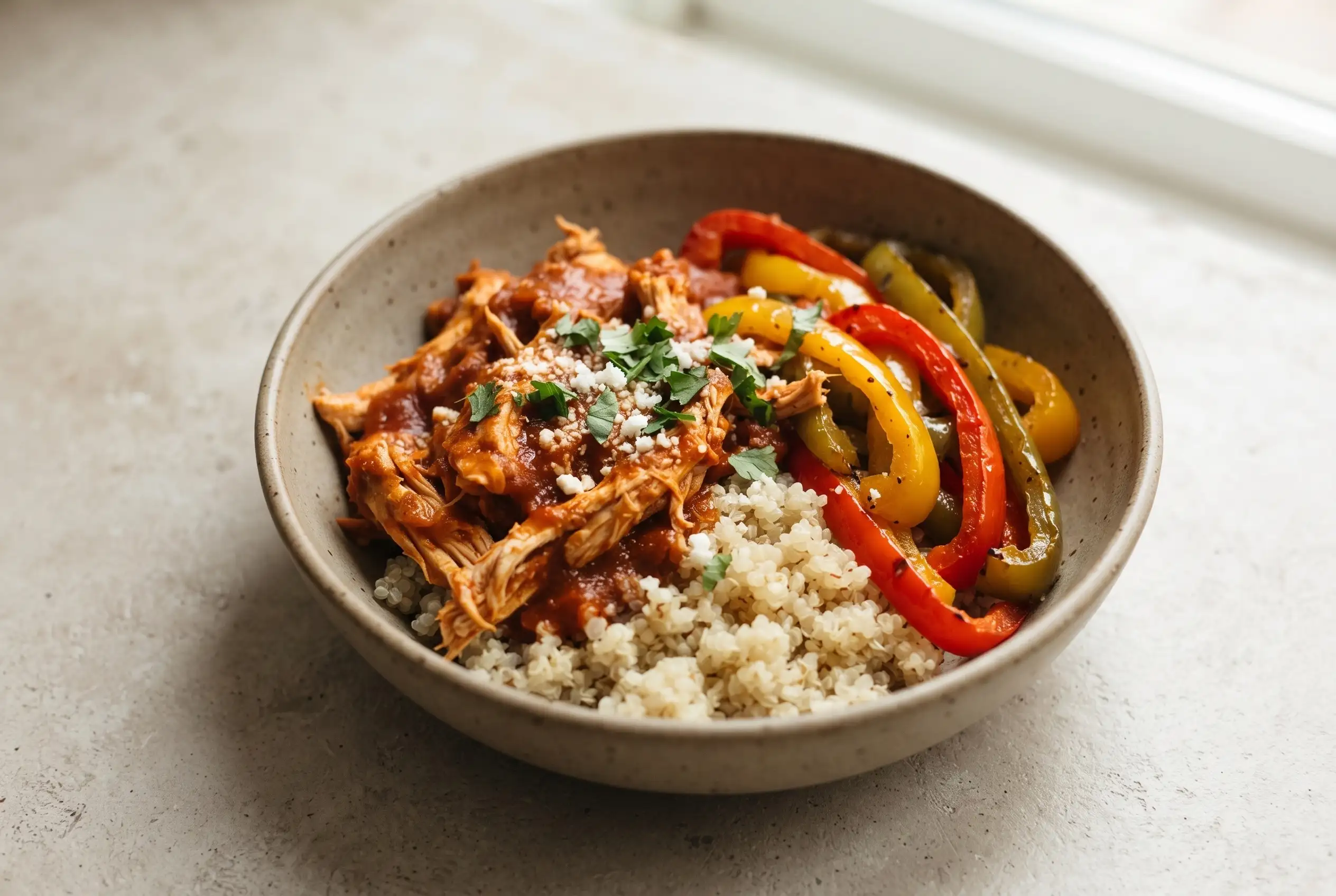
Chicken tinga bowls turn a short prep window into a deeply flavored meal built from roasted chicken, colorful peppers, and a smoky tomato-chipotle sauce. The sheet pan handles the chicken and peppers while the sauce simmers separately, so several parts of dinner come together at once. That makes these bowls especially practical for busy lunches, and the combination of tender chicken, silky sauce, and flexible serving bases keeps the meal from feeling repetitive.
Why chicken tinga bowls work for fast meal prep
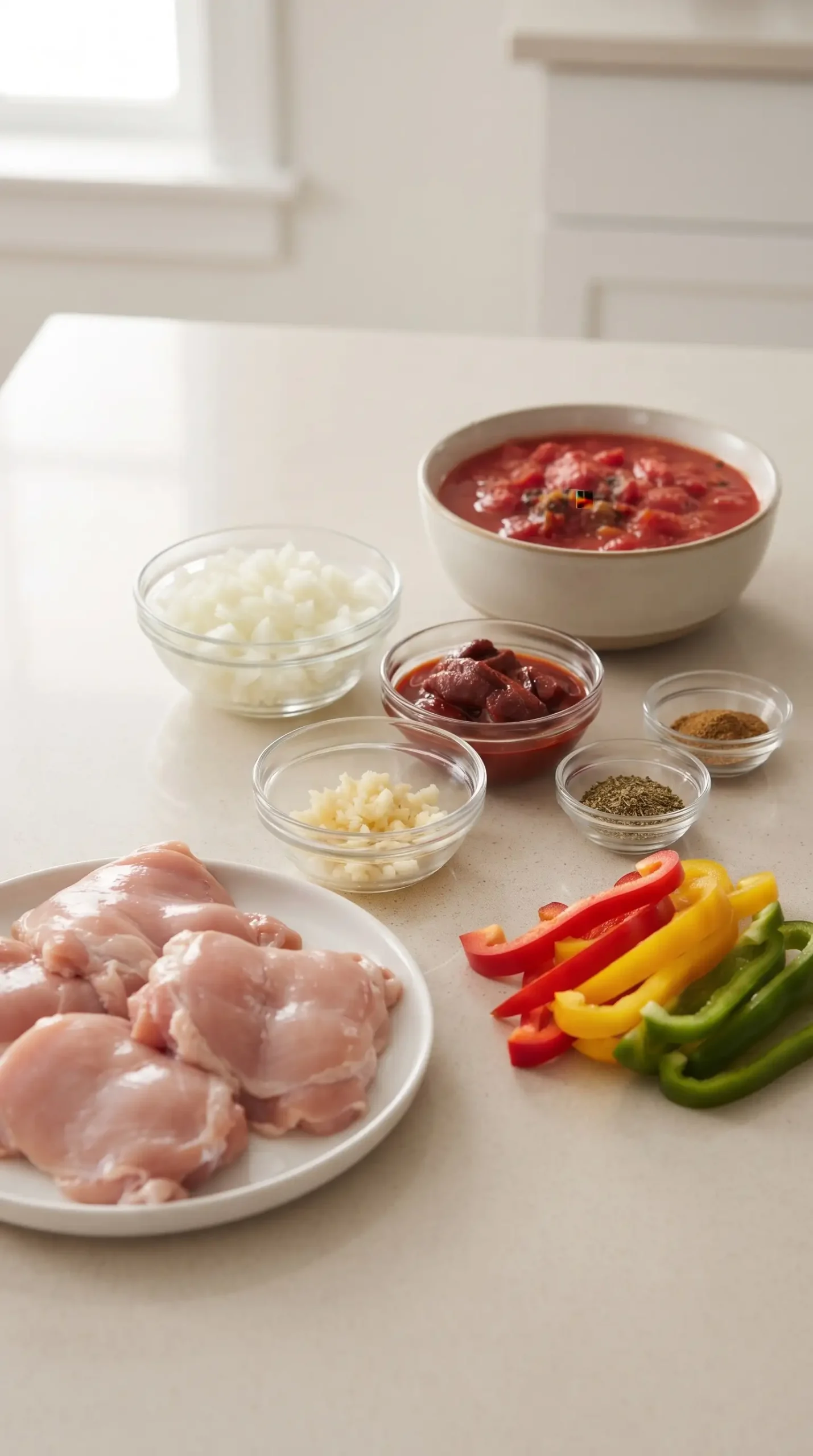
Chicken thighs are especially useful here because they stay tender during roasting and can be shredded while the sauce is finishing. The peppers cook alongside them, picking up browned edges and concentrating their sweetness without requiring a separate skillet.
Meanwhile, the sauce develops on the stovetop from onion, garlic, chipotle peppers in adobo, oregano, cumin, and fire-roasted tomatoes. Blending that mixture creates a smooth coating that can be used generously without leaving the chicken dry or unevenly dressed.
Timing matters because the two cooking tracks overlap naturally. While the sheet pan is in the oven, the skillet sauce can be built and blended, leaving the roasted chicken ready to meet the sauce instead of creating a long series of isolated tasks.
Chipotle and fire-roasted tomatoes set the tinga character
Chipotle peppers in adobo bring the most distinctive smoky heat, while fire-roasted crushed tomatoes supply acidity and a roasted tomato depth. Since the peppers can vary in heat, starting with one and adding more when a stronger chile flavor is wanted gives you useful control.
Small ingredient choices make the sauce more balanced
Onion and garlic should soften fully before the tomatoes go in. That short sauté gives their flavors time to mellow and prevents the finished sauce from tasting dominated by raw aromatics.
Ground cumin and dried oregano support the chile and tomato combination without requiring a long simmer. Keeping their amounts measured matters because an aggressively spiced sauce can overpower the roasted peppers and chicken.
Salt works best when it is added at separate stages. Seasoning the chicken and peppers before roasting develops their own flavor, while seasoning the sauce after the tomatoes are added lets you judge the finished mixture as a whole.
Keep the sheet pan spacious for better roasting
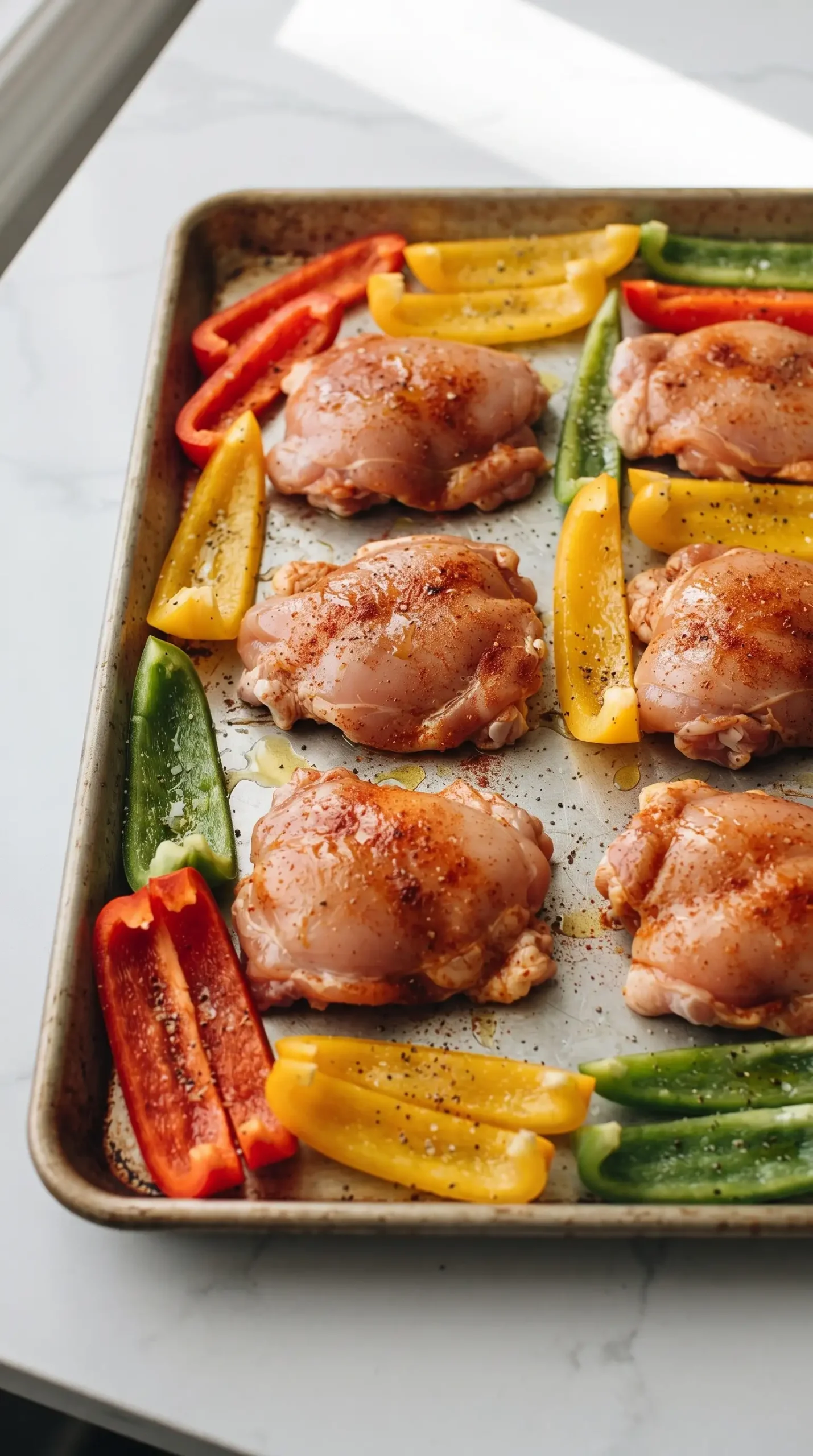
Spread the chicken thighs and sliced peppers across the baking sheet so the pieces have room to roast. Overcrowding the pan traps moisture, making it harder for the ingredients to brown instead of steam. One layer also makes it easier to turn the cooked chicken into evenly portioned bowl components later.
Let the tinga sauce stay smooth enough to coat
Blending the simmered tomato mixture changes the sauce from a chunky skillet preparation into a cohesive coating for shredded chicken. Process it until smooth, then judge its consistency before adding it to the meat. A sauce that clings lightly to the chicken gives each bite flavor without completely hiding the roasted peppers.
Extra sauce is useful because shredded chicken can absorb more moisture as it sits. You can coat the chicken generously for the first meal and reserve some separately for later portions, allowing reheated bowls to regain moisture without becoming saturated before storage.
Heat level is easiest to manage before the chicken is mixed in. Taste the blended sauce first, then decide whether the smoky chile character is where you want it. Once the sauce is combined with the meat, adjusting its intensity becomes less precise.
Watch the chicken texture, not just the clock
Roasting time provides a useful guide, but the important endpoint is chicken cooked through and tender enough to shred. Patting the thighs dry before seasoning also helps the surface roast instead of carrying excess moisture into the oven.
Build each bowl around the texture you want
Quinoa and rice make the bowls substantial, while cauliflower rice creates a lighter base. Black beans can add another hearty element, and tortillas shift the meal toward a taco-style serving. Greens work when you want the roasted chicken and peppers to remain the dominant components.
| Serving base | Best use | What it changes |
|---|---|---|
| Rice | Hearty lunch bowl | Provides a neutral, filling foundation for the smoky sauce |
| Quinoa | Meal-prep bowl | Adds a firmer, more distinct grain texture |
| Cauliflower rice | Lighter bowl | Keeps the chicken and peppers more prominent |
| Black beans | More substantial bowl | Adds another soft, hearty component beside the chicken |
| Greens | Freshest-style serving | Creates contrast with the warm roasted ingredients |
Portioning is easiest when the chicken and peppers are distributed first, followed by the chosen base. Add enough sauce to keep the chicken moist, but hold back some if the bowls will be reheated later.
Different bases also let the same batch feel less repetitive across several meals. Rice can carry more sauce, greens can use a lighter coating, and tortillas can turn the same components into a handheld meal without changing the core preparation.
Meal prep chicken tinga stays useful when components remain flexible
For planned lunches, keeping some sauce separate is a simple way to preserve control over texture. The chicken can be portioned with the roasted peppers and serving base, while reserved sauce can be added when reheating or immediately before eating.
Cooked components should be cooled and stored promptly in appropriate airtight containers. Separate portions are especially practical when different household members prefer different amounts of sauce or different bowl bases.
- Keep sauce separate: Reserve some blended tinga for adding moisture after reheating.
- Vary the base: Rotate rice, quinoa, cauliflower rice, beans, greens, or tortillas to change the meal’s texture.
- Protect the peppers: Store roasted peppers with the chicken when you want their flavor to mingle, or separately when you prefer clearer roasted texture.
Reheating works best when moisture is restored
Gentle reheating helps the shredded chicken remain pleasant instead of becoming dry. Add a little of the reserved sauce before or during reheating, then stir so the moisture reaches the chicken evenly.
A few sheet pan chicken tinga mistakes are easy to prevent
Overcrowding the baking sheet is one avoidable problem because it can encourage steaming instead of roasting. Another is shredding the chicken without enough sauce, which leaves the meat less cohesive once it reaches the bowl. Using too much chipotle at the start can also make the sauce hotter than intended; tasting after blending gives you a chance to adjust before combining everything.
15 minute chicken tinga can take different bowl directions
One batch can support several meals without changing the underlying chicken and sauce. For a grain bowl, use rice or quinoa and let the sauce become the main seasoning. A lighter version can pair the chicken and peppers with cauliflower rice or greens.
Tortillas create a different format entirely, especially when the chicken is shredded finely enough to distribute across each tortilla. Black beans can be added when a more substantial combination is desired, while the roasted peppers provide color and sweetness alongside the smoky sauce.
These changes are most useful when they respond to how the meal will be eaten. A bowl that needs to travel benefits from a sturdy base and separately stored sauce, while an immediate serving can be saucier and more generously dressed.
- Choose the base: Start with rice, quinoa, cauliflower rice, beans, greens, or tortillas according to the meal you want.
- Add the roasted components: Divide the shredded chicken and peppers so each portion gets a balanced mix.
- Finish with sauce: Use enough tinga to coat the chicken and keep additional sauce available for later portions.
Roasted chicken and peppers become the meal’s anchor
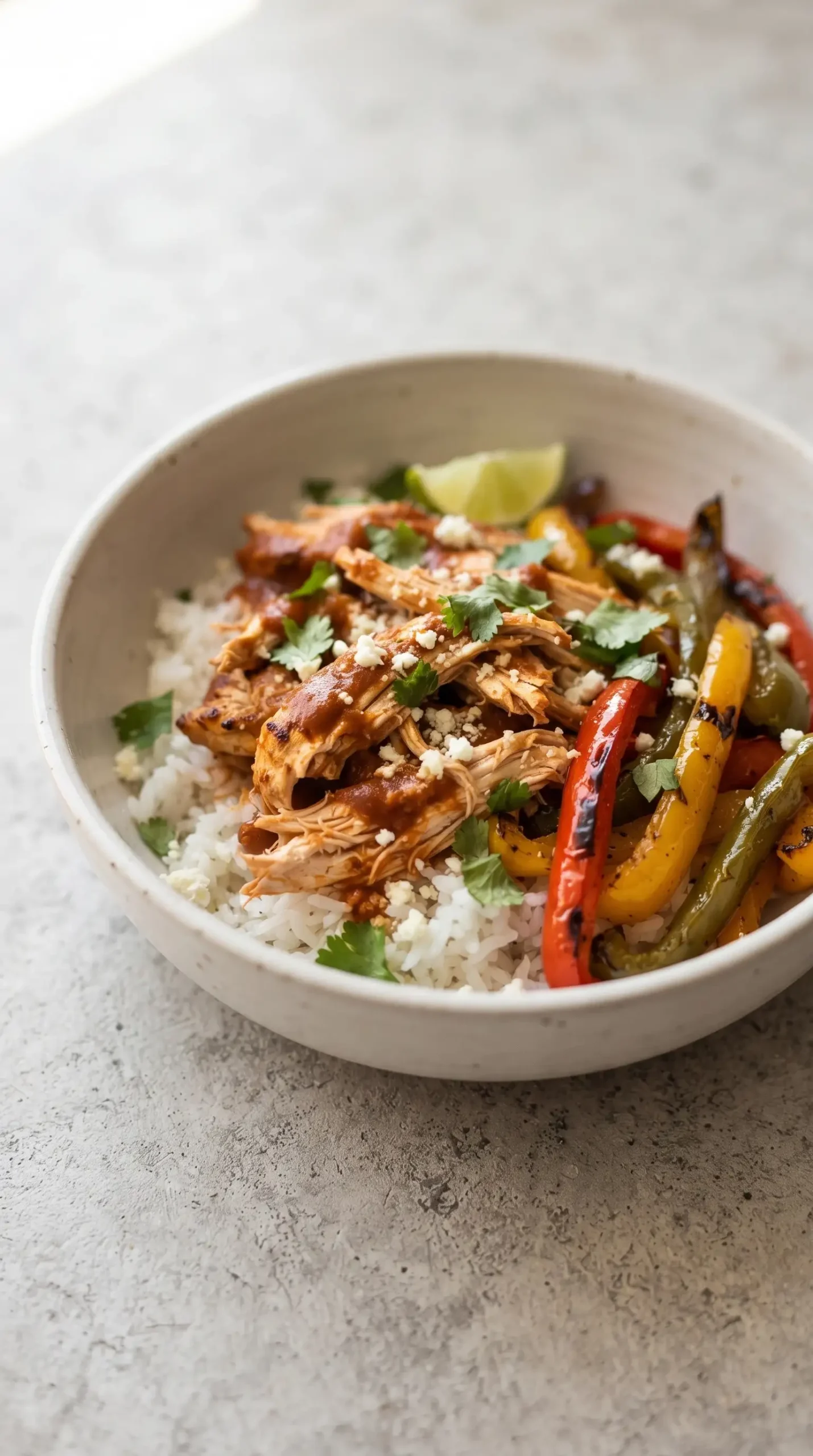
Roasted chicken stays at its best when the sauce is treated as a coating rather than an opportunity to drown every component. The peppers should remain recognizable, giving the bowls a sweet, roasted counterpoint to the smoky tomato mixture. Keeping that balance makes each serving feel composed even when the ingredients were prepared together.
Shredded chicken also gives you control over every bite. Larger pieces preserve more of the roasted character, while finer shreds distribute the sauce more thoroughly. Either approach works, but the amount of sauce should follow the texture you choose.
Chicken tinga bowls come together through smart overlap
The roasted thighs, peppers, and blended chipotle-tomato sauce each need a different kind of attention, yet their cooking times can overlap efficiently. Once the chicken is cooked through, shredding it directly into the prepared sauce creates the central mixture that carries the bowl.
That combination makes the dish practical for meal prep because the flavorful part does not depend on a complicated finishing technique. Sauce can be held back, serving bases can change, and the roasted peppers can remain alongside the chicken without losing their role.
Questions about chicken tinga bowls and meal prep
Can I make the tinga sauce less spicy?
Start with one chopped chipotle pepper instead of two, then taste the blended sauce before mixing it with the chicken. That lets you keep the smoky flavor while limiting the heat, and you can reserve stronger chipotle flavor for individual portions if desired.
Should the chicken be shredded before or after adding the sauce?
Shred the cooked chicken before tossing it with the sauce. This gives you better control over how much sauce coats the meat and makes it easier to reserve part of the sauce for later meals.
Can I freeze the leftover tinga sauce?
Yes. The blended tomato-chipotle sauce is particularly convenient to freeze separately from the chicken and peppers. Keeping it on its own also gives you a useful way to add fresh moisture to a later serving.
What can I use if I do not want rice?
Quinoa, cauliflower rice, black beans, greens, or tortillas can all serve as alternatives. Choose quinoa or beans for a more substantial bowl, cauliflower rice or greens for a lighter combination, and tortillas when you want a handheld meal.
How can I keep meal-prep chicken from drying out?
Reserve some sauce instead of mixing all of it into the chicken at once. Adding that sauce during reheating restores moisture more effectively than relying on the chicken to remain fully coated throughout storage.
Why are my roasted peppers soft instead of browned?
Give the sliced peppers enough room on the baking sheet so they are not packed tightly around the chicken. A crowded pan holds more moisture and can reduce the browning that gives the peppers their roasted character.
Chicken Tinga Bowls with Chipotle Sauce and Tomatoes
Ingredients
Method
- Preheat the oven to 425°F (218°C). Pat the chicken dry with paper towels. Place the chicken and sliced peppers on a baking sheet, coat with olive oil, and season with salt and pepper.
- Roast the chicken and peppers for 30 minutes, or until the chicken is cooked through.
- While the chicken and peppers roast, warm olive oil in a skillet. Add the onion, garlic, chipotles, oregano, and cumin, then sauté for about 10 minutes.
- Stir the tomatoes and salt into the skillet mixture. Simmer for another 10 minutes, then transfer the sauce to a blender and process until smooth.
- Remove the baking sheet from the oven and shred the chicken. Toss the chicken with the prepared sauce, using as much sauce as desired.
- Serve the chicken and peppers with quinoa, rice, cauliflower rice, beans, tortillas, greens, or on its own.