
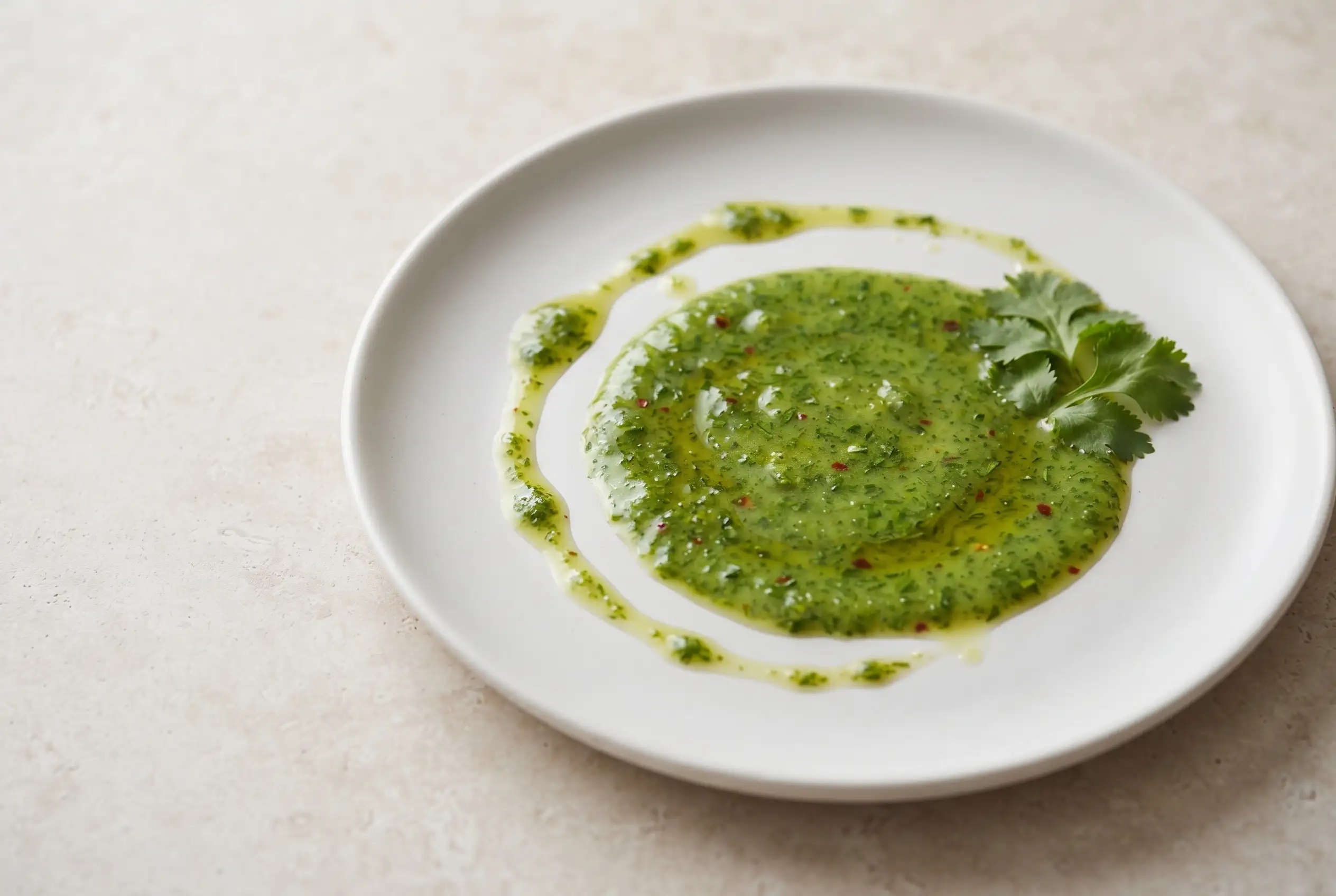
Cilantro vinaigrette turns a large handful of fresh herbs into a bright, pourable sauce with very little effort. Olive oil gives it body, white vinegar brings a sharp edge, garlic adds savory depth, and red pepper flakes leave a gentle warmth behind. The result is fresh enough for salads but useful far beyond leafy greens.
The texture is especially easy to control in a blender. A little water can help the blades catch when the cilantro is packed tightly, while seasoning at the end lets you adjust the acidity, salt, and heat to suit whatever is going on the plate. For anyone searching for a cilantro vinaigrette recipe that works as an everyday finishing sauce, the simplicity is part of its appeal.
Fresh cilantro sets the character of the vinaigrette
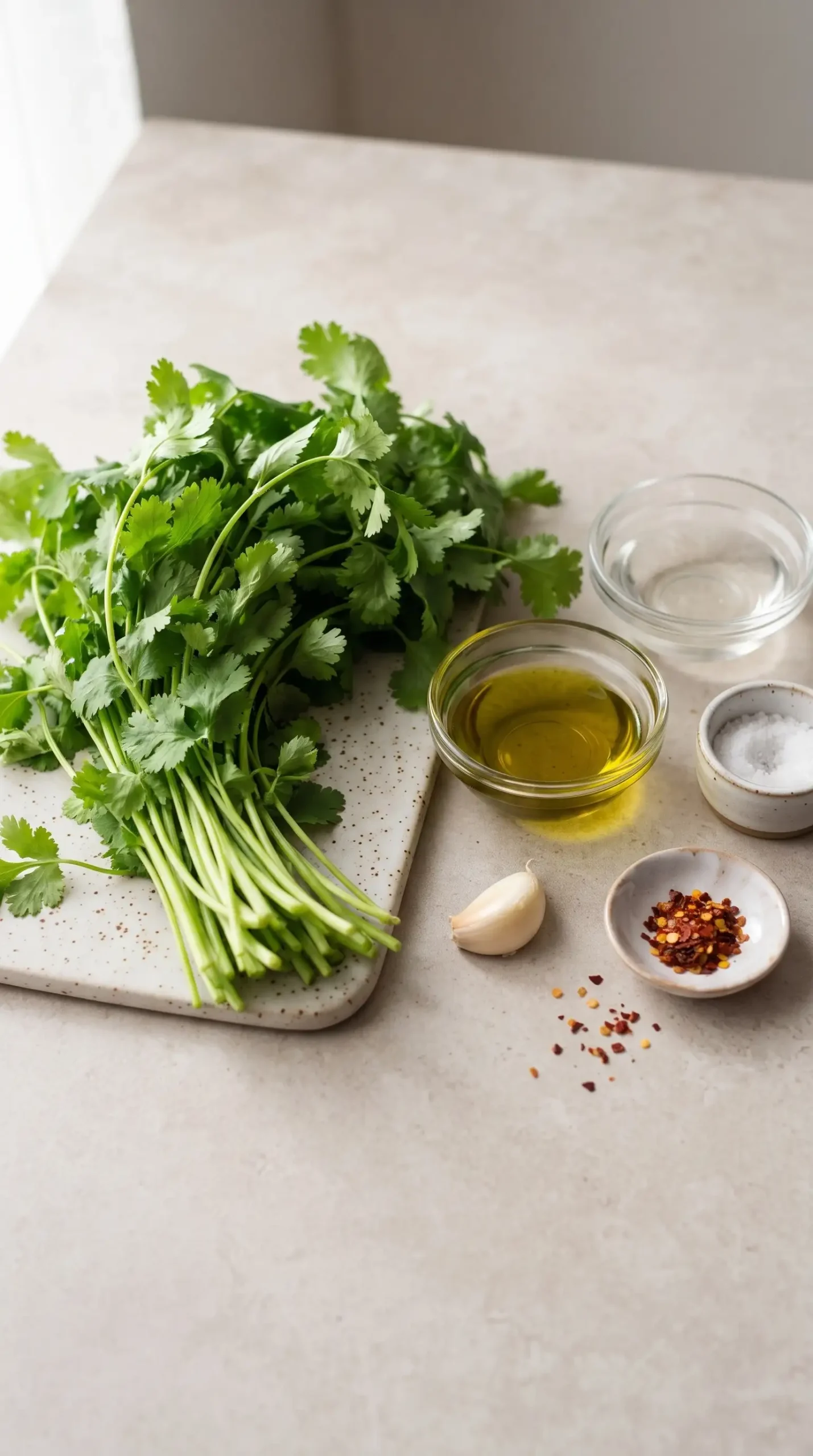
Use cilantro that looks vividly green and feels fresh, since the herb is the dominant flavor and color in a fresh cilantro vinaigrette. Pack the leaves firmly when measuring, but do not compress them so tightly that the blender struggles to move the mixture. Tender stems can go in with the leaves, especially when they are thin and green, while thick or tough stems are better removed.
White vinegar keeps the flavor bright
White vinegar gives cilantro vinaigrette a clean, pronounced tang that cuts through the richness of olive oil. Because its flavor is direct, small changes in seasoning are noticeable, so taste after blending and adjust with restraint. The vinegar should make the herbs taste livelier without overwhelming their freshness.
Balance matters more than adding more ingredients
Olive oil softens the sharpness of vinegar and carries the blended cilantro across the palate. Garlic contributes a savory note that becomes more integrated after blending, while kosher salt helps the herb and acid taste more defined.
Red pepper flakes are useful because their heat arrives without changing the basic character of the sauce. Keep them at the stated amount for a noticeable but supporting warmth, or leave them out if the vinaigrette needs to accompany a dish where chile would compete with other flavors.
Tasting at the end is the practical checkpoint. If the mixture seems flat, a little more salt can sharpen it; if it tastes heavy, the acidity may need attention. Adjustments should be small because the ingredients are few and each one remains easy to detect.
Blender movement determines the texture
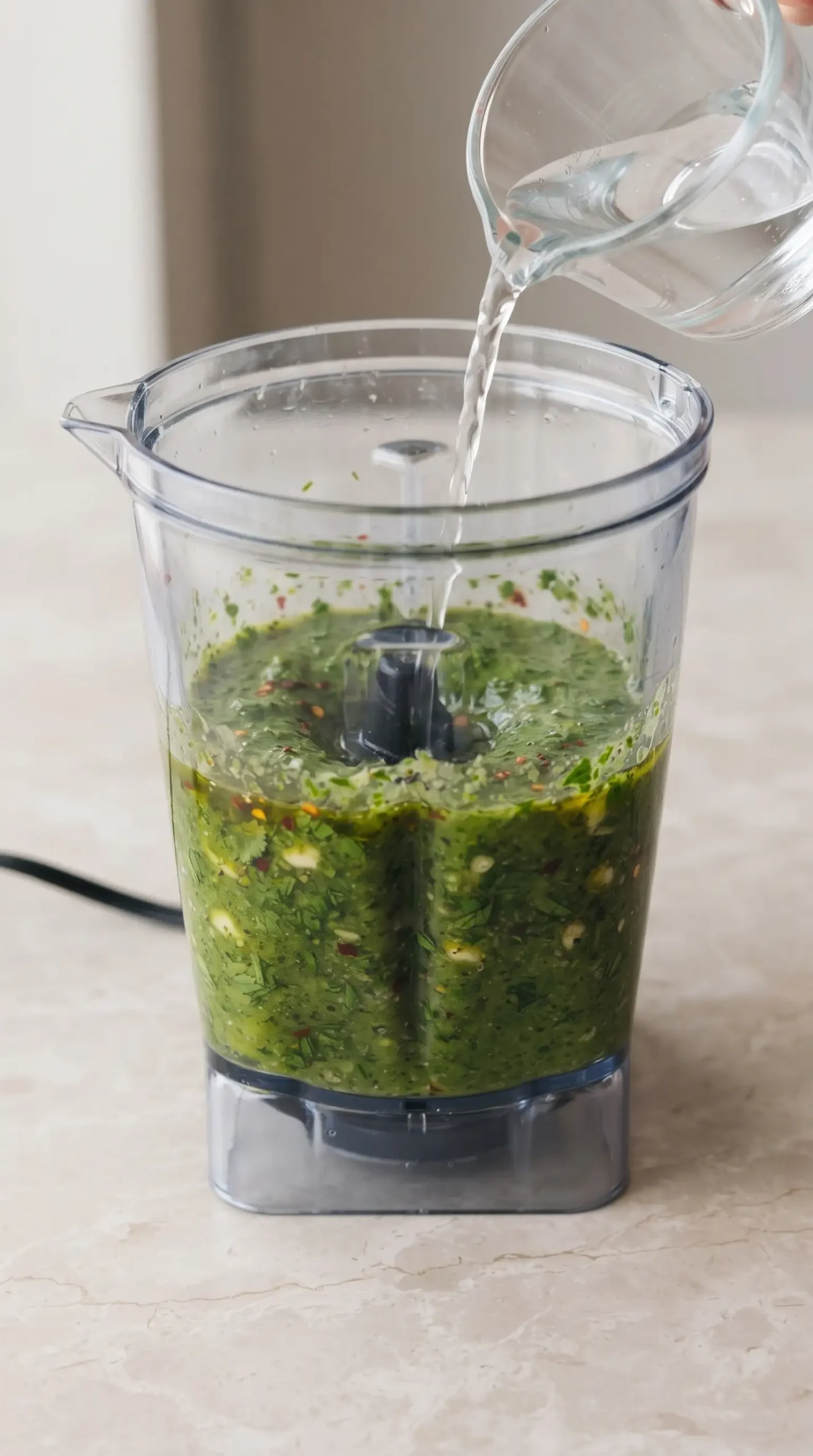
Start with enough liquid for the blender to circulate the cilantro instead of simply pressing it against the sides. The olive oil and vinegar provide the main liquid, but the packed herb can still make the mixture difficult to move, particularly in a larger or less powerful blender.
Water is useful when the blades need help catching the mixture. Add a little at a time within the suggested range, stopping as soon as the vinaigrette moves freely. Too much water can make the sauce thinner than you want, so it is better used as a blending aid than as an automatic addition.
About a minute of blending gives the ingredients time to break down into a smooth mixture. Pause if necessary to check the sides of the container, then continue until the cilantro is thoroughly dispersed. Once the texture is where you want it, season to taste instead of continuing to blend simply for the sake of a longer blending time.
Texture cues make water easier to judge
| What you see in the blender | What it means | Useful response |
|---|---|---|
| Mixture turns easily under the blades | There is enough movement for blending | Continue blending without adding more water |
| Cilantro stays packed around the blades | The mixture needs more volume to circulate | Add a small amount of water and blend again |
| Vinaigrette pours much more thinly than desired | More liquid has been incorporated than necessary | Stop adding water and use the sauce as is |
A smooth pour opens up more uses
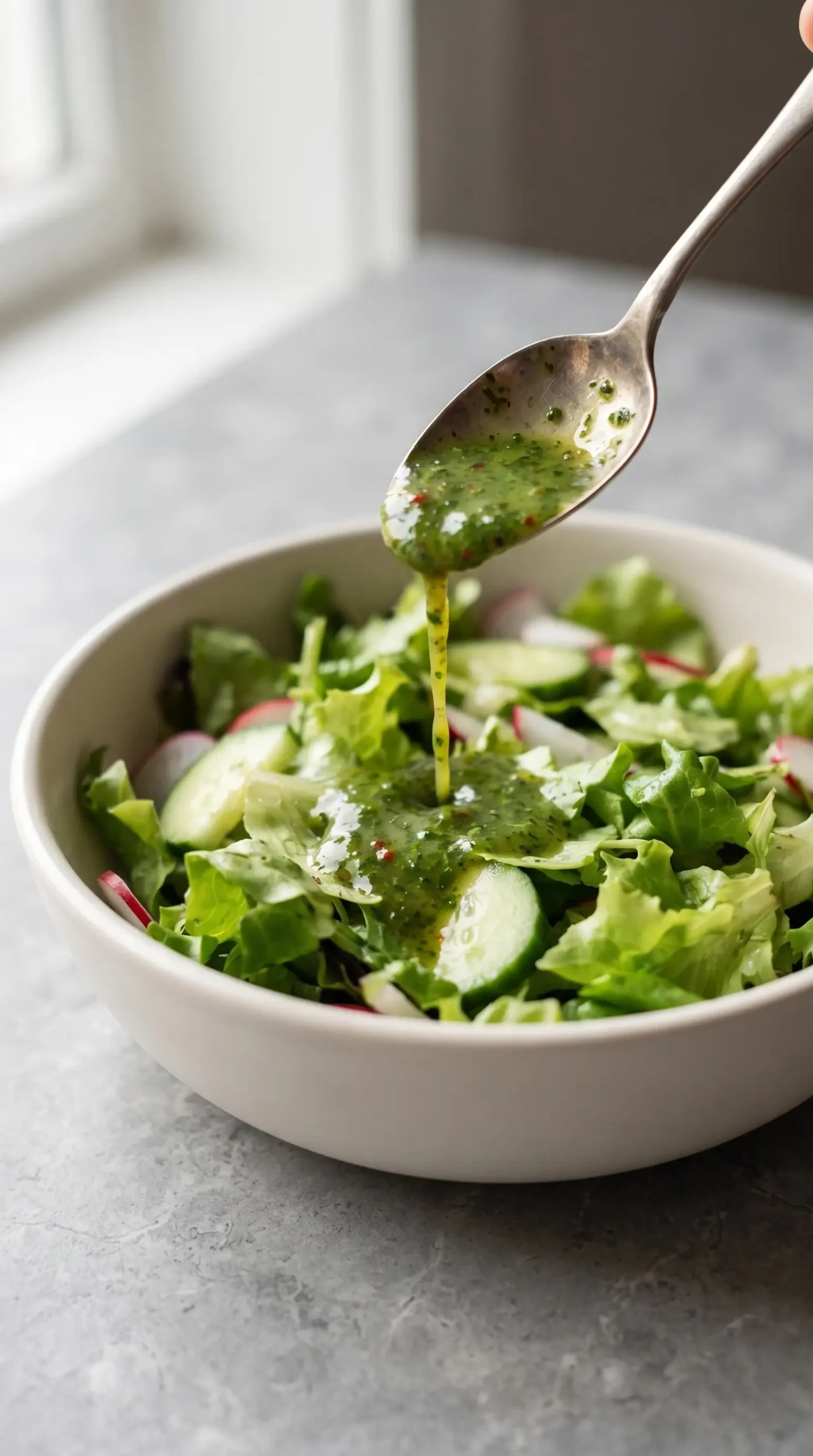
Cilantro vinaigrette can dress a green salad, but its usefulness does not stop there. Spoon it over roasted or grilled vegetables, use it alongside cooked grains, or drizzle it over a simple bowl that needs acidity and fresh herb flavor.
For a more substantial meal, the sauce can accompany beans, chickpeas, or other mild ingredients that benefit from a sharp herb dressing. Its olive-oil base also makes it suitable for finishing warm foods once they are off the heat, where the fresh cilantro flavor can remain prominent.
Keep the serving context in mind when seasoning. A salad with salty toppings may need less additional salt from the vinaigrette, while plain vegetables or grains can handle a more assertive dressing. The same batch can therefore work across several meals without requiring a complicated flavor profile.
Garlic intensity changes with resting time
Fresh garlic is immediately noticeable after blending, but its flavor can become more integrated as the vinaigrette sits. That makes the timing of your tasting useful: judge the sauce after it has fully blended, and remember that the garlic is part of a larger balance with the vinegar, oil, cilantro, and chile.
Serving choices show where cilantro vinaigrette fits
- Leafy salads: Use it when crisp greens need a lively, acidic dressing with fresh herb flavor.
- Cooked vegetables: Drizzle it over roasted or grilled vegetables after cooking so the cilantro remains distinct.
- Grains and legumes: Add it to mild bowls built around grains, beans, or chickpeas for a sharper finish.
- Simple plates: Spoon a little around plain cooked foods when the meal needs more brightness without another elaborate sauce.
Short storage protects the fresh flavor
Keep the blended vinaigrette in a jar in the refrigerator and use it within 3 to 4 days. The short storage window suits a sauce built around fresh cilantro and raw garlic, whose bright character is most useful while the mixture is fresh.
Common cilantro vinaigrette mistakes are easy to correct
A blender that struggles to move the mixture is one of the clearest signs that the packed cilantro needs more room to circulate. Adding a small amount of water can solve that specific problem, and the mixture can then be blended until it moves smoothly.
Over-dilution creates a different issue. Water is optional and exists to help the blender run when necessary, so adding it automatically can leave the vinaigrette thinner than intended. Add it gradually and stop as soon as the blades can work effectively.
Under-seasoning can also make the finished sauce seem less vivid than expected. Because cilantro, vinegar, oil, garlic, salt, and chile all remain identifiable, tasting after blending is important. Make small adjustments at that point instead of adding large amounts of one ingredient before the flavors have come together.
Small adjustments keep the sauce versatile
Leave out the red pepper flakes when a milder herb dressing is more appropriate, or keep them in when a little heat fits the meal. The underlying cilantro, oil, vinegar, garlic, and salt combination still gives the sauce its recognizable character.
Water is the simplest texture adjustment because it does not introduce another strong flavor. Use only enough to help the blender circulate the mixture, especially if the cilantro is tightly packed or the blender container is making it difficult for the blades to catch.
Acid and salt should be judged together
White vinegar can make the vinaigrette taste especially crisp, but acidity can seem harsh when the mixture needs more seasoning; salt can soften vinegar’s acidity. Taste after blending and consider the relationship between tang and salt before deciding that more vinegar is necessary.
Salt also affects how clearly the cilantro and garlic come through. A small adjustment can make the sauce seem more complete without changing its basic flavor profile. This is particularly useful when the vinaigrette will be poured over relatively plain foods.
One-minute blending preserves the practical simplicity
Once the ingredients are in the blender, the important decision is whether the mixture is moving properly and whether its texture suits the intended use. There is no need to complicate the process with extra preparation when the cilantro can be blended directly into the dressing.
Cilantro vinaigrette works best when its brightness stays intact
Fresh cilantro, sharp white vinegar, olive oil, garlic, and a little chile create a sauce whose success depends on balance and movement in the blender. Water should serve the texture, not become the focus, and seasoning is best judged once everything has been thoroughly combined.
That combination of bright acidity and fresh herb flavor makes the vinaigrette adaptable enough for salads, vegetables, grains, and simple meals. Keeping the mixture cold and using it within 3 to 4 days preserves the practical freshness that makes such a quick sauce useful.
Questions about cilantro vinaigrette storage and texture
How long does cilantro vinaigrette keep in the refrigerator?
Store it in a jar in the refrigerator and use it within 3 to 4 days. Because fresh cilantro and raw garlic are central to the sauce, keeping the storage period short helps retain its fresh character.
Why does my blender need water for cilantro vinaigrette?
Packed cilantro can form a dense mixture that does not circulate easily around the blades. A small amount of water increases the volume and helps the blades catch the ingredients, so add it gradually only when the blender needs assistance.
Can I leave out the red pepper flakes?
Yes. The red pepper flakes provide heat, so omitting them makes the vinaigrette milder without removing the main cilantro, vinegar, olive oil, garlic, and salt structure.
What should cilantro vinaigrette look like when it is ready?
The mixture should be thoroughly blended and smooth enough to move easily when poured. If cilantro remains packed around the blades or the mixture refuses to circulate, add a little water and blend again before making further seasoning adjustments.
How can I use cilantro vinaigrette beyond salad?
Try it over roasted or grilled vegetables, cooked grains, beans, chickpeas, or other simple foods that benefit from acidity and fresh herb flavor. Adding it after cooking keeps the uncooked cilantro character prominent.
Cilantro Vinaigrette with White Vinegar and Garlic
Ingredients
Method
- Add all ingredients to a blender and blend for about 1 minute until the mixture is smooth.
- Add water as needed to provide enough volume for the blender to run smoothly.
- Taste the vinaigrette and adjust the seasoning as desired.