
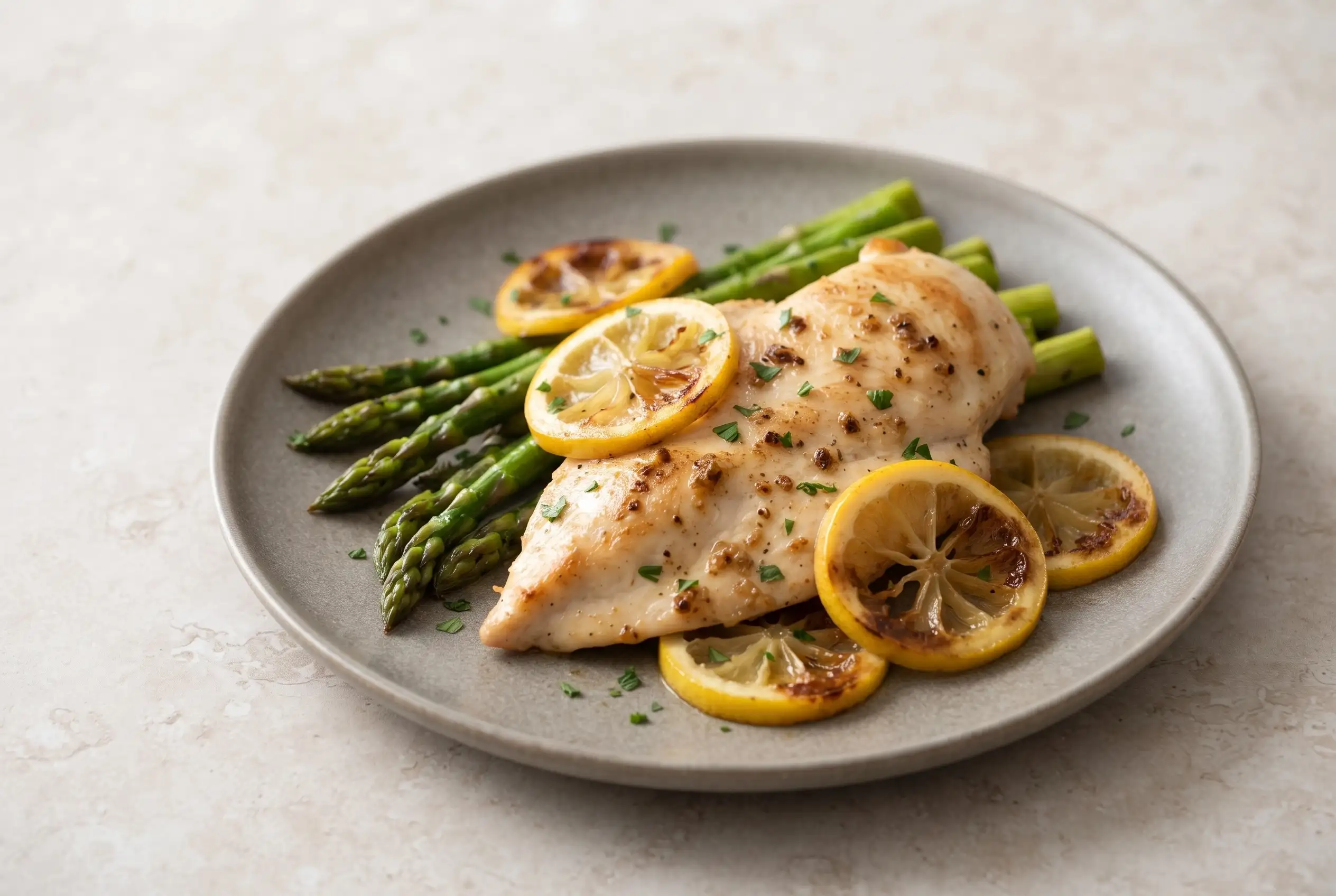
Lemon chicken gets its best texture when the chicken is thin enough to cook quickly while still developing a golden, lightly crisp coating. Paired with asparagus and caramelized lemon slices, the skillet becomes a compact meal with bright citrus flavor, savory browned bits, and a fresh vegetable element. The lemon slices do more than garnish the plate: cooking them directly in the same pan softens their sharpness and gives their edges a pleasantly browned character.
For lemon chicken with asparagus, small details make a noticeable difference. The chicken needs an even thickness, the flour coating should stay light, and the asparagus should leave the pan while it still has some firmness. Once those pieces are handled well, the rest of the dish comes together with very little fuss.
Why thin chicken matters in the lemon skillet
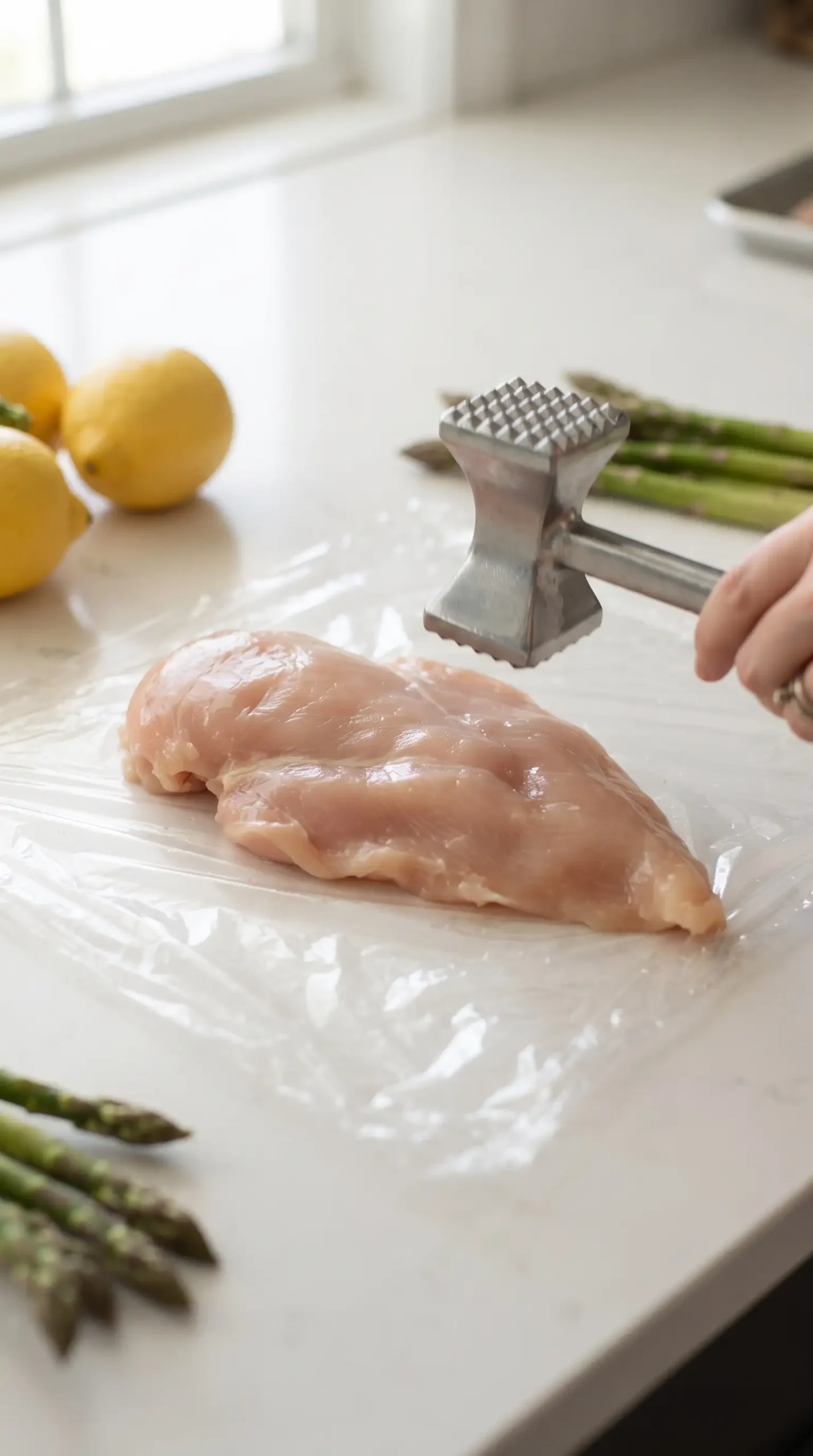
Even thickness controls both browning and doneness. A chicken breast that is much thicker in the center can require longer cooking, which gives the outside more time in the hot butter and increases the chance of a dry exterior before the middle is ready. Pounding the meat to an even thickness creates a more predictable cooking surface and lets the flour coating brown during the same window that the chicken cooks through.
Plastic wrap helps keep the process tidy while the breasts are being pounded. If a breast is exceptionally thick, slicing it horizontally into thinner pieces is a practical shortcut. The important feature is not the particular technique used to thin the meat; it is reaching pieces that are reasonably uniform before they enter the skillet.
Once the chicken is flattened, avoid pressing or moving it constantly in the pan. Contact with the hot skillet gives the flour-coated surface time to color and develop the browned bits that later become useful when the lemon slices cook.
Flour and lemon pepper set up the right crust
The flour coating should be gentle and even, with excess flour shaken off before the chicken reaches the skillet. A heavy layer can become pasty where moisture escapes from the meat, while a thin coating gives the butter a surface to brown without overwhelming the chicken.
| Pan cue | What it indicates | Useful response |
|---|---|---|
| Flour stays pale after contact | The surface is not browning yet | Give the chicken time to develop color before turning |
| Coating turns golden | The exterior is browning | Turn the chicken and continue cooking the other side |
| Butter browns rapidly around the chicken | The pan may be running very hot | Watch closely so the coating does not scorch |
| Chicken releases easily after browning | The crust has developed contact with the pan | Turn it carefully without scraping away the coating |
Lemon pepper seasoning goes directly onto the chicken in the pan, so it becomes part of the browned exterior instead of disappearing into the flour. Adding it to both sides as they cook distributes its citrusy, peppery character throughout the chicken without requiring a separate marinade.
Fresh asparagus needs a short turn in the pan
Asparagus benefits from quick cooking here because the vegetable is meant to stay bright and tender-crisp. Chopping the spears into manageable pieces helps them cook evenly, while removing them from the skillet once they reach that texture prevents them from continuing to soften during the later assembly.
There is also a practical reason to cook the asparagus separately from the chicken. The chicken needs sustained contact with the skillet to brown, whereas asparagus needs only a short sauté. Giving each component its own pan time protects both textures and leaves the browned skillet surface available for the lemon slices.
Size affects the timing. Thicker asparagus pieces can need a little more attention, while slender pieces can become tender quickly. Watch the vegetable itself: a vivid green color with a slight bite is the useful stopping point for this particular skillet.
Caramelized lemon slices transform the pan
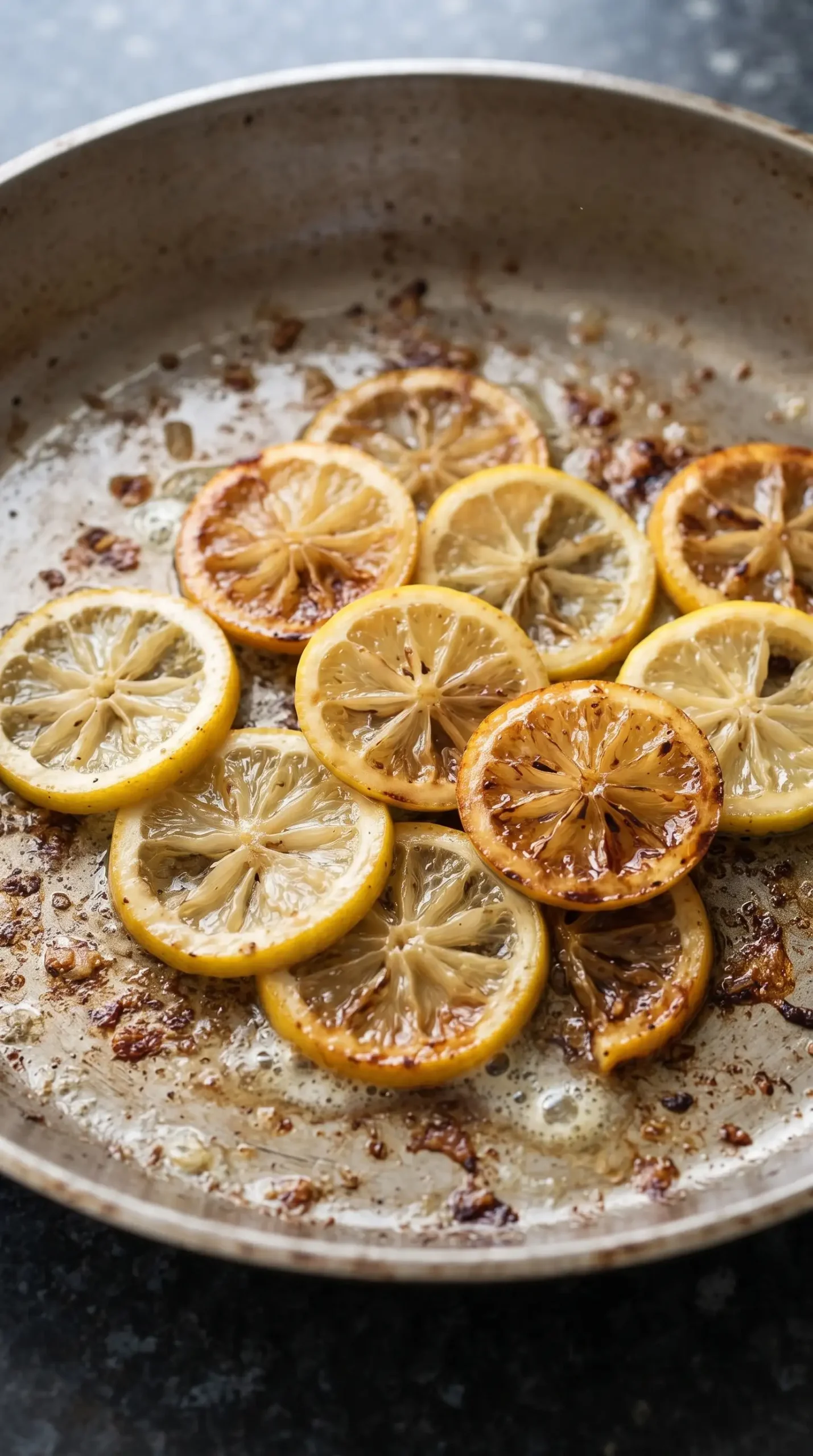
Cooking the lemon slices flat against the skillet changes their role completely. Instead of simply contributing raw acidity, they pick up the browned bits left from the chicken and butter while their exposed surfaces develop caramelized edges. That creates a more rounded citrus character for the finished dish.
Use enough pan contact for the slices to brown without constantly shifting them. A tiny pat of butter can help reduce sticking and encourage browning if the skillet surface is becoming dry. The slices should be handled carefully because their softened flesh can be more delicate after cooking.
Three visual cues keep the skillet balanced
- Chicken color: Look for a golden exterior before removing the pieces from the skillet.
- Asparagus color: Bright green spears with a tender-crisp texture signal that they are ready to leave the heat.
- Lemon edges: Light browning and contact with the pan show that the slices have begun to caramelize and collect flavorful browned bits.
These cues matter because the ingredients do not all reach their best texture at the same rate. The chicken needs browning and thorough cooking, the asparagus needs a brief sauté, and the lemons need enough undisturbed contact to color. Watching each component independently makes the final layering much easier.
Butter carries the browned flavors between components
Butter gives the chicken a rich cooking medium while helping the flour coating brown. After the chicken leaves the pan, the browned bits are called fond and can add concentrated flavor to the asparagus and lemon. Keeping those residues in place is one reason a single skillet works so effectively for lemon asparagus chicken.
The optional butter added while caramelizing the lemons serves a narrower purpose. A small amount can help the slices make better contact with the pan and encourage browning. It does not need to turn the skillet into a sauce or coat every ingredient heavily.
Honey belongs to the optional finishing variation, where it can introduce a sweeter contrast to the lemon. Because the base preparation already has pronounced citrus character, sweetness is best treated as an adjustment for diners who want a softer balance.
Keep the lemon slices intact while they brown
Place the lemon rounds flat on the skillet and resist the temptation to stir them as they cook. Moving them repeatedly reduces the uninterrupted contact that creates browned edges and can make the slices harder to lift in one piece.
Thin lemon slices also require a lighter touch than the chicken. A spatula can slide underneath them once they have browned, allowing the cooked citrus to be transferred without breaking it apart across the pan. Keeping the slices recognizable also makes the finished skillet more visually appealing.
Layering preserves the separate textures
Once the chicken, asparagus, and lemons have each had their own moment in the skillet, they can be returned together. Placing the asparagus down first creates a vegetable base, followed by the chicken, with the lemon slices arranged over the top so their juices and browned surfaces remain prominent.
| Component | Best point to remove from heat | What happens if it stays too long |
|---|---|---|
| Chicken | Golden outside and cooked through | The exterior can become overly firm or dry |
| Asparagus | Bright green and tender-crisp | The spears become softer and lose their fresh bite |
| Lemon slices | Edges are browned and the slices have picked up pan flavor | The fruit can become increasingly soft and harder to handle |
Returning everything to the same skillet is primarily about bringing the flavors together, not about starting another long cooking stage. The components have already reached their intended textures, so the assembly should preserve those results.
Common lemon chicken mistakes to avoid
Several problems can be traced to small handling choices. Thick chicken can cook unevenly, excess flour can interfere with browning, and moving lemon slices too frequently can prevent the caramelized surfaces that give the skillet its distinctive character.
Another easy mistake is leaving the asparagus in the pan while waiting for the chicken or lemons. Because the vegetable cooks quickly, it is better to remove it once it reaches tender-crisp texture and return it during assembly. That keeps the spears from becoming unnecessarily soft.
Finally, watch the skillet once butter and flour are involved. A pan hot enough to brown the chicken can also brown the coating quickly. If the exterior darkens much faster than expected, attention should shift to heat control instead of simply extending the cooking time.
A simple serving approach keeps the citrus prominent
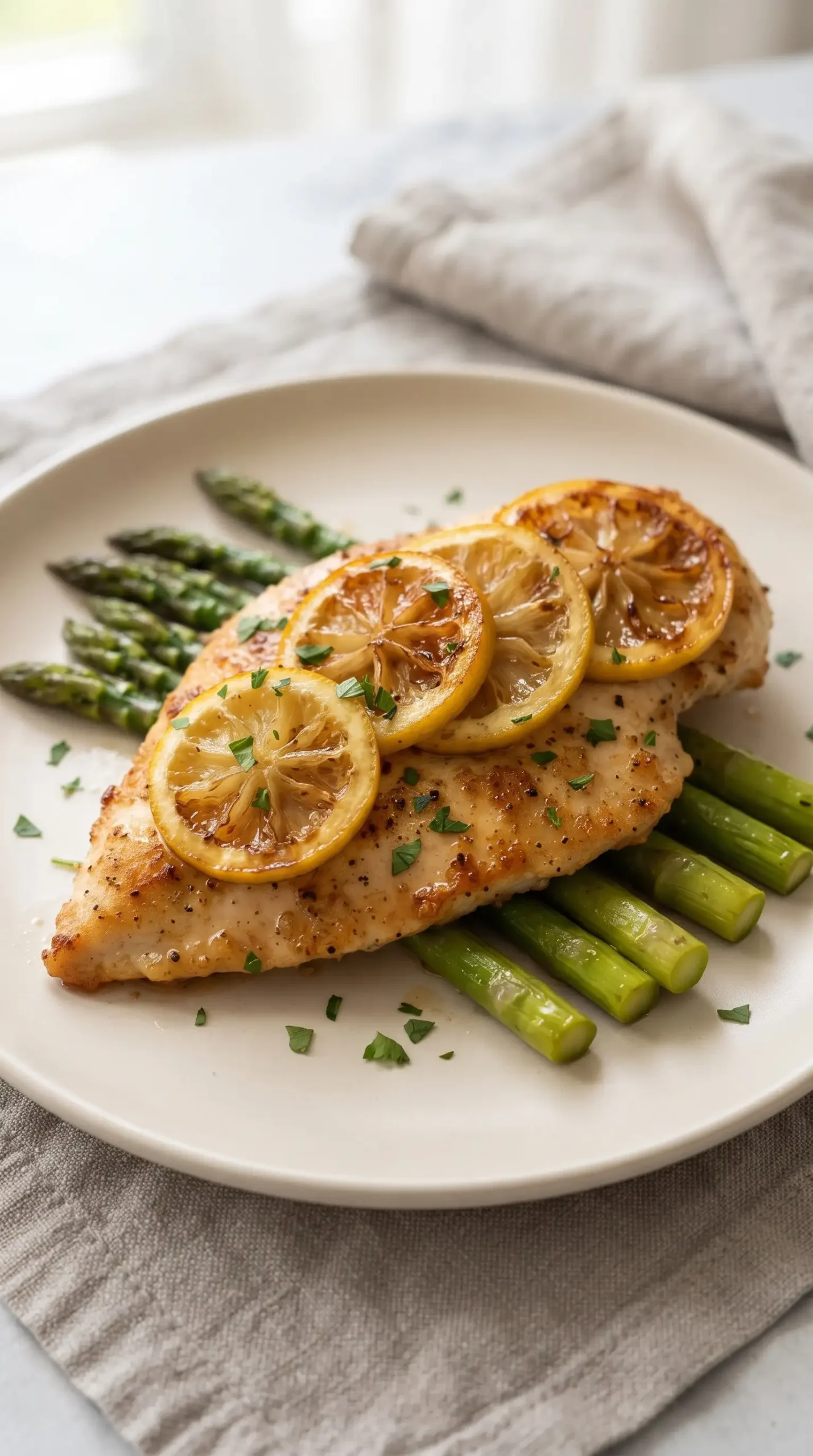
Serve the chicken with asparagus distributed around and underneath the pieces, then place the browned lemon slices where their caramelized surfaces remain visible. Optional parsley can provide a fresh finish without changing the main flavor balance.
Small adjustments that suit the same skillet
The core preparation is flexible enough to accommodate a few practical changes without changing its identity. Chicken breasts can be sliced horizontally when pounding is inconvenient, and asparagus quantity can vary within the supplied range according to how vegetable-forward the meal should be.
For a sweeter flavor profile, the optional honey and butter combination can be incorporated as a finishing variation. The honey is especially useful when the lemons taste particularly sharp, because its sweetness can soften the perception of acidity without removing the citrus character.
Fresh parsley is another optional detail. It works best as a light finishing touch after the skillet has been assembled, where its fresh flavor contrasts with the browned chicken and caramelized citrus.
Lemon chicken comes together through controlled browning
Golden chicken, crisp-tender asparagus, and browned lemon slices each depend on a different visual stopping point. Keeping those moments separate is what allows the ingredients to meet in the skillet without one component sacrificing its texture for another.
That balance is especially useful in a quick lemon chicken with asparagus because the dish does not rely on a long sauce or extended cooking period. The flavor comes from flour browned in butter, lemon pepper on the chicken, asparagus cooked briefly, and citrus slices that absorb the skillet’s browned bits.
Questions about lemon chicken thickness and browning
Can thick chicken breasts be used without pounding them?
Very thick breasts can be sliced horizontally into thinner pieces before coating them. This creates a more even thickness and helps the chicken cook through while the flour coating has enough time to brown.
Can frozen asparagus be used for lemon chicken with asparagus?
Frozen asparagus can work, but excess moisture may make browning more difficult and can soften the vegetable more quickly. Thawing and draining it well before sautéing gives you better control over the tender-crisp texture.
How can I keep lemon slices from sticking to the skillet?
Make sure the skillet is not excessively dry before adding the lemon slices, and use the suggested tiny pat of butter if needed. Once the slices have had time to brown, slide a spatula gently underneath instead of trying to move them repeatedly during cooking.
What can I do if the lemon flavor tastes too sharp?
The optional honey provides a straightforward way to introduce sweetness and soften the citrus balance. Add the sweet element conservatively so the browned chicken and lemon remain the dominant flavors.
How should leftover lemon chicken be stored?
Cool leftovers promptly, place them in a covered container, and refrigerate them. When reheating, use moderate heat and stop once the chicken is warmed through, since prolonged high heat can make cooked chicken firmer and can soften the asparagus further.
Lemon Chicken with Asparagus and Caramelized Lemon
Ingredients
Method
- Cover the chicken breasts with plastic wrap and pound them until each piece is about 3/4 inch thick. If the breasts are very thick, slice them horizontally into thinner pieces instead.
- Place the flour, salt, and pepper in a shallow dish and coat each chicken breast lightly, shaking off any excess.
- Melt the butter in a large skillet over medium-high heat. Add the coated chicken and cook for 3-5 minutes on each side, adding the lemon pepper seasoning directly to each side while it cooks.
- Transfer the cooked chicken to a plate once it is golden brown and cooked through.
- Add the chopped asparagus to the skillet and sauté for a few minutes until bright green and tender-crisp. Remove the asparagus and set it aside.
- Place the lemon slices flat in the skillet and cook for a few minutes on each side without stirring so they caramelize and pick up the browned bits from the pan. Remove the lemon slices and set them aside.
- Return the asparagus to the skillet, place the chicken over it, and arrange the caramelized lemon slices on top.
- Finish with parsley for topping if desired.