
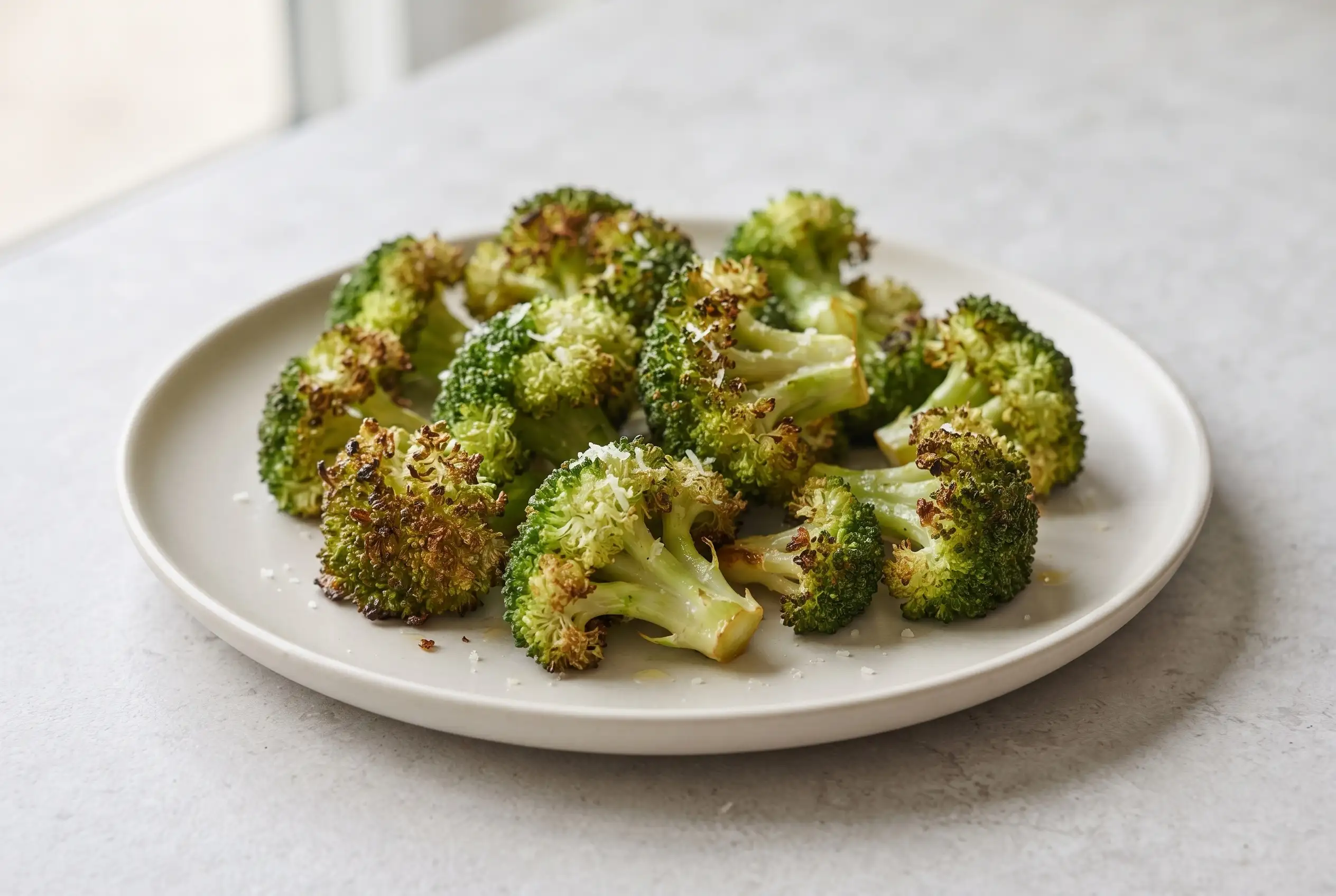
Air fryer broccoli can land in an unusually satisfying middle ground: the florets stay fluffy and tender inside while their edges turn browned, crisped, and deeply roasty. The trick is not simply blasting broccoli with high heat. A little moisture is used early, followed by a hotter roast that gives the surface time to develop color and crunch.
Air fryer broccoli also benefits from a brief massage before cooking. That simple handling helps distribute the oil, salt, and water across the florets so they enter the basket ready to soften before they roast. The result is a quick vegetable side with enough texture to stand beside a main dish, yet enough tenderness to avoid the dry, brittle character that can happen with aggressive roasting.
Why air fryer broccoli gets two textures
The unusual texture comes from changing the cooking environment during the short cook. The first stage at 350°F keeps the broccoli bright green and gives the florets time to become tender. At that point, they should resemble steamed broccoli more closely than roasted vegetables.
Raising the temperature to 375°F changes what happens at the surface. Once the broccoli has softened, the hotter air can encourage browning and crisping without requiring a long roast. Edges that were soft and moist begin taking on the browned, roasty character that makes the finished florets more interesting.
That progression explains why crispy air fryer broccoli does not need to be cooked at one high temperature from the beginning. Starting hotter can push the exterior toward browning before the centers have had enough time to soften. Keeping the first stage gentler creates room for tenderness, while the second stage supplies the concentrated heat needed for color and crisp edges.
Water helps the florets stay tender
The small amount of water has a specific job here: it gives the broccoli additional moisture during the early part of cooking. Gently massaging the florets with the water, oil, and salt helps them hold onto some of that moisture as they enter the air fryer. The broccoli does not need to absorb every drop; even moisture remaining on the surface can help preserve a tender texture while roasting.
Cut size changes roast behavior
Uniform, bite-sized florets make the short cooking window easier to manage. Smaller pieces expose more surface area to the hot circulating air, so their edges can brown quickly. Larger pieces have more interior volume and can remain tender while their outside develops color, but noticeably uneven pieces may finish at different rates.
Breaking the florets into similar sizes also makes the first-stage texture easier to judge. You are looking for broccoli that has become bright green and tender-looking before increasing the heat. If one very large piece sits beside several tiny pieces, those visual cues become less consistent across the basket.
A whole head of broccoli works just as well as packaged florets when it is cut into a similar size. The important handling choice is consistency, not whether the broccoli began in a bag or came from a fresh head. Keep particularly thick stems out of the mix unless they have been cut small enough to cook along with the florets.
Oil and salt need even contact
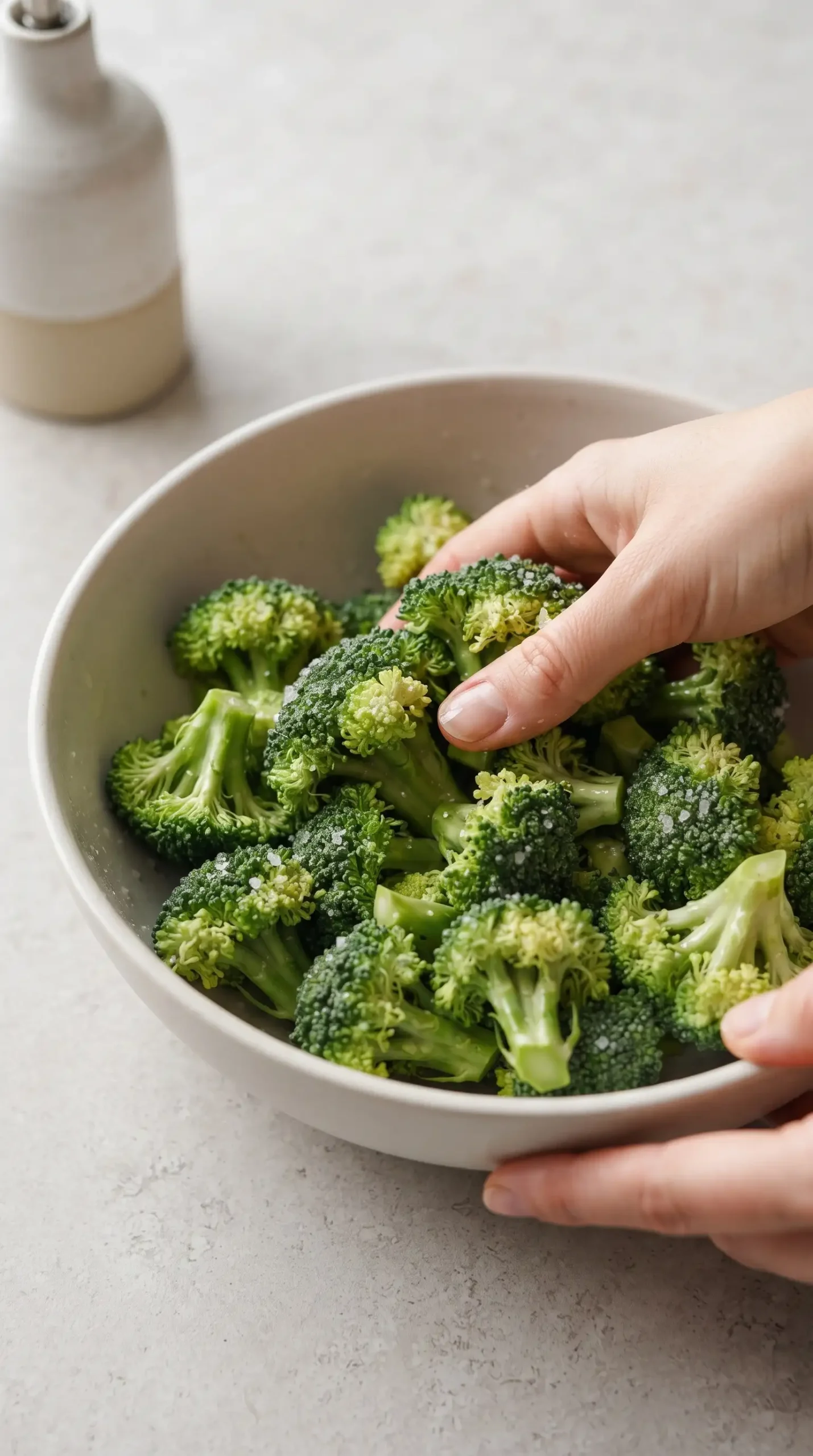
Oil helps the surfaces brown during the hotter stage, while coarse kosher salt seasons the broccoli. Gentle massage matters because it spreads both across irregular florets and into the small spaces between their branches. A light, even coating is more useful here than leaving some pieces heavily coated and others nearly bare.
The two-temperature roast gives better control
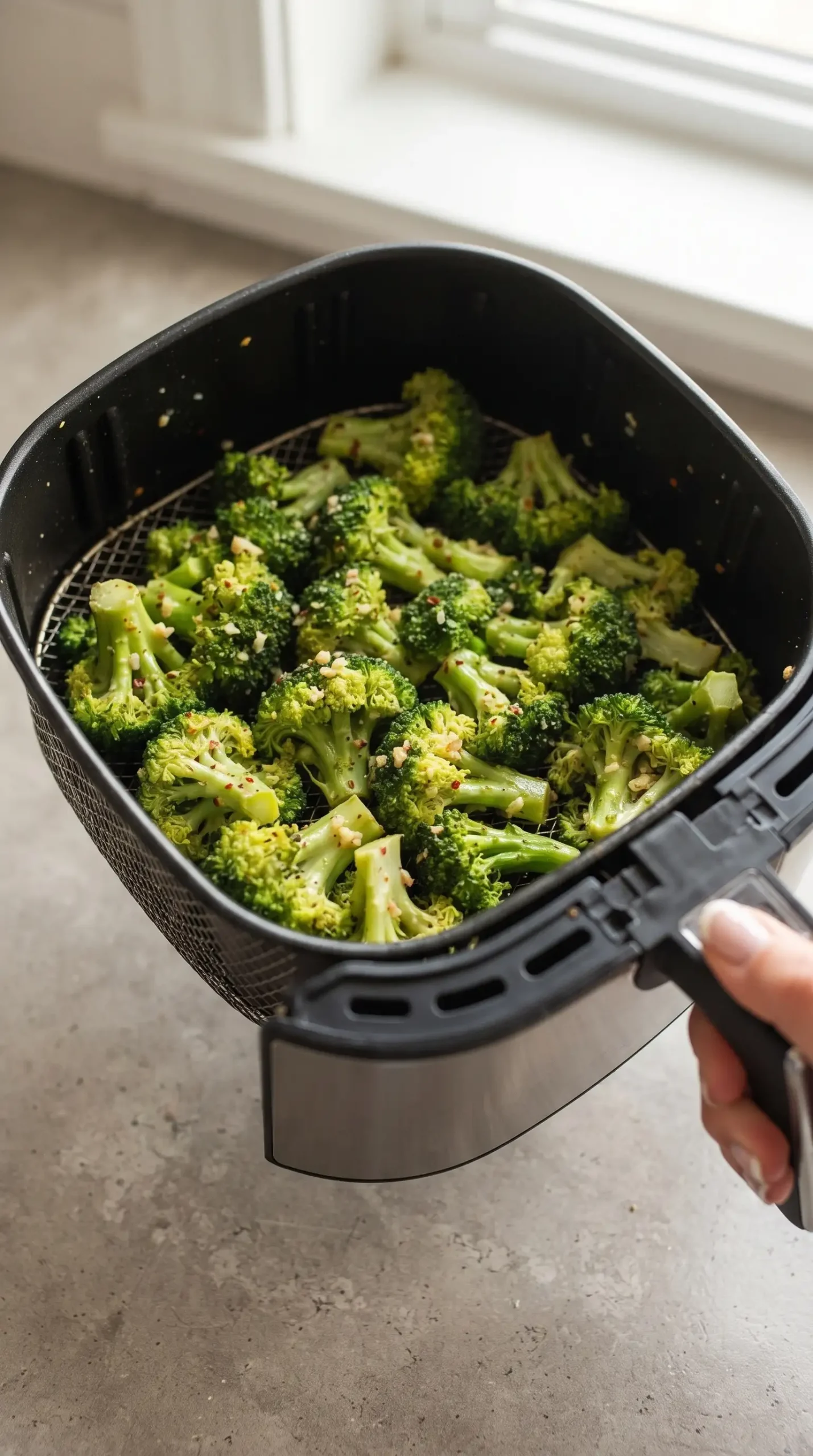
The temperature change is the central cooking control for air fryer broccoli. Five minutes at 350°F gives the florets a bright, steamed-looking appearance and begins the tenderizing process. A quick shake then redistributes the pieces before the hotter stage, giving more surfaces exposure to the circulating heat.
| Cooking stage | What to watch for | Useful adjustment |
|---|---|---|
| 350°F | Bright green, softened, steamed-looking florets | Give the basket a shake before increasing the heat |
| 375°F | Browned, crisped, roasty edges | Stop when the surface reaches your preferred crispness |
| 390–400°F | More aggressive surface browning | Use only when the 375°F roast is not crisping enough |
The second stage is deliberately short. Two minutes at 375°F is enough to begin transforming the softened surface into something crisp and browned, but the exact finish can vary with the air fryer. If the broccoli is still tender but lacks the desired roasted exterior, increasing the temperature slightly during this last stage can provide more browning.
Signs to look for between stages
Visual cues are more useful than treating the clock as an absolute endpoint. After the first stage, the florets should look bright green and steamed. After the hotter stage, look for browned edges and crisped areas while the thicker portions remain fluffy and tender. Those changes tell you when the broccoli has moved from moisture-focused cooking into roasting.
Basket crowding is manageable
Broccoli does not have to occupy a perfectly neat single layer from the first second. If the florets overlap slightly at the beginning, they can still work through the initial cooking stage, especially because they shrink as they cook. That reduction creates more room for the pieces to separate as roasting progresses.
Capacity still matters. Overfilling the air fryer can interfere with even cooking and browning, so when the air fryer is small, working in smaller batches gives the roasting stage more room to do its job.
A quick shake at the transition point is particularly useful when pieces have overlapped. It loosens the cluster and exposes new surfaces before the temperature rises. There is no need to obsess over perfect spacing; simply give the florets enough movement to let the hotter air reach more of them.
A basket-free method still works
A basket is convenient, but it is not essential for this approach. The seasoned broccoli can be prepared as directed and transferred to a baking sheet for cooking. The same principle remains important: preserve enough moisture early to keep the florets tender, then use higher heat to build the browned surface.
Common air fryer broccoli mistakes to avoid
Starting with too much heat can shift the balance toward browning before the broccoli has softened. If the surface becomes dark quickly while the interior still feels firm, the early cooking stage has not had enough opportunity to provide tenderness. Beginning at 350°F keeps the first phase gentler and gives the florets time to change texture.
Another issue is treating the water as something that must disappear before cooking. A little water left in the bowl is fine, and it can help create the moist early environment that supports the tender center. Pouring away every trace is unnecessary, while adding substantially more water would change the balance of the cooking method.
- Uneven pieces: Very small florets can brown sooner than large ones, so aim for broadly similar bite-sized pieces.
- No surface contact: If oil and salt collect in one place, some florets will roast less evenly; massage gently before cooking.
- Insufficient finishing heat: Tender broccoli that is still pale after the hotter stage may need a slightly higher finishing temperature.
- Excessive crowding: A packed basket can limit browning, so use a smaller batch when the air fryer has limited capacity.
Crispness can be adjusted at the end
The best stopping point depends on how much browned surface you want. For a softer vegetable side, stop once the florets have browned lightly. For more pronounced crispness, extend the hotter roasting stage or increase it to 390°F or 400°F when needed, watching closely so the edges do not move beyond the texture you prefer.
Dips and Parmesan change the serving experience
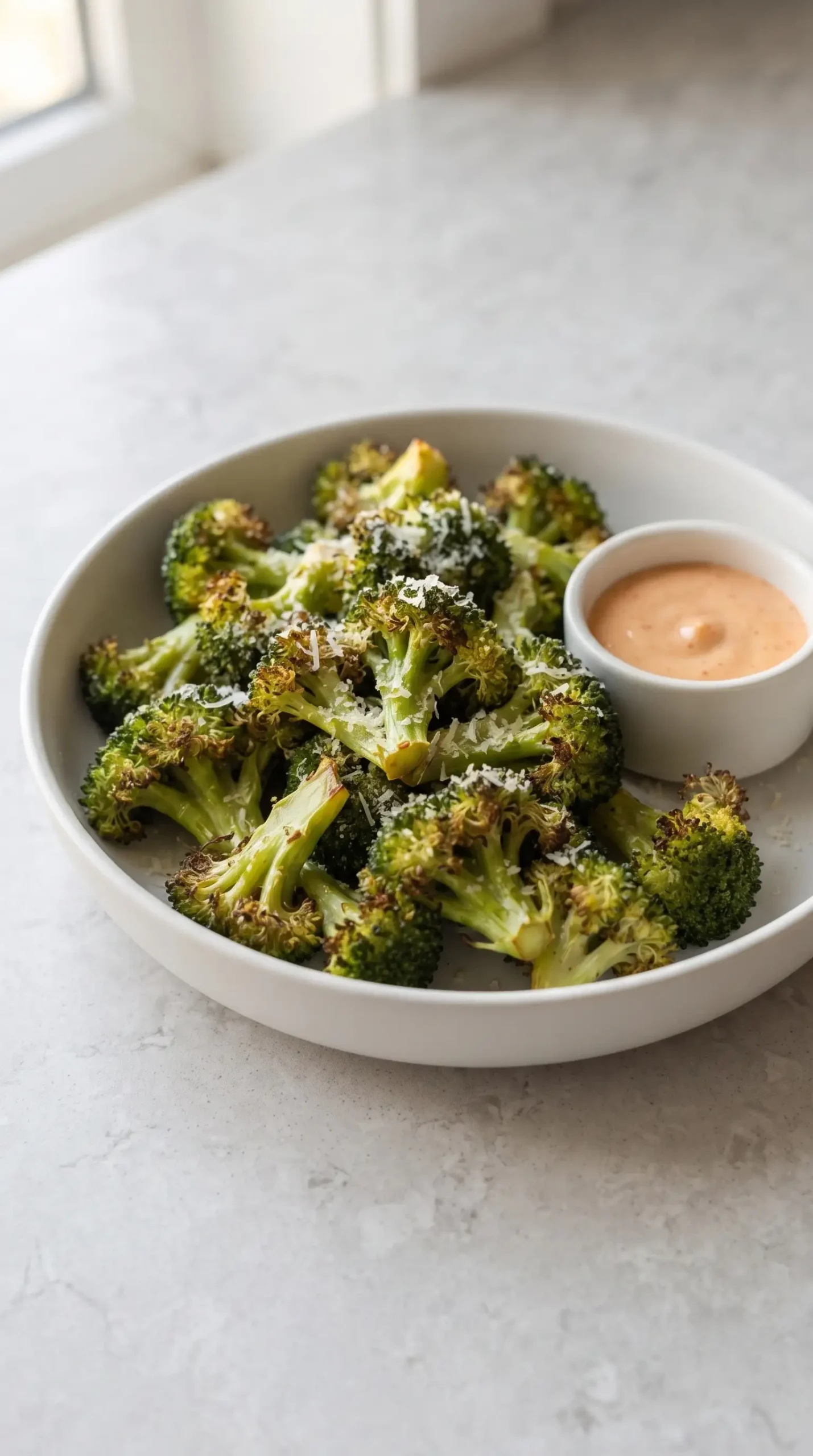
Air fryer broccoli has enough roasted flavor to work with very little finishing treatment. A dipping sauce gives the browned edges something creamy or savory to catch, while a little Parmesan adds a salty, nutty finish without requiring another cooking step.
For a simple plate, serve the florets while their contrast between tender centers and crisp edges is most noticeable. That texture works particularly well beside foods that are softer or richer, because the broccoli contributes both vegetable freshness and roasted character.
- Dipping sauce: Serve it alongside the broccoli so the crisped edges can be dipped without softening the entire batch.
- Parmesan: Sprinkle it over hot florets for a quick savory finish.
- Simple seasoning: Keep the focus on the browned broccoli when the vegetable itself is the main side.
Roasted air fryer broccoli can also be treated as a flexible component of a larger meal. Its compact cooking time makes it useful when the rest of dinner needs a quick vegetable, and its tender-crisp texture gives the plate more contrast than plainly steamed florets.
Tender centers and browned edges make the timing work
Bright green florets become tender first, then the hotter finish turns their exposed surfaces crisp and browned. That sequence is the key judgment to carry through the cook: protect the moist interior early, then chase the level of roasting you want at the end.
Once the broccoli looks tender after the first stage and visibly roasted after the second, the useful decision is simply when to stop. The short finishing window lets you choose between gentler browning and a more deeply crisped exterior without sacrificing the fluffy center that makes tender crispy broccoli appealing.
Air fryer broccoli questions about water and crispness
Can the broccoli be prepared directly in the air fryer?
Yes. The florets can be massaged with the oil and salt directly in the basket, then the water can be poured into the air fryer so it sits below the grates. This avoids using a separate bowl while preserving the same basic moisture-first approach.
Why does the broccoli stay tender instead of becoming completely crisp?
The method intentionally creates tenderness before emphasizing browning. The water and gentler first stage help the florets retain moisture, while the hotter stage concentrates on the exterior. If you want more crunch, the finishing temperature can be increased to 390°F or 400°F.
What should I do if my broccoli is browned but still too firm?
Give the florets more time at the gentler stage before pursuing additional browning. Very large pieces may also need to be broken into smaller, more comparable bite-sized pieces so their centers can soften within the short cooking window.
Why is my air fryer broccoli not getting crispy?
Check whether the basket is crowded and whether the finishing temperature is high enough for your particular air fryer. A slight overlap early on is acceptable, but a very full basket can limit surface browning. If the broccoli remains pale after the 375°F stage, a short finish at 390°F or 400°F can increase crisping.
Can frozen broccoli be used for this method?
The supplied method is designed around fresh florets, so frozen broccoli would introduce a different moisture load and would not be a direct one-for-one application. For the intended texture and timing, use fresh broccoli florets and follow the moisture-first cooking approach.
Air Fryer Broccoli with Tender and Roasted Florets
Ingredients
Method
- Add the broccoli florets to a bowl. Pour in the water, oil, and salt, then break larger florets into bite-sized pieces. Gently massage the mixture for 30-60 seconds until the broccoli becomes slightly brighter green and evenly coated.
- Transfer the broccoli to the air fryer basket, leaving any remaining liquid in the bowl. Air fry at 350°F (177°C) for 5 minutes, then shake the basket. The broccoli should look bright green and tender, similar to steamed broccoli.
- Continue air frying at 375°F (191°C) for 2 minutes, or until the florets begin developing browned, crisped edges. Adjust the final texture as needed based on your preferred level of crispness.
- Serve the broccoli warm with a dipping sauce or a sprinkle of Parmesan if desired.