
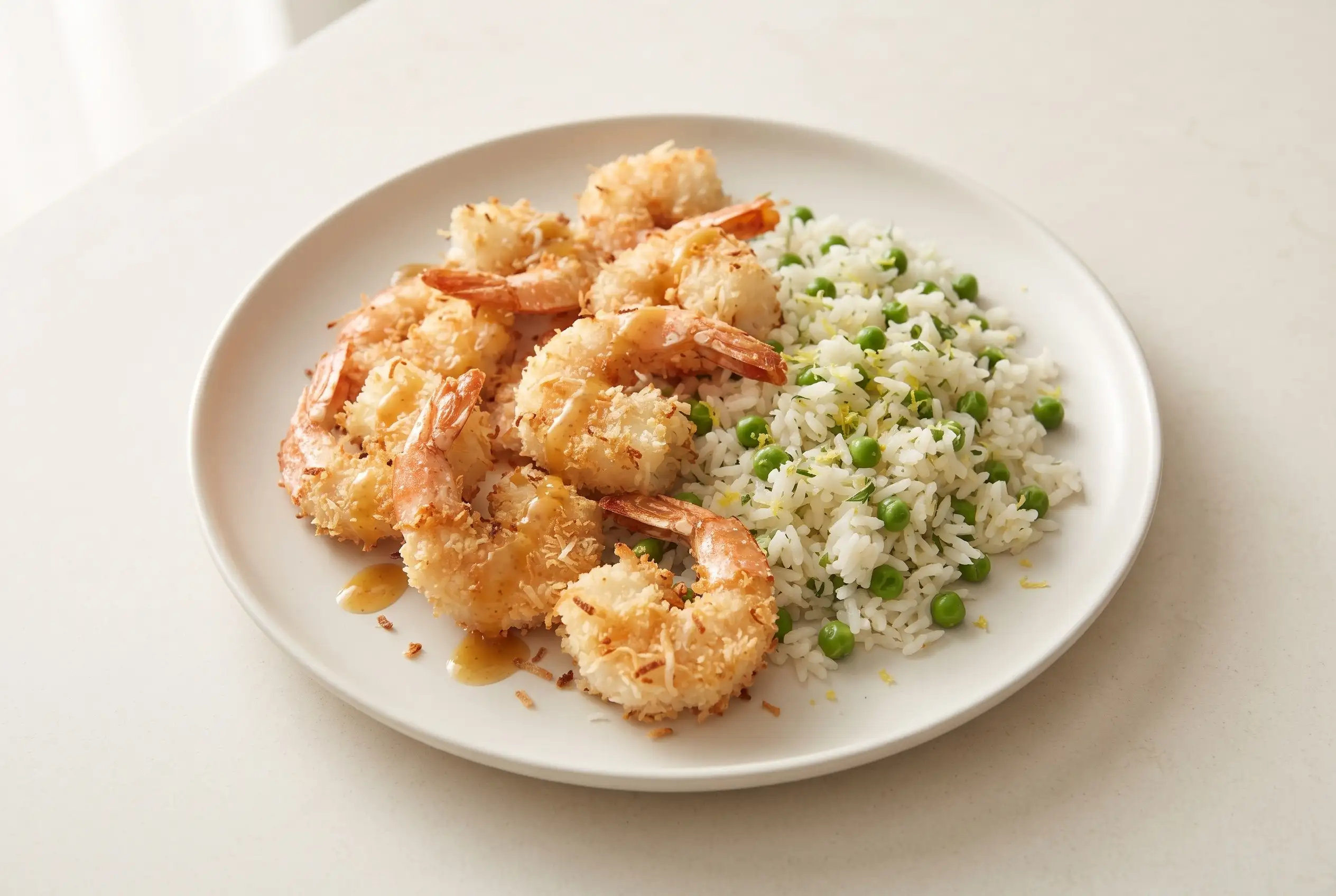
Baked coconut shrimp brings crisp toasted coconut, tender jumbo shrimp, bright lemony rice, and a warm honey butter sauce together in one dinner that feels special without requiring complicated cooking. The key is treating the coconut-panko coating and the rice as separate texture projects, then letting the buttery sauce connect them at the table.
Toasted coconut gives the shrimp a deeper crunch
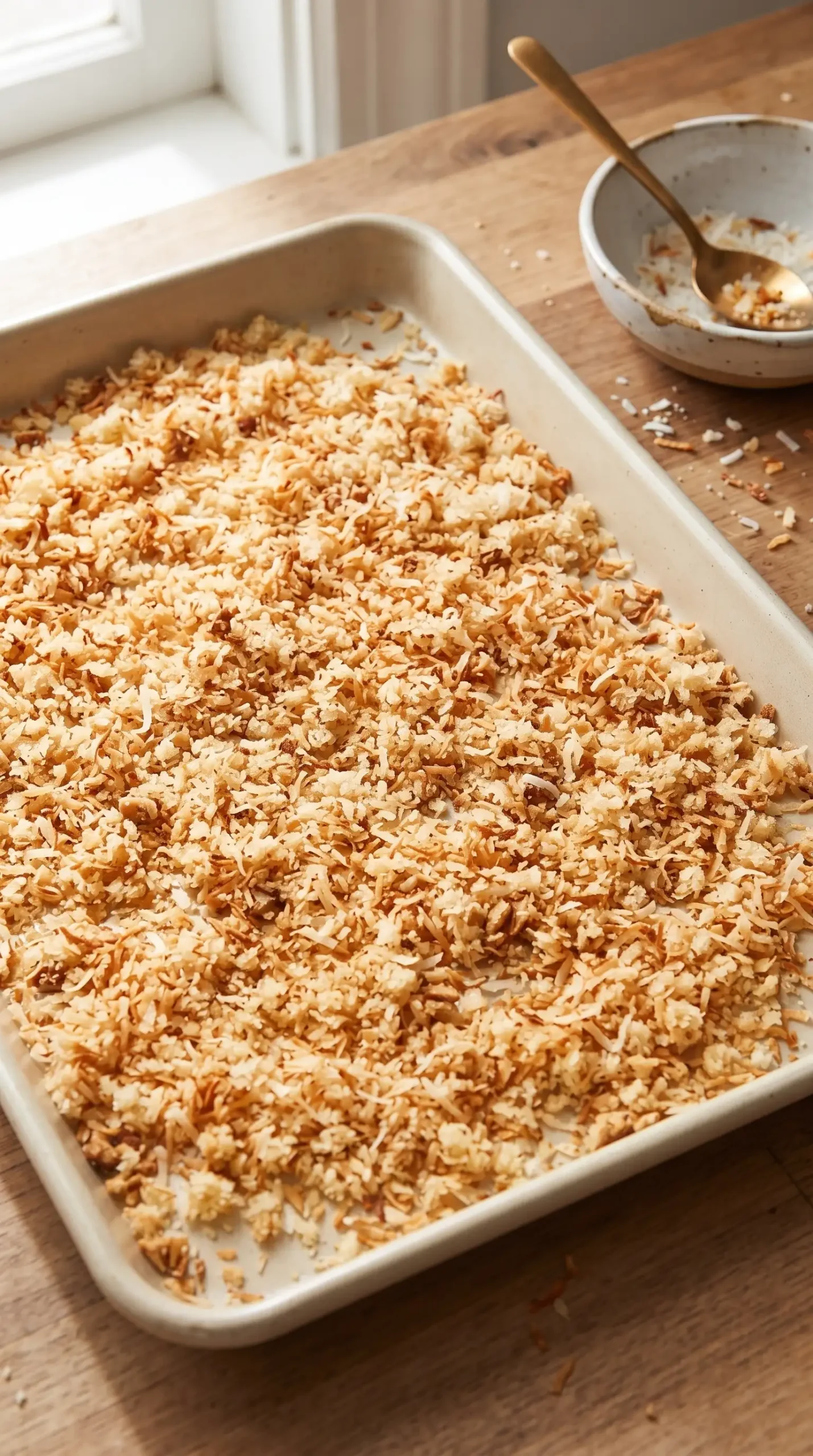
Toasting the panko and coconut before coating the shrimp changes the finished crust in an important way. The crumbs begin the oven stage already golden, so the short high-heat bake can focus on cooking the shrimp and setting the coating instead of waiting for pale crumbs to brown from scratch.
Keep the mixture on the baking sheet in a fairly even layer while it toasts, and stir it occasionally because coconut can brown rapidly. Once the mixture looks pleasantly golden and smells nutty, it is ready to cool briefly before breading.
For baked coconut shrimp, sweetened coconut works especially well when you want the honey butter sauce to echo the coating’s gentle sweetness. Unsweetened flakes are useful when you prefer the Dijon, lemon, and garlic notes to stand out more clearly.
Jasmine rice carries the lemony pea mixture
Jasmine rice provides a soft, fragrant base for the crisp shrimp, but it should not become heavy or wet after the finishing ingredients are added. Cook the rice according to its package directions, then use a fork to gently loosen the grains before incorporating the peas and flavorings.
Simply Nature sweet peas need only enough heat to warm through, so they can go directly into the hot cooked rice. Lemon juice and zest brighten the starch, while grated garlic and herbs or greens give the bowl a fresher edge. The butter helps those flavors coat the grains without turning them into a separate sauce.
The rice also benefits from restraint. Since the shrimp already have a rich coating and the finishing drizzle contains butter and honey, a bright rice mixture keeps baked coconut shrimp with rice from tasting overly sweet or heavy.
Tail-off shrimp make the rice-and-shrimp bite easier
Removing the tails before breading makes the finished shrimp easier to pile over rice and eat with a fork. Every bite can include shrimp, crisp coating, and jasmine rice without stopping to pull away the shell portion.
- Tails removed: best suited to a plated rice dinner where the shrimp are eaten as part of each forkful.
- Tails left on: useful when presentation matters or the shrimp will be handled more like finger food.
Honey butter needs enough acidity to stay lively
The sauce combines melted butter with honey and Dijon mustard, creating a rich, sweet, tangy drizzle for the crisp shrimp. Whisking those ingredients together while the butter is melted makes the sauce easy to pour over the plated food.
Dijon is especially useful because the honey and coconut can otherwise push the dish toward a very sweet finish. A little lemon can reinforce the brightness already present in the rice, while red pepper flakes or chili paste can add heat if that suits the meal.
Keep the sauce loose enough to drizzle generously. It is intended to reach the crust and rice without forming a thick coating that overwhelms the crunch of the shrimp.
425°F is where the coated shrimp finish cleanly
The oven temperature changes after the coconut-panko mixture has been toasted. The lower temperature is useful for developing color in the coating; the hotter oven then gives the breaded shrimp the concentrated heat needed to finish cooking and crisp the exterior.
Arrange the coated shrimp back on the baking sheet with enough room for the hot air and oven heat to reach their surfaces. A light spritz or drizzle of oil helps the coating develop a more appealing fried-like finish without requiring the shrimp to be submerged in oil.
Watch the shrimp closely near the end of their bake. Jumbo shrimp do not need prolonged oven time once the coating is already browned, and their appearance should guide you toward a cooked, opaque center without unnecessarily drying the meat.
A three-bowl breading setup keeps coconut on the shrimp
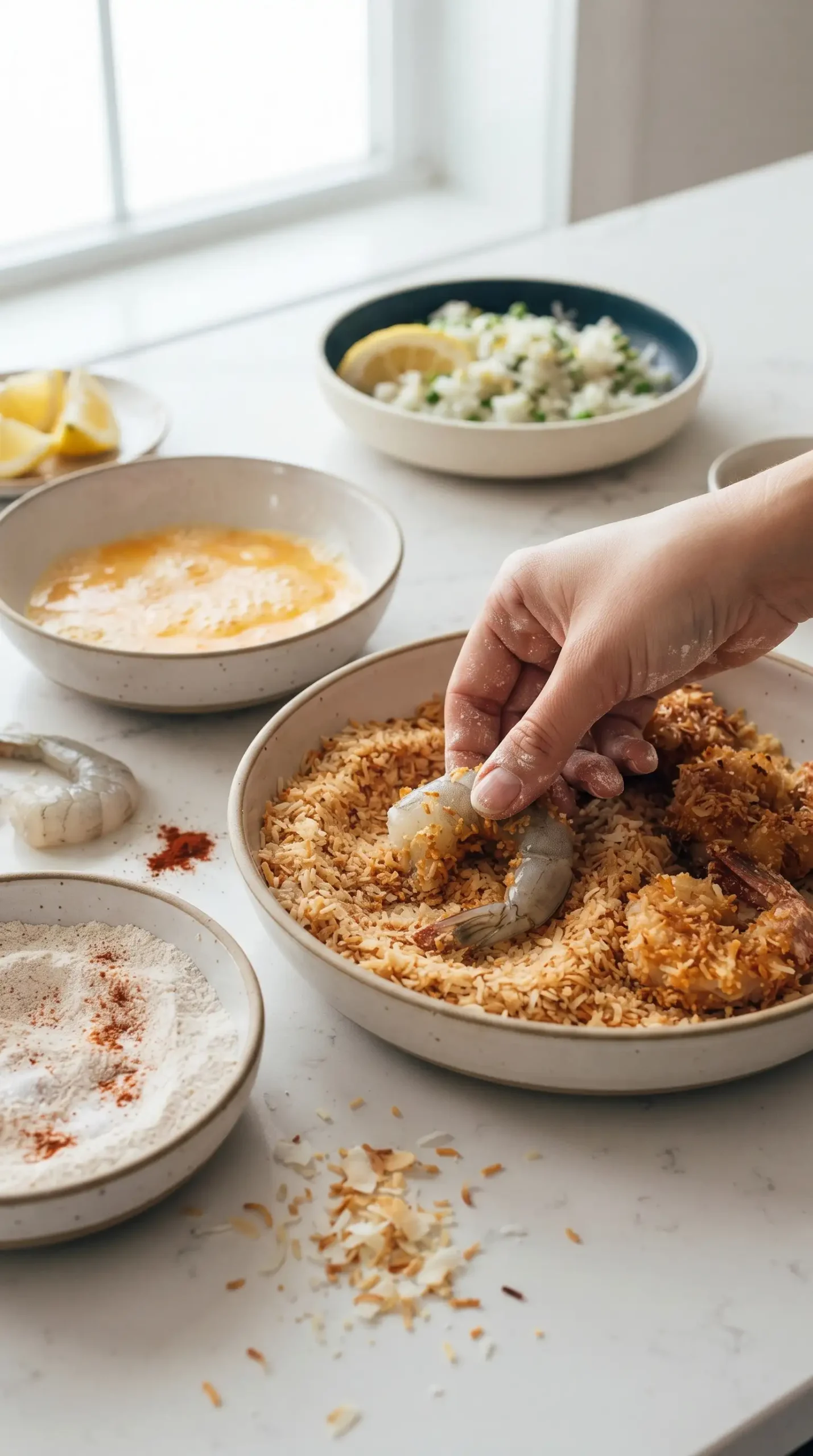
The flour mixture creates the dry surface that helps the beaten egg cling, while the egg provides the tackiness needed for the toasted coconut-panko mixture to adhere. Pressing the shrimp firmly into the crumbs is more effective than simply rolling them through and immediately moving on.
Working all the shrimp through the seasoned flour before moving into the egg and coconut stages can also keep the process tidier. Once a shrimp enters the wet bowl, use one hand for the egg and the other for the crumb mixture when practical, so fewer crumbs become glued to your fingers.
For baked coconut shrimp, a complete coating matters because exposed patches of shrimp can cook differently from the protected, crumb-covered surfaces. A light, even layer is preferable to a thick mound of loose crumbs that may fall away during baking.
Sweetened or unsweetened coconut changes the sauce balance
The choice between sweetened and unsweetened coconut is one of the few ingredient decisions that noticeably changes the personality of the plate. Sweetened flakes complement the honey in the sauce and give the shrimp a more dessert-like sweetness, while unsweetened flakes leave more room for Dijon, lemon, garlic, and chili to define the flavor.
| Coconut choice | Sweetness level | Best flavor pairing |
|---|---|---|
| Sweetened flakes | More pronounced | Honey butter with gentle Dijon |
| Unsweetened flakes | More restrained | Extra lemon, chili, or sharper Dijon |
| Either option | Balanced by the rice | Peas, herbs, garlic, and lemon |
Keep the rice fluffy when the peas go in
Hot rice can absorb flavor quickly, which is why the peas, lemon, zest, herbs, garlic, and butter should be folded through gently instead of aggressively stirred. A fork separates the grains while helping the additions distribute without compressing the rice into a dense mass.
Let the residual heat from the cooked rice warm the peas. They do not need a separate cooking step, and keeping the finishing process simple preserves the contrast between the soft rice and crisp shrimp.
Common baked coconut shrimp mistakes start before baking
One frequent problem is putting untoasted coconut and panko straight into the high-temperature shrimp bake. The coating then has to brown rapidly while the shrimp cook, which can produce uneven color. Toasting first gives the crumbs a head start.
Another issue is allowing the breaded shrimp to sit with large loose patches of coating. Press the coconut-panko mixture onto each shrimp so it adheres before the tray goes into the oven.
Overworking the finished rice can also undermine the plate. Fold in the peas and seasonings gently, then stop once everything is distributed. A fluffy rice base provides a much better contrast to baked coconut shrimp than compressed, sticky grains.
Serve the shrimp where the honey butter can reach
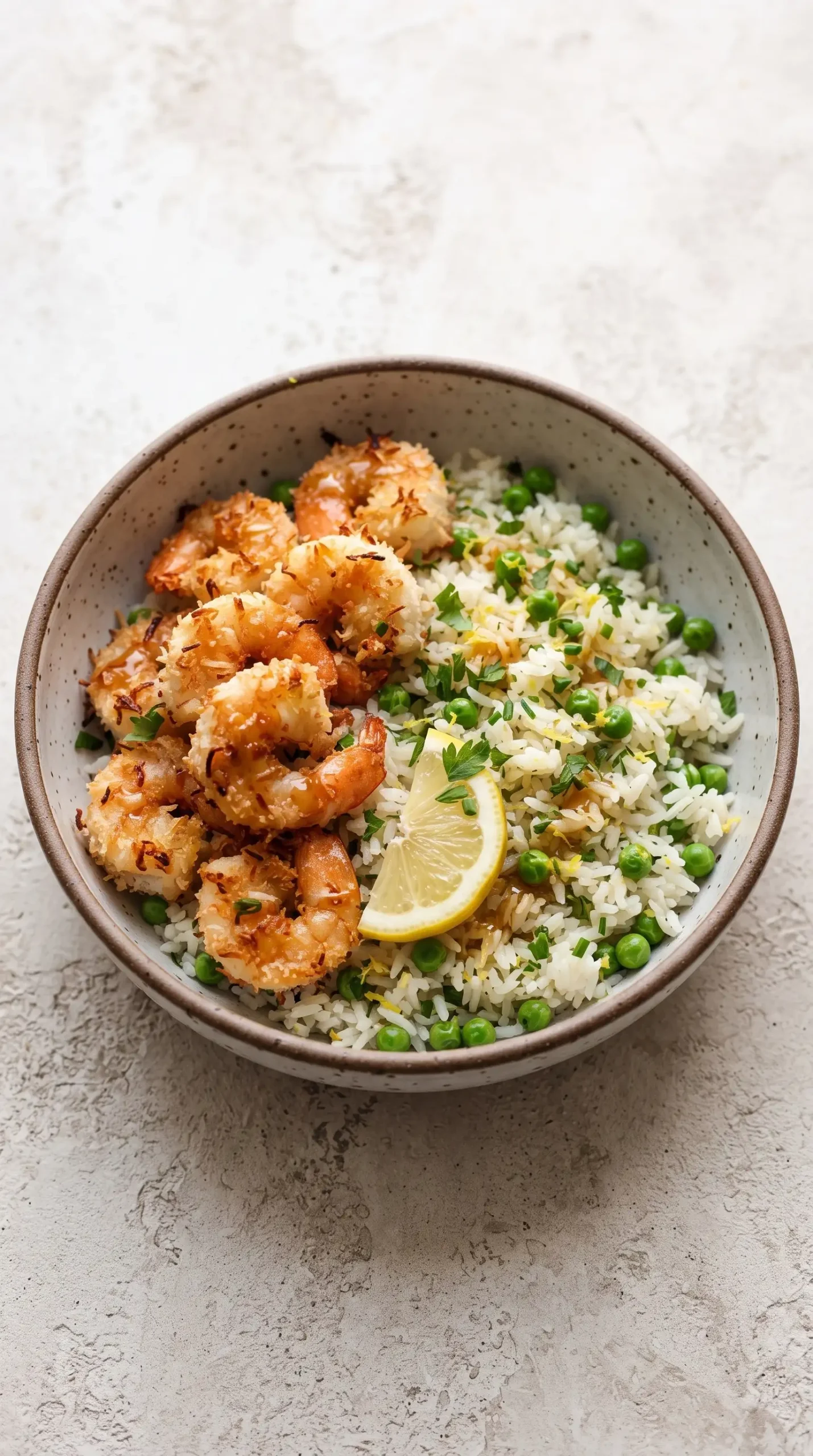
A generous pile of lemony pea rice makes a practical base for the shrimp, while the sauce can be drizzled over the top at the table. Keeping the drizzle visible lets the crisp coating retain some of its texture instead of soaking in butter before anyone takes a bite.
Scatter herbs or tender greens through the rice for a fresh finish, then add as much sauce as suits the balance of the plate. The combination of coconut, Dijon, honey, lemon, and garlic gives the meal enough contrasting flavors that the garnish does not need to be elaborate.
Small sauce adjustments can shift the whole plate
The basic honey butter is deliberately flexible because the rice already supplies lemon, garlic, peas, and herbs. Use the additions below to move the flavor in a specific direction without rebuilding the sauce.
- More brightness: whisk in a little lemon juice to reinforce the citrus in the rice.
- More heat: add red pepper flakes or chili paste for a sharper contrast with the honey.
- More tang: increase the Dijon modestly when the coconut is sweetened.
Leftover components need separate handling
If shrimp, rice, and sauce remain after serving, keeping the components separate helps preserve their individual textures. The coconut coating naturally loses crispness as it sits against moist rice or sauce, so avoid combining everything in one storage container when you expect leftovers.
The rice can be reheated separately, while the shrimp should be warmed gently enough to avoid turning the already-cooked coating and seafood tough. Add the honey butter after reheating instead of storing the shrimp submerged in it.
Baked coconut shrimp and rice work because texture stays divided
Crisp shrimp need the soft rice underneath, and the rice needs enough lemon and herbs to keep the rich coating from dominating. That contrast is what makes the plate feel complete: the coconut-panko crust supplies crunch, the jasmine rice supplies tenderness, and the peas provide little bursts of freshness.
The best finish keeps the crust crisp and the rice bright
Golden shrimp, fluffy jasmine rice, and a warm honey butter drizzle each bring a different texture and flavor intensity to the same forkful. The most useful cooking judgment is to protect those differences: toast the coating before the shrimp bake, fold the rice gently, and add the sauce after plating.
When those elements stay distinct, baked coconut shrimp becomes more than a breaded seafood dish. It turns into a balanced meal where the sweet coconut, tangy Dijon, lemony rice, and buttery finish support one another without competing for the same texture.
Baked coconut shrimp questions about tails, sauce, and texture
Can I leave the shrimp tails on?
Yes. Leaving the tails attached works well when the shrimp are being served as finger food or when you want a more decorative presentation. Removing them is more convenient when the shrimp will be eaten directly with the rice.
Can I use unsweetened coconut for baked coconut shrimp?
Yes. Unsweetened coconut gives you a less sweet coating and leaves more room for the honey butter, Dijon, lemon, garlic, and optional chili to be adjusted according to taste.
Why toast the coconut and panko before coating the shrimp?
Pre-toasting develops color and roasted flavor before the shrimp enter the hotter oven. It also means the coating does not have to begin browning from pale and raw while the shrimp are cooking.
How can I keep the coconut coating from falling off?
Let the flour mixture coat the shrimp evenly, dip them through the beaten egg, then press them firmly into the toasted coconut-panko mixture. Avoid handling the coated shrimp more than necessary before they reach the baking sheet.
Can I make the honey butter sauce less sweet?
Yes. Start with less honey and let Dijon and lemon provide more of the sauce’s character. Unsweetened coconut also gives you a more restrained base if you prefer a sharper, less sugary finish.
What should I serve with baked coconut shrimp?
The lemony jasmine rice with peas already provides the intended starch and vegetable component, so the plate does not require another substantial side. Additional herbs or greens can be used as a fresh finishing element.
Baked Coconut Shrimp with Springy Rice and Honey Butter
Ingredients
Method
- Cook the jasmine rice according to package directions.
- Heat the oven to 325°F (163°C). Spread the panko breadcrumbs and coconut flakes on a baking sheet and toast for 10-15 minutes, stirring occasionally, until golden. Remove the toasted mixture from the oven and increase the oven temperature to 425°F (218°C).
- Prepare three bowls: one with flour, paprika, and salt; one with beaten eggs; and one with the toasted coconut mixture. Coat each shrimp in the flour mixture, dip into the egg, then press into the coconut coating until covered. Arrange the coated shrimp back on the baking sheet and lightly spritz or drizzle with oil.
- Bake the coated shrimp at 425°F (218°C) for 10 minutes.
- Add peas, lemon juice and zest, herbs or greens, grated garlic, and butter to the hot cooked rice. Gently fluff with a fork until combined and the peas are warmed through.
- Whisk the melted butter with honey and Dijon mustard to make the sauce.
- Serve the shrimp over the rice and drizzle with the honey butter sauce.