

7 layer beet salad turns a handful of bright, earthy, creamy, and crunchy ingredients into a platter that feels far more elaborate than its preparation suggests. The combination of tender kale, cooked beets, juicy oranges, shallot, ricotta, pistachios, and fresh herbs works because each layer brings a different texture and flavor. Instead of tossing everything together, the arrangement lets you taste those contrasts as you move through the salad.
Layering gives 7 layer beet salad its character
Arrangement matters here because the ingredients have very different textures. Kale can hold a dressing, beets are naturally soft, oranges release juice, ricotta is creamy, and pistachios provide a crisp counterpoint. Keeping those elements visibly distinct prevents the salad from becoming a uniform mixture before it reaches the table.
Across the platter, the colors also create useful visual cues. Deep beet tones sit against green kale, orange citrus, pale ricotta, and green pistachios, making each portion look composed without requiring complicated garnishes. The layered beet salad format is especially useful when serving guests because the platter can be assembled ahead of the moment when everyone sits down.
Portioning becomes flexible as well. A diner can scoop through several layers at once, or take a little more of one component according to preference. That makes the salad feel generous without requiring every serving to be precisely mixed in a bowl.
Truffle ricotta changes the salad’s flavor balance
The most useful ingredient choice to consider is the creamy layer. Truffle ricotta brings a savory, aromatic note that can make the earthy beets feel richer, while plain ricotta keeps the finished salad cleaner and lets the citrus and herbs speak more clearly. Either works with the supplied combination.
Kale needs a softer texture before layering
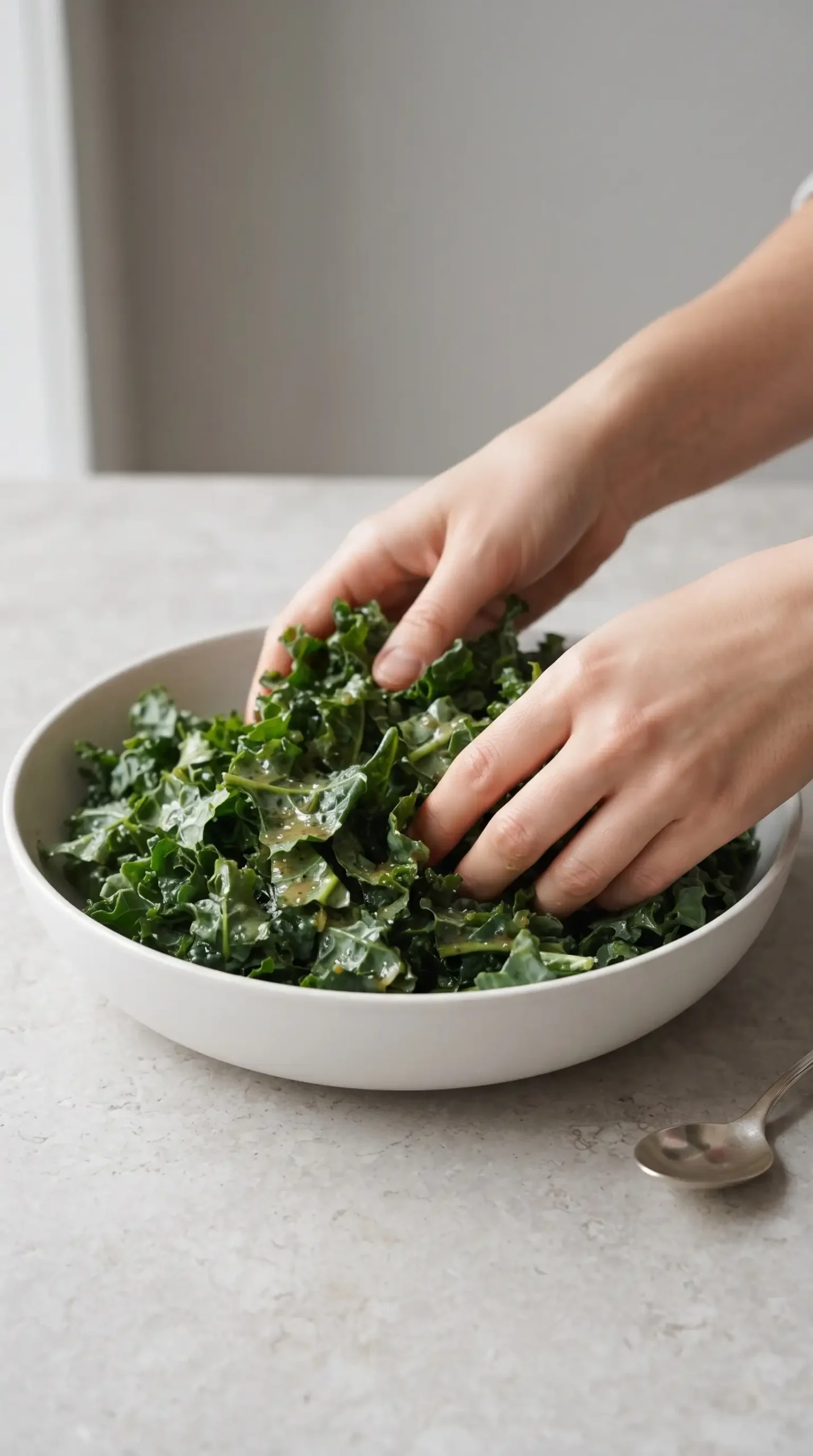
Massaging the kale with a little dressing is one of the small actions that has an outsized effect on the finished salad. The leaves become more pliable, making them easier to eat alongside the softer beets and ricotta. Skipping that step can leave the greens feeling more fibrous and separate from the rest of the platter.
Gentle pressure is enough. Work the dressing through the chopped leaves with your fingers until the kale feels less rigid, without crushing it into a wet mass. The dressing should coat the leaves lightly, because additional moisture will arrive from the oranges and from any finishing drizzle.
Meanwhile, the dressing itself can stay simple. A straightforward green salad dressing suits the kale particularly well, while a somewhat creamier maple balsamic dressing can also work. Olive oil and lemon provide another clean option when you want the citrus component to remain especially prominent.
Oranges and beets create the needed contrast
For a beet salad with oranges, cut the citrus into manageable rounds so the pieces remain substantial enough to sit among the kale and beets. Their juiciness supplies a bright counterpoint to the earthy cooked beets, while the acidity keeps the creamy layer from making the platter feel heavy.
A thin creamy foundation keeps every layer connected
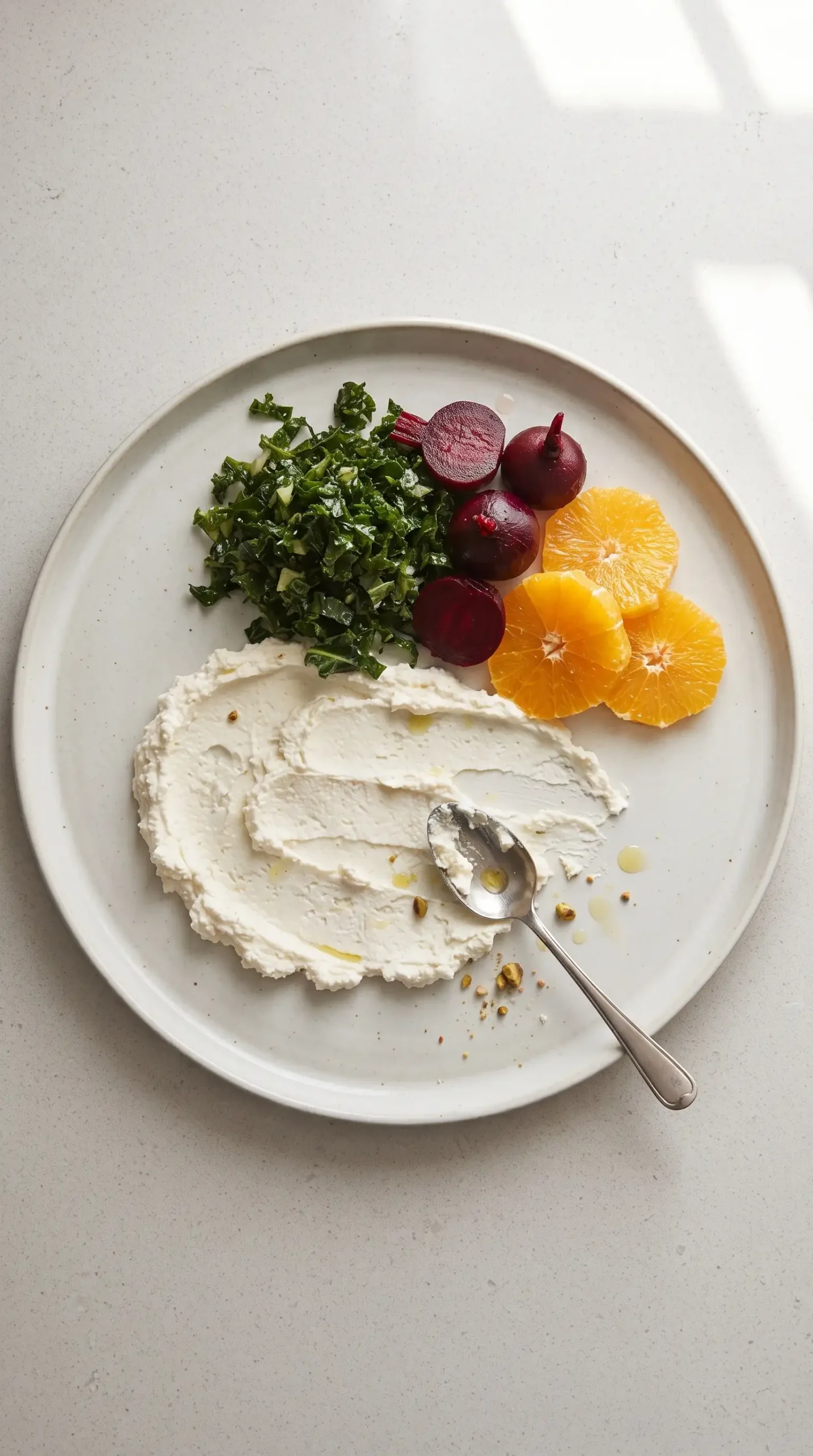
Starting with a little ricotta directly on the serving platter gives the salad an anchor. The creamy element acts almost like a base that catches some of the ingredients as they are served, while also putting a mild, rich note underneath the sharper flavors above it.
Texture matters more than making the ricotta perfectly smooth. A few uneven swipes across the platter create pockets for kale, beets, or citrus to meet the cream. Leaving some of the platter visible also helps the colorful layers remain distinct.
Seasoning should stay restrained at this stage because the dressing, shallot, citrus, herbs, and finishing salt all contribute different kinds of intensity. A heavily seasoned creamy base can compete with those elements before the other flavors have a chance to register.
Cutting size controls every bite on the platter
Consistent, bite-friendly pieces make a major difference in a layered beet salad. Aim for kale pieces that are easy to pick up with a fork, beet pieces that do not dominate the citrus, and shallot pieces small enough to distribute without delivering an overwhelming bite. Keeping the orange rounds substantial preserves their juicy texture and makes the platter visually distinct.
Light finishing keeps 7 layer beet salad lively
Once the layers are arranged, olive oil, salt, and pepper can be used according to taste. A restrained finish is useful because the salad already contains dressed kale, juicy fruit, creamy ricotta, and naturally earthy beets. A little seasoning can sharpen those flavors without covering them.
Fresh mint works especially well when you want the citrus to feel more pronounced. Basil, chives, or thyme can also be used, giving the same basic arrangement a different herbal character. Chop the herbs so they distribute across several bites instead of collecting in one place.
Pistachios should remain a noticeable textural element. Chopping them gives you a mixture of small pieces and larger crunchy bits, which is particularly pleasant against the soft vegetables and creamy ricotta. A beet salad with pistachios benefits from adding that crunch where it can remain exposed instead of burying every nut underneath the wetter ingredients.
Common 7 layer beet salad mistakes are easy to prevent
Overdressing the kale is one of the easiest ways to lose the salad’s balance. Because the oranges and beets already contribute moisture, too much dressing can make the greens soggy and cause the layers to blur. Start with a small amount during the massage and reserve extra seasoning for the platter’s finish.
Another issue comes from treating the creamy element like a thick blanket. A large, dense smear can make scooping awkward and put too much ricotta into individual bites. Spread it broadly enough to act as a foundation, but keep the layer relatively light and irregular.
Finally, cutting everything into the same small pieces defeats some of the point of the arrangement. Beets, kale, citrus, shallot, pistachios, and herbs have different jobs, so allowing their textures to remain recognizable makes the salad more interesting. If the platter looks crowded, leave a little visual separation instead of piling every component into one compact mound.
Focaccia makes a natural companion for the salad
A hunk of good focaccia gives the platter a useful savory partner, particularly when there is dressing, ricotta, and citrus juice left on the plate. The bread can be served alongside the salad without changing its layered character, making the combination feel substantial enough for a light meal or part of a larger spread.
Make-ahead choices protect the layered texture
Several components can be handled before serving, but moisture deserves attention. Keeping wetter ingredients separate for as long as practical helps preserve the contrast that makes the platter appealing.
| Task | Best handling | What to watch |
|---|---|---|
| Prepare kale | Chop and massage lightly with dressing | Avoid saturating the leaves |
| Prepare beets and oranges | Cut and keep their juices contained | Prevent excess liquid from spreading into the greens |
| Prepare toppings | Chop pistachios, shallot, and herbs | Keep crunchy and delicate elements distinct until assembly |
Assembly is best handled with the platter in mind. Keep the ingredients recognizable and avoid tossing everything together after arranging it. If some liquid collects around the fruit or beets, use a light hand when transferring those pieces so the rest of the layers stay intact.
Small variations can shift the personality without changing the structure
Once the basic balance is understood, the easiest changes involve the creamy layer, herbs, or dressing. Plain ricotta gives a milder result than truffle ricotta, while different herbs can make the same colorful arrangement feel fresher, more savory, or more aromatic.
- Creamy layer: Use truffle ricotta for a more pronounced savory character or plain ricotta for a quieter finish.
- Herbal finish: Choose mint, basil, chives, or thyme according to the flavor direction you want.
- Dressing: Keep the kale lightly dressed with a simple green dressing, maple balsamic dressing, or olive oil and lemon.
These changes work because they preserve the important contrasts: earthy beets, juicy oranges, tender greens, creamy ricotta, crunchy pistachios, and fresh herbs. The structure stays recognizable even as the emphasis shifts.
7 layer beet salad works best when texture stays visible
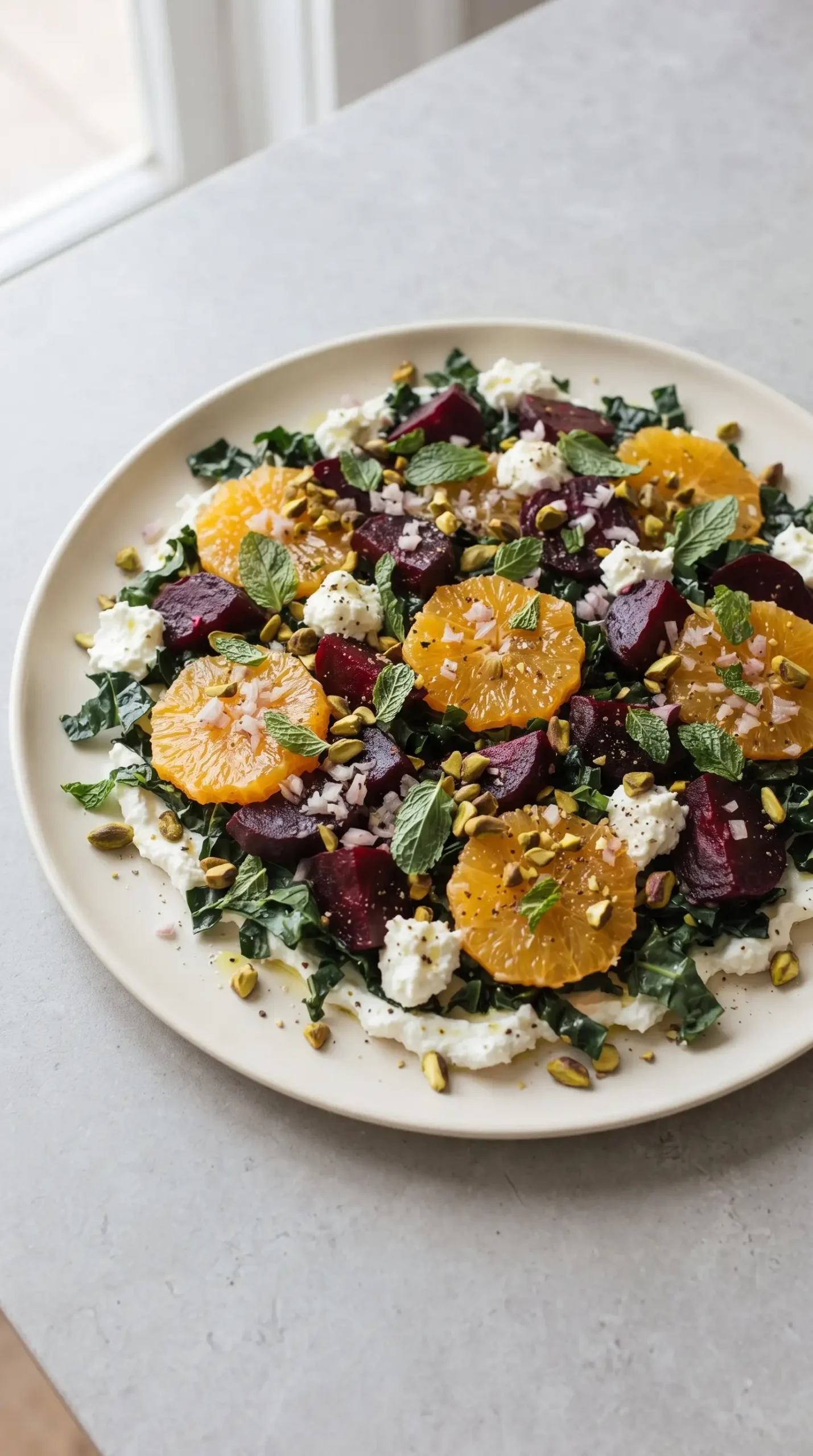
Distinct textures are what make the platter satisfying from the first forkful to the last. The kale should be softened enough to eat comfortably, the beets should remain substantial, the oranges should retain their juicy presence, and the pistachios should provide unmistakable crunch. Keeping those qualities visible also makes the salad easier to season thoughtfully.
Good layering does not require rigid precision. A loose arrangement gives diners access to several components at once while preserving the visual contrast between them. With the creamy base spread underneath and the herbs and pistachios left easy to see, each serving can naturally combine the flavors without becoming muddled.
Questions about 7 layer beet salad and texture
Can plain ricotta replace truffle ricotta?
Yes. Plain ricotta keeps the creamy layer mild and allows the beets, oranges, dressing, and herbs to provide most of the flavor. If using plain ricotta, a little extra attention to the finishing salt, pepper, and herbs can help the creamy component feel fully integrated.
Can I use a different green instead of kale?
A sturdy chopped green can work if it responds well to light dressing and can hold the other components without collapsing. The supplied method specifically uses kale because massaging it softens its texture and makes it more comfortable alongside the tender beets and creamy ricotta.
How can I keep the pistachios crunchy?
Add the chopped pistachios close to serving and avoid coating them heavily with dressing or citrus juice. Keeping them exposed on top also makes their crunch more noticeable and prevents the nuts from becoming softened by the wetter components.
Should the oranges be peeled before cutting them into rounds?
Yes, remove the peel and white pith before cutting the oranges into rounds. Trim away any substantial pith clinging to the flesh, then slice the fruit gently so the rounds keep their shape. Clean citrus pieces sit naturally against the earthy beets without an unwanted bitter edge.
What is the best way to serve the layered beet salad?
Serve it directly from the platter so guests can scoop through multiple layers in each portion. A little focaccia alongside the salad is particularly useful for catching creamy dressing and juices, while leaving the components visible preserves the intended contrast.
7-Layer Beet Salad with Oranges, Ricotta, and Pistachios
Ingredients
Method
- Massage the kale with a small amount of the dressing until the leaves soften.
- Cut the beets, oranges, and shallot into the needed pieces for layering.
- Spread a small amount of the creamy ricotta layer onto the serving platter. Use about 3 tablespoons for one serving or about 1/2 cup for a salad serving 4-6 people.
- Arrange the massaged kale, beets, oranges, shallots, pistachios, and herbs in layers over the platter.
- Finish with olive oil, salt, and pepper if desired.