
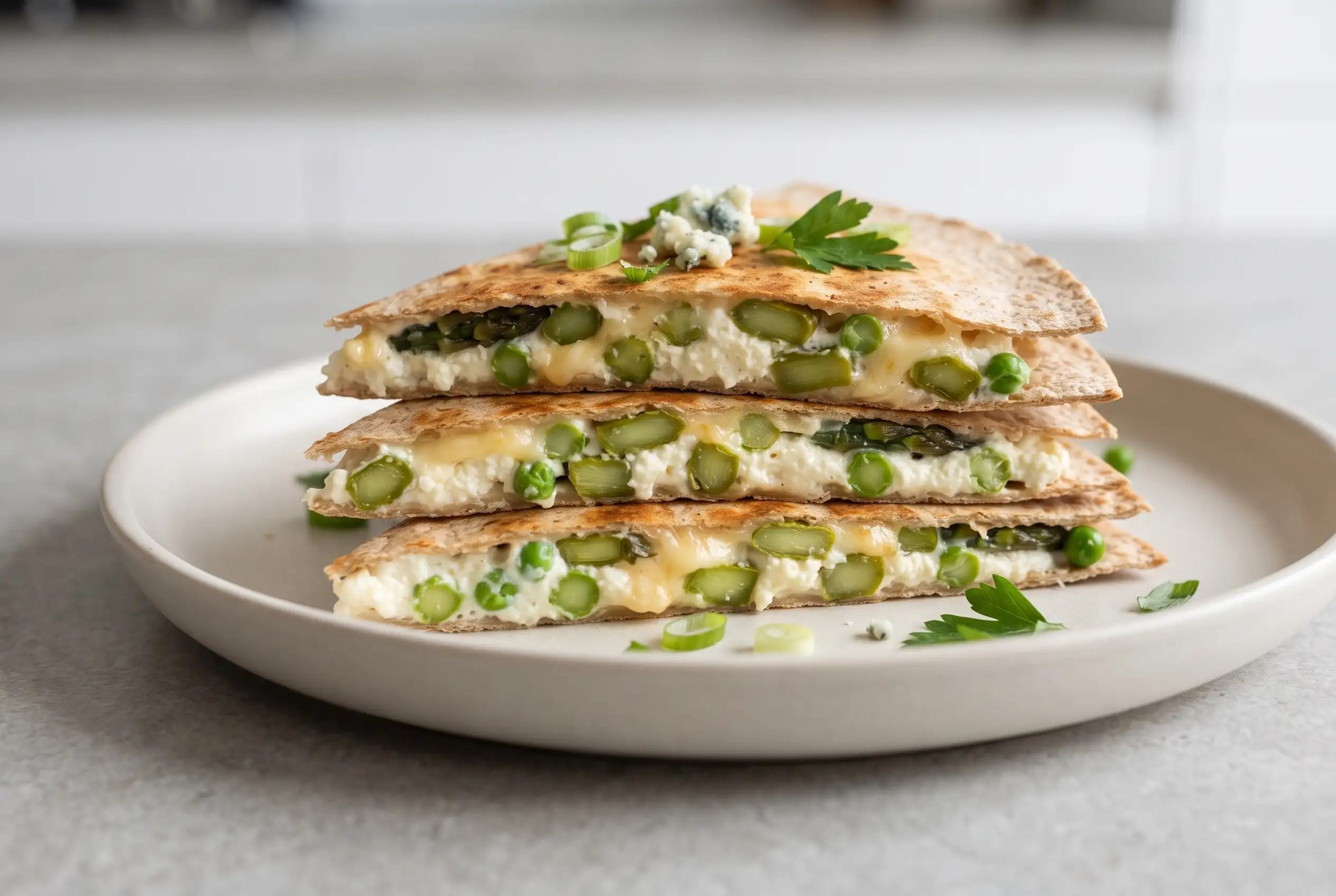
Asparagus quesadilla turns a handful of grilled vegetables, creamy ricotta, and melted cheese into a crisp, layered meal with an unexpectedly lasagna-like look. The combination works because the asparagus and peas bring distinct textures, while the tortilla provides the browned exterior needed to hold everything together. A careful approach to moisture is especially important here: ricotta can soften the tortilla as it heats, so spreading it lightly and keeping the vegetable layer controlled helps preserve the structure.
Grilled asparagus sets the texture
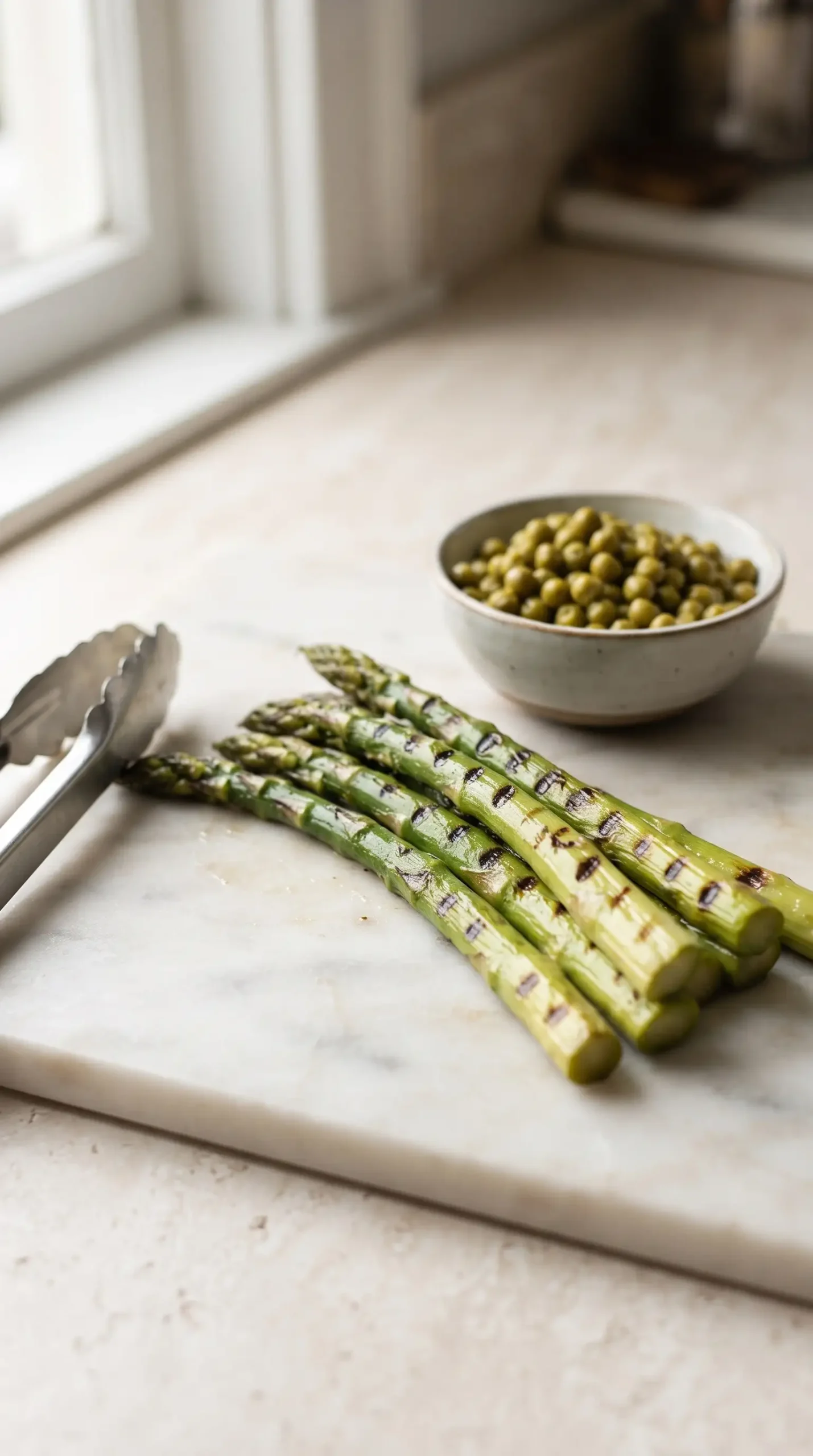
Grilling the asparagus before it reaches the tortilla gives the vegetable a more concentrated, cooked texture and keeps excess moisture from becoming the dominant element inside the quesadilla. The stalks should be tender enough to bite through but sturdy enough to remain recognizable after the tortilla is pressed and browned.
Cutting or arranging the stalks into manageable pieces also matters. Whole, thick pieces can make the filling uneven, while very small pieces can disappear into the ricotta. A moderate size lets each wedge reveal visible asparagus when sliced.
Frozen peas need a different treatment because they only need cooking through. Once heated, they can be drained well before joining the asparagus. Removing surface moisture gives the tortilla a better chance of staying crisp around the filling.
Ricotta needs restraint inside the tortilla
Ricotta is a fresh cheese with a soft, creamy layer that helps connect the vegetables, garlic, and melted cheese. Its usefulness comes with a structural tradeoff: a generous layer can release enough moisture during grilling to make the tortilla softer than intended.
Mixing the minced garlic directly into the ricotta distributes its flavor throughout the spread instead of leaving concentrated pockets. Salt and pepper should be added to that mixture before it reaches the tortilla, making seasoning easier to control without repeatedly opening the assembled quesadilla.
A thin coating is the practical choice when crispness matters. Leave enough tortilla exposed around the perimeter to reduce the chance that the filling reaches the edge and escapes as the cheese melts.
Gouda creates the binding layer
Gouda supplies the melt that helps the asparagus and peas stay connected when the quesadilla is cut. Its position over the vegetables gives the filling a cohesive layer as the cheese warms.
The two cheese components serve different structural roles. Ricotta is soft and spreadable, while sliced Gouda melts into a more continuous layer. Keeping their quantities visually balanced prevents the ricotta from becoming the dominant moisture source.
Lasagna-style stacking comes from the wedges
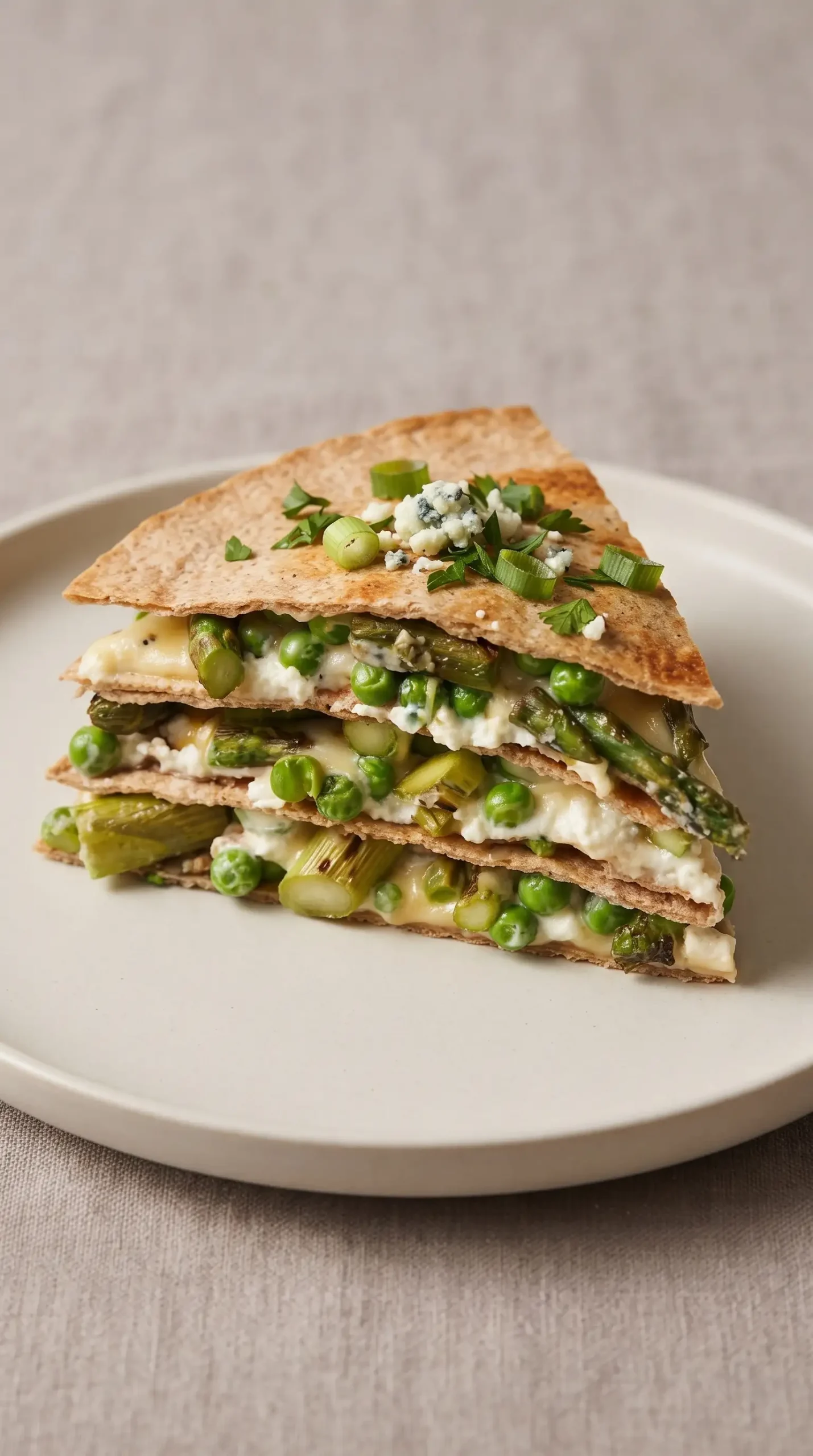
The phrase asparagus quesadilla lasagna describes the presentation more than a conventional lasagna technique. Once the grilled quesadilla is cut into wedges and those wedges are stacked, the visible layers of tortilla, vegetables, and cheese create a compact, tiered effect.
That presentation works best when the wedges remain intact. Letting the grilled tortilla settle briefly before cutting can make slicing cleaner because the melted cheese has a moment to stop moving freely.
Moisture control determines crispness
Moisture is the main variable to watch because several ingredients enter the assembly in soft or cooked form. The tortilla needs enough dry surface contact with the grill to brown, while the filling needs enough moisture to remain pleasant and cohesive.
Draining cooked peas thoroughly is one useful control point. Another is limiting the ricotta spread so that it behaves like a thin creamy layer instead of a wet filling. These small choices matter more than adding extra cheese to compensate for a soft texture.
Watch the tortilla as it cooks. A surface that becomes browned and firm while the filling is heated indicates that the balance is working. If the exterior softens before it colors, the filling may be carrying too much moisture or the cooking surface may not be hot enough.
A firm tortilla edge keeps the filling contained
Leaving a clean border around the filling gives the tortilla room to close around the vegetables and cheese. This is particularly useful with ricotta because a spread that reaches the edge can squeeze outward when pressure is applied.
Keeping the vegetables toward the center also makes each wedge easier to cut. The assembled quesadilla should close without requiring force, since heavy pressure can push the softer filling out before the tortilla has browned.
Grilling requires steady heat and gentle pressure
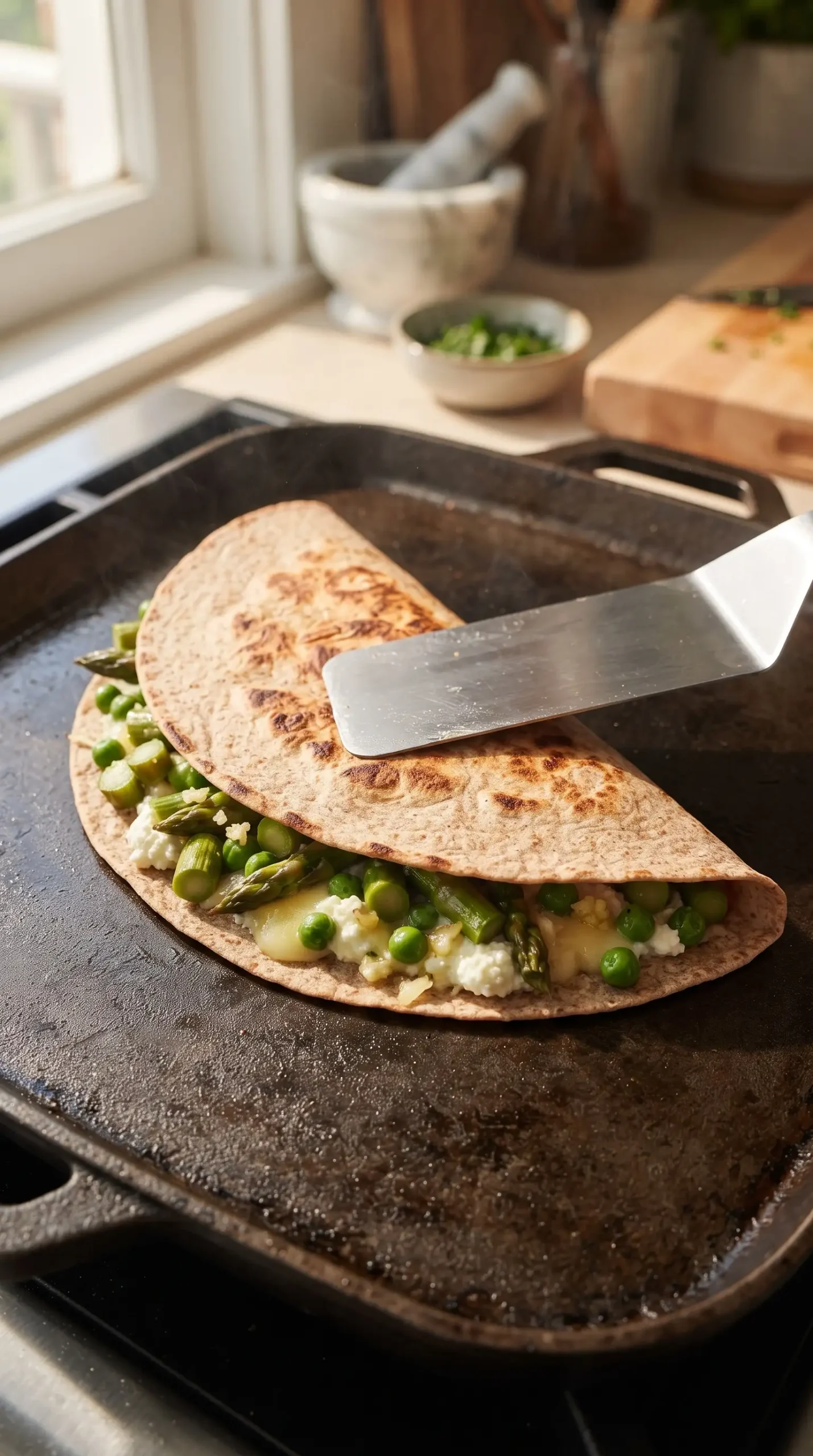
Grilling is where the contrasting textures come together. The tortilla needs direct heat long enough to develop a browned exterior, while the cheese inside needs enough warmth to soften and bind the vegetables.
Gentle pressure helps the two tortilla layers make contact with the cooking surface, but pressing too aggressively can compress the ricotta and vegetables into a thin, wet layer. A controlled touch keeps the filling distributed while still encouraging even browning.
Once the exterior has developed color, turn or remove the quesadilla according to how it is cooking rather than relying only on a fixed visual clock. The important signs are a browned tortilla, warmed filling, and cheese that has softened enough to connect the layers.
| What to watch | Useful sign | Practical adjustment |
|---|---|---|
| Asparagus | Tender but still visible | Grill before assembly and avoid overcooking it into softness |
| Peas | Cooked and free of excess surface water | Drain well before adding them to the tortilla |
| Ricotta | Thin, even creamy coating | Use a restrained layer and keep it away from the tortilla edge |
| Tortilla | Browned and firm on the outside | Maintain steady grill contact without crushing the filling |
| Gouda | Softened and cohesive | Place it over the vegetables so it can bind the filling as it melts |
Stacked wedges benefit from a clean cut
Cutting the quesadilla into wedges changes the eating experience as much as the appearance. Each piece should contain tortilla, vegetables, ricotta, and melted cheese so the layered structure remains visible.
A sharp knife makes the job easier because the asparagus can resist a blunt edge while the cheese pulls against the cut. Firm downward pressure is more useful than repeated sawing, which can shift the filling.
Stacking should happen after cutting, with the wedges aligned so their layers remain apparent. Garnishes can then sit on or around the stack without becoming part of the structural filling.
Garnishes sharpen the finished contrast
Green onions and parsley add fresh herbal notes around the warm grilled filling, while Gorgonzola introduces a stronger, tangier cheese character. Because the quesadilla already contains ricotta and Gouda, a small amount of Gorgonzola is enough to create contrast without changing the core structure.
The garnishes are most useful after grilling rather than inside the tortilla. Keeping them outside preserves their fresher character and prevents additional moisture from entering the cooking stage.
- Green onions: Scatter them over the wedges for a crisp, fresh onion note.
- Parsley: Add a light herbal finish that contrasts with the melted cheeses.
- Gorgonzola: Use small crumbles when a sharper cheese flavor is wanted.
Common asparagus quesadilla mistakes to avoid
Overfilling is an easy way to make the quesadilla difficult to close and harder to brown. The vegetables and cheese need enough room to sit between the tortilla layers without forcing the edges apart.
Wet filling creates a different problem. Poorly drained peas or an overly thick ricotta layer can soften the tortilla before it has enough time to crisp. Keeping those components controlled addresses the most direct texture risk in the supplied combination.
Heavy pressing can also work against the structure. When the tortilla is compressed too firmly, the soft filling can migrate toward the edges and escape. Gentle pressure keeps the layers in place while allowing the exterior to make contact with the grill.
Serving temperature changes the texture
Warm wedges give the melted cheese its intended cohesive texture, while the tortilla is still at its crispest. Waiting too long after grilling can allow steam from the filling to soften the exterior.
For a more substantial evening meal, keep the wedges warm and pair them with a light vegetable side so the crisp tortilla remains the main texture on the plate. Serving the quesadilla alongside other dinner dishes works best when those additions are not overly rich or moisture-heavy.
Small changes can improve structural control
A practical adjustment is to reduce the ricotta when a firmer quesadilla is the priority. More sliced melting cheese can provide cohesion with less of the soft, moisture-rich texture associated with a thick ricotta layer.
Another option is to keep the vegetable layer especially modest. Asparagus and peas are flavorful enough to remain noticeable without forming a bulky center, and a thinner filling is easier to enclose and brown.
Asparagus quesadilla stays strongest when moisture stays controlled
The grilled asparagus and cooked peas need to enter the tortilla with their excess moisture under control, while the ricotta should remain a light spread instead of a thick layer. That balance gives the tortilla enough opportunity to brown while the Gouda melts around the vegetables.
Once the exterior is firm and the filling is cohesive, clean wedges preserve the layered asparagus quesadilla lasagna effect without sacrificing the practical texture of a grilled quesadilla.
Questions about moisture and serving
Can ricotta be replaced in an asparagus quesadilla?
Yes. A larger proportion of sliced melting cheese can make the filling easier to contain because it provides a more cohesive melt with less soft moisture. The replacement should still leave enough cheese to connect the asparagus and peas without making the quesadilla excessively heavy.
How can the peas stay from making the tortilla soggy?
Cook the frozen peas until heated through, then drain them thoroughly before assembly. Letting excess water leave the peas before they meet the tortilla reduces the amount of moisture that has to evaporate during grilling.
Why does the quesadilla fall apart when it is cut?
A loose structure can result when the filling is too thick, the cheese has not softened enough, or the quesadilla is cut while the contents are still shifting. Keeping the filling moderate, allowing the Gouda to melt, and using a clean downward cut helps maintain intact wedges.
Can Gorgonzola go inside the grilled asparagus quesadilla?
It can, but using it as a garnish keeps its stronger flavor separate from the main melted cheese layer. Small crumbles added after grilling provide a sharper accent without changing the moisture balance or the basic structure.
What makes the stacked presentation resemble lasagna?
The resemblance comes from cutting the grilled quesadilla into wedges and stacking those pieces so the repeated layers of tortilla and filling are visible. It is a presentation technique, not a separate cooking method or a traditional lasagna preparation.
Asparagus Quesadilla Lasagna with Ricotta and Peas
Ingredients
Method
- Grill the asparagus and cook the peas.
- Combine the minced garlic with the ricotta cheese, then season the mixture with salt and pepper.
- Spread the ricotta mixture over half of the tortilla, add the vegetables, place the cheese slices on top, and cover with the remaining tortilla half.
- Grill the assembled quesadilla until heated through.
- Slice the quesadilla into wedges, stack the pieces, add the garnishes, and serve.