
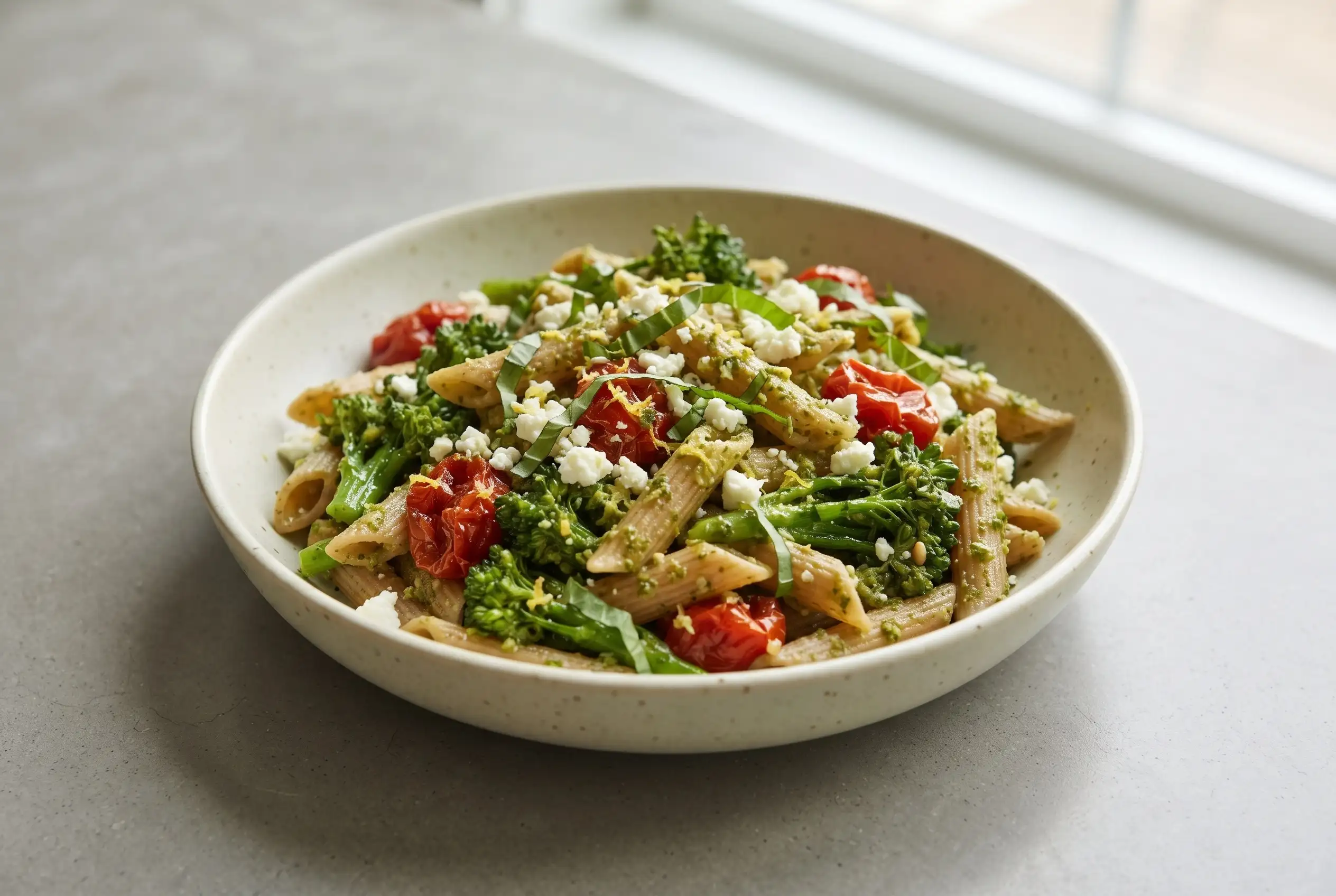
Lemon pesto penne brings whole wheat pasta, bright lemon, tender baby broccoli, roasted tomatoes, feta, and fresh basil together in a skillet-friendly meal with a fresh, savory finish. The pesto supplies richness, while lemon juice keeps the sauce lively enough to balance the cheese and roasted vegetables. Because the broccoli cooks directly in the pasta water, the meal comes together without requiring a separate vegetable pan.
Why Lemon Pesto Penne Tastes Balanced
Whole wheat penne gives the dish a hearty base that can stand up to pesto and feta without becoming overwhelmed by either. Its slightly nutty character also works naturally with roasted tomatoes and broccoli, creating more depth than a plain pasta-and-pesto combination.
Lemon juice changes the character of the sauce at the point when the richer ingredients come together. A quarter cup of pesto and feta can make pasta feel heavy if there is no contrasting acidity, but the juice of half a lemon cuts through that richness and gives each bite a cleaner finish.
Meanwhile, roasted tomatoes contribute concentrated savory flavor and a softer texture. Rinsing away excess oil keeps them from adding more richness than the pesto already provides, allowing the lemon, basil, and vegetables to remain noticeable.
Baby Broccoli Needs a Short Head Start
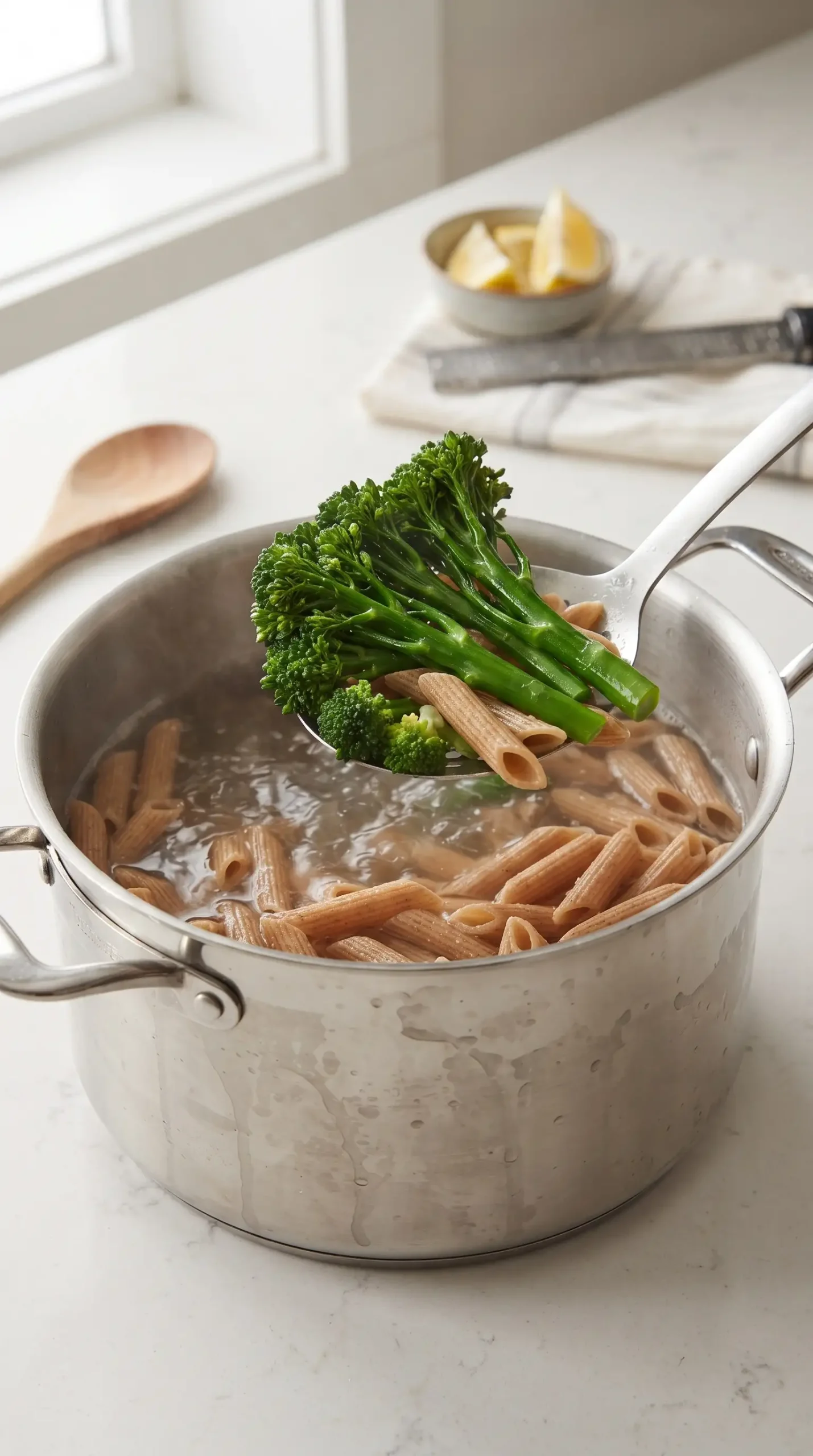
Baby broccoli works particularly well here because it can enter the boiling pasta water near the end of cooking. Adding it during the last minute or two lets the florets turn bright green while keeping enough structure to contrast with the soft pasta and tomatoes.
| Vegetable choice | Flavor and texture direction | Best handling for this pasta |
|---|---|---|
| Baby broccoli | Tender, fresh, lightly bitter | Add during the last 1–2 minutes of pasta cooking |
| Regular broccoli | More substantial florets and a familiar broccoli flavor | Cut into small florets so they can cook quickly |
| Broccolini | Delicate stems with a mild broccoli character | Use pieces that can soften briefly in the pasta water |
| Broccoli rabe | More pronounced bitterness and leafy texture | Keep pieces manageable so the greens integrate with the penne |
Broccoli rabe changes the personality of the dish more noticeably because its bitterness is stronger, while regular broccoli creates a more substantial vegetable bite. Those differences can be useful when choosing the vegetable according to what is already available in the kitchen.
Roasted Tomatoes Keep the Pasta From Feeling Flat
Roasted tomatoes bring concentrated flavor and a soft, slightly chewy texture that contrasts with the pasta and green vegetables. Since they have already been roasted, they need only a brief sauté with the cooked pasta to become hot and fragrant.
Excess oil is worth controlling before the tomatoes reach the pan. Too much residual oil can make the pesto feel heavier and can reduce the clean effect of the lemon juice. A quick rinse followed by draining keeps the tomatoes useful as a flavor accent instead of turning them into the dominant source of richness.
Garlic is optional, so its role should stay supportive. When included, a teaspoon of minced garlic only needs a short time in the hot pan with the tomatoes. The useful cue is aroma: once the garlic smells fragrant, the pesto and lemon can take over without letting the garlic become harsh.
One Pan Finish Makes the Sauce Cohesive
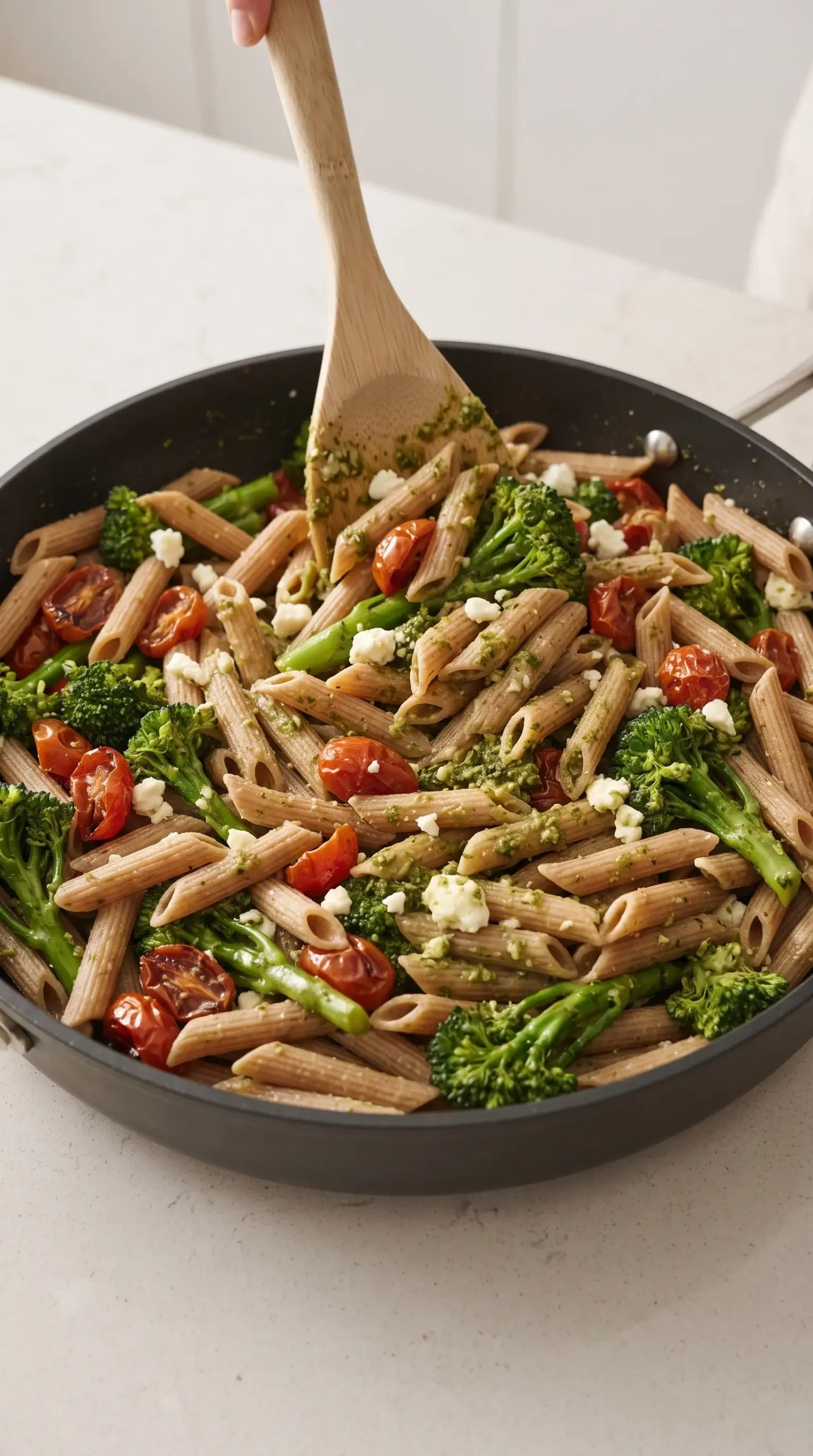
The cooked pasta and broccoli return to the pan over medium-high heat before the pesto, feta, and lemon are incorporated. That warm surface gives the ingredients enough contact to coat the penne evenly without requiring a separate sauce.
Lemon Juice Works Best After the Rich Ingredients Arrive
Adding the lemon juice with the pesto and part of the feta creates a unified coating instead of leaving the acidity isolated at the bottom of the pan. Tossing everything together also distributes the pesto across the ridges and hollow center of the penne.
Half of the feta belongs in the warm mixture, where it can become part of the overall flavor and texture. The remaining feta is reserved for the serving stage, giving the finished pasta small, distinct salty bites instead of dissolving all of the cheese into the coating.
Fresh basil goes in after the heat is removed. Its ribbons provide a fresh herbal note that would be less pronounced if they were left cooking in the pan. Adding them at the end also gives the dish a more noticeable contrast against the warm pesto and roasted tomatoes.
Three Small Choices Shape the Finished Texture
- Broccoli timing: Add the vegetable late enough to keep it bright and structured.
- Tomato moisture: Rinse away excess oil so the pesto remains distinct.
- Cheese placement: Mix some feta into the pasta and save the rest for the top.
Those choices matter because the pasta has several soft, rich elements already in play. Keeping the broccoli recognizable, controlling the tomato oil, and dividing the feta between the pan and the plate gives the finished dish more textural definition.
Keep the Pasta From Losing Its Contrast
Cooking the penne according to its package directions provides the basic timing needed for the rest of the dish. The important adjustment comes at the end of that cooking period, when the broccoli joins the boiling water for only a short window.
Bright green broccoli is an immediate visual cue that the vegetable has received the intended brief cooking time. Once the pasta and broccoli are drained, returning them promptly to the pan keeps the cooking process moving and gives the tomatoes and garlic a warm surface for their short sauté.
Medium-high heat is useful during the skillet finish because the tomatoes and garlic need only a minute or two to become fragrant. The pan does not need an extended sauce-cooking stage; pesto, feta, and lemon are added afterward and tossed through the hot pasta.
Whole Wheat Penne Benefits From a Lively Finish
Whole wheat penne has enough flavor to make the pasta itself noticeable, so the sauce should coat it without burying its character. Lemon helps create that distinction by bringing acidity to a combination that includes pesto, feta, and roasted tomatoes.
A lively finish also comes from the fresh basil added away from the heat. The basil does not need prolonged cooking to become integrated. Tossing the ribbons through the warm pasta is enough to distribute their aroma while keeping them visibly fresh.
Common Lemon Pesto Penne Mistakes to Avoid
Overcooking the broccoli is one of the easiest ways to lose the contrast that makes the vegetables useful in the dish. If the florets spend too long in the boiling water, they can become overly soft before the pasta reaches the pan.
Another problem is carrying too much oil from the roasted tomatoes into the skillet. The pesto already supplies a rich coating, so additional oil can make the finished pasta feel unnecessarily heavy and can mute the effect of the lemon.
Adding basil while the pan is still cooking can also reduce the fresh character expected from the herb. Removing the pan from the heat first keeps the basil in its finishing role and prevents it from becoming just another cooked ingredient.
Small Adjustments Can Change the Balance
Regular broccoli, broccolini, and broccoli rabe can all be used when baby broccoli is unavailable. Their textures and flavors differ, so the most useful adjustment is to keep the pieces small enough to cook alongside the pasta during the short vegetable window.
A stronger-tasting green such as broccoli rabe will make the dish more bitter and assertive, while regular broccoli keeps the vegetable flavor more familiar. The pesto, lemon, and feta can remain the same, with the vegetable choice providing most of the variation.
Serve Lemon Pesto Penne While the Finish Is Fresh
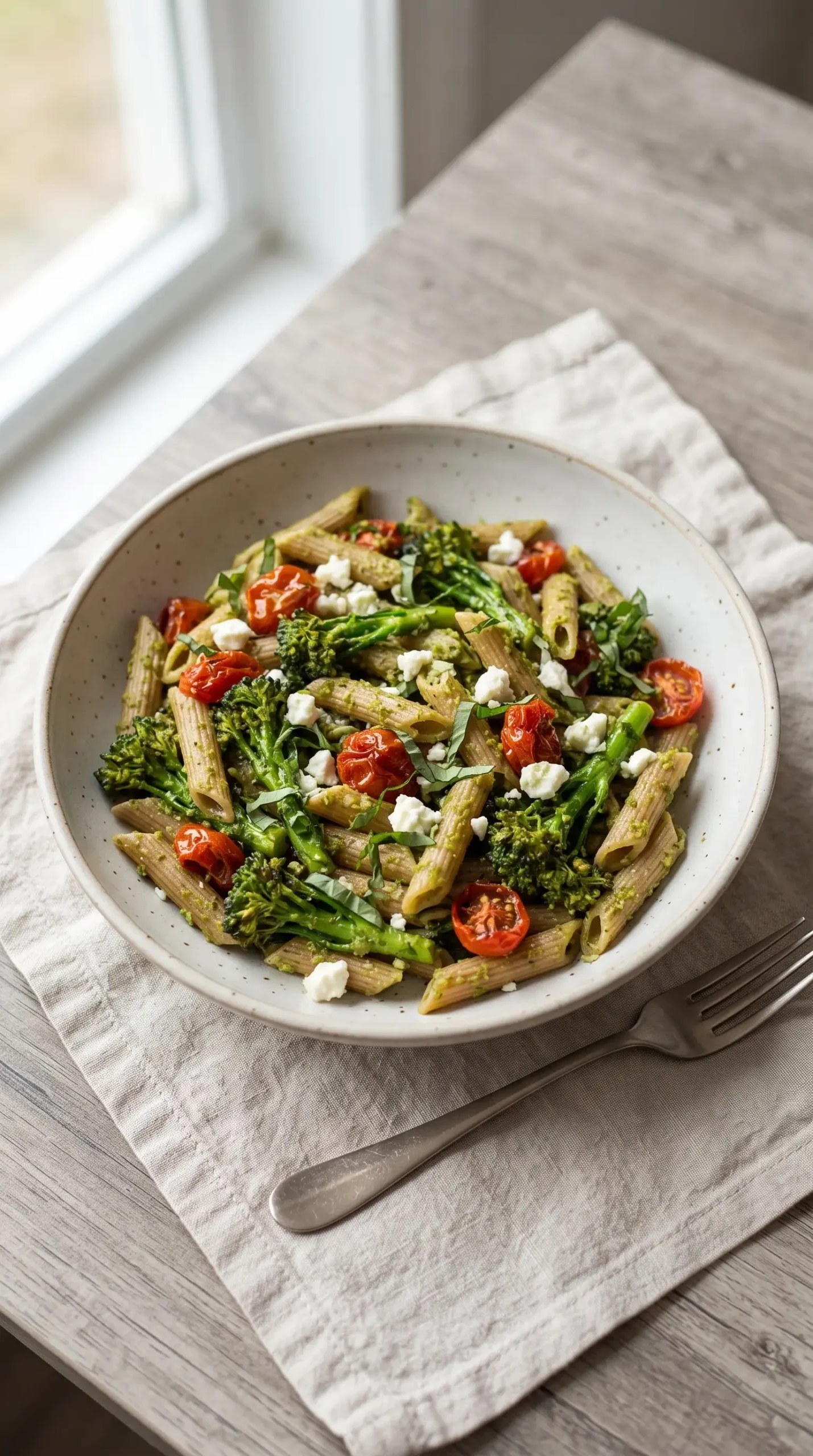
Fresh basil and the reserved feta are most effective when added immediately before serving. The basil supplies a fragrant contrast, while the feta on top creates small pockets of salty flavor that remain distinct from the pesto coating.
For a simple presentation, keep the green broccoli pieces and roasted tomatoes visible among the penne instead of mixing until every component disappears into the sauce. That makes the different textures apparent from the first serving.
What Makes 20 Minute Lemon Pesto Pasta Work
20 minute lemon pesto pasta depends less on complicated cooking than on overlapping tasks efficiently. The pasta cooks while the broccoli waits for its brief turn in the boiling water, and the skillet finish combines the tomatoes, garlic, pesto, feta, lemon, and basil without requiring a separate sauce.
That structure is especially helpful when the meal needs to move from pot to table without a long finishing process. The most important timing decision is keeping the broccoli’s cooking window short and the skillet sauté brief enough that the pesto and lemon remain fresh-tasting.
Lemon Pesto Penne Is Best When Richness Meets Acidity
Lemon pesto penne comes together most successfully when the rich ingredients stay balanced by bright, fresh elements. Whole wheat pasta provides substance, roasted tomatoes deepen the savory side, pesto and feta add richness, and lemon and basil keep the finish lively.
The practical consequence is simple: protect the short broccoli cooking window, control excess tomato oil, and add basil after the heat is off. Those decisions preserve the contrasts that make each forkful of pesto penne with tomatoes feel complete instead of heavy.
Lemon Pesto Penne Questions About Broccoli and Storage
Can regular broccoli replace baby broccoli?
Yes. Cut regular broccoli into small florets so the pieces can soften during the short boiling-water window without requiring a separate cooking step. The flavor will be familiar and slightly more substantial than baby broccoli.
Can I use broccoli rabe in lemon pesto penne?
Broccoli rabe can work when you want a more pronounced bitter, leafy flavor. Keep the pieces manageable and expect the finished pasta to have a stronger vegetable character than the version made with baby broccoli.
Why rinse the oven roasted tomatoes?
Rinsing removes some of the excess oil surrounding the tomatoes. Since pesto and feta already bring richness, reducing that extra oil helps preserve a clearer contrast between the lemon, vegetables, herbs, and creamy savory elements.
When should I add the basil?
Add basil toward the end of cooking, after removing the pan from the heat. The warm pasta will distribute the ribbons throughout the dish while keeping their fresh herbal character more noticeable than prolonged cooking would.
Can the garlic be left out?
Yes. Garlic is optional in the supplied ingredients, so omitting it does not require another ingredient to replace it. The pesto, roasted tomatoes, lemon, feta, and basil still provide the main flavor structure.
How should leftovers be handled?
Cool leftover pasta promptly and refrigerate it in a covered container. When reheating, use gentle heat and avoid prolonged cooking so the pasta and broccoli do not become unnecessarily soft. Fresh basil is best added after reheating if you have extra available.
Lemon Pesto Penne with Roasted Tomatoes and Basil and Feta
Ingredients
Method
- Prepare the penne according to the package directions. During the final 1-2 minutes of boiling, add the baby broccoli to the pasta water and cook until it turns bright green.
- Drain the pasta and broccoli, then return them to the pan over medium-high heat.
- Add the roasted tomatoes and garlic to the pan and sauté for 1-2 minutes, until fragrant.
- Stir in the pesto, half of the feta cheese, and the lemon juice. Toss the mixture in the pan until the ingredients are evenly combined.
- Take the pan off the heat, mix in the basil, and finish with the remaining feta before serving.