
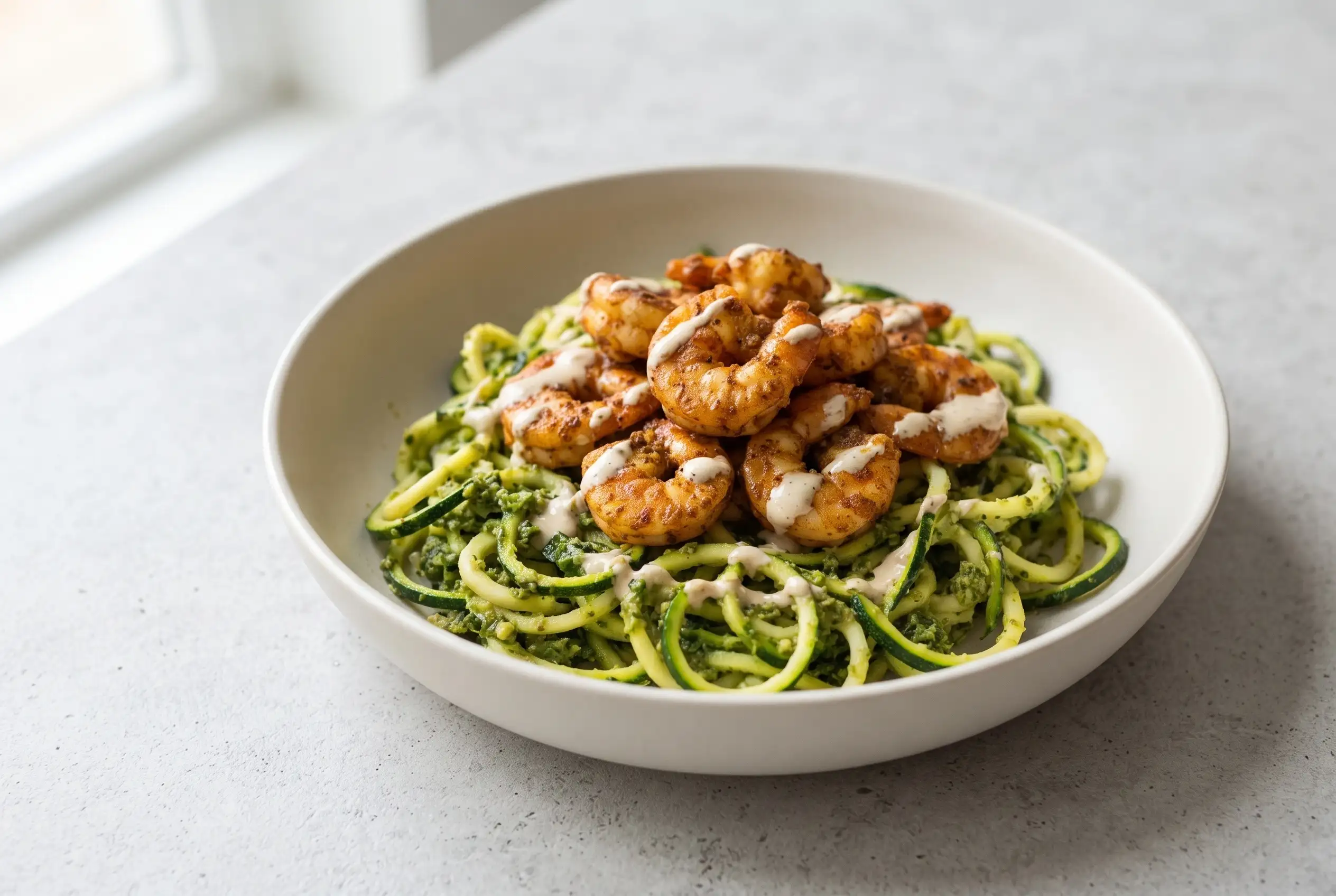
15 Minute Spicy Shrimp with Pesto Noodles brings together shrimp coated with warm spices, fresh green pesto, and crisp zucchini strands for a bright meal that feels satisfying without a heavy finish. These shrimp pesto noodles combine the richness of homemade kale, spinach, basil, and almond pesto with the quick cooking advantage of seafood and vegetable noodles.
The appeal comes from contrast: the shrimp delivers savory spice, the pesto adds herbal depth, and the zucchini noodles keep every bite fresh. With a few decisions around texture, seasoning, and timing, this dish becomes an easy option for busy evenings while still offering the details cooks look for in a carefully prepared meal.
Why Shrimp Pesto Noodles Fit a Fast Fresh Dinner
The combination of shrimp, pesto, and zucchini creates a meal where each part has a clear role. The seafood cooks quickly, the pesto can be prepared ahead, and the zucchini noodles provide a light base that does not require a long cooking process. These shrimp pesto noodles work especially well when you want bold flavor without spending the evening managing a complicated preparation.
The Kale Almond Pesto Choice That Shapes the Dish
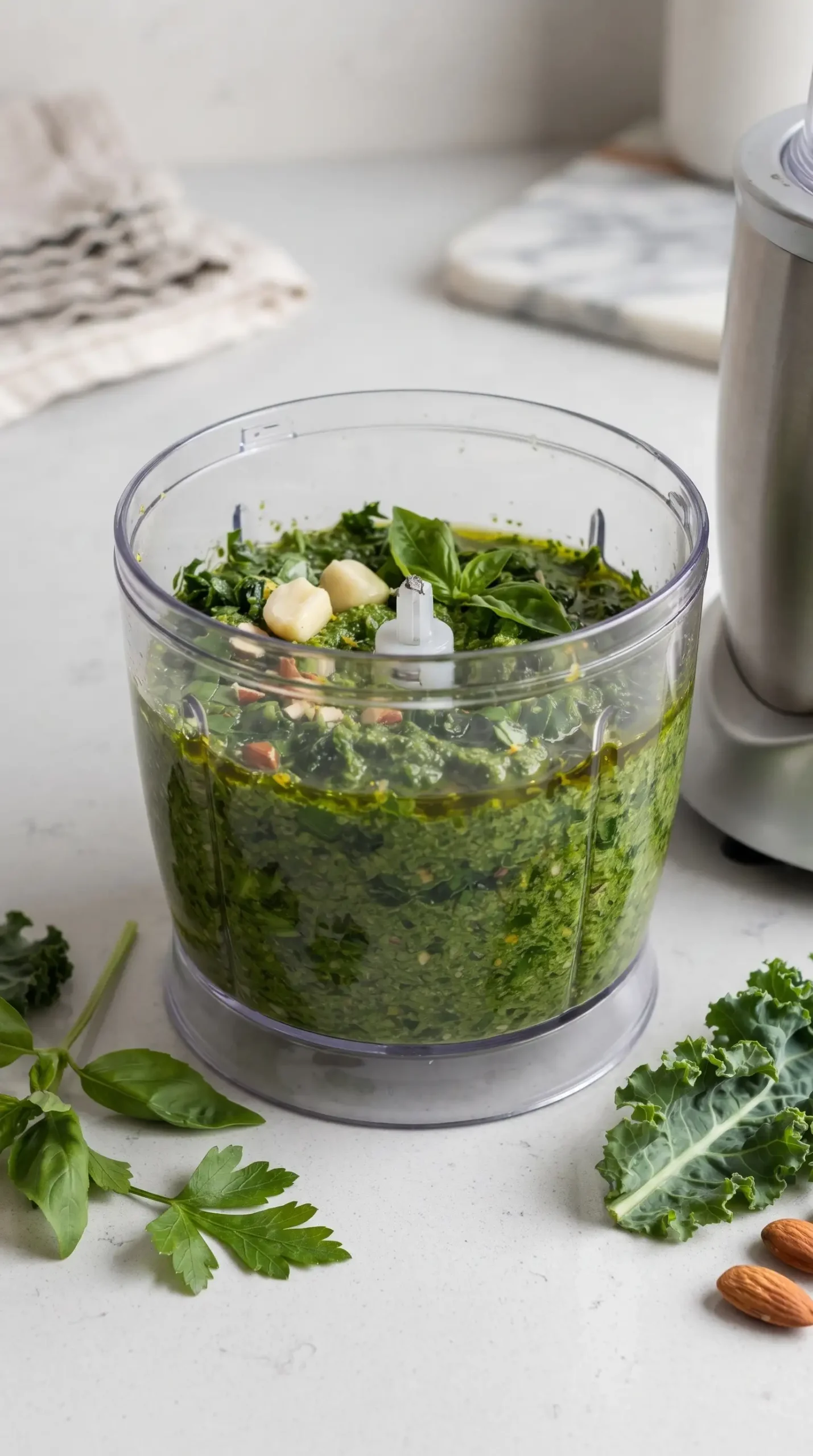
The homemade pesto is the element that connects the entire plate. A blend of kale, spinach, basil or parsley, almonds, olive oil, garlic, lemon juice, salt, and water creates a sauce with a fresh green character and enough richness to coat the zucchini noodles.
Basil gives the pesto a classic aromatic quality, while parsley can fill in when more basil is unavailable. Keeping some flexibility between the two herbs helps maintain the balance of the sauce without making the flavor depend on a single ingredient.
The almonds contribute body and a nutty flavor that helps the pesto cling to the noodles. Blending the mixture until mostly smooth creates a versatile texture, but leaving a little variation in the blend can also add interest to each bite.
- Herb balance: Use more basil when available for a traditional pesto character, with parsley as a practical substitute.
- Sauce consistency: Adjust blending time to match whether you prefer a smoother coating or more texture.
- Lemon adjustment: Increase lemon when the fruit is less juicy to keep the pesto lively.
Zucchini Noodles with Shrimp and Pesto Need Smart Timing
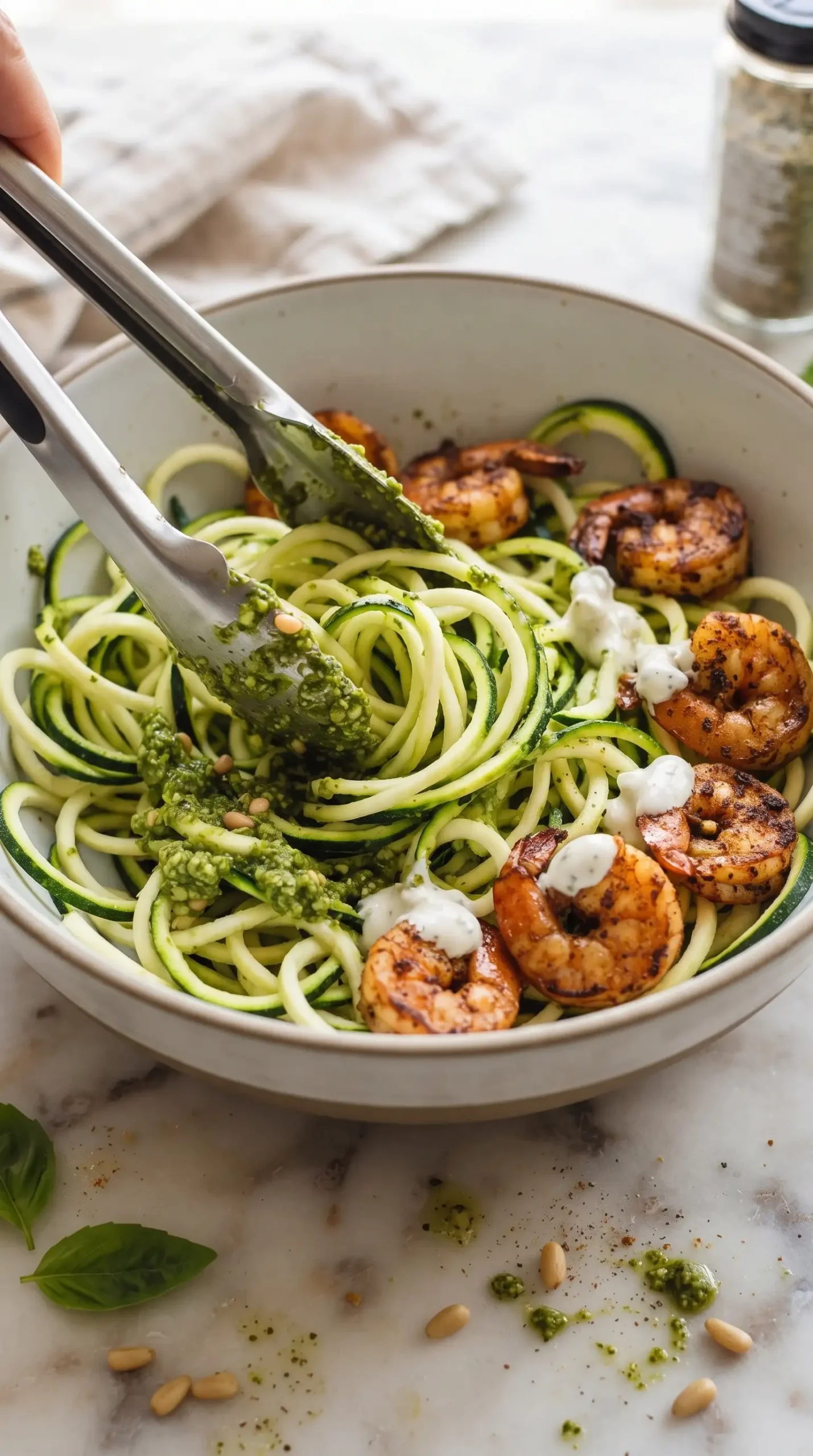
Zucchini noodles with shrimp and pesto depend on handling the vegetable noodles at the right moment. Zucchini naturally releases water after being cut and coated, so waiting too long before serving can change the texture and thin the pesto.
The texture of zucchini noodles is closely tied to the vegetable’s natural water content. Cutting zucchini can encourage moisture release, which is why managing zucchini’s excess moisture helps keep the pesto coating balanced.
The best approach is to prepare the noodles close to the meal. Tossing them with pesto shortly before serving helps preserve their soft-crunchy texture and keeps the sauce concentrated.
A spiralizer makes long noodle shapes easily, but a vegetable peeler can also create wide ribbons with a similar purpose. The shape may vary, but the key decision remains the same: avoid unnecessary resting after the pesto is added.
| Preparation choice | Texture result | Best use |
|---|---|---|
| Raw zucchini noodles | Soft-crunchy and fresh | Quick serving with pesto |
| Sautéed zucchini noodles | Softer and warmer | When a cooked vegetable base is preferred |
| Prepared noodles held too long | More moisture released | Avoid for the best pesto coating |
Spice Control Keeps Spicy Shrimp Pesto Noodles Balanced
Spicy shrimp pesto noodles rely on seasoning choices that complement the pesto instead of hiding it. Chili powder and cumin give the shrimp warmth and depth, while salt and pepper help bring the flavors together. Adding spices directly in the pan also makes it easy to adjust coverage as the shrimp cooks.
Pesto Texture Decisions Change the Finished Bowl
The texture of the pesto changes how the entire dish feels. A smoother sauce creates an even coating over the zucchini noodles, while a less blended version allows the almonds and greens to remain more noticeable.
Because the pesto recipe creates extra sauce, the additional portion can become a useful shortcut for future meals. Keeping it available in the refrigerator or freezing it gives you a ready-made flavor base for other dishes.
The sauce also gives flexibility during serving. A thicker pesto can provide a stronger coating, while a slightly adjusted consistency can make it easier to combine with a larger amount of noodles.
Shrimp Pesto Noodles Mistakes That Affect the Result
Several small choices can change the quality of shrimp pesto noodles. The most common issues come from moisture, seasoning, and shrimp doneness rather than complicated cooking problems.
- Waiting after coating: Pesto-covered zucchini noodles can release water, so combine them close to serving.
- Underseasoned shrimp: The shrimp needs enough spice coverage to stand beside the bold pesto.
- Overcooking shrimp: Remove shrimp once they are fully cooked and no longer translucent.
Fixing these problems usually requires adjusting timing more than adding extra ingredients. Keeping the noodles fresh and watching the shrimp closely preserves the intended contrast of the dish.
Raw Zucchini Noodle Handling Prevents a Watery Plate
Raw zucchini noodles provide the crisp texture that makes this version distinct. Keeping them separate until the last moment gives the pesto a stronger presence and prevents excess moisture from changing the sauce.
Serving Ideas for 15 Minute Shrimp Noodles
These 15 minute shrimp noodles are flexible enough for different serving styles while keeping the main flavors intact. The pesto and shrimp combination already provides richness, so simple additions work best.
| Addition | Purpose | When to use |
|---|---|---|
| Extra fresh herbs | Increase green flavor | For a brighter finish |
| Additional seasoning | Adjust shrimp intensity | When more spice is desired |
| Warm sautéed noodles | Change the vegetable texture | For a cooked presentation |
The dish can move between a quick lunch and a relaxed dinner depending on how you serve the noodles. The same core ingredients support both a simple bowl and a more carefully arranged plate.
Saving Extra Pesto for Future Meals
The extra pesto portion has value beyond this meal. It can be stored for later use, making it easier to add fresh herb flavor to other foods without starting from the beginning each time.
Kitchen Adjustments for Different Zucchini Noodles
Not every kitchen has the same tools, but the recipe remains approachable. A spiralizer creates classic noodle shapes, while a peeler offers a practical alternative when a different style is preferred.
Cooking the zucchini briefly is another option for people who prefer warmer noodles. A short sauté with suitable seasonings changes the texture while keeping the pesto and shrimp combination recognizable.
Cooking Control Makes Shrimp Texture More Reliable
The shrimp requires attention because its texture depends on recognizing when it is finished. Shrimp that has lost its translucent appearance is a useful visual signal that it has cooked through.
Seasoning directly in the pan simplifies preparation and allows the spices to coat the shrimp as it cooks. The heat should support browning and flavor development without leaving the shrimp sitting too long.
Good timing also matters because the shrimp and zucchini noodles have different ideal textures. Preparing each component according to its needs creates a better finished combination.
How Leftovers Stay Ready for Another Meal
Keeping the cooked shrimp, pesto, and zucchini noodles separate is the most useful approach for leftovers. Separation helps maintain the individual textures and allows the components to be combined again when served.
Shrimp Pesto Noodles Bring Freshness Through Simple Choices
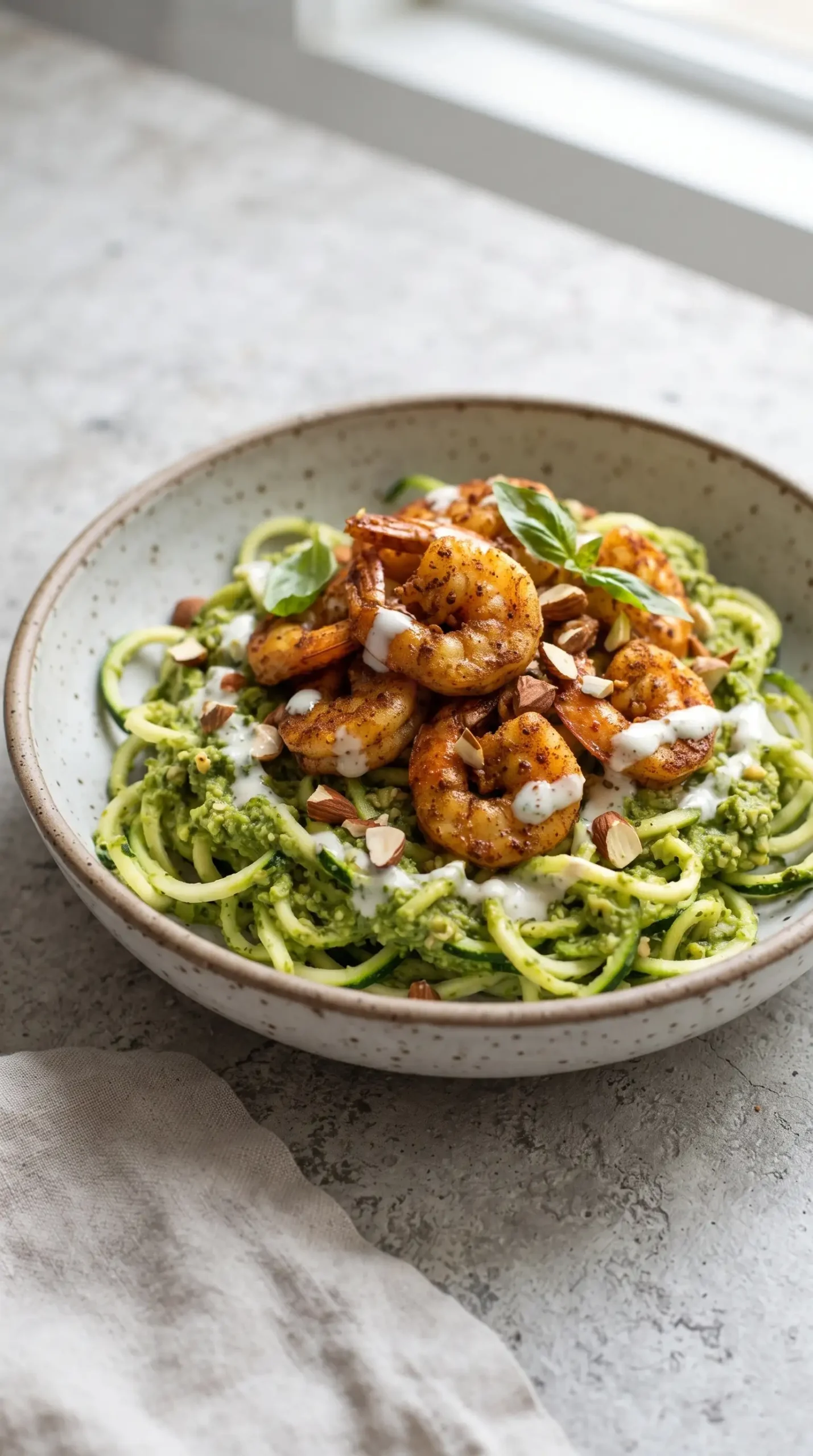
Shrimp pesto noodles succeed when the fresh pesto, seasoned shrimp, and zucchini noodles each keep their intended character. The most important decisions are protecting the noodle texture, giving the shrimp enough seasoning, and using the pesto when its flavor is at its brightest.
A carefully timed combination creates a meal where quick preparation does not mean sacrificing detail. The finished bowl depends on small cooking choices that preserve contrast from the first bite to the last.
Shrimp Pesto Noodles Questions About Storage and Preparation
Can shrimp pesto noodles be made ahead of time?
The pesto and shrimp can be prepared ahead, but zucchini noodles are best handled close to serving. Keeping the components separate helps prevent released moisture from changing the texture of the noodles and sauce.
Can I use cooked shrimp for this dish?
Cooked shrimp can be used, but it should be warmed gently with the seasoning so it does not become tough. The pan method works best when the shrimp has enough time to absorb the spice mixture.
How can I make the zucchini noodles warmer?
You can briefly sauté the zucchini noodles with oil, garlic, salt, and pepper before combining them with pesto. This creates a softer texture while still pairing well with the shrimp.
Can the pesto be frozen for later?
The extra pesto can be frozen if you want longer storage. Keeping it available for another meal makes it easier to add the same herb and almond flavor to future dishes.
What makes this dish spicy?
The spice level comes from the chili powder, cumin, and any additional seasonings added to the shrimp. Adjusting those seasonings allows the dish to match different preferences while keeping the pesto flavor present.
Spicy Shrimp Pesto Noodles with Fresh Zucchini Noodles
Ingredients
Method
- Add the kale, spinach, basil and/or parsley, almonds, olive oil, water, salt, garlic, and lemon juice to a food processor or blender. Blend until mostly smooth or until the pesto reaches your preferred texture.
- Measure out 1 cup of the prepared pesto for this recipe and reserve the remaining pesto for another use.
- Warm the butter or oil over medium-high heat. Add the shrimp and season with the chili powder, cumin, other desired spices, salt, and pepper, tossing to coat.
- Cook the shrimp while stirring until they are evenly seasoned and fully cooked, with no translucent areas remaining.
- Cut the zucchini into long noodle-like strands using a spiralizer or peeler.
- Toss the zucchini noodles with the reserved pesto and place the cooked shrimp on top.