
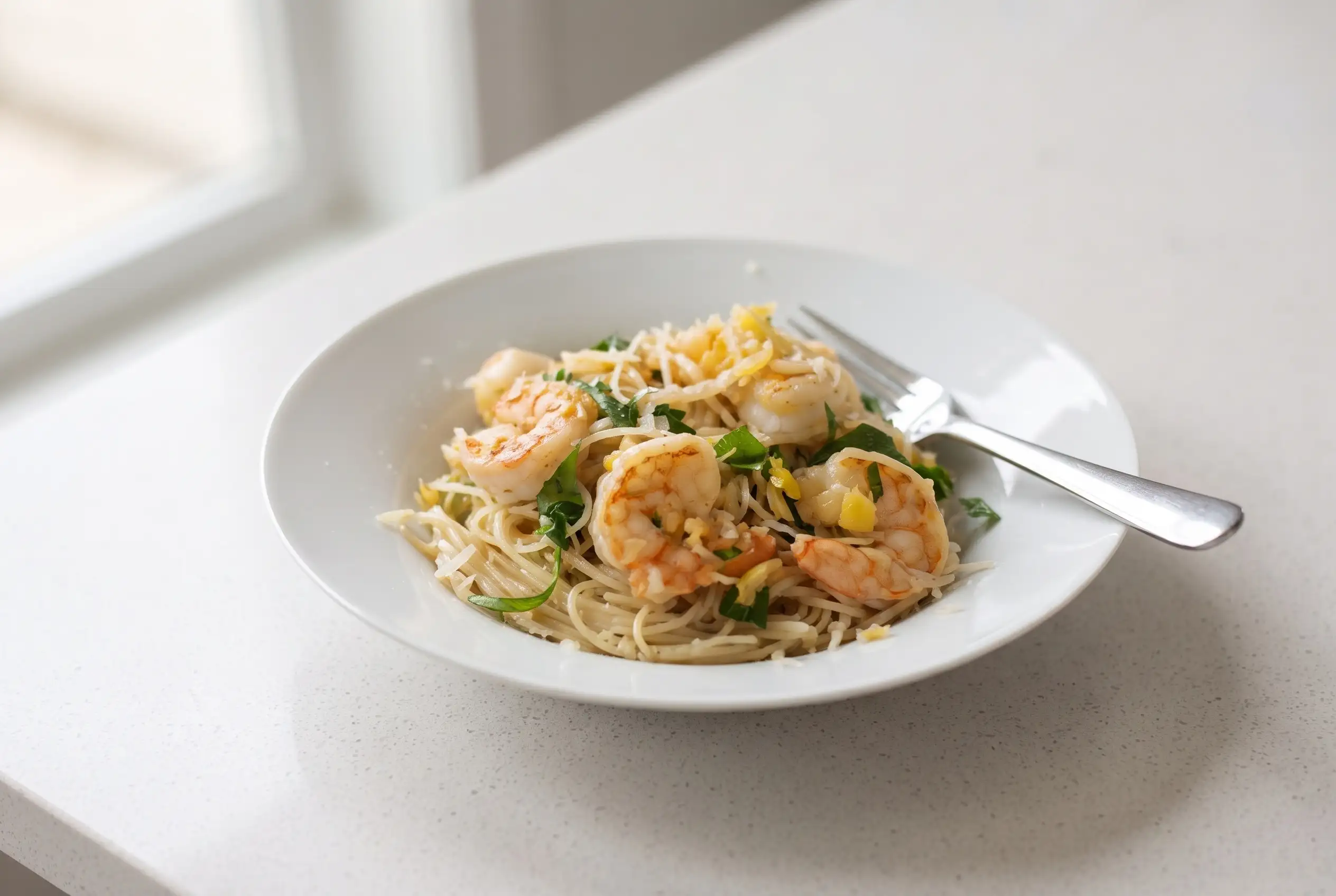
15 Minute Shrimp Scampi brings together tender shrimp, fragrant garlic, bright lemon, and delicate pasta in a fast seafood dinner that keeps every element noticeable. This shrimp scampi recipe focuses on simple timing choices: allowing the shrimp to sear before moving them, softening garlic gently, and combining the finished sauce with noodles while the flavors are still fresh.
The appeal of shrimp scampi comes from contrast. Sweet shrimp meet savory garlic, buttery richness meets sharp citrus, and thin noodles carry the sauce without making the dish feel heavy. A few careful choices during cooking help create a balanced plate with the familiar character of a classic garlic lemon shrimp scampi.
Why 15 Minute Shrimp Scampi Works for Weeknight Pasta
Shrimp scampi succeeds because the cooking process naturally fits the ingredients. Shrimp cook quickly, capellini noodles need little time in boiling water, and the sauce develops directly in the same skillet used for the seafood. Each step builds on the previous one without requiring complicated preparation.
The seafood stays at the center of the dish because the supporting flavors are focused. Garlic, lemon, wine, butter, parsley, and Parmesan create a clear flavor path that does not overwhelm the shrimp. The result is shrimp scampi with pasta that feels complete while relying on a short ingredient list.
A useful part of this approach is that the skillet collects the flavors left behind from cooking the shrimp. When the garlic and butter are added afterward, those browned bits and seafood notes become part of the sauce. The noodles then absorb that mixture when everything is tossed together.
The Garlic Lemon Balance Behind Shrimp Scampi
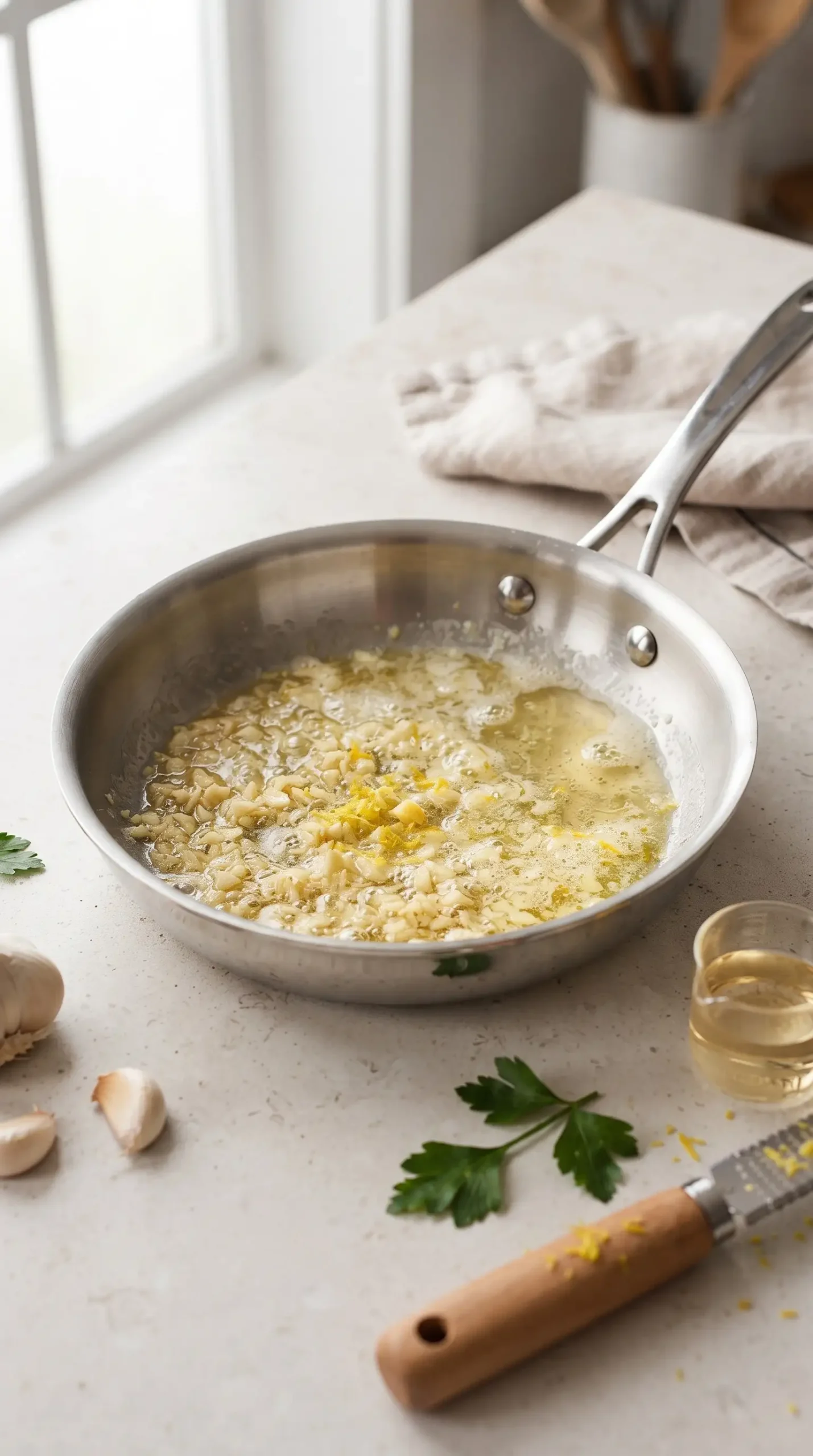
The most important ingredient decision in this garlic lemon shrimp scampi is controlling how the bold flavors are introduced. Garlic needs gentle heat so it becomes fragrant and mellow without turning bitter. Butter helps carry the garlic flavor, while wine and lemon create a lighter finish.
The minced lemon pieces bring a different character than juice alone because they include small pieces of the fruit. The recipe notes that leftover blender lemonade pieces can work, or finely chopped lemon with rind can provide a similar approach. Lemon juice and zest can also be adjusted to match the level of citrus brightness desired.
- Garlic timing: Stir continuously as it softens so the flavor stays sweet and aromatic.
- Lemon texture: Choose chopped pieces for a more noticeable citrus presence or use juice and zest for a smoother sauce.
- Wine reduction: Allow the liquid to simmer so the sauce gains concentration before the shrimp return.
Choosing Shrimp and Noodles for Better Texture
The shrimp and noodles determine the structure of the finished plate. Raw shrimp provide the opportunity to season and cook them directly in the skillet, while capellini offers a thin pasta shape that quickly absorbs the garlic, lemon, and butter mixture.
| Choice | Cooking consideration | Effect on finished dish |
|---|---|---|
| Fresh raw shrimp | Can go directly into the hot skillet after preparation | Allows control over browning and seasoning |
| Frozen raw shrimp | Needs excess moisture pressed out before cooking | Helps prevent steaming in the pan |
| Capellini noodles | Cooks quickly and pairs with light sauces | Carries the shrimp mixture without overpowering it |
Keeping Capellini and Shrimp in Sync
One challenge with shrimp scampi with pasta is coordinating two quick-cooking components. The shrimp need enough time in the skillet to develop flavor, while thin noodles need attention so they do not sit too long before meeting the sauce.
Preparing the boiling water early helps create a smoother cooking rhythm. The shrimp can be cooked and briefly set aside while the pasta finishes, allowing the seafood to return only when it needs warming. This prevents unnecessary exposure to heat after the shrimp have reached the desired texture.
Capellini works especially well here because the thin strands quickly pick up the skillet mixture. Tossing the drained noodles with the shrimp, lemon, garlic, and parsley distributes the flavors evenly throughout the pasta instead of leaving the sauce concentrated in one area.
The Skillet Heat Decisions That Protect Flavor
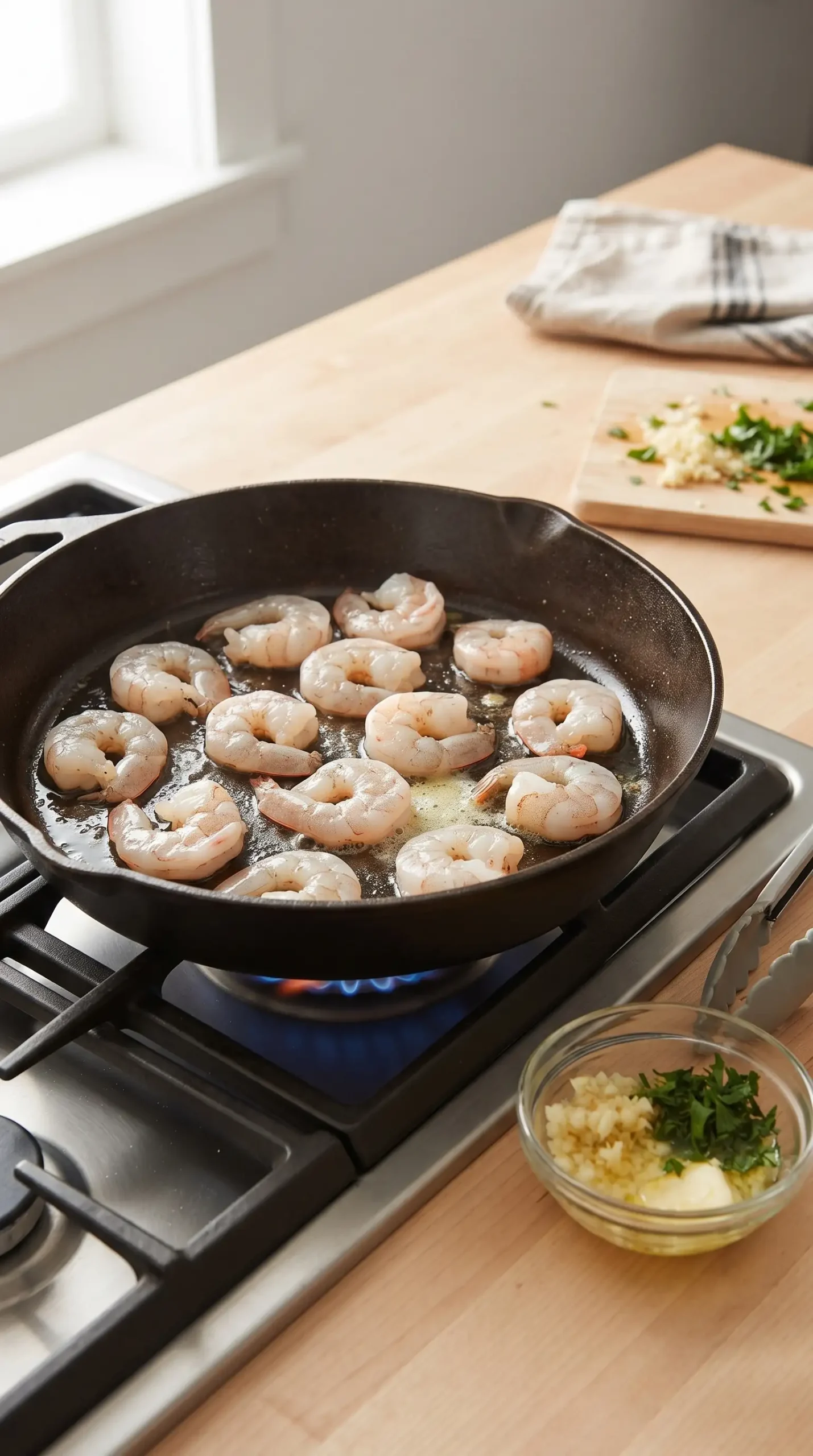
The most important cooking control in this 15 minute shrimp scampi recipe is heat management. Medium-high heat helps the shrimp cook effectively at the beginning, but lowering the temperature before adding garlic and butter protects the most delicate flavors.
Garlic requires constant attention because burned garlic can quickly change the entire dish. A gentle sauté until fragrant creates a smoother base for the wine and lemon. The shrimp should also be returned only briefly at the end so they stay tender.
| Moment | Heat focus | Cook’s observation |
|---|---|---|
| Shrimp cooking | Medium-high skillet heat | Allow the first side to cook before flipping |
| Garlic and butter stage | Reduced medium heat | Garlic should soften without darkening |
| Wine and lemon stage | Gentle simmer | Liquid should reduce before finishing |
Common 15 Minute Shrimp Scampi Mistakes That Flatten Flavor
Shrimp scampi has a short ingredient list, so small mistakes can have a noticeable impact. The directions highlight several points where attention matters most, especially around moisture, garlic, and timing.
Frozen shrimp can release extra water if they are not pressed dry before entering the skillet. Too much moisture makes it harder for the shrimp to cook with the intended texture. Removing shells and tails ahead of time can also make eating easier, since the finished dish is served ready to enjoy.
Frozen shrimp should be thawed using methods that keep the seafood safe before it reaches the skillet. safe seafood thawing practices include using the refrigerator or cold water methods when preparing frozen seafood for cooking.
Another common issue is allowing garlic to burn while waiting for the next step. The solution is simple: keep stirring and watch the color and aroma. If the garlic becomes dark or smells harsh, the sauce can lose the balanced flavor that makes this dish work.
Lemon Pieces Create a Distinct Shrimp Scampi Finish
The lemon component gives shrimp scampi its recognizable freshness. Finely chopped lemon pieces distribute citrus throughout the sauce and pasta, creating small bursts of brightness alongside the buttery garlic base.
Small Adjustments for Shrimp Scampi with Pasta
The basic structure of this shrimp scampi recipe allows for practical adjustments without changing its identity. The noodles can remain the foundation while the citrus intensity, topping amount, and shrimp preparation can be adapted to personal preference.
For a stronger lemon presence, additional lemon flavor can come from more chopped pieces, zest, or a small amount of juice. A lighter citrus touch can be achieved by reducing the amount added during the finishing stage. These changes are easiest to control at the end of cooking.
Parmesan is used as a topping, so it can be added according to the desired finish. A small amount provides a salty accent while allowing the shrimp, garlic, and lemon to remain prominent.
Serving Choices That Keep the Dish Bright
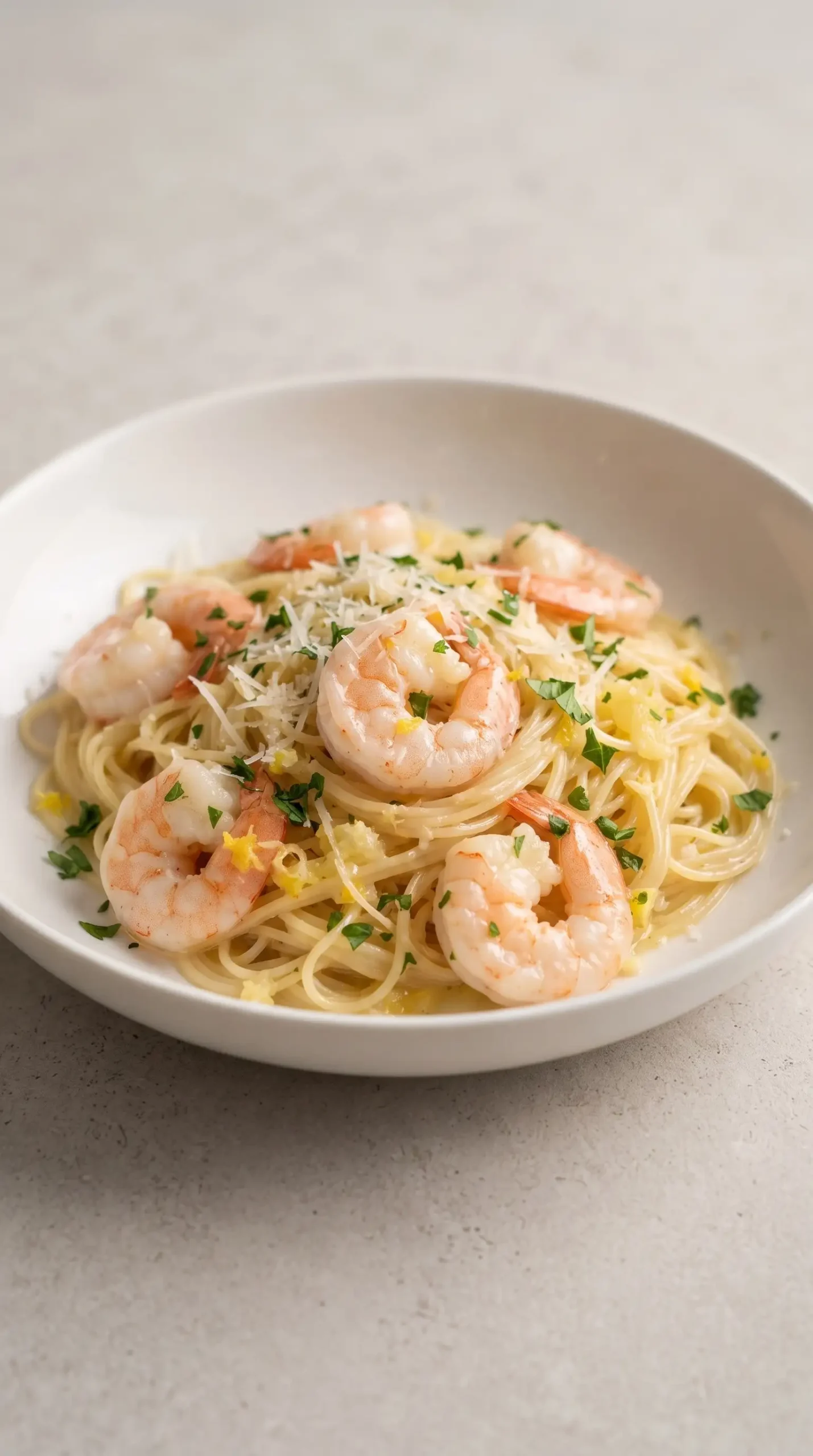
Serving shrimp scampi soon after tossing the noodles keeps the sauce lively and the shrimp texture at its best. Fresh chopped parsley adds a final herbal note that complements the garlic and lemon flavors already present.
Storing Leftover Garlic Lemon Shrimp Scampi
Leftover shrimp scampi can be kept for another meal when handled carefully. Store the cooked pasta and shrimp mixture in a sealed container and reheat gently to avoid overcooking the seafood.
How Parmesan and Parsley Complete the Plate
The finishing ingredients work because they are added after the main cooking is complete. Parsley contributes freshness, while Parmesan adds a savory finishing touch that pairs with the buttered noodles.
The topping choices should remain balanced with the seafood. Too much cheese can cover the delicate shrimp flavor, while a modest amount supports the garlic and lemon notes already developed in the skillet.
The finished plate benefits from simple presentation because the ingredients provide their own color and texture. Visible shrimp, bright herbs, and thin noodles make the dish immediately recognizable.
The Fast Cooking Rhythm of This Shrimp Scampi
The success of this shrimp scampi depends on keeping each quick stage connected. Preparing the pasta water, watching the skillet, and combining the components at the right moment allows the dish to finish with consistent flavor.
Shrimp Scampi Shows Why Timing Shapes the Pasta
Shrimp scampi works when each ingredient reaches the plate at the right moment. The shrimp need focused heat, the garlic needs gentle handling, and the noodles need the freshly made sauce while it is still easy to distribute.
The finished pasta reflects those decisions: tender shrimp, aromatic garlic, bright lemon, and a light coating of sauce that brings everything together. Careful timing turns a simple skillet meal into a balanced seafood dinner.
Shrimp Scampi Shrimp Texture Questions and Answers
How can I keep shrimp from becoming rubbery?
Shrimp stay more tender when they are cooked just until finished and not left in the skillet longer than needed. Removing them before preparing the sauce and warming them briefly at the end helps limit extra cooking.
Can I use frozen shrimp for this shrimp scampi?
Frozen raw shrimp can work well when excess moisture is pressed out before cooking. Removing the shells and tails ahead of time also makes the finished dish easier to eat.
What can I use if I do not have white wine?
The recipe can be adjusted with a small amount of another cooking liquid that fits your preferred flavor, while keeping the lemon and garlic balance as the main focus.
Why does my garlic lemon shrimp scampi taste bitter?
Burned garlic is the most likely cause of bitterness in this dish. Keeping the heat moderate during the garlic and butter stage and stirring continuously helps preserve a mellow garlic flavor.
Can I make the lemon flavor stronger?
Yes, the citrus level can be adjusted by adding more finely chopped lemon pieces, zest, or a small amount of lemon juice during the finishing stages.
Shrimp Scampi with Garlic Lemon Pasta in 15 Minute
Ingredients
Method
- Bring a pot of water to a boil for the noodles. Heat olive oil in a small skillet over medium-high heat.
- Press excess moisture from the shrimp, especially if previously frozen, and place them in the hot skillet. Cook without moving them for 1-2 minutes, then flip and cook the other side. Season with salt and pepper while they cook.
- Once the shrimp are cooked through, remove them from the skillet and set aside.
- Add the noodles to the boiling water and cook according to the package directions.
- Using the same skillet, add garlic and butter while reducing the heat to medium. Sauté for 3 minutes, stirring continuously, until the garlic is soft and fragrant without burning.
- Add the wine and simmer for a few minutes until the liquid reduces. Stir in the lemon pieces and sauté for another 1-2 minutes.
- Return the shrimp to the skillet briefly to warm through.
- Drain the noodles and return them to the saucepan. Add the shrimp, lemon, garlic mixture, and fresh parsley, then toss to combine.
- Season with salt and pepper as needed and finish with a small amount of Parmesan cheese.