
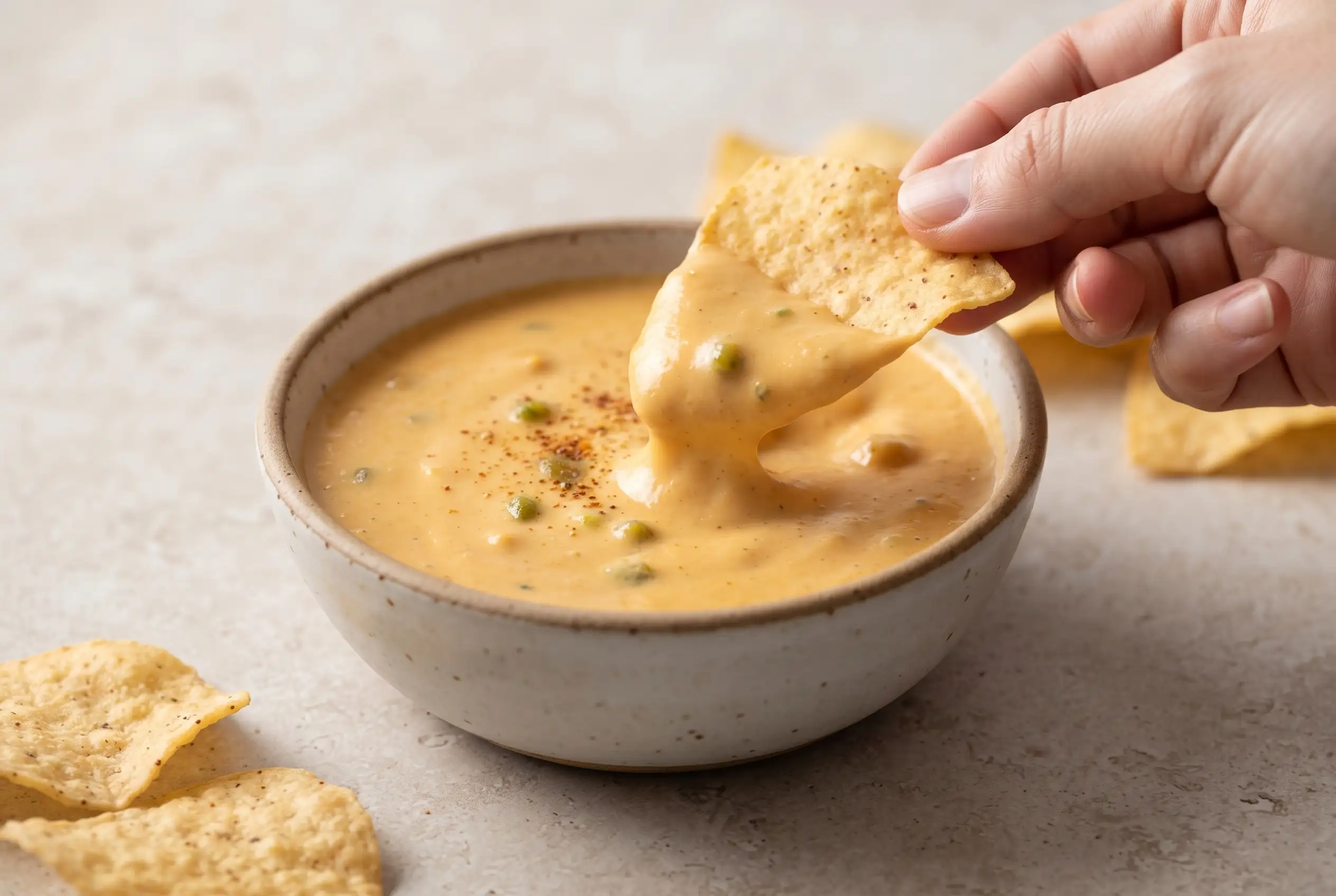
3 Ingredient Vegan Queso turns a handful of pantry-friendly ingredients into a creamy, savory dip with almost no cooking involved. Cashews create the smooth base, water loosens it into a pourable sauce, and diced green chiles with taco seasoning bring the familiar chile-and-spice character of queso. The result works as a vegan queso dip for chips, but its texture also makes it useful over tacos, burritos, crunchwraps, and roasted vegetables.
Why cashews make the base work so well
Cashews are especially useful here because blending them with water can produce a rich, creamy texture without dairy. Their relatively mild flavor also leaves room for the green chiles and taco seasoning to define the finished vegan queso.
The amount of water matters because it determines whether the blended mixture behaves more like a scoopable dip or a sauce. Starting with the stated amount gives the blender enough liquid to work while keeping the finished queso substantial enough for dipping.
A smooth result depends heavily on how thoroughly the cashews are broken down. When the nuts are completely pulverized, the mixture becomes cohesive and creamy instead of tasting like chopped nuts suspended in sauce.
Green chiles bring more than heat
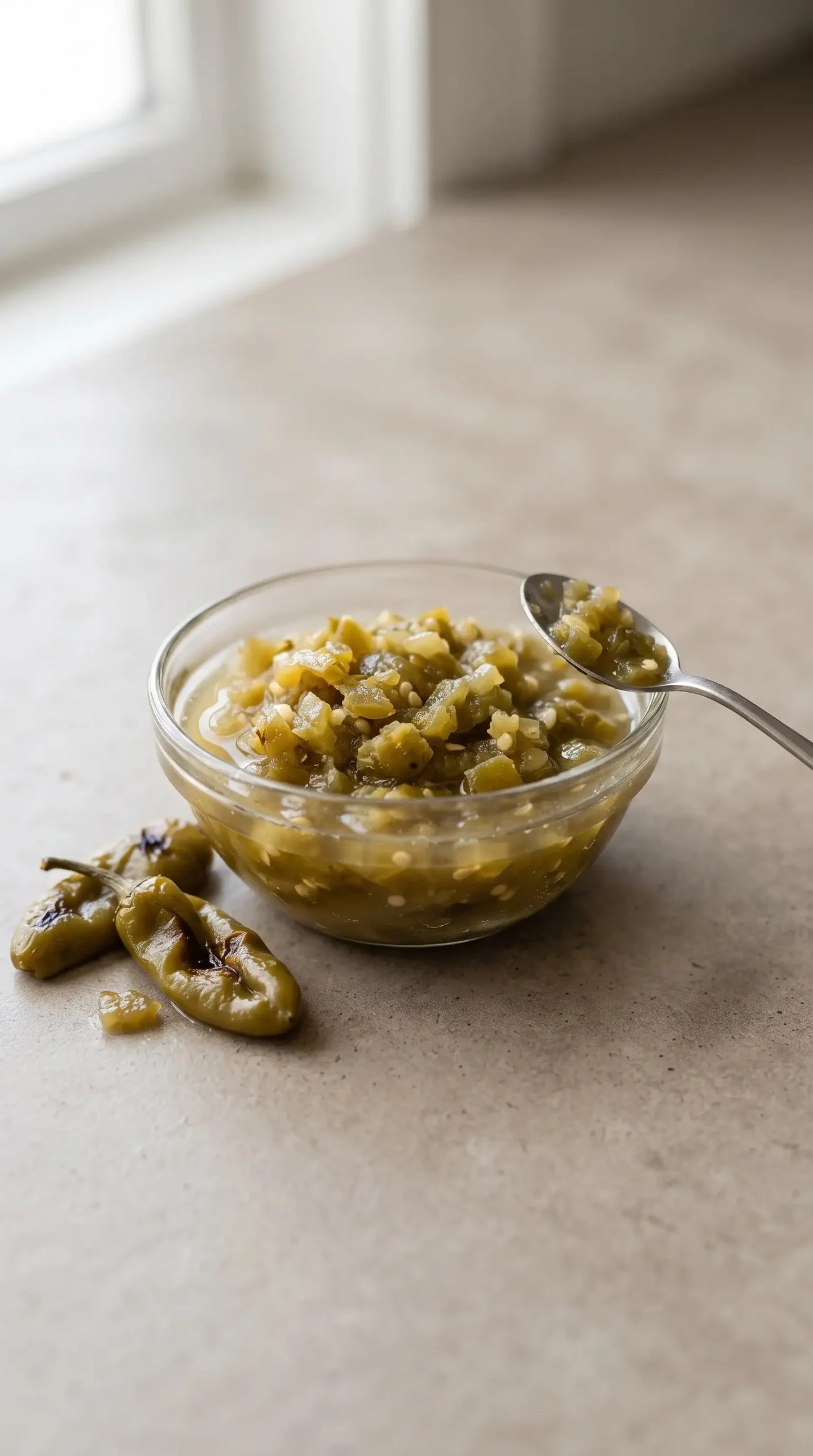
Diced green chiles give the queso a savory chile flavor that keeps the cashew base from tasting flat. They also introduce a small amount of moisture, so the mixture can become looser as they are incorporated.
Heat level is easy to control because the chile quantity does not have to be fixed beyond the supplied can amount. Using less is a practical choice when you want the taco seasoning to remain the dominant seasoning note.
Taco seasoning sets the flavor direction
Taco seasoning supplies the concentrated savory and spiced character that makes the sauce immediately useful with Mexican-inspired foods. Since seasoning blends vary in salt content, tasting after blending is important.
- Unsalted seasoning: Add a small pinch of salt after tasting so the finished sauce does not seem muted.
- Salted seasoning: Taste before adding anything else, because the blend may already provide enough seasoning.
- Stronger chile flavor: Adjust the diced green chiles separately instead of adding extra seasoning simply to increase intensity.
A high-speed blender changes the texture
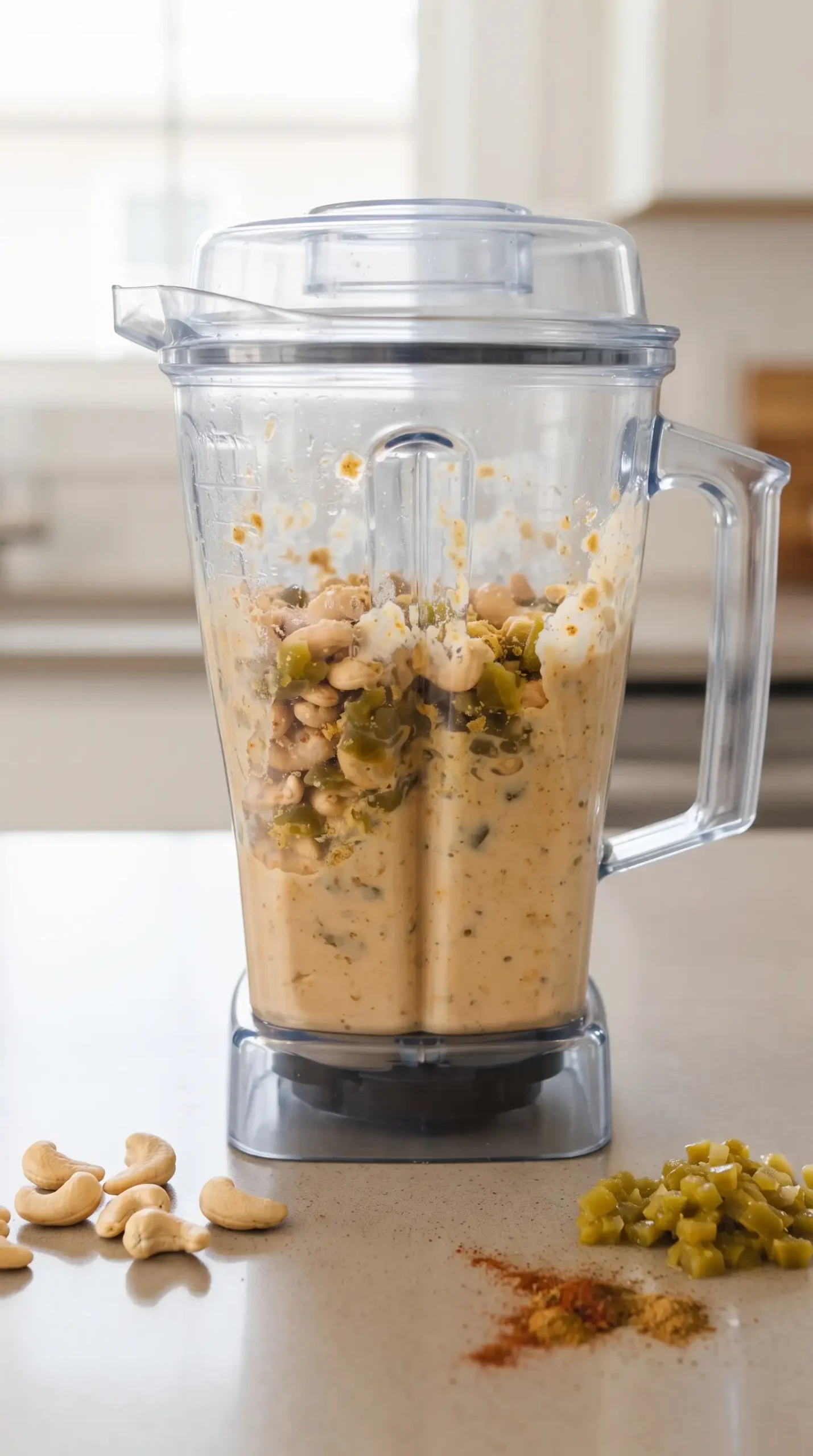
A high-speed blender is particularly helpful for cashew vegan queso because the desired texture is very smooth. Thorough blending breaks down the nuts more completely, reducing the chance of a grainy or noticeably nutty finish.
Cashews do not necessarily need soaking when a capable blender is doing the work. If your blender produces a smooth mixture directly from the ingredients, soaking adds an unnecessary preparation step.
Less powerful equipment can still produce a tasty sauce, but the texture may be different. A slightly nutty consistency is not automatically a problem; it simply means the cashews were not dispersed as completely.
The texture tells you when blending is enough
Watch the consistency instead of relying only on a fixed blending duration. The mixture should become visibly creamy, with the cashews no longer presenting a coarse or gritty appearance.
If the mixture still looks noticeably textured, continue blending before making seasoning adjustments. Changing the seasoning cannot correct a texture problem caused by insufficient blending.
Small adjustments can rescue the finished queso
Tasting after blending gives you the information needed for the last adjustment. At that point, the chile level, seasoning intensity, saltiness, and overall creaminess can be judged together.
| What you notice | Useful adjustment | What to watch for |
|---|---|---|
| Too mild | Increase the diced green chiles or seasoning gradually | Seasoning blends can also increase salt quickly |
| Not salty enough | Add a small pinch of salt when the seasoning is unsalted | Taste again before adding more |
| Too thick | Blend with a little additional water | Add liquid gradually so the sauce does not become overly thin |
| Noticeably nutty | Continue blending if the equipment allows | A less powerful blender may leave more texture |
Three ingredient vegan queso fits several meals
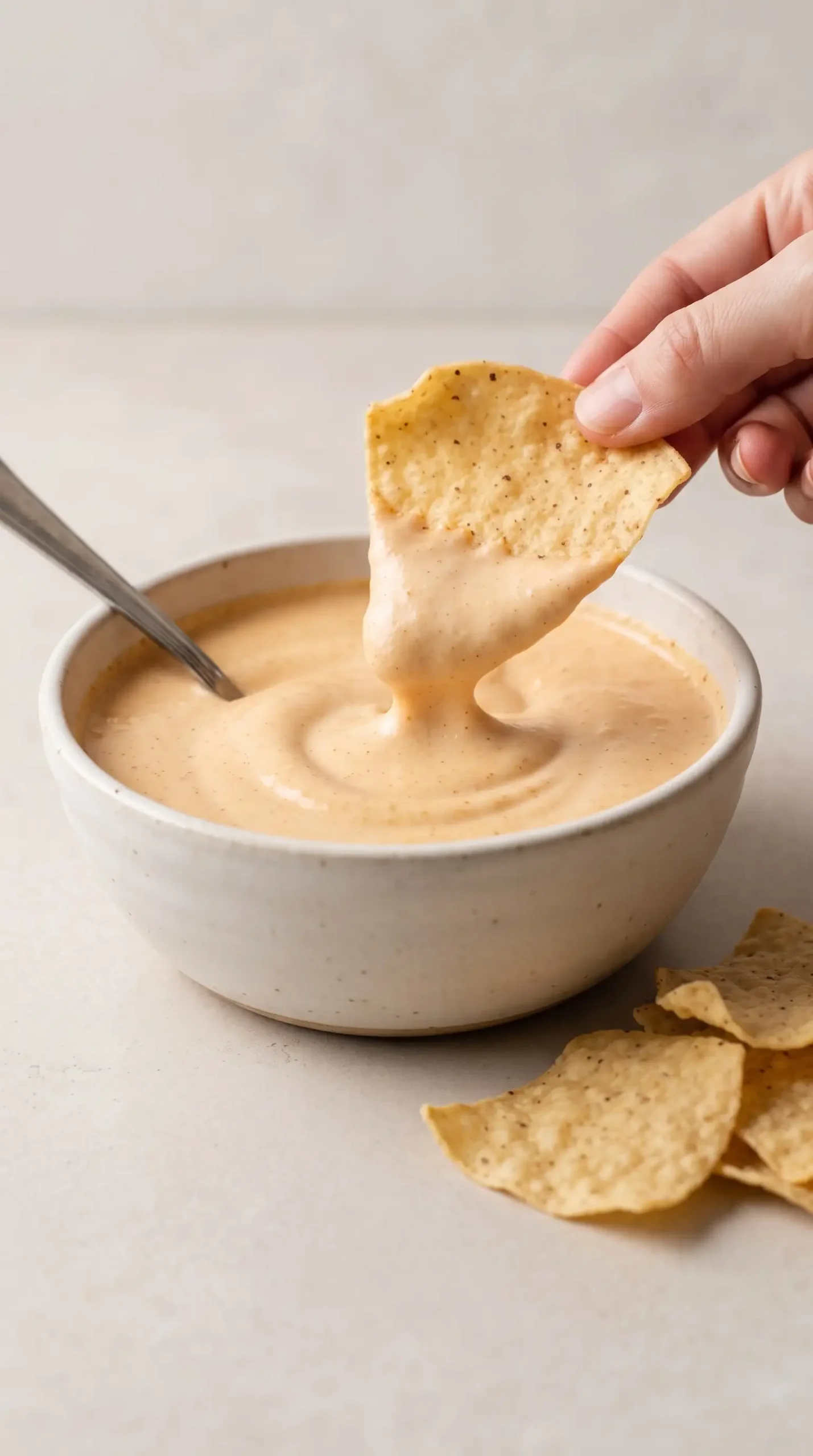
As a vegan queso dip, the sauce is an obvious match for tortilla chips, but its usefulness goes beyond the snack table. Its creamy texture lets it act as a finishing sauce wherever you want chile-seasoned richness.
Drizzle it over roasted vegetables for a quick savory topping, or spoon it across tacos and burritos. Crunchwraps also give the sauce a natural role because it can spread through the filling without requiring a separate cheese-style ingredient.
The same batch can move between dipping and saucing depending on how much liquid is used. A thicker consistency is convenient for chips, while a looser texture is easier to spread or drizzle across a meal.
Three easy ways to use the sauce
- Chip dip: Serve the queso alongside tortilla chips while it is freshly blended and creamy.
- Vegetable topping: Spoon or drizzle it over roasted vegetables for a seasoned, creamy finish.
- Taco filling: Add it to tacos, burritos, or crunchwraps where the chile-seasoned sauce can spread through the other fillings.
What soaking the cashews changes
Soaking is often associated with cashew-based sauces because softened nuts can be easier for some equipment to process. For this particular preparation, soaking is not automatically necessary when a good blender can turn the cashews smooth without it.
The practical decision comes down to your equipment and the texture you observe. If your blender handles the nuts efficiently, skipping soaking keeps the preparation exceptionally simple.
Common 3 Ingredient Vegan Queso mistakes to avoid
The most noticeable problem is usually texture. If the cashews remain coarse, the sauce can feel nutty instead of creamy. Giving the blender more time, when its motor can handle the mixture, is the most direct correction.
Another mistake is changing the seasoning before evaluating the blended texture. A sauce that has not become smooth yet can taste different once fully blended, so texture should be checked before making several flavor adjustments.
Adding too much water at once can also make the consistency harder to control. A thick mixture is easy to loosen gradually, while an overly thin sauce cannot be thickened simply by removing liquid after everything has been blended.
Cashew texture depends on the equipment you use
Blender strength has an unusually direct effect on the eating experience of this queso. High-speed machines are better suited to creating the very smooth texture associated with a creamy cashew sauce.
With a less powerful blender, expect the possibility of a little more texture. The flavor can still work well, particularly when the sauce is used over tacos or vegetables where it becomes part of a larger bite.
Flavor adjustments should stay incremental
Once the mixture is smooth, make changes in small amounts and taste between adjustments. The green chiles and taco seasoning are both capable of shifting the character of the sauce, so adding several changes simultaneously makes it harder to tell what improved the result.
When using an unsalted taco seasoning, a pinch of salt can sharpen the overall flavor. Salt should remain an adjustment rather than an automatic addition because seasoning blends differ.
For more chile presence, changing the amount of diced green chiles is more targeted than continually increasing taco seasoning. That keeps the seasoning profile closer to the intended balance.
Serving texture depends on where the queso goes
Texture has a practical role at the table. A creamy, substantial consistency is convenient for dipping chips, while a slightly more fluid sauce can travel across roasted vegetables or distribute through taco fillings more easily.
If the queso feels thicker than you want after blending, loosen it gradually with additional water and blend again. This gives you control over the finished consistency without committing the entire batch to a thinner texture.
A simple cashew base rewards careful blending
Cashews, water, green chiles, and taco seasoning do not require a complicated technique, but the blender deserves attention because it determines the texture. Once the mixture is genuinely creamy, the remaining decisions are mostly about seasoning and how you want to serve it.
That simplicity is what makes 3 ingredient vegan queso particularly flexible. The same base can function as a dip, a vegetable sauce, or a taco topping without changing its core preparation.
Vegan queso works best when texture leads the decision
The creamy texture comes first: cashews need enough blending to disappear into the sauce, while water should be adjusted carefully if a thinner consistency is needed. Green chiles and taco seasoning then provide the savory, chile-forward flavor that gives the sauce its purpose.
Once those elements are balanced, vegan queso becomes an adaptable finishing sauce instead of a single-use dip. Keeping the texture under control and making seasoning changes gradually lets the same preparation move easily from tortilla chips to roasted vegetables, tacos, burritos, and crunchwraps.
Vegan queso questions about texture and serving
Do cashews have to be soaked for vegan queso?
No. A high-speed blender can produce a smooth cashew-based queso without soaking. If your blender leaves the mixture noticeably coarse, soaking the cashews can be worth trying on a future batch to make them easier to process.
Why does my cashew vegan queso still taste nutty?
The most likely reason is that the cashews have not been broken down completely. Continue blending if your equipment permits, and judge the texture again before changing the seasoning.
How can I make the queso less spicy?
Use fewer diced green chiles and taste the mixture after blending. Keeping the taco seasoning amount controlled also helps prevent the sauce from becoming more intensely seasoned while you are adjusting its heat.
Can I use vegan queso on roasted vegetables?
Yes. A slightly loosened consistency makes it easy to spoon or drizzle over roasted vegetables, where the creamy sauce adds a savory chile-seasoned finish.
What should I do if my vegan queso is too thick?
Add a small amount of water and blend again, repeating only as needed. Gradual additions give you better control and help preserve a creamy consistency instead of making the sauce unnecessarily thin.
Can I use this vegan queso for tacos and burritos?
Yes. Its creamy texture makes it suitable for spreading or spooning into tacos, burritos, and crunchwraps, where it can combine with the other fillings as a seasoned sauce.
Vegan Queso Dip with Green Chiles and Taco Seasoning
Ingredients
Method
- Add all ingredients to a blender and blend on high until the mixture is completely smooth and creamy.
- Taste the queso and adjust the seasoning or green chiles to your preference.
- Serve as a dip for chips, a sauce for roasted vegetables, or a topping for tacos, burritos, and crunchwraps.