
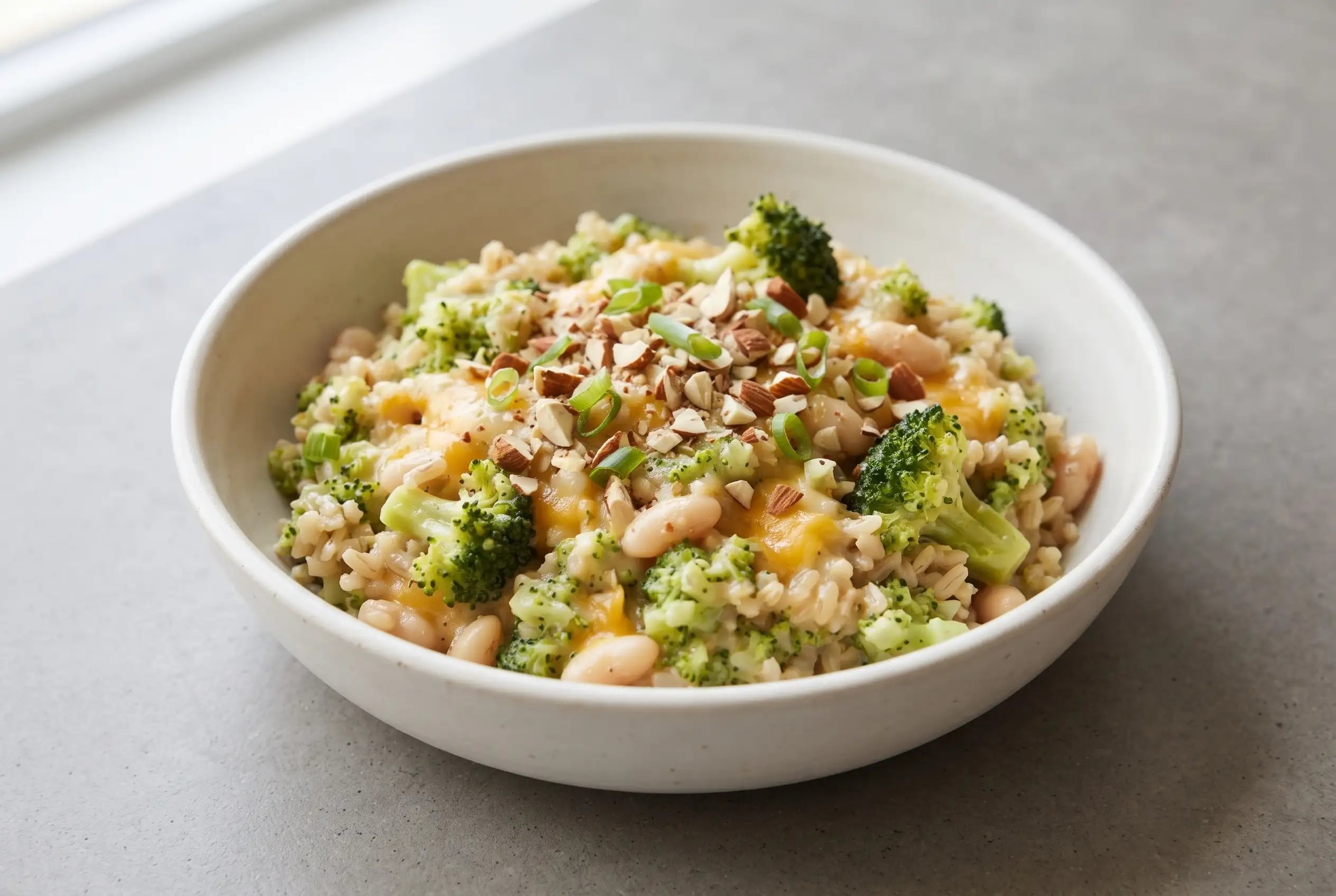
Broccoli cheese rice turns brown rice, tender broccoli, white beans, and a creamy cheddar sauce into a comforting meal with enough texture to keep every bite interesting. The combination works especially well because the rice gives the dish substance, the beans make it more filling, and the broccoli brings a fresh vegetable contrast to the rich sauce. For a busy dinner, healthy broccoli cheese rice can feel substantial without requiring a complicated cooking process.
Broccoli Cheese Rice Works Because Every Bite Has Contrast
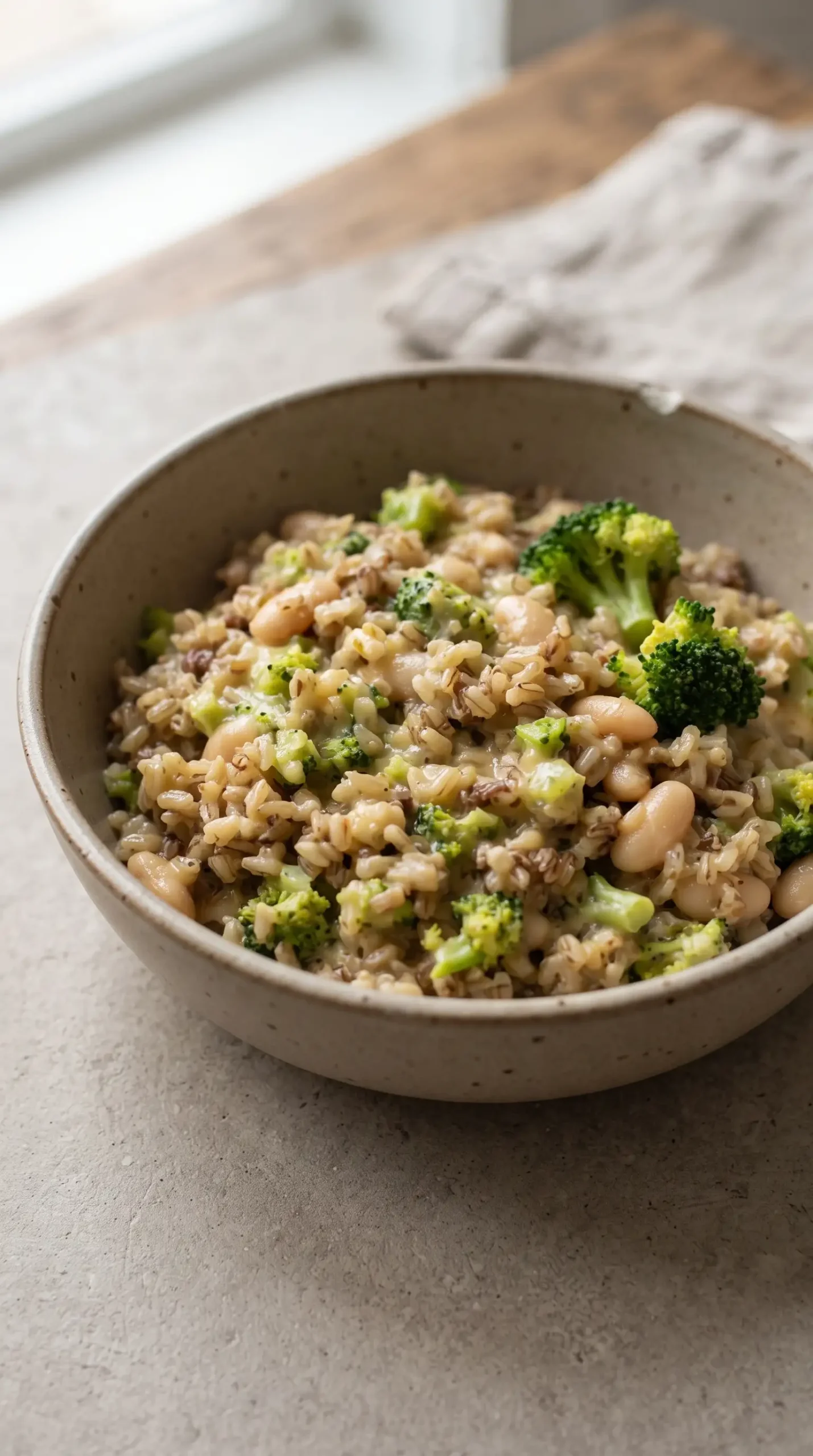
Comfort comes from the creamy cheese sauce, but the dish does not depend on cheese alone for its character. Brown rice contributes a firm, pleasantly chewy base, while finely chopped broccoli distributes vegetable flavor throughout the mixture. Leaving a few larger broccoli pieces behind prevents the texture from becoming completely uniform.
White beans add another layer that is easy to overlook. Their soft texture blends naturally into the rice while still giving individual bites some substance. Because the beans are stirred in after cooking, they do not need to withstand prolonged simmering, which helps them retain their shape.
Crunch arrives at the finish through crushed almonds and sliced green onions. The almonds provide a dry, nutty contrast to the creamy rice, while the green onions add a fresh, lightly sharp note. That finishing combination is especially useful when the dish has been made rich with butter, milk, almond meal, and cheddar.
Brown Rice Texture Sets the Base for Broccoli Cheese Rice
Cook the brown rice according to its package directions and pay attention to its finished texture before combining it with the sauce. Rice that is already very soft can make the finished broccoli cheese rice heavy once additional liquid is added, so the mixture should be loosened gradually. If the cooked grains seem dry, a small amount of broth or milk can bring them together without turning them soupy.
Bright Broccoli Needs a Fast Stop in Cold Water
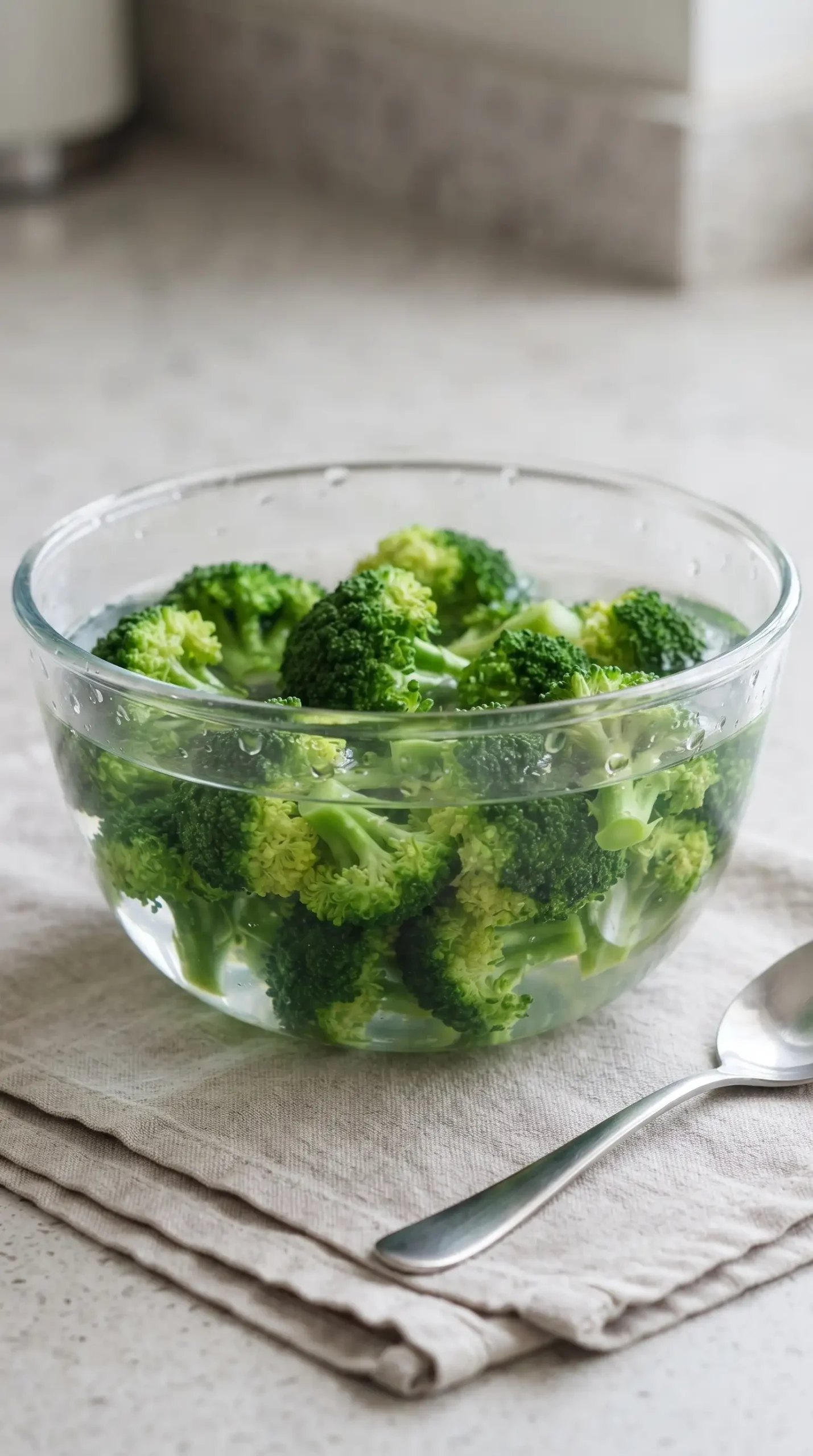
Broccoli changes quickly once it enters boiling water. A brief blanch makes the florets bright green and tender enough to fold into the rice, while immediate cooling stops the cooking process. Moving the broccoli straight into very cold water is therefore more than a color-preserving trick; it gives you greater control over the texture that reaches the finished dish.
Chopping most of the cooled broccoli into fine pieces helps distribute it through the rice and sauce. Keeping a few larger florets creates visible pieces of vegetable and gives the finished bowl a more varied bite. Cutting everything to exactly the same size would remove that useful contrast.
Draining thoroughly matters once the broccoli has cooled. Excess water can loosen the cheese sauce unexpectedly, especially when the rice and beans are added at the same time. The broccoli should be cool and drained before it goes into the creamy mixture so the sauce remains easy to adjust.
Almond Meal Gives the Cheese Sauce Its Starting Structure
Butter and almond meal create the thick base that later becomes the sauce when milk is added; almond meal can thicken sauces because its finely ground solids add body. The almond meal initially looks thick and clumpy after cooking, which is expected. Allowing it to cook with the butter and garlic for a couple of minutes develops the base before the milk begins thinning it.
Milk works best when added gradually. Each addition should be whisked into the almond meal until the mixture becomes smoother before more liquid goes in. This gives you control over the consistency and makes it easier to stop once the sauce has thickened slightly.
White Beans Turn Broccoli Cheese Rice Into a Fuller Meal
Rinsed and drained white beans can be folded into the cooked rice and broccoli without another cooking stage. Their mild flavor fits comfortably beside cheddar and garlic, while their soft interior works with the creamy texture of the sauce. Keep the stirring gentle enough to combine everything without unnecessarily breaking the beans apart.
Cheddar Sauce Depends on Gentle Heat and Gradual Liquid
Garlic only needs about a minute in the melted butter to become fragrant. Keeping that stage brief helps it contribute savory flavor without dominating the sauce. The almond meal follows immediately, and its short cooking period gives the base time to develop before milk is introduced.
Once the milk begins going in, whisking after each addition is the key control point. The mixture should become progressively smoother and slightly thickened as it simmers. If the sauce becomes too thick before the rice is added, a little more milk or broth can restore a workable consistency.
Half of the cheddar goes into the sauce so its flavor becomes integrated throughout the rice. The remaining cheese belongs on top, where it can melt under a covered pan and create a distinct cheesy layer. Keeping those two portions separate gives the finished dish both creamy interior flavor and melted cheese at the surface.
Common Broccoli Cheese Rice Mistakes Are Easy to Catch Early
Several problems reveal themselves before the dish reaches the table. Watery broccoli can dilute the sauce, so drain the chilled florets well. Clumpy sauce usually means the milk was added too quickly, making gradual additions and whisking especially important. Dry rice calls for a little broth or milk, while overmixed beans can lose their shape when stirred too aggressively. Watching these cues as you cook makes correction much easier than trying to fix the entire pan at the end.
Small Liquid Adjustments Keep the Rice Creamy
Broccoli cheese rice should hold together easily when stirred, but it should not behave like a thick paste. The amount of additional broth or milk depends on how much moisture the cooked rice has retained and how thick the cheese sauce becomes. Add liquid in small amounts, stir, and reassess before adding more.
Heat also affects the consistency after the ingredients meet. The mixture continues to thicken as it sits over heat, particularly after cheddar is incorporated. If it already looks quite thick before the rice and beans are folded in, leave yourself some room to loosen it later.
Covering the pan after the remaining cheddar is sprinkled over the top is useful for melting the cheese without requiring aggressive stirring. Once the cheese has melted, stop mixing unless the texture genuinely needs adjustment. Excess stirring at this stage can break the beans and turn the broccoli pieces less distinct.
Crunchy Almonds and Green Onions Finish the Bowl
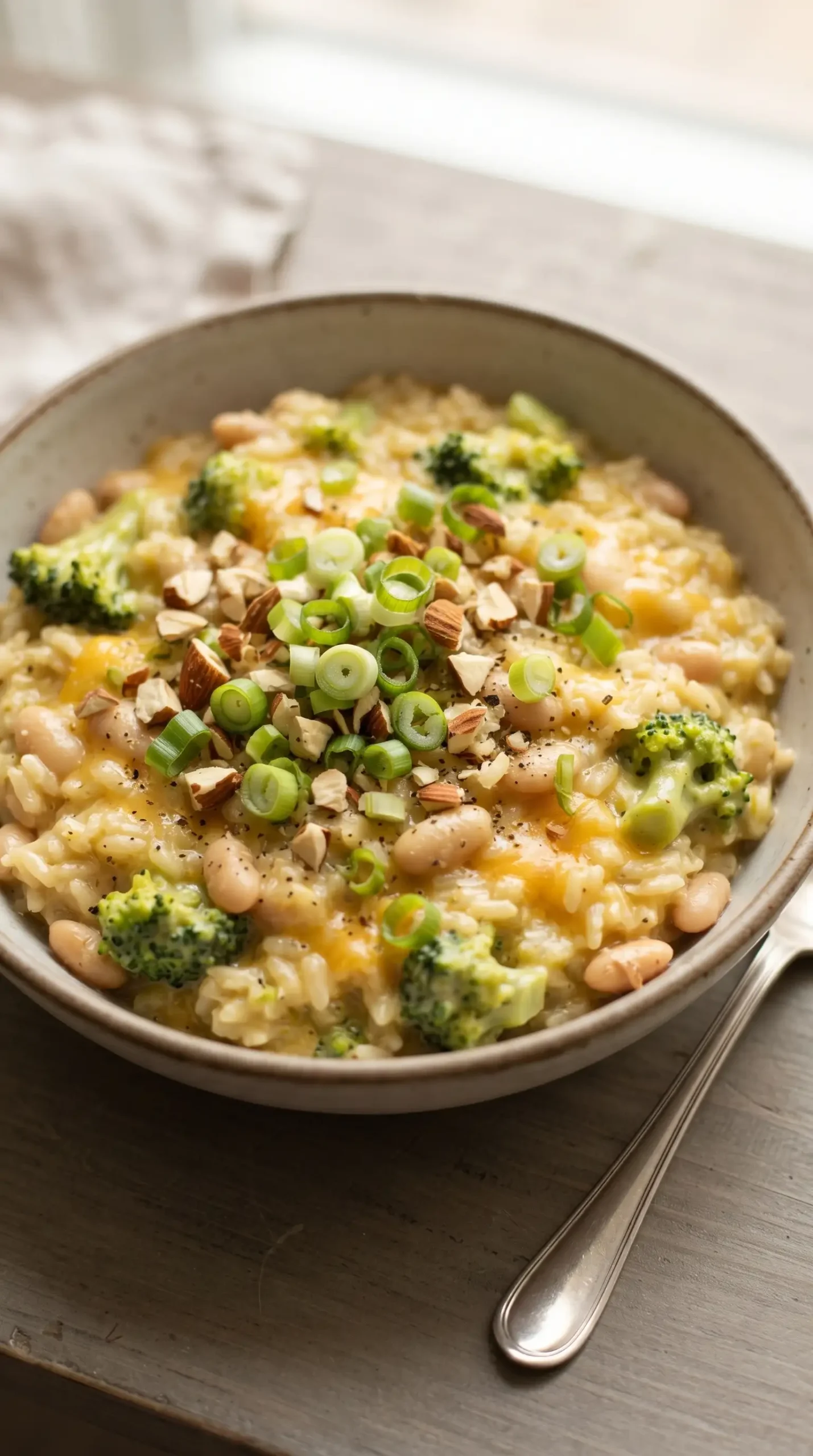
Crushed almonds work best as a finishing element because they stay separate from the creamy mixture until serving. Their crunch is most noticeable when sprinkled over the top instead of stirred through the pan, where moisture would soften them.
Sliced green onions provide a contrasting fresh note and a little visual color. Add them after the cheese has melted so their texture remains distinct. If the dish needs more seasoning at the table, a final adjustment of salt and pepper can be made after tasting the combined rice, beans, broccoli, and sauce.
Serving Broccoli Cheese Rice Without Losing Its Texture
Serve the rice while the cheese is still melted and the mixture remains creamy. As it stands, the sauce will naturally become firmer, so a dish that looks slightly loose in the pan can settle into a more cohesive texture after serving. Keep the almonds and green onions available for the surface so each portion receives some of the contrasting finish.
Useful Variations Stay Close to the Original Balance
Changing the supporting ingredients is easiest when the creamy structure remains intact. Different mild white beans can work if they have a similar soft texture, although the supplied white beans are a natural match for the cheddar sauce. Broccoli also remains the defining vegetable, so substitutions should account for how much moisture and cooking time another vegetable may require.
- Milk adjustment: Add a little more when the rice absorbs the sauce quickly and the mixture becomes too firm.
- Broth adjustment: Use it when extra savory moisture is needed without adding more dairy.
- Cheese finish: Keep part of the cheddar for the top so the surface becomes visibly melted and distinct.
Seasoning can also be adjusted after everything is combined. The butter, garlic, cheddar, and beans already create a savory foundation, while the green onions and almonds add their own finishing character. Taste before adding more salt so the seasoning reflects the completed dish instead of only one component.
For a version with more pronounced texture, retain several larger broccoli florets and use a generous scattering of crushed almonds at serving. Those small choices change the eating experience without altering the basic structure of the broccoli cheese rice.
Broccoli Cheese Rice Comes Together Best When Texture Leads the Decisions
Bright broccoli, distinct rice grains, intact beans, and a sauce that clings without becoming stiff are the clearest signs that the components have been brought together well. The most important decisions happen around moisture and heat: cool the broccoli quickly, build the almond-meal sauce gradually, and loosen the combined mixture only as needed.
Once those textures are under control, broccoli cheese rice becomes a flexible, satisfying meal built from straightforward ingredients. The cheddar provides richness, the white beans add substance, and the almonds and green onions give the creamy rice a fresh finish with a useful contrast in every serving.
Broccoli Cheese Rice Questions About Texture and Storage
Can I use another type of rice?
Yes, although the texture will change. Brown rice provides the chewy, substantial base intended for the dish, while another cooked rice may soften more quickly or require less added liquid. Whatever rice you use, adjust the broth or milk gradually after combining it with the sauce.
Why did my cheese sauce become too thick?
Almond meal creates a naturally thick starting base, and cheddar adds further body as it melts. If the mixture becomes too thick, whisk or stir in a small amount of milk or broth until it reaches a creamy consistency that can coat the rice without becoming runny.
Can the broccoli be prepared without an ice-water bath?
You can cool it by another method, but the cold-water step is particularly useful here because it quickly stops the brief blanching process. Without rapid cooling, the florets can continue cooking from their residual heat and become softer than intended before they are mixed into the rice.
How can I keep the white beans from breaking apart?
Drain them well and fold them into the rice mixture gently after the sauce has been prepared. Avoid prolonged stirring once everything is combined, especially after the remaining cheddar is added and melted over the top.
Can I make the dish less rich?
The easiest adjustment is to use the sauce and cheese thoughtfully while preserving enough liquid for the rice to stay cohesive. You can also emphasize the broccoli, white beans, green onions, and almonds in each serving so the richness of the cheddar and butter is balanced by the other textures and flavors.
Broccoli Cheese Rice with White Beans and Green Onions
Ingredients
Method
- Cook the brown rice according to the package directions.
- Bring enough water to cover the broccoli to a boil in a small pot. Add the broccoli florets, cook for 1 minute or until bright green, then remove from heat. Drain and place the broccoli in very cold water to stop the cooking process.
- Chop the cooked broccoli into small pieces while keeping a few larger florets for texture.
- Melt the butter in a deep pot. Add the garlic and sauté for about 1 minute until fragrant.
- Add the almond meal and salt, then cook for 2-3 minutes until the mixture becomes thick and clumpy.
- Gradually add the milk, whisking after each addition to smooth the mixture. Simmer until the sauce thickens slightly.
- Stir in half of the shredded cheddar cheese until melted.
- Combine the chopped broccoli, cooked rice, white beans, and additional broth or milk as needed with the cheese sauce. Stir until evenly combined.
- Sprinkle the remaining cheese over the mixture and cover the pan until the cheese melts.
- Finish with crushed almonds and sliced green onions, then adjust seasoning with additional salt and pepper if needed.