
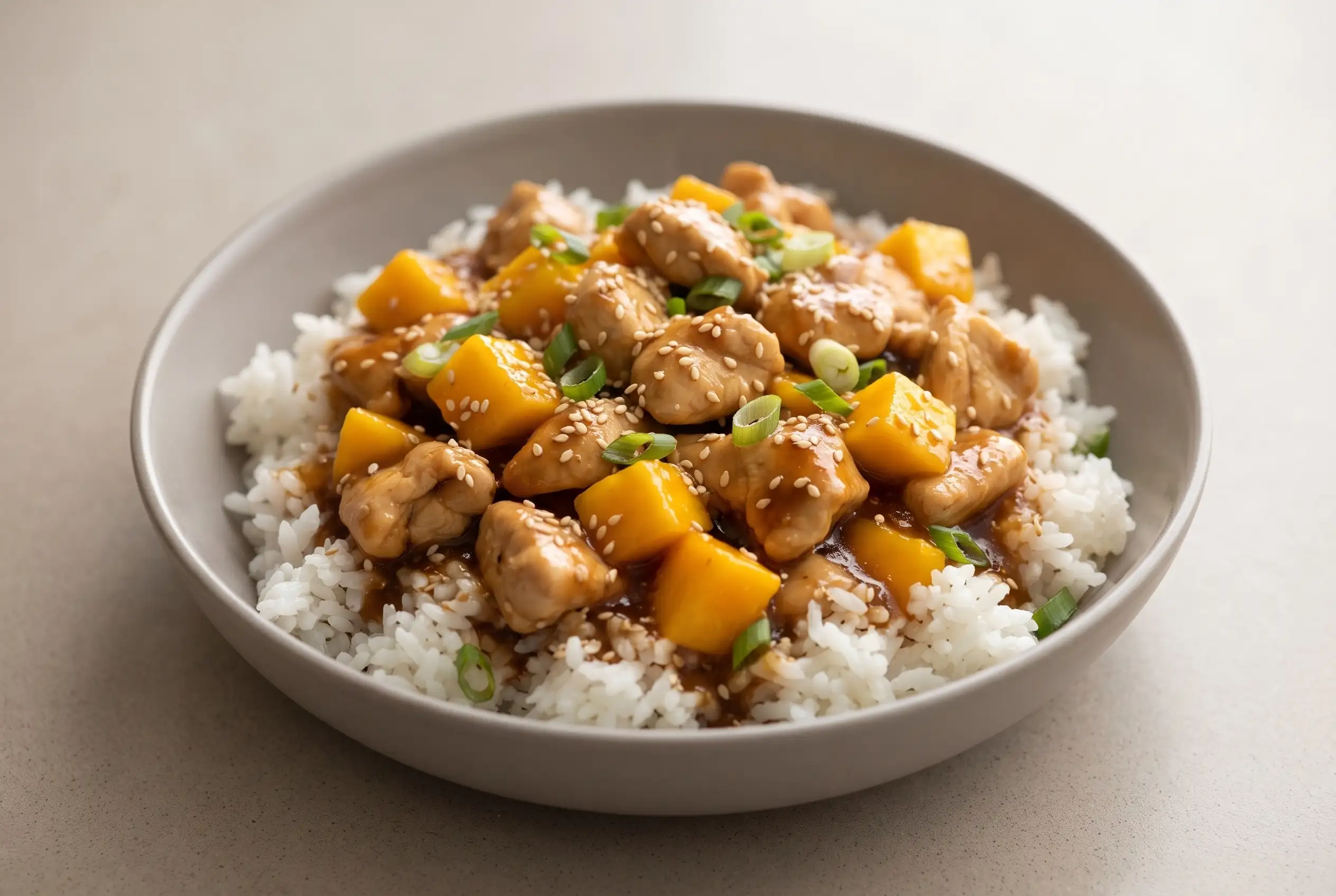
Mango chicken teriyaki brings together savory soy sauce, naturally sweet dates, juicy mango, garlic, ginger, and a light sesame finish in a skillet meal that feels far more involved than it is. The sauce is blended until smooth, the chicken gets a quick flour coating for better browning, and frozen or fresh mango goes in near the end so the fruit stays recognizable. Served over rice, the result lands somewhere between a glossy teriyaki dinner and a bright fruit-forward stir-fry.
What makes this 30 minute mango chicken teriyaki especially useful is the way several decisions can be handled while the rice cooks. The sauce can be prepared ahead within the cooking window, the chicken only needs a light coating, and the mango does not require elaborate preparation. A few finishing touches sesame seeds, green onions, sesame oil, fish sauce, or lime let you shift the flavor without changing the basic cooking method.
Dates give the teriyaki sauce its smooth sweetness
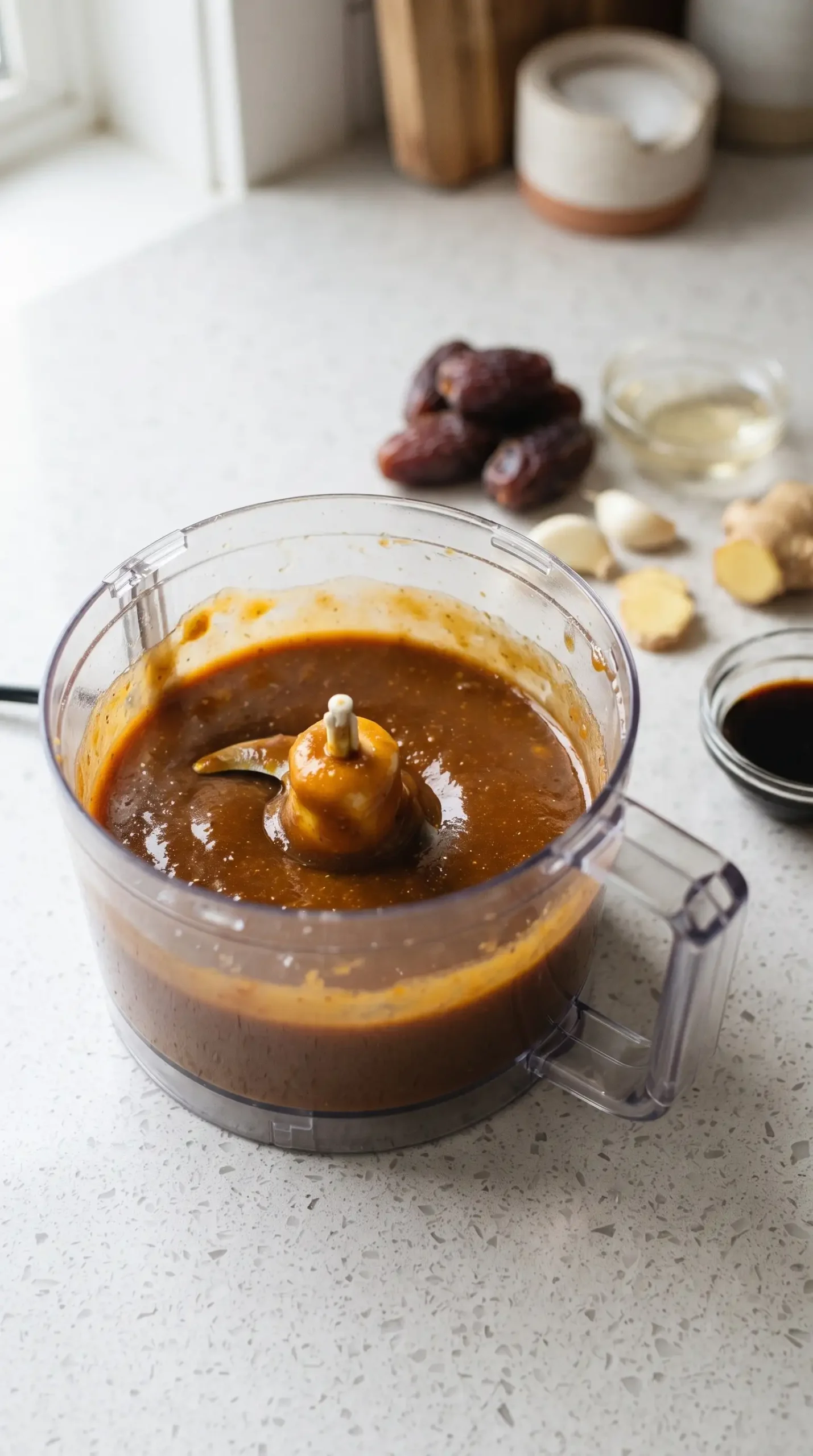
Soaked Medjool dates are more than a sweetener here. Once blended with their soaking water, soy sauce, rice vinegar, garlic, and ginger, they create a thick, cohesive base with enough body to cling to chicken and rice. Blending until very smooth matters because larger pieces of date can leave the sauce uneven and make the finished texture less polished.
Rice vinegar keeps the sweetness from becoming flat, while reduced-sodium soy sauce supplies the deep salty character expected from teriyaki-style sauce. Fresh ginger and garlic sharpen the mixture before it reaches the pan. Together, those ingredients mean the sauce does not need a long ingredient list to taste layered.
If sugar is your preferred substitute for the dates, the sauce needs a different handling approach. Blend the sauce ingredients as directed, then simmer the sweetened mixture gently until the sugar dissolves and the sauce thickens before it joins the chicken. That extra step helps the texture become cohesive instead of leaving the sauce thin or unevenly sweet.
Mango timing keeps the fruit distinct
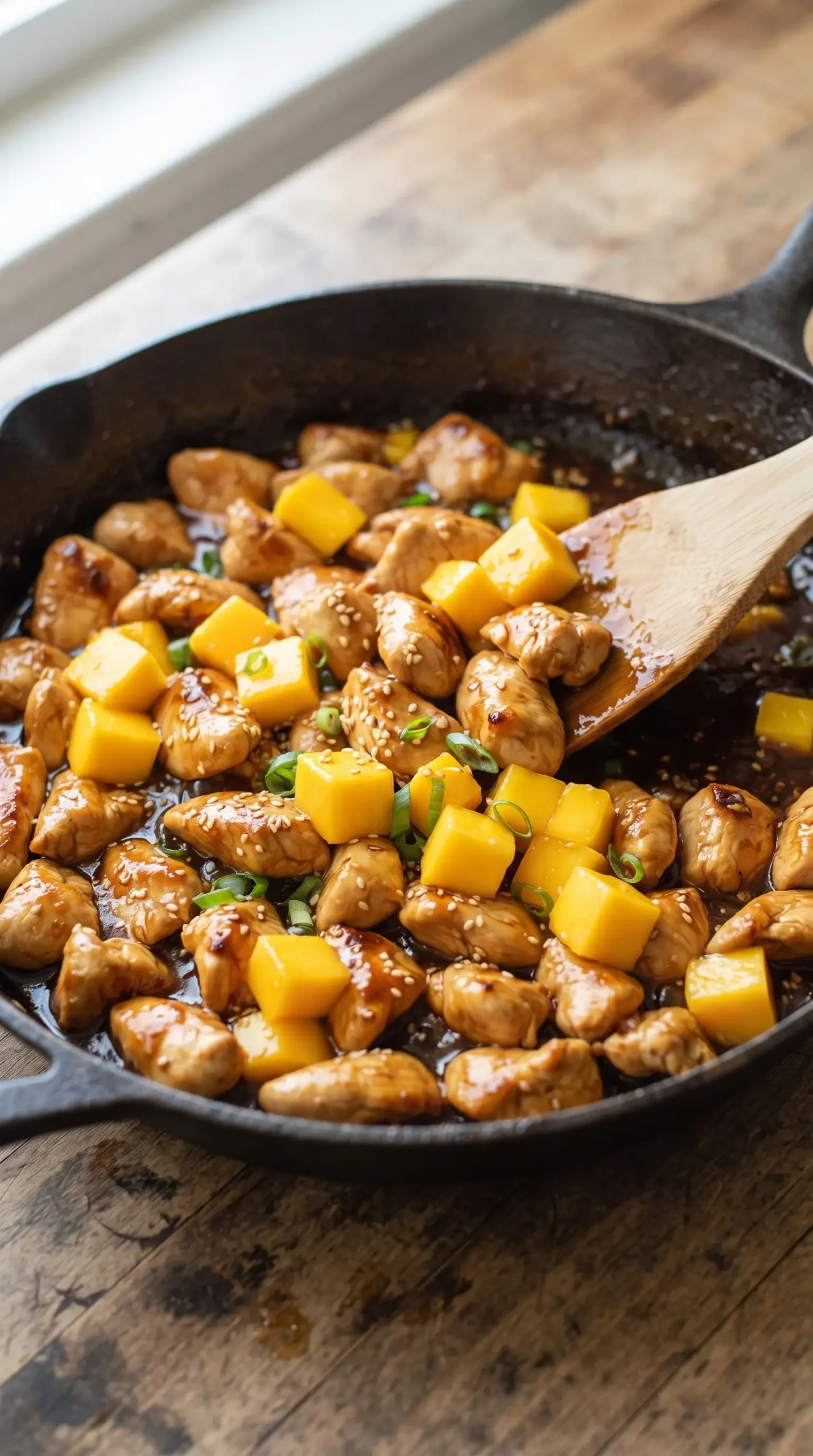
Mango works best when it has enough time to warm through and pick up some sauce without disappearing into it. Adding the chunks after the chicken has already simmered gives the fruit a shorter cooking period and preserves its recognizable pieces. Frozen mango can go straight into the pan, while fresh mango works as well when cut into similarly sized chunks.
- Frozen mango: Add the chunks directly and allow them to heat through during the covered finish.
- Fresh mango: Cut it into substantial pieces so it can hold its shape as the sauce finishes.
- Extra vegetables: A smaller amount of chicken leaves more sauce available to coat added vegetables and rice.
Chicken size controls browning and sauce coverage
Bite-sized chicken pieces make the short skillet cooking time practical. Keeping the pieces reasonably similar in size also helps them brown and cook more evenly. A light flour coating gives the surface something for the sauce to cling to, but a heavy coating would work against the quick stir-fry character of the dish.
| Chicken choice | Best use | What to watch |
|---|---|---|
| More chicken | A fuller chicken-to-sauce balance | Use enough pan space for the pieces to brown instead of crowding them. |
| Less chicken | Adding vegetables while keeping plenty of sauce | Expect a more sauce-forward serving over rice. |
| Uniform bite-sized pieces | Even cooking in the short skillet window | Avoid mixing very large and very small pieces in the same batch. |
A hot pan builds the savory base before the sauce arrives
Medium-high heat is important during the onion and chicken stage because the pan needs enough energy to develop Maillard browning before liquid is introduced. Thinly sliced onion can soften and develop color quickly, creating a savory foundation for the sauce. Once the chicken enters, stirring keeps the pieces moving without turning the process into a prolonged simmer.
Once the sauce and chicken broth are added, the cooking conditions change. Lowering the heat helps prevent splattering from the hot pan meeting the liquid. The broth is also the practical adjustment point if the blended sauce seems too thick to move easily around the chicken.
Covering the pan during the chicken simmer creates a gentler, enclosed cooking environment. That matters because the chicken needs time to cook through after the initial browning. The sauce should remain fluid enough to surround the pieces while gradually becoming more integrated with the flour coating.
After mango goes in, another covered simmer finishes the dish without requiring aggressive stirring. A gentle stir is enough to distribute the fruit through the sauce. If the mixture becomes difficult to move, a little more broth can loosen it while preserving the overall flavor balance.
Rice turns the extra sauce into part of the meal
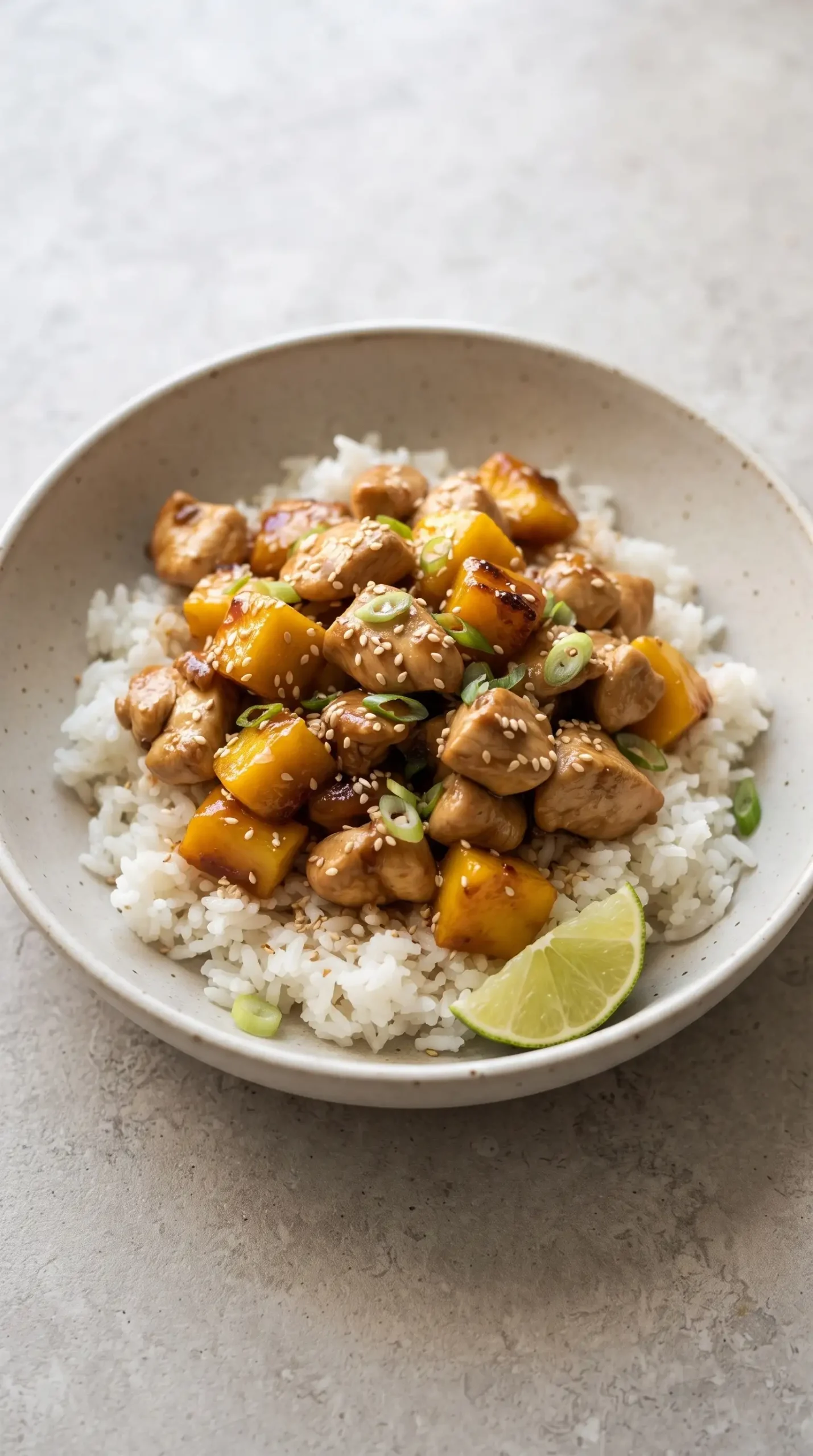
Cooked rice is particularly well suited to mango chicken teriyaki because the sauce naturally spreads beyond the chicken. Starting the rice early lets it finish while the skillet is underway, and serving the chicken over it gives the glossy sauce somewhere to collect. White rice is an uncomplicated choice, but the recipe does not depend on a specific variety.
Sesame toppings can shift the finished flavor
Sesame seeds add a simple nutty texture, while sesame oil contributes a more pronounced toasted aroma. Green onions bring freshness and a crisp contrast to the soft chicken and mango. Lime juice can sharpen the finished dish, especially when the sweetness of the dates and mango is prominent.
Fish sauce is another optional finishing ingredient, but it should be used sparingly because the sauce already contains soy sauce. A small amount can deepen the savory character without becoming the dominant flavor. These toppings are best treated as finishing adjustments, not ingredients that need to be cooked into the main sauce.
| Finishing choice | Useful when | Effect at the table |
|---|---|---|
| Sesame seeds | You want texture and a mild nutty note | Adds crunch without changing the sauce much. |
| Green onions | The skillet tastes rich or sweet | Brings a fresh, crisp contrast. |
| Lime juice | The fruit and sauce need more brightness | Adds acidity at serving time. |
| Sesame oil | You want stronger sesame character | Provides concentrated toasted aroma. |
| Fish sauce | You want extra savory depth | Intensifies umami, so a restrained amount is appropriate. |
Flour coating needs to stay light on the chicken
A shallow dish makes it easier to dust each chicken piece evenly with flour, salt, pepper, and chili powder. The coating should be thin enough that the chicken still behaves like a stir-fried ingredient once it reaches the pan. Excess flour can make the surface pasty when the sauce is added and can also encourage the pan to become crowded with loose coating.
Chili powder provides a modest background warmth that works with the sweet mango and date-based sauce. Because the seasoning is applied with the flour, distributing it evenly matters more than using a large quantity. Every piece should receive a light coating instead of having isolated pockets of spice.
Three common mango chicken teriyaki mistakes to avoid
One frequent problem is adding the liquid while the pan is still at its highest heat. Hot oil, browned chicken, and a thin sauce can splatter when they meet. Turning the heat down before adding the sauce and broth makes that transition easier to control.
Another issue comes from overcooking the mango. If the chunks spend the entire cooking period in the pan, they have more opportunity to soften into the sauce. Holding them back until the chicken has already simmered gives them a more distinct presence.
Very thick sauce is another correctable problem. The blended date mixture is naturally substantial, and the flour coating contributes additional thickening once it meets the liquid. Adding broth gradually gives you control without diluting the sauce all at once.
Finally, uneven chicken pieces can produce uneven results. Small pieces may finish well before larger ones, leaving you with inconsistent texture. Cutting the breasts into similarly sized bites before dredging makes the short cooking window much easier to manage.
Broth is the easiest way to tune the sauce in the pan
The blended sauce has enough body to become quite thick as it cooks with coated chicken. Chicken broth gives you a flexible way to control that consistency. Add it with the sauce, then judge the mixture by how easily it moves around the chicken.
A sauce that looks dense and difficult to stir can be loosened with another small addition of broth. The adjustment is most useful before the covered simmer has progressed too far, when the liquid can still distribute evenly throughout the pan.
Sweetness and acidity need to stay in balance
Dates and mango make this a naturally sweet savory dish, so the rice vinegar has an important balancing role. Its acidity keeps the sauce from tasting one-dimensional and helps the soy, garlic, and ginger remain noticeable alongside the fruit.
Lime can provide another layer of acidity at the table. Adding it after cooking gives you control over individual servings, which is useful when diners prefer different levels of brightness. A little can make the mango taste more vivid without requiring any change to the sauce itself.
Extra vegetables fit best when the sauce has room to spread
Vegetables can be incorporated when you want a more expansive skillet meal, particularly because the sauce can coat ingredients beyond the chicken. The supplied chicken range allows you to choose whether the pan emphasizes chicken or leaves more sauce available for additions.
Vegetables should be cut with the short cooking window in mind. Pieces that need substantial cooking time would compete with the chicken for attention in the pan. The most practical additions are those that can soften or heat through during the existing stir-fry and covered-simmer stages without requiring a separate long cooking process.
Leftovers depend on keeping the components moist
Cooked chicken and sauce can be refrigerated for later meals, with rice stored alongside or separately according to how you prefer to reheat it. The sauce is especially useful for carrying moisture into the next serving, since reheating can otherwise make cooked chicken feel drier.
When reheating, gentle heat is preferable to an aggressive blast that could toughen the chicken while the sauce is still warming. If the sauce has tightened in storage, a small splash of broth can restore a more spoonable consistency before or during reheating.
Mango chicken teriyaki works best when sauce consistency stays adjustable
The blended date sauce, browned chicken, and mango become most cohesive when the liquid level remains easy to control throughout cooking. Starting with a smooth sauce, lowering the heat before adding liquid, and using broth when the pan needs loosening keeps the mixture from becoming either watery or overly dense.
That flexibility also makes the dish adaptable at serving time. Rice absorbs the sauce, mango contributes sweetness and softness, and sesame, green onion, lime, or a restrained touch of fish sauce can shift the final balance. The key is preserving enough sauce to coat the chicken and rice without letting the fruit lose its identity.
Mango chicken teriyaki questions about sauce, fruit, and reheating
Can fresh mango replace frozen mango?
Yes. Fresh mango works in the same late-cooking role, provided the pieces are cut into substantial chunks that can warm through without immediately breaking apart. The important distinction is timing: mango should enter after the chicken has already had its main simmer so the fruit remains noticeable in the finished dish.
How can I make the teriyaki sauce thicker?
Letting the blended date mixture simmer gently allows it to become more concentrated and gives the sweetener time to integrate fully. If using sugar in place of dates, a gentle simmer before combining the sauce with the chicken is particularly useful. Avoid trying to solve excessive thickness by adding more flour to the chicken coating; broth is the cleaner adjustment once everything is in the pan.
Why does the sauce seem too thick after adding the chicken?
The flour coating on the chicken can contribute body as it cooks, while the blended dates already make the sauce substantial. Add chicken broth gradually and stir until the sauce moves easily around the pieces. Small adjustments are preferable because you can always add more liquid, whereas correcting an overly diluted sauce takes longer.
Can I make chicken mango teriyaki with rice ahead of serving?
The chicken and sauce can be prepared ahead and gently reheated, while rice can be cooked separately so it does not absorb all of the sauce during storage. Keep the mango in the cooked mixture, then warm everything gently. If the sauce has thickened in the refrigerator, loosen it with a small amount of broth.
What can I use instead of dates?
Sugar is the stated alternative, with the sauce requiring a brief gentle simmer so the sugar dissolves and the mixture thickens before it is used with the chicken. That approach changes the handling of the sauce, so it is worth allowing the extra simmering step instead of simply stirring granulated sugar into the finished skillet.
How do I keep the chicken from becoming dry?
Cutting the chicken into evenly sized bite-size pieces helps it cook at a similar rate, while the initial browning should remain brief because the chicken continues cooking during the covered simmer. Keeping the sauce sufficiently fluid also surrounds the pieces with moisture as they finish. Once the chicken is cooked through, avoid extending the simmer unnecessarily.
Mango Chicken Teriyaki with Sesame Seeds and Dates
Ingredients
Method
- Cook the rice if serving the chicken with rice, starting it early so it is ready when the skillet meal is finished.
- Blend the soaked dates with their soaking water, soy sauce, rice vinegar, garlic, and ginger in a food processor or blender until the sauce is completely smooth. Set aside.
- Thinly slice the onion. Cut the chicken breasts into bite-sized pieces. Mix the flour, salt, pepper, and chili powder in a shallow dish, then lightly coat each chicken piece in the flour mixture.
- Heat the oil in a large pan over medium-high heat. Add the onions and stir-fry for a few minutes.
- Add the coated chicken and stir-fry for a few minutes until the pieces are browned.
- Reduce the heat to prevent splattering, then add the sauce and chicken broth. Add more broth if needed to loosen the sauce. Cover and simmer for 10 minutes.
- Add the mango chunks, stir to distribute, cover, and simmer for another 5-10 minutes.
- Serve the mango chicken teriyaki over rice and finish with sesame seeds, green onions, sesame oil, fish sauce, lime juice, or other listed toppings as desired.