
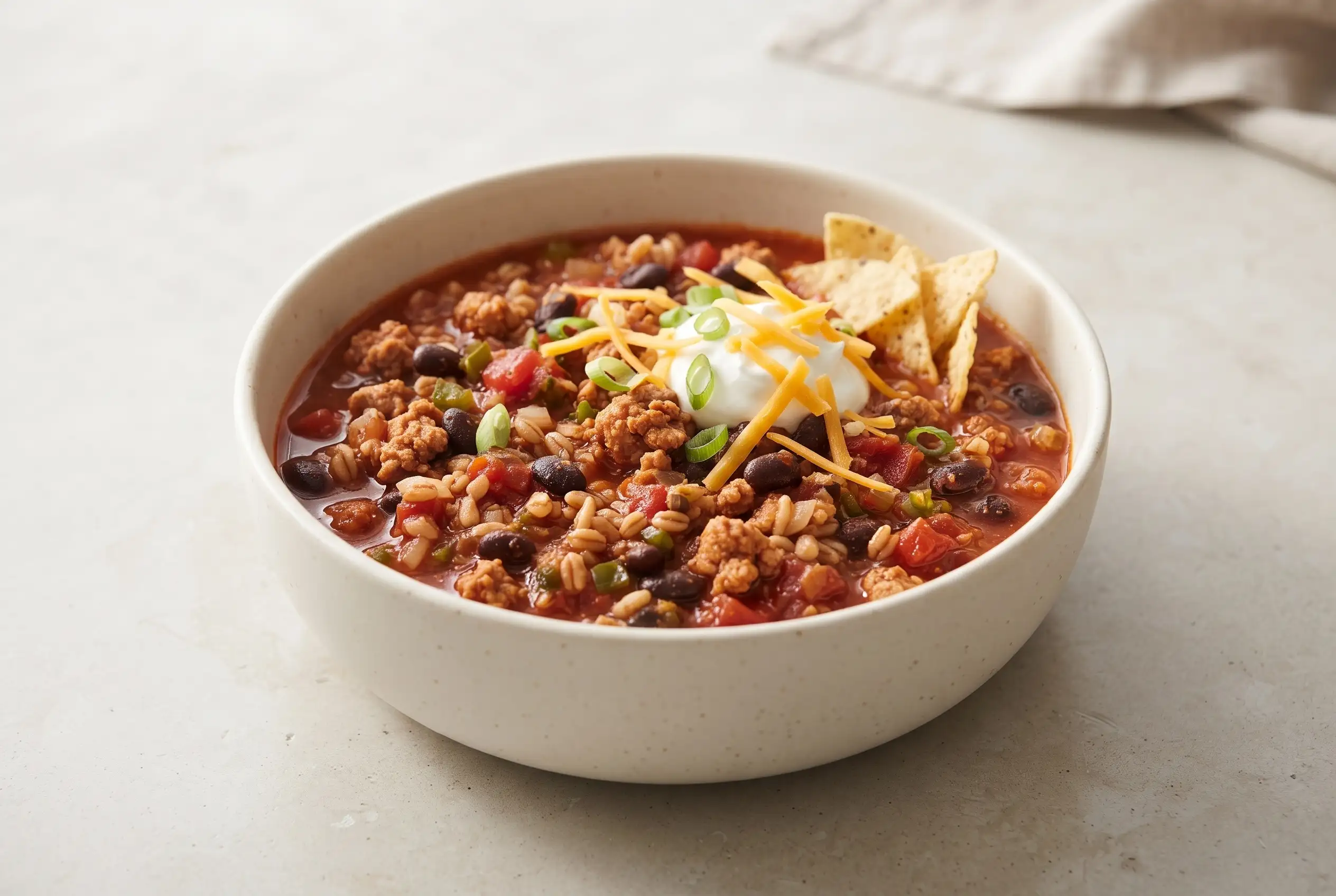
Turkey chili can be hearty without becoming a long, slow-simmered project. Here, ground turkey, black beans, fire-roasted tomatoes, fresh salsa, and jalapeños build a deeply savory base while ancho chili powder gives the pot a mellow, smoky chile character. Farro cooks alongside the chili and is stirred in at the end, making the finished bowl especially substantial. The result lands between a classic weeknight chili and a grain-forward one-pot meal, with enough heat to qualify as spicy turkey chili while still leaving room for cooling toppings.
Farro Gives This Turkey Chili Its Hearty Finish
Farro is the unusual element that changes the texture of the finished chili. Instead of serving the grain underneath or beside the stew, the cooked farro is folded directly into the tomato-and-turkey mixture. Its chewy texture holds up against the beans and tender meat, so each spoonful has more substance than a chili made entirely from soft ingredients.
Cooking the farro separately also gives you useful control. It absorbs the chicken broth and water on its own, so the chili base can be seasoned and adjusted without having to account for a grain that is still soaking up liquid. When the farro is ready, you can judge the consistency of the chili before adding it.
For a separate batch, you can cook farro in boiling water until it reaches the chewy texture you want, then drain the excess water before folding the grain into the chili.
Brown rice or quinoa can take the same role if farro is not available. Keep in mind that those grains can behave differently during cooking, so follow the cooking directions appropriate for the grain you choose. The important texture cue is that the grain should be cooked and ready to fold into the chili, not added dry to the tomato mixture.
Ancho Chili Powder Sets the Flavor Direction
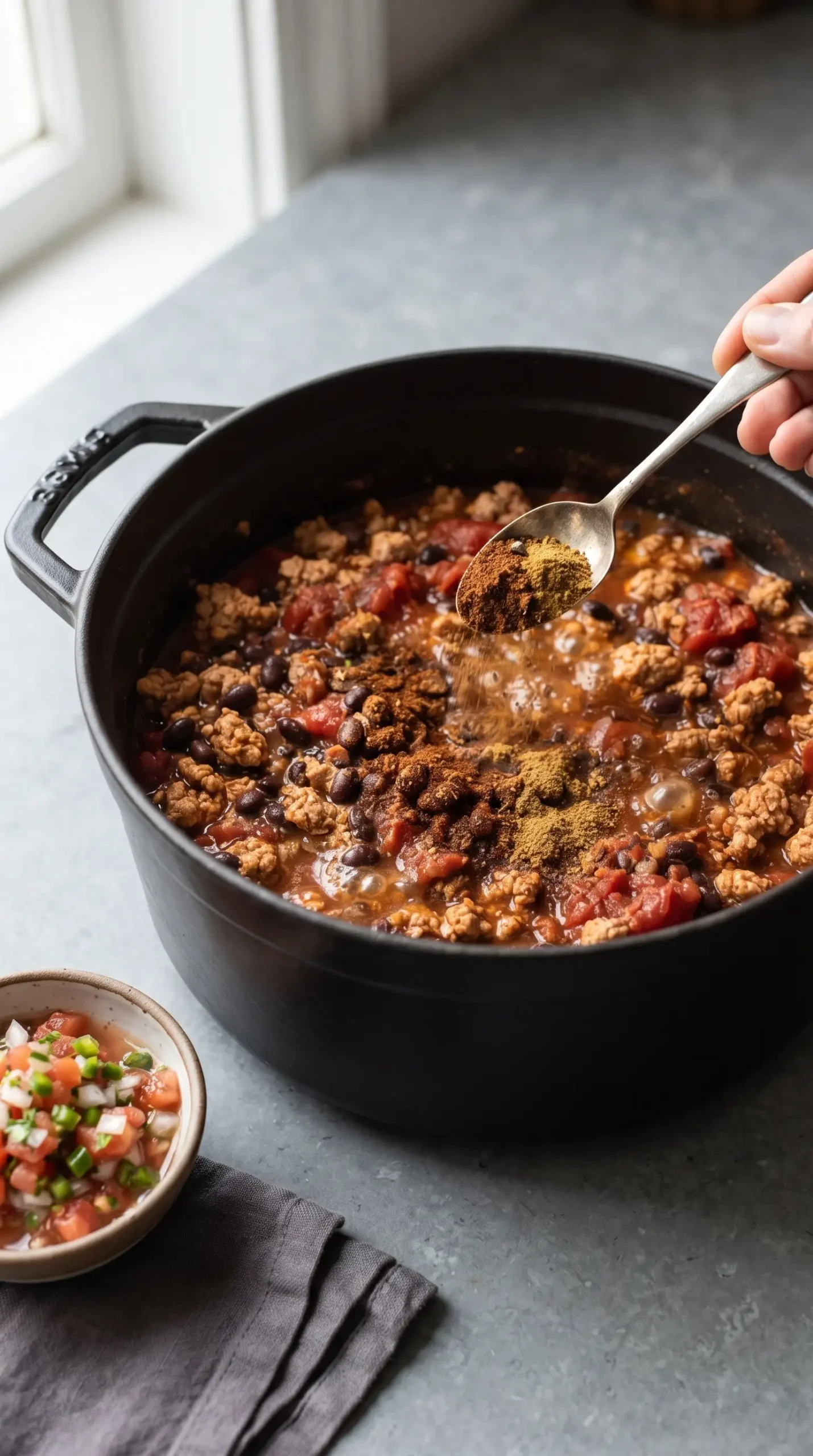
Ancho chili powder brings a deeper, rounder chile flavor than the heat alone would suggest, while regular chili powder and cumin reinforce the savory profile. Using both types of chili powder keeps the pot from tasting one-dimensional, especially alongside the smoky notes from the fire-roasted tomatoes.
Ground Turkey Needs Proper Browning Before the Liquid
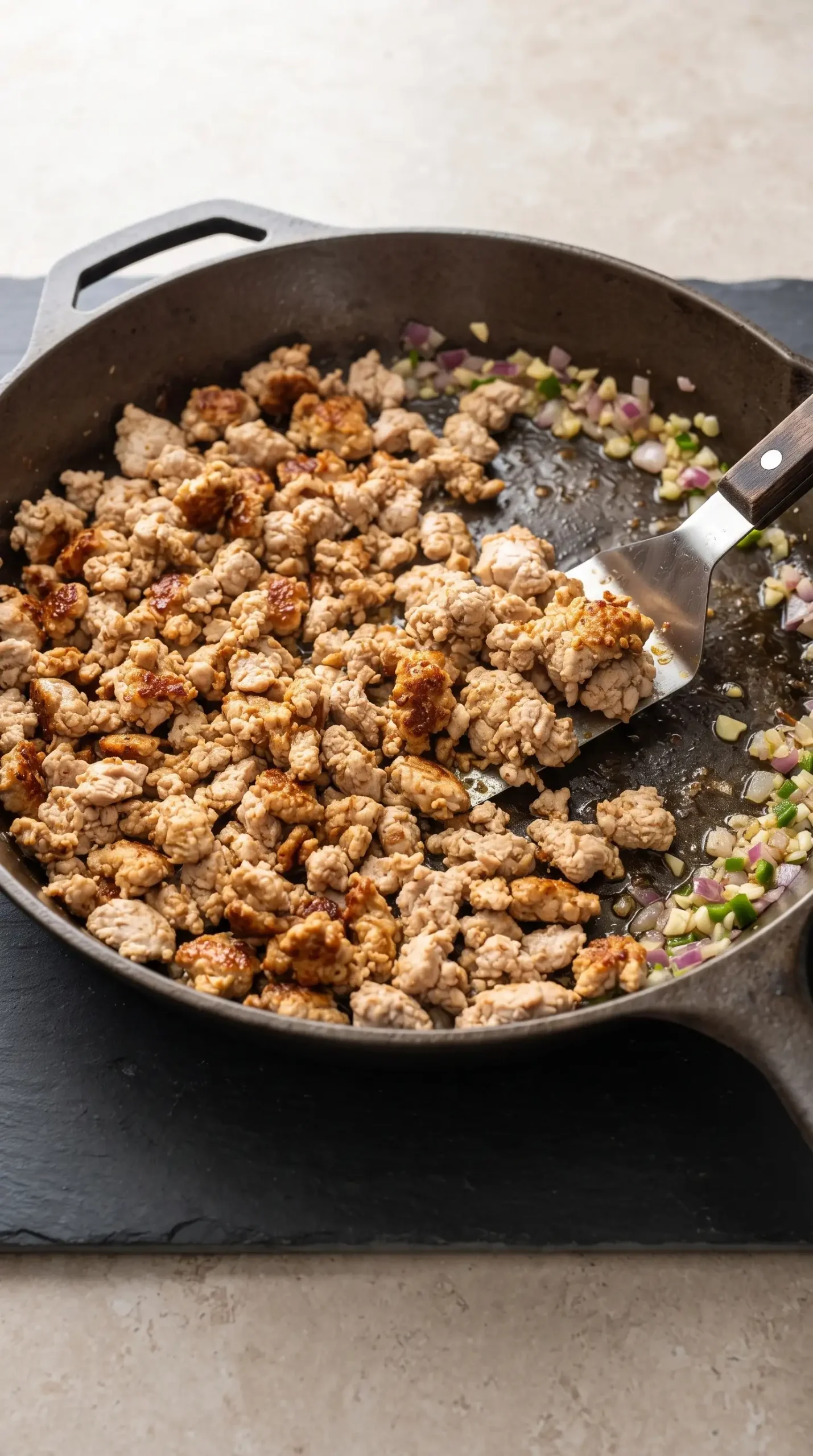
Ground turkey should be cooked over medium-high heat until it is browned and broken into small crumbles before the tomatoes go into the pot. That stage matters because the meat has a chance to develop a more pronounced cooked flavor instead of simply poaching in the tomato mixture.
Frequent stirring is useful once the turkey starts breaking apart, but constant aggressive stirring can make it harder to develop browned spots. Use the edge of a sturdy spoon or spatula to separate larger pieces, then give the meat enough contact with the hot pan to color.
Earlier in the pan, the onion, garlic, and jalapeños need only a brief sauté. Garlic can scorch quickly, so keeping it moving during those first minutes protects the fresh aromatics while the onion begins to soften. Once the turkey is added, the larger volume of ingredients makes the pan easier to manage.
Fire-Roasted Tomatoes and Fresh Salsa Build the Base
Fresh salsa does more than add another tomato element. It brings the onion, chile, and seasoning already present in the salsa into the pot, helping the turkey and beans pick up flavor before the crushed tomatoes are added. A fresh-style salsa works particularly well because its brighter character can keep the finished chili from tasting flat after simmering.
Fire-roasted crushed tomatoes provide the bulk of the sauce and introduce a lightly smoky character that works naturally with ancho chili powder. Since tomato products vary in thickness, the mixture may look thicker at one point and looser at another. The reserved water gives you a way to make that adjustment without changing the seasoning balance.
Letting the tomato mixture simmer briefly after the seasonings and salsa go in helps the flavors come together before the crushed tomatoes and additional water finish the base. There is no need to chase a long simmer when the ingredients are already cooked or quickly cooked; the useful task is bringing the flavors and texture into balance.
Jalapeño Heat Can Be Tuned Before the Pot Simmer
Removing the ribs and seeds from the jalapeños reduces their heat, while leaving them intact produces a hotter bowl. Because the jalapeños are minced and sautéed with the onion and garlic, their flavor becomes part of the foundation instead of sitting as a raw accent on top.
Reserved Water Controls the Chili’s Thickness
The two cups of remaining water are best treated as an adjustment tool instead of an automatic amount. Start with enough to loosen the tomato mixture, then add more only if the chili looks overly dense. The correct consistency is thick enough to mound slightly on a spoon while still moving easily when stirred.
Farro will change that texture once it is folded in. Cooked grains absorb some of the surrounding liquid, so a chili that looks slightly looser before the farro is added can finish at a more balanced consistency. Adding all of the reserved water too early can leave you with a thinner pot that needs more reduction.
Watch the surface as the chili simmers. A thick, bubbling mixture that barely moves when stirred needs a little loosening, while a very fluid mixture benefits from a little more simmering. Small adjustments are easier to make than trying to correct a large amount of excess liquid later.
Three Texture Checks Keep the Pot on Track
- Turkey: Look for browned, separated crumbles with no visibly raw portions.
- Farro: Check that the grain is tender enough to eat but still pleasantly chewy before folding it into the chili.
- Chili base: Stir after each small addition of water and stop when the tomatoes and beans move easily through the pot without becoming soupy.
Common Spicy Turkey Chili Mistakes to Avoid
Burning the garlic is one easy way to introduce bitterness before the main ingredients arrive. Keep the aromatics moving during their short sauté, and lower the heat if the garlic starts darkening too quickly. The turkey can then brown without carrying scorched flavors from the first stage of cooking.
Overwatering is another common problem. The tomato mixture does not need all of the reserved water simply because it is available. Add it gradually and remember that the cooked farro will absorb some of the sauce after it is folded in. If the chili is already loose before the grain is added, let it simmer briefly and reassess instead of adding more liquid.
Toppings Give Each Bowl Its Own Balance
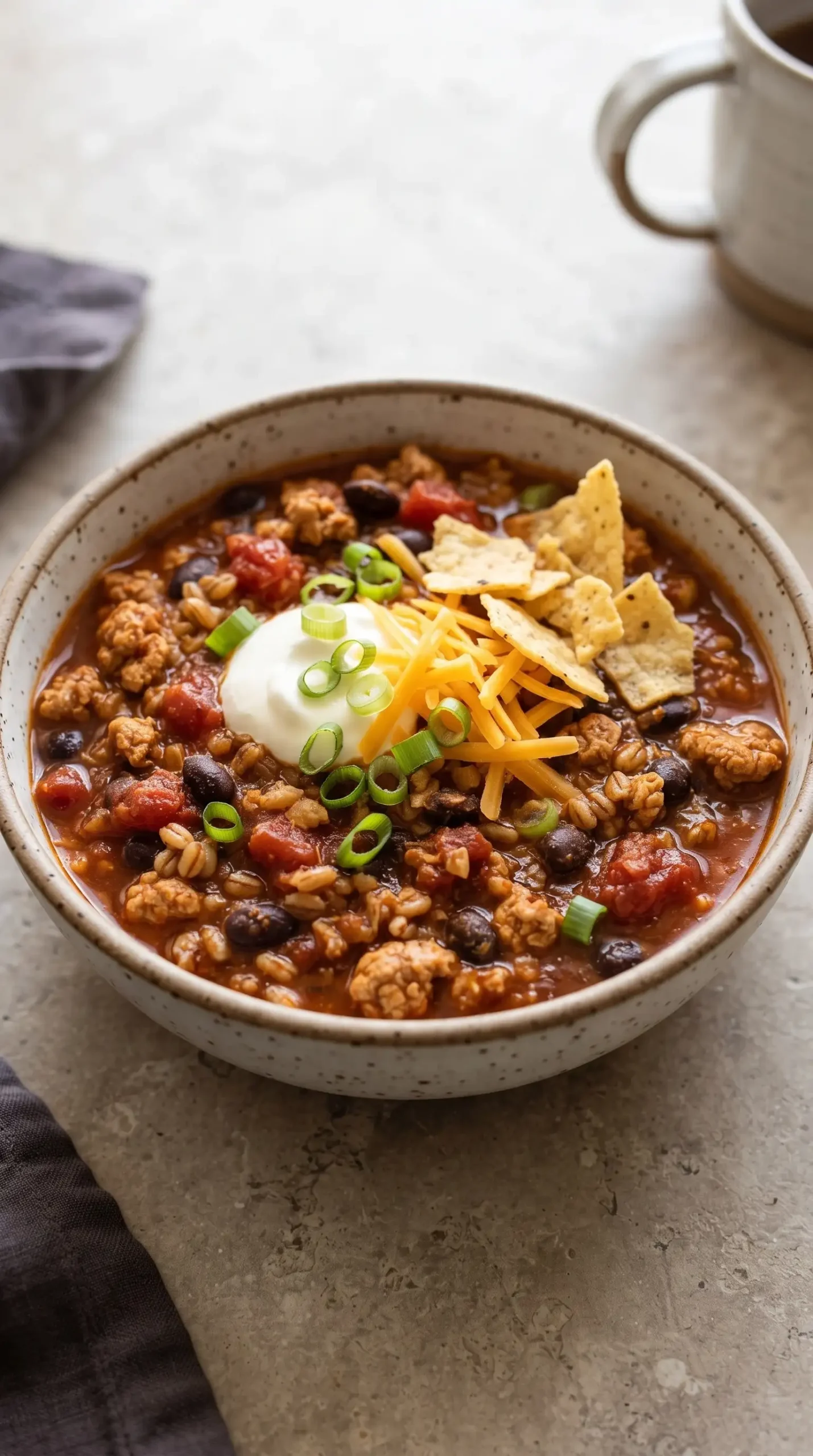
Sour cream, cheese, green onions, and tortilla chips each change the finished bowl in a different way. Sour cream cools the chile heat and adds creaminess, cheese brings richness, green onions provide a fresh bite, and tortilla chips add crunch. They are especially useful with a spicy turkey chili because diners can soften or intensify the experience of each serving without changing the pot.
Simple Swaps Preserve the Shape of the Dish
| Original element | Practical swap | What changes |
|---|---|---|
| Farro | Brown rice | A softer, less chewy grain texture |
| Farro | Quinoa | A lighter grain texture with smaller pieces |
| Jalapeños with seeds and ribs | Jalapeños with ribs and seeds removed | Less chile heat while keeping fresh jalapeño flavor |
| Chicken broth | Vegetable broth | A meat-free cooking liquid while retaining savory depth |
The grain choice is the most noticeable substitution because it changes the texture of the finished chili. Brown rice and quinoa both fit naturally into the same role, but they should be cooked according to their own package or standard cooking instructions rather than assumed to behave exactly like farro.
Leftover Bowls Benefit From Gentle Reheating
As the chili sits, the farro continues to take on moisture from the tomato base, so leftovers may become thicker than the freshly finished pot. Reheat portions gently and loosen them with a small splash of water if the consistency has become too dense.
Keep toppings separate when possible so sour cream, cheese, green onions, and tortilla chips retain their intended textures. Adding fresh toppings after reheating also gives a leftover bowl a brighter contrast against the rich tomato-and-chile base.
Balanced Thickness Makes the Ancho Turkey Chili Work
Cooked farro should meet a chili base that is already properly seasoned and adjusted for thickness. That timing lets the grain absorb some of the sauce without forcing you to compensate for a pot that has become unexpectedly dry or watery. The most useful judgment comes at the point just before combining them: the turkey should be browned, the tomatoes should be integrated, and the liquid should move freely through the beans.
Turkey Chili Questions About Heat and Storage
Can the jalapeños be made milder?
Yes. Remove the ribs and seeds before mincing the jalapeños for a milder version, while still keeping their fresh chile flavor in the aromatic base. You can also use fewer jalapeños if you want their flavor to be present without making heat the dominant feature.
Why does the chili become thicker after the farro is added?
Cooked farro absorbs some of the surrounding liquid as it is stirred into the tomato base. That is why the chili should be adjusted before the grain goes in, with enough looseness to accommodate the farro without leaving the finished mixture dry.
Can brown rice replace the farro?
Brown rice can replace farro in the same general role, and the result will have a softer grain texture. Cook the rice separately according to its normal cooking requirements, then fold it into the prepared chili once it is tender.
How can the chili be thickened if too much water was added?
Let the uncovered chili simmer gently so some of the excess liquid can evaporate. Stir periodically and reassess the consistency as it reduces. Adding the cooked farro afterward will also naturally make the mixture more substantial.
What toppings work best with spicy turkey chili?
Sour cream is particularly useful when the jalapeños make the pot quite hot, while cheese adds richness and green onions bring freshness. Tortilla chips contribute a crisp texture that contrasts with the beans, turkey, tomatoes, and cooked grain.
Spicy Turkey Chili with Black Beans, Tomatoes and Farro
Ingredients
Method
- Bring the chicken broth and 1 cup of water to a boil in a small saucepan. Stir in the farro, cover, and lower the heat to maintain a simmer for about 30 minutes, or until the liquid has been absorbed.
- While the farro cooks, heat the olive oil over medium-high heat. Add the onion, garlic, and jalapeños and sauté for 1-2 minutes, stirring often to prevent the garlic from burning.
- Add the ground turkey to the pan and cook until browned and separated into small crumbles.
- Mix in the black beans, ancho chili powder, chili powder, cumin, salt, and salsa. Simmer for a few minutes.
- Add the crushed tomatoes and use as much of the remaining 2 cups water as needed to reach the desired consistency. Simmer for a few minutes while the farro finishes cooking separately.
- Stir the cooked farro into the chili mixture until evenly combined.
- Top with sour cream, cheese, green onions, and tortilla chips before serving.