
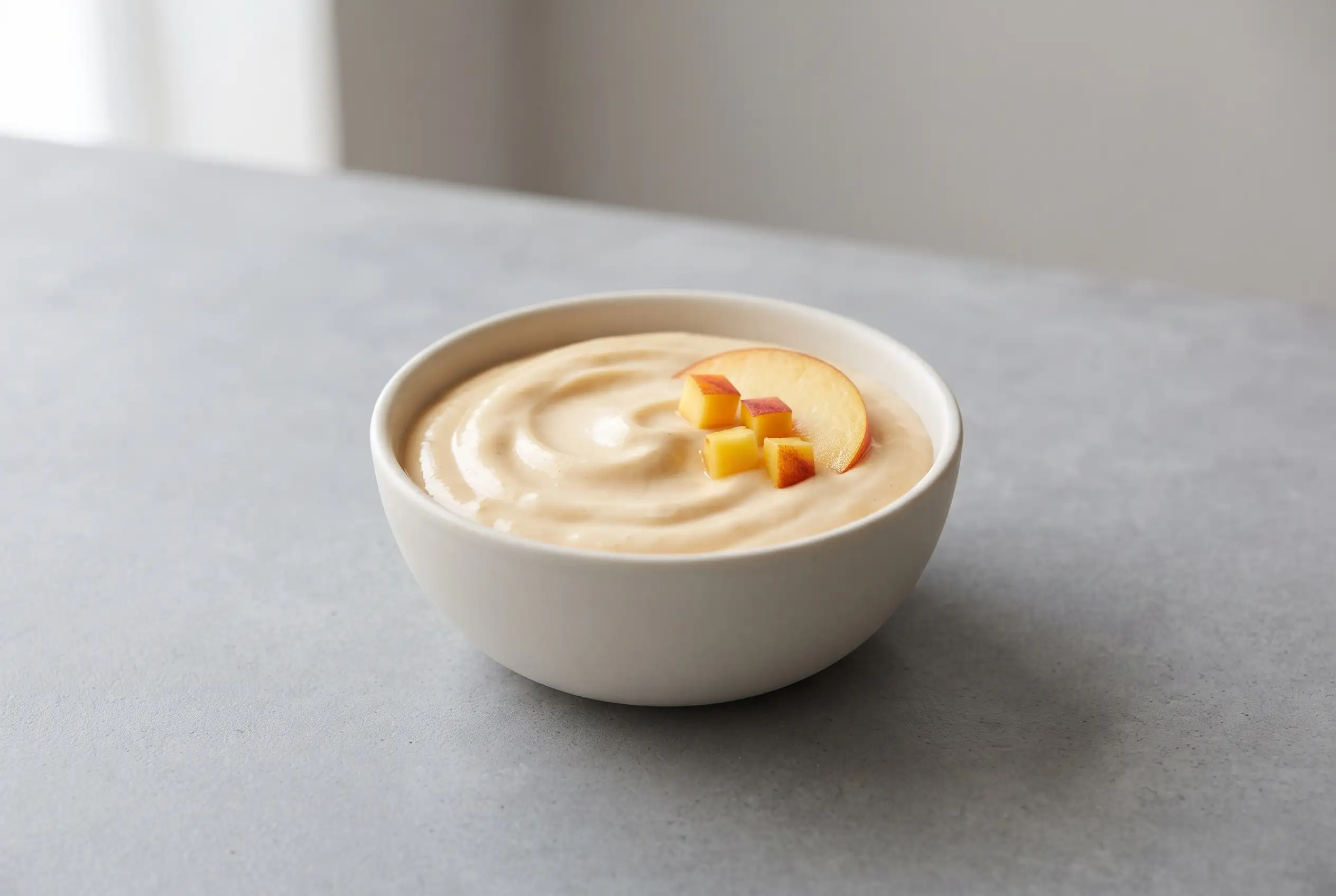
Vegan yogurt can be surprisingly simple when frozen peaches, tofu, cashews, and a little lemon are blended into a creamy, tangy spoonful. This 5 minute vegan yogurt has the character of a chilled peach dessert while using a short ingredient list and no cooking, making it especially useful when you want something quick for breakfast, a snack, or a simple topping.
Frozen peaches set the flavor and chill
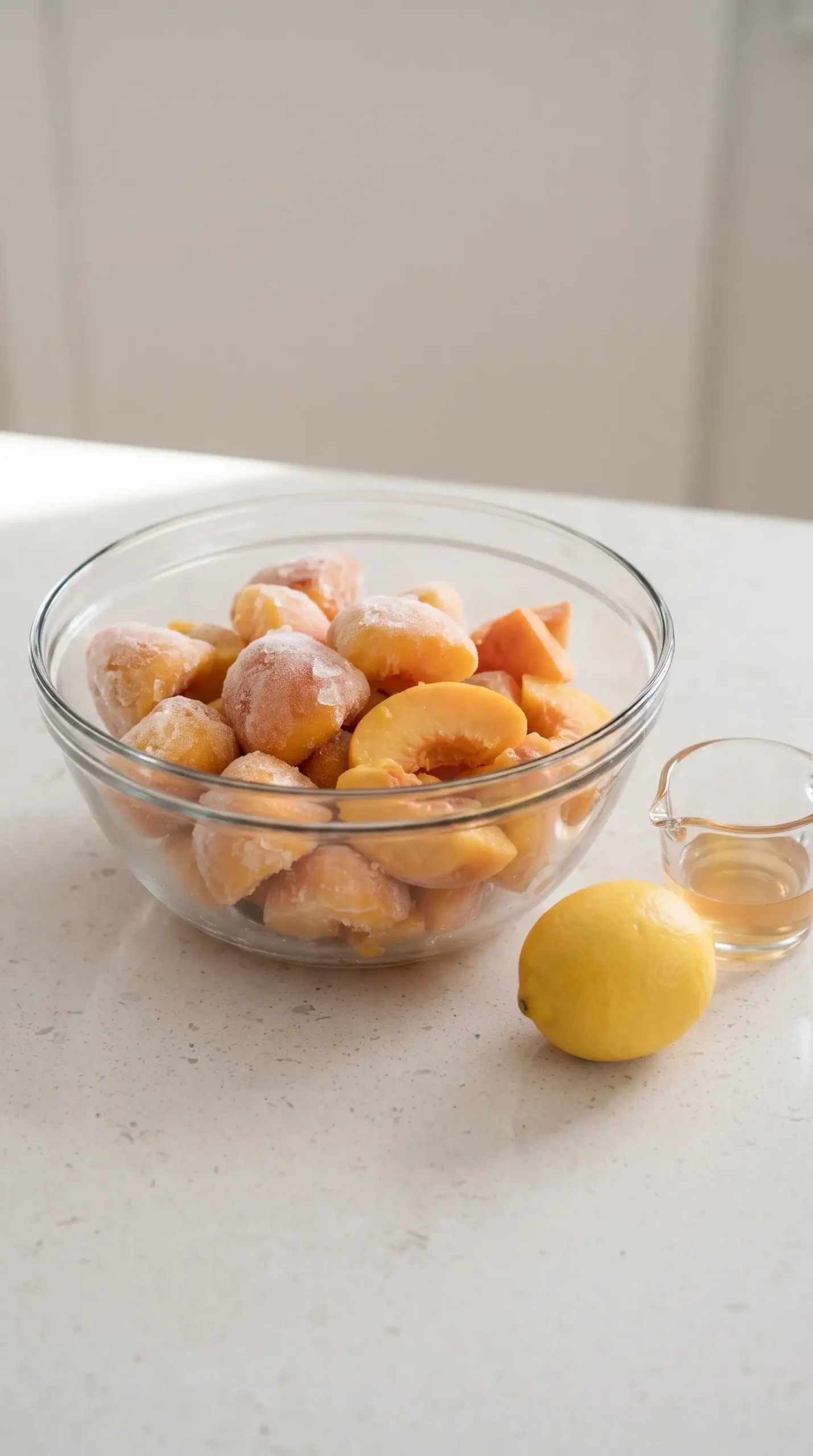
Peaches do more than provide fruit flavor here. Straight from the freezer, they bring a cold, thick texture to the blender, so the mixture can become spoonable without relying on a separate thickening ingredient. Their natural sweetness also works with the liquid sweetener, while lemon juice keeps the finished vegan yogurt from tasting flat.
Peach quality matters because there is little else competing with the fruit. If the peaches taste fragrant and sweet before blending, the finished yogurt will usually need less sweetener. Tart or less flavorful frozen fruit can still work, but tasting the mixture after blending gives you a better basis for adjusting sweetness and acidity.
Thawing is useful when your blender struggles with frozen pieces. Softer peaches move more readily around the blades, which can reduce the need to add liquid. For the thickest texture, however, avoid adding more liquid than necessary once the mixture is moving smoothly.
Cashews and tofu create the creamy base
Cashews bring richness and body, while tofu supplies the soft structure that makes this peach vegan yogurt thick enough to eat with a spoon. Their combination also lets the fruit remain prominent instead of requiring a large amount of added liquid. Because both ingredients disappear into the blend, careful processing is what turns their contrasting textures into one cohesive base.
Tofu texture changes the finished spoonful
Silken tofu and firm tofu both work, but they lead to noticeably different results. Silken tofu produces a softer, smoother consistency, while firm tofu gives the blended mixture more body. Choosing between them is therefore less about finding a correct option and more about deciding how you want the yogurt to feel.
| Tofu choice | Blended texture | Useful when |
|---|---|---|
| Silken tofu | Smoother and less firm | You want a soft, creamy spoonful |
| Firm tofu | Thicker and more structured | You prefer a yogurt with more body |
| Either type | Creamy after thorough blending | You are choosing based on what you have available |
Texture becomes especially noticeable after chilling, so the choice can influence how the vegan yogurt feels when served cold. A firmer starting base is useful if you want a more substantial breakfast bowl, while silken tofu suits a softer consistency that is easy to spoon or swirl.
Sweetness and lemon need a measured balance
Liquid sweetener and lemon juice should be treated as adjustable finishing elements. Peaches vary in sweetness, and the acidity of lemon becomes more apparent when the fruit is less sweet. Blend the base thoroughly first, then taste before deciding whether it needs more sweetness or brightness.
Extra blending determines whether it feels like yogurt
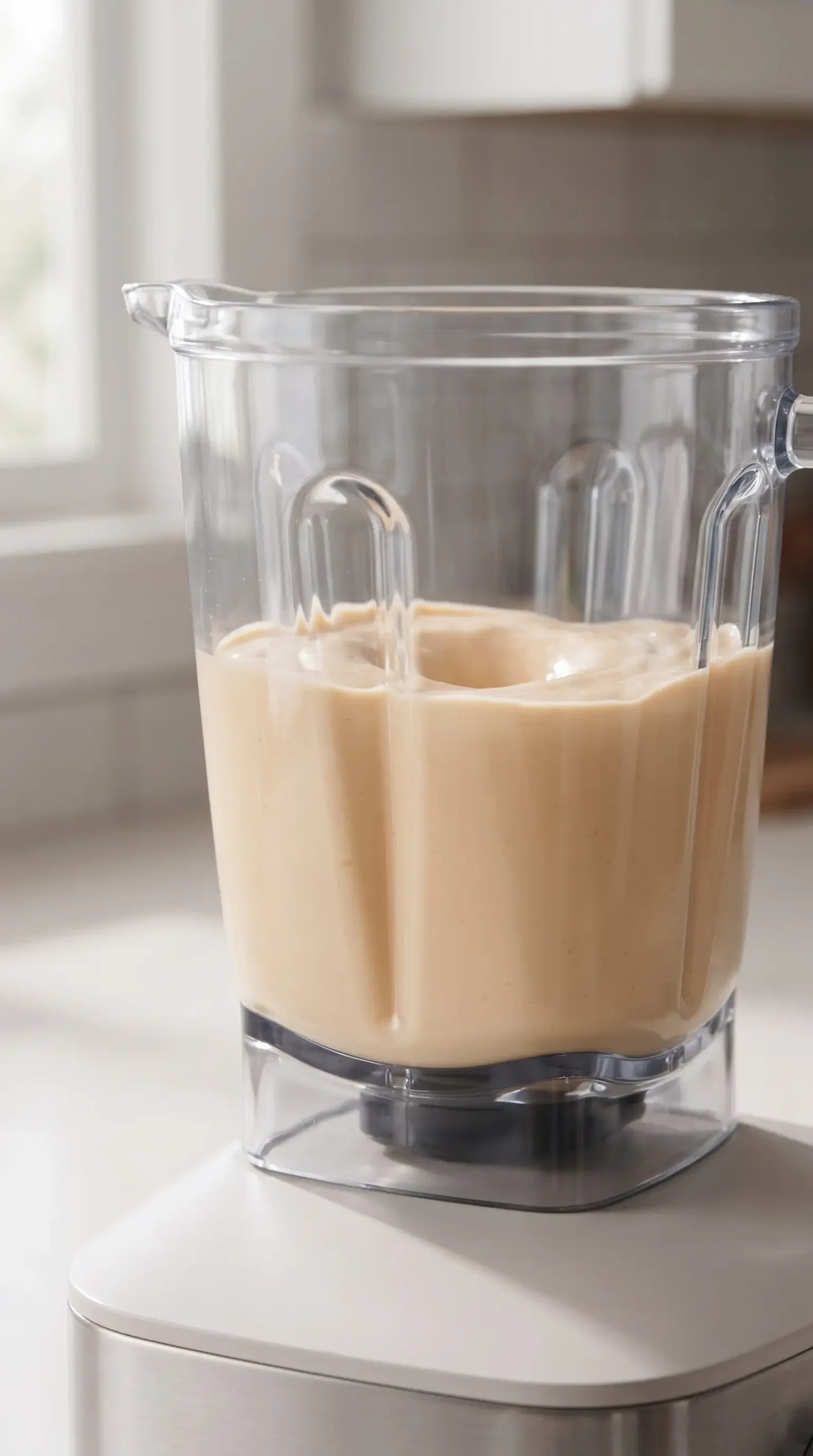
Texture is the defining challenge with tofu vegan yogurt. A quick blend can leave tiny traces of cashew or tofu, while sustained high-speed blending breaks those ingredients down and distributes the peach throughout the mixture. Keep blending until the mixture is very, very smooth instead of stopping as soon as the ingredients first come together.
Blender performance also affects how much liquid you need. If the blades cannot pull the mixture downward, add a modest amount of non-dairy milk and blend again. Adding liquid gradually gives you more control over thickness than pouring in a large amount at once.
Blade movement is the useful visual cue: the mixture should circulate enough for the ingredients to reach the blades without forcing the blender to struggle. Once that happens, continued blending can focus on refining the texture instead of simply getting the ingredients moving.
Thawing peaches can simplify blending
Partially or fully thawed peaches are the easiest choice when your blender has difficulty handling the frozen fruit. Softer pieces break down more readily and can make the mixture move around the blades with less added liquid, though a completely thawed batch may be less immediately cold after blending.
Probiotics are optional, not essential to the texture
An opened probiotic capsule can be blended into the mixture if you specifically want to include it. It is an optional addition, so leaving it out does not prevent the peach, tofu, and cashews from forming the creamy base.
Texture is one reason you may prefer to omit it. A probiotic capsule can make the finished vegan yogurt feel slightly chalky, depending on the particular product. Since that texture change is noticeable in a smooth preparation, the choice is worth making based on how the finished batch tastes and feels to you.
Capsule contents can vary, so the result is not necessarily identical from one product to another. If you decide to use one, incorporate it directly into the blended mixture instead of treating it as a topping, allowing the contents to disperse throughout the yogurt.
Thickening adjustments should stay small
When the mixture is too difficult for the blender to process, use non-dairy milk sparingly as a mechanical aid. Once the blades move freely, stop adding liquid; extra milk changes the consistency and can make the finished vegan yogurt less thick than intended.
Chilling keeps the texture ready for serving
Transfer the blended yogurt to clean jars or another covered container before refrigerating. Keeping it cold preserves the intended chilled texture and makes the batch easy to portion for later eating.
Storage time matters because the preparation contains tofu and other fresh ingredients. For a concrete refrigerated storage benchmark, use the 3 to 4 days window for prepared leftovers, rather than keeping the yogurt refrigerated for longer.
Serving from a chilled container also gives the texture time to settle. If the consistency seems slightly different after refrigeration, stir gently before serving to bring the creamy mixture back together.
Avoid these 5 minute vegan yogurt mistakes
Stopping the blender too soon is the most direct route to a texture that does not resemble yogurt. The mixture may look combined while still containing fine particles from the cashews or tofu, so use smoothness itself as the cue for completion.
- Too much liquid: Add non-dairy milk only when the blender needs help moving the mixture.
- Hard-to-blend fruit: Thaw the peaches when frozen pieces prevent the blades from circulating the mixture.
- Wrong texture expectation: Choose silken tofu for a softer result or firm tofu when you want more structure.
- Overlooking acidity: Taste after blending and adjust lemon juice gradually because peach sweetness varies.
- Unwanted chalkiness: Skip the probiotic capsule if its contents noticeably affect the smooth texture you prefer.
Correction is usually straightforward when one of these issues appears. A struggling blender calls for softer fruit or a small amount of added liquid, while a rough texture calls for more blending. If the batch tastes dull, a little additional lemon or sweetener can sharpen the balance without changing its basic character.
Peach vegan yogurt fits more than one serving style
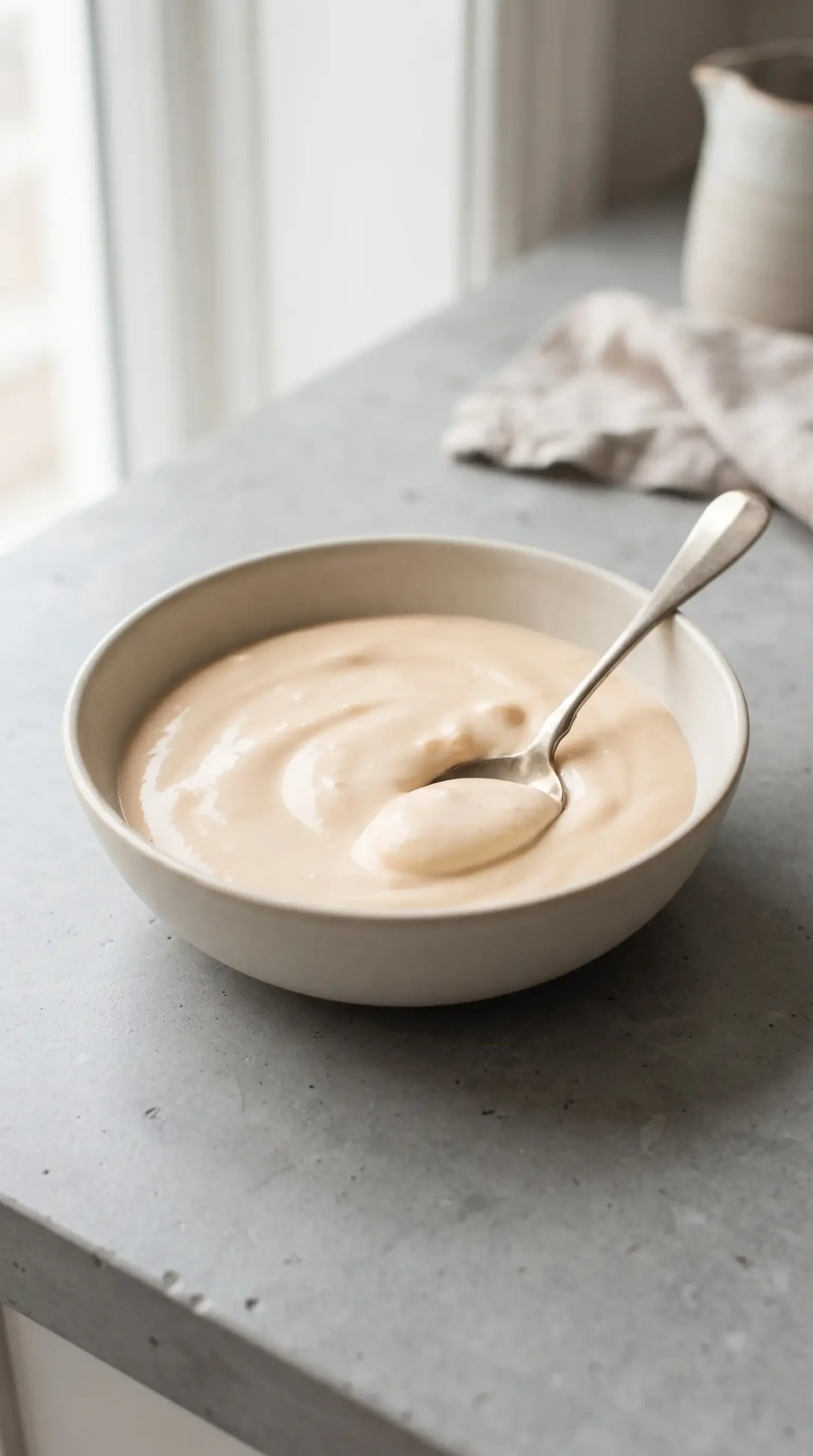
Cold peach vegan yogurt works naturally as a breakfast bowl or snack, but its thick texture also makes it useful wherever you would reach for a creamy fruit-based yogurt. Spoon it into a bowl and serve it chilled, or use it as a base for toppings that complement peach and lemon.
Small choices shape the best bowl
Serving texture starts with the tofu selection and ends with the amount of liquid used during blending. Firm tofu gives the bowl more body, while silken tofu keeps it softer; either can produce a creamy vegan yogurt when blended thoroughly.
Flavor balance deserves the same attention. Frozen peaches supply the central fruit character, while sweetener and lemon can be adjusted after blending to suit the particular fruit. That makes tasting an important part of finishing the bowl, especially when the peaches are more tart or less sweet than expected.
For a particularly smooth result, give the blender enough time to break down the cashews and tofu completely. Once the mixture moves freely and looks uniformly creamy, refrigeration can take over from there, giving you a cold preparation that is ready to serve without additional cooking.
Thorough blending makes this peach yogurt work
Frozen peaches provide the cold, cashews provide richness, and tofu determines much of the finished body, but blending brings those elements into a convincing yogurt-like texture. A batch of vegan yogurt succeeds when the mixture becomes genuinely smooth and the liquid is kept under control.
That combination also makes the preparation forgiving in the right places: tofu can be selected for texture, peaches can be thawed when necessary, and sweetness or lemon can be adjusted after blending. The useful decision is to change only what the finished mixture shows you it needs.
Vegan yogurt questions about texture and storage
Can I make vegan yogurt with silken tofu?
Yes. Silken tofu produces a smoother, softer result, so it is a good choice when you prefer a less firm spoonful. The mixture still needs thorough blending so the tofu and cashews fully disappear into the peach base.
Can I use firm tofu for a thicker yogurt?
Firm tofu gives the finished mixture more structure and can make it feel thicker than a batch made with silken tofu. It is particularly useful when you want a bowl with enough body to hold toppings without becoming runny.
Why is my vegan yogurt difficult to blend?
Frozen peaches can make the mixture too resistant for some blenders, especially when the pieces remain very hard. Thawing the peaches first is the simplest adjustment; if the mixture still cannot circulate, add non-dairy milk gradually until the blades can move it effectively.
Can I leave out the probiotic capsule?
Yes. The capsule is optional and is not needed to create the creamy peach-and-tofu base. Leaving it out may also be preferable if you notice a chalky texture from the particular probiotic product you use.
How should I adjust the flavor after blending?
Taste the finished mixture before serving and make small adjustments based on the peaches you used. Add a little more liquid sweetener when the fruit needs sweetness, or a little more lemon juice when the flavor needs additional brightness.
How long can homemade vegan yogurt stay refrigerated?
Keep the yogurt covered in the refrigerator and use it within five days. A clean, sealed container helps keep the chilled preparation protected while it waits to be served.
Vegan Yogurt with Frozen Peaches, Cashews, and Tofu
Ingredients
Method
- Add all ingredients to a blender.
- Blend on a high-speed setting until the mixture is completely smooth.
- Transfer the yogurt to jars and refrigerate for up to 5 days.