
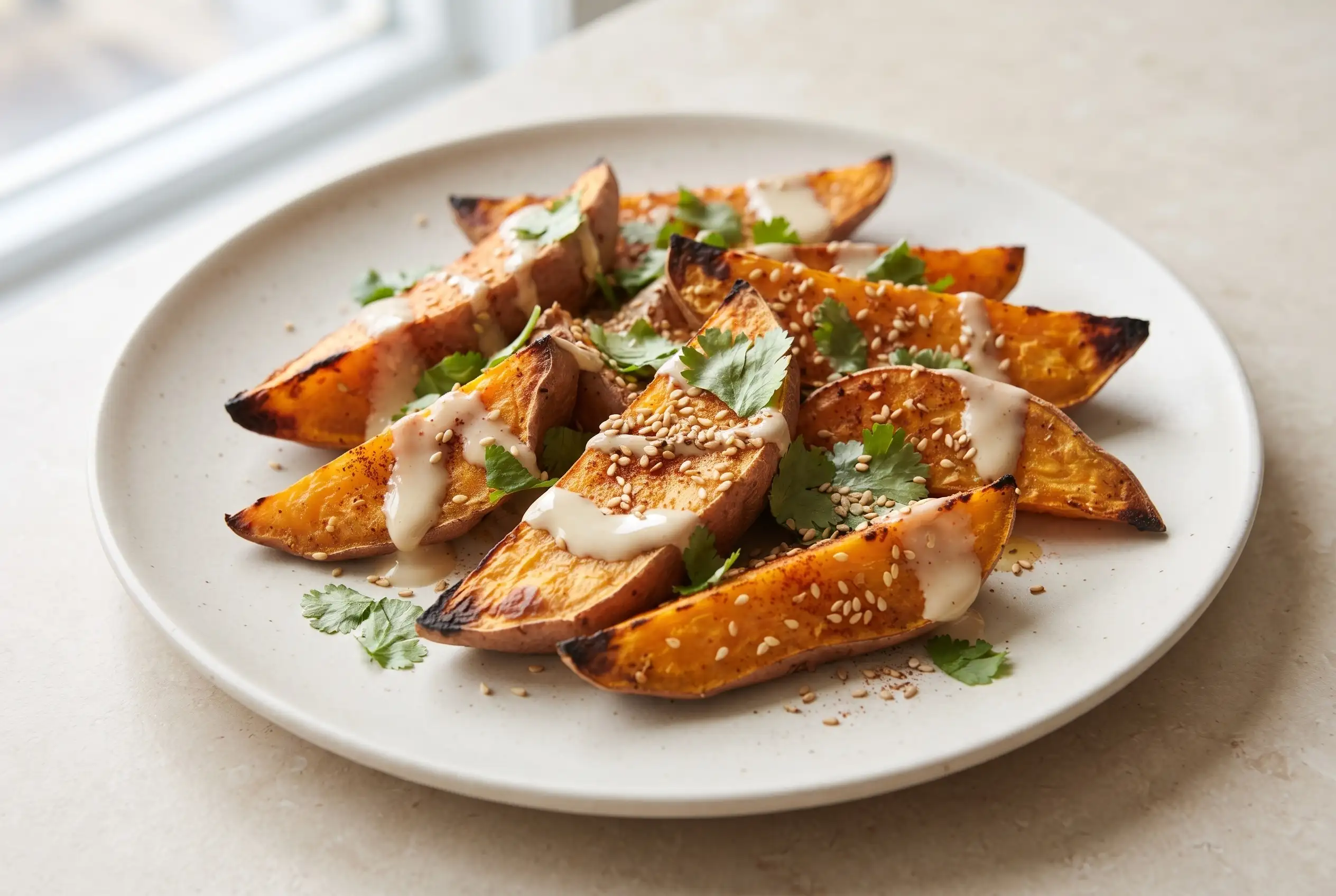
Sesame roasted sweet potatoes turn simple wedges into a deeply savory side with crisping edges, warm chile seasoning, creamy tahini, toasted sesame seeds, and fresh cilantro. The method is deliberately straightforward: roast the sweet potatoes until they begin to brown, increase the heat to push the edges further, then add the sesame-rich finishing ingredients after baking. That timing keeps the tahini and sesame oil fresh and distinct instead of exposing them to the full heat of the oven.
Sweet potato wedges carry the sesame finish well
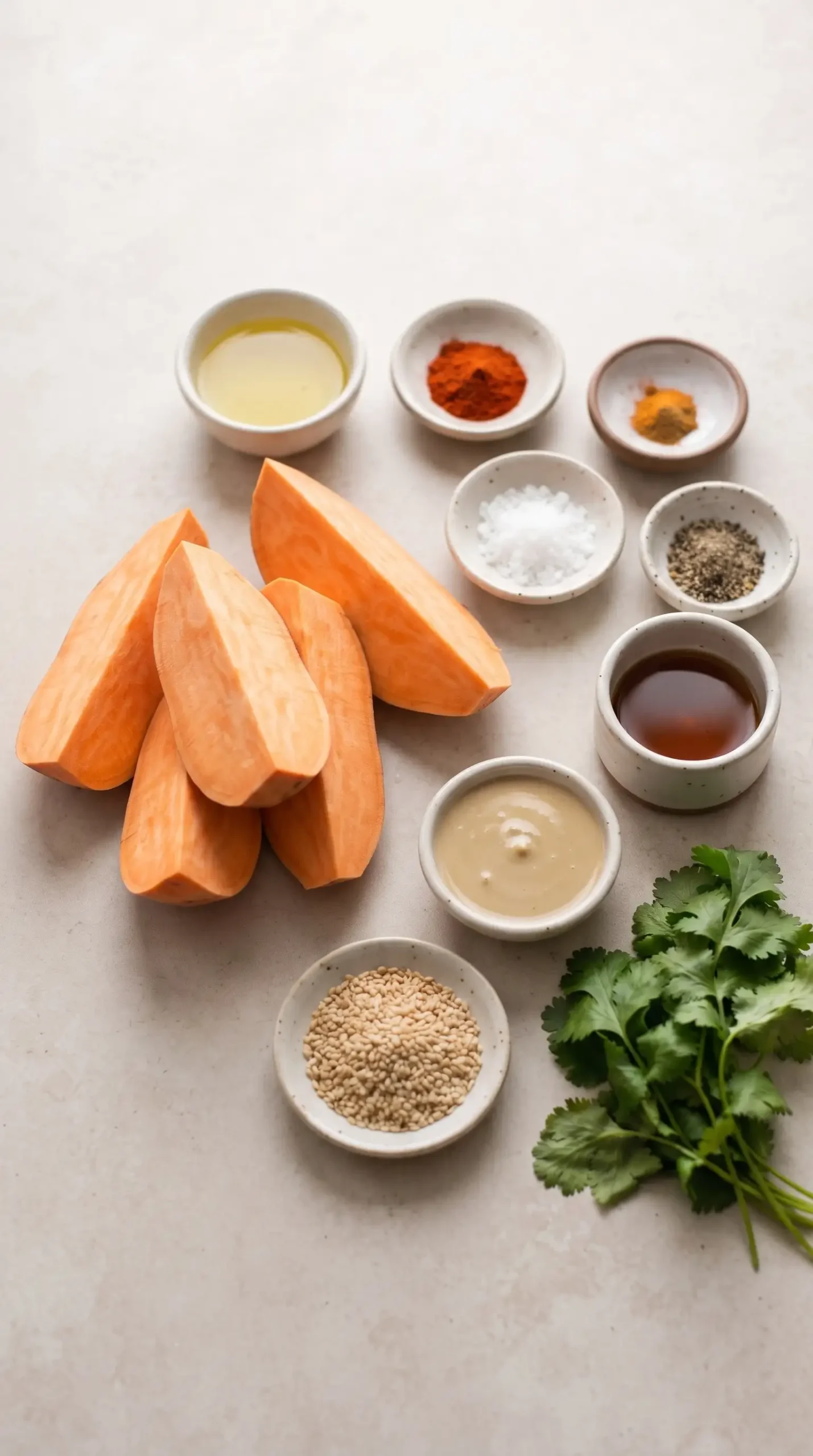
Wedges work especially well here because their broad cut surfaces have enough area to catch the chili seasoning and vegetable oil while their thicker centers remain substantial. Cutting the potatoes into reasonably similar pieces also helps them reach the same stage of tenderness and browning at roughly the same time.
Meanwhile, the seasoning stays deliberately restrained. Chili powder and a pinch of cayenne create warmth without making the dish depend on a complicated spice blend, leaving room for the roasted sesame oil, tahini, sesame seeds, and cilantro to remain recognizable at the table.
Why the finishing ingredients belong off the heat
Roasted sesame oil and tahini enter after the sweet potatoes have come out of the oven, which gives the finished dish its defining contrast. The hot wedges provide warmth that loosens the tahini as it is drizzled, while the sesame oil can spread across the surfaces without being baked into the potatoes.
Fresh cilantro completes that contrast with a leafy finish. Sesame seeds add another layer of texture, especially against the soft interior and browned edges of the wedges. Keeping these additions until serving also makes it easier to control how heavily each piece is coated.
A few ingredient choices make the flavor more balanced
- Roasted sesame oil: Use it as a finishing oil so its pronounced sesame character remains noticeable.
- Tahini: Drizzle it over the warm potatoes for a creamy coating that complements the nutty sesame notes.
- Chili seasoning: Chili powder supplies the main warmth, while cayenne can be kept to a pinch when only gentle heat is wanted.
- Cilantro: Add the leaves after baking so their fresh character remains intact.
One useful distinction is that vegetable oil handles the roasting stage, while roasted sesame oil is reserved for the finish. Keeping those jobs separate prevents the more strongly flavored oil from disappearing into the oven heat.
Roasting temperature changes control the browning
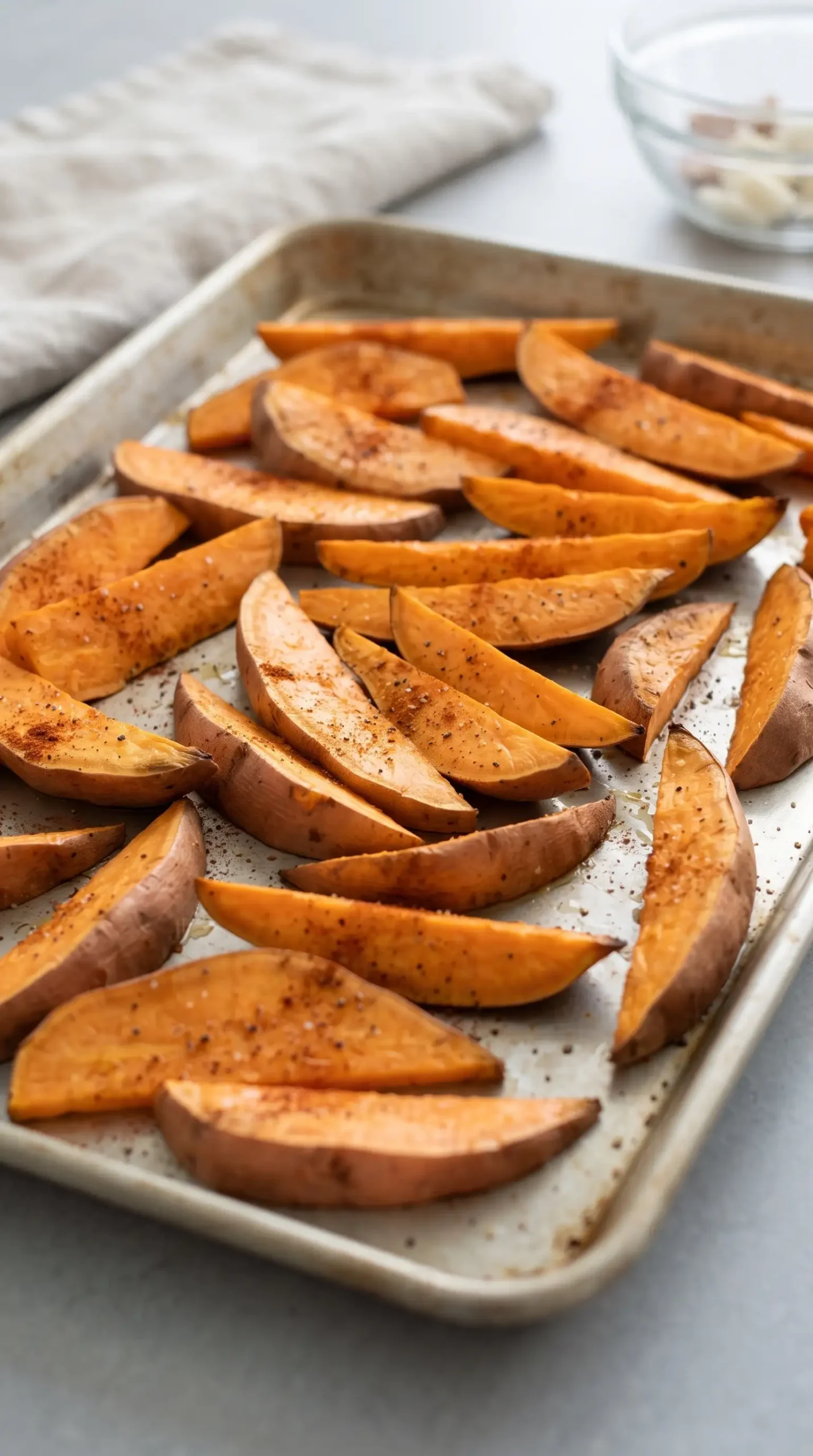
Starting at 375 degrees gives the sweet potatoes time to roast while they are being turned periodically. The later increase to 400 degrees is specifically useful for encouraging more golden color at the edges once the wedges have already spent time cooking.
That temperature change also makes observation important. The pieces should be stirred gently every 5 to 10 minutes during the initial roasting period, then watched closely after the heat rises. Once the surfaces are turning golden brown, continued movement should be guided by color rather than by a rigid number of turns.
For cooks who prefer a visual cue, the useful transition is from pale, seasoned wedges to pieces with noticeably browned edges and a cooked, tender center. If one side is coloring much faster, repositioning those pieces helps prevent them from becoming overly dark while the remaining wedges catch up.
Cutting consistency matters more than perfect shapes
Uniformity does not require every wedge to look identical. What matters is keeping the pieces close enough in thickness that they roast at a similar pace. Very thin pieces can brown quickly, while much thicker pieces may still need time in the center after their exposed edges have darkened.
Once cut, spread the wedges across the baking sheet so they can roast without becoming difficult to turn. Crowded pieces are harder to move gently and harder to judge individually, which matters because the second, hotter roasting stage is relatively short.
Sesame sweet potato wedges need a measured finish
The tahini and sesame oil are both concentrated enough that a light drizzle can carry across several pieces. Start by distributing them over the warm wedges, then add the sesame seeds and cilantro. The hot surface helps the tahini settle into the folds and browned areas without requiring a separate sauce.
| Finishing element | When to add it | What to watch for |
|---|---|---|
| Roasted sesame oil | After roasting | Keep the drizzle light enough that the potato surfaces remain visible. |
| Tahini | After roasting | Spread it across warm wedges so it coats instead of sitting in one heavy patch. |
| Sesame seeds | After the tahini and oil | Scatter them across the surface for texture and sesame flavor. |
| Cilantro | Immediately before serving | Use fresh leaves so their color and flavor remain distinct. |
Serving directly from the baking sheet is practical because it avoids disturbing the browned surfaces more than necessary. A separate platter works just as well when the wedges need to be presented as a composed side.
Thirty minutes works because the finish is fast
The 30 minute roasted sweet potatoes approach depends on keeping the cooking process focused. There is no separate sauce to simmer and no need to roast the sesame components alongside the potatoes. The oven handles the wedges, while the finishing ingredients are ready to add once the heat has done its work.
Preparation is equally uncomplicated: the potatoes are peeled and cut into wedges, seasoned with vegetable oil, chili powder, cayenne, salt, and pepper, and then placed on the baking sheet. The important efficiency comes from having the finishing ingredients ready before the wedges leave the oven, since the warm potatoes are best dressed soon after roasting.
Common sesame roasted sweet potato mistakes to avoid
Over-browning is the clearest risk during the hotter stage. Because the oven temperature increases after the initial roast, pieces that were already developing dark edges can move quickly from golden to too dark. Watch the color and stir gently when needed instead of leaving the wedges untouched.
Another problem comes from treating roasted sesame oil like the vegetable oil used for roasting. The two oils have different roles here. Adding the sesame oil after baking preserves its strong finishing character and prevents it from being absorbed into the longer cooking process.
- Uneven wedges: Very different thicknesses can finish at different rates. Keep the cuts reasonably consistent.
- Heavy tahini patches: Drizzle over the warm potatoes and distribute it across the wedges instead of leaving one concentrated pool.
- Burnished edges turning too dark: Check the potatoes after the temperature increase and move pieces as needed.
- Muted fresh garnish: Add cilantro after roasting so it is not exposed to the oven heat.
Tahini texture can shape how the wedges eat
Tahini can vary in thickness, so the way it lands on the potatoes matters. A concentrated spoonful can cling heavily to one area, while a thin drizzle can distribute its sesame flavor across more of the surface. Warm wedges help soften the visual and textural contrast between creamy tahini and crisping potato edges.
If the tahini has separated in the jar, stir tahini before using so the oil and sesame paste are evenly combined before drizzling it over the warm wedges.
When serving, aim for coverage without completely hiding the roasted surfaces. The browned potato, creamy tahini, sesame seeds, and cilantro each contribute a different texture, so keeping them visible makes the finished dish more varied from bite to bite.
Heat level is easiest to adjust before roasting
Cayenne is the most direct heat-control point because the recipe calls for only a pinch. Keeping that amount small preserves the option to emphasize the sesame finish, while adding more will make the chile character more prominent. Chili powder remains part of the base seasoning and should be distributed evenly over the wedges.
Salt and pepper also matter at the roasting stage because they season the potato itself instead of relying entirely on the finishing ingredients. Since the tahini and sesame oil arrive later, tasting the finished wedges can still help determine whether the overall balance needs a little more seasoning at the table.
Warm wedges make the best serving surface
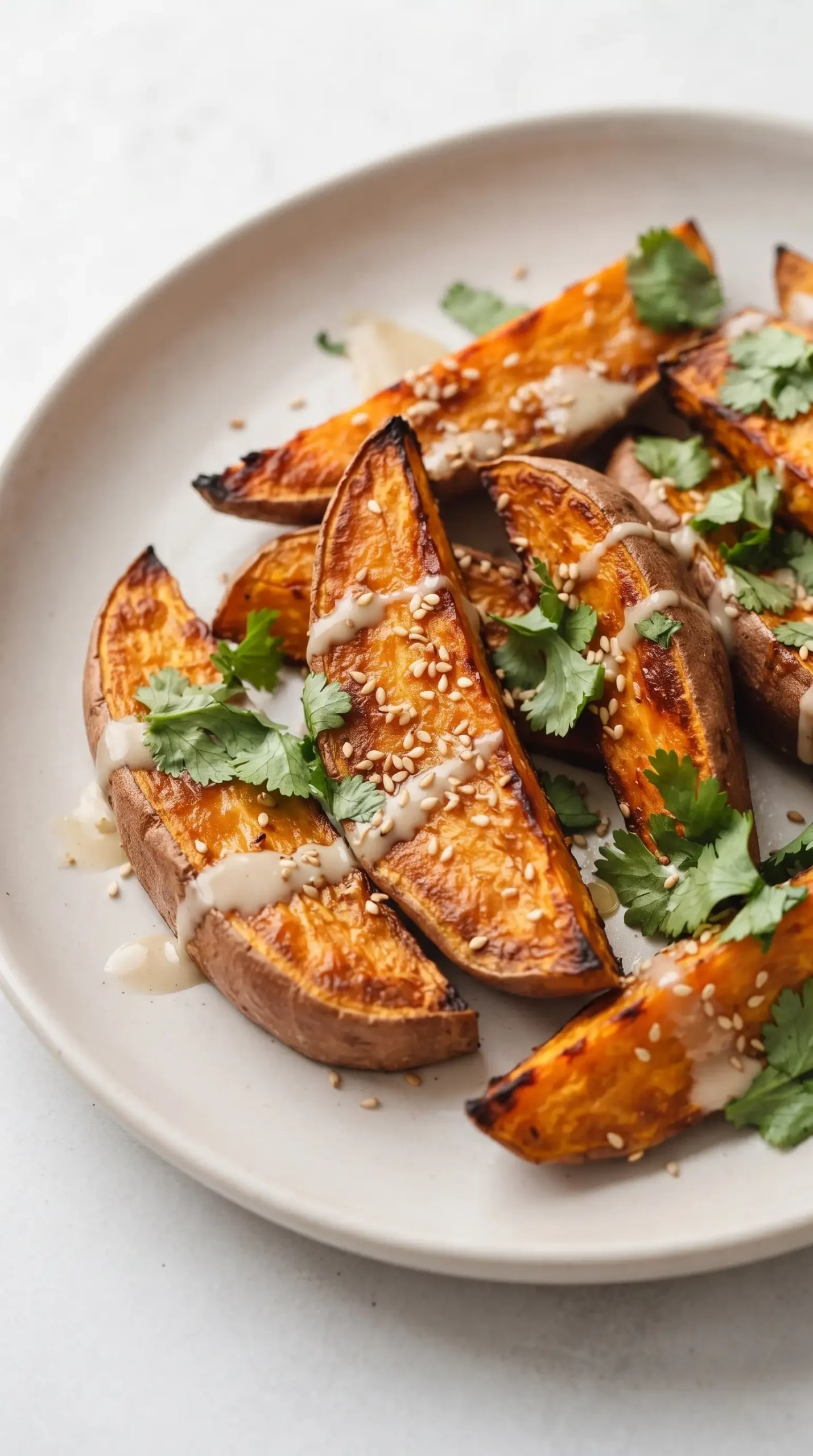
Freshly roasted potatoes provide the most useful surface for the tahini and sesame oil to spread. Letting them cool slightly after removing them from the oven gives the wedges a brief pause before dressing, while keeping enough warmth for the finishing ingredients to settle naturally.
Immediate serving also preserves the contrast that makes the dish work: browned potato edges, softer centers, creamy tahini, fragrant sesame oil, crunchy seeds, and fresh cilantro. If the wedges sit for too long before dressing, the components will still combine, but the freshly roasted texture is less central to the experience.
What makes roasted sweet potatoes with tahini distinctive
Many roasted sweet potato preparations lean heavily on sweetness, but the combination here moves in a more savory direction. The potato’s natural sweetness sits underneath chili seasoning and a concentrated sesame finish, while cilantro supplies a fresh note that keeps the tahini from making the dish feel one-dimensional.
That balance also explains why the sesame components are layered instead of cooked together. Tahini contributes creaminess, roasted sesame oil contributes aroma, and sesame seeds contribute texture. Each appears at a different point in the finishing process, so the dish gets several forms of sesame flavor without needing a long ingredient list.
Serving choices can keep the texture in focus
A platter makes the sesame sweet potato wedges easy to share, with the tahini and sesame seeds visible across the top. Serving directly on the baking sheet is useful when simplicity matters and also keeps the browned pieces from being handled more than necessary.
For a meal built around several dishes, the wedges can sit alongside foods that benefit from their warm chile-and-sesame profile. Their finishing ingredients are pronounced enough to make them interesting on their own, yet the preparation remains simple enough to fit naturally into a broader meal.
Golden edges are the cue that brings the dish together
Golden-brown edges, tender centers, and a warm surface give the sesame finish the right foundation. Once the potatoes reach that state, the tahini, roasted sesame oil, sesame seeds, and cilantro can be added without competing with an undercooked center or an overly dark crust.
That visual judgment is more useful than treating the hotter roasting stage as an automatic endpoint. Watch the wedges, move the pieces when needed, and stop once the surfaces have developed the intended color. The resulting sesame roasted sweet potatoes keep the roasted potato at the center while letting the finishing ingredients remain distinct.
Sesame roasted sweet potatoes questions about texture and finishing
Can the sweet potatoes be cut into cubes instead of wedges?
Yes, although the cooking behavior will change because cubes expose more cut surfaces and may brown differently from larger wedges. Keep the pieces reasonably similar in size and use the visible signs of browning and tenderness to judge when they are ready.
Should tahini be mixed with the sesame oil before adding it?
It is not necessary. Drizzling the tahini and roasted sesame oil separately lets their flavors remain more distinct and makes it easier to control how much of each reaches the potatoes.
How can the dish be made less spicy?
Keep the cayenne to a very small pinch or omit it if needed. The chili powder remains in the seasoning, so reducing cayenne changes the sharper heat without removing the broader chile flavor.
Can sesame seeds be added before roasting?
The supplied method adds them after roasting, which keeps them as a finishing texture alongside the tahini and sesame oil. Adding them at the end also avoids exposing the seeds to the higher-temperature finishing stage where they could become excessively browned.
What should be done if some wedges brown before others?
Gently move the darker pieces or reposition them on the baking sheet while the remaining wedges continue roasting. The hotter stage is specifically a point where close observation helps prevent individual pieces from becoming too dark.
Can the cilantro be left off?
Yes. The cilantro provides a fresh finishing element, but the roasted sweet potatoes still have the chili, tahini, sesame oil, and sesame seeds to carry the dish. Add the leaves only if that fresh contrast suits the meal being served.
Sesame Roasted Sweet Potatoes with Tahini and Sesame Seeds
Ingredients
Method
- Preheat the oven to 375°F (190°C). Coat the sweet potato wedges with vegetable oil, chili powder, cayenne, and salt and pepper.
- Arrange the seasoned sweet potatoes on a baking sheet and roast for 20 minutes, gently turning the pieces every 5-10 minutes.
- Raise the oven temperature to 400°F (204°C) and continue roasting for another 5-10 minutes, moving the pieces as needed until they begin to brown. Remove from the oven and allow them to cool slightly.
- Drizzle the roasted sweet potatoes with sesame oil and tahini on a platter or directly on the baking sheet. Add sesame seeds and cilantro leaves before serving.