
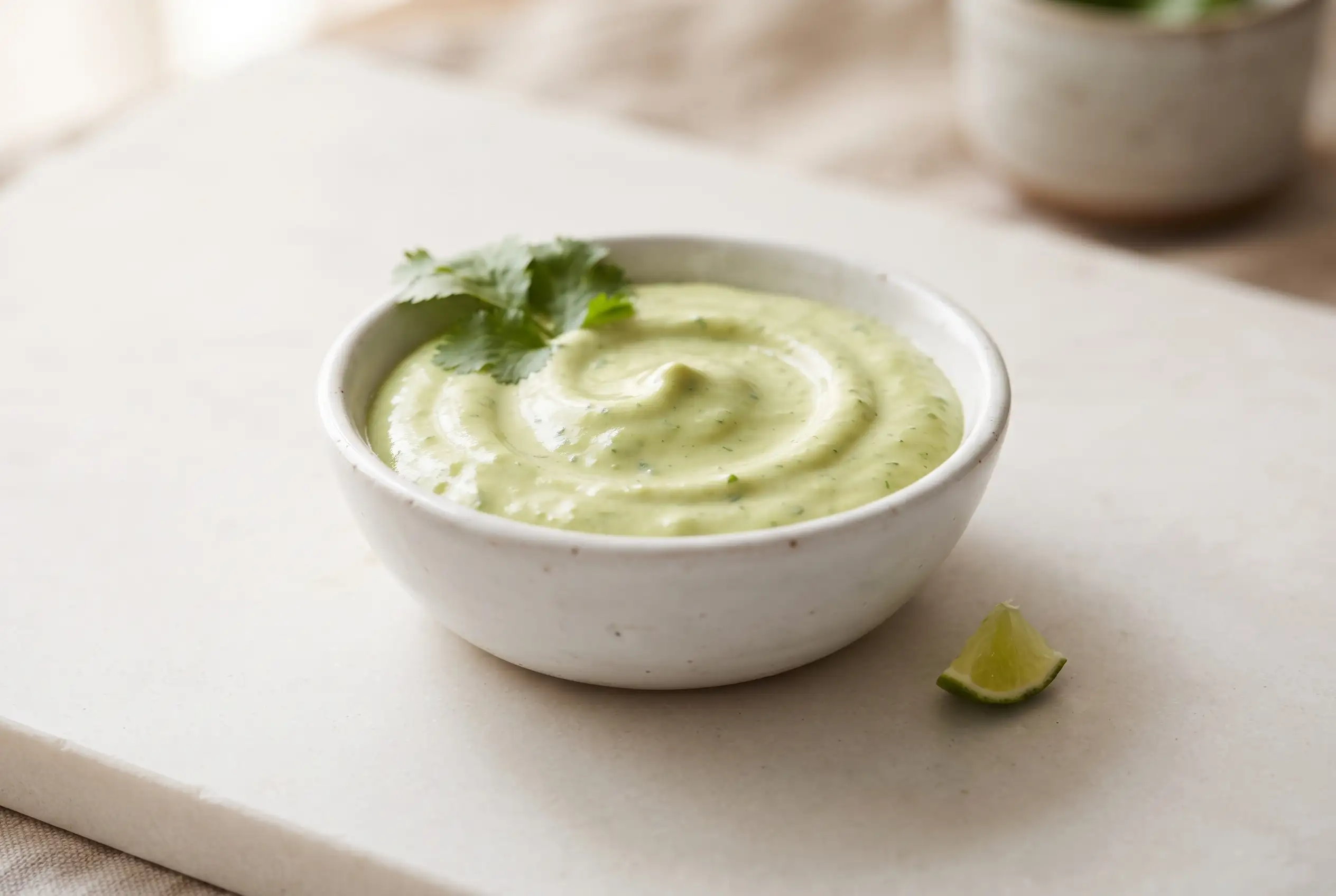
Five Minute Avocado Cilantro Dressing turns a small amount of avocado, creamy Greek yogurt, fresh cilantro, garlic, lime, and salt into a smooth, bright sauce with almost no effort. Its appeal comes from balance: the avocado supplies body, the yogurt keeps the texture creamy, cilantro brings a fresh herbal character, and lime keeps the mixture lively.
The short ingredient list also makes small adjustments noticeable. A little extra water can transform a thick spread into a pourable dressing, while too much garlic or lime can overpower the delicate avocado. With a few visual cues and simple handling choices, avocado cilantro dressing becomes an adaptable staple for salads, bowls, roasted vegetables, tacos, sandwiches, and more.
Why avocado cilantro dressing works so well
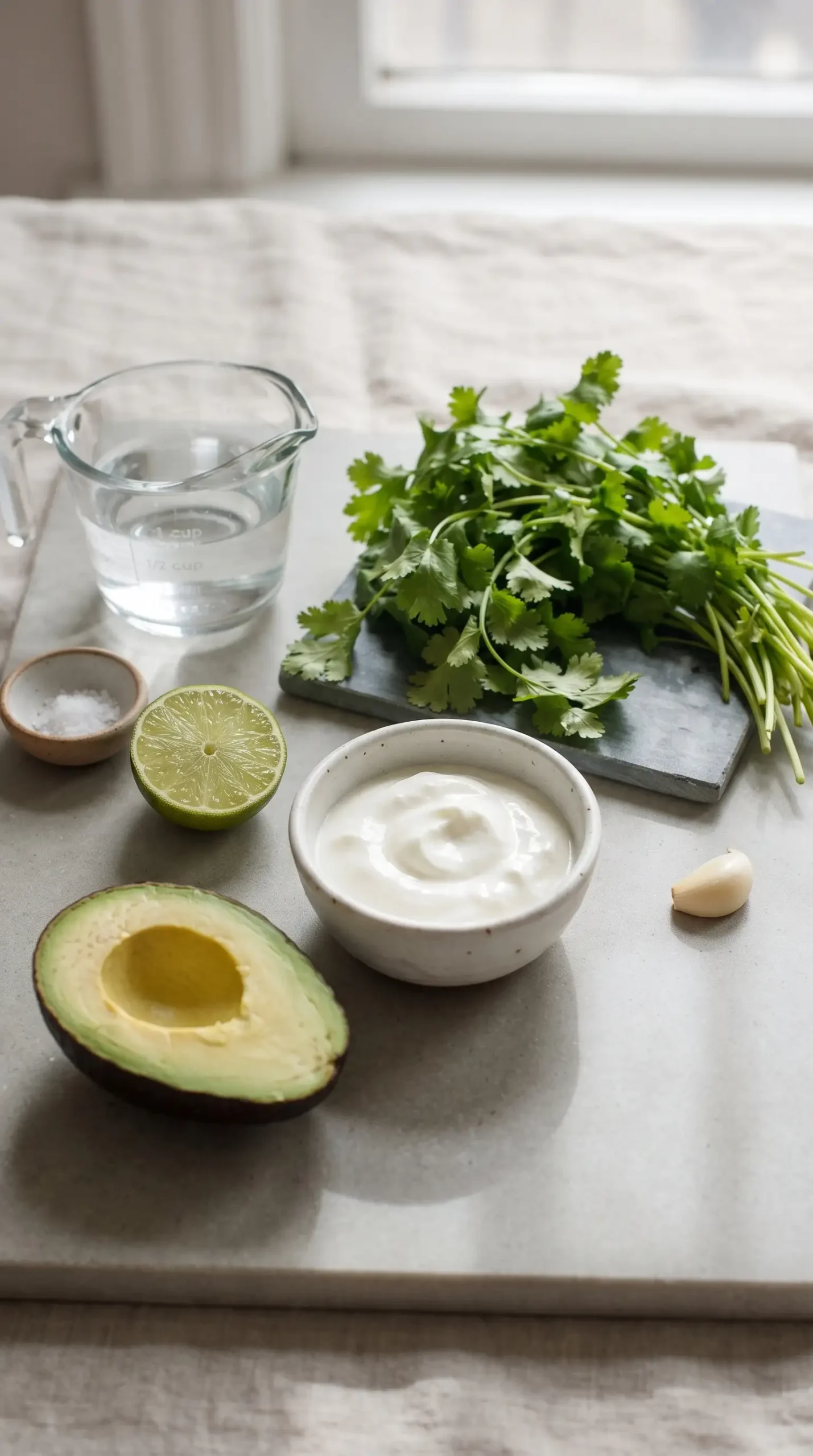
Avocado and Greek yogurt create a naturally creamy foundation without requiring a long cooking process. The avocado contributes richness and a soft texture, while yogurt introduces tang and helps keep the finished sauce from feeling overly heavy. Water then gives the mixture room to move, making it possible to choose a consistency suited to the dish.
Cilantro changes the character of that creamy base immediately. Because both the leaves and tender stems can be blended, there is no need to strip every sprig before adding it. The herb should be fresh and reasonably dry so its flavor remains clear and the mixture does not become unnecessarily watery.
Garlic, lime, and salt complete the balance in small amounts. Garlic adds savory sharpness, lime supplies acidity, and salt helps the other flavors register distinctly. Once blended, those elements become one cohesive sauce instead of separate layers of flavor.
Cilantro handling that changes the finish
Use the cilantro leaves and tender stems together, removing only portions that are tough or unpleasant to eat. A quick rinse followed by thorough draining is useful because excess surface water can make the dressing thinner before you have adjusted its consistency. Fresh cilantro should smell lively and herbal; dull or wilted bunches will produce a less vivid result even when everything else is correct.
Greek yogurt and water set the body
Greek yogurt is especially useful here because its thickness gives the dressing structure while its tang works naturally with lime and cilantro. The avocado reinforces that creamy texture, so the mixture can become quite thick when first blended. That is not necessarily a problem: a dense blend is easier to loosen gradually than a watery one is to thicken.
Water should be treated as a texture adjustment instead of an ingredient that must all be added at once. Start with the measured amount and check the consistency after blending. If the dressing needs to flow more easily from a spoon or across salad leaves, add a little more water and blend again.
The right consistency depends on how you plan to use the sauce. A thicker avocado cilantro dressing can sit on tacos or sandwiches without running, while a looser version coats greens more evenly. For a grain bowl or roasted vegetables, something between those two textures is often convenient because it can be drizzled without disappearing immediately.
Lime and garlic need restraint
Lime juice and garlic are both concentrated accents in such a small mixture, so a modest amount can have a substantial effect. Add the squeeze of lime according to the flavor of the finished blend, especially if your avocado is mild. The garlic should remain part of the savory background, allowing cilantro and avocado to stay recognizable.
Blender texture cues matter more than timing
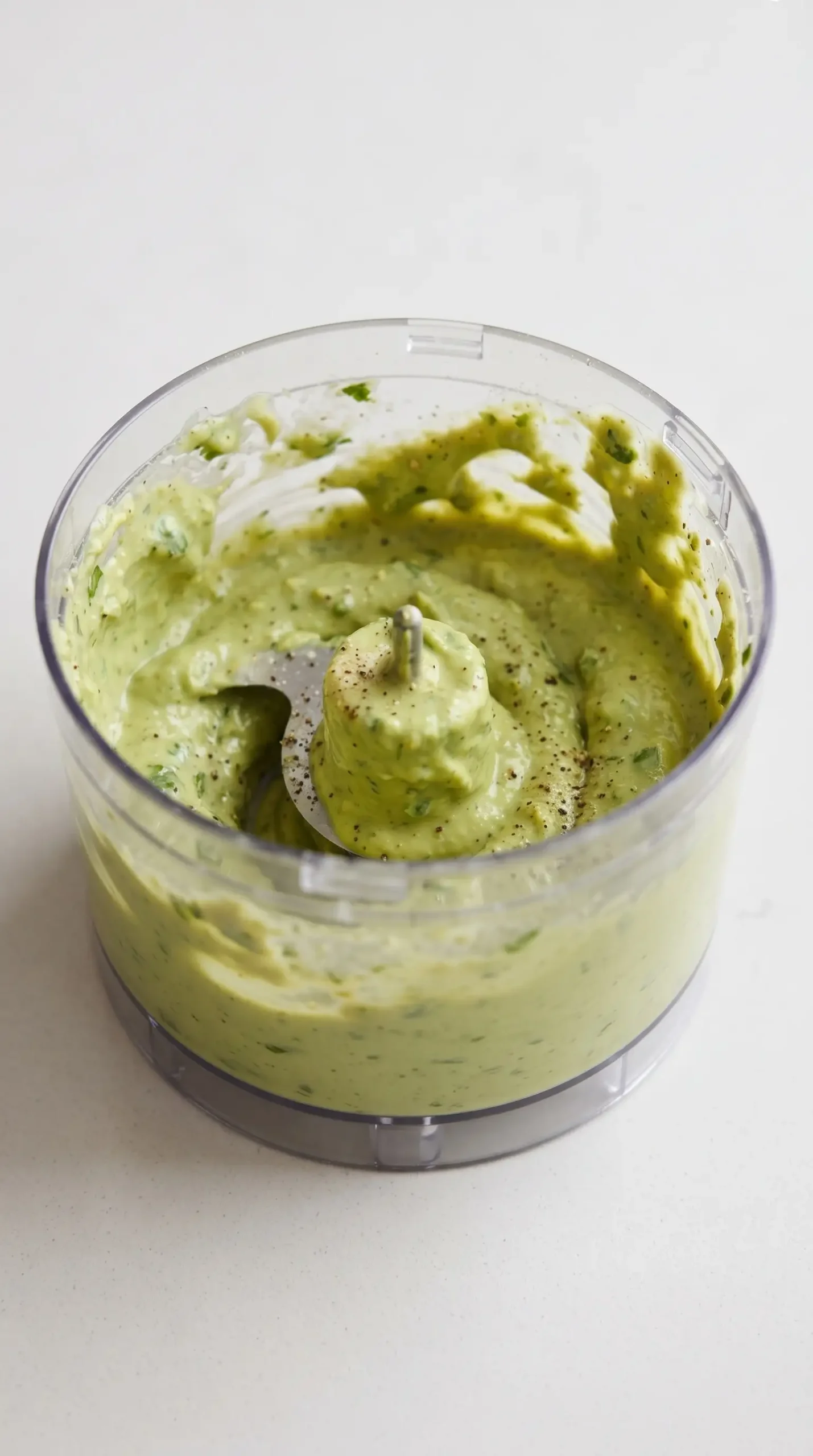
The supplied method relies on pulsing rather than a long, continuous blend, giving you an opportunity to check the texture as it develops. Pulse until all is mixed, checking the mixture between pulses so you can distinguish incomplete incorporation from a dressing that genuinely needs more water. The mixture should progress from visibly separate ingredients to a cohesive green sauce.
Pause when needed to check the sides and bottom of the blender or food processor. If thicker avocado or yogurt remains untouched while liquid moves around it, stopping briefly and helping the mixture circulate can produce a more uniform texture. Avoid adding water simply because the blades are moving slowly; thickness and incomplete incorporation are two different issues.
A smooth finish should look cohesive rather than chunky, with cilantro distributed throughout the sauce. If small herb flecks remain, that does not automatically mean the dressing has failed. The important distinction is between a pleasantly fresh, speckled texture and large pieces of avocado or garlic that have not been incorporated.
Thinness is a choice, not a correction
Think about the destination before adjusting the consistency. Salad greens benefit from a dressing that can spread across several leaves, while tacos and sandwiches are easier to handle when the sauce stays relatively thick. Adding water in small increments gives you control over that final behavior.
Best uses for its fresh, creamy texture
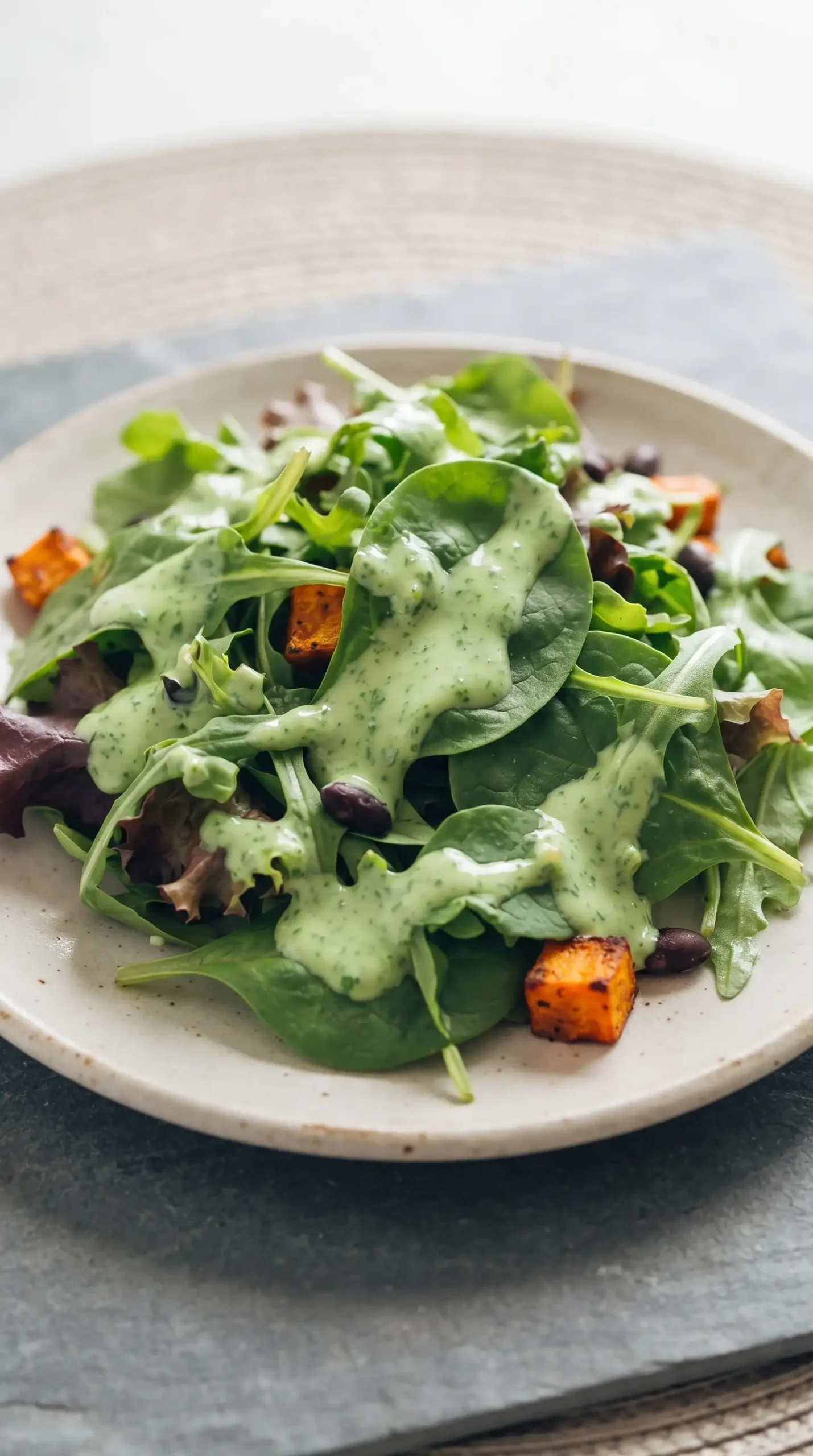
The flavor profile works especially well where a creamy element is useful but a heavy sauce would distract from the main food. Toss it with crisp greens, spoon it over roasted vegetables, or use it as a cool contrast for warm grain bowls. Its cilantro-and-lime character also fits naturally with tacos, wraps, and simple cooked beans.
- Leafy salads: Thin the dressing enough to coat greens lightly without pooling at the bottom.
- Tacos and wraps: Keep the mixture thicker so it stays where you spoon it.
- Grain bowls: Use a pourable consistency that can cross several ingredients in a drizzle.
- Vegetables: Spoon a thicker version over roasted or grilled vegetables for a creamy contrast.
Keeping the green flavor clear
The fresh character of avocado cilantro dressing depends on keeping the brighter ingredients noticeable. Cilantro should remain prominent enough to identify, while lime should lift the mixture without making it taste sharply acidic. Salt provides the bridge between those flavors and the creamy base.
Avocado brings a soft, rich quality that can mute sharper ingredients if the mixture is heavily diluted. That is why gradual water adjustments matter. Once the dressing has reached a useful pouring consistency, adding more liquid can make the flavor seem less concentrated as well as changing the texture.
Texture also affects how flavor is experienced. A thick sauce delivers a concentrated spoonful, whereas a thinner dressing spreads over a larger surface area. The same batch can therefore seem more subtle when used generously over a salad than when dabbed onto a taco.
Common avocado cilantro dressing mistakes to avoid
Most problems come from changing the balance before observing what the blended mixture actually needs. Because the preparation is so short, there is little reason to make several adjustments simultaneously. Make one change, blend briefly, and reassess.
- Over-thinning: Adding extra water too quickly can turn a creamy sauce into a weak dressing. Correct it by adding liquid gradually from the beginning.
- Too much garlic: A larger garlic quantity can dominate the mild avocado and fresh cilantro. Keep the small clove as the savory accent.
- Uneven blending: Large pieces of avocado or garlic indicate that the mixture needs more incorporation. Continue pulsing until the texture is cohesive.
- Ignoring the finish: A dressing that works on salad may be unnecessarily thin for tacos. Decide how it will be served before making the final consistency adjustment.
Substitutions that preserve the balance
The easiest changes are those that keep the creamy, tangy, herbal structure intact. Plain Greek yogurt can remain the dairy base, while additional avocado can make the mixture richer and thicker if you are adjusting quantities for a larger batch. If changing the yogurt itself, choose a plain, unsweetened option so added flavors do not compete with cilantro and lime.
For a dairy-free adaptation, an unsweetened, plain plant-based yogurt can be considered, although its thickness and tang will vary by product. Adjust water only after blending because different yogurts contain different amounts of moisture. The important practical test is whether the finished mixture has enough body to cling to the food you intend to dress.
Serving choices that change the texture you need
Avocado cilantro dressing can shift from a salad sauce to a dip-like topping simply through consistency. Use the following as a quick guide when deciding how much additional water, if any, belongs in the finished blend.
| Use | Useful consistency | Practical adjustment |
|---|---|---|
| Leafy salad | Pourable and light | Add water gradually until it spreads easily over greens |
| Tacos | Thick and spoonable | Keep the blended mixture relatively dense |
| Grain bowls | Drizzleable | Loosen enough to cross several ingredients without pooling |
| Roasted vegetables | Creamy and spoonable | Retain enough body for the sauce to sit on the vegetables |
Storage depends on protecting the fresh character
Because avocado and fresh cilantro are central to the flavor and appearance, avocado cilantro dressing is best handled as a fresh sauce. Transfer any unused portion to a clean, covered container and refrigerate it promptly rather than leaving it exposed at room temperature.
Limiting air exposure is useful because the avocado can darken when exposed to oxygen. A container with a well-fitting lid helps reduce that exposure. If the surface changes slightly during storage, stir the dressing before judging its final texture or appearance.
Cold storage can also make the mixture seem firmer than it was immediately after blending. Let the texture guide you when serving: a small amount of water can loosen it if refrigeration has made it too thick. Stir or blend briefly after any adjustment so the consistency becomes even again.
Fresh avocado and cilantro make balance the key decision
The creamy base of avocado and Greek yogurt needs enough water to move, but not so much that the cilantro, lime, garlic, and salt lose their presence. The most useful cooking judgment is therefore made at the blender: observe the texture, taste the balance, and adjust only what the mixture actually lacks.
A smooth avocado cilantro dressing should remain recognizable as a blend of creamy avocado, bright cilantro, gentle acidity, and savory garlic. That balance gives the sauce enough flexibility for salads, tacos, bowls, and vegetables without requiring a complicated preparation.
Avocado cilantro dressing questions and answers
Can I make the dressing without a blender?
A food processor is the other appliance specified for producing a smooth mixture. Without either appliance, the avocado can be mashed by hand, but the cilantro, garlic, and yogurt are less likely to become uniformly incorporated. The finished sauce may therefore have a more rustic texture.
Why does my avocado cilantro dressing seem too thick?
The avocado and Greek yogurt naturally create substantial body, particularly before the mixture has been loosened. Add water in small amounts and blend after each adjustment. Stop as soon as the dressing reaches the consistency needed for its intended use.
Can I make avocado cilantro lime dressing more tangy?
Yes. Since lime is already part of the flavor structure, a little additional lime juice can increase acidity without changing the basic character of the sauce. Add it gradually and taste after blending so the lime remains an accent instead of overwhelming the avocado and cilantro.
What can I use instead of Greek yogurt in avocado cilantro dressing?
A plain, unsweetened yogurt with a similar creamy consistency can be used, including a suitable dairy-free yogurt. Because thickness varies between products, make the water adjustment after the mixture is blended rather than assuming the same amount of liquid will behave identically.
How can I keep the dressing from becoming too watery?
Do not add extra water automatically. First blend the ingredients thoroughly and inspect the consistency. If more liquid is genuinely needed, add it in small increments, blending briefly between additions. This approach preserves more control over both body and flavor.
Avocado Cilantro Dressing with Greek Yogurt and Lime
Ingredients
Method
- Add all ingredients to a food processor or blender.
- Pulse the mixture until the ingredients are fully combined and the dressing reaches a smooth consistency.
- Serve the avocado cilantro dressing.