
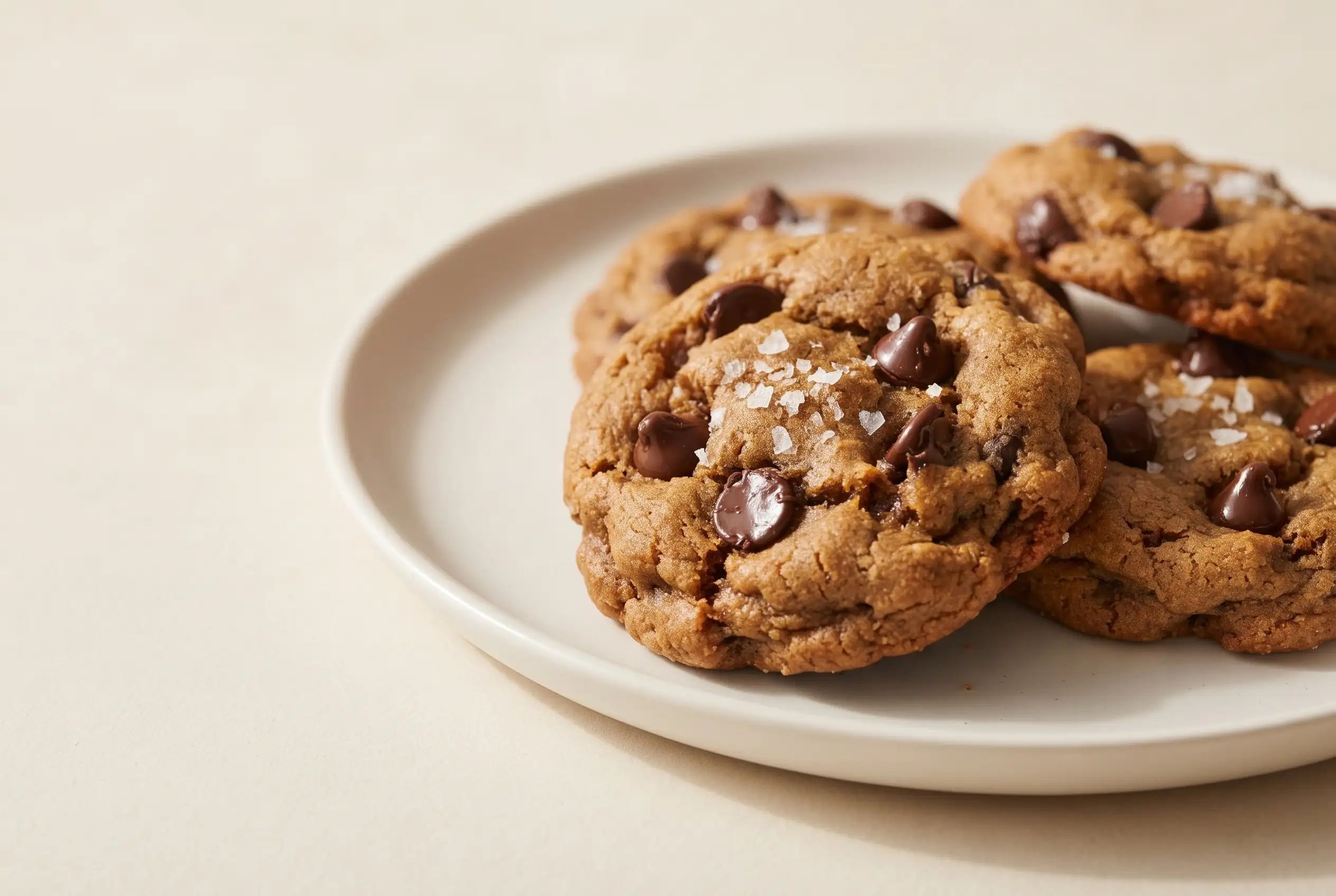
Peanut butter chocolate chip cookies come together with a short pantry list, a rich peanut butter center, and crisp golden edges that give way to a soft middle. Coconut sugar brings a deeper sweetness than ordinary white sugar, while chocolate chips add pockets of melted chocolate throughout the dough. The simplicity is part of the appeal: 5 ingredient peanut butter cookies can still have plenty of texture and flavor when the dough is handled with care.
What sets these peanut butter chocolate chip cookies apart
Dense peanut butter flavor is the defining feature here, but the cookies are not heavy or dry when they are pulled from the oven at the right moment. The dough contains no flour, so its structure comes from the eggs, sugar, and peanut butter working together as the cookies bake.
Coconut sugar gives the baked cookies a warm, caramel-like sweetness and a naturally darker appearance. That means the edges can look quite golden before the centers are fully set, making visual judgment especially useful during baking.
Chocolate chips provide contrast against the smooth peanut butter dough. Using them throughout the mixture also means each cookie gets a balanced combination of peanut butter and chocolate instead of relying on toppings alone.
Coconut sugar and peanut butter determine the dough
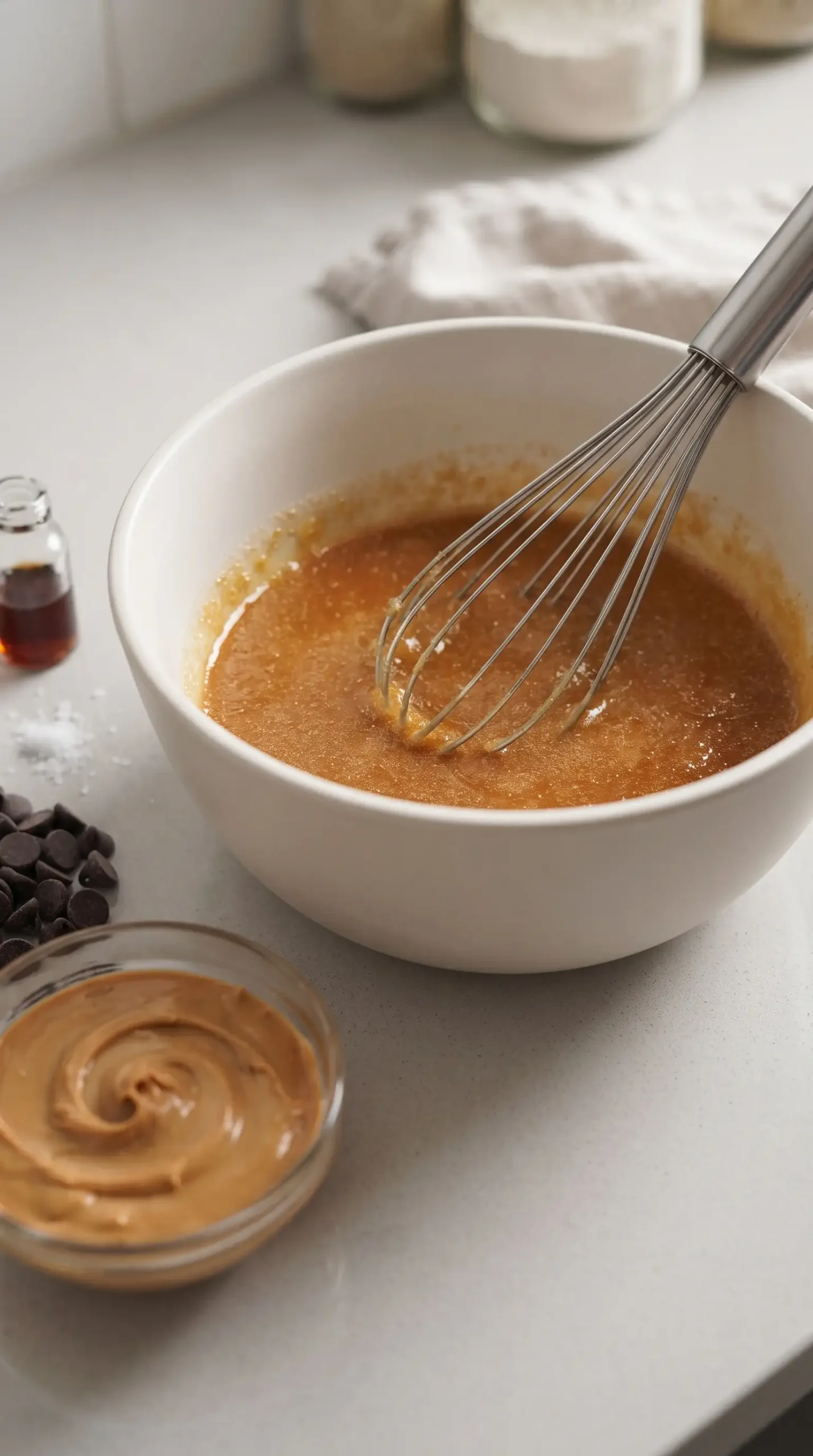
The texture of the peanut butter matters more here than its label alone suggests. A creamy peanut butter that is loose and easily stirred can produce a softer dough, while a thicker peanut butter can make the mixture noticeably more substantial.
- Coconut sugar: Keep it lightly packed as specified so the sweetness and dough consistency stay close to the intended balance.
- Creamy peanut butter: Stir thoroughly into the egg mixture until no distinct streaks remain before adding the chocolate chips.
- Chocolate chips: Fold them in once the peanut butter mixture is smooth so they stay distributed instead of getting worked through the dough repeatedly.
Brown sugar can be used in place of the coconut sugar if needed. The supplied variation uses 1 1/2 cups brown sugar, making it a direct alternative when coconut sugar is not available.
Softer peanut butter calls for extra chilling
A loose peanut butter can make the finished dough difficult to mound neatly, especially before baking. Chilling gives the mixture time to firm up, which helps scoops hold their shape when they reach the baking sheet.
| Peanut butter texture | Expected dough feel | Useful handling choice |
|---|---|---|
| Firm and thick | Holds a mound more readily | Proceed after mixing if the dough feels easy to scoop |
| Soft and easily stirred | Spreads more readily during baking | Chill for at least 15 minutes |
| Very loose | May be difficult to mound cleanly | Give the dough additional chilling time before scooping |
Fifteen minutes can change the shape of the cookies
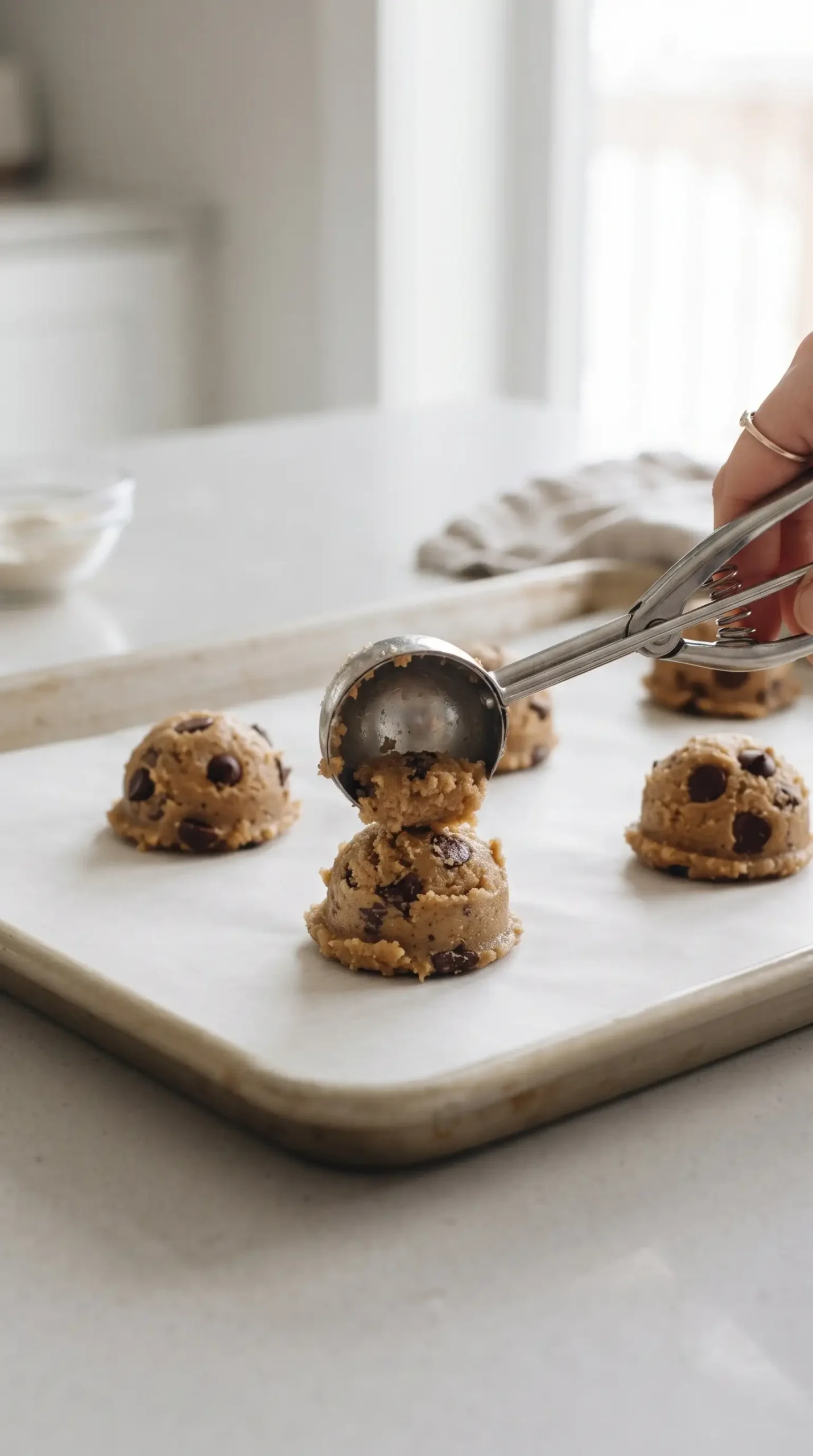
Chilling is optional when the dough already feels thick enough to scoop into rounded portions, but it becomes useful when the peanut butter is soft. A short rest in the refrigerator firms the dough without requiring a long wait before baking.
For perfectly mounded cookies, chill the dough for 15 minutes before portioning. If the dough still feels unusually soft after that point, additional chilling is appropriate; the important cue is whether the scooped dough can sit on the sheet without immediately losing its shape.
Keep any dough that is waiting for the oven chilled while the first batch bakes. This is particularly helpful when working in batches because the unbaked mixture otherwise remains at room temperature and can become progressively softer.
If you want to prepare the dough ahead rather than bake it immediately, refrigerated for up to five days is a practical window for this type of drop cookie. For longer storage, freeze the dough instead of keeping it in the refrigerator.
Heaping tablespoons keep the cookies generously sized
A 1-tablespoon cookie scoop or two spoons can portion the dough into heaping tablespoons, leaving enough room between portions for the cookies to bake without crowding each other. The supplied yield assumes a larger, generous cookie size, so the number of cookies can vary with how much dough goes into each scoop.
Golden edges matter more than a fully firm center
Peanut butter chocolate chip cookies can look slightly unfinished when they are ready to leave the oven. That is intentional: the edges should be golden while the centers remain just a little underdone. The residual heat of the baking sheet continues setting the cookies after they come out.
Eleven to thirteen minutes is the stated baking window, but appearance provides the more useful cue within that range. Look at the edges first, then check the center for a soft appearance instead of waiting for the whole cookie to look firm and deeply browned.
- Edges: Look golden and visibly set.
- Centers: Remain slightly soft and underdone-looking when the cookies leave the oven.
- Cooling: Leave the cookies on the hot baking sheet for 2 minutes before moving them.
- Transfer: Use a metal spatula to move the cookies to a rack once their initial rest is complete.
Common peanut butter cookie mistakes to avoid
The most consequential mistakes come from dough consistency and timing: skipping needed chilling with very soft peanut butter, crowding the portions, or baking until the centers look completely firm. Each can change the shape or texture of the finished cookies. If the dough feels loose, chill it before scooping; if the cookies look soft in the middle but have golden edges, resist the urge to keep baking them solely for a firmer appearance.
Cooling protects the soft center
Those first two minutes on the baking sheet are part of the cooking process, not merely a waiting period. The hot surface gives the cookies a brief chance to firm enough for transfer while their centers finish setting.
Moving them immediately can make the soft cookies more fragile, especially while they are still warm. A metal spatula gives enough support to lift them cleanly once that short rest is complete.
Complete cooling on a rack before storing allows the texture to settle. Packing warm cookies can trap heat and moisture, which can make the surface less pleasant after storage.
Sea salt gives the chocolate topping extra contrast
A light sprinkle of sea salt over the tops is an optional finishing touch that works naturally with the sweet coconut sugar and chocolate chips. Keep it restrained so the salt remains a contrast instead of becoming the dominant flavor.
Room-temperature storage keeps them ready for several days
Once completely cool, the cookies can be kept at room temperature for about four days. An airtight container is a practical choice for maintaining their texture during that short storage period.
Freezing is useful when the batch needs to last longer. The cookies freeze well for up to three months, giving you a way to preserve the baked batch without relying on extended room-temperature storage.
For the best texture after storage, allow frozen cookies to thaw before serving. Keeping them protected from excess air during storage helps limit unwanted drying and preserves the character of the peanut butter and chocolate.
Small handling choices shape the baked result
For these peanut butter chocolate chip cookies, consistency in the dough matters more than adding extra ingredients. A smooth peanut butter mixture, appropriate chilling when needed, generous but even scoops, and a slightly soft center at removal all work together to produce cookies with defined edges and a tender middle.
Golden edges and soft centers define the finished cookies
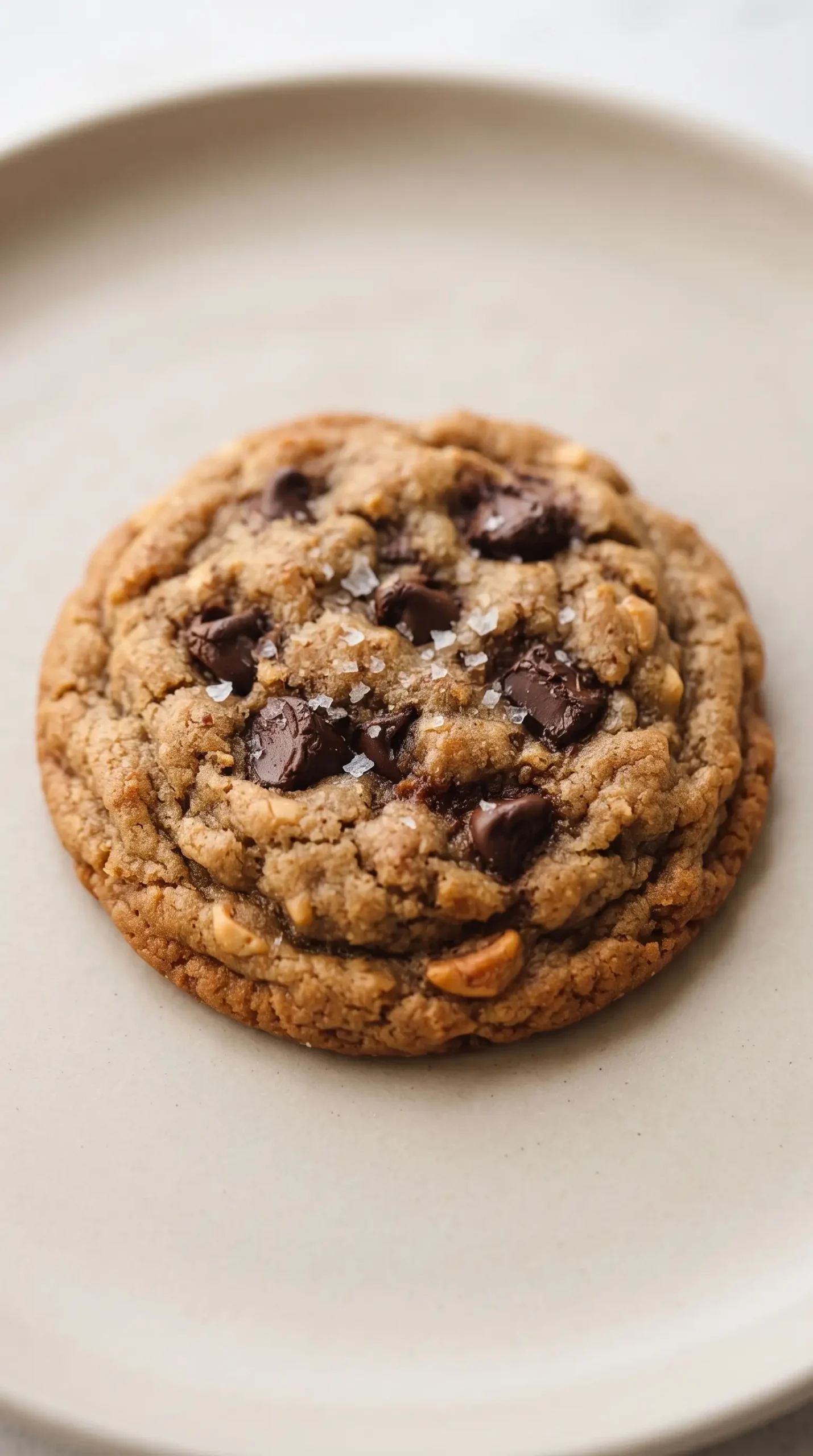
Golden edges paired with a center that still looks slightly underdone are the clearest sign that the cookies have reached the intended point in the oven. That visual cue matters because the cookies continue to firm during their short rest on the hot baking sheet, so waiting for a completely set center can push the texture too far.
Questions about peanut butter chocolate chip cookies and texture
Can I use brown sugar instead of coconut sugar?
Yes. The supplied alternative is 1 1/2 cups brown sugar in place of the coconut sugar, so it can be used when that is the sweetener you have available.
Why should I chill the cookie dough?
Chilling is most useful when the peanut butter makes the dough soft. It firms the mixture enough to help the scooped portions hold a mound on the baking sheet, with 15 minutes serving as the specified starting point.
How do I know when the cookies are done?
Look for golden edges while the centers remain slightly underdone-looking. The cookies should then rest on the hot baking sheet for 2 minutes, during which the centers continue to set.
Can I freeze baked peanut butter chocolate chip cookies?
Yes. Once cooled, the cookies can be frozen for up to three months. Protect them well during freezing and allow them to thaw before serving.
What if my peanut butter is unusually soft?
Give the dough additional refrigerator time before scooping if 15 minutes does not make it firm enough to mound cleanly. The softer the peanut butter, the more important dough consistency becomes for controlling the cookie shape.
Peanut Butter Chocolate Chip Cookies with Coconut Sugar
Ingredients
Method
- Heat the oven to 350°F (177°C) and prepare a large rimmed baking sheet with parchment paper.
- Whisk the coconut sugar and eggs together in a medium bowl until smooth. Mix in the vanilla extract and salt until evenly combined.
- Add the peanut butter and stir until the mixture becomes a smooth dough with the peanut butter fully incorporated. Mix in the chocolate chips until they are distributed throughout the dough.
- For cookies that hold a rounded shape, refrigerate the dough for 15 minutes before portioning. Keep any remaining dough chilled while the first batch bakes.
- Scoop heaping tablespoons of dough using a 1-tablespoon cookie scoop or two spoons onto the prepared baking sheet, leaving 1 to 2 inches of space between portions.
- Bake the cookies for 11 to 13 minutes, until the edges are golden and the centers still appear slightly underdone.
- Leave the cookies on the hot baking sheet for 2 minutes, then use a metal spatula to transfer them to a cooling rack. Repeat with the remaining dough.