
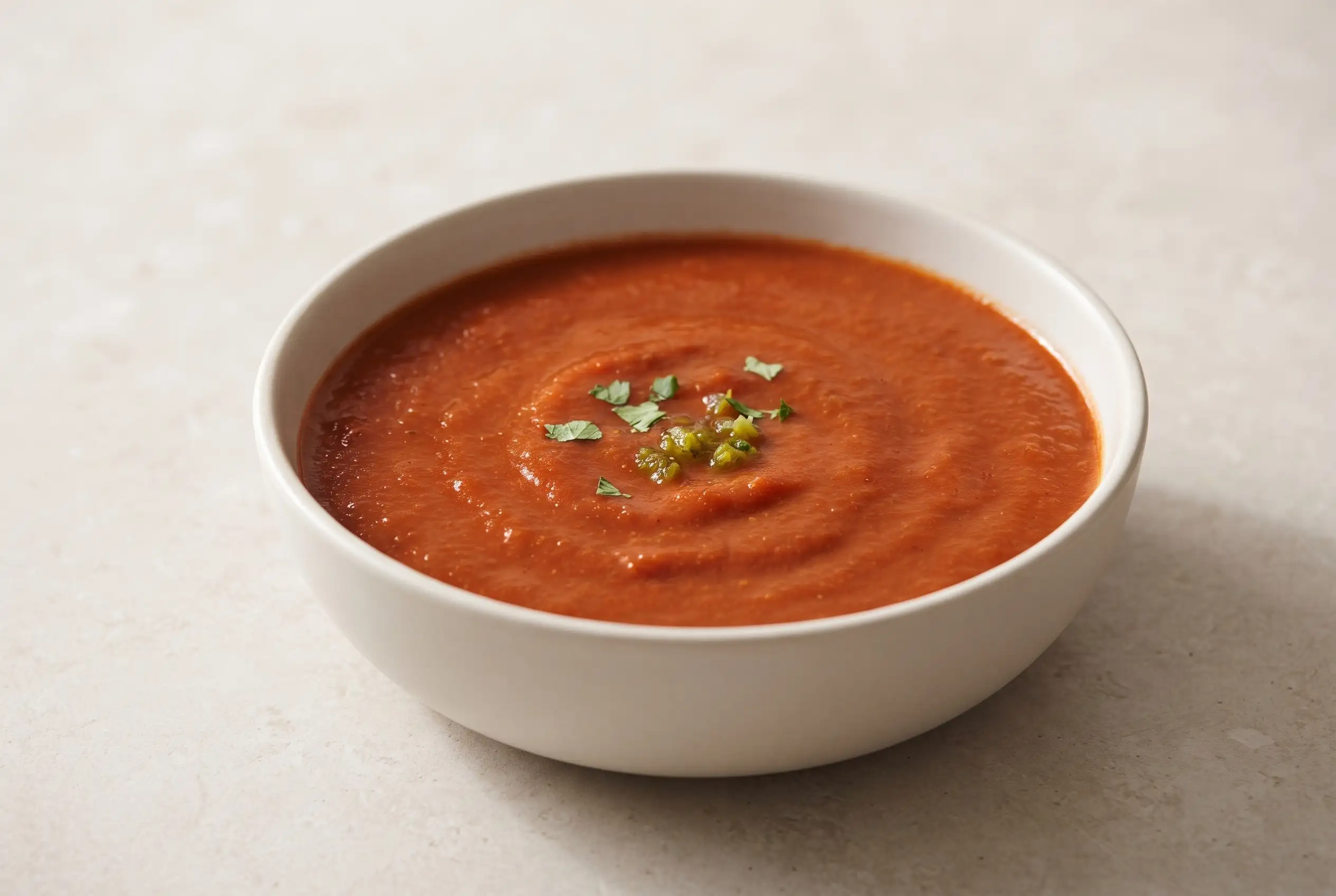
5 Minute Blender Enchilada Sauce turns a can of whole peeled tomatoes, pantry seasonings, onion, garlic, and jalapeño into a smooth, savory sauce with almost no hands-on work. The quick blending approach makes enchilada sauce especially useful when dinner needs a flavorful component without a long stovetop session, while a brief simmer can deepen the flavor when extra time is available.
Why the Tomato Base Works in Enchilada Sauce
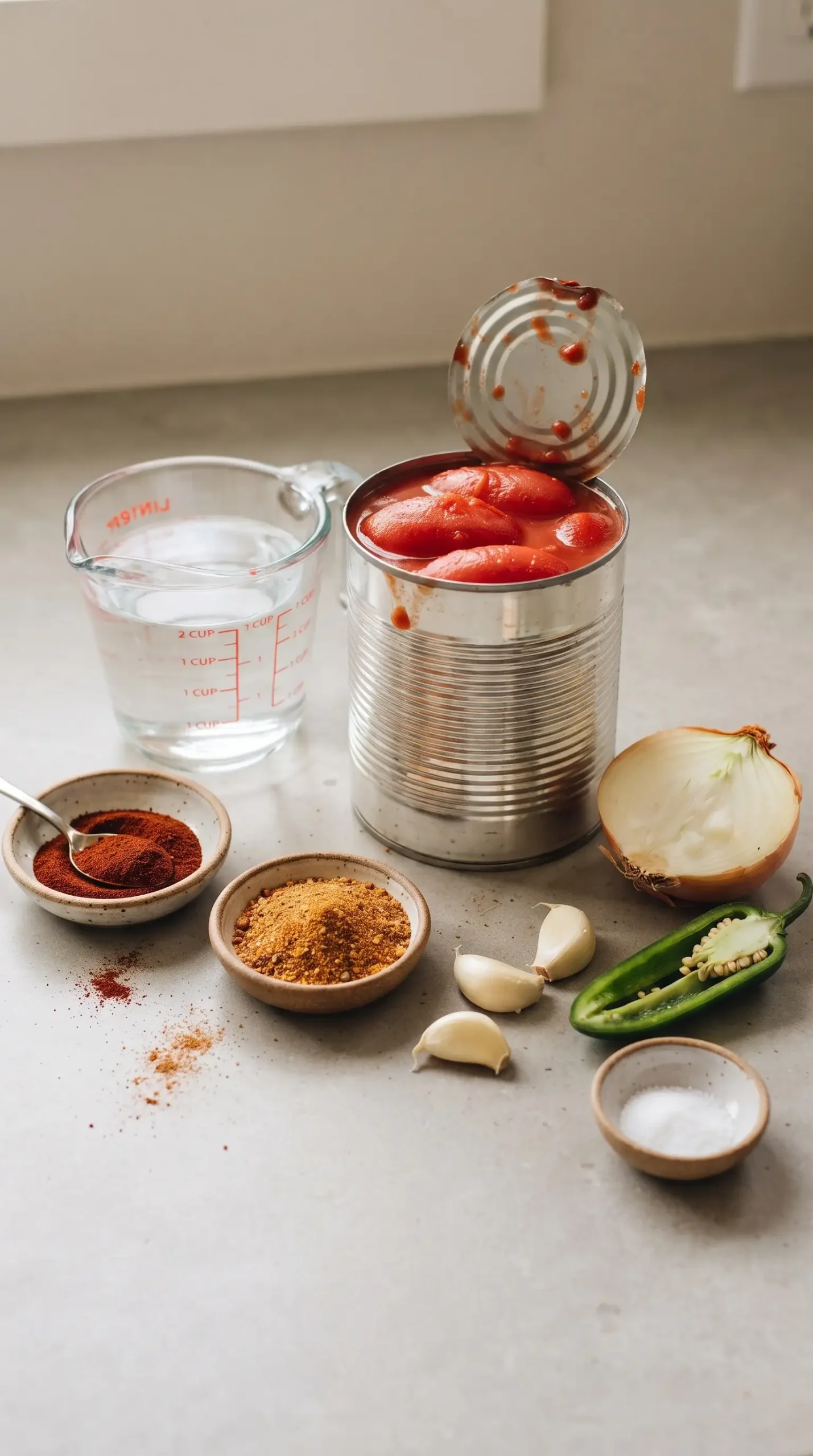
Whole peeled tomatoes give the sauce its liquid foundation and a naturally rounded tomato flavor. Because the tomatoes are blended with the other ingredients, there is no need to chop them further or build a separate cooked tomato base before blending.
One cup of water keeps the mixture loose enough to blend into a pourable sauce. That proportion also matters when the sauce is used over enchiladas, where a thick paste would be difficult to spread evenly. The finished texture should flow easily from a spoon while still coating food instead of behaving like tomato juice.
Chili Powder and Southwestern Seasoning Set the Flavor
Three tablespoons each of chili powder and taco or Southwestern seasoning create the main savory-spiced character. Since seasoning blends vary by brand, the finished flavor can differ slightly depending on what is in the particular blend being used.
- Chili powder: supplies the broad chile character that anchors the sauce.
- Seasoning blend: brings additional savory spices without requiring several separate measurements.
- Salt: sharpens the other flavors, so adding more should wait until the sauce has been tasted.
Salt deserves a little restraint because prepared taco or Southwestern seasoning may already contain sodium. Once everything is blended, taste the sauce and adjust only if it seems muted. That simple check can prevent an otherwise balanced enchilada sauce from becoming overly salty.
Aromatics Give the Blender Sauce Its Savory Edge
Half an onion, three garlic cloves, and a seeded jalapeño add freshness and savory complexity to the tomato mixture. Removing the jalapeño ribs and seeds keeps its contribution more controlled, while the raw ingredients allow the blender to do the work of breaking them down.
Blending Smoothly Without Losing Control
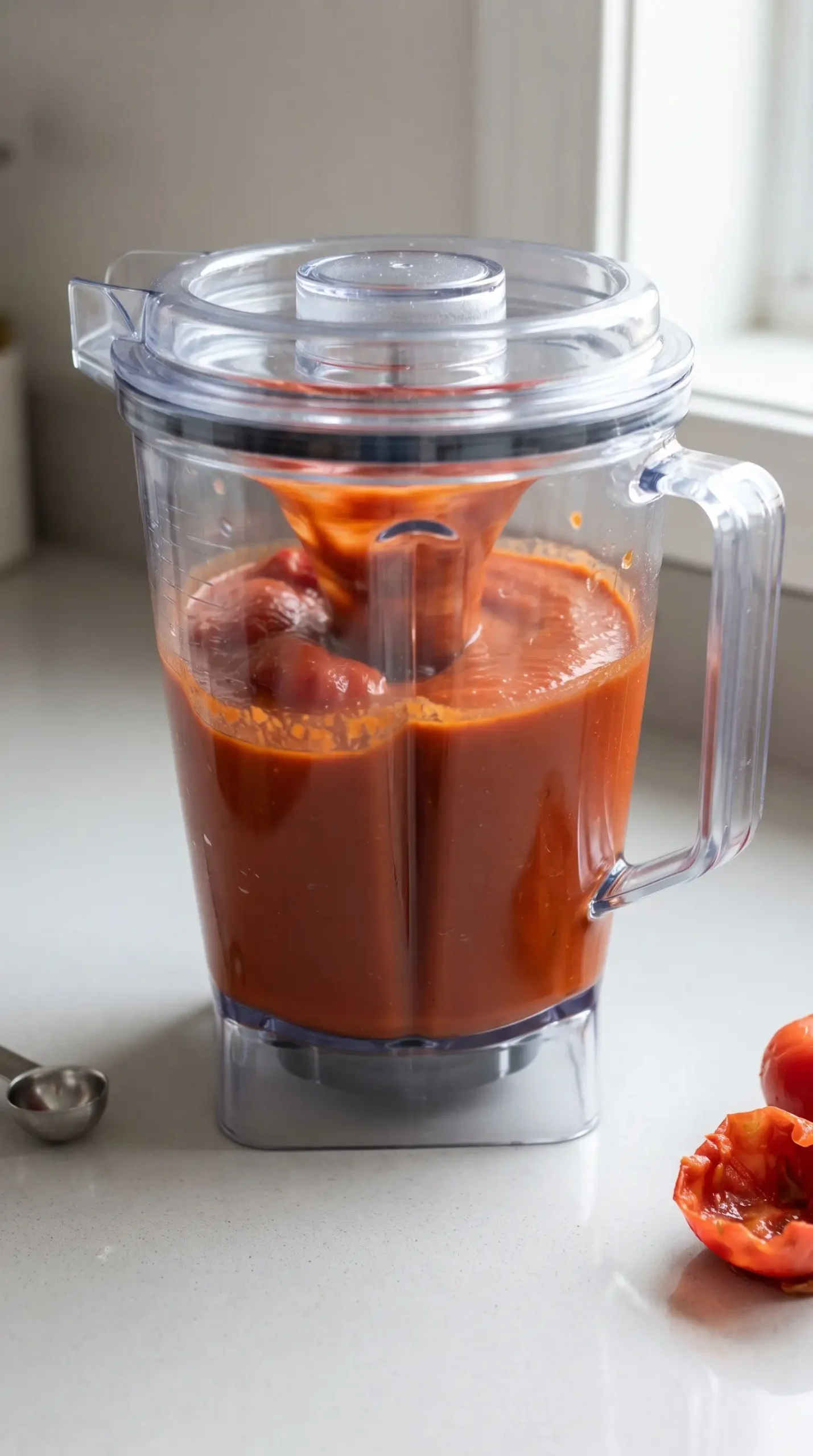
Start with the ingredients arranged so the blender can circulate the mixture efficiently. The tomatoes and water provide plenty of moisture, while the chopped onion and smaller garlic and jalapeño pieces help the blades catch the solid ingredients.
Blend until the visible pieces of onion, garlic, and jalapeño have disappeared and the sauce looks uniformly smooth. A sauce intended for enchiladas benefits from that consistency because it can spread across tortillas and around the edges of a baking dish without leaving large raw vegetable pieces in isolated spots.
Texture is also the easiest quality to assess before serving. If the sauce looks unusually thick, it may need more blending time to fully break down the solids; if it looks loose and evenly blended, it is ready to use. Avoid making repeated additions before tasting and assessing the texture, since the proportions already provide the liquid needed for blending.
The Smooth Finish Makes Enchilada Sauce Easy to Use
A fully blended sauce should be fluid enough to pour but substantial enough to cling to tortillas, fillings, or the bottom of a baking dish. That middle texture makes blender enchilada sauce versatile: it can be spooned over assembled enchiladas, spread beneath them, or used wherever a smooth chile-tomato sauce is needed.
The texture may seem thinner immediately after blending than a sauce that has spent time reducing on the stove. That is expected. Heat can evaporate some moisture and concentrate the flavors, so the choice between immediate use and simmering changes both the consistency and the character of the finished enchilada sauce.
A Short Simmer Adds Depth When Time Allows
Blending produces a usable sauce immediately, but gentle simmering can bring the flavors together more fully. The tomato, chile, aromatics, and seasoning have more opportunity to meld, while some water evaporates and the sauce becomes more concentrated.
| Finish | Texture | Flavor character | Best use |
|---|---|---|---|
| Fresh from blender | Smooth and more fluid | Bright, direct, freshly blended | Fast meals and immediate assembly |
| Brief simmer | More concentrated | Deeper and more integrated | When extra flavor development is wanted |
| Longer simmer within the suggested range | Thicker as moisture cooks away | More concentrated still | When a richer sauce texture suits the dish |
For extra depth, simmering for roughly 15 to 30 minutes is an option. Keep the heat gentle and watch the consistency as moisture cooks away. If the sauce reaches the thickness you want before that window is complete, there is no need to keep reducing it simply to reach a particular number.
Common 5 Minute Enchilada Sauce Mistakes to Avoid
Several problems are easy to prevent because they begin with choices made before the blender even starts. The most important is changing the liquid balance casually. Using a much larger amount of water can leave the sauce thin and dilute the seasoning, while adding extra dry seasoning before tasting can push the flavor too far in the opposite direction.
Another issue is stopping the blender while pieces of onion, garlic, or jalapeño are still visible. Large fragments can make the sauce feel coarse and distribute the heat unevenly. Give the mixture enough blending time to become consistently smooth before deciding that it needs any other adjustment.
Finally, avoid assuming that every taco or Southwestern seasoning blend has the same salt and spice level. A prepared blend can vary considerably, so tasting after blending is more reliable than automatically increasing the salt. That small check is particularly useful when the sauce will be served with other seasoned fillings.
Enchilada Sauce Beyond the Enchilada Pan
The smooth tomato-chile mixture works naturally as a sauce for enchiladas, but its texture also makes it useful in other meals that benefit from a savory chile base. Spoon it over cooked vegetables, rice, beans, or other Mexican-inspired dishes when a moist, seasoned component is needed.
Freezing Keeps Extra Sauce Useful
Extra enchilada sauce freezes well, making a larger batch practical even when only part of it is needed immediately. Let the sauce cool appropriately before transferring it to a freezer-safe container, leaving enough room for expansion. Smaller portions can be especially convenient when future meals call for only a little sauce.
For the best texture after freezing, thaw the sauce gradually and stir it thoroughly before using. Separation can occur after freezing and thawing, but vigorous stirring can bring the mixture back together. If the thawed sauce seems thicker than expected, a small amount of water can loosen it for pouring.
Simple Ingredient Adjustments Can Change the Heat
The jalapeño is the easiest part of the formula to adjust when heat preferences differ. Capsaicin is concentrated in the pepper’s white ribs and inner lining, and removing the ribs and seeds can reduce the heat contributed to the sauce. Since individual jalapeños vary in heat, adding or removing pepper is best treated as a flavor decision instead of a guarantee of a specific heat level.
For a less spicy version, reduce the jalapeño rather than compensating with extra water. More water changes the sauce’s body and can weaken the seasoning balance. If the sauce needs more liquid after blending or simmering, adjust gradually so it remains useful as a pourable coating.
Serve the Sauce Where Its Texture Matters
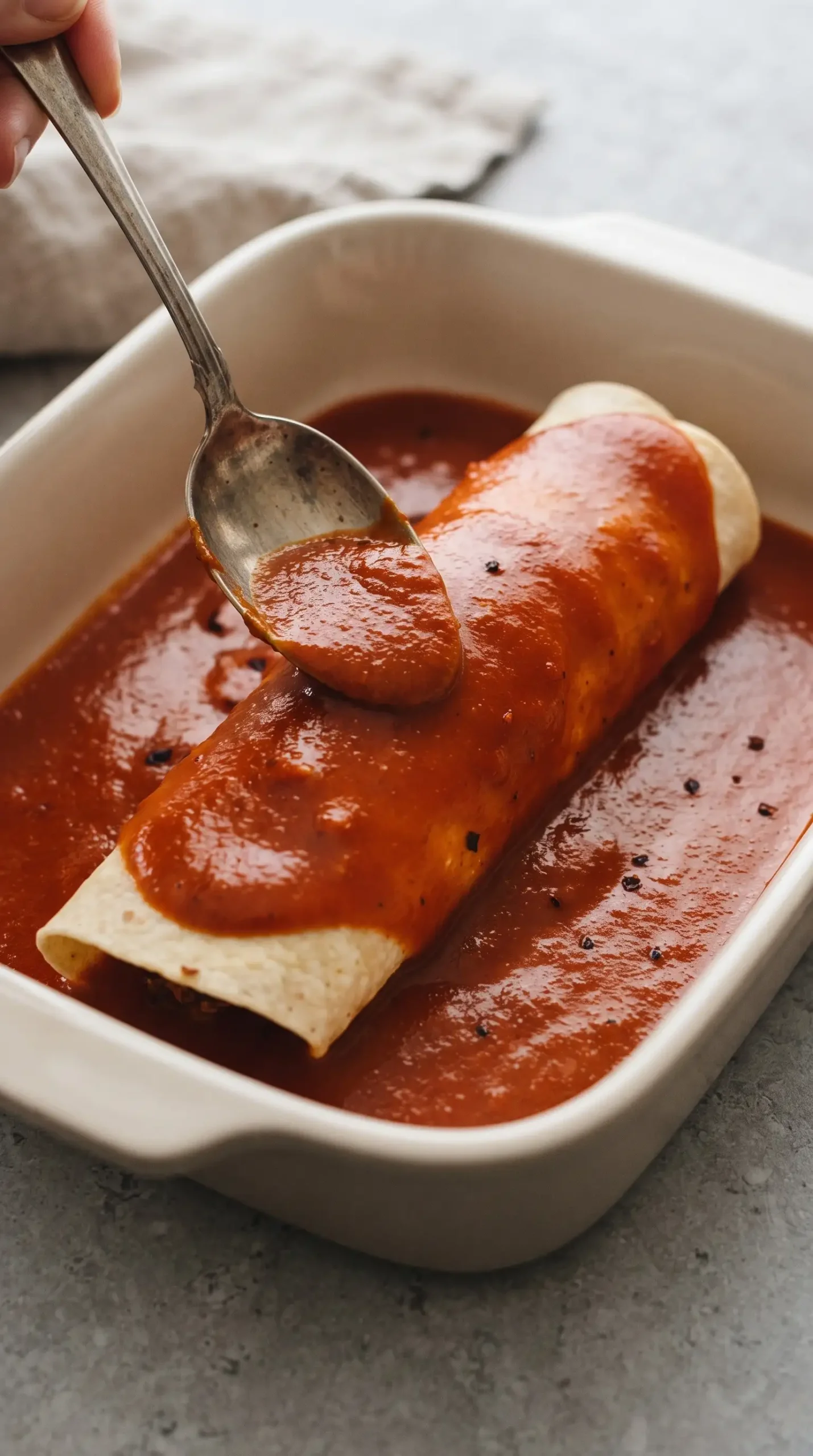
Enchilada sauce is easiest to work with when it can move across the food in a thin, even layer. Use it underneath assembled enchiladas to prevent dry contact with the pan, spoon more over the top for coverage, or add it to the dish according to how much sauce the filling and tortillas can comfortably carry.
A smooth sauce also pairs well with fillings that already have their own texture. Beans, rice, vegetables, cheese, and other cooked fillings can provide contrast without requiring chunks in the sauce itself. The result is a dish where the sauce supplies moisture and seasoning while the filling remains distinct.
A Five-Minute Approach Keeps Weeknight Cooking Flexible
Speed is the defining advantage of a 5 minute enchilada sauce: the blender handles the chopping and combining work, leaving the sauce ready for immediate use. That makes it particularly convenient when the rest of a meal is already demanding attention.
One Small Blend Check Protects the Finished Sauce
Before using enchilada sauce, look for a uniformly smooth texture and taste for seasoning. Those two checks catch the most consequential issues without adding meaningful work. If the sauce is smooth and balanced, it can go straight into the meal; if more depth is desired, a simmer provides a simple next step.
Fresh Blending or Simmering Depends on the Finish You Need
The blender gives enchilada sauce its quickest path from pantry ingredients to a usable, smooth coating. Choosing to simmer afterward is mainly a question of desired depth and concentration: immediate use preserves the speed of the approach, while additional cooking develops a more concentrated result.
That flexibility is what makes the easy enchilada sauce recipe practical for different cooking situations. Blend it and use it when dinner is moving quickly, or give it additional time when a deeper sauce better suits the meal.
Questions About Heat Texture and Storage
Can I make the sauce less spicy?
Yes. The simplest adjustment is to use less jalapeño, especially because the ribs and seeds have already been removed. Taste the blended sauce before making further changes, since the heat of individual peppers can vary.
Why is my blender enchilada sauce thinner than expected?
The sauce is naturally more fluid immediately after blending because it has not lost moisture through cooking. If you want a more concentrated consistency, simmer it gently and watch the sauce as it reduces. Avoid adding extra dry seasoning simply to compensate for a texture that can be changed through cooking.
Can I use the sauce straight from the blender?
Yes. The ingredients are designed to be blended into a usable sauce without requiring a separate cooking stage. A simmer is an optional way to deepen the flavor and concentrate the texture, not a prerequisite for using the sauce.
How should I adjust the salt?
Taste after blending before adding more salt. Taco and Southwestern seasoning blends can contain different amounts of sodium, so the amount needed depends partly on the particular blend used. Small additions are easier to control than trying to correct an overly salty sauce.
Can I freeze leftover enchilada sauce?
Yes. Store cooled sauce in a freezer-safe container with room for expansion, then thaw and stir thoroughly before using. If the texture needs loosening after thawing, add a little water gradually rather than changing the seasoning balance.
Blender Enchilada Sauce with Whole Peeled Tomatoes and Garlic
Ingredients
Method
- Add all ingredients to a blender.
- Blend until the sauce is smooth and the onion, garlic, and jalapeno pieces are fully incorporated.
- Use immediately, or simmer the blended sauce for extra flavor depth if desired.