
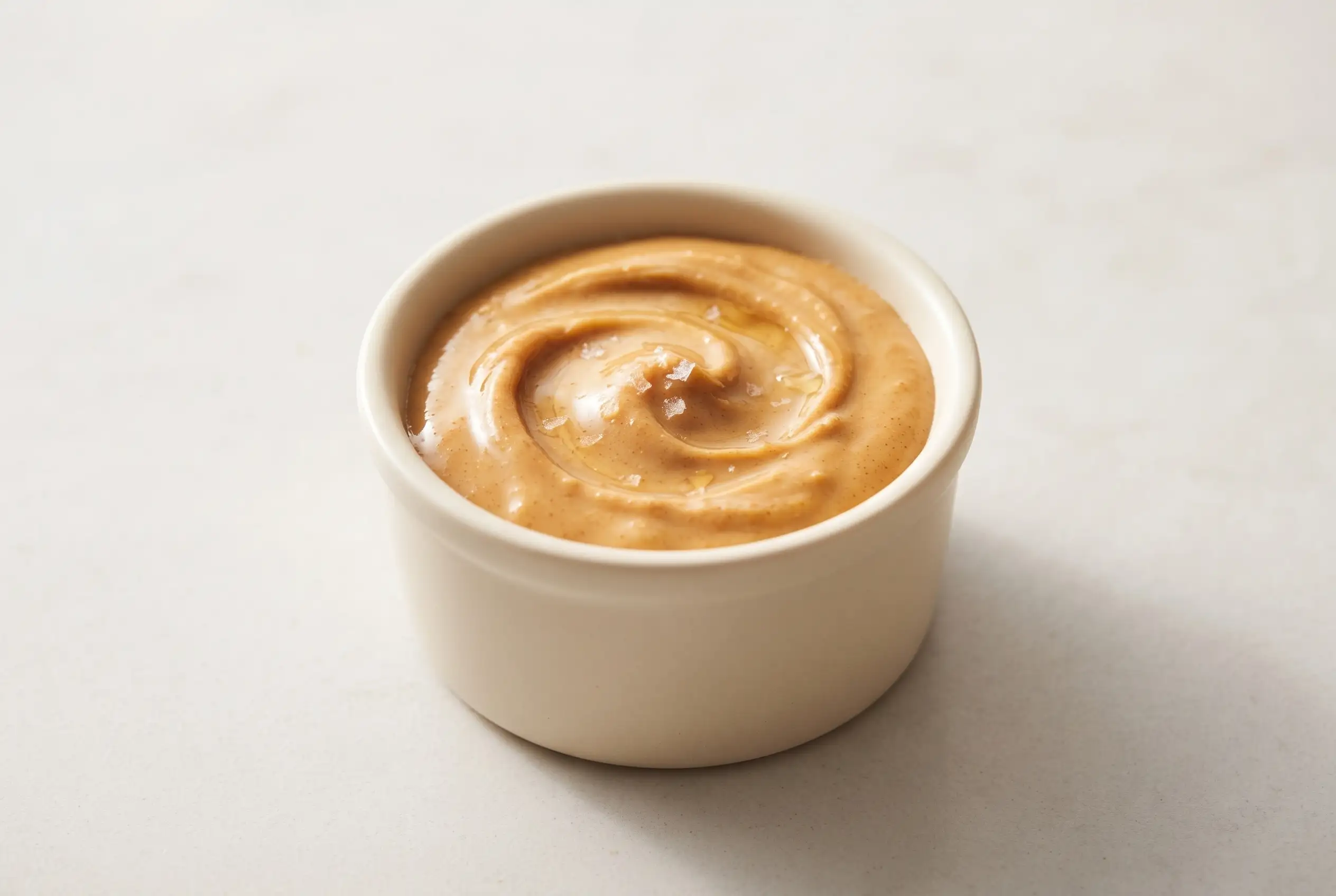
Homemade peanut butter turns dry roasted peanuts into a creamy spread with almost no equipment beyond a food processor and a little patience. In this 5 minute peanut butter method, the texture changes visibly as the peanuts move from crumbs to a dry, cohesive ball and then into a smooth, spoonable butter. Honey or sugar can be stirred in at the end, along with salt to suit your taste, so the finished spread stays easy to adjust.
Why dry roasted peanuts make homemade peanut butter simple
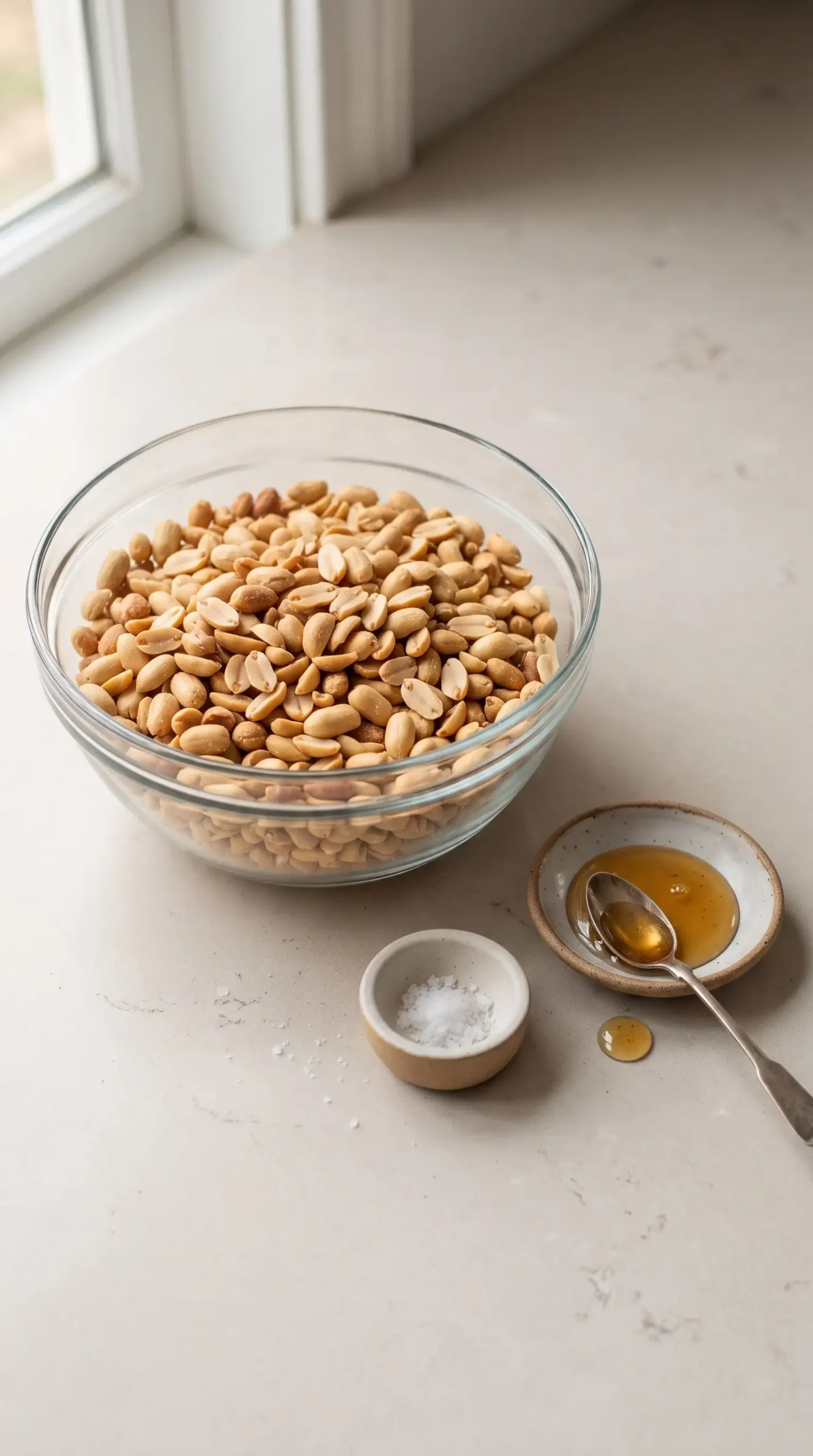
Dry roasted peanuts are already cooked and ready for processing, which keeps the ingredient list focused on the peanut flavor itself. Because the nuts go straight into the food processor, there is no separate roasting stage to manage before blending. That makes the homemade peanut butter recipe especially practical when you want a fresh spread without building the process around several pieces of equipment.
Peanut texture changes through processing, and those changes tell you more than a clock alone can. Early crumbs show that the nuts are breaking down; a compact, dry-looking mass means the particles have gathered together; a glossy, fluid appearance signals that continued processing has transformed the mixture into spreadable peanut butter.
Peanut texture changes inside the food processor
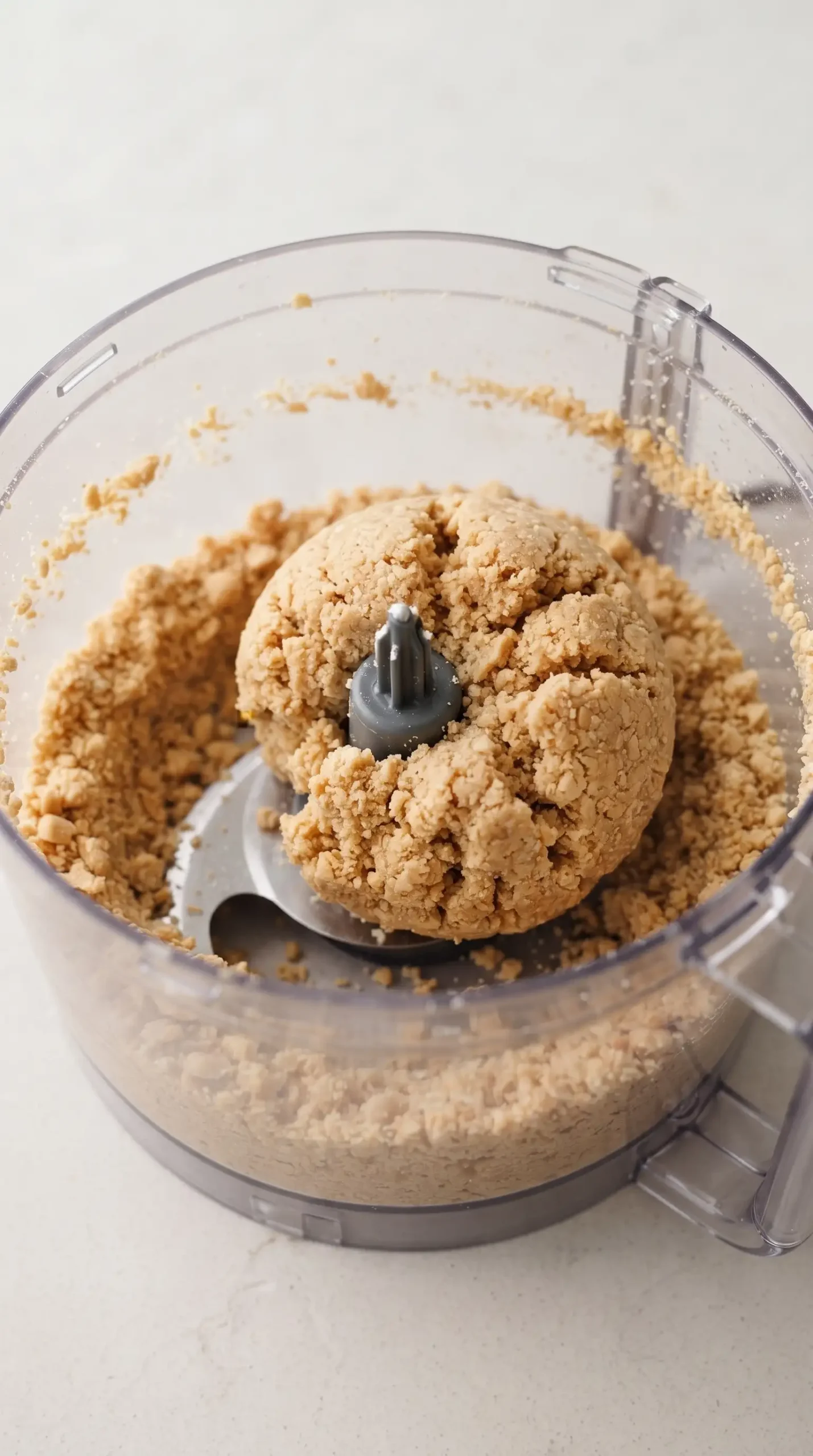
At first, the blades reduce the nuts to coarse crumbs. Soon the crumbs become finer and begin clinging together. A dry ball can look like a setback, but it is an important middle stage on the way to a creamy consistency. Keeping the machine running allows the peanut mixture to progress beyond that dense appearance.
- Crumb stage: the peanuts look loose and granular.
- Ball stage: the ground peanuts gather into a dense, dry mass.
- Creamy stage: the mass becomes smoother, looser, and visibly more fluid.
Watching those stages helps you judge food processor peanut butter by texture instead of stopping at the first sign that the nuts have clumped.
No extra oil is needed to make the spreadable texture because natural oil in the peanuts is released during processing. This keeps the basic mixture simple while the food processor does the work of turning the ground nuts into a creamy spread.
Choosing honey, sugar, and salt for the finished spread
Sweetness is easiest to control after the peanuts have reached a smooth texture. Honey gives the finished spread a distinct sweet character and a soft, rounded taste, while sugar provides sweetness without introducing the same liquid ingredient. Either works with the stated method, so the choice can follow the flavor you want.
| Choice | What it changes | When to use it |
|---|---|---|
| Honey | Adds sweetness with its own recognizable flavor | Choose it when a naturally honeyed finish appeals to you |
| Sugar | Adds straightforward sweetness | Choose it when you want the peanut flavor to stay more direct |
| Additional salt | Sharpens and balances the overall flavor | Add it only if the finished spread needs more seasoning |
Small additions matter because the peanut base is concentrated. Stir in sweetness and salt after processing, then taste before adding more. That approach gives you control without changing the texture during the main grinding stage.
What makes a 5 minute peanut butter texture creamy
Continuous processing is the key control point. The food processor needs enough uninterrupted time for the peanut crumbs to move through their dense middle stage and become fluid. Stopping as soon as the mixture forms a ball leaves you at an earlier texture, even though the nuts have already been thoroughly broken down.
A creamy homemade peanut butter should look smooth and loose enough to move easily when stirred. If the mixture still resembles a dry mound, more processing is the relevant adjustment. The useful visual cue is the transition from a compact mass to a smoother, flowing consistency.
Reading the dry ball stage without stopping too soon
One of the most useful observations in this method is that the dry ball is temporary. It can seem as though the food processor has taken the peanuts as far as they can go, but the supplied method specifically carries the mixture through this stage toward a smooth, liquid-like finish.
Keep the distinction between appearance and completion in mind. A ball means the peanuts have gathered; it does not mean the desired spreadable texture has arrived. Continuing until the mixture visibly loosens prevents an early stop based on a misleading visual milestone.
Ways to keep homemade peanut butter easy to adjust
Flavor adjustments work best when they happen after the texture has been established. Once the peanuts are smooth, honey or sugar can be added to taste, followed by any extra salt. This separates texture control from seasoning control and makes the finished spread easier to customize.
- Texture first: process the peanuts until they are smooth and fluid.
- Sweetness next: stir in honey or sugar according to your preferred level.
- Season last: add extra salt only if the finished flavor calls for it.
That order also keeps the basic peanut character easy to assess before sweetness and seasoning become part of the tasting decision.
Common homemade peanut butter mistakes to avoid
Stopping during the dry-ball stage is the clearest error because the mixture has not reached the creamy finish. The visible clump can look finished, but it represents a midpoint in the transformation. Continuing the food processor until the texture becomes smooth addresses the problem directly.
Another avoidable mistake is adjusting sweetness or salt before the peanut texture is ready. Early seasoning makes it harder to judge the finished balance, while late additions are simple to taste and modify. Use the smooth peanut base as the point at which flavor adjustments begin.
Overcomplicating the process can also work against the simplicity of the method. Dry roasted peanuts are the starting point, and the food processor performs the main transformation. Keeping the approach focused lets the texture changes provide the information needed for the next decision.
Serving homemade peanut butter once it turns smooth
Fresh peanut butter is naturally suited to spreading because the processed peanuts have become cohesive and creamy. It can also be spooned into other foods where a peanut flavor and rich texture are useful. Since the flavor can be adjusted with honey, sugar, or salt, the finished spread can remain the star of the preparation.
For everyday use, a smooth spoonful works well anywhere a peanut butter spread is appropriate. The important distinction is that the food processor creates a texture that is easy to scoop and spread without requiring a long ingredient list.
Storage choices for homemade peanut butter
Storage depends on how quickly you expect to use the spread. The supplied guidance allows either refrigeration or room-temperature storage when you expect to finish it quickly. Choosing between those options is therefore a practical matter of use rather than a need to change the preparation itself.
| Storage choice | Useful when | Practical consideration |
|---|---|---|
| Refrigerator | You want chilled storage | The spread will be kept cold between uses |
| Room temperature | You expect to go through it quickly | Keep it in a suitable covered container and use it promptly |
| Either approach | Your usage pattern determines the choice | Pick the option that matches how fast the spread will be eaten |
Whichever storage route fits your routine, keep the peanut butter in a suitable container and make the choice based on expected use. That keeps storage guidance aligned with the simple nature of the spread.
Why continuous processing matters more than extra ingredients
Minimal ingredients do not mean the texture happens instantly. The food processor has a specific job: breaking down the peanuts far enough that the mixture moves beyond crumbs and the dry ball into a creamy state. That mechanical transformation is the central piece of the method.
Adding more ingredients cannot replace that processing stage. Honey, sugar, and salt are flavor adjustments, while the peanut processing determines whether the spread has reached the desired consistency. Keeping those roles separate makes the method easier to understand and repeat.
When a food processor gives you the clearest visual cues
A food processor is particularly useful here because you can observe the mixture as it changes while the blade continues working. The progression from crumbs to a dry ball to a smooth, fluid-looking butter provides direct feedback about texture, so you do not need to rely only on an abstract timing target.
Those visual cues are also helpful if your peanuts take a little longer or shorter to reach the same appearance. The supplied method points to a four-to-five-minute processing window, but the texture itself remains the more meaningful sign of completion within that process.
Different sweetness levels for homemade peanut butter
Some batches need no strong sweetness, while others benefit from a little honey or sugar. Because the sweetener is added after the peanuts have been processed, you can make that decision based on the actual flavor of the finished peanut base instead of committing before tasting it.
A restrained addition keeps the peanut flavor prominent. More sweetness moves the spread toward a sweeter snack-style profile. Either direction can work with the same smooth peanut foundation, provided the addition is stirred in gradually and evaluated by taste.
What to look for before serving the peanut butter
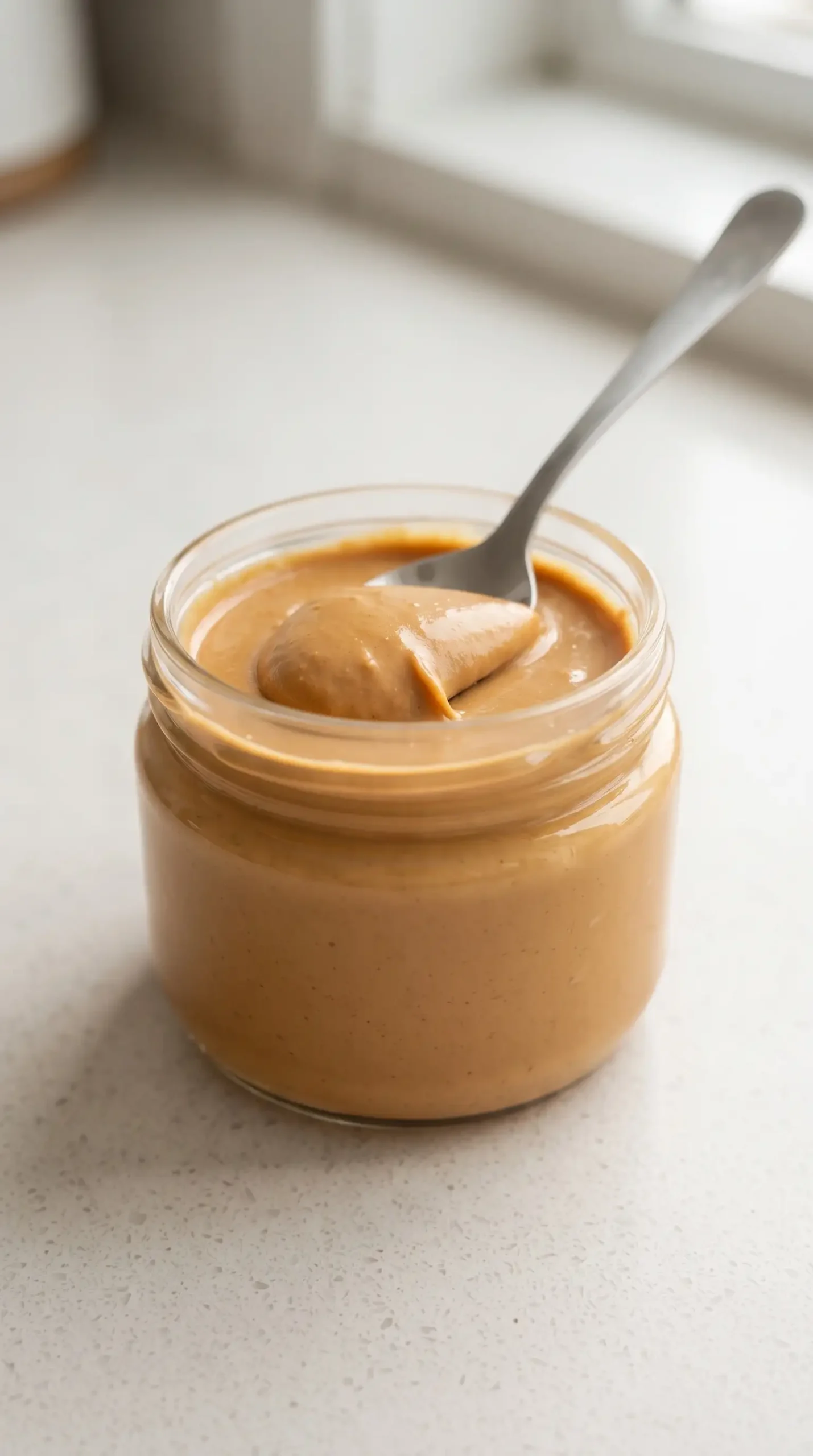
A finished batch should have a smooth, creamy appearance and a consistency that moves easily when stirred. The dry, compact ball should no longer be the dominant texture. Once the peanut mixture has loosened, sweetness and salt can be checked and adjusted according to preference.
Serving decisions are simplest when texture and flavor are both settled. A quick visual check of the spread followed by a taste gives you two useful signals: whether the food processor has taken the peanuts far enough and whether the seasoning suits your preference.
Homemade peanut butter works best when texture leads the process
Peanuts become creamy only after the food processor carries them through every visible stage, including the dense ball that can tempt you to stop early. Once that transition is complete, honey or sugar and optional salt can be adjusted without interfering with the main texture work.
That sequence keeps the homemade peanut butter straightforward: let the nuts transform first, judge the finished consistency by sight, then tune the flavor. The result is a fresh spread whose most important decision is also the easiest to see.
Questions about texture, storage, and homemade peanut butter
Why is my peanut butter still a dry ball?
A dry ball means the peanuts have reached an intermediate stage, not the smooth finish. Keep the food processor running so the dense mass can progress into a looser, creamy consistency.
Can I use sugar instead of honey?
Yes. Sugar is an appropriate alternative to honey in the supplied method. Stir it into the smooth peanut butter after processing, then taste and adjust the sweetness to your preference.
Should I add salt if the peanuts already taste seasoned?
No additional salt is necessary if the finished peanut flavor already tastes balanced. Taste after processing and add only enough salt to suit the batch.
Can homemade peanut butter stay at room temperature?
The provided guidance allows room-temperature storage when you expect to use the spread quickly. If you do not expect to go through it fast enough, refrigeration is the other stated storage option.
How do I know when food processor peanut butter is finished?
Look for a smooth, creamy, fluid-looking texture instead of crumbs or a compact ball. That visible change is the clearest completion cue in the method.
Can I make the peanut butter less sweet?
Yes. Start with the smaller amount of honey or sugar, or leave the sweetener out if that suits your preference. Because sweetness is adjusted after processing, you can taste the peanut base before deciding how much to add.
Homemade Peanut Butter in 5 Minutes with Roasted Peanuts
Ingredients
Method
- Add the peanuts to a food processor and process continuously for 4-5 minutes, allowing the mixture to progress from crumbs to a dry ball and then to a smooth, creamy consistency.
- Stir in the honey or sugar and add additional salt if desired.
- Store the peanut butter in the fridge or at room temperature if it will be used quickly enough.