
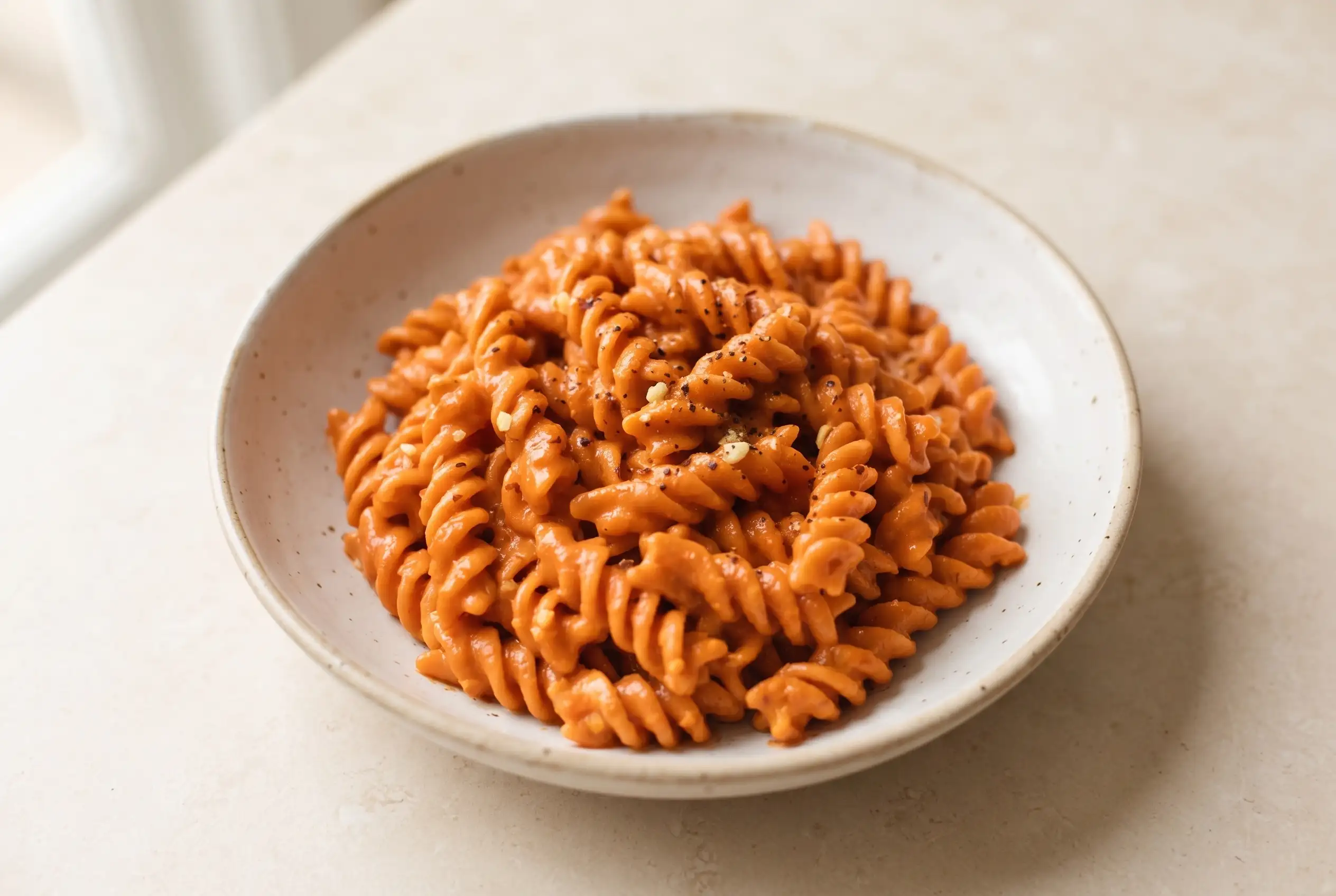
Vegan vodka pasta turns a short ingredient list into a creamy, tomato-rich dinner with surprisingly little effort. The combination of olive oil, garlic, deeply cooked tomato paste, vodka, and full-fat coconut milk creates a smooth sauce that clings beautifully to pasta, while a splash of reserved pasta water helps bring everything together.
Why 5 Ingredient Vegan Vodka Pasta Works
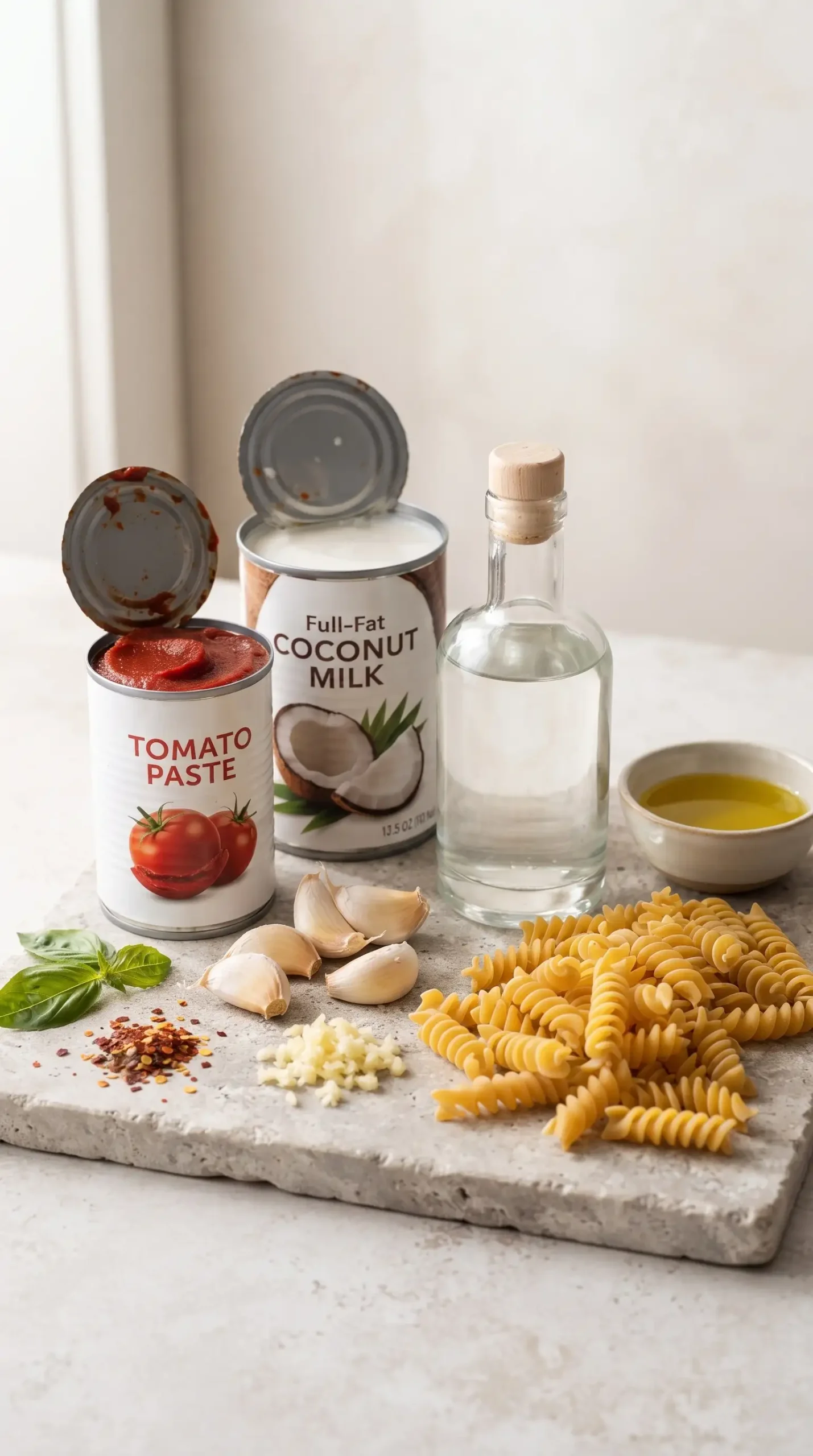
Five Ingredient Vegan Vodka Pasta succeeds because each major component has a clear job. Tomato paste supplies concentrated tomato flavor, while olive oil gives the sauce richness from the beginning. Garlic provides an aromatic base, and vodka brings a sharp note that softens as it cooks into the sauce.
Coconut milk provides the creamy texture that makes the finished pasta feel indulgent without dairy. Full-fat coconut milk is especially useful here because its richness balances the acidity of the tomato paste and creates a sauce that coats the noodles instead of tasting thin.
Meanwhile, pasta water acts as the finishing adjustment. Its starch helps loosen the sauce while encouraging it to cling to the pasta. That small addition can make the difference between a sauce that sits on the bottom of the bowl and one that wraps around every piece.
Tomato Paste Needs Patient Browning
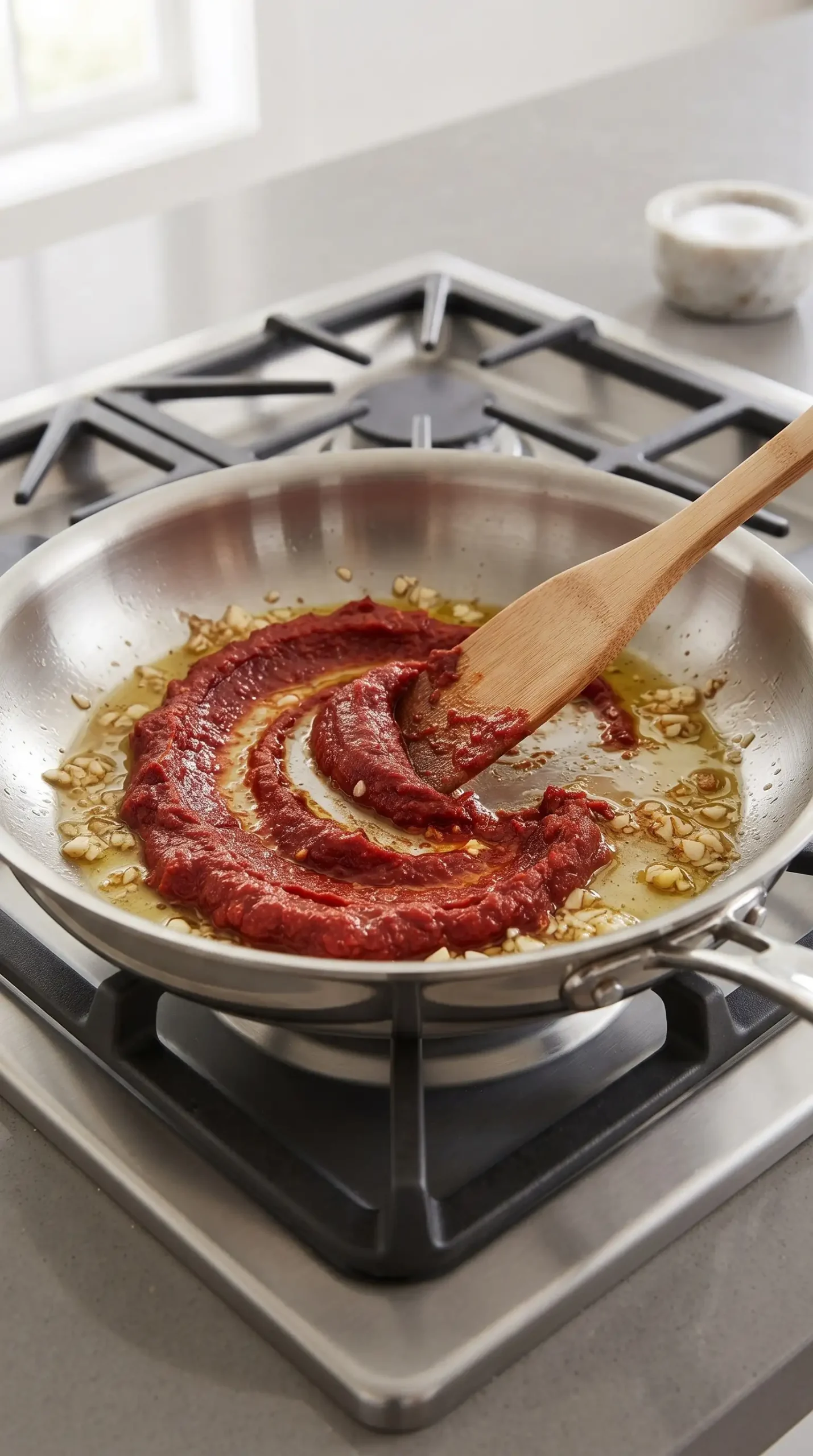
Tomato paste becomes more flavorful when it cooks in the olive oil until it turns a noticeably deeper red. Give it enough attention to develop that color, stirring as it cooks, because the change signals that the concentrated tomato flavor is being developed before the liquid ingredients arrive.
Coconut Milk Keeps the Sauce Creamy
Full-fat coconut milk is the key to the creamy character of vegan vodka pasta. Its richness softens the concentrated tomato paste and rounds out the sauce without requiring cream, cheese, or butter.
Once the coconut milk is stirred in, a gentle simmer allows the flavors to settle together. Vigorous boiling is unnecessary; a calm simmer is enough to bring the sauce into a cohesive texture while keeping the cooking process easy to control.
Because coconut milk has its own character, seasoning matters. Salt sharpens the tomato and garlic, while black pepper or red pepper flakes can add another layer of flavor if you want more contrast. A small drizzle of olive oil at the end can also reinforce the richness.
Garlic Sets the Flavor Before Anything Else
Garlic deserves unusually close attention in vegan vodka pasta because the sauce contains only a handful of major flavors. Keep the heat low and stir constantly while the minced garlic cooks in the olive oil. The aim is fragrant garlic without letting it brown, since browned garlic can become bitter and overpower the tomato and coconut flavors.
Rotini Gives the Sauce Plenty to Grab
Rotini works particularly well because its spirals catch the creamy tomato sauce. Each twist gives the sauce somewhere to cling, making the finished bowl feel evenly coated instead of leaving most of the sauce behind.
| Pasta shape | Why it suits the sauce | Best use |
|---|---|---|
| Rotini | Spirals hold creamy tomato sauce | Rich, well-coated bites |
| Penne | Tube shape carries sauce inside and around the pasta | Classic vodka-pasta texture |
| Rigatoni | Wide ridges provide plenty of surface area | Hearty, substantial servings |
| Spaghetti | Long strands distribute sauce evenly | A smoother, slurpy presentation |
Low Heat Protects the Sauce Base
Gentle heat is the most important control point during the beginning of the cooking process. Olive oil should warm gradually, and the garlic should become fragrant without developing brown edges. Keeping the burner low gives you enough time to react before the garlic moves from fragrant to bitter.
After the tomato paste goes in, steady stirring helps it cook evenly against the warm oil. Watch for the color change to a deeper red instead of relying only on a timer. That visual cue is more useful here because stovetops and pans can behave differently.
Vodka should be added after the tomato paste has developed its deeper color. Let it sizzle and cook down before adding the coconut milk. This keeps the sauce from becoming dominated by the raw alcoholic aroma and gives the liquid time to integrate with the tomato base.
Pasta Water Finishes the Consistency
Reserved pasta water gives vegan vodka pasta an easy texture adjustment at the point when the cooked pasta meets the sauce. The starchy pasta water helps sauce cling as you toss, so add a little at a time until the sauce looks fluid enough to coat the pasta without becoming watery.
Vodka Adds More Than a Sharp Note
The vodka contributes to the character of the sauce while the tomato paste is being transformed into a creamy mixture. Its presence is subtle after cooking, especially once it has had time to sizzle out before the coconut milk is added.
Common Vegan Vodka Pasta Mistakes to Avoid
Burnt garlic is one of the easiest ways to throw off such a concentrated sauce. If the garlic becomes noticeably brown, its bitterness can remain prominent throughout the finished dish. Keeping the heat low and stirring continuously prevents that problem before it starts.
Another issue is stopping the tomato paste too early. If it has not developed into a deeper red color, the sauce may lack the richer cooked-tomato character that makes it satisfying. Give the paste time to cook in the oil and keep it moving around the pan.
Finally, adding too much pasta water at once can make a carefully reduced sauce loose. Start with a small splash, toss thoroughly, and add more only if the pasta needs it. The finished sauce should look creamy and cling to the noodles rather than pool around them.
- Browned garlic: Lower the heat and stir constantly to preserve a sweet, aromatic garlic flavor.
- Pale tomato paste: Continue cooking until the paste reaches a deeper red color.
- Loose sauce: Toss first, then add pasta water gradually instead of pouring in a large amount.
- Flat seasoning: Adjust with salt, black pepper, red pepper flakes, garlic salt, or a little olive oil according to taste.
Whole-Wheat Pasta Changes the Bite
Whole-wheat pasta can be used when you want a heartier, more substantial texture. Its nuttier flavor works with the tomato and garlic base, although the finished dish will have a different character from pasta made with refined flour.
Small Adjustments Can Change the Finish
Heat lovers can bring more intensity with red pepper flakes, adding them according to personal preference. Black pepper works differently, providing warmth and a little bite without making the sauce overtly spicy.
Extra olive oil can make the finished bowl feel richer, while additional salt can sharpen the tomato and garlic flavors when they seem muted. Garlic salt is another option, although it should be added carefully because it contributes both seasoning and additional garlic flavor.
More vodka can also be used if you prefer a more pronounced vodka-pasta character. Keep the cooking sequence intact so the added vodka has time to sizzle before the coconut milk goes into the pan.
A Bowl of Vegan Vodka Pasta Needs Little Decoration
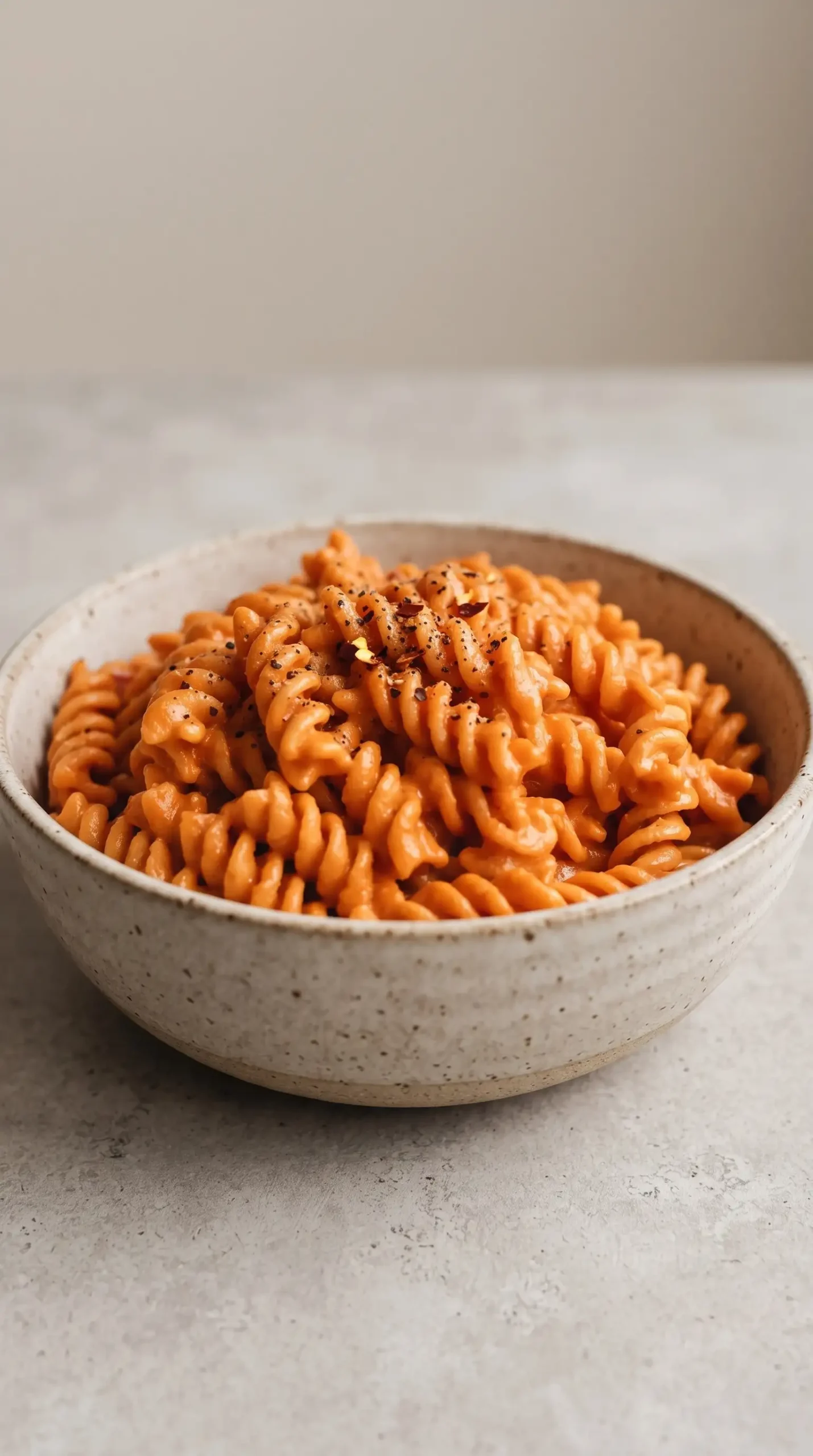
The creamy sauce already provides plenty of flavor and texture, so the dish can be served simply. A little black pepper or red pepper flakes gives the surface some visual contrast and adds seasoning without requiring a complicated topping.
Leftover Sauce Benefits From Gentle Reheating
When reheating leftovers, use gentle heat and stir regularly so the creamy sauce warms evenly. A small splash of water can help loosen pasta that has tightened as it sits, restoring a smoother consistency without adding another heavy ingredient.
Separate portions are easier to adjust than one large batch. Warm only what you plan to eat, then correct the texture gradually with water or a little olive oil if needed.
Deep Tomato Color Makes the Finished Pasta Cohesive
The deepest flavor in vegan vodka pasta starts before the sauce becomes creamy. Garlic needs gentle handling, tomato paste needs enough time to become deeply red, and vodka needs a moment to sizzle before coconut milk joins the pan. Those small cooking decisions shape the sauce far more than adding extra ingredients.
Once the cooked pasta is tossed through that sauce, reserved pasta water lets you make the consistency your own. A careful hand with heat and liquid keeps the result creamy, savory, and balanced from the first bite to the last.
Vegan Vodka Pasta Questions About Coconut Milk and More
Can I taste the coconut milk in vegan vodka pasta?
Full-fat coconut milk contributes richness and creaminess, but the concentrated tomato paste, garlic, salt, and vodka create the dominant flavor profile. If you are sensitive to coconut flavor, use a full-fat variety with a mild taste and season the sauce carefully so the tomato and garlic remain prominent.
Can I make vegan vodka pasta without rotini?
Yes. Penne, rigatoni, spaghetti, and other pasta shapes can work with the sauce. Shapes with ridges, curves, or hollow centers tend to capture more creamy tomato sauce, while long noodles produce a looser, more evenly distributed coating.
Why does my vodka pasta sauce taste bitter?
Over-browned garlic is a likely culprit because garlic becomes bitter as it browns too far. The tomato paste can also become harsh if it is cooked too aggressively. Keeping the heat low for the garlic and stirring the tomato paste as it develops its deeper red color helps preserve a balanced flavor.
How do I make the sauce less thick?
Add reserved pasta water gradually while tossing the pasta with the sauce. A small amount loosens the mixture while helping it remain cohesive. Continue adding tiny splashes until the sauce moves easily around the pasta without becoming watery.
Can I make this easy vegan vodka pasta spicier?
Red pepper flakes are the simplest way to increase the heat without changing the basic structure of the sauce. Add them according to taste, either while the sauce is simmering or at the table for more individual control.
Vegan Vodka Pasta with Tomato Paste and Coconut Milk
Ingredients
Method
- Warm the olive oil over low heat. Add the minced garlic and cook, stirring, until fragrant.
- Stir in the tomato paste and continue cooking until the paste develops a deep red color.
- Pour in the vodka and allow it to sizzle. Add the coconut milk and salt, then let the sauce simmer briefly.
- Cook the pasta according to the package directions. Drain and combine with the sauce, adding a little reserved pasta water as needed to reach the desired consistency.
- Serve the pasta and enjoy.