
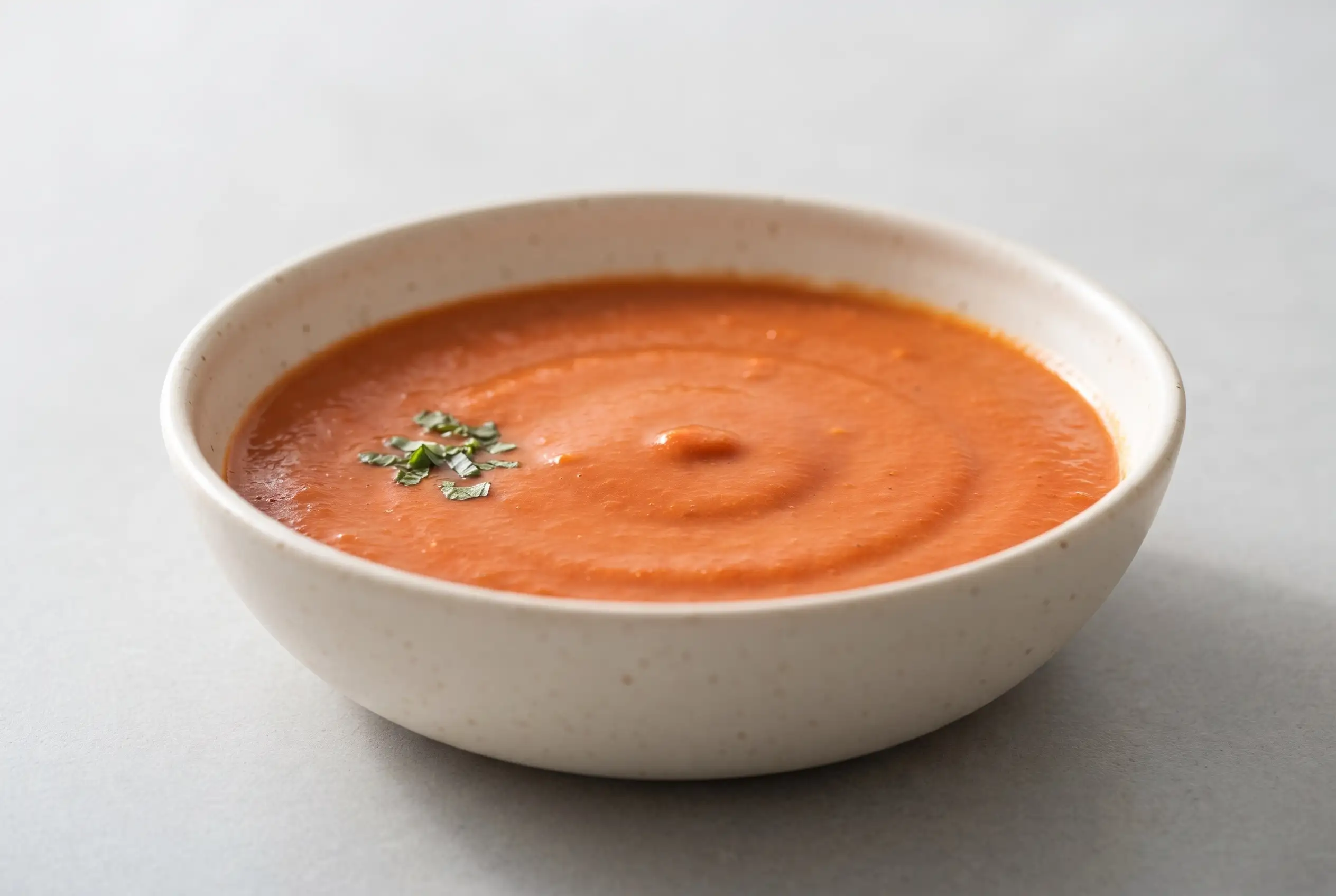
tomato soup gets its depth here from a short ingredient list and a slow, controlled simmer. Two cans of San Marzano tomatoes, salted butter, yellow onion, optional garlic, and salt create a soup that can stay smooth and straightforward without a long list of additions. The 5 Ingredient Tomato Soup approach also leaves plenty of room to adjust texture and serve it with whatever belongs beside a bowl of tomato soup in your kitchen.
Why this tomato soup tastes fuller than its ingredient list suggests
Tomatoes carry most of the character, so their quality matters more than it would in a soup built around many competing flavors. San Marzano tomatoes bring the concentrated tomato base needed here, while butter rounds the acidity and gives the finished soup a richer texture.
Meanwhile, the onion cooks directly with the tomatoes and butter for a long enough stretch to soften completely and contribute sweetness. Because it is removed before blending, the soup gets its cooked onion flavor without leaving onion pieces throughout the finished bowl.
Simple seasoning also has an advantage. Salt is easier to judge when there are only a few ingredients, so tasting near the end lets you decide whether the tomatoes need more seasoning without masking their flavor with a long list of spices.
San Marzano tomatoes set the character of the soup
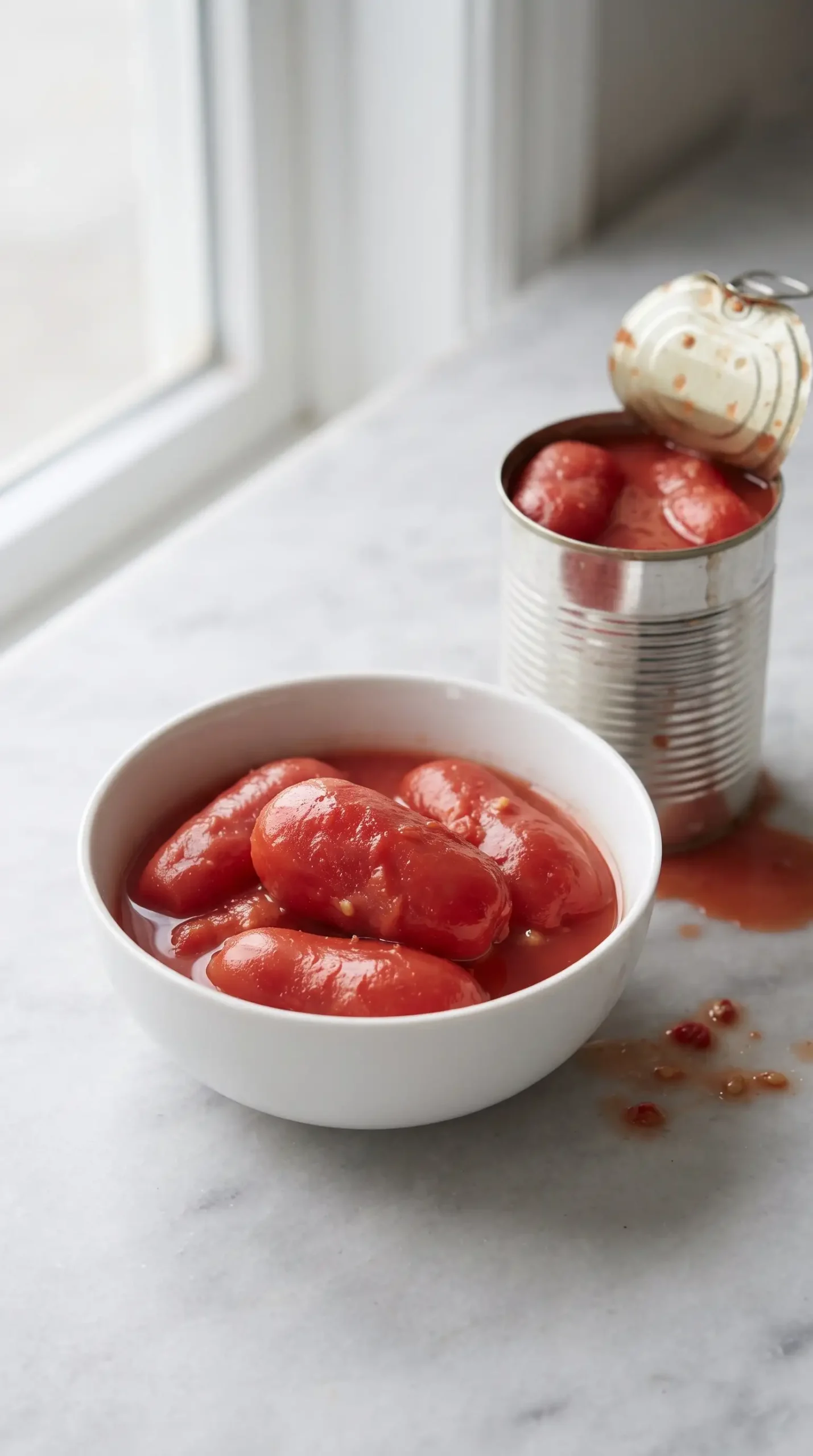
Whole or crushed San Marzano tomatoes both work, but they behave slightly differently in the pot. Whole tomatoes need to break down during cooking and blending, while crushed tomatoes begin with a more uniform texture. Either choice can produce a smooth tomato soup once it is blended.
For a more specific ingredient choice, look for San Marzano DOP tomatoes, which are available as whole peeled tomatoes or fillets under the protected designation.
Whole tomatoes are especially useful when you want control over texture. They remain distinct during the simmer, then can be completely transformed by an immersion blender. Crushed tomatoes shorten that textural step because much of the work has already been done.
The important point is consistency: use tomatoes packed in a form you can blend easily and allow enough time for the tomato mixture to soften before judging the finished texture.
Butter and onion create the soup’s rounded base
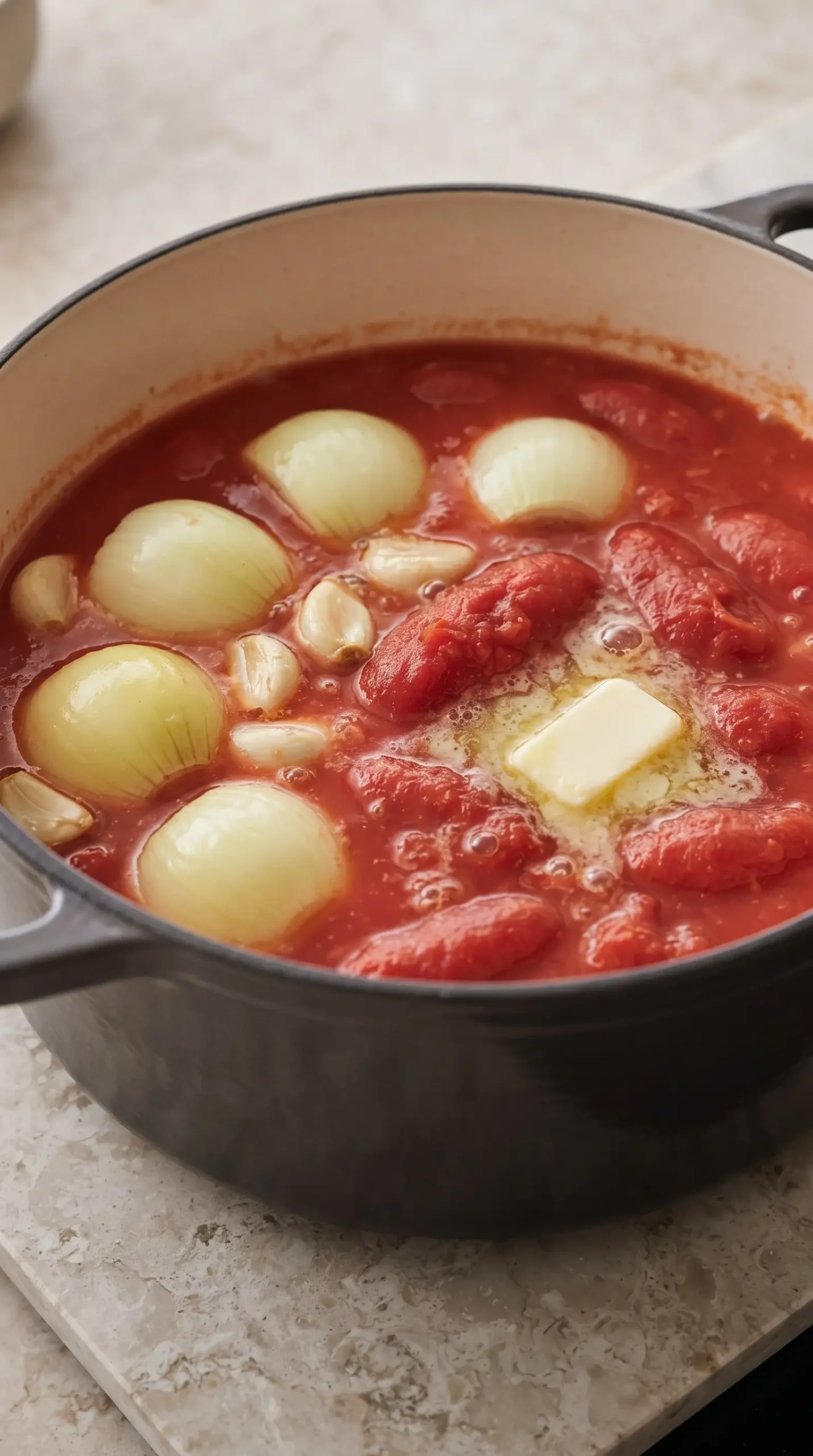
Salted butter melts into the tomato mixture and softens the sharper edge that tomatoes can have. The onion cooks alongside it, gradually becoming tender and sweet before the pieces are removed. Keeping those ingredients together during the simmer gives the soup a unified base without requiring a separate sautéing stage.
Garlic works best as an optional accent
Garlic does not need to define the flavor here. A few smashed cloves can remain in the pot during cooking and then be blended with the tomatoes, giving the soup a more noticeable savory edge. Leaving them out keeps the profile centered more tightly on tomato, butter, and onion.
Since the garlic is smashed rather than finely chopped, it can cook gently in the liquid without becoming a dominant browned ingredient. That makes it easy to include when you want extra savory depth while still keeping the short ingredient list intact.
Tomato soup gets its best texture from the right blending point
Blending is where the cooked tomatoes, butter, onion-infused liquid, and optional garlic become one continuous texture. An immersion blender is particularly convenient because the soup can be blended directly in the saucepan or Dutch oven once the onion pieces have been removed.
Blend only until the texture matches your preference. A thorough pass produces a very smooth tomato soup, while a shorter blend can leave a little more tomato character in the texture. There is no need to add liquid simply because the soup looks thick before blending; evaluate its consistency after the tomatoes have been fully incorporated.
For the smoothest result, keep the blender head submerged while it is running and move it slowly through the pot. That helps process the remaining tomato pieces evenly instead of repeatedly lifting the blender above the surface.
A clear simmer protects the bottom of the pot
Keep the heat controlled once the tomato mixture reaches a low bubble. The soup needs enough movement to cook steadily, but an aggressive boil can encourage the thick tomato mixture to catch on the bottom. A partially covered pot also allows the soup to simmer without sealing in every bit of steam.
Stovetop tomato soup needs gentle heat, not constant attention
During the simmer, occasional stirring is more useful than continuous stirring. Tomato mixtures can settle against the bottom as they cook, particularly in a thick layer, so a stir about every 15 minutes helps prevent scorching while allowing the soup to cook largely undisturbed.
Watch the surface for a low, steady bubble rather than vigorous boiling. If the bottom begins catching despite stirring, reduce the heat promptly and scrape gently with a suitable utensil before anything stuck to the pan becomes more pronounced.
That controlled approach is one reason stovetop tomato soup can develop a slightly sweeter, richer character. The tomato mixture has time to cook down with the butter and onion while receiving enough heat to deepen without being pushed into a hard boil.
Blending temperature changes how you judge thickness
Once the onion chunks are removed and the soup is blended, assess the consistency in its finished form. Tomato pieces can make an unblended pot look thicker or thinner than it will actually seem after everything is incorporated, so adjusting the texture before blending can lead to unnecessary additions.
Milk, water, broth, or cream can loosen a thick bowl
A thick tomato soup does not need to stay thick if you prefer a lighter consistency. Small additions of milk, water, broth, or cream can loosen the soup after blending, giving you control without changing the cooking process itself.
Choose the liquid according to the result you want. Water keeps the tomato flavor most direct, milk or cream makes the texture softer and richer, and broth adds another savory note. Add a little at a time, blend or stir thoroughly, then taste again before adding more.
| Adjustment | Effect on tomato soup | Best use |
|---|---|---|
| Water | Loosens without adding much new flavor | When the tomato flavor should remain prominent |
| Milk | Softens the texture and acidity | When a gentler, creamier bowl is preferred |
| Broth | Adds extra savory character | When the soup needs more liquid and savory depth |
| Cream | Makes the soup richer and silkier | When a fuller texture is desired |
Salt becomes easier to judge after the tomatoes cook
Tomatoes concentrate as they simmer, so the seasoning can taste different near the end than it did at the beginning. Taste the blended soup before making a final adjustment, then add salt gradually so the tomato flavor remains clear.
Mistakes that can throw off a simple tomato soup
Scorching the bottom is the most important problem to prevent. A thick tomato mixture can catch if the heat is too high or the pot is left completely unattended. Gentle bubbling and periodic stirring address both risks without requiring constant monitoring.
Overcooking the garlic can shift the flavor away from the clean tomato base. The supplied method uses smashed cloves that cook in the liquid, so there is no need to brown them separately before the tomatoes go into the pot.
Removing too much liquid can leave the finished soup thicker than intended. Judge the consistency after blending, then thin it gradually if needed. Adding a large amount at once makes it harder to control the final texture.
Garlic bread and grilled cheese give tomato soup a useful contrast
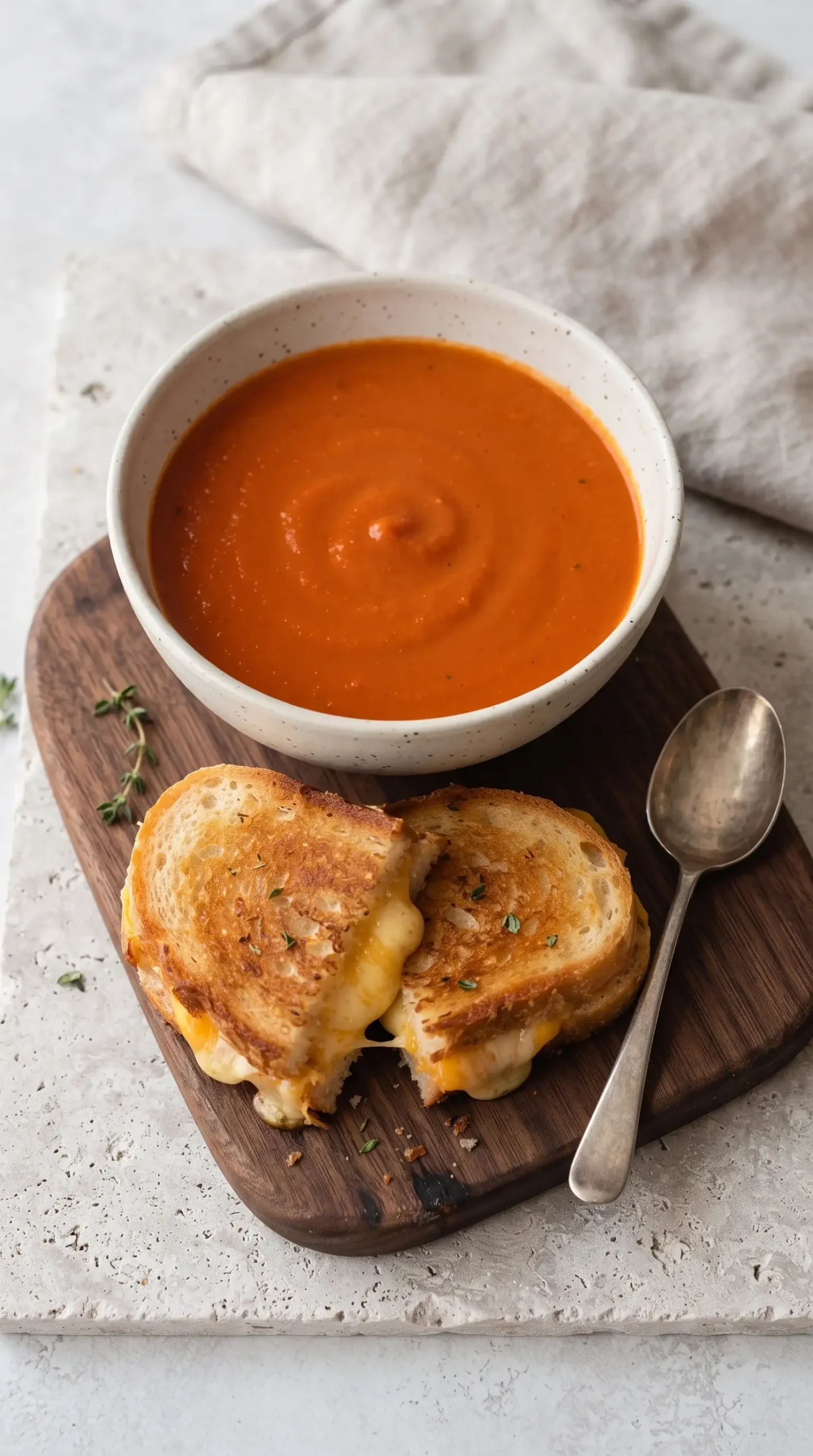
Tomato soup is naturally easy to pair with crisp or toasted foods. Garlic bread brings a crunchy surface and a savory garlic note, while grilled cheese adds a richer, chewy element that works against the smooth soup.
For a lighter finish, croutons or crackers provide texture without changing the soup itself. A spoonful of pesto can also be used as a topping when you want an herbaceous accent, with the amount kept small enough that the tomato base remains recognizable.
- Grilled cheese: adds a substantial toasted, cheesy companion.
- Garlic bread: supplies crisp texture and another layer of garlic flavor.
- Croutons: provide crunch without altering the soup’s consistency.
- Crackers: offer a simple, salty contrast with almost no preparation.
- Pesto: adds a concentrated herbal accent to the tomato base.
Leftover tomato soup is easy to reshape at serving time
Stored tomato soup can thicken as it sits, so the consistency you liked when it was freshly blended may not be identical later. Reheat it gently and stir well, then decide whether it needs a small splash of liquid before serving.
Reheating is also a good moment to reassess seasoning. A chilled or stored soup may taste less pronounced than it did when hot and freshly blended, so taste after warming before adding more salt.
For serving, keep additions separate when possible. That preserves the flexibility to serve one bowl with grilled cheese, another with crackers, and another with a little pesto without changing the base soup for everyone.
An Instant Pot version changes the hands-on cooking
The same ingredient combination can be cooked in an Instant Pot for a more hands-off approach. Everything goes into the pot, it cooks under pressure, and the onion chunks are removed before blending. The main practical advantage is reduced attention during cooking because there is no stovetop bottom to monitor.
The stovetop version can develop a slightly sweeter and richer flavor because the tomato mixture has more opportunity for gentle caramelization during the open simmer. Both approaches use the same basic ingredients, so the choice comes down to whether you value hands-off cooking or the particular flavor produced by the stovetop method.
Gentle cooking keeps the tomato flavor at the center
The tomato mixture should bubble quietly, stay stirred enough to protect the bottom, and be blended only after the onion has been removed. Those controls matter more here than adding extra seasonings, because the short ingredient list leaves very little to hide scorching, excessive boiling, or an uneven texture.
A smooth tomato soup also becomes easier to customize once its base is right. Leave it as-is for a concentrated bowl, or loosen it after blending with a little water, milk, broth, or cream. The underlying tomato flavor remains the reference point for every adjustment.
Tomato soup questions about texture, tomatoes, and cooking
Can whole San Marzano tomatoes be used instead of crushed?
Yes. Whole tomatoes work well because the immersion blender can break them down after the simmer. They may simply require more blending to reach the same smooth texture that crushed tomatoes provide from the start.
Why is my tomato soup thicker than I expected?
Tomatoes can produce a concentrated soup as they cook, and blending does not automatically add liquid. Stir in a small amount of water, milk, broth, or cream after blending, then reassess the consistency before adding more.
How can I prevent tomato soup from scorching on the bottom?
Use medium-low heat once the soup reaches a low bubble and stir periodically during the simmer. A partially covered pot helps maintain steady cooking while the occasional stir keeps the thick tomato mixture from sitting against the bottom for too long.
Does garlic need to be included in this tomato soup?
No. Garlic is optional here. Leaving it out produces a more direct tomato-and-butter flavor, while smashed garlic cloves add a stronger savory note when cooked with the soup and blended afterward.
What should I do if the soup tastes too sharp?
First make sure it is properly seasoned, because insufficient salt can make tomato flavor seem harsher. If the soup still needs softening, a little milk or cream can round the texture and acidity without requiring additional spices.
Can I make tomato soup less smooth?
Yes. Blend for less time and stop once the remaining tomato pieces match the texture you want. The immersion blender gives you direct control, so there is no requirement to process the soup until it becomes completely silky.
Tomato Soup with San Marzano Tomatoes and Salted Butter
Ingredients
Method
- Combine the tomatoes, butter, and onion in a large saucepan or Dutch oven. Bring the mixture to a low bubble, then reduce the heat to medium low. Partially cover and simmer for 45 minutes, stirring about every 15 minutes to keep the bottom from scorching.
- Use tongs to remove the onion pieces from the soup. Leave the garlic in the pot if desired.
- Blend the soup with an immersion blender until it reaches your preferred smoothness. Taste and adjust the seasoning or consistency as needed, adding milk, water, broth, or cream if you want a thinner soup.
- Serve the tomato soup with your preferred accompaniments such as garlic bread, grilled cheese, croutons, crackers, or pesto.