
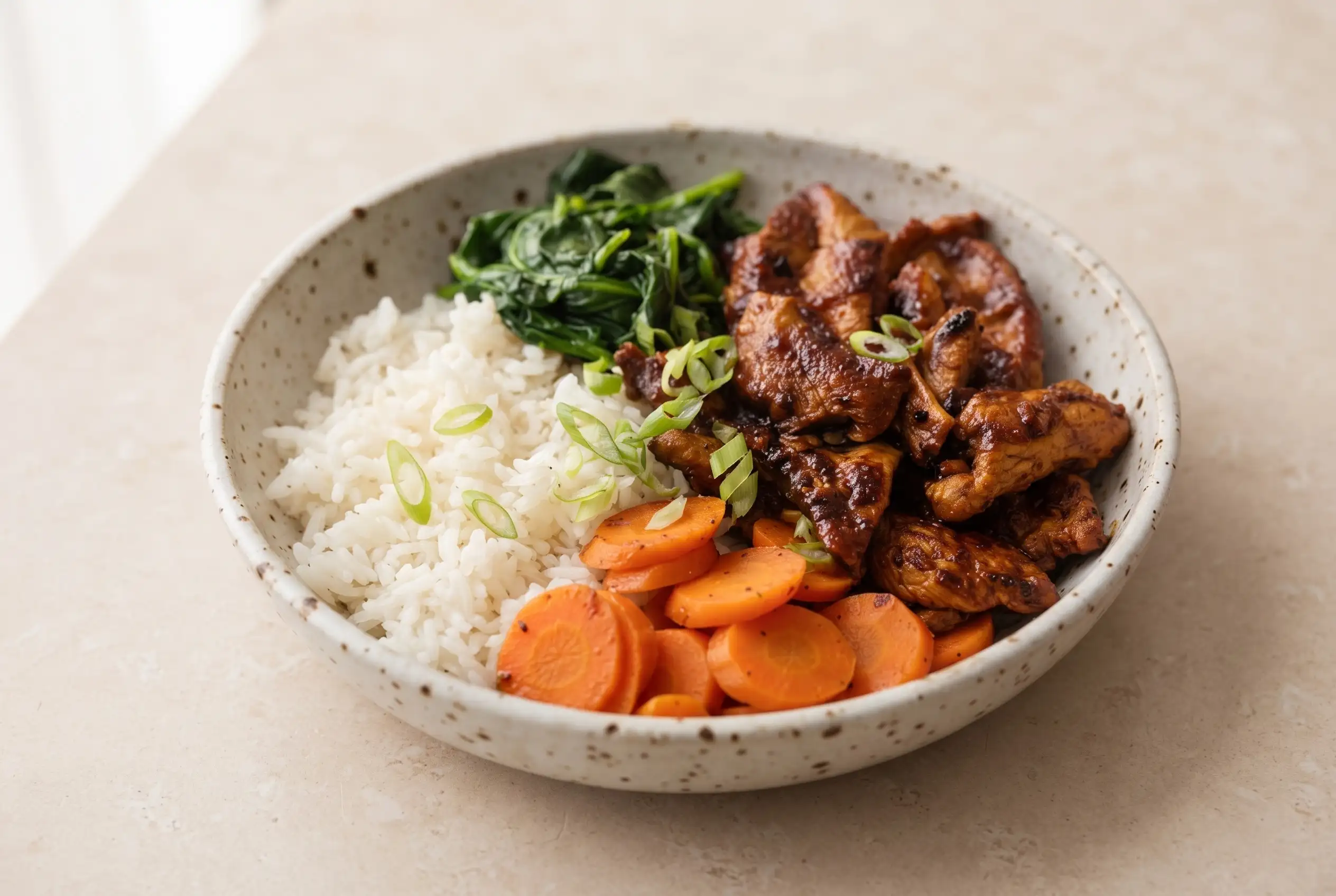
Spicy pork gets its character from a short, assertive sauce and a very hot pan. Here, sambal oelek or sriracha meets soy sauce, brown sugar, fresh ginger, and garlic, then coats thinly sliced pork tenderloin before it hits the skillet. The combination gives the meat a savory, sweet, garlicky heat with browned edges that develop quickly.
The key to 5 ingredient spicy pork is not adding more ingredients or cooking the meat for longer. Thin slices, a brief rest in the sauce, and fast searing work together to keep the pork tender while the sugars caramelize. Served with rice and vegetables, the spicy pork becomes a complete bowl with contrasting textures and enough sauce to bring everything together.
Thin Pork Slices Make the Heat Work
Very thin slices are central to the cooking method because the pork needs to brown quickly. A thick piece of tenderloin would require more time in the skillet, increasing the chance that the exterior becomes overly dark before the center is ready.
For cleaner, thinner cuts, firm the tenderloin in the freezer for a short period before slicing. The meat becomes easier to steady and cut, especially when using a very sharp knife. Aim for pieces that are thin enough to cook rapidly but still substantial enough to turn without tearing.
Once sliced, the pork should be coated evenly with the sauce and allowed to rest for 20 minutes to 1 hour. That window gives the surface time to pick up the soy, chili, ginger, garlic, and brown sugar before the meat reaches the skillet.
Sambal, Sriracha, and the Sauce Balance
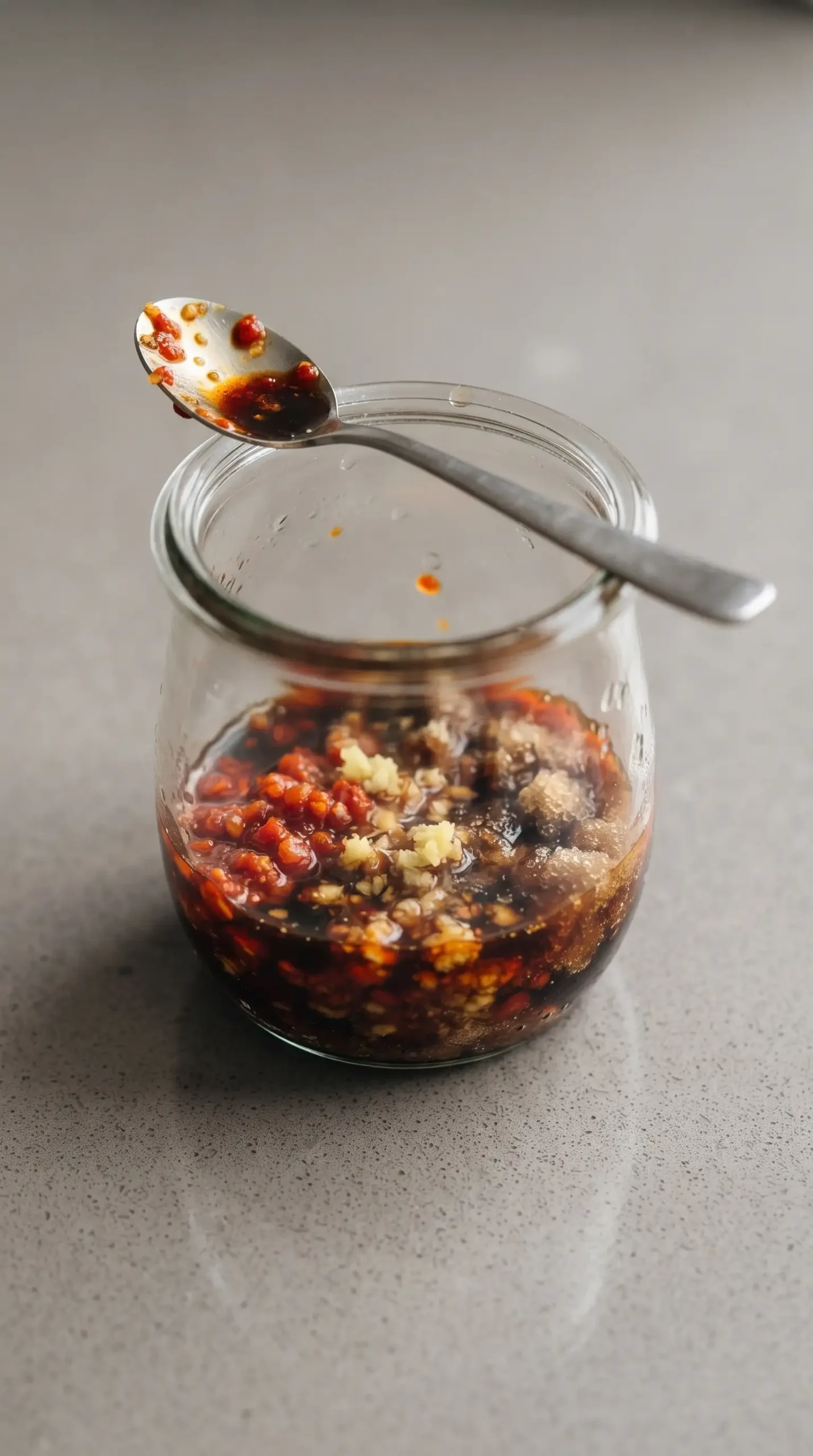
Sambal oelek brings a direct chili flavor and a textured heat, while sriracha gives the sauce a smoother, sweeter character. Either works with the same basic proportions, so the choice can follow the kind of heat and texture you prefer.
Soy sauce supplies the salty backbone, while brown sugar helps round out the chili and gives the pork its browned exterior. Freshly grated ginger and garlic keep the sauce from tasting one-dimensional. Because the sauce is concentrated, finely grating both aromatics helps distribute their flavor across the thin slices.
- For sharper chili character: use sambal oelek.
- For a smoother, sweeter chili profile: use sriracha.
- For stronger fresh aromatics: grate the ginger and garlic finely so they disperse through the sauce.
A Brief Rest Gives the Pork an Even Coating
Once the sauce is shaken together, the pork needs enough contact time to become thoroughly coated. Twenty minutes is sufficient for a quick meal, while a longer rest within the stated window gives you more flexibility when preparing the rice and vegetables.
The sauce should cling to the meat instead of pooling heavily around it. Thin slices have plenty of surface area, so an even coating is more useful here than a thick layer of sauce. Shake the sauce ingredients together thoroughly before pouring them over the pork.
High Heat Is the Main Cooking Control
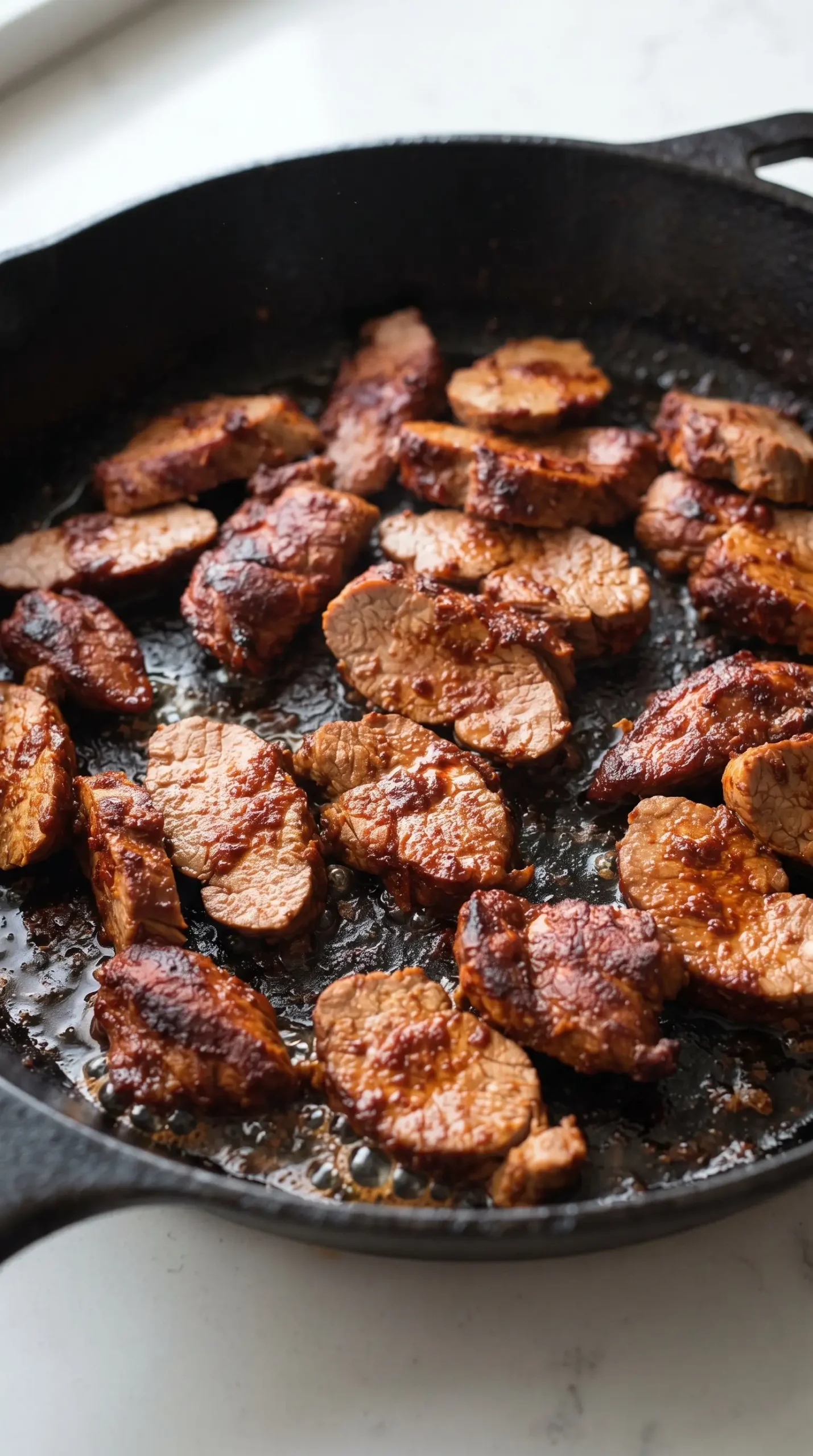
A heavy skillet, such as cast iron, is particularly useful because it can provide the strong heat needed for rapid browning. Preheating matters: the pan should be genuinely hot before the pork goes in, and the vegetable oil should look hot and shiny.
Work in a single layer. If the pork crowds the pan, moisture can build up around the pieces and interfere with the fast sear. Cooking in batches is preferable when necessary because each piece needs direct contact with the hot surface.
Leave the pork undisturbed for about 1 to 2 minutes on the first side. Look for visible caramelization along the edges and underneath before turning. After the flip, cook just long enough to finish the meat and develop color on the second side.
The timing is deliberately short because the slices are thin. Once the pork has browned and cooked through, remove it from the skillet instead of letting it linger over the heat while you prepare the rest of the bowl.
Because the slices cook quickly, use a thermometer to confirm that the pork reaches 145°F (62.8°C) and rest for 3 minutes before serving.
Caramelized Edges Come From Restraint
The brown sugar in the sauce is useful for developing the deep color associated with a good sear, but it also means the surface can darken quickly. Resist the urge to keep moving the pork around the pan. A period of uninterrupted contact allows the underside to brown properly.
At the same time, avoid leaving the meat in the skillet after it has finished cooking. The same high heat that creates attractive caramelization can make thin pork slices tough when they spend too long in the pan.
Rice and Greens Turn Spicy Pork Into a Bowl
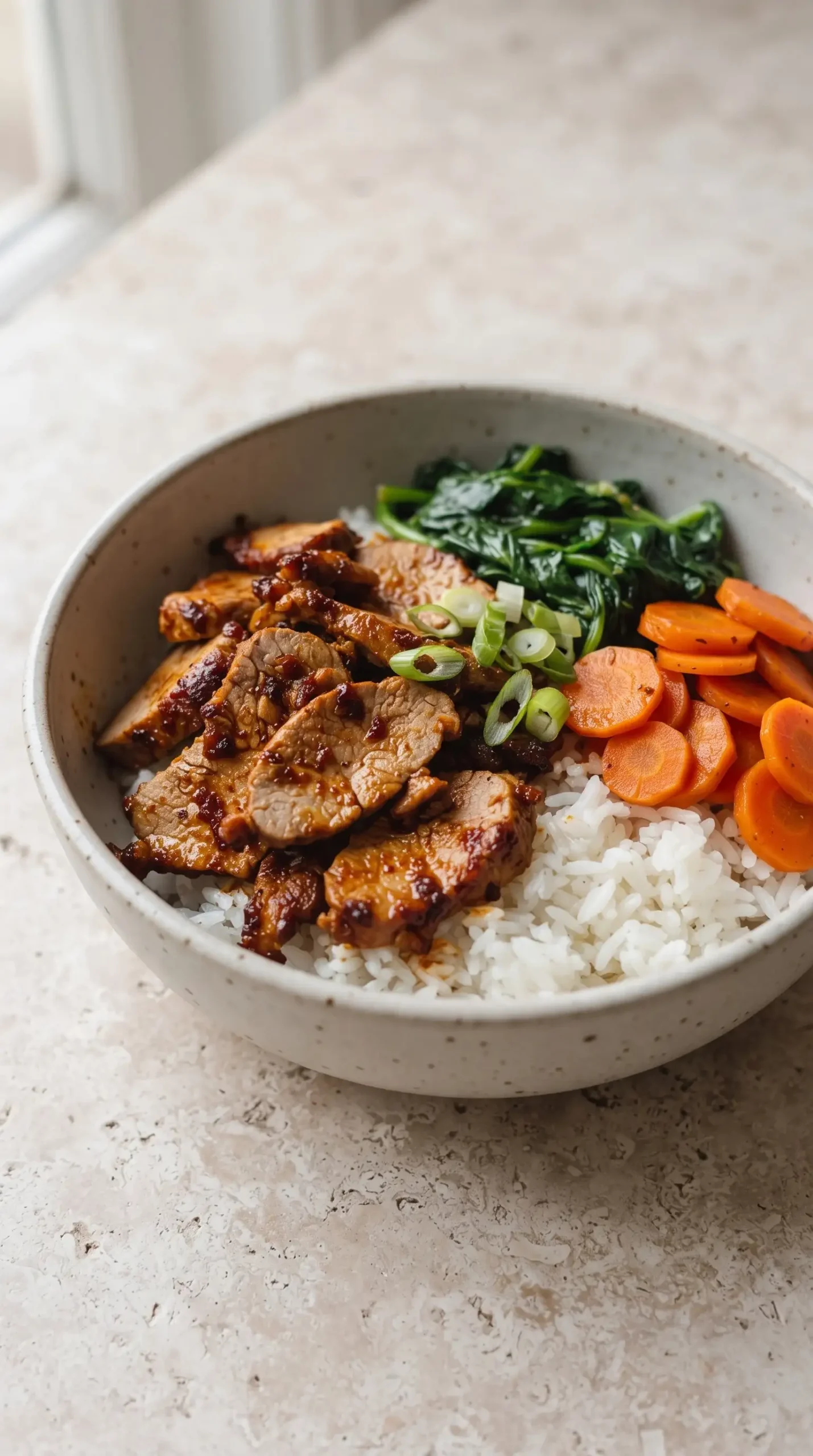
Rice provides a mild, neutral base for the strongly seasoned pork. Cook it according to the package directions so its texture remains distinct and it can absorb some of the savory sauce without becoming the dominant flavor.
Sliced carrots and cooked-down spinach bring different textures and a fresh vegetable contrast. The carrots can retain some bite while the greens collapse into a compact, tender accompaniment. Green onions add a fresh finish without requiring another complicated preparation.
| Component | Useful role in the bowl | Best handling |
|---|---|---|
| Rice | Neutral base for the seasoned pork | Cook separately according to package directions |
| Carrots | Firm vegetable contrast | Slice into coins and sauté until tender |
| Spinach | Soft, cooked green element | Cook down after the pork is removed |
| Green onions | Fresh finishing flavor | Slice and scatter over the finished bowl |
Use the Pan After the Pork Comes Out
The skillet can do more work once the pork has been removed. Carrots and greens can go into the same pan, where the remaining browned bits and traces of the spicy sauce help season the vegetables without requiring another sauce.
Give the vegetables enough space to cook instead of piling them into a crowded surface. The carrots need time to soften, while spinach only needs to cook down. Keeping the vegetables in the same pan also makes the meal more efficient and captures flavor that would otherwise remain on the skillet.
Common Spicy Pork Mistakes to Avoid
The most common problem is a pan that is not hot enough when the pork arrives. The meat then spends longer cooking and releases moisture before a strong crust can form. Preheat the skillet properly and wait for the oil to become hot and shiny.
Overcrowding creates a similar problem. When too many slices cover the cooking surface, they cannot all sear effectively. Divide the pork into batches whenever a single layer is not possible.
Another mistake is slicing the tenderloin too thickly. Thick pieces need longer cooking, which works against the rapid-searing approach. Partially firming the tenderloin before cutting makes very thin slices easier to achieve.
Finally, keep your hands away from the immediate cooking area when adding the sauced pork. Hot oil can splatter, particularly when a moist marinade-coated surface meets a very hot skillet. An apron and careful handling are practical precautions here.
Cast Iron Needs a Little Attention Afterward
A hot cast-iron skillet can produce the intense sear needed for spicy pork, but the browned sauce and cooking residue may leave the surface requiring some cleanup afterward. Deal with the pan while the residue is still manageable, following your usual cast-iron cleaning routine.
Adjust the Bowl Without Changing Its Character
The simplest way to change the meal is through the heat level of the chili paste. Sambal oelek and sriracha can both work, so you can choose based on the chili flavor you want without changing the rest of the cooking approach.
The vegetable side can also shift within the ingredients already suited to the bowl. More carrots make the vegetable component more substantial, while extra spinach creates a softer, greener accompaniment. Keeping the rice as the neutral base preserves the contrast that makes the spicy pork easy to balance.
Keep the Pork Moving Quickly From Skillet to Bowl
The most important sequence is simple: thin pork, even sauce coverage, a properly heated skillet, and short cooking. Each decision supports the next one. The sauce supplies concentrated flavor, while the hot pan supplies the browning needed to make those flavors taste more developed.
Once the pork has its caramelized surface and is cooked through, take it off the heat. The rice and vegetables can then provide the cooling, mild, and fresh elements that balance the chili-forward meat without requiring another complicated preparation.
Fast Searing Keeps Spicy Pork Tender
Thinly sliced pork tenderloin depends on speed. A hot skillet and a single layer create the conditions for browning before the meat has spent too much time cooking, while the short sauce rest ensures the surface is already well seasoned when it reaches the pan.
That balance is what makes spicy pork work so well in a rice bowl: the meat gets concentrated flavor and caramelized edges, while rice, carrots, spinach, and green onions give the finished meal contrasting textures and a milder foundation.
Spicy Pork Questions About Heat and Searing
Can I use sriracha instead of sambal oelek?
Yes. Sriracha is specifically suitable as an alternative to sambal oelek in the sauce. Expect a somewhat smoother and sweeter chili character, while the overall cooking process stays the same.
How can I slice pork tenderloin very thinly?
Firm the tenderloin in the freezer for a short time before cutting, then use a very sharp knife. The firmer texture makes it easier to control the cut and produce the thin slices needed for rapid searing.
Why did my pork turn tough?
Thin pork can become tough when it remains over high heat longer than necessary. A pan that is not hot enough can also extend the cooking time. Preheat thoroughly, avoid crowding, and remove the pork once it has browned and cooked through.
Should I cook the pork all at once?
Only if the slices fit in the skillet in a single layer with room for direct contact with the cooking surface. If they do not, divide the pork into batches so the pieces can sear instead of becoming crowded.
Can I cook the vegetables in the same skillet?
Yes. After the pork is removed, the carrots and greens can be cooked in the same pan. The remaining browned bits and sauce residue can season the vegetables while they cook, adding flavor without another preparation.
Spicy Pork with Sambal Oelek, Soy Sauce and Ginger
Ingredients
Method
- Combine the sauce ingredients in a jar and shake until mixed. Pour the sauce over the sliced pork and let it rest for 20 minutes to 1 hour.
- Prepare the rice according to package directions.
- Heat a heavy skillet over high heat and add a small amount of vegetable oil.
- When the oil is hot, place the pork in a single layer, working in batches if needed. Cook without moving for 1 to 2 minutes until the surface is caramelized, then turn the pieces and cook the other side until finished.
- Cook the carrots and spinach in the skillet after the pork is removed, using the remaining pan flavors to season the vegetables.
- Serve the cooked pork with rice, carrots, spinach, and sliced green onions.